 Stones into Schools
by Greg Mortenson
read by Atossa Leoni
2009
What is particularly wonderful about this book is the pervasive optimism. At a time when I often feel hopeless in the face of atrocities I can’t fight, this is a story about a guy who figured out how to fight. And by fight, I mean arrange the building of schools for girls in rural Pakistan and Afghanistan.
I may be the last person to know about this book since it’s a sequel to “Three Cups of Tea”, which I vaguely recall from that having been on the New York Times Best Seller list for a gazillion weeks some years back, but I never read. I now probably need to do so. But I picked up “Stones into Schools” kind of randomly as one of the few audiobooks at my local library that looked like an interesting read for my work commute. And it really was.
Apparently, in the first book, Mortenson talks about having been a mountain climber who got lost in Pakistan, winding up in a small rural village where a very goal-oriented young child wrangles a promise out of him that he will return and build her a school in her village. There’s some extreme mission creep, as happens, and he winds up with a nonprofit that builds a number of schools in a number of rural villages.
The second book, this one that I’ve just read (ie, listened to), starts with Mortenson checking in on one of these schools along the Pakistan-Afghan border, when horseriders come down from the Afghan mountains to meet him. They explain that they had heard he was in the area, and by area, they meant a mere six-day horseride away, and had come to ask him to build a school for their community of nomadic yak herders in the heights of the mountainous Wakhan Corridor. This was in 1998.
The book covers the next ten years of Mortenson’s attempt to get that school built, through the rise of Taliban and the complex series of relationships, favors given and owed, with all the people and communities along the way.
The book does an amazing job of introducing the people he meets and works with, in all their complexities of personal histories and motives, and how, in the end, they align in trying to bring literacy to rural girls. It also really introduced me for the first time to exactly how horrific the Taliban was to the people it claimed as its own, and how few they truly numbered for all their viciousness. The Taliban created an unsustainable society that hates its own women, but the women and the men who cared for them continued to strive for better.
This book makes me feel hopeful. And that is something I desperately need right now.
When I checked my library catalog to make sure they had “Three Cups of Tea” for my future reading/listening (they do), I discovered another book “Three Cups of Deceit” all about how Mortenson is a liar and a fraud and just the title felt like a slap in the face after such optimism. I looked up both that book and Mortenson on Wikipedia to figure out what the actual truth was and, as far as I can tell, the “Three Cups of Deceit” guy was angry that Mortenson isn’t perfect, nonprofits are always weird, rural schools for girls haven’t immediately created peace in the middle east, and decided to ride the coattails of fame with a clickbait title, while doing his best to turn optimism into cynicism and hope into despair. Mortenson promotes his successes and talks less about his failures and there’s no more financial shenanigans in his nonprofit than in many others. I think the ultimate lesson here is: you don’t have to be flawless to still be good. Find a quest, like-minded people will join you on the quest, and do as much good in the world as you possibly can.
 Hanif Abdurraqib is very smart and funny on
  This was on all sorts of Best of lists and the description sounded amazing; this was the quote from the New York Times review: “A mind-bending romp through a gender-fluid, eighteenth century London . . . a joyous mash-up of literary genres shot through with queer theory and awash in sex, crime, and revolution.” I like all of these things! This should be awesome! But even after multiple tries, I never made it past the third chapter. It was written in some of Olde Englishe dialect that my brain just wouldn’t parse at all. I feel like if I could have gotten over the hump and into the story I would have liked it, but I guess I’ll never know.
 Of course, everyone was reading this book. In DC, naturally, but I think there was a mad scramble for it nation-wide. I don’t really buy books anymore, and the library waitlist was over 900 people, so I figured I’d probably get around to reading it in a couple years once the next big exposé came out. However, at Thanksgiving my dad said that I could borrow his copy, as long as I return it at Christmas. A month! Plenty of time, right?
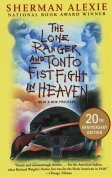 With a title like that, how could I not want to read it? Also, the book is a 20th anniversary edition that was being highlighted at my local library as a recommendation from one of the librarians, and it’s about modern life on an Indian reservation. It’s a collection of 24 short stories, most of them only about 10-pages long.
 Your Black Friend and Other Strangers
 An Age of Barns


 Freedom Hospital: A Syrian Story
 I am Raymond Washington
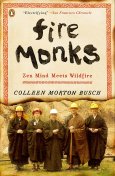 Fire Monks: Zen Mind Meets Wildfire at the Gates of Tassajara
 Rebecca has read a fair amount of
  Biblio-therapy