Wicked Plants, Wicked Bugs by Amy Stewart

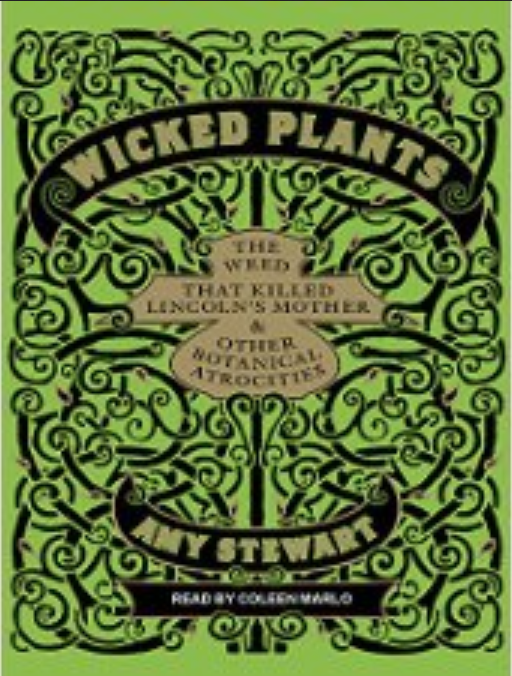
Wicked Plants: The Weed That Killed Lincoln’s Mother and Other Botanical Atrocities
by Amy Stewart
read by Coleen Marlo
2009

Wicked Bugs: The Louse That Conquered Napoleon’s Army & Other Diabolical Insects
by Amy Stewart
read by Coleen Marlo
2011

These books were each between four and five hours long as audio books, so not all that long as these things go, and were kind of a stream of mini non-fiction cozy body-horror stories, which is a crazy intersection of genres but that makes it all the more fun.

In many cases, they’re not even precisely stories; more like entries in a lexicon: something between a dictionary, encyclopedia, and field guide. Not something I would normally sit down and read, cover-to-cover, but I could easily set the audiobook to play without worrying about being too distracted from driving. I didn’t so much learn the details of anything in particular, but got all sorts of inspiration for writing, either mysteries with weird symptoms or science fiction/fantasy with weird creatures and societies. (It turns out there are plenty of peculiar creatures and societies right here on Earth!)

The various entries are interesting and funny, horrifying and gross, but also somewhat disappointing, especially in the few cases where I just happened to know more about a given topic than the author does. They fit into much the same niche as Mary Roach‘s writing, but the comparison doesn’t do them any favors. Mary Roach does deep dives and really digs into the crazy/scary/gross topics she writes about while Stewart accurately introduces the books as something of a dilettantes look at the subjects rather than any sort of expertise. Stewart writes from the perspective of a lay person with a very human-centric perspective. The application of modern protestant morality to the plants and bugs she discusses is done humorously but also distracts from how cool they really are when viewed simply as themselves rather than through the lens of their impact on humans.

I’m incredibly impressed with Coleen Marlo’s reading skills. She not only seamlessly reads the scientific names of each entry, but just overall does a wonderful job of reading the book in such a way that it just flowed smoothly. I didn’t spend any significant time thinking about her voice because it was just naturally the sound of the book. It can be difficult to properly value the skill that takes until you try listening to an audiobook by a reader who doesn’t have it.

To sum up, Wicked Plants and Wicked Bugs were both good for what they were: not deep but fun and interesting and inspirational for fiction writing ideas.

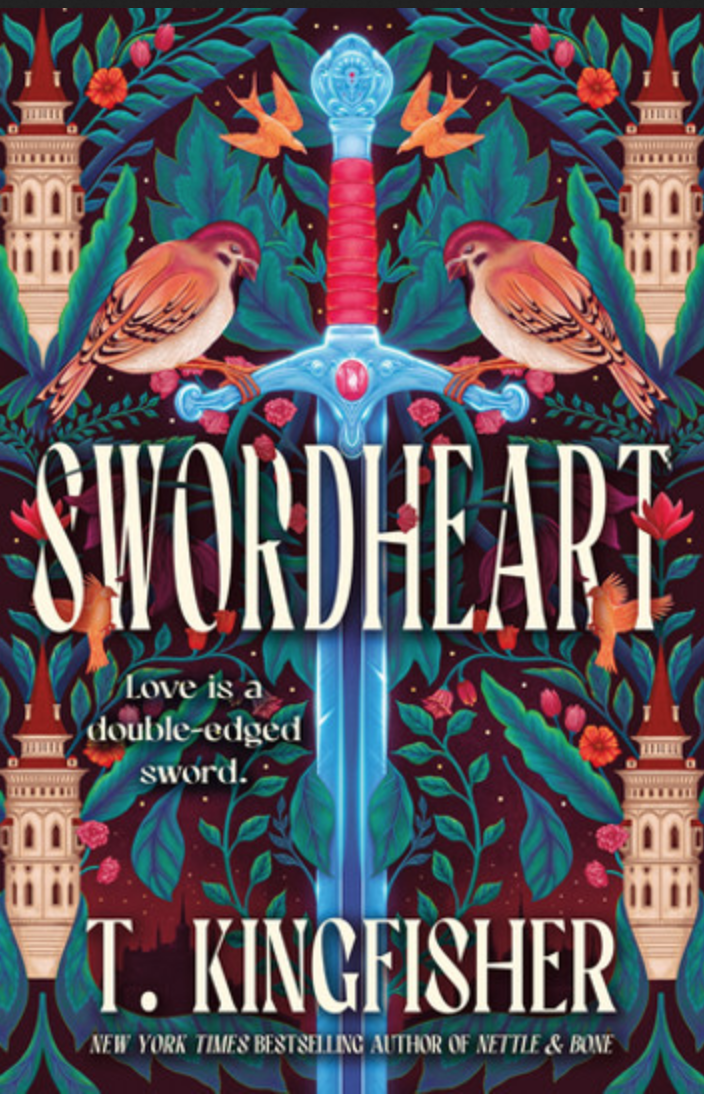
Swordheart by T. Kingfisher

Swordheart
by T. Kingfisher
2018

This is delightful and hilarious and a surprisingly quick read despite being fairly long. The story pulled me along as the plot goes on wild side-quests and the main character goes on wild tangents. I adore the main character, Halla, a housekeeper who had come into an unexpected inheritance that involves some really angry dis-inherited relatives that she has to avoid. She was happily living her life, more or less, and would have continued to do so if not for the need to avoid the awful relatives which has led to acquiring a magically haunted sword, running away from home, meeting bandits on the road and having to escape them, meeting police chasing the bandits on the road and having to escape them, and increasing number of hijinks that domino ever onwards.

The second main character, Sarkis, is the magically haunted sword and also a barbarian from a distant land, who is used to being used as a warrior by other warriors, and is now a companion for an escaping housekeeper and isn’t quite sure what to make of the situation. We slowly get more of his backstory over the course of the book, but (in my opinion) his true delight is to be the outside perspective on Halla and her situation. It’s hilarious!

I was also pleased to see confirmation in the afterward that this was going to be a trilogy. Since it was published in 2018, I assumed the other two would already be available. Alas! Book 2 of the trilogy is due to be published in August 2026. Hmph. I will wait.

I also realized about a quarter of the way in that Swordheart is set in the same universe as the author’s Saint of Steel series, of which I have read the first three of four:

Paladin’s Grace (Saint of Steel, Book 1)
2020

It’s actually only as I was putting together this review that I realize from the publication dates involved that these books were written after Swordheart, and thus these are in the Swordheart universe rather than vice versa. I had read a great essay about the social history of perfume and how closely perfumers were tied to alchemists and to poisoners and someone had recommend this book in the comments and it really is fabulous. Set in a generic historic fantasy setting with gods and demons and paladins, our main character Grace is a perfumer trying to make a living, but having to fight systemic sexism every step of the way. And also accusations of being a poisoner. Meanwhile, the main male character is a paladin’s who’s god has since died and thus his own status is deeply in question. I really enjoyed the deep dive into the perfuming business as well as the interesting theological perspective. After I read it, I immediately put a hold on the remaining books in the series:

Paladin’s Strength (Saint of Steel, Book 2)
2021

Paladin’s Grace had introduced four paladin’s who had survived the death of their god, and there was a book for each of them to figure out how to continue living when the religion they had devoted themselves to was so thoroughly disbanded. This is the second book and continues to do some amazing world-building on what religions there are and how they interact with one another and with their gods and I do love a deep dive into fantasy theology.

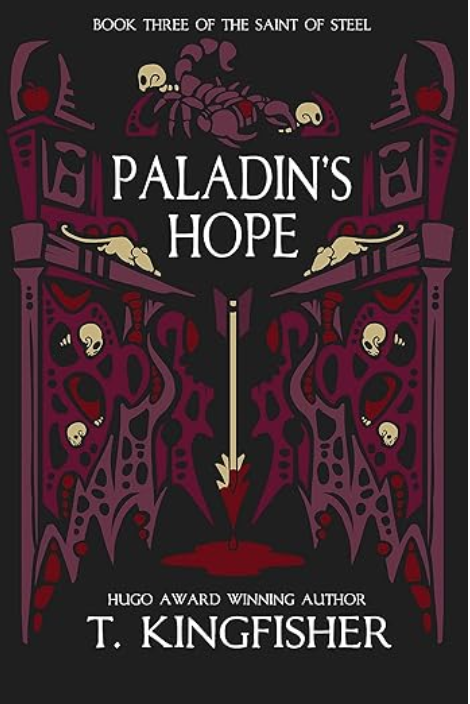
Paladin’s Hope (Saint of Steel, Book 3)
2021

This is the third book in the series and I probably should have taken a break rather than reading one book after another because I remember liking it well enough, but just loosing some steam in reading them back-to-back-to-back. I really love Kingfisher’s characters and world-building, but this book focused more on the overarching series plot of a massive villain in the background who must be routed out before they destroyed all of society or something like that and I just didn’t find it as interesting.

I’m pretty sure the reason I didn’t review these here before was because I’d been planning to review the whole series in one go but then didn’t get around to reading the final book: Paladin’s Faith. However, I’ve gone ahead and put a hold on that at my local library and plan to read it in preparation for Daggerbound being published in August 2026.

The Thursday Murder Club by Richard Osman

The Thursday Murder Club
by Richard Osman
2020

This book is absolutely brilliant! Not to be a complete stereotype but: it made me laugh and it made me cry and I loved it!

It’s set in a retirement community and Osman really makes brilliant and full use of that setting and the implications. It’s not just a fun setting (although it is that too); this is a location where every main person has at least seven decades of experience and time to have accumulated skills, friends, secrets, sorrows, and perspective. Every character is a Character! Current events can and do connect to mysteries that have long gone cold but the people involved are still around and making decisions based on those old situations.

The mystery is also full of twists and turns and so many red herrings and I fell for every single one of them. There were no obvious false starts; every path led somewhere, it just wasn’t necessarily to where I, or the investigating characters, thought they were going.

The murder mystery(ies) are obviously the main plot line, are fascinating, and keep the novel cohesive, but another amazing brilliance of this book is the way the investigation shows a whole set of different communities, how they interacted with each other and also how they changed through time. And the characters are all so wonderful and delightful! (With one glaring exception, but they get what’s coming to them! And were still written absolutely brilliantly.)

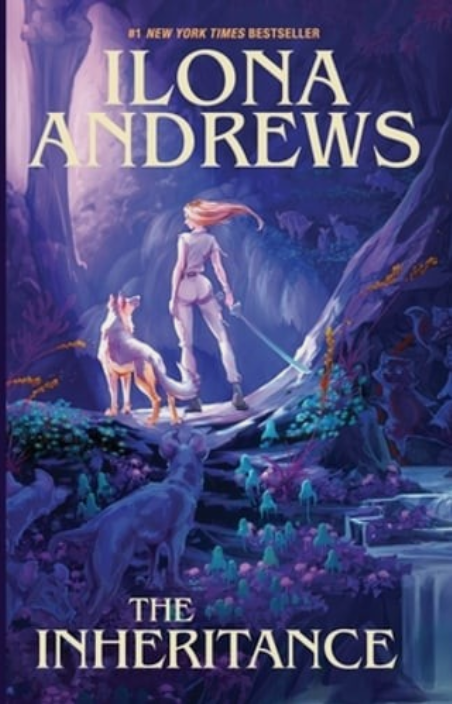
The Inheritance by Ilona Andrews

The Inheritance (Book 1 of The Breach Wars)
by Ilona Andrews
August 2025

This book is fun! It would a guilty pleasure if I were still at a point in my life where I was willing to feel guilty about a simple pleasure. This book is good because it makes me happy. The authors clearly had fun writing it and I had fun reading it, and if I were going to try to compare it to Great LiteratureTM, then there would be some issues, but that’s not the league it’s in, and in the league of fun pleasures, it’s a wild success!

I also get a kick out of knowing that these authors clearly read/watch the same Dungeon Adventure genre of Korean comics/anime that I do. The premise: a decade or so ago, mysterious portals starting appearing that would produce monsters that had to be fought and the portals closed; at the same time some people gained a whole variety of super powers perfectly suited to fighting the monsters; people formed guilds to organize the fighters, and thus plots involve both fighting monsters and political shenanigans with wealthy celebrity fighters and saving people. Probably the most well-known in this sub-genre is Solo Leveling, my favorites are: Traces of the Sun and Mission: Save the Hunter, but I’ve probably tried at least a dozen others. There are a lot of takes on this and now Ilona Andrews are writing their own and I am here for it!

This is also an interesting break from Ilona Andrew’s usual writing in that it is a pure adventure story with no romantic plot line. Not only that, but there is a character in the first chapter who is set up as the obvious love interest who winds up being a minor villain instead. I was delighted by the twist!

There is significant overlap in the world-building for this story with their Innkeeper Series, which I would normally link to a prior review of but am shocked to discover that I haven’t previously reviewed any of those stories. The Innkeeper Series is a great deal of fun, starting with:

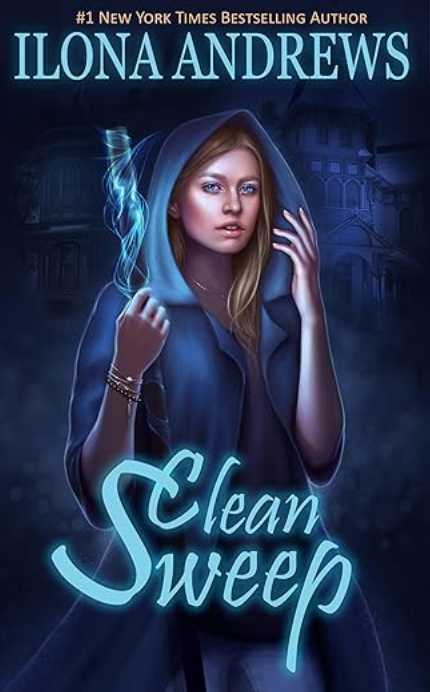
Clean Sweep (Innkeeper Chronicles Book 1)
2013

which introduces Dina Demille who runs a small inn in rural Texas that caters to a very specific clientele: interplanetary visitors who want absolutely safety for the duration of their stay and who, in turn, promise to not make it too obvious to an unaware general human population that Earth is very conveniently located as a waypoint for a lot of very strange travelers. Shenanigans regularly occur.

There’s enough specific overlap between the societies of aliens introduced in the Innkeeper series and some background discussed in The Inheritance that I would expect them to be set in the same universe but there’s also enough different in the standard Earth culture, that I’d expect them to be entirely different. I’m definitely curious about what will be revealed in book 2 of the Breach Wars series or book 7 of the Innkeeper series.

Also, Ilona Andrew’s next book, due in 2026, This Kingdom Will Not Kill Me, is their take on the transmigration sub-genre in which the main character of the story is a regular person in the real world who wakes up inside a story that they’ve been reading with full knowledge of the oncoming plot. Most well-known is probably Scum Villain’s Self-Saving System, my favorite is probably Cleric of Decay, and I have at least started half a dozen other stories on Manta or Webtoons with the same concept. I hope Ilona Andrews are having as much fun with these as I have been!


Testimony of Mute Things by Lois McMaster Bujold

Testimony of Mute Things
by Lois McMaster Bujold
October 2025

A new Penric & Desdemona novella! Yay! This is a delight and while it is the fifteenth story written, it is set chronologically as the fourth in the series. As much as I enjoy Penric as a family man who is famous/infamous and experienced, it is wonderful to see the younger Penric still getting himself established and being underestimated and relying more on older mentors to help him figure out his next steps. And, interestingly, in this we learn more about Ruchia, Desdemona’s prior host, and look at what it means to have friendships with people who are a combination of mortal and immortal. Ruchia is dead, but Desdemona continues on and thus so does Ruchia’s imprint.

Something that I find particularly delightful about this series as a whole is that the publisher listed on Amazon is Spectrum Literary Agency which is not, in fact, a publisher. Lois McMaster Bujold is retired. She was a wildly successful science fiction and fantasy author with 27 novels (at least), many short stories and compilations, and translations, and some years back she declared that she was retiring. And in her retirement, she apparently entertains herself by writing novellas and doing the equivalent of self-publishing but with the full support of a literary agency with full editorial work, and just no marketing at all. She doesn’t need to do any marketing, because fans such as myself are more than willing to just check back every so often to see if there’s anything new and be ecstatic when there is!

An Elderly Lady Is Up To No Good by Helene Tursten

An Elderly Lady is Up to No Good
by Helene Tursten
translated by Marlaine Delargy
2018

This is a delightful little book of five short stories starring Maud, the titular elderly lady who is up to no good. She’s like Miss Marple’s nemesis in a series of cozy noir mysteries.

In her late 80s, Maud has lived her whole life in the same apartment in Gothenburg, Sweden because there was a clause in the sales contract for the apartment building that her father’s children could live there rent-free for as long as they’d like. Maud has enjoyed living there her whole live (much to the dismay of the housing association board) and has saved up enough money to travels extensively in her retirement. She also saves by being casually criminal whenever the opportunity arises. As an apparently frail little old lady, Maud is generally treated well except when she’s condescended to. As an actually quite fit and capable little old lady, Maud sometimes decides that when she is not treated well, then that person should be removed from this life and goes about making that happen.

What’s particularly interesting about this book is that the narration isn’t on her side. She isn’t an anti-hero or a vigilante. She’s a killer who gets away with it by playing into society’s biases about little old ladies.

In addition to the stories themselves, I also got a kick out of the afterward/about-the-author section which described how Tursten is the author of two detective series, but she was getting burnt out writing about honest people supporting the law. Instead, she was inspired to write a story about someone on the opposite side of the law. And thus Maud came into being.

Someone You Can Build A Nest In by John Wiswell

Someone You Can Build A Nest In
by John Wiswell
2024

This book is very cute and very gross. It’s a remarkably sweet romance between a literal man-eating shapeshifting ooze and a member of a monster-hunting human family. The story is set in a hand-wavy historical fantasy setting mostly in and around one town but with knights and nobles and small kingdom politics happening in the background. In the opening scene, the monster Shesheshen wakes up from hibernation when a hunter enters her lair in order to kill her and harvest her heart. Instead, she kills and eats him, not necessarily in that order. Later on, she meets his sister Homily and falls in love. There are, as you can imagine, some problems that must be resolved for any relationship to work out.

The plot is tricksy with a couple of twists and turns that kept my anticipation high. It also side-stepped a lot of issues by having a main character who was so very inhuman that she, and thus to a certain extent the reader, just didn’t care about the ongoing body horror. It’s not horror to the point-of-view character so everything is fine!

I enjoyed the book and thought it was both fun and funny.

However, I do have some caveats:

One of them is oddly how sanitized the story is. Of course there is a lot of death and killing, but I was a bit taken aback by how few people Shesheshen actually winds up killing, despite her stream of conscious thought process that classifies people as highly edible. (Her thought process is hilarious!) Given that the author is upfront about monsters often being a metaphor for disability, it makes sense that he wrote a more misunderstood monster than a truly vicious one, but it also felt like he was trying to write both at the same time and couldn’t quite manage to reconcile the thought process with the actions so it doesn’t quite work out.

While the expectation of death and gore is obvious from the very beginning, there was a scene of extreme animal harm in the middle of the book that surprised me and broke the rhythm of the story for me. Spoiler: the animal does get rescued and does survive, but it’s an unpleasant scene that hit me harder than anything else in the book.

And finally, I think this book could have done better as a duology. The book is broken into eight parts and takes place over the course of a full year. The main plot and primary character arcs and half the year are covered in the first seven parts. The eighth section covers the other half of the year and a whole secondary character arc that gets skimmed through extremely quickly. It could have been a whole sequel, possibly from Homily’s perspective, but it felt very rushed as a too-long epilog to the main story.

But overall, this book was fun and enjoyable and a great build-up to Halloween.

Sworn Soldier series by T. Kingfisher

I have started the spooky season off right with a pair of eerie fantasy horror novellas that I highly recommend (although admittedly not to my 6-year-old cousin for whom I had to do some quick page flipping to find a section I could read aloud without introducing any concerning concepts.)

What Moves the Dead
by T. Kingfisher (aka Ursula Vernon)
2022

This first novella is a retelling of Edgar Allen Poe’s The Fall of the House of Usher, which I actually only read in full afterwards, although I vaguely knew the gist of it through literary osmosis. The original is a bit of a slog with a lot of words about not much happening. In contrast, Kingfisher goes above and beyond in developing some of those details into full plot arcs and monster development, creating a cozy horror story that is deeply unnerving, with a wonderfully unique character to be the narrator.

Also, not to get into spoilers beyond what the cover already shows, but I feel like this book could be part of a triptych with Entangle Life and Little Mushroom to really cover the full expanse of literary discourse on fungi.

The narrator is Alex Easton, a retired soldier from Ruritania, a fictional eastern European country that apparently has a long history of being a fictional setting, and has — in this story at least — a running gag about how miserable the country is in pretty much every way, but it’s still home. An interesting twist that reminds me of the Cleric Chih series is that in the Ruritanian language, soldiers have their own dedicated pronouns, and thus anyone who doesn’t like their born pronouns can swear in as a soldier and get a soldier’s pronouns as part of the deal along with PTSD and various other injuries.

Easton is fascinating enough, that it’s no wonder that the one-off story became a series, and thus the second book is:

What Feasts at Night
by T. Kingfisher (aka Ursula Vernon)
2024

This is another cozy horror novella set in the 1880s, that follows pretty soon after the prior one where Easton is hoping to recover from the events at the House of Usher, although would have preferred to do so in an apartment in Paris rather than in an old hunting lodge in Ruritania, but events conspire to bring Easton to rural Ruritania, an unexpected death, and some deeply superstitious villagers. The characters are a delightful as they try to get along, despite having distinctly different perspectives, and the world-building perfectly creepy in the way it presents the world as dangerously uncertain about what is happening and even more uncertain about what to do about whatever is happening.

Kingfisher does an excellent job of both taking advantage of and subverting some of the standard writing tropes to keep both the reader and the characters uncertain. The supernatural elements are introduced into the world building in a way that feels all too natural and realistic.

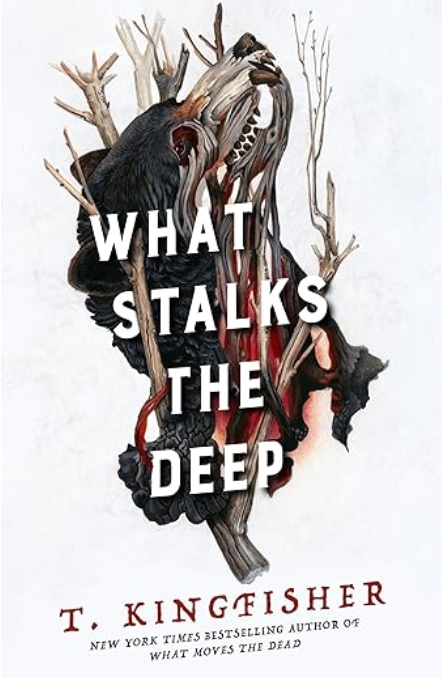
The third book in this series, What Stalks the Deep, just got published last week and I’m on the list for it as soon as it hits my library, but wanted to give it a call out here as well. It’s coming soon!

How Lucky

By Will Leitch

Man, it is my season for finally getting around to reading novels by authors that founded beloved defunct websites. Will Leitch co-founded Deadspin, and while he often wrote about sports, he was so clever and witty that I read all his posts anyway. Anyway, I was very much looking forward to reading a mystery by him, and it only took me four years!

I love an unlikely detective, and this was specifically recommended to fans of The Curious Incident of a Dog in the Night-Time, which was one of my first of the genre. In this novel, protagonist Daniel suffers from spinal muscular atrophy (SMA, described as similar to infant ALS), with a predicted lifespan of 21 years tops, though he is beating the odds in his early 20s and living independently though with round-the-clock assistance. He can’t speak verbally or move without his wheelchair, but still participates in more of life than many of us, which becomes a clear theme of the novel.

While sitting on his porch each morning, he regularly sees a young college student walking to class, and when one morning she gets in a car and then disappears, he appears to be the only witness. He is promptly dismissed by the police in the face of his disability, and his two closest friends jump in to help him continue to get his statement heard. This brings him to the attention of the kidnapper, which really ramps up the suspense.

The crime itself is fairly straight-forward, and is secondary to showcasing a number of socially-marginalized characters and how much they contribute to society as a whole. The end takes a startling swing toward high action, which felt a little jarring, but I’m not sure that wasn’t intentional as well. If at times the theme felt a little blunt, it is definitely a message that is needed more and more today: that everyone can contribute to our society in large and small ways, and that you get out of life what you put into it.

Wicked River by Lee Sandlin

Wicked River: The Mississippi When It Last Ran Wild
written by Lee Sandlin
read by Jeff McCarthy
2010

This is a wild ride. It’s a non-fiction black-comedy history book. It’s a collection of crazy stories about unpleasant people living awful lives and they are hilarious. Except that sometimes it gets grim enough that it overloads my sense of humor and just gets super depressing even in its ridiculousness. But it really is fascinating and an excellent look at American history and social movements. It’s kind of amazing how many patterns of events and types of people I recognize as being present in today’s world.

This is by the same author who wrote Storm Kings , which I enjoyed so much that I immediately checked out their other audiobook. Storm Kings is the better book, with a more cohesive storyline, while Wicked River is more a scattershot of stories and events, but it’s still very good and very impactful. Each chapter looks at a different aspect of life along the Mississippi, mostly pre-Civil War, skipping around in time and location, with a lot of stories about the lives of specific individuals and events. It gets into the nitty gritty of life and death and trade, the horrors of recurring epidemics, the cognitive dissonance of slave-holding societies, the lawlessness of the various settler justice systems, intermittent excesses of debauchery, celebrations of casual violence, ubiquitous drunkenness, and a vast cast of characters from all walks of life.

The book concludes with the Mississippi River Commission being established immediately post-Civil War and essentially taming the river, at the same time that railroads were replacing boats for transport. In the end, there’s a sense of nostalgia for the wildness that has been lost, because the river cultures were amazing and easily romanticized, even though, or perhaps especially because, they sound truly awful to have lived through.