Spinning Silver by Naomi Novik

spinningsilverSpinning Silver
by Naomi Novik
2018

I spent an afternoon and two evenings gasping “oh no!” in between bouts of giggling, and stayed up way too late both nights and had a very difficult time putting it down for a night and a work-day in the middle. I love Novik’s writing and her characters are a delight, and she keeps her plotting fast and dense, and just so much happened and I loved it all!

The story is clearly inspired by Rumpelstiltskin, but makes a lot of changes, and really focuses around the theme of trading value for value, as it tells the interlinked stories of a young jewish money lender, a poor servant girl, the daughter of a duke, a tsar, and the king of the winter elves.

The world-building is also amazing as Novik introduces a whole magical realm in parallel to a more historical Russia, and then leaves both the reader and the main characters to piece together the rules of magic and society that permeate that alternate world.

It also made me realize that while, like any fairytale, it’s something of a morality tale, the morals quite difference from the standard. Many fairytales have the moral that if you remain kind even in abusive situations, then you’ll eventually get out and go on to have a good life. Which is an important lesson and is touched on, but isn’t the main one here. And this one is equally valuable: be ruthless in your demands for fair treatment and harden your heart against those who would emotionally manipulate you to avoid the consequences of their actions.

So, to sum up, this was amazing and I highly recommend it. It also kind of reminded me of not only Novik’s previous book Uprooted, but also Bujold’s Sharking Knife series, and Mckinley’s Sunshine, all of which I also really liked and recommend.


Less

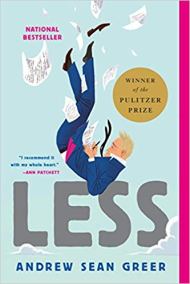
41SdL441MFL._SX331_BO1,204,203,200_A number of years ago I made a decision: I was not going to spend any more of my wild and precious life reading books about how hard it is to be an old white man. Overall I’ve been pleased with this choice and think I am a happier person for spending my time reading YA and mysteries rather than Tom Wolfe or Jonathan Franzen or whatever else the New Yorker wants me to care about. But every now and then one of these “I am a white man with broken relationships and concerns about my legacy” stories slips through. Often this just reinforces my original decision (I am still mad about the time I’ve spent on Philip Roth) but on those rare occasions when I am pleasantly surprised, I want to give credit where it’s due. So let’s talk about Less by Andrew Sean Greer.

Arthur Less is about to turn 50, his latest novel has been rejected by his publisher, and he just got an invitation to his younger not-quite-a-boyfriend’s wedding to someone else. He clearly cannot possibly attend, so he patches together enough teaching/residency/vacation offers to make up a months-long trip around the world. The book follows him from his California home to Mexico, Paris, Morocco, India, and assorted other locations as he tries to overcome both small daily indignities and his looming worries that his life has amounted to nothing. This sounds like it would fall squarely in my hated “old white man” category, but it somehow covers that ground while also being quite charming and feeling relatable to those outside its main character’s demographic. Arthur has a sense of the absurd that gives him a perspective on what’s happening to/around him, and the author is aware enough to actually address the old white man issue within the plot in a quite clever way. It’s a brief book and quick read, but it’s stuck with me for days, leaving me thinking about how we perceive ourselves vs. how others do, and especially about how we are seen by those who love us.

A couple of final notes: first, I am definitely not breaking any news here, since Less won the 2018 Pulitzer Prize for Fiction. As is typical for me, I’m just chiming in late on something already widely recognized as great. Second, as I was looking at various reviews and comments on this book, I saw a number of people refer to this as a comedic novel. This surprised me, since I didn’t think it was funny at all. I do tend to be sensitive to stories about people embarrassing themselves and that does make up a big part of this story–if other people find that funny, I can only conclude that they must be monsters. Maybe some reviewers feel like they have to call it comedic simply because it doesn’t feature constant addiction and death with a backdrop of genocide? I think it’s more accurate to say that this is a bittersweet story that at times made me very sad, but ultimately surprised me with how full of hope and supportive of happiness it turned out to be.

Kinsey’s Three-ish Word Review:  Delicate and surprisingly emotional

You might also like:  The Unlikely Pilgrimage of Harold Fry by Rachel Joyce or Major Pettigrew’s Last Stand by Helen Simonson. This was actually a tough one for me and I really struggled to think of books that shared both the general sort of story issues but also had the same sort of sweet and sad feeling. I would love to hear anyone else’s thoughts on this one–Less surprised me so much that I am still trying to get my head around it.

Dear Mrs. Bird

51-Gwr6g5jL._SX329_BO1,204,203,200_

I am an absolute sucker for books about the Blitz. Something about the combination of London, historical fiction, the drama of WWII–I will read just about anything the features the word “Blitz” in the blurb. And I’m clearly not the only person who feels this way, since these books continue to get published. The new Dear Mrs. Bird by A.J. Pearce fits nicely into my favorite sub-category of this genre–women in the Blitz–while adding some layers I haven’t often seen.

Emmie is a young woman living in London in the early days of WWII. She works part-time as a fire dispatcher, but dreams of being a reporter and is thrilled to get a job at a magazine, sure she is on her way to be an intrepid war correspondent. However, it turns out that she is mostly doing typing at an old-fashioned ladies’ magazine whose editor won’t answer any sort of reader questions that deal with any “Unpleasantness.” Of course, there’s a war on and life is complicated, so Emmie ends up reading lots of letters from readers with serious problems, and can’t bear to think that they won’t get any response. She she starts responding and well, hijinks ensue.

Now, the basic plot here requires that Emmie spends a lot of time worried about being caught and worrying about what will happen when she does, and that is one of my least favorite things to read–I find that completely agonizing and by the end of the book was almost skimming scenes in her office for fear of what was going to happen. What saved the book for me were Emmie’s experiences outside work, where she and her best friend attempt to live their 20-something lives in the middle of a war. More than most Blitz books I’ve read, Dear Mrs. Bird gets across the feeling that yes, terrible things were happening, but that for those people living in the middle of the bombing, it became normalized. Emmie and her friends have to view the nightly bombings and tragedies as just another irritation to deal with, like bad traffic, in order to live their lives. And when you’re twenty-two, something like getting dumped is likely to feel like a much bigger deal than the war. And yet, at the same time, the book takes on the issue of how the internal and external pressure to keep the famous British “stiff upper lip” was hard on people, and how sometimes even the most patriotic Londoner needed to acknowledge the toll the constant bombing took on them.

There’s also just a bit of romance, although I couldn’t help but feel that Emmie might have landed in the wrong place there–I’m holding out hope that there might be a sequel featuring my favorite character, Emmie’s long-suffering boss at the magazine. He’s in his forties and spends most of the book rolling his eyes at Emmie’s adventures and the rest of the world, and I found him completely charming. And I’m sure that has nothing to do with the fact that this is the role I would most likely be playing in this story.

Kinsey’s Three-ish Word Review:  The Guernsey Literary and Potato Peel Pie Society meets Bridget Jones.

You might also like:  Well, obviously, The Guernsey Literary and Potato Peel Pie Society and the Bridget Jones books. But also a book I rave about a lot called The Lost Art of Keeping Secrets or another adorable one called Miss Buncle’s Book. And if you’re looking for a little period escapism with a lot of charming young British ladies falling in love, Mary Stewart basically perfected post-war romantic suspense and I read through all her work as a teenager–my favorites of hers were always Touch Not the Cat and Nine Coaches Waiting.

And if, like me, you’d just like to read some more books about the Blitz, Connie Willis’s Blackout and All Clear are epics that also involve time travel. I also love Life After Life by Kate Atkinson, The Night Watch by Sarah Waters, and The Distant Hours by Kate Morton. And in other media, check out “The Stolen Child” and “The Doctor Dances” episodes of Doctor Who and the movie Hope and Glory.

The Sun is Also a Star

Yoon_9780553496680_jkt_all_r1.inddWay back in early 2016 Anna wrote a review of a book called Everything Everything by Nicola Yoon, and almost surprised herself by really enjoying the sweet YA romance/coming-of-age story. I liked that book as well, and I’m here to tell you that Yoon’s follow-up The Sun is Also a Star is even better.

I had looked at the book several times but was always a little put off by the plot summary–two teenagers meet one day in New York and feel an instant connection, but she is about to be deported and what kind of future can they have? In our current political climate even thinking about immigration issues makes me feel sort of sick, plus I tend to be a cynical old lady about teenage love in first sight stories. But when I ended up desperate on a cross-country flight and decided to give this a try, I ended up reading the whole thing in one sitting and loving it. The characters both feel very complete, their relationship feels organic, and Yoon does a great job setting the scene so that it feels like you’re out there walking around with Natasha and Daniel on the New York City streets.

The book also features this interesting little element where every now and then you get a flash forward or a flash sideways, I guess you’d say, to what a supporting character has going on in their lives or what will happen to them in the future. It’s a lovely effect that makes the story feel more expansive and universal than it would otherwise.

This is a quick read, and would be great for the beach or a plane or just when you need to feel a little bit better about the world.

Kinsey’s Three Word Review: Enchanting, challenging romance

You might also like:  Any number of other fabulous YA romance/family stories out there including Nick & Norah’s Infinite Playlist (always a classic!), The Gentleman’s Guide to Vice and Virtue (which Anna mentioned back in March), Far From the Tree (this one will make you cry), and Simon vs. the Homo Sapiens Agenda.  And if you haven’t already seen Love, Simon, the movie based on that last one, I cannot recommend it highly enough–it was completely charming and featured great music by the Bleachers. It is going to be one of those movies like Easy A that I will be delighted to stumble upon on cable on a rainy Saturday afternoon and will be able to watch an infinite number of times.

The Truth According to Us

By Annie Burrows

Truth_According_to_UsI loved The Guernsey Literary and Potato Peel Pie Society so much! It is the sweetest, funniest story you will ever read about an isolated community trying to recover from Nazi occupation in WWII.

When I saw that one of the authors had written a second book, also set in a small community and character-focused, I was immediately engaged. And it is super engaging! It just isn’t quite so sweet and funny. (I may have cried multiple times when reading it late at night.)

It is significantly longer, with a much larger cast of characters, just about all of whom I grew to care about, even as they got tangled into conflicts that cannot end satisfactorily for them all. Ostensibly it is about a small town trying to recover from World War I, the Great Depression, the downfall of the factory that employed most of the citizens, and the anti-union movement.

The novel cycles around the family that used to own the factory, but is now falling to ruin along with the rest of the town. Much of the story is told through one of the very young daughters in the family, trying to make sense of it, and in that narrative, it is a bit of a coming-of-age story. From the older generation, it is more of a story of laying ghosts to rest and moving on. A significant chunk, though, is also told from the outside perspective of a wealthy young woman sent to write a pamphlet about the town, as part of the Federal Writers Project, who almost immediately blunders through the various small-town quarrels due to ignorance, and it is a coming-of-age story for her, too, though a more serious one.

It is just a huge mess of family loyalty and betrayal and forgiveness, and the different types of relationships we have with the different people in our lives, and I’m just in awe that the author was able to fit it all into one (long) book!

The Sisters Brothers

By Patrick deWitt

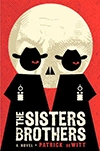
Sisters_BrothersI really like Western movies, but I’m not sure I’ve ever read a book in the genre, actually. I love to see the long shots of empty vistas and close-ups of horses, but am not quite so keen to read about them. I have a suspicion that The Sisters Brothers is not your normal Western, but I absolutely loved it!

It was the title that caught my attention, of course, and I checked it out, just to figure out how to parse it (it is two brothers with the last name Sisters). The Sisters Brothers are infamous gunslingers hired by a mob boss to track down someone who ran with his money. Along the way, they run into various misadventures, and discover that things are not exactly as they’ve been told.

It’s not for everyone, I’d say; the writing was similar to Faulkner’s, I thought, with a plainness that highlights the sort of general absurdity of life, but more plot-driven than Faulkner usually is, which is probably why it is a genre novel, not capital-L Literature. It reminded me a lot of the Fargo television show, actually: a fair amount of extreme violence, but balanced with a quirky humor and some unexpected heart.

Speaking of television shows…

Pocketful of Bones

By Julie Frayn

Pocketful_of_BonesPocketful of Bones is straight-up Bates Motel! Within the first chapter or two, a young prostitute accidentally gets pregnant from a john; when he discovers the baby and threatens to take the child from her, she kills him and buries him the backyard She continues to support herself and her son through sex work, which complicates the son’s adolescent sexual awakening (to put it nicely).
Per the description on the back of the book, eventually things come to a head, when the mom has to rebuff the son’s advances, and he leaves, only returning to the house (and yard) much later. The first half constantly increases the sense anxiety, as the bodies pile up, but tempers it with moments of humor and pathos. As it neared the middle, though, I was sort of gritting my teeth, trying to get past the impending incest-adjacent scene, hoping for a respite from the claustrophobia of the house and yard.

Unfortunately, the damage has been done, and the second half just doubles-down, with two different narratives of disturbed people with the potential to wreck havoc on everyone around them. The anxiety became unsustainable, and I found it increasingly difficult to finish. As an aside: this book is not kind to men in general; almost all victims are men, and while it is debatable whether they deserve to be killed and buried in someone’s backyard, I certainly understood why someone might be tempted to do just that.

The Power and Exit West

The end of 2017 and beginning of 2018 have been rough, y’all. Not good at all. And since comfort reading is one of my big coping strategies, I have spent the past few months reading mostly romance novels, Lord Peter Wimsey mysteries (still working my way through all those, Murder Must Advertise was loads of fun), and the occasional true crime story. But recently two well-reviewed literary books snuck in that both tell stories about a world much like our with just the slightest fantastical shift. They were also both beautifully written and slightly terrifying, which might be a good fit for all our feelings in this deepest, darkest winter?

The Power is also a good fit for our current #MeToo culture, since it is based on the idea that one day, women all over the world suddenly begin to manifest the ability to shock/attack people with electricity. If women have no reason to fear men physically, what could happen? In this story, piece by piece, place by place, this shift begins to upend society. The narration moves between characters, including women who are able to exercise this power in their lives, and men who begin to understand what it is like to live in fear. The premise is excellent, but what makes this book so genius is the subtlety with which the author approaches all the possible different ways that this change in the power balance affects politics, sex, school kids, the workplace, and every other bit of society.  The Power has gotten all sorts of accolades in the U.K., where it originally came out, which was honestly surprising to me because it feels so subversive I can’t believe it’s had such mainstream popularity. Also, the framing conceit of the book–letters between scholars talking about a draft manuscript that makes up the bulk of the book–is just absolutely genius and may raise some painful memories for any women who have spent much time with men in the workplace.

Exit West has also received rapturous press and was on a number of Best of 2017 lists, and it was all deserved. This story revolves around a couple in an unnamed Middle Eastern country who are falling in love and starting a tentative relationship right as their country is beginning to destabilize and eventually descend into war. (The parallels with Syria feel unavoidable.) At the same time, all around the world, an unexplained phenomenon is occurring where suddenly a normal door can begin to open to some random location in another part of the world. Now that people can move around the world without crossing borders, countries have lost control over immigration and the world is in upheaval. The book is clearly making statements about refugees and political states in the modern world, but for me the more haunting part of the story was the descriptions of the small, incremental changes in a society that can lead to one day waking up in a war zone. While the plot is heavy, the writing here is very light and poetic and the book is not overly long, so it doesn’t feel like a burden to read.

Neither of these is what I would call a comfort book, and neither of them made me feel particularly more hopeful about the future. But if you’re looking to be captivated by a story and slightly horrified about what the world could come to, one of these might be for you.

Strange Practice

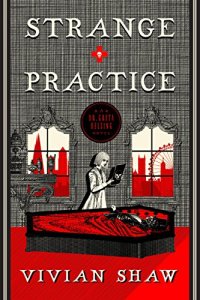
61KZB80mVgLAnyone who spends ten minutes reading this blog would be able to tell pretty quickly that Strange Practice was going to be right up my alley. This initial entry in a series of magical mystery stories by Vivian Shaw follows Greta Helsing (yes, yes, her family dropped the van some time ago), a London physician dedicated to treating the city’s magical inhabitants. Mummies with feet problems? Vampire anemia? Ghouls who need psychiatric assistance? She herself may be human, but she has a calling to provide health care for mystical creatures likely to have issues accessing the NHS. There is an actual mystery here (crazy monks are murdering people, there’s a sort of nameless power from the dawn of time, etc.) but the real draw of this book is the assortment of characters that end up surrounding Greta. Some of the magical creatures she knows fit better into the modern world than others, but they all have to work together to save London and protect the secrets of its less-well known inhabitants.

This is Shaw’s first novel and the writing isn’t always effortless–there were definitely times when it felt like she was trying too hard to be clever and was getting in her own way. And I found that the point of view switched around too much for me to ever really feel settled into the story. Greta is nominally the main character and she is definitely the reader’s entry point into this world, but other characters (vampires, humans, demons, the villains of the story) also get so many chapters told from their perspectives that the ratio felt off to me. I’m hopeful that Shaw was trying to cram as many cool ideas and cool characters as she could into this first book, but that as she goes along she’ll start letting things breathe a little more.

But despite those quibbles about some elements of execution, I really enjoyed the book. The overall world created here was fascinating and very specific. I was left with the impression that this version of London has many more creatures with complex lives ad backstories that need Greta’s help, and that the group of vampires, demons, and humans that circles around her is well on the way to be becoming an odd little family. My Kindle version of this book included a teaser for the next one in the series, so it looks like I’ll have the chance to see what Greta and her team are up to next.

Kinsey’s Three Word Review: Entertaining urban fantasy

You might also like: Anything by Patricia Briggs or Ilona Andrews–I think the official Biblio-therapy position is that we are strongly in favor of those series. But Ben Aaronovitch’s supernatural mysteries, also set in London, would be good companions to this.

The Essex Serpent

61U76uN5PHLI was in London earlier this summer and the book of the moment, the book piled up in store displays and advertised in posters around town, was The Essex Serpent by Sarah Perry. I was worried that this would be another of those Kinsey Tells You About an Already Wildly Popular thing entries, but I haven’t heard much about The Essex Serpent here in the U.S., which is a shame, because it’s really quite a good book.

I suppose you could call this a neo-Victorian novel–it’s set in England in late 1800s, and focuses on a woman named Cora. Her husband has just died–not a terribly sad occasion for her–and being a widow has allowed her the freedom to start walking the marshes and looking fossils and getting muddy and generally ignoring nice society. In the course of all this she meets the vicar of a small town on the English coast and they strike up a friendship, which is at least partly based on Cora’s interest in rumors of a sea monster (the Essex Serpent) that has been plaguing the town. What will this relationship bring? Will they ever find the serpent?

This description makes it sound like plot-driven, exciting tale! But it’s not, really–it’s not a romance, and it’s not a supernatural mystery/adventure. The basic plot description doesn’t account for how the story’s point of view moves from character to character, not only Cora and the vicar, but also their children, the vicar’s wife, and a doctor friend of Cora’s, among others. The book is really a character study, illuminating the inner lives of a variety of people that, for various reasons (gender, class, intelligence), are marginalized or limited within society.  Plus, the tiny villages and marshes of English seaside basically serve as one of the characters, giving the whole book a sort of damp, salty feeling to it. All this makes it seem odd, honestly that this is such a book of the moment in England–it’s about as far from The Girl on the Train as you could get, but it’s a lovely book and I’m glad it’s gotten so much attention. The cover is also just gorgeous.

Kinsey’s Three Word Review: Atmospheric Victorian tale

You might also like: The Historian or The Thirteenth Tale; or Kate Morton’s books, including The House at Riverton; or Sarah Waters’s books, especially Fingersmith.

Books for the New America

So, 2016, huh? It’s been quite a year. I feel like I’ve been just barely hanging on since the election. But while I needed some recovery time to mourn and come to terms with what had happened, it’s time to look up and move forward. (Although holidays cards have been a challenge, since I couldn’t find any that said “Merry Christmas, but I’m still really mad.” I should have waited to make my card purchase, since the genius Swistle just got on zazzle.com and made a bunch of cards with pretty lights and trees on the front that say things like, “Wishing you whatever scraps of peace and joy you can find this holiday season.”) Since this site is all about dealing with everything thought books, I thought I would offer two different kinds of book options for anyone else out there who might be desperately looking for their scraps of peace and joy.

Comfort Books

I spent a lot of the last month reading things that allowed me to slide into a calmer, more peaceful world. The best of them included:

  • L.M. Montgomery stand-alone books. As much as I love Anne of Green Gables, once I start rereading that I have to go through the whole series, which is a big time commitment. Plus, Rilla of Ingleside, the last book in the series, has too much heart-breaking World War I plot for me to handle right now. But some of Montgomery’s one-off books are completely charming. My favorites are Jane of Lantern Hill, about a little girl who gets to set up house with her father on Prince Edward Island, and the much more grown-up romance The Blue Castle.
  • Dorothy Sayers mystery novels. How did I miss Dorothy Sayers all my life? Somehow how I did, which is actually great, because now I have a whole series of arch British 20th century mysteries to catch up on. Whose Body? is the first in her series featuring Lord Peter Wimsey, but Gaudy Night has been my favorite so far.
  • Books about makeup. The actual thing that has been soothing me to sleep each night? Pretty Iconic by Sali Hughes, her latest detailed hardback book about classic makeup/hair care/beauty items. Just page after page of gorgeous photos of a lipstick or a shampoo bottle, next to a little essay about each item. Even opening the book lowers my blood pressure.

I have also heard from friends that vampire books and Connie Willis comedies have been working for them, so this is clearly a category that expands to fit the needs of the individual.

Discomfort Books

But makeup and historical mysteries will only get us so far, and we also need to be prepared for the fight ahead. Since I assume that everyone has already been taking notes from The Handmaid’s Tale, here are a few other books to keep you sharp.

  • The Small Change series by Jo Walton. These are also British mystery novels, but they are worlds away from Dorothy Sayers. In this trilogy, which starts with Farthing, English elites overthrew Churchill and ceded Europe to Hitler, and fascism and intolerance are creeping over the island. While each book features a mystery and a principled Scotland Yard investigator, the power of the books in the chilling way they show what happens to regular people trying to live regular lives as their country slowly crushes them.
  • Anything by Octavia Butler. The Parable of the Sower is a completely amazing book that terrified me to the point where I can never read it again. As I recall, it was about a teenage girl living with her family in a California where law and order and government and society and general had broken down. Also, I think she was starting a new religion? But any Octavia Butler is going to provide a swift reminder about the oppression some Americans have experienced from the moment this country began and kind of how terrible humans can be, in general.
  • Secondhand Time: The Last of the Soviets by Svetlana Alexievich. The author of this, I’m going to call it a literary oral history, won the Nobel prize in literature in 2015. This book is an amazing, enormous telling of the crumbling of the Soviet Union and the emergence of today’s Russia through a zillion individual stories. What came through most clearly to me was how many of the people she spoke with felt like not only their country, but the people that lived within it, became unrecognizable in the blink of an eye.