The end of 2017 and beginning of 2018 have been rough, y’all. Not good at all. And since comfort reading is one of my big coping strategies, I have spent the past few months reading mostly romance novels, Lord Peter Wimsey mysteries (still working my way through all those, Murder Must Advertise was loads of fun), and the occasional true crime story. But recently two well-reviewed literary books snuck in that both tell stories about a world much like our with just the slightest fantastical shift. They were also both beautifully written and slightly terrifying, which might be a good fit for all our feelings in this deepest, darkest winter?
The Power is also a good fit for our current #MeToo culture, since it is based on the idea that one day, women all over the world suddenly begin to manifest the ability to shock/attack people with electricity. If women have no reason to fear men physically, what could happen? In this story, piece by piece, place by place, this shift begins to upend society. The narration moves between characters, including women who are able to exercise this power in their lives, and men who begin to understand what it is like to live in fear. The premise is excellent, but what makes this book so genius is the subtlety with which the author approaches all the possible different ways that this change in the power balance affects politics, sex, school kids, the workplace, and every other bit of society. The Power has gotten all sorts of accolades in the U.K., where it originally came out, which was honestly surprising to me because it feels so subversive I can’t believe it’s had such mainstream popularity. Also, the framing conceit of the book–letters between scholars talking about a draft manuscript that makes up the bulk of the book–is just absolutely genius and may raise some painful memories for any women who have spent much time with men in the workplace.
Exit West has also received rapturous press and was on a number of Best of 2017 lists, and it was all deserved. This story revolves around a couple in an unnamed Middle Eastern country who are falling in love and starting a tentative relationship right as their country is beginning to destabilize and eventually descend into war. (The parallels with Syria feel unavoidable.) At the same time, all around the world, an unexplained phenomenon is occurring where suddenly a normal door can begin to open to some random location in another part of the world. Now that people can move around the world without crossing borders, countries have lost control over immigration and the world is in upheaval. The book is clearly making statements about refugees and political states in the modern world, but for me the more haunting part of the story was the descriptions of the small, incremental changes in a society that can lead to one day waking up in a war zone. While the plot is heavy, the writing here is very light and poetic and the book is not overly long, so it doesn’t feel like a burden to read.
Neither of these is what I would call a comfort book, and neither of them made me feel particularly more hopeful about the future. But if you’re looking to be captivated by a story and slightly horrified about what the world could come to, one of these might be for you.
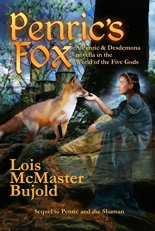 Penric’s Fox (story #5) is essentially a sequel to Penric and the Shaman (story #3). Although it’s set some years later, it’s the same cast of characters and is set decidedly before the events of story #4. One of the things I really enjoy about Bujold is that she plays around with her genres even in the same series and thus this is a detective story, with a discovered corpse and police investigation and all. It was also kind of heart-wrenching and made me tear up a bit but just so very good.
 Prisoner of Limnos (story #6) is a direct sequel to Mira’s Last Dance (story #4) with barely a few weeks having passed for the characters between the two books and dealing directly with some of the uncertainty left at the end of #4. I was also all geared up for some raciness to it, too, but Anna can be reassured that events stay relatively chaste (even as my mind is in the gutter giving me occasional wink-wink nudge-nudges.) This is something of a heist storyline and also introduces a whole swathe of new secondary characters that seem very interesting and open up all sorts of possibilities for future story lines. While this one doesn’t end in quite the almost-cliff-hanger (emotionally at least) of #4, it does leave me just craving more. I just really need to know more about those new characters and their stories and what they do next. I’m keeping my fingers crossed that Bujold continues to write these stories at the amazing pace she’s had so far.
 Anyone who spends ten minutes reading this blog would be able to tell pretty quickly that
 Rebecca is a much bigger fan of Lois McMaster Bujold than I am, and she already raved about the first three entries in this series
 The most difficult books to review are those that aren’t really good or really bad – just all those mediocre books.
 Twisted, on the other hand, is not silly or mediocre — it is confusingly both very good and very bad, so I was never sure if I was enjoying it or not (up until the big climax, when I was most certainly not). It is a retelling of the Rumpelstiltskin story, which is a big part of the problem, since that story is awful. The central woman in the original story has almost no personal agency, and is tossed from man to man: her father to the king, to Rumpelstiltskin, and then back to the king, who becomes her husband.
 If I told you that a book was like a YA Game of Thrones crossed with Ocean’s Eleven, would I even need to say anything else?
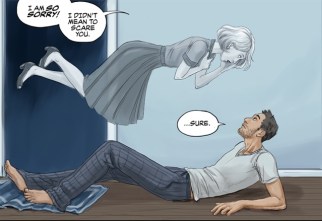 Wilde Life
 Power Ballad
 Oh, man, this book is like if author Richard Kadrey took everything I love in fiction and put it all in one book – dark and moody hero detective in a noir-ish mystery, with violent action and Judeo-Christian mythology thrown in. (Have I mentioned before my love for schlocky Judeo-Christian horror movies, like “The Omen” and “The Prophesy”?
 I wanted to keep my
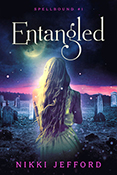 Entangled had the reverse affect: I was groaning right off the bat, but once I’d settled into hating just about every character, protagonist and antagonist alike, I was drawn into the plot itself and looked forward to seeing where it went. The absurd plot was what originally drew me to the novel (well, that and being free): teenage witch Graylee dies mysteriously in her sleep, and even more mysteriously, wakes up several weeks later in the body of her twin sister. Only handsome, brooding warlock Raj, who had been lurking around Graylee recently, suspects the switch!

