By Agatha Christie
 We finally bit the bullet and got Amazon Prime in order to watch “Good Omens,” and since then I’ve also been diving into all the Agatha Christie I’d been pining after. I’d previously reviewed the novel Crooked House, and the movie lacks a fair amount of the charm of the novel, replacing the more familial relationships with additional drama. However, the casting is truly amazing: Glenn Close, Gillian Anderson, and Christina Hendricks, all playing extreme personalities rubbing against each other in the titular crooked house. So, while I preferred the novel overall, the movie is well worth a watch.
After Crooked House, Amazon recommended “Ordeal by Innocence,” a three-part miniseries based on another stand-alone Agatha Christie novel I wasn’t familiar with. Well, I absolutely loved it! An authoritative matriarch has adopted five children from a variety of troubled backgrounds and raised them with dictatorial love. At the time of the book and miniseries’ start, she has been murdered 18 months ago, and the youngest son, with a history of delinquency, found guilty from overwhelming evidence. The son had insisted on his innocence until he died in prison, providing an alibi that couldn’t be confirmed.
The first character we meet is the man who could have proven the alibi, but has been incapacitated for the past 18 months, and is only coming forward now. This of course opens a whole can of worms, as the family had finally settled into some semblance of acceptance of the mother’s death and the son’s culpability, and now suspicion is everywhere again.
The miniseries takes some of the subtext from the book and makes it straight up text, leading to some deliciously shocking reveals along the way. Controversially, the series actually changes the ending, going with a different perpetrator and motive than the book. The revised ending maintains the spirit of the book, and gives a clear nod to a pivotal relationship in the original.
The book is much quieter, taking a more philosophical approach toward what it means to be innocent of a crime if no one can prove it (thus the title). Wikipedia cited that it was not one of Christie’s more popular novels, with reviewers wary of the psychological delving into motives and character. I wouldn’t normally have minded this, but 1950s psychology is rough. The women are portrayed especially uncharitably, which I would guess inspired the changed ending.
As Rebecca pointed out, the two books complement each other fairly well: both large, wealthy families consisting of conflicting strong personalities; in one, the troubled backgrounds of the family members lead naturally to conflict; in the other, the family seems to turn to conflict themselves just for the entertainment. For each, I preferred the version that included the most warmth in characters, and for one that was the novel and for the other the updated series.
As an aside, we also tried to watch “The ABC Murders” with John Malkovich as an aging and depressed Hercule Poirot, and it was such a depressing grind that we couldn’t get past the first episode.
 HOWEVER, have I got a podcast recommendation for you! It is fascinating, intense, and disturbing, and I have to take it a little at a time. “
 I can’t remember what social media recommended this, but a while ago, someone
  When I was relating this to my mom as perhaps the best literary take-down I’d ever read, she reminded me of Mark Twain’s savaging of Fenimore Cooper, which if you haven’t read, you need to go do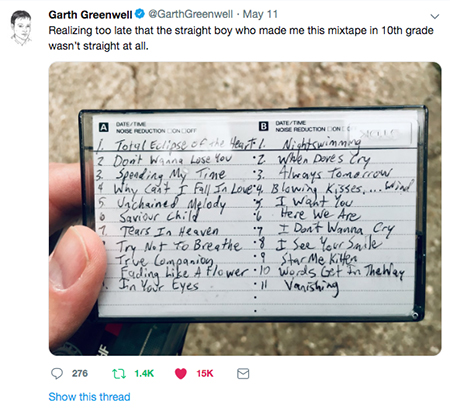
 After all my recent disappointments, I decided to go with a book with zero male voices at all. Hey Ladies! started as a randomly occurring column on the late, lamented
  A Girl Like You features Henrietta, a beautiful young woman trying to find decent work to support her widowed mother and numerous siblings in Chicago during the Great Depression. She waitresses in increasingly risqué venues, following better money while trying to hide it from her strict mother. After the manager at one club is murdered, the handsome and charming (?) Inspector Howard convinces her to go undercover at an even shadier club to get an inside view on a possible criminal network that may have included the deceases manager.
 This novel also features a beautiful young woman, working her way up socially from a shadowy past of crime and poverty in Boston, just post Civil War. Nell is first introduced as the assistant to a rural surgeon, who had rescued her from her upbringing, but in the first chapter she is hired as a governess to an old-money Boston family. Through complicated circumstances, the oldest son of the family is accused of murder, and his mother entreats Nell to do some background investigation.
 I enjoyed Charlaine Harris’ True Blood series, both the books and the TV show, at least the first few issues of each, so I figured I’d check out her Midnight, Texas series. I watched the pilot episode and the characters and acting were all flat enough that I couldn’t stay engaged, but I was curious enough about the mystery itself that I decided to try the book.
 This is actually the second in a Victorian-era series featuring intrepid reporter Penny Green, but other than the awkward progression of her relationship with a Scotland Yard Inspector, I don’t think I missed much by jumping ahead. And by that, I mean I didn’t actually care enough to miss anything.
 One O’Clock Jump is basically the polar opposite. It is the first in a series featuring Dorie Lennox, a private investigator in Depression-era Missouri. She is tough, smart, and deeply sympathetic, and she just can’t catch a break, which is what really did it in for me. In the first chapter, Dorie is tailing a woman for a job and follows her up a bridge, which the woman then jumps off. There’s no heroic rescue, just watching the body float away in the current, which is more realistic, I guess, but also solidly sets the tone for the rest of the book.
 I have been hesitating over this review for a while because Thornton writes predominately gay mystery/romances, which is definitely a niche market and not for every reader. The Pinx Video Mystery series is written for a wider audience, though, and is just so good that I have to recommend it. The first book of the series, Night Drop, begins on the night that officers that beat Rodney King were acquitted and riots broke out across LA.
 Hanif Abdurraqib is very smart and funny on
  Biblio-therapy