Carry On

My past entries here have made it clear that I am a Rainbow Rowell person. Eleanor and Park is one of my favorite books ever, and I loved Attachments and Landline. Plus, Rainbow is adorable both on Twitter and in person. (I am not a stalker, I promise.) But I was nervous when she announced that her latest release would be a sort of spin off of Fangirl. Rebecca reviewed Fangirl here on the blog, and while I think I liked that book more than she did I agreed that the pacing was a little odd. And I was pretty indifferent to a major plot point of that book–the Harry Potter-esque book series that the main character wrote epic, popular fanfiction about. Fangirl didn’t actually contain any of this fictional story, but you heard a lot about it over the course of the book. While I liked Fangirl‘s treatment of fanfiction, I wasn’t particularly interested in the wizard-y story itself–it didn’t seem worth my time to think about these characters that felt extra, extra, fictional (books within books!). So when I heard that Carry On would be an entire book those Harry Potter-like wizards fighting evil at a magical boarding school, I was not excited. But then Nicole Cliffe at The Toast (Best Website Ever) started raving about it, and The Toast published a lovely interview with Rowell. And I always knew I was going to read it, so I bought it to take on vacation. And hear me now: it was so good and I was so wrong.

Honestly, Rowell herself seems to have worked a magic trick here. Carry On is clearly inspired by Harry Potter and uses Harry Potter as scaffolding in some ways, yet has an entirely different feeling. Despite the presence of magic, it’s a bit less of a fairy tale and is grittier and funnier–it definitely has a more modern feeling that I would have predicted, based on the descriptions in Fangirl. The book is clearly meant to the culmination of a long series of adventures (as if it were the seventh Harry Potter) and it refers to all sorts of past events, but I was never lost or confused by what was happening. The writing made it feel like you were jumping right into conversation with beloved characters. Rowell also introduces some new, clever ways of dealing with magic. For example, in her world spells are not made-up Latin-y words, but are cliches or nursery rhymes or lyrics–words whose power comes from people using and knowing them. Like, there’s a scene where a u can’t touch this spell doesn’t work on a dragon because the dragon doesn’t know the song. And Carry On does something that I don’t think Harry Potter even quite manged–it tells a really charming, compelling love story, which is really the heart of the book.

As I said, I read this on vacation and I almost wish I hadn’t because once I started all I wanted to do was keeping reading. On multiple occasions I chose to read this rather than pay attention to what was around me, even though what was around me was France. (I liked the book so much, I actually feel okay about this.) This would be the perfect book for a long plane flight or rainy weekend, when you just want to immerse yourself in a new world and ignore everything around you.

Also, I want to note that you don’t have to have read Fangirl to follow Carry On. This book is completely free standing and independent of Fangirl and (I think) is much better. Although I like Fangirl more now, knowing that it eventually led us to this.


Kinsey’s Three Word Review:
Suspenseful, magical romance

You might also like: I’m going to assume that everyone has read Harry Potter and that you’ve all been listening to me and reading Rainbow Rowell’s other books. With that in mind, I’m going to recommend John Green and David Levithan’s YA writing. They both have more famous books, but their collaboration on Will Grayson, Will Grayson is one of my favorites and has a similar feeling to this. Neverwhere by Neil Gaiman is another solid recommendation featuring a clever magic world, although it’s a bit darker.

Heather Wells Mysteries

Heather Wells Mysteries
by Meg Cabot

size12_cabotSize 12 Is Not Fat
2006

size14isnotfateitherSize 14 Is Not Fat Either
2006

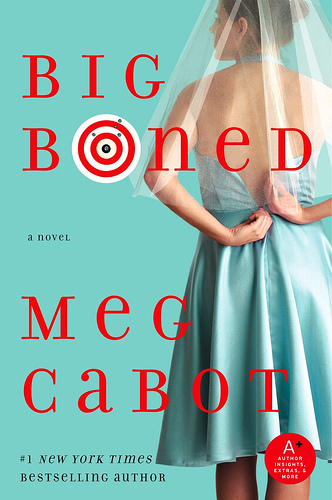
big-bonedBig Boned
2007

Like all of Meg Cabot’s books, these are delightful romps with crazy characters. The plot is, more or less, there to keep the characters focused and give the books a defined ending. I love her characters so much! And one of the many things that makes Cabot a great author is that she clearly loves her characters, too, every insane little bit of them.

I’m particularly pleased with these books, because unlike her 1-800-WHERE-R-YOU series or her Mediator series, both of which I also loved, the Heather Wells mysteries have an adult protagonist. Most of Cabot’s books are set in high school and I am (very belatedly) aging out of the time when I can really empathize with the high school drama. But it’s wonderful to know that Cabot writes for adults as well, because there are times in life when I need to read something with her warm-hearted fake-it-till-you-make-it-even-when-it’s-really-very-fake-right-now approach to life. None of these characters have it all together, even though they’re adults, but that’s okay. They can still try and they can still succeed. And I will still laugh (mostly with them, but sometimes at them) as they do so.

The protagonist of this series, Heather Wells, is an ex-pop star who, in quick order before the first book begins, lost her recording contract, her pop-star fiance, and all of her money, as well as her mother/manager who ran off to the Bahamas with the money. There’s surprisingly few hard feelings about any of this, c’est la vie.  The books start with Heather renting a room from her ex-fiance’s brother (who’s a private detective) and getting a job as assistant dorm manager at a local college campus.

And then there’s a death in the dorm!

And the police think it was an accident!

And Heather Wells must solve it!

Not to spoil anything but (A) she solves the mysteries! and (B) by book number three the dorm has gotten the nickname “the death dorm” since people keep on dying in it and needing Heather Wells to solve their murders.

Anyway, these are wonderful, comfort books. I read these first three and am all happy and satisfied and ready to read something else for a while. But I’m also glad to know that there are two more books in the series waiting for me when I next feel the need for some Meg Cabot.

World War Z

RHWorldWarZ500World War Z
By Max Brooks
2007

So I “read” this as an audio book that was marked as unabridged, but does appear to have lacked a few sections from the original book written in 2006. I now need to go back and read that whole book, because this was AMAZING and there are still parts I haven’t read!

Just, wow! So, so good!

The audio book was particularly good for an audio book because it was read by a full cast of voice actors, not just a single reader, and it really highlighted the way that this book was presented as an oral history.

For the rare person who doesn’t recognize it, it’s a fictional book inspired by the nonfiction book The Good War: An Oral History of World War II. In World War Z, though, the war in question is the zombie war, but for all the fantasy element, it’s addressed in a serious manner. I love the world building that went into figuring out how a zombie war could start, how different people would react, and how it would eventually end. I also loved the characters, who were all faced with this impossible conflict and did the best that they could.

I may very well be the last person to have gotten around to reading this book, so it hardly needs me to recommend it, but if you happen to have been living under a rock for the last decade, you really should read this!

The only thing that could have made it better is if it were longer, and apparently that wish got granted since there’s more for me to read once I get a text copy to read. (I really want to know more about the blind Japanese mountain man! But I’ll also take anything else.)

As a side note: ignore the movie. They took a really unique book essentially consisting of dozens of epic interlinking short stories and tried to shoehorn it into a traditional movie plot.

A Net of Dawn and Bones

chancyA Net of Dawn and Bones
By C. R. Chancy
2015

This is a self-published book available on Amazon, written by one of my favorite fanfic authors, who described it as:

Urban fantasy for anyone who’s stared at the latest vampiric/werewolf/whatever supposed “love” interest, and prayed the main character would have the common sense to set them on fire.

It really was a joy, with a great deal of awesome world building, and wonderful characters and interesting plot. In addition to the general fantasy elements, it also has a lot of religious exploration, which is something I enjoy a great deal. Plus a significant amount of interesting historical information is inserted into the story, too, to the extend that there’s a bibliography at the end of the book with recommended non-fiction books.

One bit of lovely backstory is the premise that a lot of people wind up in Hell –- via original sin or being cursed or whatnot — who don’t really deserve it. Our main character is a “Hell raider”, who breaks into Hell and then back out again, carrying souls with her to be released to face a more fair judgment. The book starts with our main character in Hell, discovering a rather worrying link to Earth that will need to be fixed from the Earth side of things.

Meanwhile, on Earth, the backstory is more like that of the Anita Black series: that various supernatural creatures have revealed themselves to the public and are now granted citizenship and legal protections. And the police are struggling a bit to figure out how this all works out. This is an awesome premise, and I’m still somewhat bitter about how awful the Anita Black series got after a really wonderful start. Chancy is doing something similar, but doing it right.

And thus our Hell raider and our local police attempt to work together to stop a supernatural evil. Yay!

It’s fun and relaxing while also being fascinating and surprisingly informative, and addresses a lack in the vampire/werewolf fantasy genre, for heroines who aren’t going to fall for beautiful monsters.

My one caveat to a positive review is the presence of a few casual anti-Islamic descriptions which threw me off, both for the prejudice and for it’s offhandedness, given that most of her other statements tend to be more backed up with either research or world-building. The anti-Islam sentiment had neither, alas, and I honestly think her editor should have removed them for literary as well as ethical reasons.

That said, I have a lot of experience reading and enjoying problematic things and it only came up twice and I, at least, was able to easily put that aside and enjoy the rest of the book for what it does right.

The first chapter and a half are readable in a preview on Amazon if you’re interested.

Darths & Droids

Screen Shot 2015-10-11 at 7.16.08 PMDarths & Droids
by The Comic Irregulars (Andrew Coker, Andrew Shellshear, David Karlov, David McLeish, David Morgan-Mar, Steven Irrgang, Ian Boreham and Loki Patrick)
and, of course, Lucas Films
2007 – present (and ongoing)

So, I’m currently reading book 3 of this series, while the authors are still regularly updating book 6. And, with the soon-to-be released Star Wars episode 7, I’m sure hoping the authors continue to write a book 7.

Because this is a graphic novel parody re-telling of the Star Wars movies and it is hilarious!

I actually blasted my way through Books 1 and 2 and am now laughing my way through Episode 3, even as I also go back to Episodes 1 and 2 to laugh at that over Anna’s shoulder as she reads it.

The great thing about this is that it doesn’t actually deviate from the plot (as best as I can tell, although I admittedly don’t really remember the movies all that well) – it uses screen captures for the illustrations. The parody aspect comes with the fact that it’s told as the adventures of a Dungeons & Dragons style role playing game and has the dialogue of the players, both in and out of character, overlaying the events. And let me tell you: all the things that make no sense in the movies, suddenly make all sorts of perfect (and perfectly hilarious) sense when you see the motivations of the players making the decisions.

I have no real interest in role playing games, but this almost tempts me to try because it’s so funny, except that then I remember that I find them kind of tedious. It doesn’t matter, though: this makes it look fun and awesome! And the author’s comments below each page are also hilarious bits of commentary either on making that particular update or on the joys/frustrations of role playing games.

Plus, I had not thought it possible to be absolutely charmed by Jar Jar Binks, but apparently I can be. And I really want to tell you all about the hilarious things that happen (Shmi! Sally! “Summon bigger fish”!) but once I started, there’d be no end and you really just need to go start reading it yourself.

Go forth and read Darths & Droids: here!

I’m also going to include a couple of other somewhat related links, which are well worth exploring too:

DM of the Rings: Darths & Droids was originally inspired by DM of the Rings, another webcomic parody with the same premise of role playing gamers being the Lord of the Rings characters. It’s also hilarious, although I think Darths & Droids does it even better, in part at least because the Star Wars movies are active/ludicrous enough to support going through it scene by scene, while DM of the Rings necessarily skips over large sections.

Star Wars: Before The Force Awakens (original Korean: “스타워즈: 깨어난 포스 그 이전의 이야기”) by Hong Jacga is actually a fully licensed and approved addition to Star Wars that is also a free online webcomic being regularly updated. It’s also beautifully illustrated and adds scenes of Luke Skywalker’s early life even as it retells much of the story of the original trilogy.

Miss Fisher’s Murder Mysteries

By Kerry Greenwood

Cover photo: Miss Fisher's Murder MysteriesThe Australian television show is hugely popular on Tumblr, but I’ve been resisting it because it just looked a bit twee for me. However, when trying to unpack those last random boxes from my latest move (including one marked “desk stuff” that I never unpacked from the previous move that turned out to include a large set of random pens, at least half of which had dried out), I ran a couple of episodes from PBS in the background, and I was hooked. Literally, it appears to take two episodes. I finally caved and checked out the first season on DVD from the library, and Rebecca wandered in and out of the room for the first episode, sat down for the second, and then demanded that we watch the remaining ones together. We finally ended up with Netflix primarily to have access to the third and most recent season.

In case you are not on Tumblr and have somehow avoided all the Miss Fisher love, she is a flapper in 1920’s Melbourne, who sort of falls into detection through lack of anything better to do with her life. It is really hard to put my finger on what makes it so addictive, but I think it is primarily due to the characters and the actors. The plotlines are fun, but not too noticeably different from the many, many other mystery shows. Miss Phryne Fisher is unrepentantly wealthy, frivolous, feminist and raunchy, and that is actually very rare in television these days. I think this is probably the biggest aspect of her popularity – we are so parched for portrayals of sex-positive femininity that we will fall all over any and all portrayals like rabid dogs. Which is not to say that Miss Fisher doesn’t deserve all the fandom, but just to try to explain the level of adulation that even the show-creators seem a little puzzled by.

She has endearing friendships with both her best friend, a gay lady doctor, who assists in some of the cases and is wonderfully dry, and her paid companion, Dorothy, who is a relatively conservative Catholic girl slowly falling (rising?) to Miss Fisher’s influence. Her flirtation with the local police inspector is masterful, as he clearly respects her, is attracted to her and finds her intrusive and annoying all at once. Rebecca pointed out that the actor playing the inspector deserves more than whatever they are paying him just for his very restrained but communicative expressions alone.

So, after enjoying Season 1 so much, Rebecca and I checked out a large stack of the novels it is based on. Each one is barely 200-pages long, and we anticipated a lovely month of entertaining fluff, but neither of us cared to actually read more than the first one. There was no obvious flaw to point at, but the charm of the television show just wasn’t there. Miss Fisher is described as significantly younger, and is more sarcastic and dissatisfied, which comes across as sort of bratty. The other characters are similarly diminished – Dorothy is somehow both more bitter and naïve, Inspector Robinson almost nonexistent, and the communist cab drivers more zealous and confrontational.

I started to think of this series as the flipside to the Haunted Bookstore series that I reviewed earlier. With the Haunted Bookstore novels, I could list several concrete reasons why I shouldn’t have enjoyed them, and yet I loved them all completely and read them straight through until I was so sad to reach the end. With the Miss Fisher novels (or at least the first one), there were so many reasons I should have really enjoyed it, and yet I just didn’t. I even found that while I was reading the book, my enjoyment of the television show fell off a little, so while I finished the first book, I determined not to read any more and just enjoy the show on its own.

—Anna

On The Beach

By Nevil Shute

Book Cover: On the BeachOn The Beach, published in 1957, is by far the most relaxed post-apocalyptic book I’ve ever read. The basic premise is that large-scale nuclear warfare broke out in the northern hemisphere, apparently destroying all civilization. Because of something about wind patterns that I have no frame of reference for, the blasts and radiation have not hit the southern hemisphere, though they are expected to slowly come over with the changing of the seasons.

Our two main protagonists are an Australian naval officer and an American submarine commander who was undersea during the war. The two of them, and about a dozen other military personnel and neighbors and such, all get along very well, hosting small dinner parties and beach outings, while the Australian navy sort of desultorily sets up an exploratory mission to search for survivors or intact land or such.

One of my (many) pet peeves with police and military dramas is how angry and confrontational all of these supposed professionals get with each other. On The Beach continually shocked me with how each introduced character — the Australian naval officer, the American commander, the civilian engineer, and even the Australian Prime Minister — seemed to enjoy meeting the others and working with them in what should have been an extremely emotionally fraught situation.

The first submarine expedition lasted a week and only one page; I actually had to go back and reread it since I thought maybe I’d missed a part. Truly, the only suspense came from me as a reader not quite believing that there wasn’t going to turn out to be some horribly twisted character or other manufactured drama-for-the-sake-of-drama. I think some readers might struggle with this because nothing much seems to happen, but I somehow found it so reflective of the little things one would fill one’s life with at the end, that is was soothing to read. (To add a caveat to this, after I finished the book, I read some other reviews, in which people did not find it quite so soothing, and described the calmness as frustrating and terrifying, so take that into consideration, I guess.)

I highly recommend it, even if just for the extremely novel experience of reading about a bunch of adults dealing with an unpleasant situation in as mature a way as possible. Seriously, when is the last time you’ve read a book where you liked and understood the motivations of every single one of the characters? Where there isn’t a single ‘villain’ in the piece? One of the women is a little thinly written, but compared to other female characters in 50s and 60s scifi novels, she is still quite a strong character. The other central woman was particularly well done, starting from pretty much a spoiled brat to becoming sort of the heroine of the story, though, again, ‘heroine’ is perhaps too active a word for it.

The book starts with the line from T. S. Elliot, “This is the way the world ends / Not with a bang but a whimper,” and I can’t think of a better overall description for this book than that, quite frankly.

—Anna

The Last Policeman

By Ben Winters

Book Cover: The Last PolicemanThe Last Policeman is a murder mystery set in a pre-apocalypse Earth – an asteroid has been discovered that will hit Earth and most likely destroy all of humanity in six months. Lots of people commit suicide (which I don’t understand; maybe this is my laziness speaking, but why bother if the Earth is going to shortly do it for you?) and lots of people have abandoned their homes and jobs in order to fulfill their bucket lists. Our protagonist, Henry Palace, however, was a beat cop who was promoted to detective after enough of the detectives quit or died. He has always wanted to be a detective, and so is very dedicated, driving everyone else crazy with his scrupulous attention to detail and his eagerness to actually investigate a death that he claims is suspicious and everyone else says is yet another suicide.

There are spots of humor (all the McDonald’s and Duncan Donuts have closed, but Panera is still running strong, albeit as a religious organization), but the overall tone of the novel is definitely dark. The world is completely topsy-turvy with internet and cell service collapsing, most major corporations shutting down, and just about every other job, including the government, depending on a skeleton crew of dedicated employees. Inflation is through the roof, of course, though I was confused that there was any monetary economy at all, actually. The people, too, are all different levels of crazy, with depression and drug use way up, naturally, making tracking down motives and following rational clues particularly difficult.

One of my favorite things about the book is that, through showing instead of telling, I am fairly sure that both the detective and the victim are on the milder side of the Autism spectrum. It is cool to see that (possible) representation laid out so matter-of-factly. Separate from that aspect, however, there were the occasional times when I wondered about an unreliable narrator. He isn’t unaffected by the coming doom, either, and there are definitely times when I wondered whether he purposefully twisting the truth to make his case better match the cases he’d hoped he’d be working on as a detective.

This is the first in a trilogy, and I definitely plan to read the next two, so I’ll report on those when I get to them. Rebecca asked me how there can be three if the world only has six months to go, but this book only spanned a month. I wondered, though, if something unforeseen happens and the asteroid does not hit, how do you rebuild after all of Earth’s societies have been living as though it is the end of times?

—Anna

Lost at Sea

By Jon Ronson

Book Cover: Lost at SeaChrist. I don’t know how Jon Ronson does it, but he made me feel sympathy for the goddamn Insane Clown Posse in the very first chapter.

After my last review on a book that I discovered through an article by Jon Ronson, I remembered that I hadn’t checked up on his works for a few years, and he had published twice since then. Lost at Sea is made up of dozens of short chapters, each a standalone essay describing Ronson’s interaction with a wide variety of people and groups. (I believe they were actually originally articles for the London Guardian.) It made me laugh several times, but it also made me kind of sad, as each group seemed to be simply looking for connection and meaning in life, and having to go to some extreme lengths to find it.

It took me far to long to realize this, but the title is actually very apt – these are all stories about people who have lost their way in one way or another. The stories get progressively grimmer, too, starting with stories of roboticists attempting to create artificial intelligence and parents raising “indigo children,” thought to be the next evolutionary stage with psychic abilities, to a planned school massacre in Christmas, Alaska, and suicides over mounting credit card debt.

One of the more powerful essays for me, though, was one where he takes the general income disparity in the United States, and divides it into 6 sections, each one five times the income of the previous one. So, the first he talks with a dishwasher earning $10,000; then a family that lives paycheck-to-paycheck on $50,000; then Ronson himself is $250,000 (this is also the briefest section); a high-level executive in the entertainment business who wished to remain anonymous and earns roughly $1.25 million; one of the first investors in Amazon, who earns roughly $6 million, and finally at the top, a man who helped establish the storage unit industry and is worth billions at this point (at this point it is almost impossible to establish an annual income). I have read a lot of articles on income disparity and what it means for our society and economy as a whole, but this was the first that broke down what it means for day-to-day living and helps explain why it is so difficult to understand the lives of people that make significantly different amounts of money.

Several of the stories included the subjects expressing anger at Ronson’s writing style, saying that he including snarky lines like “I’m met with silence” in order to connote something underhanded without actually state it outright. And while I enjoy his style and his snark, I could see their point, that he does offer his own interpretation of pauses and body language in ways that certainly influence readers’ views. I’d mentioned before that one thing I like is how much his own presence is included in his writing, which is unusual in journalism, but after the third or fourth subject lashes out at him, I began to wonder about it. While he is often self-deprecating, he does vary how much he is present in writing in ways that are complimentary to him, so I could certainly see how his subjects felt manipulated and their personal crises used simply to showcase Ronson in one way or another.

So, I guess by the end of the book, I remain a big fan of Ronson’s writing, but perhaps not quite such a fan of Ronson himself.

—Anna

I’m Not A Terrorist, But I’ve Played One On TV

By Maz Jobrani

Book Cover: I'm Not A Terrorist, But I've Played One on TVI first read an article in GQ by Jon Ronson (who I love) about Maz Jobrani and other actors of Middle Eastern descent, and about how they are only offered roles as terrorists. The actors describe all the different ways they are killed by the heroes, over and and over again, and how frustrating it is to get no other roles, not to mention feeding into negative stereotypes of your culture in order to make a living. Because it is Jon Ronson, too, it is depressing, but also a bit funny.

I thought it was a really interesting piece on something I had literally given zero thought to before, so when the article mentioned Jobrani’s memoir, I checked it out from the library that day. Jobrani, an Iranian-American, started as an actor, but turned to stand-up comedy when he decided that he didn’t want to play terrorists any more, which I think was a good move since his book made me laugh out loud several times.

Jobrani is an extremely positive person, disappointed by the anti-Middle-East sentiment in the US, but focused on creating a more positive presence. For my own part, I like humor that is a bit angrier and more biting, especially when it comes to social justice issues. However, even his light-hearted jokes revealed how little I know about Iran and the rest of the Middle East and this is a very easy way to learn some very basic truths about Middle Eastern culture. Jobrani has a lot of videos up on YouTube and is a semi-regular on Wait, Wait, Don’t Tell Me, so check him out!

—Anna