Not Getting Murdered by Johnson & Cooper

Your Guide to Not Getting Murdered in a Quaint English Village
by Maureen Johnson and Jay Cooper
2021

I got this as a Christmas present right before dinner and finished it within a couple of hours, while also eating vast quantities of good food, hanging out with family. This is not a long or dense book. It is hilarious!

It’s clearly inspired by Edward Gorey and also by the whole genre of murder mysteries set in quaint English villages. Especially the long series’ where the amateur detective solves a murder mystery in their home village for each book, and the deaths sure do add up. In a very light-hearted and dark-humored way, this lists all the stereotypical places, peoples, and events of small quaint villages and how murderous they manage to be. (For example: if there are any vats described in the text of a book, it’s almost certainly because someone drowned in it. For safety: stay away from vats!)

The illustrations are frequent and the text is sparse, and it’s hilarious and morbidly adorable. There are also quizes! What do you do in each situation to survive the events? Each of them like a tiny choose-your-own-adventure! Hahahaha! I love this book so much!

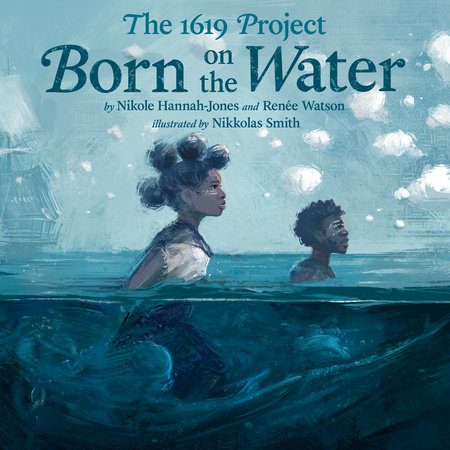
The 1619 Project: Born on the Water, by Hannah-Jones, Watson, and Smith

The 1619 Project: Born on the Water
written by Nikole Hannah-Jones and Renée Watson
illustrated by Nikkolas Smith
2021

This is a children’s picture book that was part of The 1619 Project and it is beautifully written, gorgeously illustrated, and addresses a difficult but vitally important topic in an age-appropriate manner.

The framing story starts with a young child being given a class assignment to write out their family tree. However, while their white peers are able to go back many generations and list which countries their families came from, this black student can only list three generations and feels ashamed. The main focus of the book is the history of that student’s family that starts with joy and culture and rich history in Africa, goes through great suffering and hardship with kidnapping and enslavement in America, but still perseveres, fights, and survives to live on in the student today. It gives a message that survival in the face of trauma is to be celebrated. Black Americans have a great deal to be proud of in their African roots and their American survival and their achievements – past, present, and future.

I’m particularly impressed with the way this book shows centuries of American slavery as the middle part of the history of the student’s ancestors. Slavery was long and harsh and transformational, but it was not the start of their history and it was not the end of it.

This is clearly intended for a young audience, but I highly recommend it for adults as well, not just for the pure artistry of the writing and illustrations, but also for the soft discussion of a difficult topic.

Meddling Kids

By Edgar Cantero

Just read the blurb for this and see if you aren’t intrigued! I immediately put a hold on it and was eagerly anticipating its arrival, but upon reading quickly realized that it’s not really my thing. I get what Cantero is trying to do and I think it is really interesting, but for me, it doesn’t quite work. He wants both a winky satire/nostalgia piece and a dark, shocking horror/mystery, and they each undercut the other.

The first 50 pages were a bit of a slog, as Cantero set up the characters and setting. He really, really likes a simile, and I can’t say that I feel the same. Not everything has be like something else! Some things are just themselves! And often the similes got so convoluted, it actually obstructed understanding rather than assisted: “The night was cold but gentle like an X-rated metaphor.” What does that even mean?! “From the mining equipment buried in that station like implausible goodies found inside pyramids and hellgates for the use of video game characters, Andy picked up a few items she deemed useful.” Sigh.

Once the action picks up after about a hundred pages, I started enjoying it more for the plot itself. The characters are likeable enough once the author stops rhapsodizing over their physical and mental attributes. The plot really is a good one, too, flipping the standard cartoon final reveal of a man-in-a-mask to become a façade covering something much darker.

Meddling Kids would make a brilliant movie (with a pretty serious editing job), and the author clearly agrees, painstakingly setting up sequences of physical comedy and Rube Goldberg-like action that would look stellar on the screen, but bog down the pace for the reader. Of course, even those sequences are immensely clichéd – it’s meant to be, that’s part of the joke and the homage – but that also doesn’t prevent it from also being eye-rolling. The writing style very much isn’t for me, but I think a lot of readers would enjoy it much more than I did, as testified by the raving reviews and cover blurbs.* Also, to give credit where it is very much due, Cantero takes incredible care to avoid any serious animal harm: even the literal canary in the goldmine implausibly survives intact.

About midway through the book, I checked whether Edgar Cantero had made an appearance in The Midnight Society (he has not, as far as I know), which is one of my favorite twitter accounts. The author lovingly skewers a wide variety of horror authors in ongoing tweet-length dialogues, and it makes me laugh regularly and introduces me to some new authors and some truly wild details about authors I had thought I’d previously known!

*Though, actually, when I went on GoodReads to confirm this, the majority of reviews sound the same as mine – good premise, weak execution, and they brought up some more serious issues of outdated language referring to intersex, transgender, and lesbian characters, as well as some broad racial stereotyping. I was willing to give some leeway for this since Cantero is Spanish, and Spain and Latin American countries use different terms than we do (even in translation), but readers should definitely be forewarned about that.

When the Tiger Came Down the Mountain by Nghi Vo

When the Tiger Came Down the Mountain
by Nghi Vo
2020

This is a companion novella to The Empress of Salt and Fortune, not a sequel or a prequel, but a companion: another experience of Cleric Chih. It doesn’t have the same calm mood of the other, and I didn’t enjoy it quiet as much, but it’s still really very good and a fascinating story that deals more directly in the magical realism of this world. It’s also another beautifully crafted example of complex story telling with both a framing story and an interior story. It felt like a combination of Scheherazade and Rashomon, as it deals with the use of storytelling as a way to survive the night and with conflicting versions of the same story.

I definitely recommend it.

Also, a minor spoiler:

Continue reading

The Empress of Salt and Fortune by Nghi Vo

The Empress of Salt and Fortune
by Nghi Vo
2020

I can’t remember how this book got onto my to-read list, and it was there for a while before I got around to starting, but I’m glad I did. It’s lovely. It’s quite short – only 120 pages – but it’s beautifully, almost lyrically written. It’s also really interesting as an example of story crafting. The tone and the content of the book are in such stark contrast.

The tone of the book is very calm and quiet — contemplative, almost dreamlike. The world is a casually magic ancient China: there’s magic and mysticism, but it’s not the point of the story and it’s not particularly relevant, it’s just how the world is. An archivist cleric with a bird companion arrives at an old estate to make records of it, before moving on to their next assignment. The only other person there is an old servant woman. That’s the story.

In contrast, the topic of the book is the Empress of Salt and Fortune. She has recently died after a long and successful reign, but this old estate that the cleric is taking records of is the place of exile where she had lived for six years as a young woman before she came to power. The old servant woman, Rabbit, was her companion in those years. The empress is an amazing character: delightful and complex and ruthless and clever, and her plotting is dangerous and deadly. And the reader and the cleric learn about her from seeing the estate and hearing Rabbit’s stories.

In some ways this book reminds me of The Hands of the Emperor in that all the massive political upheavals happened in the past, all the anxiety gone and all the grief muted by time. In some ways it reminds me of Iron Widow in the way the empress is ruthless and vicious and hurting and victorious. And of course all three of them are about taking power and surviving. But it is also very much it’s own story and a fascinating read. I definitely recommend it.

Knot of Shadows by Lois McMaster Bujold

Knot of Shadows
a Penric & Desdemona novella, part 11
by Lois McMaster Bujold
October 21, 2021

I check in on Bujold’s Amazon page every few weeks because these novellas she writes drop without any warning or fanfare and are a completely wonderful surprise each time there’s a new one. This one is no exception. I bought and read it as soon as I discovered it.

One of the (many) things I enjoy about Bujold is the range of genres and moods she’s able to write while still staying true to her characters. In a series that delights and fascinates, makes me laugh and blush and wait with baited breath to see how the latest adventure turns out, this is the first to leave me feeling very somber.

It reminds me of her Vorkosigan short stories, “The Flowers of Vashnoi” and “The Mountains of Mourning”. Sometimes our protagonists arrive too late by far to solve the problems but must instead do their best to clean up the results and try to pull together some clarity out of tragedy. This story is wonderful, I adore both Penric and Desdemona, and the world building remains incredible, but the situation is complex and difficult and the best solution is the one that mitigates the harm because there’s no avoiding it.

The Last Graduate by Naomi Novik

The Last Graduate
Lesson Two of The Scholomance
by Naomi Novik
September 28, 2021

I loved the first book in this series, A Deadly Education, which was listed as book one of two, and I loved this one which is listed as book two of three, and I cannot wait until book three comes out! Because this book was a game changer and then ended immediately after the climax, so there’s none of the fall-out. It’s not exactly a cliff-hanger in the normal sense of it, because it does come to a successful conclusion, but oh man, what happens next???

In the previous book, our main character El, had finally started to make a few rare friends and form alliances. Her magic affinity is for large-scale destruction which makes the growing up process really difficult and in a school with a 1-in-7 survival rate, life is already extremely difficult. But when your school is much coveted for it’s survival rate which is so much higher than the 1-in-100 rate of anywhere else for adolescent magicians, clearly some large scale destruction to change the whole situation would not necessarily be a bad thing, if only it were properly directed.

There’s a pattern that I don’t see nearly often enough in books of having the resolution fundamentally change the world (preferably for the better, but really, at all.) Most conflicts get shown against an encroaching evil that is threatening the status quo, or alternately fighting against an evil that is currently in power so as to revert to a previous status quo. There’s something very freeing for the reader and impressive from the author to saying: the current situation is bad and the previous situation was bad too and we’re going to aim for something entirely new and different and better than anything before.

I imagine it doubles the amount of world-building that the author has to figure out, but it’s worth it! Plus, Novik is absolutely fabulous at world-building both in the large scale issues and in the constant little details of real world living that is both delightful and hilarious. Seeing the characters struggling to figure out how to live in the current situation but also find the space to think about how to change and what to change is so good and inspiring. After years of learning to accept a constant attrition rate of deaths, it’s hard for the students to learn to care again, not to mention embarrassing to admit that caring to a population just as trained against it. But they manage! And it is glorious!

This book is just so good on so many levels and made me so giddy that I had to immediately go back and reread the first book and then reread this one again. Just, so good!

Iron Widow by Xiran Jay Zhao

Iron Widow
by Xiran Jay Zhao
October 7, 2021

O.O

Wowza.

This book.

The main character is kind of the embodiment of “Are you tired of being nice? don’t you just wanna go apeshit?” Yes. Yes, she does. And thus, so she does.

The book was described as a re-imagining of the life of the only ruling empress of China, Wu Zetian, in a futuristic sci-fi/fantasy China that merges Pacific Rim with The Handmaid’s Tale.* There are giant mecha robots piloted by male pilots and powered by female concubines… who don’t tend to survive the process. Wu Zetian is a pretty peasant girl filled with rage. Her older sister was already sold to the army as a concubine and she’s going next, but she’s planning a revenge assassination rather than dutiful self-sacrifice.

In a society telling her that girls and women are naturally gentle and soft, appeasing and submissive, Wu Zetian knows that’s wrong from her own personality. As the book progresses, she peals back more and more layers of her own assumptions, revealing how aspects of the world that seemed like natural laws are instead very much man-made. What seems like basic history, is instead thick layers of propaganda difficult to even find the edges of. With lies and manipulations twisting any understanding of the world, moral decisions are nearly impossible. And the prize after every victory is a more difficult battle.

The whole book is a series of dramatic battles — mental, emotional, physical, you name it — that build to greater and greater heights, and the end is less a conclusion as it is a launching point. It’s extremely satisfying, so I wouldn’t call it a cliff hanger, but there’s no resting on one’s laurels in this universe. I really hope there’s a sequel and I also have no idea how the author will manage to write a sequel to this.

This is Xiran Jay Zhao’s first book, but I was first introduced to their twitter account and the very good, very funny analysis of various movies set in China and what they get horribly wrong, or occasionally right, examples: Mulan (2020) and Mulan (1998).

I highly recommend this book, but also just wow: this character is amazing and she pulls absolutely no punches. And also her whole relationship situation is fabulous, summed up by her statement, “Love doesn’t solve problems; solving problems solves problems.” And she is out here to solve some @#$@%ing problems!

* Without having read The Handmaid’s Tale, I’m still going to assume it (much like Jane Eyre) would be vastly improved by the main character being more murderous. And Wu Zetian is here for that murderous response to subjugation.

Adventure Cats by Laura J. Moss

Adventure Cats: Living Nine Lives to the Fullest
by Laura J. Moss
2017

This is a fun and inspiring book that I ran across at some point well after I’d already started taking my cat on walks with a halter and leash.* I thought to myself: this is a nonfiction book about adventure cats, my cat would definitely like to go on more adventures, so this might give me ideas.

And it did. Sort of. Maybe I’ll like outside adventures more if I have my cat with me. But as I’ve stated before, I find the concept of long walks a lot more interesting than the practice of it.

It turns out that I’m pretty much the exact opposite of the intended audience for this book. The intended audience is made up of adventurous people who are interested in seeing if they can get their cat involved in their lifestyle. My situation is that I am a standard couch-potato cat-owner who has stumbled across ownership of an adventure cat and now needs to figure out how to keep his life suitably enriched while also keeping him safe and me sane.

About half the book is made of short bios of various adventure cats and their people and what all is involved in their lifestyle. I adored these parts! So cute! There are cats who go hiking and camping and sailing and surfing and skiing and rock climbing and so much more. Awesome!

The other half of the book is focused on how-to instructions and lists of important information on how to safely go adventuring with a cat. It seems very useful and also highlighting that this is not my preferred method of relaxing or enjoying the world.

The directions on how to train a cat are also so slow and careful that it struck me as more of a deterrent than an inspiration to actually follow the method, but again: I’m not the audience of people who are adventurous and want a cat to match. I expect the written method is the correct way to train a cat, but my relationship with my cat is a lot more mutual training as I figure out how to accommodate his desires as much as I train him to accommodate mine.**

This book also ran into my standard pet peeve with pretty much all self-help books: they tend to talk to the reader with broad assertions (“you think”, “you feel”, “you respond”) that always make me feel particularly contrary (“you don’t know me!”), and I was getting that with this book as it simplified cat body language and responses in a way that was absolutely necessary for the scope of the book, but didn’t match my cat at all.***

A final warning: Every couple of pages this author uses a cutesy pun (being “purrpared”; anything being “pawsible”) and it’s way too cutesy for me.

Despite the various caveats, I do recommend this book. It is an inspiration to see about pushing the boundaries of what I do for my cat’s enrichment and maybe for my own enrichment too.

* As a kitten, my cat was extremely curious and completely fearless and had to be held back from stalking a flock of Canadian geese, and he doesn’t appear to have gained much sense of self-preservation since then.

** I didn’t have to lure my cat into liking the halter and leash: He wanted to go outside so I made wearing a halter and leash a condition of that, and it wasn’t so much leash training as it was compromise negotiation. If he came near the door, I would put the halter/leash on him, and he’d be allowed out. If he didn’t want the halter leash on him, then he shouldn’t come near the door as I was going out.

*** Yes, my cat got startled and poofed out with a full bottle-brush tail on a walk this weekend, but he also continued to explore and had absolutely no interest in returning to the safety of the house. Yes, at another point he froze absolutely still and then had to slowly approach and cautiously whack a fallen leaf like a dangerous enemy, but again, no interest in retreating to safety.

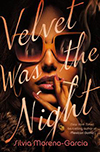
Velvet Was the Night

By Silvia Moreno-Garcia

I am a big fan of Silvia Moreno-Garcia, and I love following her across all her genre hopping: Gods of Jade and Shadow was a breathtakingly dreamlike and philosophic fantasy novel, Certain Dark Things an engrossing and gritty vampire/mob suspense novel, and Mexican Gothic a beautifully atmospheric and bizarre gothic (of course). And now, Velvet Was the Night is a picture-perfect noire in every way!

In the acknowledgement, Moreno-Garcia mentions that noir is a proud tradition in Latin America, and she has certainly done it proud with every character, scene, and even the descriptive tone of the writing. Velvet Was the Night centers around two very distinct protagonists: an apolitical, daydreaming woman stuck in a secretarial job she loathes, and a young thug hired to infiltrate and repress (i.e. beat) student and/or communist protests. Moreno-Garcia teases out throughout the book how similar they are to each other, regardless of their wildly different circumstances, as well as how each of them incrementally matures through the events that push them outside the ruts of their daily lives.

Like all good noirs, Velvet Was the Night connects the daily lives of these two individuals and the people around them to the wider scope of politics. In this case, the politics of 1970s Mexico are complicated and literally foreign to me, and yet Moreno-Garcia somehow manages to spin it out in a way that I could understand and follow along to, starting small and generalized and building up the complexity of the different factions along with the plotlines. It felt like some kind of magic trick and I have no idea how she kept me tracking all the twists and turns!