Toronto Comic Arts Festival 2024

I’ve been going to the Small Press Expo (SPX) for years, but last weekend was the first time I’ve managed to go to the Toronto Comic Arts Festival (TCAF) and it was so much fun! We came in to Toronto on Friday and left on Monday so that we could attend the entirety of the event on Saturday and Sunday. I attended five presentations, browsed hundreds of vendor stalls, and bought 14 graphic novels. (And was tempted by a whole lot more!) I haven’t read all my new acquisitions yet, but most of the ones I have are also online so I can link out to them as well as brag about them:
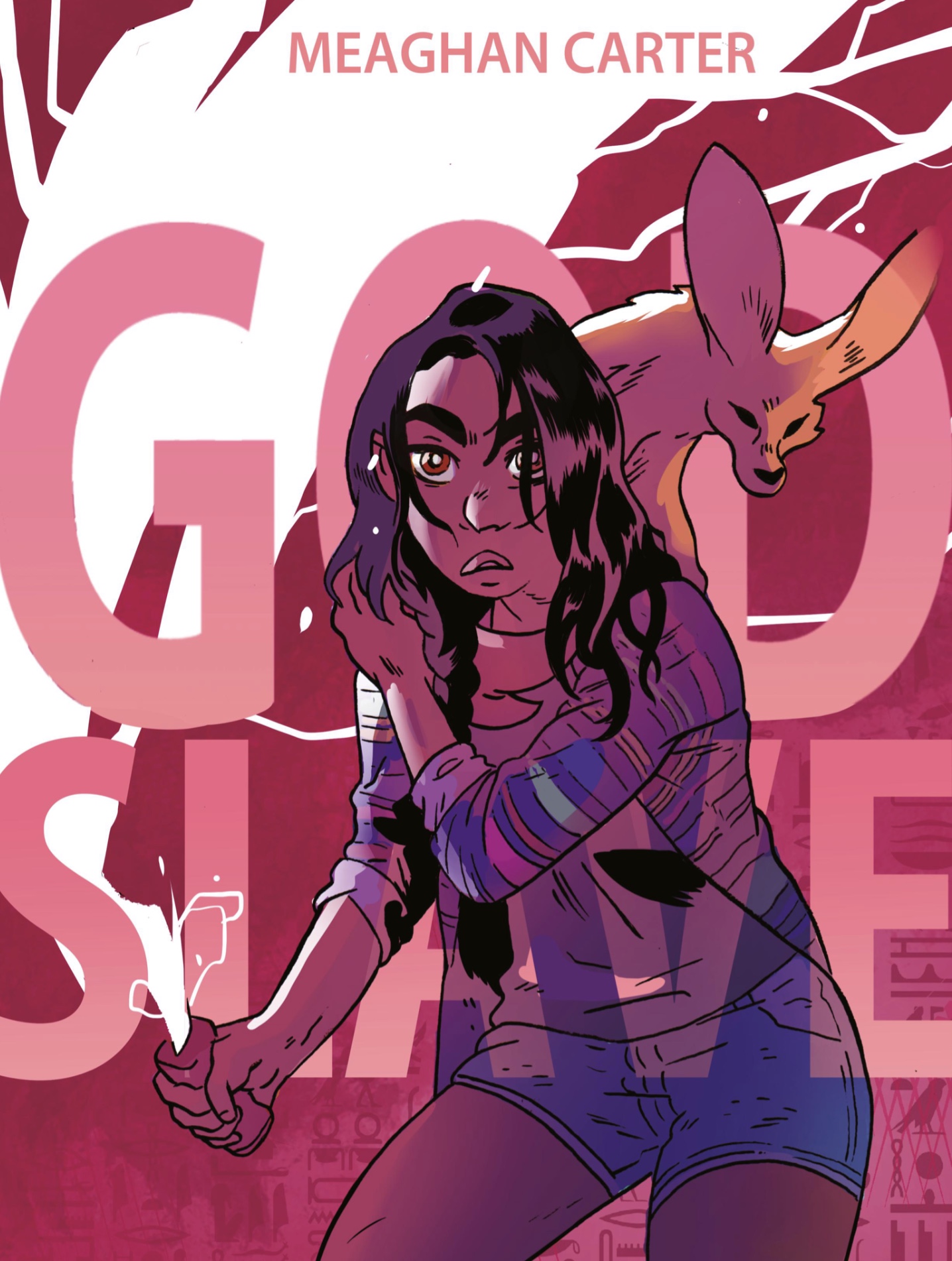
Godslave
by Meaghan Carter
A nineteen-year-old college drop-out accidentally wakes up an ancient Egyptian god who looks a bit like a fennec fox (so cute!) and then gets drawn into the deadly family drama of the Egyptian pantheon. Who the good guys are is deeply in question. I bought the first two volumes, which comprise the first five chapters, but the online version has started the sixth chapter!

The Big Mystery Case: A Crime Comedy
by Luke Bruger-Howard
This is a hilarious pastiche of crime thrillers that reminds me of the equally hilarious video How To Make Blockbuster Movie Trailer. It’s a quick read (less than an hour) and a loving mockery of the detective genre.
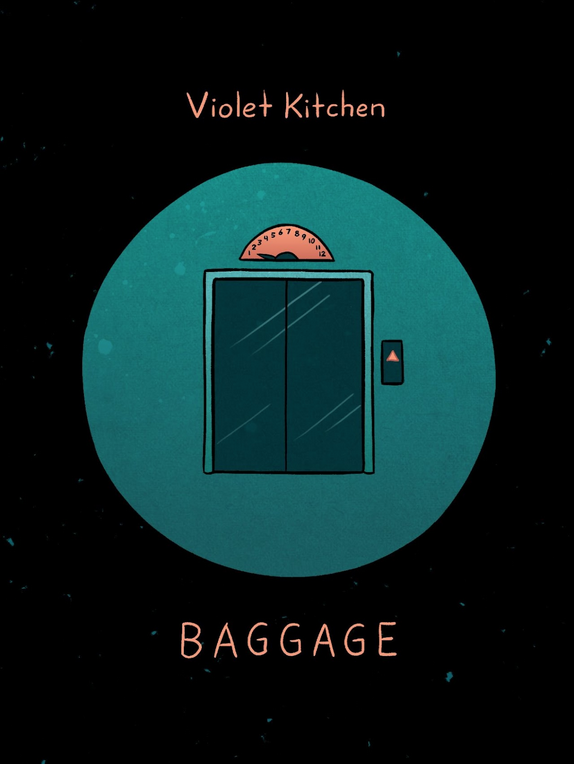
Baggage
by Violet Kitchen
This is an absolutely beautiful poem of a graphic novel, about packing for a trip, unpacking in a hotel room, and then repacking to depart again. It’s gorgeous in the way it uses both artwork and words to evoke emotions and communicate a sense memory. The imagery is very clean and crisp while the concept is very ethereal and dreamlike, and it works together perfectly.

The Closest Thing to Living
by Ky K
They only had the prologue of this story in hardcopy, but it drew me in and included a link to the online version for me to continue following and see what happened to the woman who wakes up from her murder, discovers she’s a vampire, and decides that this is the freedom she needed to be more true to herself. She’s very nihilistic and isn’t much interested in her own past, but it looks like despite being dead, she won’t be able to actually walk away.

Autumn Wing and the Crown of Fire, Volume 1: The Sword of Red Leaves
by Brandon Hankins
Gorgeous inkbrush artwork with a limited color palate that I really love. This first chapter is about a young nephilim, who’s trying to earn the right to go on a quest to forge a crown of fire, aka a halo, and come into his full power. It did a really good job of addressing what it means to be strong, especially when other people are yelling at you for both not giving in to them and for not being strong. I just bought the first volume, but five chapters are online!
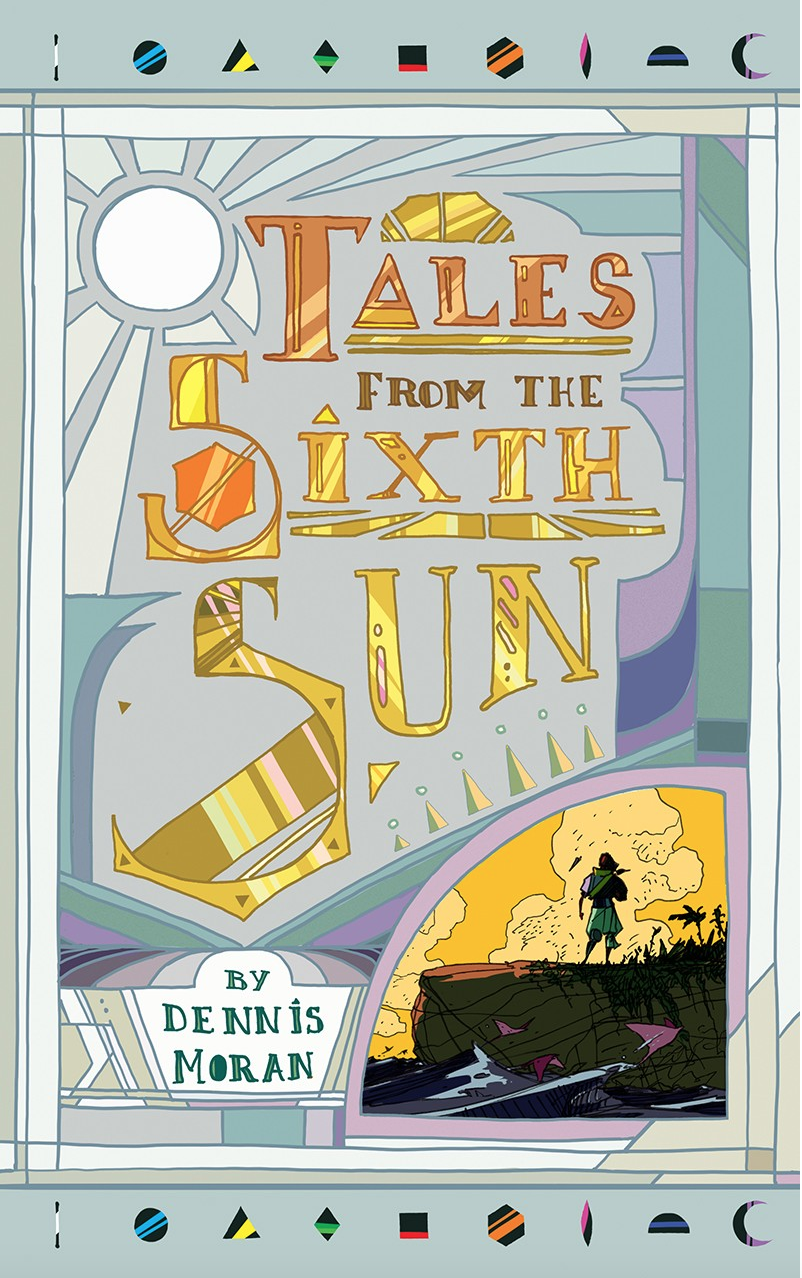
Tales from the Sixth Sun
by Dennis Moran
Absolutely gorgeous artwork and a magical world that reminds me a bit of Wakanda, with mysticism and technology integrated, set in a fantasy world heavily influenced by Afrofuturism and Inca-futurism. The first half of the book is nearly word-less, and the art carries the storytelling so beautifully but also very tightly focused. The later part has more dialogue and introduces a much more complex society and history and plot. This book contains the first three chapters of the story, but the first six chapters are online!

I am extremely picky about the graphic novels I buy: I they need to have both beautiful artwork and interesting storylines, and all of these were wonderful finds. I’m really looking forward to making this festival an annual event.
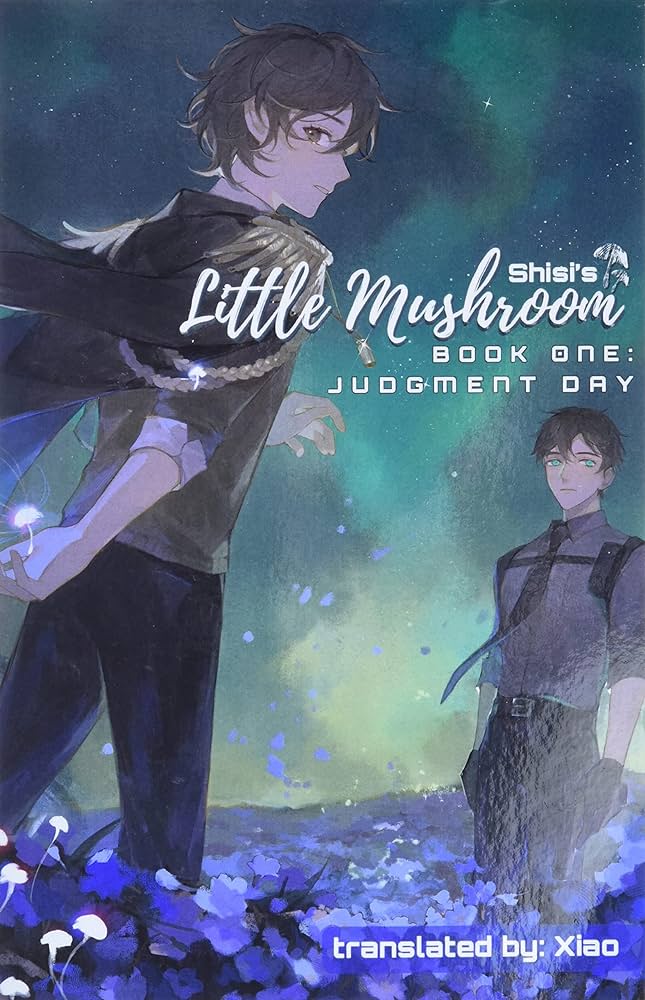
Little Mushroom by Shisi

Little Mushroom
by Shisi
translated by Xiao
2022

This is adorable and hilarious and horrifying. This is set in a post-apocalyptic world (with all the scientific explanation of Star Trek, ie, absolutely ludicrous but boy does the author and a series of scientist characters try) where the final bastions of humanity are in a handful of highly guarded cities under military rule, while plants and animals outside are all aggressively mutating and mutagenic. Get stung by an insect and within a couple of hours you’ll become a giant insect monster going on a killing rampage. The nature aspect reminds me of Scavengers Reign, and the writing is clearly intended to evoke specific visual images that sometimes comes across oddly in a written medium, but this would make a stunning animation.

The society is an extreme form of fascism that’s written as a necessary evil with the protestors dying horrible deaths for not understanding the necessity of the military department with little to no oversight that executes anyone suspected of being tainted with a mutation. The slogan of “Humankind’s interests take precedence over all else” very much includes the rights of any individual. There’s the military, the scientists, the breeding program, and everyone else. It’s a grim society, on the cusp of destruction: an extreme dystopia.

However, the book’s perspective is not from the point of view of a human. While humans are struggling for survival in an increasingly hostile world due to the mutating animals and plants, one such mutation is a mushroom who has gained sentience, mobility, and the ability to shape change into the form of a human. That mushroom, named An Zhe, ventures forth into the human city to reacquire part of itself that had been collected by a human research team. Human massacres just aren’t as traumatic to a mushroom as they are to a human and An Zhe’s calm curiosity permeates the book. What does he know about humans and morals and society? He’s just a little mushroom! Adorable!

Lu Feng, the human in charge of executing any human mutations, takes one look at An Zhe and essentially goes: huh. An Zhe is definitely odd but not in the way of a mutated human. Deeply suspicious, but to all appearances just an oddly sweet and naive human.

And thus the plot develops: the human race losing the century-long war against the increasing number of devastating disasters while desperately trying to figure out what’s causing the mutations, An Zhe trying to figure out how to fit into human society while searching for his lost “spore”, and Lu Feng developing unwanted feelings for the one person who isn’t scared of him.

It is utterly ridiculous and adorable — despite the gore, body horror, and overarching destruction — and somehow ends happily.

While this is printed in two volumes, it was originally written as a webnovel with three books and then a series of epilogues and side stories. I’d originally just bought the first volume which is books one and two (despite the cover which says “book one” on it). It does come to a good conclusion and is a natural break in the story… except that there are some really distracting loose ends (a mannequin that’s a perfect replica of Lu Feng was created, confiscated, and then never shows up again? I think not!) so I immediately ordered the second volume and then had to wait a week for it to show up.

There’s definitely some cultural commentary and common Chinese tropes that I don’t have the context for, but I still really enjoyed these books. I can’t give a blanket recommendation since the society is seriously grim dark with the aforementioned body horror and gory deaths, so readers will need to judge their own preferences, but it really is amazing how chill and even hilarious the narration can be regarding the horrors when the POV character is a self-aware mushroom.

Web comics

I have been bingeing so many web comics! There are so many, and cover such a range! And I know I’ve read web comics before and even recommended some of them on this blog, but previously I was discovering them on their individual websites and now I have discovered that there are phone apps that give you access to some untold numbers of web comics all through a single searchable interface.

Admittedly, the vast majority are pretty darn schlocky, and my first impression was that they were like harlequin romances for fantasy fans. (“His Majesty’s Proposal”, “The Remarried Empress”, and “Justice for the Villainess” are all real titles of webcomics I’ve tried.) But on the one hand, I do enjoy some schlocky fantasy romances, and on the other hand, there are other genres represented, and some really good stories, as long as you’re willing to go searching.

Many of the stories are on-going with weekly updates which remind me of why I stopped following comics in individual issues and waited for trade paperbacks instead. I find the individual updates frustratingly short. But having just discovered these collections, there are a lot of issues to catch up on before I’m current, and there are some great stories that have been completed.

Manta is one of the apps I downloaded on my phone, although it’s also available as a website. I now have a monthly subscription that gives me full access to any story in their collection. Some of the completed stories that I recommend are:

  • Shall We Pole Dance? is a 12-issue nonfiction story about a woman’s experience improving physically and mentally through joining a pole dancing class, that’s just sweet and delightful.
  • The Night Market is a 12-issue fantasy story about a magical market that is an intersection of worlds, where you can buy anything at all, but once you enter, you must buy something, and everything has a cost.
  • Unbreakable Master is a 141-issue fantasy gay romance about a guy who breaks everything he touches discovering that there is a hidden world of magical beings fighting a war for control of the world, and what role his powers might have in this struggle.
  • Traces of the Sun is a 96-issue fantasy gay romance about a guy who has the magical power to fix things, a job fixing destroyed buildings, and a secret: that when his childhood friends were killed in an attack, he tried to fix them, but only raised them as zombies that he can neither bring fully to life nor settle into peace. (This is based on a book and I want to read the book so bad, but it’s in Korean and there’s no translation available.)

Webtoons is the other app I now have installed on my phone, which charges a certain number of “coins” per recent issue, with coins being sold for real money, however, as long as you’re willing to wait a few weeks, the backlog of older issues are free. None of the stories I’ve read on this app have been completed, but there are several that I’ve enjoyed the backlog and updates for:

  • Eleceed is currently at 262 free issues of a fantasy adventure story about a kid who has a superpower discovering that there’s a whole society of “awakened ones” with superpowers and working up the ranks of power via an endless series of dramatic duels, which is a tedious premise, but the growing cast of characters are so darn delightful! The sweet kid, Jiwoo Seo, discovers an injured cat, who is actually a person, Kayden, who had semi-accidentally transformed himself into a cat, but proceeds to mentor the kid. This story made me realize that for a society that’s essentially lawful evil, the chaotic neutral of Kayden is a net benefit.
  • Cleric of Decay is currently at 30 free issues of a fantasy adventure story where our protagonist has been sucked into a video game he was playing, but only after he’d both selected a particularly difficult/weak character class AND installed cheat codes to make it viable. So now he’s wandering around as the last living cleric of an evil goddess who was killed and dismembered years ago trying to collect objects of power at the demand of a mummified hand of a goddess while staying unnoticed by the various paladins and clerics of more accepted deities.
  • Paranoid Mage is currently at 11 free issues of a fantasy adventure story about a young man who discovers he has magic powers shortly before being discovered by a secret society of magic users who are strictly hierarchical and do not think he is allowed to opt out of joining their society on a low rung. He escapes, and is now on the run/in hiding, while trying to learn to use his powers, and also stumbling across parts of magical society.

These stories are a delight and an addiction.

The Wild Robot by Peter Brown

The Wild Robot
2016
by Peter Brown

This was clearly written for young readers with simple language, chapters that are only a page or two long, and fun illustrations on most pages. It’s also 300 pages long, covers a lot of ground in those many short chapters, and is lovely to read as an adult, with a heart-felt plot arch. The titular wild robot, Roz, is a general assistant robot made for by and for humans with a learning AI component, who is lost in a shipwreck and wakes up for the first time on an island full of wild animals, and no humans at all. So Roz must learn directly from nature and the wild animals, which whom she learns to speak and live and become wild.

It’s light and fun with the animals all talking in their animal language and having an hour of truce every day between predator and prey to gather and discuss the island news, but it does acknowledge (albeit lightly) that sometimes the predators do kill and eat the prey animals, because that’s the nature of nature. But it’s a lovely feel-good story, with adventures, found family and beautiful wilderness.

The Wild Robot Escapes
2018
by Peter Brown

Although they were published two years apart, the sequel feels like the second half of a duology. This is another 300-pages of many short chapters riddled with illustrations and a simple plot arch that’s also emotionally deep and resonant. It continues directly from the end of the first book, and creates some lovely parallels.

There is a third book, The Wild Robot Protects, that I’ll probably read eventually as well, but I’m guessing it’s more a stand alone story, while these two are definitely paired.

I highly recommend these for any kid who’s just getting into longer full-text books, or for any ESL readers who want something that’s interesting with plot and characters while still needing simply language, or anyone like me who just wants a somewhat relaxing read about sweet characters figuring out how to succeed.

Also, as a little extra, DreamWorks is making this into an animated movie. The trailer looks adorable, and I’m deeply curious as to what they do with the plot arc.

The Seven Moons of Maali Almeida

By Shehan Karunatilaka

Work is sending me to Sri Lanka tomorrow, so I scrambled to check out several travel guides from the library. They weren’t really holding my attention, though, so I had the thought to track down a fictional novel by a Sri Lankan author and set there. Unsurprisingly, the vast majority focus on the long and brutal civil war, and that wasn’t what I was looking for in this particular moment.

The Seven Moons of Maali Almeida has a fascinating premise, and was described as “bawdy, wisecracking” and “comic, macabre, angry and thumpingly alive,” which seemed more like it. However, it was very much also about the civil war, which upon consideration makes a lot of sense: the 26-year war only ended in 2009, recent enough that it would probably be absurd for any novel to not feature it someway or another. (I also think it worked: I have a much better general sense of the recent history and culture, though I had to frequently remind myself that I was reading a critique of the most negative side.)

The novel opens with Maali Almeida, a photojournalist, arriving in the afterlife, which spotty memories of his life and none of his death. The very bureaucratic helper explains to him that he has seven moons before his chance to move to the next stage, whatever that will be, closes. As he travels around Colombo, revisiting old homes, family, and friends, dodging various other ghosts and demons, pieces of his life come back to him, and he scrambles to make meaning of it before he must go on.

Maali not a very likeable man, though neither is anyone else, and the situation in Sri Lanka is impossible. The tone of the book in general reminded me of Catch-22, in that it was actually quite funny when showing truly horrifying circumstances. Upon reading the first chapter, Rebecca said it reminded her a bit of Slumdog Millionaire, and perhaps there is genre of books that reveal the worst of humanity through the darkest of humor. For all that, though, it ended in a surprisingly optimistic view of humanity and life in general, which caught me off guard but that I really appreciated. (As an aside, the beginning of the book caught me off guard with its second-person present tense, which is an usual style that can be difficult to get into, but I adjusted more quickly than I expected and came to really appreciate it.)

The Poppy War by R. F. Kuang

The Poppy War
by R. F. Kuang
2018

Some years back, I first heard of this book in a recommendation list that had tagged it as grimdark. That’s not a subgenre I appreciate at all, and so I didn’t read it then. More recently, I ran across a recommendation somewhere else, and it looked interesting so I gave it a shot, and for the most part it slots pretty neatly into a lot of fantasy and YA war books that deal with horrible situations. However, out of 530 pages, there are about 30 at the 400 page mark that are absolutely horrifying and I wish I hadn’t read.

While the book is set in a fantasy world, it’s clearly inspired by China and Japan and the Japanese invasions of China. And those 30 pages are inspired by the Rape of Nanking, aka the Nanking massacre of 1937-1938. If you ever want nightmares, look up that bit of history. As a piece of fiction, it comes across as a series of gratuitously detailed descriptions of physical and sexual abuse on a massive scale; as a reminder of the depths of horror that humans perpetuate upon each other, it made me wonder why I was reading fiction and not somehow doing something to stop any of the current genocides taking place, and how horrible is it that none of them are as horrifying as Nanking was.

But, you know, other than that, the book felt like a combination of The Magicians (which I didn’t care for) and Iron Widow (which I did). The plot focuses on Rin, a young orphan girl being fostered by drug runners who’s determined to get out of an arranged marriage by passing the entrance exam for the premier military academy (which come with an automatic full scholarship) and going on to do great things.

The book is organized into three parts, the first part of which is basically an extremely long training montage. I do love a good training montage, so this isn’t a bad thing from my perspective, although some of it broke my suspension of disbelief. (Forcing yourself to stay awake for days on end to rote memorize texts you don’t understand is unlikely to actually lead to a good test grade.)

The next two parts are the war. And also where the characters get increasingly full of themselves even as they make increasingly questionable decisions. The training montage section dealt with a lot of cool world building and magic theory, but not much about military structure, strategy, tactics, or logistics, all of which they could have been helpful later on.

There is an extremely dramatic conclusion with Rin coming into her power and rather conclusively ending the war, while also setting up for an even more dramatic sequel. However, it also falls a bit flat as it tries rather quickly to address the philosophical question of whether or not atrocities in response to atrocities are ever acceptable.

So over all, this was well written, but I didn’t actually like it, and while I’m curious to know what happens in the next book, I don’t think I’m going to read it.

Ruined by Vaughn, Searle, and Smith

Ruined
written by Sarah Vaughn
pencils and colors by Sarah Winifred Searle
inks by Niki Smith
2023

This is a regency romance graphic novel and it’s delightful and well-done and extremely fictionalized. It’s not so much set in the British regency era as it is in the universe of the Bridgerton TV show, not explicitly but pretty obviously, as it mostly maintains the fashions of the historical era while ignoring the social and political issues.

In this universe there is no racism or homophobia. Sexism is alive and well in the systemic way that drives so many romance novel plots, especially arranged marriage ones such as this one, but not in the individual way. Systemic classism is also highly present but largely ignored. If this book had been trying to be historical fiction, it would be a failure, but as a romance with aesthetic, it’s a delight.

Our heroine has been compromised! She must marry immediately in order to avoid a terrible scandal! Our hero has inherited an estate that’s in terrible repair and near bankruptcy! He must marry for money! They must give up all hope of a love match and have an arranged marriage!

The story opens at their wedding, and then they proceed to get to know each other and fall in love. There’s also a number of secondary characters with at least two other couples who get together with their own intersecting shenanigans. The book is very cute, beautifully illustrated and everyone makes ridiculous decisions regarding their love lives. It’s also got a couple of explicit sex scenes, which are very much part of the story and character arcs, but were surprising to me since otherwise the story telling feels very general audience and open to all ages.

Apocalyptic Travel graphic novels

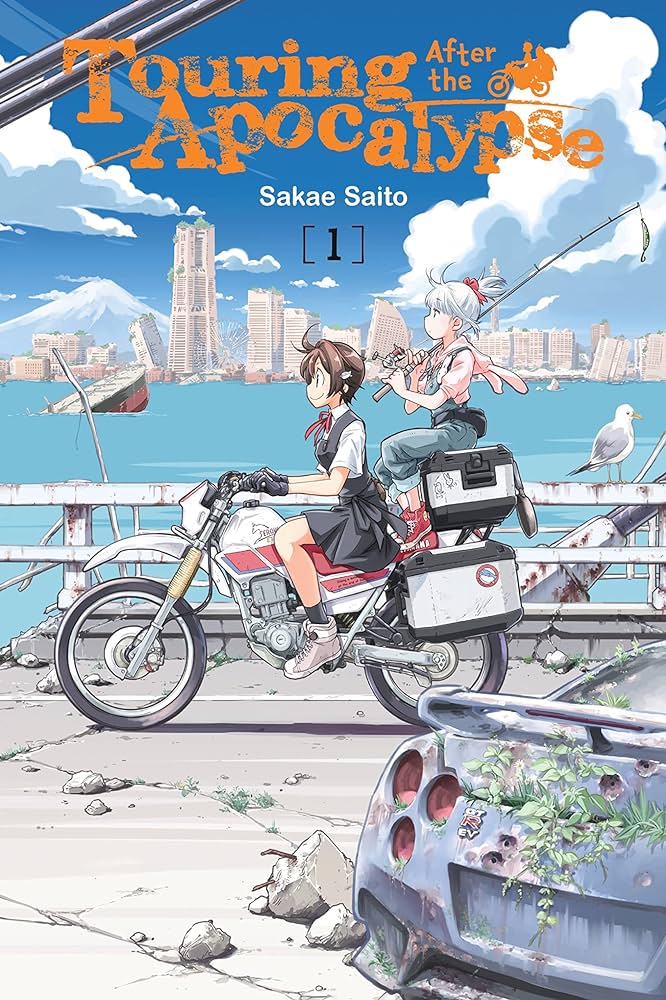
Touring After the Apocalypse, Volumes 1 – 3
by Sakae Saito
translated by Amanda Haley
2022-2023

I randomly checked these manga out from the new release section of my local library and they’re adorable. Youko and Airi are (or at least appear to be) two teenage girls who are traveling via motorsbike around Japan, seeing the sights, following Youko’s older sister’s previous touring schedule, but while the pictures and social media posts that the sister posted look (more or less) like regular posts we might see today, Youko and Airi are seeing the sights after they’re long abandoned and worn down and completely absent any other people. But they’re so excited to see everything!

In each volume, there’s some discovery that to me-the-reader acknowledges the whole tragedy of the empty and crumbling infrastructure of society and what it means that there are so many people not there. To the two girls, it’s fun and interesting and then they move on to the next thing. It keeps the whole mood light-hearted, while also highlighting how much society changes in a single generation as kids who didn’t live the history are accustomed to their lives as being the norm.

There’s a slowly building reveal that something else is going on with these two, but while there are various hints and teases so far, I haven’t figured it out yet.

I’m also really impressed with the translation job since there’s a lot of pop culture references and word games that flow perfectly naturally while I’m reading the English and I can only imagine were incredibly difficult to transpose from the original Japanese.

The Electric State
by Simon Stålenhag
2017

Oof, this is beautiful and moody and horrifying and dark, and it ends in such a way that there’s just enough hope for the future that I think “maybe…”, even though it’s very clear that there’s no real hope. But, just, maybe…?

My first thought when looking at this book was that it was an art book, full of beautiful full page and two-page spreads of various post-apocalyptic scenes. And it is! But it’s also a novella with a story, written in text and full paragraphs and absolutely no text boxes or the like, so it’s more of a picture book than a graphic novel in the way the text and the images interact.

The story is about the narrator Michelle and her companion Skip making a cross country trip in a thoroughly failed cyberpunk society. The setting is intra-apocalyptic rather than post, and oof, does it dip into all sorts of horror, with the implication that at least three types of apocalyptic disasters were all happening at once: war, environmental, and technological. It was reassuring that the events were set in the 1990s with a different history prior to that because this book would have been even more horrifying if it was set in the 2040s. There are a series of flashbacks that reveal the narrator’s backstory, but it’s only in the final third of the book that the reason for trip and Skip’s story are finally revealed, and it’s such a magnificent twist that just twists my heart and stomach.

The differences between these two titles is kind of amazing, just in tone and visualization, especially given how similar the premise and frameworks are. It very much highlights how two people can tell the same story in such different ways that they become two different stories. Reading these two so soon one after another reminds me very much of the Holy Shit! Two Cakes! meme.

The Housekeepers

By Alex Hay

I only realized after starting this novel that heist stories usually dovetail into two very disparate directions, either clever and glossy (à la Ocean’s Eleven or Leverage) or gritty and desperate (Six of Crows, for one). I enjoy both in general, but currently have more of the emotional capacity for the first, and The Housekeepers decidedly falls into the second.

The recently dismissed housekeeper from a wealthy household gathers together a team to strip the house of all its valuables. The team is all women, most of whom have served in domestic positions, with all the poverty and humiliation that entails. Each woman has her own private motivations and ambitions, and the cooperation of the team always feels like a very fragile agreement that could break at any time.

None of them are particularly likeable, though I sympathized with all of their positions and the actions they felt forced into. It reminded me a little of Parasite, where the extreme inequality is a prison for everyone involved, whether on the luxurious side or not. I could see a solution where all the characters find true purpose and satisfaction, but given the world they lived in, it was impossible, and instead I read in dread of who would get hurt the worst.

And that world, the society they live in, created a more finely pointed, subtle dread than just the suspense of the heist itself. These women who had once been domestic servants are now in much more precarious financial positions, but also have more personal freedom on their own. When they go back into service to set up the operation, the grind of the drudgery becomes its own obstacle, as manual labor and exhaustion take their toll.

The whole thing became a bit much for me at times, honestly—at times I couldn’t put the book down, but other times I had to take a break after a few pages—and the book carries it right to the end. There was no satisfying wheeling out of the perfect plan, just nail biting, and I was hanging onto the blurb raving about “a sensational triumph and the ultimate takedown of those in power” to ensure a happy ending.

The Secret Life of Albert Entwistle

By Matt Cain

The quoted praise for this book all included words like heartfelt, heartwarming, and heartbreaking, and they aren’t wrong—I laughed, cried, and aww’ed—but it all felt a little heavy handed. Not emotionally manipulative exactly, but not as effortlessly immersive as I’d hoped.

The novel follows Albert Entwistle, a postman nearing mandatory retirement, who is finding himself faced with how narrow his life has become. Intertwined with flashbacks to his youth, Albert’s early experiences with homophobia was so painful and traumatic for him that it turns into pretty severe social anxiety in general. The novel emphasizes how if you can’t be yourself in one way, it tends to bleed into closing off any sort of real relationships with people. That said, Albert’s early experiences are in no way uncommon or extraordinarily brutal, so no content warning needed for those. I get the impression that Matt Cain was more concerned with filling the lack in literature of stories with happy ending for older gay people, so understandably uninterested in delving deep into trauma, which I appreciated.

At times the book feels a little simplistic, in a sort of Forest Gump kind of way. Albert’s search for his secret high school boyfriend from 50 years ago follows a linear step-by-step trail that stretched my suspension of disbelief. On an individual level, though, Albert follows the same path that greater society has taken over the last five decades, his own self-acceptance mirroring the wider cultural progress. Cain is very purposefully walking the reader through an easily accessible guide to LGBTQ+ history.

In fact, he ends the book with some short interviews with gay men in their 60s from small Northern British towns like Albert’s, explicitly because he worried that the history was getting lost. So much has changed in such a relatively quick time, due to the very hard work of activists, that younger generations might not realize how much had to be fought for over the last few decades. Seeing Albert as a stand-in to personify a movement helped make sense of parts of his personality that seemed a little too flat or smoothed over.