Cultish

By Amanda Montell

One of my new year’s resolutions was to lose some weight and, realizing that I wasn’t going to be able to do it on my own, I looked at some diet apps. I went through the one-week free trial of the ubiquitous Noom, and though I found it somewhat helpful, the language in the lessons made me a bit uneasy. I decided to read Cultish as a counterbalance, to help me ward off any susceptibility to a diet cult. (I ended up quitting Noom at the end of the trial, partially because of the high cost but mostly because it’s nutritional guidelines did not allow for my morning latte and my evening glass of wine, and those are non-negotiable.)

However, Cultish still ended up being hugely relevant. Amanda Montell looks at a variety of ‘cult-like’ entities, from the obvious like Jonestown and Heaven’s Gate to the much milder like Instagram influencers, primarily through the lens of language and speech. As she delved into the oratory style of Jim Jones, who studied persuasive speakers ranging from Martin Luther King, Jr. to Adolf Hitler, I began to recognize similar stylings in extremist politicians (on all sides of the political spectrum, though I do think the ultra-conservative right has a special talent for it) and even in mainstream media chasing after clicks.

Catastrophizing news items or historical events, often out of context, and creating a sense of urgency sounded exhaustively familiar:

Jonestown survivor Yulanda Williams recalls Jones showing the Redwood City congregation a film called Night and Fog about the Nazi concentration camps. “He said, ‘This is what they have planned for people of color. We’ve got to build our land up over there in Jonestown, we’ve got to get over there. We’ve got to move fast, we’ve got to move swiftly, we’ve got to pool our resources together,’” she explained.

The repetition of key phrases is also a seemingly obvious but very effective oratory tool, as well. It also reminded me of the Scam Goddess podcast, which I highly recommend and which ties into this quite well. As podcaster Laci Mosley describes, scams rely on creating a sense of urgency where there’s no time to stop and think through practicalities and logistics, since you may then start seeing the logical holes.

The big cults are the ones known throughout the country, so it’s not until Montell starts diving into MLMs and fitness crazes that she turns to more personal connections and anecdotes. They are fascinating and relatable, but at the same time, pervasively LA-centric. There’s a certain glib assumption that the author and her family are the most sophisticated skeptics possible, which sticks out from the narrative, though doesn’t take away from the still fascinating analysis of language usage.
Hugo-Nominated Novellas

I’m usually not a fan of novellas (they often feel to me like bare outlines of better, longer books), but after reading Nghi Vo’s two last year, I was ready to reconsider. The Empress of Salt and Fortune won the 2021 Hugo novella category, and since I loved that one so much, I decided to check out some of the others. These authors have definitely proved me wrong – with each one, I paused multiple times to just take in fully how good it was! And honestly, right now, being less than 200 pages is perfect for my attention span.

Ring Shout by P. Djèlí Clark

I had first read Clark with his short story, A Dead Djinn in Cairo, which I highly recommend – he has a companion novella, which I enjoyed quite a bit, and a sequel novel, which I hope to read soon, set in the same magical, steampunk world. They are fun, adventurous murder mysteries with fantastical elements.

Ring Shout is a bit of a divergence, set in Georgia in 1922 during the rise of the KKK, but still maintains the exciting pace of an adventure story, as well as a wide variety of delightful characters. Clark masterfully balances the reverberating horrors of slavery with a celebration of Black life and resilience. Instead of a harrowing look at the evils perpetrated by white supremacy, he focuses on our resistance heroes who triumph against both earthly and other-worldly aggressions.

More subtly, he weaves in themes of how fear and anger can corrupt into hate, on all sides no matter how righteous or justified, and I definitely needed to do some self-reflection after reading.

Upright Women Wanted by Sarah Gailey

The tagline for this is “Are you a coward or are you a librarian?” and it is perfect! Set in a Gilead-like dystopian future, restrictive gender and hetero-normative identity has been enforced by an authoritarian government. Our protagonist runs away from her stifling home life to join the Librarians, who disperse government-approved literature throughout the country, among other things.

Another exciting adventure story, with Western overtones, since horses and wagons have once again become the norm, with the limited cars and fuel being reserved for military use. Along with the protagonist, we get to know better the other librarians, and their role in a larger-scale resistance movement. Like Ring Shout, it is exciting, suspenseful, and ultimately hopeful.

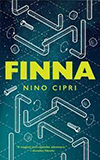
FINNA by Nino Cipri

FINNA is set in a fictional IKEA, and I’m not sure a better dystopian setting exists. Ava and Jules are co-workers and recent exes who must awkwardly work together to rescue a customer from a wormhole, which apparently not infrequently opens in random big Scandinavian furnishing stores. Another enthralling adventure as the duo have to cross through several multiverses, with a very funny but pointed satire of capitalist grind and work culture.

Each world is a fascinating look at how trade and commerce can play out in society, diverging farther from the US standard the further our protagonists go, but I have to say that the laugh-out-loud funniest parts for me were in the prime store and all the very accurately satirized agony of working retail.

The Chosen and the Beautiful

By Nghi Vo

Nghi Vo must have had this novel in the chamber ready to go, because it was published mere months after The Great Gatsby left copyright in January 2021. So, to brush off my decades-old literature degree, The Great Gatsby is basically a character study of one man, the titular Jay Gatsby, and the character is also more a metaphor for the corrupting deception of the “American Dream” than an fleshed out person. There’s a lot of room to fill out the lives, thoughts, and feelings of all the characters, and Nghi Vo does that very well.

The narrator is Jordan, the thinnest of the central five characters in the original, so with the most room for creative exploration, and Nghi Vo sure takes advantage of that! She’s now Vietnamese, adopted as an infant by a wealthy white missionary, and now in young adulthood doing her best to ignore anything that makes her stand out from the other bright young things. She is also untrained but agile in the Eastern magic of paper cutting, and this magical element is what really diverges from the source.

It is mostly incidental to the plot but fascinating, and there were several times where I wish the novel had thrown out the source plot entirely to just explore this magical and much more diverse world. On the one hand, the multi-dimensional Jordan, Nick, Daisy, and Tom are more interesting to read about in detail (Gatsby remains a bit of an enigma); on the other hand, those details somewhat undo the pivotal central message and theme of the original.

The very act of adding dimension negates the sense of a flat façade that Fitzgerald created, but Nghi Vo also plays with that idea in interesting, and occasionally very literal ways, as with the magical paper cutting creating animated illusions. I think in the end, I found the book more interesting than enjoyable, and not up to the very high standards of her previous two novellas, which Rebecca reviewed last year, but with all that, I still think it is well worth the read.

Meddling Kids

By Edgar Cantero

Just read the blurb for this and see if you aren’t intrigued! I immediately put a hold on it and was eagerly anticipating its arrival, but upon reading quickly realized that it’s not really my thing. I get what Cantero is trying to do and I think it is really interesting, but for me, it doesn’t quite work. He wants both a winky satire/nostalgia piece and a dark, shocking horror/mystery, and they each undercut the other.

The first 50 pages were a bit of a slog, as Cantero set up the characters and setting. He really, really likes a simile, and I can’t say that I feel the same. Not everything has be like something else! Some things are just themselves! And often the similes got so convoluted, it actually obstructed understanding rather than assisted: “The night was cold but gentle like an X-rated metaphor.” What does that even mean?! “From the mining equipment buried in that station like implausible goodies found inside pyramids and hellgates for the use of video game characters, Andy picked up a few items she deemed useful.” Sigh.

Once the action picks up after about a hundred pages, I started enjoying it more for the plot itself. The characters are likeable enough once the author stops rhapsodizing over their physical and mental attributes. The plot really is a good one, too, flipping the standard cartoon final reveal of a man-in-a-mask to become a façade covering something much darker.

Meddling Kids would make a brilliant movie (with a pretty serious editing job), and the author clearly agrees, painstakingly setting up sequences of physical comedy and Rube Goldberg-like action that would look stellar on the screen, but bog down the pace for the reader. Of course, even those sequences are immensely clichéd – it’s meant to be, that’s part of the joke and the homage – but that also doesn’t prevent it from also being eye-rolling. The writing style very much isn’t for me, but I think a lot of readers would enjoy it much more than I did, as testified by the raving reviews and cover blurbs.* Also, to give credit where it is very much due, Cantero takes incredible care to avoid any serious animal harm: even the literal canary in the goldmine implausibly survives intact.

About midway through the book, I checked whether Edgar Cantero had made an appearance in The Midnight Society (he has not, as far as I know), which is one of my favorite twitter accounts. The author lovingly skewers a wide variety of horror authors in ongoing tweet-length dialogues, and it makes me laugh regularly and introduces me to some new authors and some truly wild details about authors I had thought I’d previously known!

*Though, actually, when I went on GoodReads to confirm this, the majority of reviews sound the same as mine – good premise, weak execution, and they brought up some more serious issues of outdated language referring to intersex, transgender, and lesbian characters, as well as some broad racial stereotyping. I was willing to give some leeway for this since Cantero is Spanish, and Spain and Latin American countries use different terms than we do (even in translation), but readers should definitely be forewarned about that.

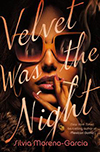
Velvet Was the Night

By Silvia Moreno-Garcia

I am a big fan of Silvia Moreno-Garcia, and I love following her across all her genre hopping: Gods of Jade and Shadow was a breathtakingly dreamlike and philosophic fantasy novel, Certain Dark Things an engrossing and gritty vampire/mob suspense novel, and Mexican Gothic a beautifully atmospheric and bizarre gothic (of course). And now, Velvet Was the Night is a picture-perfect noire in every way!

In the acknowledgement, Moreno-Garcia mentions that noir is a proud tradition in Latin America, and she has certainly done it proud with every character, scene, and even the descriptive tone of the writing. Velvet Was the Night centers around two very distinct protagonists: an apolitical, daydreaming woman stuck in a secretarial job she loathes, and a young thug hired to infiltrate and repress (i.e. beat) student and/or communist protests. Moreno-Garcia teases out throughout the book how similar they are to each other, regardless of their wildly different circumstances, as well as how each of them incrementally matures through the events that push them outside the ruts of their daily lives.

Like all good noirs, Velvet Was the Night connects the daily lives of these two individuals and the people around them to the wider scope of politics. In this case, the politics of 1970s Mexico are complicated and literally foreign to me, and yet Moreno-Garcia somehow manages to spin it out in a way that I could understand and follow along to, starting small and generalized and building up the complexity of the different factions along with the plotlines. It felt like some kind of magic trick and I have no idea how she kept me tracking all the twists and turns!

The Twenty Days of Turin

By Giorgio De Maria

Written in 1977, The Twenty Days of Turin has been a cult favorite in Italy that only got an English translation in 2017. I was intrigued when I read reviews saying that this short novel (only 144 pages) depicts a proto social media far more accurately than any early cyberpunk authors. It’s not a spoiler to explain the setup: before the start of the novel, several young adults established “The Library,” where citizens of Turin could submit and read anonymous personal diaries. It was intended to help lonely and isolated individuals find connection with their neighbors, but quickly devolved into mean-spirited diatribes and grotesque confessions. Stunningly familiar, right?

After several mysterious, violent murders, The Library is closed down and most of the contents are burned. The novel is narrated by a local author several years later, attempting to investigate the unsolved murders and their connection to the library for a new book he is writing. He interviews several key people, and uncovers deeper levels of conspiracy in this cross between a noir mystery and a horror/fantasy novel. The conclusion ties in surprisingly with another current social debate, but elaborating any more would be a full spoil.

The pacing is odd, with long philosophical discussions between the narrator and his interviewees mixed with growing suspense and sudden outbreaks of violence in a very disconnected, dreamlike way. The narration did not always focus on what I expected to be the most interesting parts: there is less about the actual library than I’d have liked, and more description and backstory of each person interviewed than I felt was necessary. I wasn’t sure if the disconnect for me came from it being Italian, almost 50 years old, or in a genre I’m not overly familiar with.

I recommend it because it is short, interesting, and different, though not as mind-blowing or entrancing as I’d hoped on the first description. My library edition also came with two shorts, a supernatural short story featuring Lord Byron and some A+ satirical writing, and a somewhat dry essay on the new pop-rock music of the 70s and its cultural significance. Both were also very odd but entertaining in their different ways.

As an aside, the descriptive blurb on the novel says it was written during the height of domestic terrorism in Italy, and it made me wonder if in forty years the 20s would be considered the “height of domestic terrorism” in the U.S. For more context, I recommend this Goodreads review by Luca Signorelli, acknowledged in the translator’s notes as a key figure in bringing about the translation.

The Mueller Report: 3 graphic novels

I was certainly never going to read the actual 400+ page report, so I was intrigued with the idea of a graphic novel that breaks it all down. Then, when I saw there were three different versions, I clearly had to compare and contrast!

The Mueller Report

By Shannon Wheeler and Steve Duin

I read this one first because the illustrations are fun and cartoony, if not exactly true to life (I very much appreciated the authors including footnotes identifying key actors on each page and an illustrated index, since there are so many, and middle-aged white men in suits tend to all look alike anyway).

In 200 pages the graphic novel gives an impressively comprehensive overview of the entire report, breaking down the two different probes and the final conclusion that managed to disappoint and anger pretty much everyone. Because they have so much territory to cover, it moves quickly from event to event without delving into any one of them deeply.

The Mueller Report Illustrated: The Obstruction Investigation

By The Washington Post

This is the one I was most anticipating, with the most realistic graphics and the heaviest hitting analysts, but I was a little disappointed when I realized that it only delves into the second probe (which I only knew to distinguish because of Wheeler and Duin’s graphic novel). It does, however, give more nuance to events that I then realized had been compressed in the previous comic, and provides some of the supporting evidence in reproduced memos and articles. That said, this being The Washington Post, their own articles are heavily featured, of course.

However, if you, like me, think this is basically the only way you are going to be able to review the Mueller report, this is available free online with a scrollable layout here, so I recommend checking it out.

The Mueller Report Graphic Novel

By Barbara Slate

This Mueller Report went back even further than the first one, setting the stage in 2014 with Russia’s Internet Research Agency and the initial plans for Trump Tower Moscow. It is also the shortest of them all at just 107 pages, so it whizzes through everything at a brisk pace, occasionally leaving me a little lost among all the names, even after having the read the other two. The illustration style, too, was sketchy and inconsistent enough that I struggled to match the figures to the real life people.

That said, I think Slate really shined best in the occasional, isolated full-page graphics each dedicated to one specific issue, such as Russia’s approach to organizing political rallies in America and the search for Hillary’s emails.

***

All in all, I found them all interesting and entertaining, and while I didn’t grasp everything, I’m much better informed than I was before. What I found particularly interesting was seeing what scenes all three decided to emphasize (Trump’s unorthodox one-on-one dinner with James Comey, Chris Christie’s prescient warning that Flynn would be an on-going scandal, Trump keeping Session’s resignation letter even after asking him to stay) and where they diverged.

meh

I think I’m feeling a little cranky because I finished the complete Astreiant series, which just seemed to fit everything I like best in a novel, and now I’m vaguely disappointed in every novel I’ve read since.

Ladies’ Bane

By Patricia Wentworth

I’ve had Patricia Wentworth on the periphery of my to-read list for a while now. She’s a contemporary of Agatha Christie, and is often compared to her, and I do love my Agatha Christies! I picked Ladies’ Bane sort of random, thinking that it sounded pretty gothic, which I’m also partial to. And it was very gothic! A young lady marries a man in a whirlwind romance and disappears to his county estate, and when her cousin comes to check on her, she finds her much changed with no idea who to trust. Classic gothic! And Wentworth’s mainstay detective, an elderly ex-governess, doesn’t appear on the scene until a quarter of the way through. 

But I don’t know…I read it quickly and enjoyed it, but it very much lacked the spark of Agatha Christie. The characters were not quite dimensional enough, the mystery not quite twisty enough, and the personal touches were a little more crude and even a bit mean. I think this is why detective Miss Silver didn’t quite catch on to the extent of Miss Marple. She’s more judgmental and reproving, and her apparent signature quirk of quoting Tennyson doesn’t really help. I asked my mom, another big Agatha Christie fan, whether I was just missing something with Patricia Wentworth, and she agreed that she hadn’t taken to her at all either.

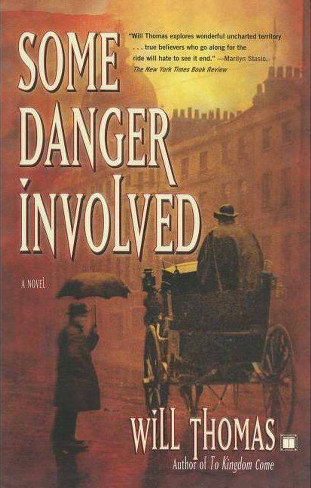
Some Danger Involved

By Will Thomas

This mystery is very consciously and closely inspired by Sherlock Holmes and Watson. It starts intriguingly enough with our Watson-figure, a down-and-out disgraced academic applying for the job as assistant to an enquiry agent who is demanding and idiosyncratic enough to run off all other applicants. The enquiry agent, the assistant, and surrounding characters are all interesting in distinct ways, but after a while I wanted deeper insight into their characters. The detective himself appears as a bit of a Mary Sue, with the universal respect he garners and his expertise in a range of martial arts. I was unsurprised to read in the author’s biography that he himself studies and practices several forms of martial arts.

The plot also centers around the Jewish community in London in the nineteenth century, and again, it was interesting, but I was a little uneasy that the author may not know enough about Jewish traditions and culture to write accurately and sensitively about it, especially with the lack of subtlety in other parts of the book. So, overall, I enjoyed the book well enough, but wanted more depth across the board. 

Continue reading

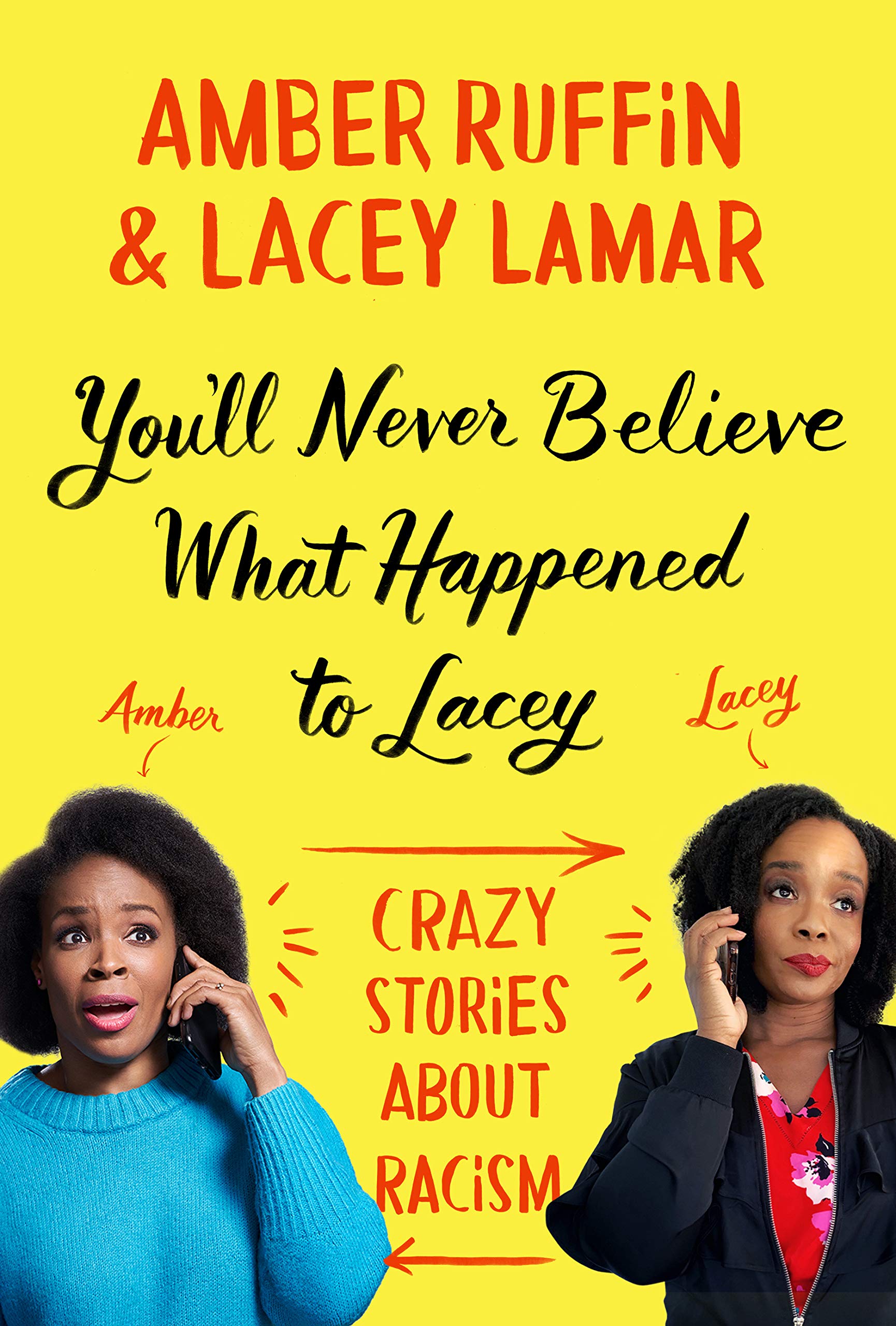
You’ll Never Believe What Happened to Lacey

By Amber Ruffin and Lacey Lamar

Comedian Amber Ruffin relates, with her sister’s help, all the bonkers stories of racism that her sister Lacey experiences in her hometown of Omaha, Nebraska. As she writes in the introduction, these stories will shock white readers and relate to Black readers, and man, was I shocked! She also warns that many of the stories don’t seem to have any logical motivation behind them, that people just seem to wild out for absolutely no reason, and that is racism in a nutshell.

At one point, after a particularly enraging story, Amber writes, “I have never been able to understand why white people have such a low tolerance for hearing about racism.” And I thought to myself, I could tell her why. It’s that most of us white people have the same sense of race relations as very young Black children before they’ve been fully exposed to the onslaught. I went most of my life thinking that the vast majority of people are generally decent and trying to do right, though they may stumble occasionally. All while Lacey, her siblings, and her parents experience daily racist words and actions from people just being mean to be mean.

It is a real testament to their writing how laugh-out-loud funny the book is, and how well they capture their relationship as sisters on the page. While Lacey deals with some truly outrageous shit, she often gets her own again in satisfying ways and reassures the reader that she is doing just fine with a loving family and friends and successful career. Of course, she has her sister to commiserate with as well, and I’m just grateful that they let us readers take a peak into their conversations (not to mention the brilliant photographic evidence)! The book alternates fonts for the two, which is very effective, but afterwards, I somewhat regretted not listening to the audiobook read by the two authors. The conversational tone makes it a quick read, but I bet would really shine in audio.

Leaving Isn’t the Hardest Thing

By Lauren Hough

I first read Lauren Hough in her eye-opening expose of life as a “cable guy,” which is also where I learned that some people refuse to let service workers in their home use their bathrooms, and am now very explicit about inviting them to, if needed. I immediately followed her on twitter, where she is very smart and funny, and very occasionally mentions that she grew up in a cult. I’d always thought she meant it hyperbolically, like her family was very conservatively religious, but then she announced her book of essays which would cover growing up in the Children of God cult. I thought oh shit, and then immediately preordered straight from the publisher.

And, whew, this book has such a strong narrative flow that I couldn’t put it down, but then also my head was so full of thoughts and feelings that at the same time I wanted to take a moment to process them all. Each essay connects so seamlessly with the next that I also kept forgetting it wasn’t a single narrative and was slightly puzzled (though not bothered) by the jumps back and forth in chronology. While the essays are all autobiographical, they are sorted by themes rather than chronologically. So, there is some really interesting recursion, where Hough revisits the same events in different essays, reflecting on them in different ways. It feels like Hough is sharing her own recovery with us, circling closer to the trauma that came out of her upbringing, coming at it from different directions to make ultimate sense of the whole. It feels raw and personal in a way that I’m not sure I’ve read before.

Hough relates all of this in a matter-of-fact voice that reminded me a bit of the noir style of writing, actually. Like, the world can be a terrible place where terrible things happen, but individuals just do the best they can in the circumstances given them. And that, while systems and organizations are inevitably corrupt, the connections you make with other people can be life savers. It’s an odd combination of grim and comforting at the same time, and I love it in noir and I love it here.