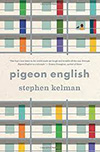
Pigeon English

By Stephen Kelman

I thought this was a murder mystery with an atypical narrating protagonist, like The Curious Incident of the Dog in the Night-Time (which I loved) and The Maid (which I liked well enough), so I wasn’t really prepared to for this very literary novel about poverty in the UK. It was very good for what it was, but in this third year of the pandemic, I really need to stick to my low-stress cozies. That said, as much as I felt that I really didn’t have the emotional bandwidth for this, I also couldn’t put it down.

12-year-old Harri lives with his family in one of London’s housing projects, and when an older boy he recognizes from school is found dead, he and his friends decide to investigate.  Harri himself is cheerful, enthusiastic, and generally optimistic in a quite grim world, that his narration kept me pulled in, even when his young London slang was almost entirely incomprehensible to me. As a warning,  there are also a number of slurs, insults, and general ignorance, which seems entirely accurate to the protagonists but also got occasionally tiresome.

However, the hardest part of reading this was seeing how poverty grinds up everyone in it, regardless of how they try to escape or even claw out some bits of joy. It is beautifully written, with some surprisingly poetic narration woven in, but very much a gritty study of often-overlooked communities, framed around this one murder, rather than a mystery novel.

Cemetery Boys

By Aiden Thomas

Cemetary Boys is a very seasonal read right now with its cemetery setting, leading up to El Día de los Muertos.  Yadriel was born into a family gifted with divine abilities. All the women of his family serve life, able to heal even mortal injuries, while the men serve death, leading lost spirits to their afterlife. Yadriel is trans, though, and while his family recognizes him, they insist that Lady Death will not, and refuse to let him perform the necessary male ritual that will awaken his powers.

When Yadriel attempts the ritual in secret, with the assistance of a cousin, he accidentally summons the wrong ghost in the process, a fellow classmate from his school. The ghost challenges Yadriel to solve his murder, and in the process, they uncover a slew of disappearances throughout their LA neighborhood. It’s a great premise and well-thought out mystery, but I realized early on that the novel is very much for young adult readers, perhaps even middle school rather than high school. I liked and cared about the characters, but felt more sympathy for the overwhelmed and often clueless parents and grandparents than I did for the teenage protagonists.

It was also quickly clear to me what was going on with the mystery, which I took as another sign that this is truly a book for younger readers, ones who are still being introduced to plot twists and suspense in books. I would have loved this book in my preteens, and I feel a little sad that now I found it at times tiresomely predictable, though I suppose that is an inevitable part of getting older. Happy Day of the Dead, everyone!

Admissions

By Kendra James

I first heard about this book during Kendra James’ very funny guest stint on my favorite podcast “Yo, Is This Racist.” I highly recommend the episode, both because the hosts are always very funny and smart and because the stories James tells from the book got me hooked (granted after a few months). It is a memoir of her experience as the first Black legacy student at Taft, a fancy prep school in Connecticut, and the whole thing was a real eye-opener for me. In the early 2000s with nascent internet and social media, her high school experience was wildly different than mine, and it was often hard to parse whether that was due to the time period, the quality of the school, or race. Regardless, she captures this moment in her life with such detail that I really felt like I was getting a clear look into a life much different than mine.

On the one hand, I never really understood prep schools, feeling that at this point, for better or worse, most high schools sort of vaguely aim their students toward college instead of trade apprenticeships. However, James reveals the extraordinarily high level of guidance students at Taft got when applying for colleges, which really hammered home the extra privilege that makes these students much more likely to go to prestigious colleges and universities. (It also made me mad all over again about the college admissions bribery scandal, since they already had such a leg up!)

On the other hand, she was one of a handful of Black students in an overwhelmingly white school (in an overwhelmingly white state), and of course that came with a fairly constant barrage of aggressions, both micro and not so small. James is so funny overall in her writing that it came as a surprise how difficult some parts are to read. She does an equally skilled job at unpacking the oversized responsibility that is piled on all the students of color, who are also still so young and just coming into awareness of themselves and the world around them.

What struck me hardest from James’ memoir was how acutely James and other students of color could distinguish between individual racism, which was often more blatant, and systemic racism, which though more subtle, could hurt them in much wider ways. This really gets at what many white people, myself included, often don’t see: some rando shouting the n-word is disgusting, but a centuries-old institution requiring the Black, Latinx, and Asian students to continuously prove their worth to both their peers and much of the faculty is much more lastingly harmful. James and her fellow students of color recognized that immediately, and I felt bad that it took me so long into adulthood to begin to see the same thing.

I also have to admit that I recognized more of myself than I would have liked in her ignorant white classmates. My own high school was also very white, and while I did not actively hold racist beliefs, I just went with the cultural flow, and the flow in the Texas public school system was most definitely racist. Admissions gives a clear, fairly universal, real world example why not being racist isn’t enough, and why we need to aim to be anti-racist instead.

I only found out in the acknowledgements (for some reason, I’ve started reading them dedicatedly, and it feels somehow very middle aged of me) that James first began to write about her experiences on our beloved defunct website, The Toast!

A Splendid Ruin

By Megan Chance

Alison Green recommended this book a few weeks ago on her blog, Ask A Manager (one of my daily reads), and it sounded so gothic, full of the secrets and decadence of the very wealthy, that I was hooked! It actually turned out to have unexpected similarities to The Maid, which I’d just previously read, both featuring fish-out-of-water protagonists who face serious endangerment from the society around them. In this case, May Kimble is an impoverished orphan who is invited to live with her estranged, extremely wealthy aunt and uncle after the death of her mother. Once there, she faces a whole slew of warning signs that she tries to explain away with her own inexperience.

Like The Maid but even more so, the tension ratchets up until the worst has happened, but then May faces the truth and finds her own strength in recover and it is very satisfying. It also has the subtlety and depth that I missed in The Maid, which in retrospect I think was the detail of the setting. Author Megan Chance gives 1900s San Francisco such color that it is almost its own character. The first half of the book leads up to the devastating fire that destroyed most of the city, and the second half occurs right afterwards, and Chance does an amazing job of bringing it all to life.

Every scene unfolded new and intriguing details about each individual character and the society as a whole. Between the vibrancy of the historical setting and the taut suspense of the impending doom, I truly couldn’t put this book down. I basically read it straight in three days in any free time I had, and then found the ending completely satisfying.

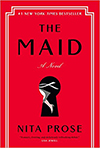
The Maid

By Nita Prose

I’d been on the waiting list for this book for several months, and when it finally came in, the librarian mentioned that it’s been coming in and out constantly. I’d heard it recommended as a mystery in the form of Agatha Christie, which of course sold me on it, but I’m not sure that I get the comparison, other than it is a mystery and a twisty one. Perhaps also that the narrating protagonist is as overlooked as Miss Marple often is?

Molly is a very skilled maid at a high-end hotel, and also very clearly autistic. I have no idea how accurate the author’s portrayal of autism is, but it certainly creates an interesting perspective. Whole scenes told one way in Molly’s perspective are clear to the reader as having entirely different interpretations under the surface that she’d not recognizing. Many of these are fairly unsubtle, but it does create an interesting puzzle for the reader to figure out exactly how is being missed or misinterpreted.

It’s a bit agonizing at times, to be honest. Molly is such a decent person, left on her own after the death of her grandmother and trying so hard, and we as the readers watch people manipulate and use her. Some scenes are vaguely funny, which made me a bit uncomfortable (Molly herself worries about not knowing if people are laughing with her or at her, and I sometimes wasn’t sure if I as the reader was, either), but more are depressing at the ugliness of people who will do anything to get even the slightest edge in life.

Fortunately this is balanced out by the charming handful of people who appreciate Molly and are ready to help when she finds herself in deep trouble. This begins when she finds a guest has died in one of the rooms, a wealthy man who had enough enemies to make his death suspicious. Molly’s unemotional reaction to it quickly attracts the attention of the police, so she and her growing number of friends scramble to discover what really happened before it can be pinned on her. I very much enjoyed the book, and read it within a few days, which is very quick for me, but the occasional lack of subtlety made the story feel somewhat unrefined in places. It has already been optioned for a movie due to come out next year, with the excellent Florence Pugh as the lead, which I think may actually be even better than the book. My sense is that the more obvious parts of the book will read better on screen than on the page, so I’m already eagerly anticipating the movie.

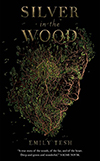
Silver in the Wood

By Emily Tesh

First off, I have to recommend Tor.com’s eBook club, where they basically just offer a free ebook (or three) each month. A few months ago, the offering was a compilation of Witchmark, All Systems Red, and Silver in the Wood. I’d already read and loved both Witchmark and All Systems Red, but it took me a little while to get around to reading Silver in the Wood. Well, I read it in two days, and loved it, too!

It is very short, under a hundred pages, so more of a novella, but it just feels very tidy, if that makes sense. The story actually feels a bit like an ancient forest, quiet and mystical. There are no extraneous flourishes: only a handful of characters and the entire story takes place in a cabin and the surrounding woods. As a reader we get the pertinent information as we need it, and I don’t want to give any of it away early here.

I will say that the book is separated into two parts, and I was surprised and delighted by the shift in tone between the two. Part I has a mild melancholy that I could sink into, and Part II had me laughing out loud on the first page. Because I was reading Silver in the Wood as part of a compilation, I didn’t have a clear sense of where I was in the book until I’d suddenly reached the end. It had a satisfying conclusion that fit the rest of the book, but I was sad not to have more. And then, I discovered it was the first in a duology!

Drowned Country

Unfortunately, I didn’t like the sequel nearly as well. I was so happy to revisit the people I’d loved so much in the first one, but a couple of years have gone by in the world, and things have fallen apart. The general tone of the book shifted from quietly melancholy to angsty, and there wasn’t much humor at all.

A big part of that shift was due to the change in protagonist. While both books are written in third person, one character’s internal thoughts and feelings are expressed, and I didn’t like the internal life of this book’s protagonist nearly as well. His general personality was a slight irritant to me throughout the book, even when other characters and events caught my attention.

And the plotline is interesting, if somewhat recursive of the previous book. The ending was satisfying enough, too, that I don’t regret reading the book. Our protagonist matured enough over the course of the story that I’d probably read a third sequel if one came out, though this seems pretty definitively a two-parter.

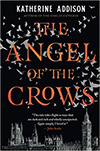
The Angel of the Crows

By Katherine Addison

Someone had recommended The Angel of the Crows as Sherlock fanfic with the serial numbers filed off, and as Rebecca pointed out, they weren’t filed off much. For me, though, this had the benefit of the book feeling immediately comfortable even in the unique setting. Set in an alternative Victorian Era, angels guard most of the public spaces of London, while their fallen numbers rampage in war zones. Doyle has returned from war in Afghanistan (a depressing constant) with incapacitating wounds and a couple of secrets that are slowly revealed over the course of the book, and finds housing with the titular Angel of the Crows, who solves mysteries to pass the time and keep London safe.

Doyle, of course, quickly gets roped into assisting the angel Crow, and both of them are so eminently likeable with their various flaws and idiosyncrasies, and their relationship was so sweet, I could have read twice as many stories of their adventures. Crow’s lack of understanding of many human traits makes much more sense and is much more sympathetic, coming from a literally unearthly being. Addison also builds off of a variety of Arthur Conan Doyle’s most famous stories, including the Hound of Baskerville and the Speckled Band, and I really enjoyed seeing the reinterpretations in a world where werewolves and vampires exist openly.

Rebecca read it first and warned me that the book has very episodic plotting, with many shorter cases solved within the arc of the longer Jack the Ripper investigation. Knowing what to expect, I read the book somewhat like a collection of short stories, and found that especially accessible, too. None of the mysteries were as complex as one would get in a single dedicated novel, but I could read one each night and then set the book down satisfied. It’s been such a nice end to my day all this week that I’ve got a bit of a book hangover now, even though my to-read stack is towering.

Devil House

By John Darnielle

John Darnielle is the lead singer of The Mountain Goats, who I’d never actually listened to, and also a big supporter of and frequent guest on podcasts, which is where I heard of his new novel, Devil House. The main premise is that a true crime author moves into a house that was the scene of a supposed devil worship sacrifice during the satanic panic of the 80s, in order to immerse himself in the scene while writing about the event. Darnielle explained that he tried to construct the novel itself like a house, which I didn’t fully understand, and still don’t even after reading it. There certainly was a lot of description of the house, if that’s what it means?

This very lukewarm review is likely due to me as a reader, rather than the book itself, though it is also a much different book than I was expecting. This was just not the book for me (I also listened to a couple of Mountain Goats songs out of curiosity, and they were also Not For Me, so I guess that’s something learned all around). On the one hand, I was immersed enough in the entwined stories that at times I struggled to put the book down, and there was never any question in my mind about finishing it. On the other hand, I was viscerally and generally annoyed for pretty much the entire week I was reading it.

As much as I love mysteries, especially murder mysteries, I hate reading true crime. And this is not true crime, in itself, but I think Darnielle probably does a good job of mirroring it, while writing about his author. I had previously thought I didn’t like the sensationalizing of real victims in true crime, but as I read Devil House, I realized instead of any sort of lofty ideals, I really just find the psychological delving to be boring. I’d much rather read about solving the logistical puzzle of a mystery than the thoughts and emotions of the killers and victims, and there’s a lot of the latter in this novel.

The bulk of the book shifts between three time periods, our author in the present day researching his book, the double murder in the 80s, and a separate double murder in the 70s that was featured in the author’s breakout book. I kept waiting for there to be some connection revealed between the three, but I think Darnielle was trying to do something more subtle, and he was giving three ostensibly different examples that come at the same core message from different perspectives.

The book ends with a lengthy treatise on truth, stories, what gets remembered and what doesn’t, and what gets amplified in stories and what doesn’t. Darnielle writes all this with an universality (“we all…”) that captured much of my frustration with the book as a whole. I often felt like I was supposed to be reading something poignant and informative about how humans all relate to memories, but it didn’t match my relationship with my own past or memory at all. So it’s alienating, at the very least, to read what is clearly supposed to be a reflection of humanity overall, and to find it so strange and unfamiliar.

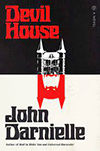
As an aside, I think the cover reflects all of my feelings very well: it is a really striking graphic design, but I realized pretty quickly that the house pictured on the cover doesn’t match the physical description in the book at all, which was a continual irritant.
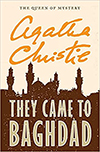
They Came to Baghdad

By Agatha Christie

I was first intrigued to read a spy adventure novel by Agatha Christie, rather than her more usual English murder mysteries, but it also turned out to be a disconcertingly timely read. Published in 1951, it is all very Cold War, with tensions running high between the United States and the Soviet Union, with a planned global summit in Baghdad in an attempt to ease those tensions and prevent a third world war so soon after the second. It’s been a very odd week to read a book with such similarities and equal disparities to current events! (The Iraq of 1951 is also strangely discordant, since it is both through Christie’s blatantly prejudiced eyes, though she in fact loved the country herself, and before many of the subsequent wars that tanked its economy and culture.)

For all the overarching motivation of preventing war between America and Russia, it is really a story of England and Iraq, with the many English expats converging on Baghdad for a madcap variety of reasons. The whole plot has Christie’s classic clues and twists, but has enough screwball comedy to it that I’m very disappointed that no one has adapted it to film yet. Our main protagonist, Victoria, is a mediocre typist recently fired in London, who impulsively follows an attractive young man to Baghdad. She is more gutsy than intelligent (thus her initial poor decision making), but to the detriment of all the espionage around her, she is unexpectedly observant and also a somewhat compulsive liar. Christie’s mastery really shines in the final denouement, when all the smallest clues, including some that I had chalked up to minor writing flaws, came together very quickly in a very satisfactory way.

A very minor spoiler, the central conflict is explained to Victoria midway through the book, and hit me like a flash of familiarity:

Continue reading

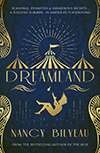
Dreamland

By Nancy Bilyeau

I was positive that Kinsey had recommended this book to me, but when I texted her to tell her how much I was enjoying it, she was like, so, tell me about this book?

It’s a murder mystery, sort of: there’s definitely someone killing young women on the Coney Island boardwalk, but it is sort of in the background for most of the book. It’s also got a lot of the earmarks of gothic mystery: a very wealthy family with simmering tensions and a young woman trying to escape the strictures of the family.

The whole book is so delicately written: it is clearly much better to be super rich in New York in 1910 than it is to be super poor, but it still seems to suck pretty badly.  (It is probably by far the best to be comfortably middle class.) I didn’t expect myself to sympathize quite so much with such a wealthy and indulged protagonist, but Bilyeau does a great job of showing how imprisoning and insulating/isolating this level of wealth does. Peggy wants very much to be a good person, but her very existence within the power that her family’s wealth yields is a threat to everyone around her not equally protected by wealth.

After being coerced by her family into attending a summer retreat to Brooklyn shore, she falls into a star-crossed romance with an immigrant artist on the boardwalk. As her naivety with the everyday struggles of the rest of the world threatens his life and livelihood, I did wonder what exactly he saw in her. Peggy is incredibly sympathetic, but not always likeable, and I credit the writing immensely for that. She has such good intentions and tries so hard, but often falls back into arrogance and selfishness in times of stress. It illustrates so well how this type of upbringing can be corrupting despite one’s best intentions. (For me, the artist, Stefan, was the weakest character, sort of an unrealistic ideal that made me grudgingly suspect him of fortune-hunting, agreeing with many of the other characters.)

I did think the ending fell a little short of the suspense leading up. The more I read, the greater appreciation I have for mystery authors – it is really hard to set up a puzzle and then pull off a solution that fits all the pieces while still being a surprise at the end. It’s a rarer skill than I’d realized, and this book doesn’t quite meet it, but it doesn’t negate the beautifully atmospheric pages leading up to it.

Also, I recommend the final author’s note, since her description of which real-life people and places she based characters and settings on is fascinating!