By David Clawson
 This showed up on my daily Bookbub email, and I was curious enough to read the excerpted section on Amazon, and that first chapter impressed me. For a modern, queer retelling of Cinderella, the author does a good job of characterizing a stepmother and stepsiblings who are self-centered and incompetent but not wicked, and a protagonist who is enough of an introverted neatnik to fall into a Cinderella role when the family runs into hard times.
Unfortunately, chapter 2 opens with meeting the fairy godmother drag queen, and while the actual sequence of events is clever, I’m not sure David Clawson actually knows any drag queens, and I’m almost positive he doesn’t have any black friends. I’m saying it gets real awkward real fast.
I really wanted to find excuses, so I spent far too much time thinking, oh, the protagonist is just so young and naïve, and perhaps this is just showing his own ignorance before he grows as a person, until I just couldn’t fool myself anymore. The titular drag queen and her friends are the broadest caricatures, vaudevillian even. Which could almost (but not quite) be waved away with the self-aware camp-ness that is built into drag, but meeting the man outside drag was too much. We’re talking 90s-sitcom-level portrayal of a “slightly thuggish-looking black guy in oversized hip-hop clothes” (direct quote from the book, and it gets worse from there).
Finally, just to add insult to injury, in Chapter 3 we meet Prince Charming, who is “the ridiculously handsome, brown-haired, brown-eyed, square-jawed, cleft chinned J. J. Kennerly, the only child of the closest thing America has to royalty,” and I wanted to vomit. While I appreciate the almost-ligature of the r and l, the Kennedy’s are so overblown in my opinion that any attempt to make them (or a facsimile of them) into a romantic lead loses me completely.
So, I was already predisposed to dislike Kennerly when he “ironically” said something incredibly homophobic to the drag queen to shock her for mistaking (?) him for a bigot. So, I’m left side-eying the protagonist, embarrassed by the fairy godmother, and contemptuous of the prince, which is not what I was hoping to get out of a fluffy bit of summer reading.
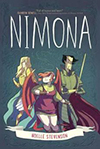 Nimona has been highly acclaimed in graphic novel circles for years now, and I don’t know why I resisted it. Sheer contrariness, I guess. But, ah, it is so good! It starts off very Tumblr-y: manic pixie dreamgirl Nimona breaks into the secret lair of a stereotypical villain Ballister Blackheart to insist on becoming his sidekick. He flatly refuses until she reveals she’s a shapeshifter, which he can see would be very useful. It is funny and cleverly written, if not especially original.
 I was telling my mom, a big Agatha Christie reader, how disappointing the miniseries was, and she casually gave me a spoiler to the novel which made me want to read it immediately. I won’t pass along the spoiler, but I will say Christie sets up so many zigs and zags that I was surprised at almost every turn, even knowing a key part of the ending.
 We finally bit the bullet and got Amazon Prime in order to watch “
 HOWEVER, have I got a podcast recommendation for you! It is fascinating, intense, and disturbing, and I have to take it a little at a time. “
 I can’t remember what social media recommended this, but a while ago, someone
  When I was relating this to my mom as perhaps the best literary take-down I’d ever read, she reminded me of Mark Twain’s savaging of Fenimore Cooper, which if you haven’t read, you need to go do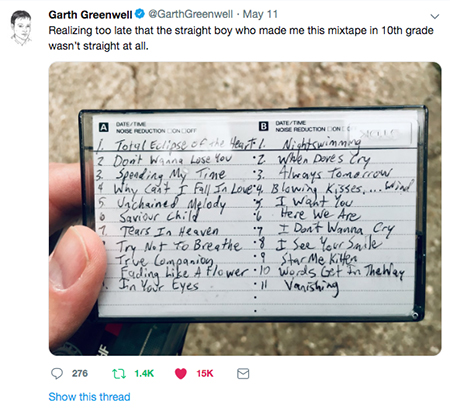
 After all my recent disappointments, I decided to go with a book with zero male voices at all. Hey Ladies! started as a randomly occurring column on the late, lamented
 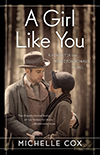 A Girl Like You features Henrietta, a beautiful young woman trying to find decent work to support her widowed mother and numerous siblings in Chicago during the Great Depression. She waitresses in increasingly risqué venues, following better money while trying to hide it from her strict mother. After the manager at one club is murdered, the handsome and charming (?) Inspector Howard convinces her to go undercover at an even shadier club to get an inside view on a possible criminal network that may have included the deceases manager.
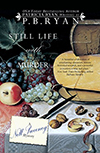 This novel also features a beautiful young woman, working her way up socially from a shadowy past of crime and poverty in Boston, just post Civil War. Nell is first introduced as the assistant to a rural surgeon, who had rescued her from her upbringing, but in the first chapter she is hired as a governess to an old-money Boston family. Through complicated circumstances, the oldest son of the family is accused of murder, and his mother entreats Nell to do some background investigation.
 Biblio-therapy