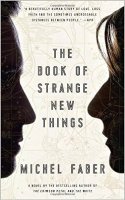
The Girl From Everywhere

girl

Okay, this one is going to be complicated to describe but hang in there, it’s worth it. The Girl From Everywhere by Heidi Heilig is this crazy mix of time travel and fantasy and a coming of age YA story that constantly spins off into unexpected directions.

Nix is a teenage girl who lives on a time-traveling pirate ship. (I know!) She was born in 19th-century Hawaii, but her father has the power to sail a ship into any original map he has–even maps of fictional places. Nix’s mother died when she was a baby so Nix has grown up on the ship with a crew of sailors collected across times and places. She has developed a knack for raising the money they need for new maps through elaborate time travel import/export schemes, and is happy on the ship that is the only home she’s ever known. But her father is obsessed with finding a map that will get him back to Hawaii before Nix’s mother died, and Nix doesn’t know whether she will even still exist if they make it there. Despite not knowing how the rules of time travel might affect her, Nix still agrees to help her father try to track down one last map of Hawaii, but to get it they’ll need to pull off an elaborate heist and not get caught by the police, local crooks, or the winds of time itself.

How does time travel work? What are we willing to sacrifice for love? What is the difference between history and myth? What do we have to give up to make our own lives apart from our family? What would Ocean’s Eleven look like in 19th-century Hawaii? There are all kinds of things happening here, but the story still feels very grounded. And even through most of the book takes place in colonial Hawaii, Nix’s father was originally from the modern-day U.S. so both Nix and the story have a very modern sensibility.

Also, how pretty is that cover?

Kinsey’s Three Word Review: Fantastical historical caper

You might also like: Time and Again is a classic time travel story, and I’ve already talked about how much I love When You Reach MeKindred by Octavia Butler is a dark take on the subject, and I’ll always recommend Connie Willis for time travel stories. But a lot of this book dealt with Hawaiian history and Unfamiliar Fishes by Sarah Vowell is a comprehensive but snarky look at that sad story.

The Bible: Chronicles 2

I am fast approaching the two-year anniversary of when I decided to read the bible within a year. And this is the 15th book (out of 39 in the Old Testament and 27 in the New Testament). So, you know, kudos to all those amazing people who actually manage to make it through the whole thing in a year. In contrast, I (very, very slowly) trek onwards.

You know how sometimes two books will be published as a book and its sequel, but in reading them you realize that they were actually intended to be one book and the publisher just cut that book in half for reasons of their own? So, yeah, Chronicles 2, the second scroll of Chronicles. It’s the same thing as the first one, with an extremely nominal break.

King David is dead, and his son Solomon is now king of Israel. After the funeral and 1,000 burnt sacrifices, God appears to Solomon asking what he wants. Seriously. (Chronicles 2 1:7) Solomon asks for the wisdom and knowledge needed to lead the people of Israel, which is actually a pretty good answer. God says that since Solomon didn’t ask for wealth, honor, death to his enemies, or long life, God will give Solomon not only the wisdom and knowledge he asked for but all the other stuff as well. Sweet!

Now recall how, in Chronicles 1 16-22 and 28-29, there are detailed descriptions of the temple that King David really wanted to build? Well, in Chronicles 2 chapters 2-4 Solomon has the temple built, with more descriptions, and in chapters 5-7, the temple is consecrated and God enters it as fire from heaven and there’s a lot of descriptions of how the temple is to be used, mostly in the form of “If X, then Y” statements.

And then we switch over the wonderful successes of Solomon:
In chapter 8, he builds a lot of towns and was generally so religious that he built a special house for his wife, the daughter of Pharaoh because he didn’t want his own house tainted with her presence.
In the first half of chapter 9, the Queen of Sheba comes to visit and inspect the situation and is so impressed that she gives him all sorts of presents and he is so taken with her that he gives her anything she wants, and then she goes away. (Verses 1-12)
In the second half of chapter 10 (verses 13-31), a bunch of other important people give Solomon a bunch of expensive presents because he is just that amazing. And then he dies.

Chapters 10-12 follow the next king, Rehoboam, son of Solomon, generally being an ass (essentially telling the people: don’t complain to me, or I’ll give you something to complain about)

Chapter 13: King Abijah reigned for three years, and there are battles and rousing speeches, and much calling out to the Lord. Also, he took fourteen wives, and fathered twenty-two sons and sixteen daughters.*

Chapters 14-16: King Asa did what was good and right, mostly by destroying the items of any other religion, including casting out his own mother. However he still ended sinful by relying on political allies at wartime and physicians when he got sick rather than on the Lord.

At this point we’re have caught up with the timeline told in the second book of Kings and there is a lot of repetition. Do you remember the list of the Kings of Judah, as recounted in Kings 2? Well, here they are again in Chronicles 2. Enjoy:

Chapter 17-20: King Jeshoshaphat
Chapter 21: King Jehoram, who died in great agony from a bowel infection and no one mourned him. Ouch.
Chapter 22: King Ahaziah dies, his mother Athaliah tries to kill the rest of the family in order to rule herself
Chapter 23: The downfall of Athaliah: there was a mutiny, she called treason, they decided it wasn’t right to kill her in the king’s house, so had her removed in order to kill her.
Chapter 24: King Joash
Chapter 25: King Amaziah
Chapter 26: King Ussiah
Chapter 27: King Jotham
Chapter 28: King Ahaz
Chapters 29-32: King Hezekiah
Chapter 33: King Manasseh and King Amon**
Chapters 34-35: King Josiah
Chapter 36: King Jehoahaz, King Jehoiakim, King Jehoiachin, King Zedekiah, and generally the downfall of the kings of Judah, with a bit of a teaser at the end for King Cyrus of Persia building the house of Jerusalem again.

Almost all of these chapters start with something along the lines of
“_____ began to reign when he was ____ years old; he reigned _____ years in the city of (Jerusalem/David).”***
and end with something along the lines of
“____ slept with this ancestors and they buried him in the city of _____. His son ____ succeeded him.”

Summary: Oh the repetition: there are a lot of kings who got up to a lot of things, but really, there aren’t any more kings than previously mentioned.

Moral: All things come in cycles, the rise and fall of kings, the good and evil of kings, and there’s no particularly good way to tell the difference between good and evil.

* Let’s pause a minute for the math: 22 sons + 16 daughters = 38 children. 38 children / 14 wives = 2.7 children per wife. And all of this in three years? It’s possible, but the timing is certainly tight. Especially given the number of battles and ambushes, rousing speeches and sacrifices to the Lord. And apparently his other behaviors and deeds were written up in the story of Iddo. So Abijah may not have lived long, but wow did he live intensely.
** Poor King Amon got four versus as a tag at the end of his father’s chapter before his son’s chapter. On the other hand, he was apparently evil and only ruled for two years, so screw him anyway.
*** A surprising number of times, it also includes “His mother’s named was ____ daughter of ______” which is kind of cool.

Next up: Ezra
Fanfiction: Star Wars edition

It has been a while since I’ve posted, mostly because I’ve either been reading books already recommended on this site (wow, was Bone Gap awesome!) or mainlining a whole bunch of fanfiction. Thus, it’s time for another fanfiction post, this time all in the Star Wars fandom.

One of the things I really enjoy about fanfiction is that there are a lot of common plot ideas that different authors will try their hand at writing. So you wind up with these sets of stories that are variations on a theme.

One recent theme that came out of Star Wars: The Force Awakens is to look at how Finn’s escape from the First Order effected those Stormtroopers left behind. These are all amazing and in many ways deal with variations on stories themselves, since the Stormtroopers hear about Finn through rumor and word-of-mouth.

Cautionary tale by Aviss:
summary:
After the Starkiller, Finn becomes a cautionary tale among the troopers.
This doesn’t always work in the First Order’s favour.

Tomorrow (there’ll be more of us) by dimircharmer:
summary:
“FN-2187 was real, right?” She sounds very young again. “Please tell me he was real.”
“I’m real,” said Finn, who was on his first patrol since his back healed. “And my name’s Finn now.”
Her eyes widened. “You have a name?
*
Or: The resistance is starting to get stormtrooper defectors. Finn helps them out.

The Story of Finn by LullabyKnell
summary:
The story they hear is that of FN-2187.
He’s a defector – a traitor to the First Order. He’s not the first, nor will he be the last, and the First Order expects to retrieve him and end him quickly.
But that’s not what happens.
The only thing Stormtroopers own are stories.

have you heard by peradi
summary:
“I heard FN-2187 was a Stormtrooper.”
Finn Sparks a revolution


Explorations of how Stormtroopers react to the events of the movie is both awesome and very closely tied to canon. There’s no reason to believe that those stories couldn’t happen. And I really want have you heard to be the plot for the next movie because it is just that perfect.

In contrast, sometimes the themes that gain multiple writers trying it out are a lot more random: such as the idea that maybe Obi-Wan Kenobi could travel back in time and ensure the tragic events of the past-now-future don’t happen. It’s such a wonderful idea that really speaks to the foundation of fanfiction: let us fix this thing so the world is a better place.

Negotiator by Esama
summary: Obi-Wan dies, wakes up and decides to live a whole different life

Waking Dream by flamethrower
summary: A simple injury during what should have been a routine mission brings shocking changes to the lives of Qui-Gon Jinn and Obi-Wan Kenobi, and may alter the future of the Jedi Order.
note: this is awesome, but also nearly 50K words long and the first in a series that runs 550K words long. Still worth reading!

this is unexpected by marbleglove
summary: a self-indulgent response to the many, wonderful time-travel Star Wars stories that send a more experienced and more knowledgeable Obi-Wan Kenobi back in time to change the many tragedies to come
note: this is quite short (little more than 1K words) and more playful than plot-ful.

As much as I love the variations on a theme that sometimes happen (and I really, really do love them!), I am also incredibly impressed with the authors who find a perspective or concept I haven’t seen before. Thus I am incredibly impressed with Fialleril who wrote a series of gorgeous short fic delving into the slave culture of Tatooine, into which Anakin was born and near which Luke was raised.

The Tatooine Cycle by Fialleril

Chosen: When Shmi Skywalker was thirty seven years old, she went out into the desert.
Seductio: He learns that he must be free of attachment.
Patriarchy: Fathers always desire the destruction of their children
Children of the Desert: They were the children of the desert, born for squalor and mystery
Amakurra: Tatooine wasn’t home for her in the way it was for Luke. But for Leia, who would never go home again, Tatooine – at least, this part of Tatooine – was strangely comforting.

How to Build a Girl

moranWay back in late 2012, in a wrap-up of my favorite books of the year, I mentioned how much a I liked a book of essays by Caitlin Moran. She remains fabulous to follow on Twitter and I read her essays any time I get the chance (her weekly column is behind a paywall, and I can’t quite justify subscribing to a British newspaper just for one column, but things do show up from time to time). But for some reason I had been avoiding her debut novel. I’m not sure why exactly, maybe because I knew it was a coming-of-age story and I was worried that it would be horribly embarrassing and awkward to read about a teenage girl struggling through puberty? But I finally got around to reading it and I loooved it.

How To Build a Girl is fiction, but is obviously largely autobiographical. Moran, like the main character Johanna, was part of a large family growing up poor in 1990s Britain. And she also stumbled into a career as a music writer as a teenager, which is the story the book largely tells. Johanna is a poor, geeky, too-smart-for-her-own-good unpopular kid who decides to reinvent herself and ends up on the edges of the British music scene working as a magazine writer. As you can imagine, sometimes this goes swimmingly and sometimes it doesn’t, but it’s fascinating to watch Johanna work out how to present herself, how to talk to people, how to construct a persona for herself–essentially how to be an adult. Which, you know, being an adult is hard and I think most of us are still trying to figure out how to do it. I haven’t seen many books that talk about this process as explicitly as this one does. But it manages to not be at all preachy or new-agey, but entirely practical.

I’m not sure how many of the details come directly from Moran’s life, but all of it feels very true–the family interactions, the fashion and makeup conversations, the music reviews. She and I are roughly the same age and I recognized a lot of the musicians and cultural references of the era, which was fun for me but was definitely an extra and not required to enjoy the book. And I should note that while this may sound like a YA novel, it’s not appropriate in any way. Moran does not shy away from talking about sex and drugs and bodies and crime and all the things that a teenager might encounter, and it’s pretty gritty from the very first page. And yet it didn’t feel exploitative or like Moran is grabbing for attention–it just felt real.

Kinsey’s Three Word Review: Snarky but touching

You might also like: Anything by Caitlin Moran is awesome. And if you haven’t read Tina Fey or Amy Poehler’s books, their stories of teenage adventure match up with Johanna’s very well. Someday, Someday, Maybe by Lauren Graham (AKA Lorelai Gilmore) is also a clearly-largely-autobiographical-novel about a young woman becoming who she wants to be, and is lovely.

Also, let me take this opportunity to shout out a couple of things that I read on my fellow blog author’s recommendations and thoroughly enjoyed. First, back in July Rebecca raved about Uprooted by Naomi Novik and she was totally right. It was a completely fabulous modern fairy tale. And Anna recently talked about The Rest of Us Just Live Here by Patrick Ness, which I liked as well. Ness has another recent release called A Monster Calls, which was also great. Different from The Rest of Us–while that one reminded me of an episode of Buffy the Vampire SlayerA Monster Calls was more like Neil Gaiman’s The Graveyard Game–but also great.

The Man in the High Castle Book vs. Movie Showdown

It often feels like people set up book readers and movie watchers as adversaries, especially when it comes to adaptations of written works to movies (or TV). “Are you mad that they’re turning this into a movie?”  “How bad will the movie be?” “If you didn’t read the book, you’re not really a fan! You can possibly appreciate the story!” And as a self-proclaimed reader who loves books, people seem to think that my loyalty will lie with books and I will be offended by any adaptation. But I actually love watching movies or TV versions of books and short stories! I find it fascinating to see how something from one medium is changed to another. What characters have to be cut or combined to make something work on screen? How does a plot need to be condensed or modified to work visually? Rather than take the changes personally, I find the adaptation process to be like watching someone work out a logic problem and I like seeing the solutions people come up with. For example, when I heard they were making a movie of the Cheryl Strayed book Wild, I just couldn’t imagine how they were going to turn that very introspective story into a movie. But the movie did a fabulous job of weaving in flashbacks while using silence to communicate Strayed’s loneliness and solitude on her hike. After I saw the movie Brokeback Mountain I went and read the source material–in that case, the movie was based on a short story, so the screenwriter had to create new material to fill out the story. If I had read the story first, I would not have believed it could be successfully expanded to a two-hour movie, but that movie is beautiful and, I think, very true to the original story. Adaptations don’t always work, of course–Little Women  is one of my very favorite books of all time, and pretty much every movie version has serious problems with casting (Winona Ryder as Jo, really?) and issues with the (admittedly) serial plot. But I also once saw a stage production of Little Women that was a failure in almost every way, EXCEPT they totally fixed Professor Bhaer by making him the same age as Jo and writing him as an absent-minded young man. He instantly went from creepy to cute. My point here is, I like comparing different media versions of the same material and seeing what works and what doesn’t, but I don’t always feel like I have to rule that one is better than another.

Having said all that, let’s talk about The Man in the High Castle. In late 2015 Amazon released a ten-episode season of an original drama based on the Philip K. Dick novel. I had never read the book, so I went into the show knowing only that it was an alternate history about a world where the Axis won WWII, and the U.S. was now divided into a West Coast occupied by the Japanese, an East Coast occupied by the Nazis, and an independent, lawless Rocky Mountain region. It’s now the early 1960s and the story follows, among other characters, members of a resistance group that are working to smuggle newsreels that seem to show the Axis losing the war to a mystery “man in the high castle” who provides them anti-Axis intel in return. The show definitely has some issues. The most primary characters–young people caught up in both the resistance and a love triangle–are the dullest on the show. Things move slowly at times, and it is dark. Really dark. Like, there were several times when I thought, “Well, surely they won’t go that far.” But, they’re Nazis! Of course they will go that far! But I really enjoyed the show overall. The world building is excellent–the scenes in San Francisco show all sorts of subtle ways that Japanese culture has been woven into the American city–and Rufus Sewell is chilling as a New York-based Nazi leader. And the newsreels that seem to show the U.S. winning the war raise all sorts of interesting questions that introduce a sci-fi element to the story (Are these fake newsreels? Are they showing our world? Is some sort of time travel happening?). By episode 10, the plot was moving along at a good pace and it ended on a cliffhanger than makes me very eager to check out (the yet-to-be-announced) Season 2.

As I was watching I heard, either online or on podcasts, that the plot of the show branched off from the book very quickly, and that in the book the newsreels were actually books themselves. This kind of change–changing a book to a film so it plays better in a visual medium–is exactly the sort of thing that fascinates me, so I decided to read The Man in the High Castle and see how the book compares. WELL. Look, I know that Philip K. Dick is a highly-regarded giant of science fiction, and I’m sure there are people out there railing about how the TV show completely ruined the book. But as far as I am concerned? DO NOT READ THIS BOOK.

First of all, the plots of the two versions are wildly different, and the characters just barely even line up. The Rufus Sewell character (probably the most compelling on the show) isn’t in the book at all, and most of the other characters bear little resemblance to their TV versions. The plot does involve a mysterious book and a resistance movement, but that’s about it–it feels as if the TV writers took the basic premise of an occupied U.S. and the character names, and then went off and did their own thing. And for the most part, that new thing is more complex, with more moving parts and more people, than the book. The TV show did drop a few things that could have been interesting–in the book the Nazis are in the process of colonizing Mars–but that were presumably too complicated for TV. But overall I found the multiple plot threads of the TV show more twisty and fun. However, none of that is why I am telling you not to read this book. My issue is that the book was horribly, terribly, sexist and racist. Every female character is both stupid and mean, and Dick makes a disturbing number of “dumb, like all women” comments. And there are plenty of cases where the book will use a racial slur, and it’s obviously because that is what a particular Nazi character would say or how a white man living under Japanese occupation would feel. But there were also lots of times where it seemed pretty clear that Dick was using a slur because he himself did not realize it was a slur. It all made me feel icky and I almost gave up on the book entirely because it was so gross.

So, although I generally don’t feel the need to decide whether the book or the movie (or TV show) wins, or to tell people that one version is definitive, in this case I am clear: the TV show is better. The move down the scale of racism and sexism would be all that I needed to make that call, but I actually also thought that the TV show’s expansion of the plot and characters and the visual world building were significantly more interesting than in the book. So, as long as you have a high tolerance for darkness, I would say watch the show, and don’t feel a single bit of guilt about ignoring the book altogether.


The Book of Strange New Things

By Michel Faber

The_Book_of_StrangeWhew, this book. I’ve been reading The Book of Strange New Things off and on now for the past two months. The very basic, ridiculous-sounding premise is that a minister is sent to a newly established human colony on Mars in order to bring Christianity to the native martians. I had thought that this interesting combination of science fiction and religion might be a good Christmas present for my dad, who is interested in both, but I also thought that I better read it myself first since I’ve had bad luck in the past giving unread books to people.
I went back and forth several times on whether to save this as a gift. One the one hand, it really is an interesting look at the role religion plays in people and their relationships and how that translates to a literally alien setting. (For instance, how do you explain both The Good Shepherd and The Lamb of God to beings that have no concept of sheep, or even any grazing animal?) On the other hand:

  • Women in general don’t come off great, though that is something that almost every reader of science fiction has to build a tolerance for. (By the end, though, the men weren’t coming off all that great, either, and I was struggling to find a sympathetic character at all.)
  • There were multiple descriptions of non-Christians and people of color that made me uncomfortable, while not being overtly racist.
  • In the end, there were just way too many random and gratuitous mentions of male genitalia than I felt comfortable giving to my dad. (Clearly, he is an adult and would be fine reading it, but maybe just not coming from me.)

After trying to weigh the balance between a really thoughtful overarching premise and problematic details, I finally just decided that any book that takes me two months (with frequent breaks) to get through is not a strong recommendation.

—Anna

Why Are They Angry With Us?

By Larry E. Davis

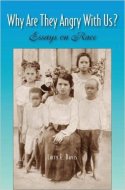
Why_Are_They_AngryThis is a short book of autobiographical essays on race by a colleague of my mother’s. I picked up her copy while visiting over Christmas, so I have no idea how widely available it is, but I highly recommend it. Davis has a fascinating way of breaking down extremely complex and emotionally-charged issues of race into underlying theories of causes that can be more directly addressed. He calmly and clearly lays out factual counter-arguments to many of the arguments that, per the title of this book, attempt to blame black people for their own social inequality.

The title comes from a question that struck the author as a young boy: if we (himself and other black people) were the slaves, then why are they (white people) angry with us? This led him through decades of studies in psychology and sociology. His central hypothesis in this book is that it mostly comes down to cognitive dissonance. Basically, people want their way of thinking and their behavior to align with each other, so much so that they will force one or the other to change in order to align, if necessary. So, if your way of life depends on exploiting others, but you still very much want to consider yourself a decent person, then you begin to think that the exploited person somehow deserves it, which then leads to all sorts of racist stereotypes.

The encouraging aspect of this is that it seems to work both ways: if you can successfully change either the behavior or the thinking, the other will eventually change, too, in order to stay aligned. His example of that is when the Civil Rights Act made it illegal to discriminate based on race, behavior (slowly) changed to follow the law, and then thinking changed afterwards (even more slowly). It reminded me of something that the host from one of my favorite podcasts, Yo, Is This Racist?, said (paraphrasing): “I don’t think I can stop people from having racist thoughts; I just want to make it unacceptable to ever verbalize these thoughts.” According to Davis’ theory, making racist talk culturally unacceptable could go a long way toward making racist thought disappear as well.

—Anna

Bone Gap

I first heard about Bone Gap, written by Laura Ruby, on the Pop Culture Happy Hour podcast as part of their round-up of National Book Award winners and I planned to write a post recommending from just about the minute I started it. So the fact that it just this week won the 2016 Printz Award for excellence in literature for young adults this week  makes this a very timely review (a rarity for me!).

Bone Gap tells the story of Finn, a teenage boy who lives with his older brother in a tiny, Midwestern farm town. Finn has a reputation as being a bit slow or spacey, and things have only gotten worse since the disappearance of Roza, a young woman who was living with them. Finn was the only witness to her kidnapping, but he hasn’t been able to describe the kidnapper and everyone in town (including his brother) has been looking at him askance ever since. Aaaand that’s about all I want to say.

I went in to this book knowing that it included elements of magic realism, and I’m going to tell you that much because I think our readers here more likely to pick this up if it’s got a bit of magic to it (Biblio-therapy readers are a fanciful lot). However, I also read the book summary on the inside of the cover and it gave me some details that I wish I hadn’t known. This story and its magic and its central mystery unfold so slowly and naturally that I think part of the joy of reading this is letting the story take you along at it’s own pace.

So, don’t read any online reviews, just trust me on this. Bone Gap is sweet and mysterious and sometimes dark and scary and sometimes small-town claustrophobic, and just all around interesting. It’s a book that cast a spell on me.

Kinsey’s Three Word Review: Magical small-town mystery

You might also like: I almost hate to make recommendations here, since anything I suggest is going to telegraph the ultimate tone of Bone Gap. But I can’t stop myself from telling people what to read, so, Alice Hoffman and Francesca Lia Block are two authors that do magic realism well. I like them both, although Hoffman’s books tend to tip towards middle-aged women and Block’s really speak to angsty 14-year-olds. Another option is Please Ignore Vera Dietz, by A.S. King, a book with an element of magic that splits the difference and would appeal to a wide range of folks.

The Night Circus

By Erin Morgenstern

Night_CircusThis book should have been everything to me – a spooky circus and a sorcerous battle set in the Victorian Era – but it was just so damn boring. It started strong with the hoary old magicians selecting unaware students to continue their contest of skills, and then building the titular circus to serve as the staging ground. Once the circus is up and running with the young magicians showing off their respective skills in increasingly elaborate exhibits, the novel really bogged down in endless descriptions of amazing and whimsical spectacle.
I really wanted to like this book because it has shown up on so many people’s best book guides, but the vast majority of the book is physical descriptions of settings both in the circus and out, and I find those extremely tiresome. Kinsey, who has read and enjoyed it, recommended approaching it like a poem, but I mostly don’t enjoy poetry either. There was just enough intrigue to keep me from giving up on the book entirely, though I kept interrupting it in order to read other books, and the action finally begins in the final 20% of the book.

I will say that the end is very good, but I just don’t think it was worth quite the level of build-up it got. While I sure would like to actually visit the night circus and see it all for myself, reading about it got old really fast.

—Anna

The Shamer’s Daughter

shamersdaughterThe Shamer’s Daughter
By Lene Kaaberbol
2006

This was a good little book although it was a bit on the young side of YA for me. In an unrelated note, it’s actually really interesting how young the main character was. The main character, Dina, is old enough to be well into the age of reason but nowhere near pubescent so there’s absolutely no romantic plotline. I appreciated that.

I also hadn’t realized this book was the first part in a series so I thought the ending was particularly interesting as it resolved the immediate problem while leaving a much larger problem still there. While I now know that it was setting up for a sequel, at the first read, I assumed it was an aspect of Dina being young and focused on the immediate situation.

Over all, the book reminded me a lot of Sharon Shinn’s series with The Safe-Keeper’s Secret, The Truth-Teller’s Tale, and The Dream-Maker’s Magic. Like those books, The Shamer’s Daughter is set in a world in which some people are born with semi-magical talents that give them careers even as it sets them apart from society at large.

Dina, the titular Shamer’s daughter, has inherited her mother’s skill of being able to see (and force others to see) everything that they are ashamed of by looking into their eyes. No one really wants a Shamer as a neighbor, but they have a social role in identifying criminals.

As one might expect, when a crime involves the death of the ruling family of a kingdom and competing heirs to the throne, being a Shamer who can actually see the truth is a bit fraught. Especially since the ability is built on shame and thus doesn’t work on people who don’t feel shame.

While this book simplifies the world and the complexities of people’s emotions in general, it still does a really good job of presenting some very clear answers to traditionally complex questions about guilt and responsibility and the strength to do what’s right.

Also, apparently there’s a movie, but it doesn’t look good.