The Bible: Ezra

One of my cousins recently graduated from divinity school and he recounted something one of his teachers told him that really stuck with him and now sticks with me: “when giving a sermon, hold the scriptures in one hand and a newspaper in the other.” Given the issues with racism and refugee problems I’ve been seeing in the news recently, this book is particularly on-topic, although not particularly helpful with its conclusions.

This book starts off with Cyrus, King of Persia, having an inspiration. In theory, the idea is god wants a house built for him in Jerusalem; in practice Cyrus bribes Israelite refugees to go over to Jerusalem rather than stay in Persia. And not even with his own funds, just telling the populace, they must give silver, gold, and other goods and livestock to any Israelite from Persia traveling to Jerusalem.

And then we get a massive list of who all the refugees were, where they were from, where they went, and how many they numbered. One thing about reading these books is a reminder of the sheer numbers being dealt with. We’re talking about people in the hundred and thousands and hundreds of thousands.

And then there was a bunch of celebration and prayer and burnt offerings.

Those were chapters 1, 2, and 3. In chapters 4, 5, and 6, however, we discover that bureaucracy is eternal and it turns out various other governing units are not particularly happy with Cyrus’ plan to shift refugees elsewhere, and did anyone actually have a copy of the authorizing letter Cyrus had sent out regarding building the temple? As it turns out, the answer to that last question is “yes,” and if you try to ignore it again King Darius of Persia will have your house torn down and you hung on the scaffold built in its place. So, you know, building that temple continued.

It isn’t until chapter 7 (out of just 10, in the Book of Ezra) that Ezra is introduced as a character. But he’s a scribe in the law of Moses, and under the ongoing patronage of Artaxerxes, kind of Persia.* He’s essentially sent to be a magistrate and enforce god’s law on the people of Jerusalem.

Now chapter 7 is also interesting for being written in the first person, due to most of it being a decree of Artaxerxes, kind of Persia. However, chapter 8 is also in first-person but I’m confused about who exactly it is. Is it safe to assume Ezra? Whoever it is, they gathered a bunch of people – listed in detail – to the river that runneth to Ahava and then contemplated the issue of all of them carrying a bunch of gold through a bandit heavy area. I really enjoyed Ezra 8:22, in which the narrator really doesn’t want to contact the King of Persia to ask for guards for the gold, after having spoken about how great and powerful their god is. Like, that’s just embarrassing. Hahahaha! Anyway, they split up and transport the gold in 12 packages and it all goes well.

In chapter 9, Ezra (I’m assuming) is deeply disturbed about how the Israelites continue to inter-marry and have children with the people who were already living in the lands.

In chapter 10, Ezra (we’re back to the more regular third-person narration) continues to be deeply disturbed by the Israelites having married foreigners, and gathers all the men to discuss the issue. Verses Ezra 10:18-43 list the various males who had taken foreign wives, and even had children by them. But they all promised to “put away their wives” in addition to offering a ram of the flock for their trespass. So… there’s that.

And thus ends the book of Ezra.

Summary: Bureaucracy, racism, and problems with refugees all have long and illustrious histories.

Moral: Yes, money can buy you out of troubles? (Especially other people’s money.) Don’t marry foreigners?

*I’m more than a bit confused by all the Kings of Persia (and/or Babylon – are they the same thing? Is one a subset of the other?), who I assume are ruling sequentially, but the book is a bit coy about the timeline for all of this, which is decidedly unusual, given how specific the books of Kings and the books of Chronicles were. But there are casual and mentions of King Cyrus of Persia and/or Babylon, King Darius of Persia and/or Babylon, and King Artaxerxes of Persia and/or Babylon.

Next up: Nehemiah

Eligible

As I’ve said more than once before, Pride and Prejudice is my favorite book of all time and I keep a close eye on adaptations. I may not like every version of the story people cook up, but I love weighing them against each other and seeing what tiny improvements each version can make. Just recently I rewatched the Keira Knightley movie, and while I find almost everything in that version to be not quite as good as the 1995 BBC mini-series, I was reminded that the movie does a GREAT job of using clothes and houses to really play up the class differences between the Bennets and the Bingley/Darcy crowd.

Anyway, when I saw that Curtis Sittenfeld’s latest book Eligible was a modern version of Pride and Prejudice, I was very interested. Sittenfeld is probably best known for her first novel Prep, about a girl at a New England boarding school. I actually thought Prep was incredibly grim and unpleasant to read, but I quite liked American Wife, which was an imagined, fictional version of Laura Bush’s journey to become a somewhat unwilling First Lady. So I went into Eligible fairly ambivalent about Sittenfeld and I’m still not sure how I feel, although   did enjoy the book.

There’s no point summarizing the plot–this is a very loyal retelling of Jane Austen’s classic story about the Bennet sisters, moved forward in time to modern-day Cincinnati. To be completely honest, I went into the book thinking that there was no way anything could live up the Lizzie Bennet Diaries–I LOVED that video adaptation of the story and I couldn’t imagine another modern telling matching up. But Eligible did win me over, at least a bit, as it went along.

There were a few things I thought it did really well:

  1. Sittenfeld really hit it dead on with loads of her cultural references as she moved the characters to the present day. For example, Jane is a yoga teacher, Darcy is a surgeon, and Kitty and Lydia are totally into CrossFit. Over and over again she would introduce a character with his or her modern identity and I would say, “Oh, of course! That makes total sense.”
  2. In the books, the Bennet sisters are in the 15-21 age range and most modern updates up that a bit to make everyone legal, but even my beloved Lizzie Bennet Diaries only puts the older girls in their late twenties. In Eligible, Jane is turning 40 and Lizzie is right behind her. Which is perfect! A huge part of the original story is the pressure the girls feel to get married, and that panic rings so much more true in the modern story when Jane and Lizzie are both approaching 40. To me, this was the one thing that Eligible has really added to the Pride and Prejudice oeuvre.
  3. Darcy and Lizzie came off pretty hot, actually, which doesn’t always happen.

But I have to admit that there were a few things that didn’t quite work for me:

  1. This is often a problem with Pride and Prejudice adaptations, but it takes the book a while to get going. If you’re Jane Austen, I’m happy to read a third of the book where people futz around before the love story kicks in. For other mere mortals, it means that I spend quite a few chapters being like, “Come on, come on . . . “
  2. I would say that 90% of the characters, plot, and structure of the book are straight from the source material. The characters have the same names, the chapters are structured the same ways, etc. So when she does make a change, it must mean something, right? There were two major places where Eligible diverged from the original and I am still not quite sure why. First, Wickham is split into two characters, which gives a whole new spin to a couple of key plot points and I can only assume that this is because we all have larger social networks today? Hmm. And second, this book proceeds a bit past where the original ends and . . .  again, I’m not sure I see the point.
  3. Lydia. Oooh, Lydia is problematic. In order for the plot to move along, Lydia has to do some fairly outrageous things. Jane Austen’s take seems to be that Lydia was, if not evil, certainly dumb and thoughtless; by the end of the book (200-year-old spoilers), Austen seems to have decided that Lydia has made her bed and now she can lie in it. In our previous discussions of the Lizzie Bennet Diaries, we all talked about how much we liked their take on Lydia, which made her much more sympathetic and made her actions more understandable. Sittenfeld’s Lydia is pretty much in the dumb and thoughtless mold, but the way Wickham is now handled makes the end of her story feel quite different. I don’t feel like Lydia has to be sympathetic–a big message in the story is about family loyalty, even when you might not like that family–but it was a significant enough change that it felt like Sittenfeld was trying to make a statement. And I think that statement was, even if you’re dumb and mean things might work out if you have a responsible older sister? I don’t know.

Overall, I thought Eligible was snappy and fun to read and if you’re a Jane Austen completist like I am, you’ll enjoy it. But if I am going to recommend Pride and Prejudice-inspired material to someone, this ones falls down on the list under the Lizzie Bennet Diaries, Bride and PrejudiceLongbourn and even Bridget Jones’s Diary.

Captain American and Black Panther

Captain America: Civil War

Marvel-Civil-WarAll three of us blog writers went to go see the third Captain America movie together, and I have thoughts. Actually, I had thoughts (concerns) before we even went. I didn’t follow the Civil War event in the comic books, but I knew the basic gist is that there is a growing political movement for putting superheroes under some kind of government control, and the Avengers become split between Iron Man supporting that movement, and Captain America against it.
I think it is a nice touch to make the most outwardly patriotic character still have concerns about political overreach, but I simply couldn’t wrap my mind around how Tony Stark, who wasn’t even willing to register his mechanical suit with the government in the first Iron Man movie, would take a pro-registration stance. In fact, I’d always thought Tony Stark sort of represented the classic Republican stance of financial independence, corporate freedom, and small government. It made me wonder if this movie would actually be a bit of a commentary on how the Republican Party itself has shifted in ideology.

And, then I saw the movie, and I’m even more confused. I wish I could have taken notes in the theater because I vehemently disagreed with basically everything that any of the characters said, and now I can’t actually remember any of the arguments. However, when trying to write this up, I tracked down some of the transcribed argument, and reading it didn’t make any more sense. It felt a little like when I was reading Atlas Shrugged, and the supposed ‘liberal’ characters made bizarre straw men arguments that I’d never heard an actual liberal make.

After much discussion with Rebecca, I think I have a basic grasp on the two sides, boiled way down and largely guesstimated from some very overwrought dialogue (clearly, this includes spoilers, but only for the most stupid and boring parts of the movie): Continue reading

The Fifth Wave

A podcast that I was listening to recently (Extra Hot Great, which I mentioned in my post) was dividing post-apocalyptic/end-of-world stories into two categories: those that focus on what it’s like as the world is falling apart and those that focus on how people live after things have fallen apart. I had never quite thought of it this way before, but it is a great way to describe the differences and it helped me figure out why I love some end-of-the-world novels and find others way too stressful. Apparently, I like reading about post-disaster life and how people keep going–Station Eleven and The Hunger Games are examples, where most of the story is about people living in the “new normal” of a world after life as we know it has ended. I guess these books feel far enough removed from my own life that I can maintain some emotional distance? But I am an anxious enough person that I find stories that show the process of civilization breaking down to be almost unbearable–when the author’s goal is to show you how close we are to this new post-apocalyptic word, that’s too close for me! I really enjoyed David Mitchell’s The Bone Clocks, but there was one section of it that so powerfully described a world in which the Internet had gone down and international borders were closed . . . I don’t even like to think about it too much.

All of this to say that The Fifth Wave is one of those as-the-world-is-falling apart books that I found really anxiety-inducing, but may be right up your alley! This is the first in a YA trilogy in which aliens have come to earth and are in the process of exterminating humans/cleaning up the planet. The story follows a couple of different teenagers who are trying to survive on their own in a world where virtually all other humans are dead. There’s a teeny bit of teen romance that I found somewhat unrealistic (I think all these kids would have too much PTSD to do much other than huddle in a ball on the floor, but whatever) but most of the book is about them fighting, running, and trying to figure out the right next step in a world where everything seems doomed. The main story is set a few weeks/months after the aliens have arrived, but there are lots of flashbacks to them arriving and starting the whole “no humans” process, so you really see the whole process play out. It’s a plot-intense book–the action moves fast and I was frantically turning pages to find out what happens. And while this is definitely not my preferred type of end-of-the-world story, it was compelling enough that requested the next book in series from the library.

Kinsey’s Three Word Review: Immediate post-apocalyptic adventure

You might also like:
 Any of the books I mentioned above, or the movie Children of Men, if you feel the need for a little cry about the state of the world. But we’ve all seen enough depressing things–go read something funny! Some of my laugh-out-loud books include Let’s Pretend this Never Happened by Jenny Lawson, Cold Comfort Farm by Stella Gibbons, Can You Keep a Secret by Sophie Kinsella, and I Feel Bad About My Neck by Nora Ephron.

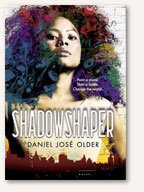
Shadowshaper

By Daniel José Older

ShadowshaperThis is the third book from the bitchesgottaeat bookclub, where Samantha Irby recommends a book that she’ll be reading, with the idea that we could read it at the same time but never actually discuss it at all. I’d already read and loved the first, Carry On, and was surprised and delighted by the second, Everything, Everything. Even after a 2-for-2 record, I didn’t really want to read her third recommendation, Shadowshaper. There’s just not much that I can relate to with magically talented teen artists living in Brooklyn, quite frankly.

The protagonist, Sierra, is a high-school senior focused on painting a large mural on the side of an abandoned building in her neighborhood. She notices  other murals in the neighborhood fading unnaturally quickly, and then things get stranger from there. The writing seemed a bit uneven to me, which kept me from getting fully involved in the story, but the story itself is really unique and interesting.

A strong theme in Shadowshaper is immigrant culture, and the elements of one’s old country that one brings to one’s new country, in music, dance, food, and spirituality. Sierra’s family and most of her neighborhood is Puerto Rican, most of her friends are either Hispanic or African American, and her love interest is Haitian. There is a subtler theme, too, of misappropriation of cultures that aren’t one’s own. The book additionally asks questions about what kind of role academic study can play in understanding if it is necessarily on the outside, looking in. My favorite element of the story is how these themes are carried through in the supernatural elements, as well, but I can’t really elaborate without extensive spoilers.

Author Daniel José Older writes extremely visually, describing all the colors of the murals and the neighborhoods and the spirits themselves. As a reader, I get a bit bogged down in large descriptive paragraphs, but I kept thinking what a phenomenal movie this would make with animated murals traveling through the New York cityscape!

—Anna

Comic Book Catch-Up

Sigh, another long hiatus from a busy spring and a lazy reading schedule. I’ve been finally getting around to checking out a couple of comic book series that Tumblr has overall just completely fanned out over.

Rat Queens

Rat_QueensSo, I could absolutely see why this is Tumblr’s cup of tea – it is feminist, queer, violent, and bawdy – but it just wasn’t quite my thing. I think I’m a bit old for it, honestly. The titular Rat Queens are a diverse group of mercenary women, and what the comic does especially well is highlighting the distinct personalities and backgrounds of each of the four women, and their varying relationships with each other. In the collected first volume, they and several other mercenary groups are offered a quest as an alternative to jail time for a bar brawl that got out of hand.

It is clever and funny, and I can’t quite put my finger on why I don’t really like it. It is pretty juvenile humor (though not in subject matter or artwork), but I’m usually all about juvenile humor. I asked Rebecca whether she’d read it, and she couldn’t actually remember whether she had or not, so I guess that corroborates my own lack of enthusiasm.

Saga

SagaSaga, on the other hand, was immediately engrossing. It opens with an extremely rustic birth scene, and unfolds from there, moving forward with the gripping plot and filling in the backstory as it goes. Our two new parents are such a hopeful, almost innocent Romeo and Juliet pair, though with much more personal agency than the Shakespeare couple, that I was immediately rooting for them.
They are from different planets, one of winged people and one of horned people, that have been pitted in a seemingly never-ending intergalactic battle incorporating many other planets as well. Winged Alana and horned Marko are opposing soldiers that fell in love and abandoned their posts in order to start a family together, and thus just about everyone wants them dead, including an aristocratic tv-faced robotic person, and two different feuding mercenaries, one a beautiful spider woman and the other a strictly-human-seeming man that travels with a giant lie-detecting cat. Can you see why I loved this so much?

In addition to just all the oddness, the motivations and emotions behind the characters still feel so real. Also, the art is perhaps the best that I have ever seen in a graphic novel – it is really spectacular. When I went to track down volume 2, I discovered that Saga is written by the same author as Runaways, which Rebecca raved about a while ago.

—Anna

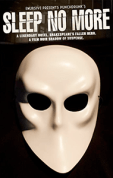
Sleep No More

sleep-no-moreI’ve been reading a lot of books previously reviewed by Kinsey and Rebecca on this blog, so haven’t had much to post about, but I’m going to piggyback on Kinsey’s review of a play, and tell you about a performance I saw on a recent work trip to New York City.

I ran across Sleep No More when looking for a hotel to book near the training session in the Chelsea neighborhood, and Google lists The McKittrick Hotel as sleeping quarters, when in fact it is an elaborate set piece, in which the performers travel through the various rooms while the audience follows. Sleep No More is described as a noir-style take on Macbeth, which are two of my very favorite things, so I was pretty quickly sold on it, though it took me a bit longer to pull the trigger on the $85 ticket price.

My general impressions:

When I was waiting in line, a couple of teenagers behind me were psyching themselves out, wondering how scary it would be and if they would scream, and I was annoyed at them for treating it like a haunted house (this comes back to me later).

All audience members are given white masks (not unlike the Scream mask) that we must wear throughout the performance, and we must not speak. I was first let into the space, masked, with maybe 5 or 6 other audience members and we sort of wandered around empty rooms for a while. I had a sudden fear that I would manage to go through the entire space and manage to somehow miss any live performance, just because that seems like the sort of idiotic and embarrassing thing that would happen to me. I was trying to convince myself that I would be satisfied with just how cool the various room settings were, but I have to admit that I was relieved when I finally saw a performer.

Once you have run across one performer, they will usually lead you to others, and you can chose to stay with your original or switch off with a new one. I found Macbeth himself first, and then Lady Macbeth, for the dramatic scene in which she coaxes him to kill the king and become king himself. When Macbeth ran off set, I decided to stay with Lady Macbeth, and only realized later that I’d missed the killing of the king.

However, I actually ended up in the same scene again with the Macbeths, probably about an hour later, so I followed Macbeth this time, and got to see the pivotal death scenes of both Duncan and Banquo. (Though I hung out for a while in the graveyard set, I never got to see the three witches, who I was sure would eventually appear.) I also got to watch a spooky tailor stitch up the worst seam I have ever seen in my life. I had a small impulse to try to intervene, at least with the sewing itself.

Though Sleep No More is described as a play (or immersive event or whatever), it is really a dance performance. The actors do not speak, but rather have highly physical choreography they perform. (Also, audience members are never pulled into a participatory role, so you can be reassured on that point, if that’s not your thing.)

So, it was very novel and entertaining, but I had a realization about an hour in that really made the performance for me. There were probably about a hundred or two masked audience members wandering the three (or four – it gets a little confusing at times) stories of the hotel in all, and in scenes where there are multiple performers interacting, all of the audience members following each one all combine into quite a crowd of blank white faces drifting about and coalescing around the various characters. It really did start to seem exactly like a haunted house, only you, the audience member, are one of the ghosts.

You and the others sort of drift aimlessly around with only each other, who you cannot speak to, and as soon as any “live” character appears on the scene, you all immediate glom onto the person, surrounding them when they are still and trailing after them when they are moving. In fact, for a couple of scenes, characters had to sort of gently wave ‘ghosts’ out of their way, which they did very professionally, exactly as one would sort of wave away a mist or cobweb.

Once this occurred to me, the whole thing took on a more delightfully spooky dimension. Seriously, how many times in your life will you be able to experience being the one haunting an old hotel? This works perfectly for the story of Macbeth, too, which is all about hauntings, both literal and of the conscience.

One caveat to the whole thing, though: the experience itself is a lot of fun, but it is all very scattered and nonlinear to the extreme, so if you prefer more plot-driven theater, this might not be for you. I knew beforehand that it was loosely based on Macbeth, which is my favorite Shakespeare play and one I’m fairly familiar with, so I recognized some scenes, force-interpreted others, and was completely puzzled by still more. (The inept tailor was given a tiny rat skull, which made him despondent? I don’t remember that from Macbeth.)

—Anna

Podcasts and a Scrappy Little Broadway Show I Have High Hopes For

I wish I had some good books to recommend here, but I’ve been in an odd rut lately of reading things that weren’t bad,, but ended up being vaguely disappointing. (I’m looking at you, Bradstreet Gate, because if your whole plot is centered around a murder mystery, you need to TELL ME WHO COMMITTED THE MURDER.)

But that doesn’t mean I’m not consuming media, because my lengthy commute to work means that I listen to A LOT of podcasts. Sometimes I feel as thought half the things I say start with, “So I was listening to this podcast . . .” But I just hear so many interesting things on so many different topics, told in such a personal way–it feels like I have very smart friends riding along with me in my car as I negotiate the DC highways. I do listen to a few of the big, famous podcasts that I don’t feel the need to plug–the NerdistSerial, and Pop Culture Happy Hour are all great, but if you listen  to podcasts at all you probably knew that already. But there are some smaller podcasts that keep me sane and entertained:

Read it and Weep calls itself a good podcast about bad books, movies, and TV, and the general model is that three friends (plus rotating guests) read or watch something and then get together to make fun of it. It started when these guys decided to read the Twilight books so they could mock them in a knowledgeable way, but has expanded to them watching and reading the occasional good thing, or a childhood favorite, and they even take sponsorships/suggestions from listeners. Although the episodes where they review something bad are still the most fun–you’ve never heard anything as sad as these 20-something dudes trying to find something nice to say about Fifty Shades of Grey. I like it because the commentary is truly funny, but also smart–they’re good at breaking down what does or doesn’t work about a particular piece of media and they’re happy to admit when they actually enjoyed something. They are also quick to call out sexism or racism or other things that make them feel gross, so I can rely on them getting upset about the things that make me upset. But in a much more funny way.

Another favorite pop culture podcast is Extra Hot Great, a podcast about TV by the people who run previously.tv (and used to run Television Without Pity). This is another funny one, with smart criticism about TV. They do different features, including one I love called Is This Worse than Jazz, where they debate whether a particular pop culture item is worse than jazz (maybe this only works if you hate jazz). They also do a lengthy quiz each week, which allows me to shout answers out loud in my car.

I first found You Must Remember This through her series on Hollywood and the Manson murders, but I’ve found all of Karina Longworth’s podcasts about Hollywood history fascinating. She tends to do “seasons” that focus on a specific topic, such as Manson, the studio system, or the current series on the blacklist. One of the disappointing books that I read in recent weeks was about a scandalous Hollywood murder in the 1920s, and I think I didn’t like it because was drier and less sympathetic than Longworth’s calm, gentle storytelling. My other big take-away from this podcast is that almost everyone in Hollywood seems to have been a miserable depressive that drank themselves to death; I almost cried in my car listening to the story of Carole Lombard and Clark Gable.

I do occasionally branch out from pop culture and Hollywood, and Rex Factor is one of my favorite history podcasts. Two British guys (Graham and Ali) reviewed the history of every king and queen of England, ranked them on qualities such as scandal and “battle-iness,” and then held a bracket-style showdown to determine the ultimate monarch. They do a thorough job of reviewing the history, while also getting to the interesting trivia and being funny along the way (Ali is always so hilariously concerned when first cousins get married). I was a little worried that they would stop podcasting after they finished all the English rulers, but they’ve recently started up again with the kings and queens of Scotland. A word of warning–the early Saxon kings are a bit of a drag since they all have similar names and there’s not a lot of existing information, but things get more interesting as history moves along (there was definitely way more sex with nuns than I was expecting).

And finally, on a different note, I have talked here more than once about how I tend to recommend things that everyone already knows about. The Goldfinch?  The Martian? You didn’t really need me to tell you about those. But now I’m about to tip over into parody here: have you guys heard about Hamilton? I mean, seriously folks, it’s really good. I was lucky enough to see it on Broadway at the end of March (I bought my tickets back in September and then tried not to think about them too much since I was convinced a meteor would crash into the theater before I got to go) and it was AMAZING. But I can also wholeheartedly recommend the cast album. Because the whole show is sung–there’s really no spoken bits of the story–listening to the cast album really does let you hear the whole show and it’s just genius. It’s also awesome music to listen to in the gym. I think this Hamilton thing is really going to take off! (Hamilton also won a Pulitzer prize this week, and Lin-Manuel Miranda posted a hilarious picture on Twitter of the celebratory Pulitzer pies.)


Gentleman Jole and the Red Queen

61ku6qro0cl-_sy344_bo1204203200_Gentleman Jole and the Red Queen
by Lois McMaster Bujold
2016

Bujold is one of the few authors who I absolutely trust. I enjoy every single thing she has ever written. Some more than others, of course, but everything is good. One of the amazing things about her is that she clearly refuses to let herself or her writing stagnate. She’s constantly exploring new styles and genres.

This is particularly obvious in her Vorkosigan series, which is currently at sixteen books (of which this is the most recent) plus a number of short stories and novellas. They’re all in the same science fiction universe and to a large extent about the same characters and yet they are often written as wildly different genres: light science fiction, hard core science fiction, murder mystery, psychological exploration, comedy of manners…. Bujold has tried it all and succeeded at it all.

Most of the books follow Miles Naismith Vorkosigan in his various adventures around the universe, getting himself into and then out of a variety of troubles. The first two books that I read, however, are about his mother, Cordelia Naismith, before and immediately after having Miles. This book returns to Cordelia, giving an interesting perspective on what has gone on before that Miles just never noticed, but focusing on where she is going now.

In some ways, it’s reminiscent of Memory, the eleventh book in the series, in which Miles, age 30, must confront a drastic change in his life and decide how to deal with it (while investigating shenanigans in the capital city!). Except that this time, it’s Cordelia at 76 who is looking at changing her life while in the center of small town life. Admiral Jole, who has previously been an extremely minor character, is also brought into focus as he is confronted with a crossroads of his own as he is swept up in the changes she is making.

One of the really amazing things about this book is that it reads more as character-driven non-genre literature than science fiction. While it’s set in this science fiction universe, it’s also set in what is essentially a backwater boomtown. There are a large number of moderately eccentric but utterly relatable characters. Our two main characters are both mature adults with successful careers. This isn’t high adventure, it’s living your life and making choices and dealing with other people.

It’s beautiful and I loved it.

The Good Death

By Anne Neumann

The_Good_DeathThis book was way more depressing than I’d anticipated, and I already knew it was called The Good Death. Author Ann Neumann was inspired to research and write this book after she spent a year caring for her dying father. After he passed, she wondered whether he’d had a ‘good death,’ and what that even means in our world. I was interested to read it, of course, because I have some questions about that, myself.

I was looking for a more personal, introspective look at what death means in our lives and how we judge other people’s death, but Neumann is a journalist, and quickly veers off into wider-scope political and institutional controversies around end-of-life care.

After a brief personal introduction of Neumann’s inspiration, the book begins with looking at end-of-life “comfort care,” and how the health care and legal industries define the boundaries of palliative care vs. medical intervention. Because her father had mentioned it as he declined, she discusses assisted suicide, analyzing the arguments made by advocates and protestors. This leads Neumann to further explorations on forced feeding, capital punishment, and disability activism. There are clear linkages between the topics, but the book feels a bit loose and tangled as a whole. It asks a lot of questions and inspires a lot of thought on difficult topics, but doesn’t reach many conclusions.

She does weave personal stories throughout, initially from her experience caring for her father and later as a volunteer with Hospice, and those parts were the most interesting to me, her witnessing the ends of different lives, but also the least deeply explored. I imagine that the journalism experience that benefits her when untangling legal documents and political arguments perhaps hobbles her in more personal reflection.

I was glad to read it because it inspired me to really explore some of my assumptions around life and death, but I finished the book feeling that everything was just in a bit of a mess, and there was no clear way to fix things in the future.

—Anna

DCEagleCamOn a more cheerful note, I am completely entranced (possibly to an unhealthy degree) by the DC Eagle Cam, live-streaming an eagle family of two adults and two eaglets nesting in the National Arboretum. The adults are such good parents, and the eaglets are completely precious and growing quickly!