By Phoebe Robinson
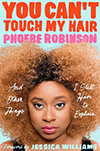 I decided to take a break from reading serious intellectual books about race and racism, and instead turn to a funny book about race and racism! And honestly, comedian Phoebe Robinson touches on many of the points from So You Want to Talk About Race and White Fragility through humor, pop culture, and personal anecdotes, so I really recommend this to anyone who wants to laugh while they learn some hard truths. Actually, I just recommend this to anyone, since Robinson is a very smart and funny writer on a whole range of topics:
- Do you want to know which Hall & Oats lyrics summarize the entirety of human history?
- Do you want detailed advice on how to correctly google yourself?
- How to avoid being the Black Friend? (or conversely and more importantly, how to avoid tokenizing a friend as your Black Friend)
She kicks the book off right away with her titular hair: how her hair, society’s reactions to it, and the affect those reactions had on her evolved over her youth and young adulthood, culminating in a history of black hair in media which illustrates the decades it took for natural black hair to be even slightly accepted today.
For me, one of the most striking stories she tells is about a director she worked with, which quite literally runs down all the hallmarks of white fragility like a checklist: denial of racist words, reassurance of being a good person, burdensome guilt-ridden apology and request to ‘talk it out further,’ and the final cherry on top of turning to a different black person for absolution. It should seriously be used as the prime example in DiAngelo’s book!
My favorite part of the book, however, was toward the end where she writes a series of letters of ‘advice’ to her “all-time favorite person: my two-and-a-half-year-old biracial niece, Olivia.” As a professional comedian, of course she’s funny, but she really shines when she’s also sincere: “Seeing how you view the world makes me happy. Ah! A comedian expressing a genuine emotion and not following it with a joke. Full disclosure: That was really, really hard for me to do just then.”
In addition to wanting to make sure Olivia doesn’t miss such pop culture gems as DMX singing “Rudolph, the Red-Nosed Reindeer,” she tells her how great it is to be black, to be a woman, and even tags in John Hodgman for the difficult task of talking up being white without sounding racist! (You’re going to want to read the story of John taking his friend Wyatt—who I assume is Wyatt Cenac—to a gourmet mayonnaise shop in Brooklyn.)
And finally, in her advice on being sex-positive, she goes on a lengthy tangent about the problematic 2014 movie Kingsman: The Secret Service, which first of all, shocked me about that movie since I’d never seen it, but then made me want to read an entire book of her dissecting what does and does not work in movies and tv shows. This book is so chock full of pop culture references that I finally just had to appreciate the ones that I got and let the rest pass, or I would have been constantly jumping over to google.
 White Fragility is written by a white woman very specifically for a white audience, to help us all process our feelings in a way that does not burden Black people around us. DiAngelo is explicit about this in the introduction: “This book is intended for us, for white progressives who so often—despite our conscious intentions—make life so difficult for people of color.”
 Honestly, I did not want to read about race right now, let alone talk about it. I wanted to keep reading the historical mysteries and romances that have kept me moderately distracted during this pandemic, but they started to feel tiresome, and I knew that I couldn’t ignore this national dialogue any longer.
 Say Her Name: Resisting Police Brutality Against Black Women
 I feel like this review is the complete opposite of my
  Catfishing on CatNet
 The Physicians of Vilnoc (Penric and Desdemona story #8)
 Navigating the Stars (Sentinels of the Galaxy, book 1)
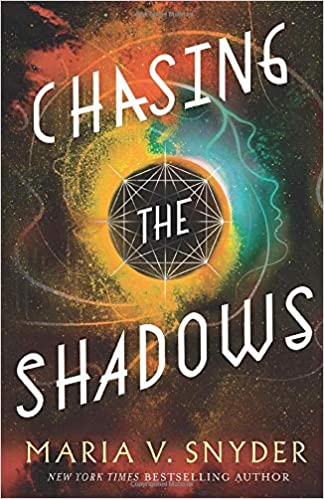 Chasing the Shadows (Sentinels of the Galaxy, book 2)
 Well, this novel is a fucking mess. The preview reminded me a bit of classic Agatha Christie mysteries, with a wealthy and estranged family gathered at a huge mansion on a remote island for the wake of the family matriarch. It lacked Christie’s charm, though, with every character being absurdly dislikeable, but I often find that entertaining as well. It was sort of refreshing for the protagonist—bribed/extorted by one of the family siblings into serving as a maid for the wake for mysterious reasons—to explain that everyone finds her “difficult” and for me to agree with everyone. (As a 29-year-old woman trying to get her doctorate in the 1950s, it would have been very easy to sympathize that the cards were very much stacked against her if she herself hadn’t been quite so unpleasant.)
 Biblio-therapy