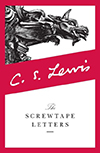
The Screwtape Letters

By C.S. Lewis

Rebecca and I both enjoyed The Great Divorce so much that we decided to read The Screwtape Letters, another Christian fantasy by C.S. Lewis (her review to follow). This novel is a collection of letters from Screwtape, a demon, giving guidance to his nephew on how to corrupt people’s souls. And it comes out of the gate swinging!

“Your business is to fix his attention on the stream [of immediate sense experiences]. Teach him to call it ‘real life’ and don’t let him ask what he means by ‘real’.” (p. 2!)

C.S. Lewis is scolding me for wasting time on social media from beyond the grave!

“But the best of all is to let him read not science but to give him a grand general idea that he knows it all and that everything he happens to have picked up in casual talk and reading is ‘the results of modern investigation’. (p. 3)

80 years ago, C.S. Lewis was dunking on do-your-own-research guys!

So, it’s been a real eye-opening seeing the ever-green traits of humanity that I used to ascribe to the digital age. I initially enjoyed the novelty of it, but the narrative structure of letters leads to far more proselytizing than The Great Divorce, which took a more show-don’t-tell approach. As Screwtape enumerates all things that can lead a person to hell, the path to heaven becomes narrower and harder to define. The reader gets all sorts of negatives (just going through the religious motions will surely lead you to hell, but so too will interrogating your faith too thoroughly), and no positive directions, as far as I can tell.

Of course, this falls in well with the conceit of letters from a demon. Lewis even gives himself a clever and all-encompassing disclaimer in his preface by saying that all demons lie and even have their own bias, so any issues with the letter lie solely with the fictional demonic letter-writer. So, while it’s hard to argue with this, Lewis clearly intends the book for Christian instruction, and for me, at least, this type of negative direction is not so helpful.

After a while, as the ways humans stray kept piling up, I started bracing myself for some ugly prejudice or another to rear its head. However, nothing overt emerged, though Lewis is pretty dismissive of women, when he gives them any thought at all, and it’s probably all for the best that he doesn’t give any thought to anyone non-white, non-Christian, or even non-English. It was hard to escape the feeling of just being constantly scolded, though.

The book contains 31 letters in all, each only being 3-5 pages, and it made me wonder if it was intended to read one letter a day, to allow the reader some time to really think through each one. But Rebecca read that they were originally released in serial on a weekly basis, which is an even better, longer break between each one! It ends with a longer essay, Screwtape Proposes a Toast, which Lewis wrote years later, and in which Screwtape is addresses a new graduating class of demonic tempters. In it, Lewis once again expresses a surprisingly current sentiment, though more retrograde with a “kids these days, with their participation trophies” hack.

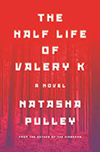
The Half Life of Valery K

By Natasha Pulley

I really like Natasha Pulley, but man, it feels like she is in a challenge to make her readers root for the most problematic character possible. I had some serious issues with her previous book The Kingdoms, but I think she might have outdone herself this time. (Unlike her other books, The Half Life of Valery K doesn’t include any magical realism and is even based on real events, which makes it worse, quite frankly.)

The protagonist, the titular Valery K, is a radiation scientist in Russia in the 1960s, which simply can’t be anything but problematic given the field of study and time period. When the novel starts, Valery has been in a Siberian work camp for 6 years, and has only survived that long due to some lucky circumstances. The description of the work camp is devastating, especially given how well researched it seems to be. Valery has every expectation of starving to death in the following year when he is released and brought to ‘City 40’ to help study the effects of radiation on the general ecosystem. City 40 is kept in deep secrecy to hide it from the western countries (the US in particular), and once in the city, no one leaves.

Valery quickly befriends the head KGB officer that holds them all there, another strangely sympathetic but deeply problematic character. It is a much more comfortable imprisonment than the work camps, so Valery is content until he discovers deeper secrets that even his very compromised morals cannot accept.

And that gets to the crux of the book – it is all about the evils that people have to accept to survive in impossible situations. And also when people reach a breaking point where they can’t accept any more, and fight back, often becoming evil in their own opposing way. This obviously makes for a very difficult read, and I think I’ll be wrestling with the questions this book raises for a while.

I haven’t read much about the Soviet Union, so this book more than any other I’ve read gave me insight into what the Soviet communist government was trying to achieve as an ideal and some of the ways it failed so badly in practice. Anti-west Soviet propaganda is a pervasive background throughout the novel, with most characters living in constant fear of US bombing, especially after Hiroshima. Soviet citizens would ascribe most unexplained explosions to US bombing, and I realized that I had no idea if the United States had bombed the USSR in the 50s and 60s, and that I likely wouldn’t know.

Though the US is somewhat more sophisticated in how it influences its citizens,* it made me really interrogate the degree to which I’ve bought into western propaganda (the Soviet characters are shocked by the strict gender roles imposed in western cultures, for instance). Awareness is all well and good, but there’s no clear answer for how individual citizens can combat this ideological warfare, which left me feeling a little hopeless about the state of humanity in general.

*I was reminded of a joke I’d heard a while ago: A Russian and an American get on a plane in Moscow and get to talking. The Russian says he works for the Kremlin and he’s on his way to go learn American propaganda techniques.

“What American propaganda techniques?” asks the American. “Exactly,” the Russian replies.

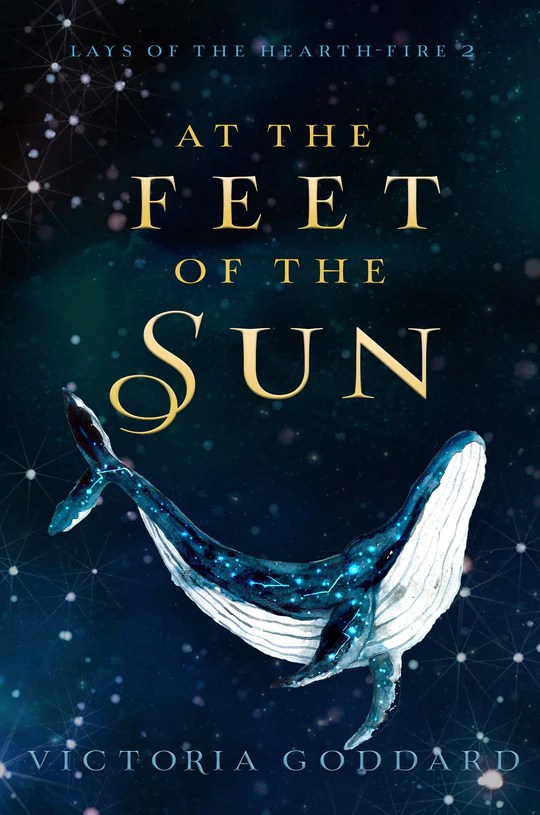
At the Feet of the Sun by Victoria Goddard

At the Feet of the Sun
Lays of the Hearth-Fire, Book Two
by Victoria Goddard
2022

If I had any sort of self-control, I would not have finished this book quite so quickly, because it’s essentially five books all presented together in one omnibus. Which I’m glad of! Because otherwise there would have been some real cliff-hangers. But, it’s really long with multiple interlinked plot arcs and side quests that are massive enough to be regular quests all on their own. And, also, the book (that’s really five books) does come to a satisfying emotional conclusion at the end, but it doesn’t actually conclude the original plot that was set up at the end of the first book. So I’m already looking forward to Book 3, but am glad enough to have a breather before presumably reading another 1000+ pages.

This book starts up soon after the end of Book 1: The Hands of the Emperor, and the first part runs parallel to The Return of Fiztroy Angursell, and then just keeps going with the adventures and development of Cliopher “Kip” Mdang. Kip is a wildly successful bureaucrat who has spent his life successfully dismantling an empire and replacing it with a more egalitarian system of government. And now he’s retiring. He’s not yet officially done, but he’s transferred the majority of his work and responsibilities to others and has the space to figure out who he is now that he’s not so driven anymore, and that’s not an easy path. And also, this whole universe is an amazing creation where there are nine interconnected worlds, magic and gods are real, religion is complicated and diverse, and time fluctuates wildly. Kip’s career is somewhere between 45 and 1100 years long, depending exactly where you stand, and his own personal experience varied as well as he experiences long periods of timeless effort. The story moves seamlessly between practical struggles and legendary adventures; travels on the sea around Kip’s home archipelago and travels on the Sky Ocean between the stars; searching for Kip’s lost cousin Basil and going to get a new fire from the Palace of the Sun.

Kip is amazingly and wonderfully competent in achieving his goals for the greater good of the world, but still struggles to find his place and self-promote when it’s about him and not some greater achievement. And figuring out how to communicate with his emperor as a person whom he loves after spending decades/centuries working with him as an untouchable god is an ongoing struggle, even as they both want equality between them. Through all the struggles, there’s a sense of certainty that it will all work out, or if it doesn’t, then it will be a loss of what could have been but what already is, is still sufficient.

It’s a beautiful and optimistic book, and I really enjoy it immensely.

A Short History of Tractors in Ukrainian

By Marina Lewycka

“Extremely funny” says The Times.
“Mad and Hilarious,” Daily Telegraph.
“Uproariously funny” from The Economist

Guys, this was one of the most mean-spirited books I’ve read in a long time. Sisters Vera and Nadia hate each other and seem contemptuous of their elderly widowed father. When he becomes attached to a much younger woman, they try to intervene, seemingly more out of immediate hatred for this new woman than any concern for their father. Their father, in turn, disdains his daughters for a variety of reasons, and fights their intervention, even as the new woman turns out to be despicable and abusive.

The back blurb teased that this struggle uncovers long buried family secrets, which is what hooked me (as well as the unusual title). And the central story is interspersed with background vignettes on the parents’ and grandparents’ lives in Ukraine, though there is no big reveal or epiphany. Instead, by spending just a little more time talking about their different experiences growing up, the two sisters reach a basic level of empathy for each other that they probably should have managed a long time ago. Oh, and there are also passages from a short book the father is writing about tractors. The history of mechanical invention is not really my thing, but I actually welcomed the breaks from the central characters.

I wanted to quit a couple of times, but was too embarrassed after the librarian had looked so intrigued by the title when I was checking it out and made a note to check it out herself. Plus, I feel like I’ve been losing interest in books halfway through lately, and that I should really see one through to the end. That said, the ending was surprisingly satisfactory and even a little touching after all the meanness, so that was kind of nice.

The Woman in the Library

By Sulari Gentill

Whew, this book is a trip! It starts off with a scream of terror in the Boston Public Library. In the fuss and speculation that follows, our narrator, a young woman named Freddie working on a novel, becomes friendly with the three other people at her table, one of whom, the book tells us, is a murderer! I was just settling in for a good locked-room mystery when it unfolds that the scream-in-the-library is the first chapter of a book being written by a successful novelist named Hannah, who is sending her chapters individually to a fellow author Leo for feedback.

So, we get the chapters of the library mystery, interspersed with letters of commentary from the other author (interestingly, we don’t get any personal description or insight into Hannah). I was initially a little disappointed because the meta-framework prevented me from getting as fully invested in the library mystery, but I was eventually pulled in despite myself. And then even more thrilled when Leo’s letters started to hint at its own mystery!

Luckily for my comprehension, we don’t read any of Freddie’s book, though she takes notes of people and events she encounters that will influence her novel, so there’s some blurring of lines there as well. I had to periodically pause to remind myself where any given character existed in the layers of fiction stacked in this novel. Gentill (the real author) does a very good job of creating these overlapping worlds that seem to influence each other across boundaries more permeable than one would expect.

Gentill herself is an acclaimed Australian author of novels across multiple genres; Hannah, the mostly invisible fictional first-level author behind the chapters, is also an acclaimed Australian novelist, writing from Australia about winter in Boston (Leo is her contact in Boston, giving her local flavor in addition to general feedback); and Freddie (protagonist of Hannah’s novel) is an Australian novelist on a writing fellowship in Boston, where she gets tangled in a series of suspicious circumstances stemming from the initial titular scream.

I got a little miffed midway through when Freddie started making some dumb decisions (something I’m getting much less tolerant of in books) when I realized that I might be entering a further level of unreliable narrator, which was very exciting!

In the end, I really enjoyed the layers, and how in addition to double suspense, it allowed the author to write about the process of writing in several different ways without being too heavy handed.

Pigeon English

By Stephen Kelman

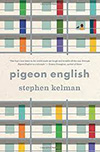
I thought this was a murder mystery with an atypical narrating protagonist, like The Curious Incident of the Dog in the Night-Time (which I loved) and The Maid (which I liked well enough), so I wasn’t really prepared to for this very literary novel about poverty in the UK. It was very good for what it was, but in this third year of the pandemic, I really need to stick to my low-stress cozies. That said, as much as I felt that I really didn’t have the emotional bandwidth for this, I also couldn’t put it down.

12-year-old Harri lives with his family in one of London’s housing projects, and when an older boy he recognizes from school is found dead, he and his friends decide to investigate.  Harri himself is cheerful, enthusiastic, and generally optimistic in a quite grim world, that his narration kept me pulled in, even when his young London slang was almost entirely incomprehensible to me. As a warning,  there are also a number of slurs, insults, and general ignorance, which seems entirely accurate to the protagonists but also got occasionally tiresome.

However, the hardest part of reading this was seeing how poverty grinds up everyone in it, regardless of how they try to escape or even claw out some bits of joy. It is beautifully written, with some surprisingly poetic narration woven in, but very much a gritty study of often-overlooked communities, framed around this one murder, rather than a mystery novel.

Cemetery Boys

By Aiden Thomas

Cemetary Boys is a very seasonal read right now with its cemetery setting, leading up to El Día de los Muertos.  Yadriel was born into a family gifted with divine abilities. All the women of his family serve life, able to heal even mortal injuries, while the men serve death, leading lost spirits to their afterlife. Yadriel is trans, though, and while his family recognizes him, they insist that Lady Death will not, and refuse to let him perform the necessary male ritual that will awaken his powers.

When Yadriel attempts the ritual in secret, with the assistance of a cousin, he accidentally summons the wrong ghost in the process, a fellow classmate from his school. The ghost challenges Yadriel to solve his murder, and in the process, they uncover a slew of disappearances throughout their LA neighborhood. It’s a great premise and well-thought out mystery, but I realized early on that the novel is very much for young adult readers, perhaps even middle school rather than high school. I liked and cared about the characters, but felt more sympathy for the overwhelmed and often clueless parents and grandparents than I did for the teenage protagonists.

It was also quickly clear to me what was going on with the mystery, which I took as another sign that this is truly a book for younger readers, ones who are still being introduced to plot twists and suspense in books. I would have loved this book in my preteens, and I feel a little sad that now I found it at times tiresomely predictable, though I suppose that is an inevitable part of getting older. Happy Day of the Dead, everyone!

The Golden Enclaves by Naomi Novik

The Golden Enclaves
Lesson Three of The Scholomance
by Naomi Novik
September 27, 2022

This book has been out for a week, but I was finally able to check it out from a local library and then read it over the course of maybe 27 hours (in the middle of a work week). And just wow! It’s so good and so satisfying and so tense.

This book starts immediately after the second book ends, and is very much a continuation of everything that has happened before in the previous two books and I probably need to go back and reread both in order to better enjoy some of the clues that had been casually dropped as world building before but abruptly become extremely plot significant here.

Each book centers around a conflict that’s slightly larger impact than the previous book. In the first book, the plot is focused on our protagonist’s personal survival; in the second book, it’s about the school’s survival; and in this the third book, it’s about the community’s survival. This is also the first book where the action is outside of the school and there are adults involved and hoo boy does that make things even more complicated. The kids in the school were just trying to survive: well the adults outside of the school are doing the same but have had even more time to make mistakes and make compromises and make hard decisions that have consequences down the years, decades, and centuries. And our protagonist El has to figure out how to live in the world where it’s the people rather than the mals who are the greatest danger.

This book also reminded me of Rainbow Rowell’s Anyway the Wind Blows, the third book in her Simon Snow series, in a variety of ways that I can’t write out without spoilers.

Anyway, I adore this book, but it’s definitely not a stand-alone. So if you haven’t already, go read the first one first.

What I Read When I Dropped Off the Face of the Earth

Whew, 2021 and 2022, huh? The last, let’s see, 18 months have been a rollercoaster ride for me and for seemingly everyone else I know. I may not have been posting here, but I have been reading and books have become even more important to me as a comfort and a distraction. So just to catch up a bit before I jump back in to more detailed reviews, here are the highlights of my last 18 months of reading–not necessarily the best books I’ve read, but the ones that most soothed my soul when I needed it.

Fun YA Series

YA is always a solid place to start when you need something engrossing and distracting, but also a bit hopeful. The two series I’ve enojyed most lately have both been discussed on this blog before, but I am still talking about them.

  • Rebecca talked about the first two books in Naomi Novik’s Scholomance series, but The Golden Enclaves comes out in just a few days! The series has magic, and a boarding school, and some romance, while being completely unlike Harry Potter at all. This world is dark, while also managing, especially in the second book, to show how people, even deeply pessimistic people, can change the world and people around them.
  • I really enjoyed Maureen’s Johnson’s Truly Devious trilogy when it was focused on the main characters solving the initial mystery about the founder of their mysterious boarding school (I do like a boarding school story). But I was surprised by how much I like the fourth book in the series, The Box in the Woods, where our heroes branch out and solve a new mystery. In all of these books I’ve been impressed with how complex the mystery stories themselves are–Johnson doesn’t skimp on the twists and turns of the crimes and cover-ups, while also drawing really layered teen characters.

Cozy Gay Period Mysteries

A nice English country house with some gentlemen falling in love? That’s my sweet spot. Magic is nice, but not required.

  • Cat Sebastian’s Hither, Page and The Missing Page are both really sweet romances/mysteries between a country doctor reeling from his experiences in the first World War, and a spy who might be ready to get out of the business and find a more settled life. She’s written loads of books that are all fun, but I think I like the 20th-century setting of these more than all her others.
  • A Marvellous Light, the first in a planned triology, is set Edwardian England–according to the publisher’s website, this makes it a “gaslamp” story–but has similar sort of “odd couple fall in love while solving a mystery” vibes. This one does happen to involve magic, and I do always love it when books have scenes–and this one has many!–where non-magical people suddenly learn that magic exists. It’s like the book version of “It’s bigger on the inside!”

Non-fiction about Archaeology

This is a very specific category of books, but somehow reading about the ancient world is very calming?

  • Riddle of the Labyrinth by Margalit Fox is actually about 20th-century efforts to decipher an ancient language, with a little everygreen sexism in academia thrown in for good measure. Fascinating for anyone who likes process-y stuff and/or grammar nerds, since it walks through how scholars figure out unknown languages.

  • Lives in Ruins by Marilyn Johnson is technically about the archeologists who do the work, not the history itself, but it was also fascinating and totally made me want to go dig in the dirt.

Actual Literature

I do read literary fiction, although it can be a hard sell when I’m looking for comfort. Of late I’ve felt overwhelmed when I see a big doorstop of a book, but both of these were comparatively short, which made them feel achievable.

  • Matrix, by Lauren Groff, was probably the best thing I’ve read all year. It’s the story of a medieval nun who runs an abbey in France. It mostly focused on her internal life as she travels through a life that may seem very small by modern standards, but is huge in spirit. I feel like every description of this book made me less interested in reading it, but it was very compelling and felt more modern than it had any right to.
  • I remember enjoying Jonathan Strange and Mr Norrell by Susanna Clark when it first came out and I also liked the TV adaption of it. But for some reason, her second book Piranesi never caught my attention. I think something about the cover, and maybe the title, made me think it was going to be weird? I don’t generally mind weird, but something turned me off of it. Well, it was kind of weird, but not in a “weird for weird’s sake way.” Instead, it was one of those stories where you have to roll along for the first about 40% not really knowing what’s going on, just having faith that things will become clear. And then suddenly clues start dropping and the rush you get when you start figuring things out is so fun!

Finally, I’ll give a plug to something I was extremely skeptical of for a long time: book podcasts. I love podcasts and listen to many, many hours of true crime and comedy and pop culture discussion every week, but I’ve actively stayed away from reading-related podcasts. I think I was worried that I would feel bad about all the books I hadn’t read and would just end up adding to my already endless To Be Read list? But I’ve found two podcasts that are nicely calibrated to avoid those problems. Currently Reading and Reading Glasses are similar in structure, in that the hosts will talk about the books they are reading or have just finished, but then also address more general topic like remembering what you read, or the best tote bags for books, or how to get into books in translation or in a certain genre. And while I have definitely read things based on their recommendations–I read Piranesi after one of the Currently Reading hosts said it was basically a murder mystery–most of the time they describe books in such clear ways that I often end up deciding that the books they describe are not for me after all. Plus, these shows both manage to release an episode every week, so if you’re looking for book talk more often than the once-a-year schedule I seem to be working on, these could be for you!