Heather Wells Mysteries

Heather Wells Mysteries
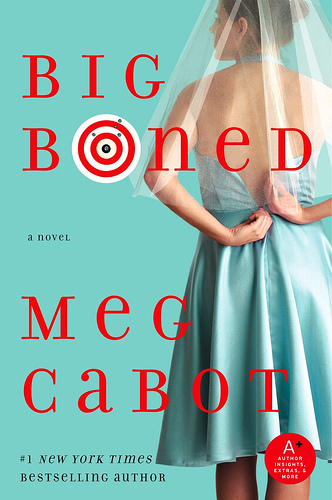
by Meg Cabot

size12_cabotSize 12 Is Not Fat
2006

size14isnotfateitherSize 14 Is Not Fat Either
2006

big-bonedBig Boned
2007

Like all of Meg Cabot’s books, these are delightful romps with crazy characters. The plot is, more or less, there to keep the characters focused and give the books a defined ending. I love her characters so much! And one of the many things that makes Cabot a great author is that she clearly loves her characters, too, every insane little bit of them.

I’m particularly pleased with these books, because unlike her 1-800-WHERE-R-YOU series or her Mediator series, both of which I also loved, the Heather Wells mysteries have an adult protagonist. Most of Cabot’s books are set in high school and I am (very belatedly) aging out of the time when I can really empathize with the high school drama. But it’s wonderful to know that Cabot writes for adults as well, because there are times in life when I need to read something with her warm-hearted fake-it-till-you-make-it-even-when-it’s-really-very-fake-right-now approach to life. None of these characters have it all together, even though they’re adults, but that’s okay. They can still try and they can still succeed. And I will still laugh (mostly with them, but sometimes at them) as they do so.

The protagonist of this series, Heather Wells, is an ex-pop star who, in quick order before the first book begins, lost her recording contract, her pop-star fiance, and all of her money, as well as her mother/manager who ran off to the Bahamas with the money. There’s surprisingly few hard feelings about any of this, c’est la vie.  The books start with Heather renting a room from her ex-fiance’s brother (who’s a private detective) and getting a job as assistant dorm manager at a local college campus.

And then there’s a death in the dorm!

And the police think it was an accident!

And Heather Wells must solve it!

Not to spoil anything but (A) she solves the mysteries! and (B) by book number three the dorm has gotten the nickname “the death dorm” since people keep on dying in it and needing Heather Wells to solve their murders.

Anyway, these are wonderful, comfort books. I read these first three and am all happy and satisfied and ready to read something else for a while. But I’m also glad to know that there are two more books in the series waiting for me when I next feel the need for some Meg Cabot.

Miss Fisher’s Murder Mysteries

By Kerry Greenwood

Cover photo: Miss Fisher's Murder MysteriesThe Australian television show is hugely popular on Tumblr, but I’ve been resisting it because it just looked a bit twee for me. However, when trying to unpack those last random boxes from my latest move (including one marked “desk stuff” that I never unpacked from the previous move that turned out to include a large set of random pens, at least half of which had dried out), I ran a couple of episodes from PBS in the background, and I was hooked. Literally, it appears to take two episodes. I finally caved and checked out the first season on DVD from the library, and Rebecca wandered in and out of the room for the first episode, sat down for the second, and then demanded that we watch the remaining ones together. We finally ended up with Netflix primarily to have access to the third and most recent season.

In case you are not on Tumblr and have somehow avoided all the Miss Fisher love, she is a flapper in 1920’s Melbourne, who sort of falls into detection through lack of anything better to do with her life. It is really hard to put my finger on what makes it so addictive, but I think it is primarily due to the characters and the actors. The plotlines are fun, but not too noticeably different from the many, many other mystery shows. Miss Phryne Fisher is unrepentantly wealthy, frivolous, feminist and raunchy, and that is actually very rare in television these days. I think this is probably the biggest aspect of her popularity – we are so parched for portrayals of sex-positive femininity that we will fall all over any and all portrayals like rabid dogs. Which is not to say that Miss Fisher doesn’t deserve all the fandom, but just to try to explain the level of adulation that even the show-creators seem a little puzzled by.

She has endearing friendships with both her best friend, a gay lady doctor, who assists in some of the cases and is wonderfully dry, and her paid companion, Dorothy, who is a relatively conservative Catholic girl slowly falling (rising?) to Miss Fisher’s influence. Her flirtation with the local police inspector is masterful, as he clearly respects her, is attracted to her and finds her intrusive and annoying all at once. Rebecca pointed out that the actor playing the inspector deserves more than whatever they are paying him just for his very restrained but communicative expressions alone.

So, after enjoying Season 1 so much, Rebecca and I checked out a large stack of the novels it is based on. Each one is barely 200-pages long, and we anticipated a lovely month of entertaining fluff, but neither of us cared to actually read more than the first one. There was no obvious flaw to point at, but the charm of the television show just wasn’t there. Miss Fisher is described as significantly younger, and is more sarcastic and dissatisfied, which comes across as sort of bratty. The other characters are similarly diminished – Dorothy is somehow both more bitter and naïve, Inspector Robinson almost nonexistent, and the communist cab drivers more zealous and confrontational.

I started to think of this series as the flipside to the Haunted Bookstore series that I reviewed earlier. With the Haunted Bookstore novels, I could list several concrete reasons why I shouldn’t have enjoyed them, and yet I loved them all completely and read them straight through until I was so sad to reach the end. With the Miss Fisher novels (or at least the first one), there were so many reasons I should have really enjoyed it, and yet I just didn’t. I even found that while I was reading the book, my enjoyment of the television show fell off a little, so while I finished the first book, I determined not to read any more and just enjoy the show on its own.

—Anna

The Last Policeman

By Ben Winters

Book Cover: The Last PolicemanThe Last Policeman is a murder mystery set in a pre-apocalypse Earth – an asteroid has been discovered that will hit Earth and most likely destroy all of humanity in six months. Lots of people commit suicide (which I don’t understand; maybe this is my laziness speaking, but why bother if the Earth is going to shortly do it for you?) and lots of people have abandoned their homes and jobs in order to fulfill their bucket lists. Our protagonist, Henry Palace, however, was a beat cop who was promoted to detective after enough of the detectives quit or died. He has always wanted to be a detective, and so is very dedicated, driving everyone else crazy with his scrupulous attention to detail and his eagerness to actually investigate a death that he claims is suspicious and everyone else says is yet another suicide.

There are spots of humor (all the McDonald’s and Duncan Donuts have closed, but Panera is still running strong, albeit as a religious organization), but the overall tone of the novel is definitely dark. The world is completely topsy-turvy with internet and cell service collapsing, most major corporations shutting down, and just about every other job, including the government, depending on a skeleton crew of dedicated employees. Inflation is through the roof, of course, though I was confused that there was any monetary economy at all, actually. The people, too, are all different levels of crazy, with depression and drug use way up, naturally, making tracking down motives and following rational clues particularly difficult.

One of my favorite things about the book is that, through showing instead of telling, I am fairly sure that both the detective and the victim are on the milder side of the Autism spectrum. It is cool to see that (possible) representation laid out so matter-of-factly. Separate from that aspect, however, there were the occasional times when I wondered about an unreliable narrator. He isn’t unaffected by the coming doom, either, and there are definitely times when I wondered whether he purposefully twisting the truth to make his case better match the cases he’d hoped he’d be working on as a detective.

This is the first in a trilogy, and I definitely plan to read the next two, so I’ll report on those when I get to them. Rebecca asked me how there can be three if the world only has six months to go, but this book only spanned a month. I wondered, though, if something unforeseen happens and the asteroid does not hit, how do you rebuild after all of Earth’s societies have been living as though it is the end of times?

—Anna

The Ghost and Mrs. McClure

By Alice Kimberly

Book Cover: The Ghost and Mrs. McClureI have been kind of a cranky reader lately (post Jonathan Strange and Mr. Norrell), and I was cranky starting this book, too. You may have noticed that I can be a bit snooty about my pulp mysteries, and I only condescended to read this mix of a cozy and pulp mystery on my mom’s recommendation. It has a ridiculous premise: a recently widowed woman leaves her up-scale career and lifestyle in New York City to help her aunt run a small-town bookstore, which turns out to be haunted by a hard-boiled private eye, shot there in 40s.

The private eye ghost is a little over-the-top, our protagonist is often ditsy, and the writing is a bit amateurish (the author definitely hits her stride later in the series, though). It is the fluffiest of fluff, and it just makes me really happy. All of the various oddball characters in the small town are cartoonish in the way that cartoons are awesome: they are quirky, and accessible, and just so comfortable. I’ve read the first three on the last two weeks, so they are each a quick read and quickly addictive, too.

On the flipside, in case I was feeling too pleased with my new series, I also checked out Werewolf Cop from the library, thinking Werewolf! Cop! I should have been warned off by the blurb by Stephen King, but I was just too eager to read a possible supernatural noir novel! This book was so offensively bad that I couldn’t even hate read it for the blog. I won’t go into details or this post will run as long as my last one (and I only made it to chapter 2), but it reminded me why I stopped reading all male authors for a chunk of time in my teens. (I went back and got books four and five of the Haunted Bookshop series instead.)

—Anna

Edited to add more praise: I just finished the fifth and final published novel in the series (though another one is rumored to be in the works), and they just keep getting better and better! In the later novels, the ghost shows Mrs. McClure memories of his old cases, and the novels are build around two mysteries from different time periods in interesting ways. Reading all five books back to back, I also started to notice the subtle evolution of Mrs. McClure’s character. Through the encouragement of the supportive ghost and her successful investigations, she noticeably gains confidence and takes increased control of her life. It is just a really nice through-line.

Also, I meant to write this before, but forgot: with every single novel, about halfway through I would start thinking how obvious the solution was, but every single time, I got it wrong, and not in a disappointing way, either. (Of course, in my defense Mrs. McClure was wrong as often as not as well.)

DC Noir

Edited by George Pelecanos

Book Cover: DC NoirI’d checked this book out way back in Boulder, when we were first thinking of moving to DC because I thought it would be a fun introduction, but then I got busy with all the moving stuff. However, now I’m feeling pretty DC noir myself, so I figured I’d give it another go.

This is part of a whole series of [City] Noir books, so if noir mystery is your thing, you might want to check whether the Akashic Noir series includes your city (there is an incredibly wide range of cities, and not just confined to the US, either).

I’ve complained before about authors not getting “noir” quite right, thinking you can just slap on a bunch of the more obvious earmarks, but reading these stories helped me refine my thoughts on it. Too many people think that noir is about how horrible people can be to each other, but in really good, nuanced noir, it is about how decent people struggle to stay that way in a general horrible world. So, while there are very often horrible people in noir, they are usually side characters and may well also be originally decent people who have failed in their own struggle. Of course, making a whole universe that is generally grim and destructive is a lot more difficult than just throwing some unexpected murderers in there, and that’s why noir is a true art form.

Some of the stories here got it and some didn’t; while I would say that the ones that missed the mark outweighed the one that just got the true noir feeling, those with the right feeling were awfully good (though depressing, of course).

The stories were set in a wide range of different neighborhoods, and while there’s a few set in wealthy neighborhoods, most are set in the poorer ones. (And, as a sort of funny aside, I’m currently apartment hunting once again, and thought I’d found a very reasonably priced townhouse until the neighborhood it was in showed up in one of the stories here. When I texted Kinsey, just to confirm my suspicions about the neighborhood, she just texted back “NO.”)

Anyway, the stories also spanned different time periods, which threw me off sometimes – a lot of them, of course, wanted to focus on DC’s most crime-ridden times, and some of them were sort of indeterminate. One of the stories began with riots caused by a black cop shooting a handcuffed Hispanic suspect, and except for the respective races, that seemed very current. My favorite story featured one of the more radical black power movements taking on the mob in the 60s.

Only one of the authors in the collection is female, and only two of the stories had a female narrator, which was a bit of a disappointment. There is a DC Noir 2, though I think I may instead want to check out some of the other cities, possibly Dublin Noir, since that sounds pretty interesting.

—Anna

Not Actually Fanfiction

As should be obvious, I really enjoy fanfiction. They are (often) fun stories by (presumably) amateur authors who can sometimes do amazing things unconstrained by thoughts of salability. They write because they have ideas they want to get out. And sometimes, it’s not actually fanfiction. Sometimes an amateur author, in the same spirit of fanfiction, will write an original story and post it online for anyone and everyone to enjoy.

There are even a few archives specifically for these types of short stories, presented like fanfiction except for being entirely original. The parallel for Fanfiction.net is FictonPress.com. ArchiveOfOurOwn simply added a category for Original Fiction.

Here are a few recommendations for original short stories presented online:

Suite for the Living and Dead
By Inland Territory
Summary: When he was twenty three years old, Mike Lafayette took it on himself to write an oratorio for a people without a god.
Why I like it: This is just beautiful. A beautiful concept and beautifully written, but also speaks directly of the particular pain of seeing a deadly and important conflict happening in front of you and, for one reason or another, not joining the fight.
Extra comment: This feels a bit like a fanfiction story in that it references a much more epic story with main characters who are minor characters here. It makes me wonder if there is a book out there this is connected to but I haven’t been able to find. My current assumption is that it is that the author of this short story has an idea for a book and maybe she’s even half-written it, but it’s not available anywhere.

Toad Words
By Ursula Vernon
Summary: Terri Windling posted recently about the old fairy tale of frogs falling from a girl’s lips, and I started thinking about what I’d do if that happened to me, and…well…
Why I like it: One of the problems with traditional fairytales that I (and many other women) are increasingly aware of is how they often reward young girls for being quiet, polite, beautiful, and awaiting rescue, while punishing young girls for being outspoken, ugly, and actively attempting their own rescue. This takes one such fairytale and shows the repercussions, and how a curse can ultimately be made a reward and a blessing can ultimately be a punishment.

Never the Same
By Polenth Blake
Genre: science fiction
No summary, but the first paragraph: Everyone thinks my brother is nice. He set up a rescue centre for birds, after the terraforming accident poisoned the lake. That’s always the image of him, holding a bird covered in sludge. The birds are never the same after they’re cleaned, but the gossips never talk about that.
Why I like it: This is a lovely little mystery, with a main character with mental health issues. With a somewhat unreliable narrator investigating a situation in a highly biased community, the story looks into the difference between right and wrong actions and right and wrong motivations.

The Emperor’s Last Concubine
By Yamanashi Moe
Warning: this has explicit sex in it
No summary, but I bookmarked it as: a story of love and politics
Why I like it: This story has the standard Cinderella structure but focuses on what happens after the handsome prince whisks his beloved away and the difficulties faced by both prince and beloved as they both become aware of the golden cage the palace makes.

Books You Already Knew I Was Going To Tell You To Read

I was on the road quite a bit in December and read a whole pile of books I enjoyed. But none of them quite seemed to warrant their own review, since none of them are going to come as a surprise to anyone who’s spent any time here. So a list seems appropriate, so I get to mention a few things that I heartily, if predictably, recommend:

1) Landline by Rainbow Rowell. I saw Rainbow Rowell speak in person earlier this fall, and that woman is made up entirely of curly hair and charisma, and the stories she told about writing this book had the audience literally screaming with laughter. This is no Eleanor and Park, but I’m not sure my heart could handle another one of those, so this story about a marriage and a magic telephone will do just fine.

2) Dreams of God and Monsters by Laini Taylor. Quite a while back on the blog I mentioned the first book in this trilogy, Daughter of Smoke and Bone. That book was your fairly standard YA, magical realism, independent female narrator, star-crossed lover sort of story. And then book two, man, book two took a turn. It got dark and weird and tragic and bloody, and I actually put off starting the third one for months because I was scared of where things might go. But I ended up really liking how the story resolved, and I promise you, you have not read anything like this.

3) One Plus One by Jojo Moyes. I’ve already raved about Me Before You and The Girl You Left Behind, so it shouldn’t be any surprise that Moyes’s latest was equally heart lifting/breaking. (Note, because I know my readers: don’t worry too much about the dog. It will work out.)

4) The Secret Place by Tana French. This wasn’t my favorite of the Dublin Murder Squad novels–that would be The Likeness–but it was a compelling read. While the plot and mystery of this one didn’t grab me the way some of them have, it still delivered on the two things I think Tana French does best–unsympathetic but fascinating characters, and a romance-free vision of modern-day Ireland.

The Flavia de Luce Series

By Alan Bradley

I read a recommendation for Alan Bradley’s Flavia de Luce mystery series online and was intrigued by the idea of an 11-year-old girl detective in a small British town in the 1950s (seriously, who wouldn’t be?). Reading some background on the series before diving in, I also learned that the author wrote his first book, the first in this series, at the age of 70, which is just very encouraging to people who haven’t quite found the time to pursue their passion yet. Of course, he’s had to spend years now answering why a 70-year-old man chose an 11-year-old girl as his protagonist, which has got to get a little tiresome, but I thought his answer was a good one: he wanted his protagonist to be someone who is almost invisible in society, so is able to go unnoticed in pretty much every situation.

Book Cover: The Sweetness at the Bottom of the PieAnyway, I started with the first book, The Sweetness at the Bottom of the Pie (I love his titles), and it was an utter delight! The mystery is a little obvious, but I was much more willing to forgive Flavia for not putting the pieces together much sooner, especially since a great deal of her time is spent trying to disrupt her family whenever possible. Her family consists of her emotionally distant widowed father and two older sisters banging around in their centuries-old ancestral home, and it is just classic British flakiness.

The author is maybe a little heavy with the similes at times, but though it sometimes distracted me, it was inoffensive overall. A sign of my advancing age may be that I often sympathized with the poor inspector who was just trying to solve a somewhat unpleasant murder and everywhere he turns, there’s a small girl underfoot, certainly quite bright, but still a very young child nonetheless. I struggle a bit to describe how well I think the author describes Flavia’s brilliance while also keeping her clearly quite young.

The second book, The Weed That Strings the Hangman’s Bag (seriously, such fun titles!), however, has a passage in it that I think really showcases the balance and which I particularly loved. I’m including it after a page cut, not because it has spoilers (though it does spoil Madame Bovary, so take that caution I guess), but so that it doesn’t fill up the entire home page: Continue reading

The Cuckoo’s Calling

I’m a little late to the party here, because although I followed all the revelations* about J.K Rowling writing a mystery novel under a pen name (Robert Galbraith), I just now got around to actually reading the book. Which was a shame, because The Cuckoo’s Calling is really a cracker of a mystery novel.

I like mysteries and have read a trillion of them, but I tend to get disillusioned with how much they blend together. Yes, I realize that most mysteries are going to have a formula, but I have read enough “death in a quiet English village” books and “death in a major American city” books to last me a lifetime. Rowling’s book may not stray far from the formula, but it is so well done that it definitely doesn’t blend in with anything else–it has it’s own distinct voice and feeling. The basic story is that a down-on-his-luck PI in modern-day London is asked to investigate the death of celebrity. The police have ruled it a suicide, but her brother is convinced it was murder. So far, so formulaic. But the details and the characterizations in this story are fab. All of the characters are crisply drawn–my favorite was the PI’s temp assistant, a great, smart female character who is not the typical genre girl assistant. The details about life in London make the city feel like a character itself, and the mystery was twisty enough that I didn’t see the solution coming.

As I was reading the book I was asking myself, as I’m sure everyone was, whether I would have ever guessed it was by Rowling without being told. And the answer is . . . of course not. It’s a mystery novel written for adults and it’s not like any of the characters suddenly start casting spells. But once you know she’s the author, there are definitely elements that feel familiar. Like, the character names have a Harry Potter-ish ring to them: the murder victim is Lula Landry, and the PI’s name is Cormoran Strike. And, as many reviewers have pointed out, the plot leads to a lot of musings about celebrity culture and the paparazzi; one has to imagine that Rowling’s thoughts on this come from personal experience.

While the book wraps the central mystery up quite nicely, lots of threads are left hanging with the characters, who clearly have lots more to do. I found myself curious about how the PI would handle his disastrous love life, and whether the assistant would get do some real sleuthing of her own. Which is convenient, since the second Cormoran Strike novel, The Silkworm, was just released, and I am definitely looking forward to it.

Kinsey’s Three Word Review: Twisty, modern mystery

You might also like:
Case Histories, or any of the Jackson Brodie mysteries by Kate Atkinson, or the Duncan Kincaid mysteries by Deborah Crombie. Both of these are series set in today’s Great Britain, and both have an of-the-moment, edgy feel. I’ve also heard fabulous things about Denise Mina’s books, but I have been defeated by my to-read list and haven’t gotten to these yet–someone else should read some and report back!

*I know that Rowling is doing perfectly fine and there’s really no need for me to feel sorry for her, since I’m sure she’s perfectly happy somewhere counting her piles of money, but it does seem sad that it’s apparently impossible for her to trust the people around her with even a fairly unimportant sort of secret. How can one hope to have any sort of normal life like that? As Bill Murray says, “I always like to say to people who want to be rich and famous, try being rich first. See if that doesn’t cover most of it.”

Long Fanfictions

In preparation for writing my review of Rainbow Rowell’s most recent book, Fangirl (expect the review soon), I decided it was time to recommend a few more fanfiction stories. What makes this selection stand out from my prior recommendations is that, in honor of Rowell’s main character’s fanfiction epic, all of these are recommendations are really incredibly long.

Previously I’ve recommended short fics, because they’re intended to lure unwary readers into fandom or maybe point out a hidden jewel to someone already in fandom. The longer stories tend to be well known to those already in fandom and be a bit daunting for those outside of it.

The following stories range from 109K to 757K long. To give you some context for those numbers: A harlequin romance (one of those romance books often sold at the check-out line of grocery stores and titles things like The Billionaire’s Baby or The Tycoon’s Virgin Mistress or some such) is generally 10K words. Anyone who has completed the NaNoWriMo challenge to write a novel in the month of November, has written 50K words.

The following recommendations are a demonstration of not just the skill that some fanfiction writers have in weaving together words and worlds and characters, but also the dedication they have in continuing a story line that has gotten immensely rich and complex, and keeping at it until they can bring the story to its intended conclusion.

These stories have required a serious commitment by some fan to write. They take a reasonably serious commitment from some fan to read, too. But they’re worth it!

So, from shortest to longest:

Into the Rose Garden
by Dryad13
Fandom: Labrynth
109,232 words long
first chapter posted: June 10, 2004
last chapter posted: January 8, 2006

Summary: Sarah has good grades, a circle of friends, and a cute boyfriend. Life’s great…right? So why does she have the strange feeling that something’s missing? Fairy tales show that magic will make you or break you. Which category does she belong in?

Why I like this: This is a gorgeous story that does an incredible amount of world building regarding both magic and society, to how the Underground works and where exactly Jareth’s place is, in it and the consequences to Sarah for having defeated him.


The Least of All Possible Mistakes
by rageprufrock
Fandom: BBC’s Sherlock
118,096 words long
first chapter posted: January 31, 2012
last chapter posted: February 20, 2013

Summary: If ever a people deserved tasering, it’s Holmeses.

Why I like this: Lestrade doesn’t get much attention in the Sherlock Holmes stories and it’s a shame given how awesome she (the author decided to make Lestrade a female for this story) is. She’s not brilliant, but she is smart and, more to the point, she’s also practical and pragmatic and with enough self-confidence to know when to ask for help and when to call that help out for being an ass. And she is not at all the sort to put up with kidnappings by the mysterious older brother of her consultant (see the summary.) 😀


Divided We Stand
by KouriArashi
Fandom: MTV’s Teen Wolf
156,742 words long
first chapter posted: July 10, 2013
last chapter posted: October 4, 2013

Summary: Derek is being pressured by his family to pick a mate, and somehow stumbles into a choice that they didn’t expect and aren’t sure they approve of….

Why I like this: This uses a fairly common trope of fanfiction, but one that I enjoy immensely, and says what if this secret society is actually common knowledge? They’ve been around forever and all sorts of their cultural oddities have just been incorporated into society at large. In this case, everyone knows werewolves exist. And then we get to an immensely fun and satisfying romp of a story in which there is romantic drama and mysterious conspiracies and an eventual happy ending. It’s pretty much a perfect comfort story.


Pet Project
by Caeria
Fandom: Harry Potter
338,788 words long
first chapter posted: March 3, 2005
last chapter posted: June 9, 2013

Summary: Hermione overhears something she shouldn’t concerning Professor Snape and decides that maybe the House-elves aren’t the only ones in need of protection.

Why I like it: This is a brilliant story focused on Hermione Granger as she matures enough to realize that teachers are people, too, and starts to notice some of the complexities and tricks of the adults around her, with a focus on Severus Snape in particular, and his role as a double agent. As she begins to delve into the mystery of Severus Snape, she and the author really delve into the magic and magical culture of the Harry Potter world. (Plus, I am completely in love with the house elves of this story, even though I never much cared for that plot line in the original books. “Ears are flapping!”)


Embers
by Vathara
Fandom: Avatar: The Last Airbender
757,222 words long
first chapter posted: September 24, 2009
last chapter posted: January 18, 2014

Summary: Dragon’s fire is not so easily extinguished; when Zuko rediscovers a lost firebending technique, shifting flames can shift the world…

Why I like this: So many feelings! This is an amazing story delving into Zuko’s character as an exiled prince and abused child and doing amazing world building while also delving into the causes and repercussions of genocides and world wars and cultural clashes and children loaded with responsibilities and adults loaded with secrets.