 My Sister, the Serial Killer
by Oyinkan Braithwaite
2018
This book was very good and I highly recommend it, but it was also not at all what I expected even though I’m not quite sure what I was expecting. I’ll start by saying that it’s Nigerian noir. I haven’t read very much Nigerian literature or very much noir, so I’m not sure if it was one of those aspects or something entirely unique to the author that had the characters and their interactions fall into a sort of odd uncanny valley for me. It was unnerving and I was never quite sure what to expect. And despite it being less than two hundred pages, I had to take multiple breaks to relieve my poor nerves, as I walked around the house going, “oh no…., oh, no….”
The premise is pretty much exactly what the title says: at the beginning of the book, Korede’s sister Ayoola has just killed her third boyfriend “in self defense.” One time, sure: that’s terrible but good for her for defending herself. Two times, is terrible, how can these things keep happening to her just because she’s so beautiful. Three times, though, three times, Korede feels is just increasingly unlikely to be self-defense.
Then Ayoola shows interest in dating the guy Korede has a crush on. And events proceed.
The book was very factual and never gory but it sure ramped up the uncertainty of events as they happen while at the same time revealing in bits and pieces events from the past.
Anyway, I highly recommend this not only because it’s excellent but also because I desperately want to hear someone’s take on it. I’ve now read a bunch of other reviews online, but this is pretty much the perfect book for a bookclub where the members can get together later and talk about it with a lot of waving hands and inarticulate noises of amazement and distress.
 This is like Wibbly-Wobbly, Timey-Wimey: the novel. The book is covered in blurbs raving about how original and fascinating it is, but I’m not sure that I ever got a full grasp of what was happening. Every so often, I’d get a spark of understanding, which was pretty cool, but then it would inevitably lead to even more confusion.
 Have you ever thought Jane Eyre would be improved if the heroine had simply murdered all the villains who cross her? Well, have I got a book for you! The very first sentence sets the tone: “Of all my many murders, committed for love and for better reasons, the first was the most important.”
 Before I started writing this review I searched through our past blog entries several times, because this seemed like such an “us” book that I couldn’t believe one of us hadn’t already written about it. It’s a lady Sherlock Holmes! A Study in Scarlet Women is the first in a series of (currently) three books by Sherry Thomas about Charlotte Holmes, a brilliant woman who throws off the constraints of her conservative Victorian family and starts solving mysteries.
 Kinsey has read a fair number of Mitchell’s books, but this is my first one, and the only way I was able to put it down at all was to try to stretch it out for longer, it was so good! It is also very spooky, so I recommend it for a good October reading, leading up to Halloween. (I realize I’m cutting it a bit close here.)
 Oh, The Dragon Prince! The first season of this cartoon just hit Netflix a few weeks ago, and it probably would have passed me by entirely except for a thread of kudos on
  If The Dragon Prince is Game of Thrones, then
  This book is literally The Breakfast Club, but if someone killed Anthony Michael Hall (and if Anthony Michael Hall had a real mean streak). Simon, the victim, wrote a gossip blog, revealing secrets about his classmates. He’s killed before he can post a new piece, while in detention with the four classmates he wrote about. Of course, those four are an over-achiever, a delinquent, a queen bee, and a jock.
 You know how sometimes you want something interesting and different from what you’ve read before but also still want the same comfort and satisfaction as you get from those familiar books? I have to assume that I’m not the only reader chasing this catch-22.
 Waaaay back in 2012, I wrote a review about the first book in a new YA fantasy/mystery trilogy by Maureen Johnson. I really liked
 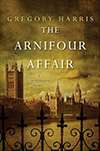 Sometimes I worry that I’m getting too cranky in my old age – that books I would have enjoyed when I was younger, I now pick apart as trite since I’ve read so many other, better books by this point. I really wanted to like The Arnifour Affair: it is a Victorian-era murder mystery featuring a renowned detective, and his partner, both in work and life. Unfortunately, it reads like someone’s Sherlock/Watson fanfic with the names changed. Which, honestly, I would be all over, if only it was well written!
 Biblio-therapy