fail, fail again, fail better by Pema Chödrön

failcoverfail, fail again, fail better
by Pema Chödrön
2015

This was an elegant short book with two main sections: the first is a transcript of a commencement address that the author, an American-born Buddhist nun, delivered to the 2014 graduating class at Naropa University, and the second is a transcript of a follow-up interview that delves further into the topic.

Both sections were good, although I enjoyed the first part better. The commencement address was more elegantly written and more beautifully laid out and had a feeling of something in between poetry and prose. The interview delved more into Chödrön’s person life experiences and how they effected and were effected by her thoughts on failure.

The thoughts really come down to:

  • Failure is always possible but do not allow fear of failure to stop you.
  • It is important to acknowledge that a failure is a failure rather than pretending it isn’t, to either yourself or others.
  • Examine each failure to determine why it happened and allow it to be a learning experience without focusing on blame: either of yourself or others.
  • Failures range from minor to devastating but they are always external actions: you can fail, but you cannot be a failure.

None of these thoughts are particularly unique or anything I haven’t run across before, but they’re important and well worth being reminded of on a semi-regular basis.

All Rights Reserved by Gregory Scott Katsoulis

allrightsreservedAll Rights Reserved
by Gregory Scott Katsoulis
2017

This book is terrifying. It’s good and I recommend it, but like many such YA novels, it’s set in a dystopian future and it’s a particular dystopian future that I am deeply concerned with.

For some background:

US copyright law was first established in 1790, allowing authors to register their books for a seven-year monopoly on publication, to allow the authors that long to make as much profit as they could before they had to shift their focus to a new creation.

Ever since then, the copyright protections have been creeping to allow creators longer monopolies and pushing back any content going into the public domain to help and assist other creators or just be available to the public for free.

The Copyright Term Extension Act (colloquially known as the “Mickey Mouse protection act” because Disney was so scared of Mickey Mouse entering the public domain) was made law in 1998, and that degrees that all content is automatically copyrighted (no registration or even intent required) and content remains under copyright for 70 years after the original author has died. Great grandchildren can now hold monopolies of their ancestors’ creations… no need to make new content at all.

Meanwhile, what exactly copyright covers has also been expanding: originally it literally just covered the text itself. Translations were not infringing copyright because they were literally changing the language. Characters and settings were free to use. Now sequels and spinoffs are all infringements. Organization for Transformative Works is currently battling just to allow people to freely write fanfiction for purely recreational purposes.

The “fair use” exception was added to copyright law allowing some leeway for people to use excerpts except that one of the ramifications is that it shifts the burden of proof. Historically, a copyright holder had to show that someone had been infringing on their copyright, or they couldn’t sue: innocent until proven guilty. Now, the copyright holder can sue based on any use at all, and the person using it has to prove that their use fits the exception: guilty until proven innocent.

I know less about Patent and Trademark law (the other two main branches of law concerning intellectual property) than I do about Copyright law, but I expect they’ve gone through similar slow transformations.

And I’ve certainly become increasingly aware of how often my purchases aren’t actual purchases, but are legally “lease agreements”. You don’t buy Kindle books or iTunes songs or Microsoft software anymore: you lease the use of them, with restrictions in place. There are definitely rights reserved on those things.

Back to the book:

So in this novel, we’re presented by an America™ that has continued to change intellectual property laws to such a point that words and phrases and gestures are each individually copyrighted and royalties are due for any use of them.

Everyone is tracked and their words and actions monitored to ensure they are paid for. Going into debt means being taken away to work short lives as field labor or indentured indefinitely to anyone interested in buying that debt. Everyone makes some money by being sponsored by various companies to advertise for them. (Rich and/or pretty people get better sponsors.)

Our main character Speth Jime (her first name is a discount name that doesn’t cost too much to say, her last name was probably originally Jimenez except it was too expensive and shortened generations back) turns 15 at the beginning of the book, the last day on which she can speak freely. After that, when a friend commits suicide, she can’t even afford to scream. Rather than make her first speech as an adult (full of product advertisements) she goes completely silent.

The narration shows Speth’s thoughts, but she has no way to communicate with those around her, even as they talk to and at her.

Plot-wise, it feels a bit like The Hunger Games, really, as people try to either ally with her or take her down and giver her suggestions that she has to figure out whether or not to follow. There’s a happy ending (with more than enough loose ends to warrant a sequel), but it’s a nerve-wracking and heart-breaking trip. The cast of characters are interesting and well-developed and diverse in a variety of ways, and Speth is amazingly relatable in the way she’s just become this icon of rebellion that she never intended as anything other than a reaction to personal trauma. The book wouldn’t have held together without the characters being so relatable, but where the book truly shines is the world building. The dystopian world is terrifying as it shows how difficult systematic oppression is to fight, and how easily rights can be worn away and the lack of those rights then normalized.

So very good, and packs a serious punch.

It will definitely make you think the next time you mindlessly click “agree” on a terms of service contract.

Humans Wanted, ed. by Vivian Caethe

humanswantedHumans Wanted
edited by Vivian Caethe
authors: Jody Lynn Nye, A. Merc Rustard, Alex Acks, Marie DesJardin, Eneasz Brodski, J.A. Campbell, Sydney Seay, Richard A. Becker, Gwendolynn Thomas, Mariah Southworth, Alex Pearl, & Amelia Kibbie
2017

I was very excited to discover this book existed and bought it for my kindle as soon as I realized it was a thing. Sadly, I think I went in to it with my expectations a bit too high. It’s not that they’re bad, it’s just that these stories read like classic silver age scifi stories. I can certainly enjoy classic science fiction, but the premise of the book is that it was inspired by a tumblr post that I’d actually run across before this book was ever published.

And that tumblr post is hilarious. It’s also just one part of a whole tumblr conversation / meme that is also hilarious and joyful, asking the questions: what if humans are the weird ones? Like just not the galactic norm at all in really weird ways? what if we’re space orcs? What if we’re the hold-my-beer species? What if our weirdness is that we form bonds with everything (family, friends, aliens, space ships, weapons, etc.)?

There’s just a spirit of joyful insanity in the online discussion that didn’t come through in the stories in this book which tend more towards the nostalgic melancholy. These stories are definitely doing interesting things and well-worth the read, but are missing a lot of the millennial-era absurdist humor that I’d expected given the premise.

So instead of the professionally written, edited, and formatted stories in this book, I recommend reading some of the amateur-written, spontaneously collaborative, mini stories that you can find posted online, of which I have included a handful of links below:

Unnamed ficlet(s) about the human desire to bond

The Gentlemen of Fortune club stories 

Story 215: Cultural Exchange

Unnamed ficlet(s) about terraforming (but keeping the fun bits of the location)

Thee absurd scenarios

The Story of Drake McDougal

Altruism Defines Us

Penric & Desdemona by Bujold (more stories!)

I wrote a review of the first three stories in Bujold’s Penric & Desdemona series back in November 2016 and then Anna wrote a review of the fourth one in July 2017, but I am here to tell you that the fifth and sixth ones have both come out and they are both awesome!

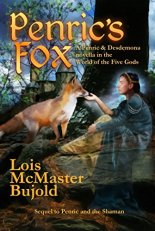
PenricFoxPenric’s Fox (story #5) is essentially a sequel to Penric and the Shaman (story #3). Although it’s set some years later, it’s the same cast of characters and is set decidedly before the events of story #4. One of the things I really enjoy about Bujold is that she plays around with her genres even in the same series and thus this is a detective story, with a discovered corpse and police investigation and all. It was also kind of heart-wrenching and made me tear up a bit but just so very good.


prisonerlimnosPrisoner of Limnos (story #6) is a direct sequel to Mira’s Last Dance (story #4) with barely a few weeks having passed for the characters between the two books and dealing directly with some of the uncertainty left at the end of #4. I was also all geared up for some raciness to it, too, but Anna can be reassured that events stay relatively chaste (even as my mind is in the gutter giving me occasional wink-wink nudge-nudges.) This is something of a heist storyline and also introduces a whole swathe of new secondary characters that seem very interesting and open up all sorts of possibilities for future story lines. While this one doesn’t end in quite the almost-cliff-hanger (emotionally at least) of #4, it does leave me just craving more. I just really need to know more about those new characters and their stories and what they do next. I’m keeping my fingers crossed that Bujold continues to write these stories at the amazing pace she’s had so far.
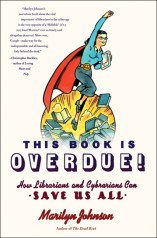
 

This Book is Overdue by Marilyn Johnson

thisbookisoverdueThis Book is Overdue: How Librarians and Cybrarians Can Save Us All
by Marilyn Johnson
2010

I enjoyed this book but it also left me feeling kind of weird and antsy in a way that took a while for me to figure out. It’s made up of twelve chapters that are essentially stand alone non-fiction stories about some pretty amazing things that different librarians and groups of librarians are doing in the world right now. This is a direct counter to all those (generally upper/upper-middle class) people who write articles about how no one uses the library anymore. People are absolutely still using libraries, both in traditional ways and in new and innovative ways.

This book looks at twelve ways that librarians have done some pretty amazing things from innovations:

  • Having a real working library offering real world information and services staffed and resourced in an MMO RPG (massive multi-player online role playing game
  • Having mobile librarians working with mobile devices and hooked into real-time databases offering fact-checking and up-to-date information to protestors, counter-protestors and locals alike during massive protests.

to protecting traditional values:

  • Taking on the United States federal government in a massive silenced court case about reporting on the reading habits of their customers
  • Providing computer literacy training around the world to ensure people can access books in whatever form the library happens to have it in, physical or digital.

It’s fascinating and (as a library science grad) personally inspiring.

That said, it also made me feel just a bit antsy with the way the author put librarians on this pedestal of being amazingly altruistic in all ways. She is surprised by their human foibles and shocked when there’s a case of a librarian doing something wrong.

Like any career, librarians include some truly heroic people and some truly awful people, and a lot of people who are generally in-between. There is a strong culture of altruism in the career path, yes, but we’re not saints.

So definitely read this book and read about some extremely cool people who are doing or have done some amazing things. But also take a moment to read a more low-key blog post about your every day librarians as well.


World Map of Literature

I do love seeing those lists of books that all sorts of publications put out:

They’re fun to browse and generally make me feel all snooty and superior either because I’ve read a lot or because I disagree with the selection. They tend to be heavily weighted towards western white male authors, with maybe a noticeable minority of western white female authors.

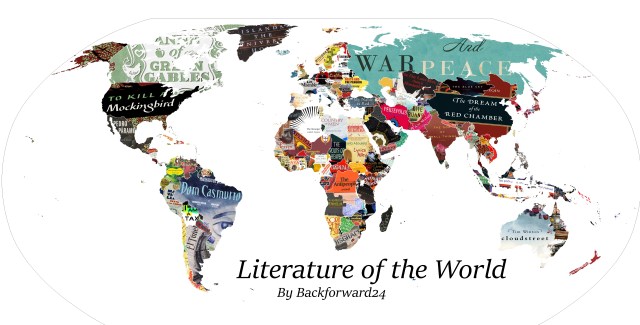
That tendency makes Literature of the World all the more awesome, because this one Reddit user, Backforward24, literally goes over a world map and identifies a piece of literature from each country that you should read:

Literature of the World

And the joys of social media crossover means that I actually discovered this Map via Tumblr, because I don’t generally browse Reddit. That’s where I went to copy down the list of books* that I am including below the tag for length purposes:

* note: I have read 7 of the 145 books.

Continue reading

online comics / graphic novels

I never quite know what term to use for comic strips or comic books or graphic novels now that the medium has expanded so wildly beyond what those terms originally referred to. But I’ve got two online comic strips that I highly recommend because they’re charming and delightful and I just love the characters and the stories and the artwork.

First up:

WildelifeWilde Life
by Pascalle Lepas
2014 – ongoing

The plot is: “A graphic novel about a writer who rents a haunted house from Craigslist and makes not-friends with a werewolf.”

It’s essentially a series of short stories set in a rural town around the main guy who’s rented a house for a while to just get away from his previous life that’s mostly not mentioned. The illustrations are excellent (and just keep getting better) but the characters are where this really shines. Every character is so very much themselves and so very delightful. (And don’t forget to check for roll-over text comments from the author on later pages because they’re pretty darn funny too.)

The author has just finished the sixth chapter / plot arc, and it’s so incredibly delightful and I really hope she does another kickstarter so I can order hardcopy versions. In the meantime, you, gentle reader, should immediately go check this out: http://www.wildelifecomic.com/comic/1

Second up:

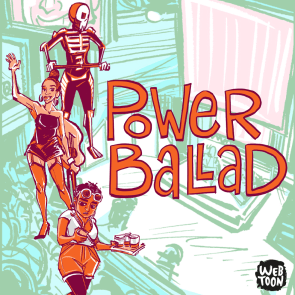
powerballadPower Ballad
by Molly Brooks
2017 – ongoing

This only has eight issues out so far but it’s scheduled to be updated weekly and those eight issues are an utter delight!

Meera is the personal assistant to international pop star / masked vigilante Carina. So while Carina does music videos and fights crime batman-style, Meera tries to make sure appointments are made and kept. And they both have adorable pining crushes on each other but neither have said anything (yet!) and it’s just too cute for words.

Also, the illustrations are amazing and doing some really interesting things, because first they’re working with the online medium by displaying each issue as a single page down which the reader scrolls rather than trying to mimic a hardcopy comic book (at some point I think it would be really interesting to see if hardcopy comics can be made on scrolls to mimic websites), and second, they’re illustrated with just a couple of colors in a handful of shades, which gives it a sort of quick-sketch first impression while still being amazingly effective and detailed.

So check it out here: http://www.webtoons.com/en/drama/power-ballad/list?title_no=987


J.J. McAvoy

BlackRainbowMcAvoyBlack Rainbow
by J.J. McAvoy
2015

ThatThingMcAvoyThat Thing Between Eli and Gwen
by J.J. McAvoy
2016

SugarBabyMcAvoySugar Baby Beautiful
by J.J. McAvoy
2015


So I wavered on writing these books up because they’re in a genre I don’t generally admit to reading: the short, extremely self-indulgent, quite graphic, romance novel. It’s a genre that pretty much defines the guilty pleasure book for a lot of women (it’s a money-maker genre in the publishing industry.) They’re not, generally speaking, good books, but they can be intensely satisfying and relaxing brain candy.

J.J. McAvoy might have managed to break the mold for this genre, though, because I think her books might be genuinely good. They are certainly significantly better than any other books in this genre that I’ve ever read. The issues the characters deal with are relatively believable and sympathetic, but more importantly her characters are all smart and witty and just a bit mean without ever being cruel.

Reading these books really highlighted for me how my favorite characters are all at least a tiny bit mean. I don’t like cruelty, but neither do I like a milksop. These characters, they talk and they bicker and they’re in their partner’s weight-class as far as those fights go, and they genuinely apologize on the rare occasions they go too far or hit an exposed nerve. The books transcend the self-indulgent fantasy by being about characters who are enjoyable in their own right.

And then McAvoy modified the standard plot arc in a way that I’m really impressed with. I’m going to put that beneath a spoiler cut, although there won’t be any specific spoilers.

I won’t recommend the books to everyone, because you do have to enjoy the genre first, but if you do, then you should absolutely try these.

Plot arch spoilers:

Continue reading

March by John Lewis

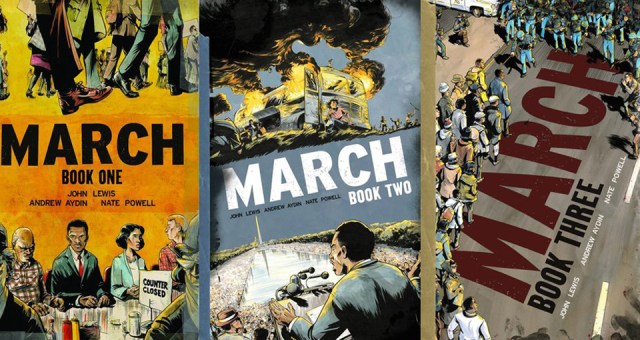
marchtrilogy960x510

March, books 1, 2, and 3
written by John Lewis and Andrew Aydin
illustrated by Nate Powell
2013, 2015, 2016

John Lewis is a g**d*** hero and every school child should learn his story and every adult should know it. That’s my take away from these books. I am embarrassed at how much of these events I didn’t previously know.

These books were both heart-wrenching and inspirational, made all the more so by the starkness of the story telling. Lewis is not specifically trying to be heart-wrenching or inspirational, he’s just telling the story. And the story is intrinsically heart-wrenching and inspirational.

John Lewis felt, feels, so strongly about achieving what is right that he knowingly walked into situations where he could be killed, refusing to physically fight back, and instead demanding that the world be better than it was through acts of faith and friendship in the face of hatred and anger. That takes levels of courage that I can’t really comprehend and yet want so much. He wanted to live and yet was willing to risk his life to accomplish something because, live or die, succeed or fail, just the attempt would be worth it.

That is a freaking hero.

These books are autobiographical and nonfiction. They give the reader a look at a specific part of history that often gets glossed over in the textbooks. But it’s important history, in part because it’s still ongoing. These events were only some fifty years ago and John Lewis is still alive and working today. And the issues he dealt with are still being dealt with today as well. These books make you think. They don’t necessarily tell you what to think, but they show you events that require thought.

So read them.

Read them now.

Something that gets to me about modern politics is how scared people are. Trump’s supporters want to cower behind a wall, protected from anyone and everything different from them. Trump’s detractors are terrified that he’s going to either kill them outright for being different or force them into a poor homogenous society cowering behind a wall. (I’m over simplifying, but I stand by the summary.)

John Lewis’s life is a testament against that level of fear. He could face fear and not let his warp who he was or change him into someone he didn’t want to be. Everyone should learn that lesson.

Another thing that struck me in these books was how evil some of the white people were. It’s generally not covered in text books, but it’s still historical fact—and not even all that historical. But there were just ordinary citizens who were also monsters and they raised their kids to be monsters. They went out of their way to kill, spread misery and spew anger.

It has occurred to me before that there is a level of cognitive dissonance in this type of violent racism, that clearly shows that the racists know themselves to be in the wrong and lying to themselves. True-believer racists go the white-man’s-burden route. But by violently trying to create a society that they consider to be natural, they demonstrate just how unnatural it really is.

These books also got me thinking about how methods change and evolve in every war as both sides learn how best to attack and defend. In the 1960s, the civil rights leaders made being jailed work for them by overfilling the jails and refusing to pay bail, forcing the cities to take the expense.

Unfortunately, racists have evolved since then and have turned the jail system into a for-profit venture and they benefit off the number of black bodies they imprison.

I’m reminded of the story of Jesus turning the other cheek. It’s often seen as purely an act of humility, but that’s because not many people know the cultural implications of Jesus story. Left and right hands were seen very differently, as were open handed slaps and backhanded slaps. Jesus wasn’t merely submitting to being slapped again, he was changing the situation so that the person slapping him faced a very different set of options.

I’m not sure what the modern version should be, but I do know that it needs to change with the times.

And a final thought:

One of the things that I find difficult with any civil rights movement is that I can never do enough, and so I become paralyzed and wind up doing nothing. But Lewis makes the point with this story, the story of his life and the lives the people he worked with, that no one person can do everything and that’s okay. Because you do what you can, don’t do what you can’t, and rely on others to do what they can. Civil rights, all politics for that matter, isn’t a single sprint: it’s a marathon and a relay. You work together and you go for the long run, and you pass the baton back and forth. You have some wins and you have some devastating losses, but hopefully over the course of years and decades you wind up with more achievements than setbacks. And that is a message that is always important, but especially important in today’s political scene.

The Bible: Psalms

I had actually been really looking forward to Psalms because I thought there would be some good poetry here. I’m not a big poetry reader, not because I dislike it but because I am incredibly picky about it. But I like John Donne’s poetry, and Rita Dove’s poetry, and Ramprasad Sen’s poetry, and I’ve been getting a kick out of the “I lik the bred” poetry meme. As it turns out, I’m not a big fan of King David’s, King Solomon’s, or various other poets’ poetry that wound up in Psalms.

The introduction on the audio book version also raised expectations because apparently a lot of these are lyrics, intended to be set to music, and the original text includes instructions on the music. Cool!* If nothing else, I was going to amuse myself by trying to find Christian rock bands who had put the Psalms to music in a modern fashion. But the results are pretty rough. I mean, the music is fine, less rock and more spiritual/celtic maybe, which is disappointing, but the lyrics…

Just, wow, the Pslams are whiney. Either whiney or really blatantly hypocritical. Often, they’re both whiney and hypocritical. Just oof. I was disappointed. There’s just a lot of “these people are being mean to me, you need to beat them up” along with “you hate people who do violent things but love people who obey you, so let’s all do violent things to the people who don’t obey you.”

So just, nope.

Now, keep in mind that Psalms is broken into 5 sections and 150 poems, from a variety of poets discussing a variety of issues, so while I didn’t like the vast majority of it, that isn’t to say there aren’t a few exceptions.

There are some individual verses that ring out with power and touch the heart… but there’s always another verse that pretty much delivers the opposite message.

A couple of verses that spoke to me particularly strongly given the current political situation in the US are:

Psalm 94:20-21:

But you are opposed to dishonest lawmakers
Who gang up to murder innocent victims

Psalm 101:6-7 (by King David):

I will find trustworthy people to serve as my advisors
And only an honest person will serve as an official
No one who cheats or lies
Will have a position in my royal court

So, for a moment, it was a salve to my soul, a bit like watching West Wing.

But then there’s Psalm 106:34-35:

Our Lord, they disobeyed you
By refusing to destroy the nations.
Instead they were friendly
With those foreigners and followed their customers

So there really is something for everyone in these psalms, including the pro-genocide bigots. That is not a good thing.

But if you ever want to have a bible verse to support your position on any given issue, Psalms probably has you covered. You just have to decide to ignore all the context and hypocrisy.

Summary: A book of poetry that varies between emo whining and questionable historical accounts.

Moral: If you alternate between flattering and whining to a powerful being, they might be willing to act on your behalf.

* Especially cool since I have recently run across a lot of interesting discussions of how versatile hip-hop is, and how versatile Shakespeare is in much the same vein as hip-hop, and I just had high expectations.

Next Up: Proverbs