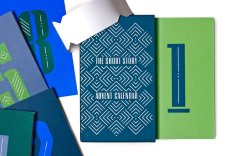
The Grandmaster of Demonic Cultivation by: Mo Xiang Tong Xiu

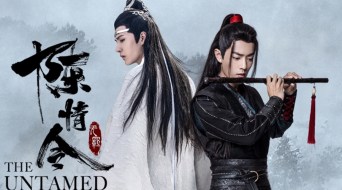
mdzs coverThe Grandmaster of Demonic Cultivation 
Written by: Mo Xiang Tong Xiu
Translated by: K.san
2018-2019

This is a phenomenon.

I first discovered this because someone I follow on tumblr was posting a steady stream of amazingly beautiful screencaptures of beautiful people and scenes from the show, The Untamed, showing on Netflix.

theuntamed

I convinced Anna to try it out with me, and we were quickly enthralled and had to watch all 50 episodes even though the plot was confusing enough that we had to read the episode summaries before watching each episode and then discuss the events to make sure we understood what was going on.

It wasn’t helped by the fact that we were dealing with names that we weren’t used to, so mostly gave everyone a nickname: Protagonist, Beloved, Beloved’s brother, Protag’s brother, Protag’s sister, Red girl, Red guy, Fan guy, Douche, Psycho, Douche’s Cousin who makes Douche look better in comparison… etc.

It says something about how charismatic the acting is that we were drawn in despite the initial confusion.

So, we watched all 50 episodes and it was done. There was an amazing and beautiful conclusion. But also: what was I going to do with my evenings now????

I mean, the answer is clearly: fanfic. But before that, I discovered was that the tv show was based off a book, Mo Dao Zu Shi, that has a freely available online fan translation, Grandmaster of Demonic Cultivation by K.san, of all 113 chapters plus 13 “extras”.

There is action and adventure and mystery and intrigue and magic and it is so freaking funny. What was funny in the tv show is ten times funnier in the book because we get the internal monologue of our main character. What was subtext in the tv show is very much text in the text. On the other hand, what was known-but-unspoken by the characters in the tv show is dumb-ass boys being absolutely terrible at communication in the book.

Anyway, this is an east asian fantasy world with swords and magic and ghosts and a variety of supernatural spirits that are probably more culturally known in China but easy enough to just go with as an American reader.

The basic premise, is that a much reviled and yet also much respected character was killed some sixteen years before the start, but has been brought back to life as part of a revenge (on someone else) plot. Wei Wuxian finds himself alive again, somewhat insulted that his reputation after death had gotten so bad that someone brought him back to life to kill their family. And things quickly spiral from there, because sixteen years is just long enough for the next generation to start dealing with the world but not enough for the earlier generations to have forgotten Wei Wuxian or moved on.

There’s a lot of flashbacks in the book as we alternate between seeing what’s going on now, with the newly alive Wei Wuxian, and what happened prior to his original death, and how it got the point where he was killed in a coordinated attack. Meanwhile Wei Wuxian and Lan WangJi have the most slow-burn, mutual-pining, idiot-boys-cannot-communicate, romance going on in both time periods.

It also starts off quite funny, and gets progressively darker as it goes along, even as it maintains some of the humor, and finally breaks through into lightness again at the end.

All this goes to say, I loved this and I want to recommend it to everyone who thinks they might like this kind of fantasy action shenanigans, but if the genre is not your thing, then I’m not sure if the book is good enough to break through. But maybe give the tv show a try just to see.

However, a couple of warnings:

Warning #1: the translation is very, very good for an amateur, but is rough for a professional. I did find the translator notes quite interesting as she discussed some of the word choices she made. And since she was posting the translated chapters as she went, it’s also interesting to see how the translations changed and improved over the course of the full book.

Warning #2: there is explicit sex near the end of the book and even more in the “extra” chapters after the story arc is complete. The scenes say more to me about the author’s kinks rather than staying true to the characters. Since the kink in question, playing with consent issues, is kind of my anti-kink, even when it’s clearly desired by both, I didn’t care for it and look forward to fanfic fixing that particular aspect.

Grunt by Mary Roach

gruntGrunt: The Curious Science of Humans at War
by Mary Roach
read by Abby Elvidge
2016

I think every child goes through a phase of being fascinated by the gross and gruesome and Mary Roach never grew out of that phase. And she invites her readers to take similar joy in it as well. She takes such honest delight in peering into the hidden, dusty, bug-infested corners of history and science and holding up the often gruesome contents for our perusal.

What’s the sleep schedule like on a nuclear submarine and why is it a major problem that sleep deprivation is an ongoing and increasing concern? How are military doctors advancing the science of genital reconstruction and recreation from where it used to be due to the increased survival of IED victims? Who are the people designing the uniforms and what are the features they’re trying to optimize? How can you protect soldiers in the field, their hearing, their eyesight, their bodies, without hampering their abilities act and react quickly? Why is diarrhea such a concern and yet so difficult to study? Why are maggots so helpful in medical care and yet so rarely used?

All of these questions and more are examined in this book that looks at the establishment part of the military establishment rather than the military part.

So this book is delightful and I highly recommend it, but maybe not while you’re trying to eat anything.

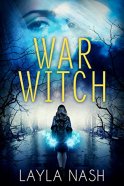
War Witch by Layla Nash

WarWitchCoverWar Witch
by Layla Nash
2017

This was a BookBub find and it was a fun urban fantasy with witches and werewolves. It’s set fifteen years after The Breaking, when supernatural powers and creatures were revealed to the rest of humanity, and five years after The Truce was implemented at the end of an exceptionally bloody 10-year-long civil war in which everyone was fighting everyone else and a lot of people died.

Out main character, Lily, was an incredibly powerful witch at the forefront of the fighting during the civil war and is now trying to find some semblance of peace and wanting nothing to do with the current power structure, staying as unaligned as she possibly can from the many, many factions still struggling to figure out their place. Nash has done some amazing world building with the concept that there’s the truce between humans and supernatural beings, but each side is made up of groups that contain smaller groups that contain individuals and pretty much all of them have their own conflicts and alliances and motives. And five years is a very short time for peace while ten years is a very long time for a civil war. So the whole society is extremely fraught.

And into this situation some witches work illegal demon magic and Lily is the main suspect. (In part because she’s been hiding that she can and has summoned demons, but not this particular time.)

In addition to the world building, I also kind of love the romance side plot. It’s really obvious the Lily, an unaligned witch trying to lay low, and Leif, an extremely high ranked werewolf enforcer for the current power structure, are attracted to each other. However, they are also in conflict with each other because they can sympathize with but not abide by each other’s political stances. It’s just a really interesting dynamic and I enjoyed seeing how Nash worked it.

What I wasn’t so happy with was how it ended with a clear set-up for a second book. I’m increasingly developing a pet peeve against books that spend their final chapter(s) setting up the next book rather than completing the current book. Also, this book doesn’t appear to have a sequel yet anyway. But anyway, I found the end of the book annoying, but the world building was excellent and the character interactions were both fascinating and hilarious.


Meditation for Fidgety Skeptics: A 10% Happier How-to Book
10percenthappierMeditation for Fidgety Skeptics: A 10% Happier How-to Book
by Dan Harris, Jeffrey Warren, and Carlye Adler
read by Dan Harris and Jeffrey Warren
2017

I ran across this book a year or so ago at someone else’s house and noted that it looked interesting. The  elevator pitch that originally caught my eye: it’s written by a TV news anchor who had an on-air panic attack and got into meditation in the aftermath as he dealt with his issues. So when I was looking for a good audio book to listen to on my commute, I remembered it, requested it at my library, and gave it a shot.

As it turns out, a book on meditation is not necessarily the best thing to listen to while driving. While the authors are very specific about how you don’t have to actually stop and meditate when they do through a meditation, it’s something I might have enjoyed doing otherwise. And driving along as the speaker says, “close your eyes and concentrate on your breathing” isn’t the safest way to drive, especially if I want to do so.

Also, as I should have realized from the title, I’m not actually the audience for this book since I’m not a skeptic about the benefits of meditation. I don’t care for the spiritual and transcendental elements that sometimes come along with meditation, but I’m quite well aware of the mental, emotional, and physical benefits of meditation. Sadly, there are all sorts of things I know would be good for me that I still don’t do, which is why I wanted to try this book out. But while it was a reminder that I should try to meditate on a semi-regular basis, I found a lot of the self-deprecating bonhomie humor of Harris, the primary author, not to my taste and a reminder of one more reason why I don’t watch TV news chat shows.

But it did seem like a good book for the right audience. And as an audio book it was recorded in some ways like a podcast with Harris and Warren switching off reading their sections and occasionally interacting with each other in scripted conversations. So to sum up, a relatively good book but not really my cup’a.

Certain Dark Things by Silvia Moreno-Garcia

CertainDarkThingsCertain Dark Things
Silvia Moreno-Garcia
2016

This book was listed on the tumblr post Adult fantasy books not by straight white men and only realized afterwards that Anna was already reading a book by the same author. This book was summarized as “vampire noir in Mexico city.” It is really good!

It’s a vaguely futuristic dystopian world where there’s so much extreme poverty that the futuristic elements are minor flashes that just highlight how nothing has changed for the vast majority of people. It’s also a world where all the vampire legends from different lands are based on real beings, and there are ten confirmed types of vampires. It’s only been a few decades since vampires were revealed as real creatures but it’s now the norm, and the norm is that vampires run several of the major drug cartels. So in addition to the conflicts between government and drug cartel, there’s also conflict between government and vampires, between different vampire species, and between different drug cartels. And it all gets extremely messy and extremely bloody.

While the novel switches out point of view between several different characters, our main character is Domingo, a human guy in his late teens I think, who starts off feeling pretty good about himself and his place in the world: he’s got a steady income picking through trash and finding things he can sell and a place of his own in an abandoned metro tunnel. And then he sees a beautiful woman and tries talking to her and she actually acknowledges him! How lucky is he?

And just, he is kind of lucky because of all the vampires that he could have met she needs help that doesn’t involve him dying. Mostly.

It is also very much a noir. The bad guys are the bad guys because they are truly horrifically evil and the good guys are the good guys because at least they’re not as bad as the bad guys. But it’s a gritty world and no one is truly innocent. In the end everything works out in the best possible way but there’s just no real chance at a happy ending.

Actually, I take that back, spoiler alert: the dog lives. So that’s happy.

Traffic by Tom Vanderbilt

Traffic_DSTraffic: why we drive the way we do (and what it says about us)
written by Tom Vanderbilt
read by David Slavin
2008

Since I’m listening to audiobooks on my commute, I figured I might as well listen to one about traffic patterns. This was not my best idea ever. Not only does the reader try to input emotional import into every single one of his sentences to make it sound important and high energy and highly emotional (not what I want first thing in the morning as I drive in or after a long day’s work), but it also has a tendency to tell me what the average person’s commute is like and how people with longer commutes are unhappy with those commutes. I dislike being told I should dislike something that I don’t currently dislike. Look, there are enough things in the world that I do dislike, that I don’t need to acquire more just to fit in! And yet, I start double-guessing myself: am I unhappy with my commute? Should I be? Urg.

But aside from all that, it’s still a really interesting book.

While not in specific sections, this book addresses traffic in three different ways: as a psychologist about human behaviors, as a game theorist about best options, and as historian about stories. As it turns out, I really enjoy the stories (did you know that LA traffic has a central command hub that is largely automated except for Oscar night where there are people literally manipulating the light cycles to try to get the limousines all through? Because I hadn’t and I love it!), I find the game theory interesting (when lanes merge, late merging benefits everyone, so don’t merge until you absolutely have to!), and I find the psychology really, really irritating (as stated above, I don’t like people telling me what I do or do not think, and I’m not sure whether it’s worse when they’re wrong or when they’re right.)

Overall I do recommend the book and have found that even as I waited a month or so to actually post about this, that many of the stories and concepts have stuck with me.

Bloodlust & Bonnets by Emily McGovern

bloodlust-and-bonnets-9781471178955_lgBloodlust & Bonnets
by Emily McGovern
2019

I first ran across this artist/author via her My Life as a Background Slytherin comics which are hilarious and adorable and I highly recommend. And at some point she made a four-page comic called Bloodlust & Bonnets that is hilarious and gorgeous and I also highly recommend.  This book, by the same name as that short, is a 200 page graphic novel that uses those first four pages as the prologue. (Although the art is simplified for the book version.)

For the plot: there’s an evil vampire cult! Lucy, the plucky debutant is targeted by them! Lord Byron has a magical castle! The mysterious bounty hunter Sham has secrets! Napoleon is a psychic eagle! Secret societies and blood oaths and balls and gentlemen’s clubs and turkish baths and succubi and more plucky debutants!

This book is hilarious but also I could only read it in small doses, a chapter at a time. The ongoing joke through the whole thing is just how incompetent all the characters are. Like, all of them. It’s an even playing field at least? With the possible exception of the flighty and wealthy professional widow who is not so much incompetent as she is distracted by other things… ie, potential future dead husbands. So here I am with my competence kink wondering when someone will show up with some competence and each new character is a tease because they all think they’re very capable and introduce themselves that way and they’re all so very much not. Which also makes it fit in kind of hilariously well in British costume drama style.

This is pretty much a take off of Pride & Prejudice & Zombies or Jane Slayre, with Wodehouse & Jeeves, Pink Panther, and Monty Python influences. Which all comes together to say that this book is amazing but also, wow, how are these characters so dumb and yet still walk and breath at the same time???

Fast Women by Jennifer Crusie

FastWomenFast Women
by Jennifer Crusie
2001

This was both a perfect palate cleanser after How To Be Alone and something of a direct rebuttal of it as well. Because this is definitely a romance novel, with a plot focused around two characters getting together and a guaranteed happy ending, but it’s also a remarkably nuanced look into a number of complex relationships. Fast Women is very much on the literary side of things — it deals with divorce, alcoholism, abuse, neglect, despair, and having to start over — and but is saved from that genre by maintaining a generally optimistic outlook on life. While a lot of purported ‘literature’ is unpleasant people living unpleasant lives, this book is consists of delightful people living interesting lives, but it’s no less complex or nuanced. It also has a number of ridiculous situations and conversations that had me giggling every other page.

The main character is Nell and her love interest is Gabe, but Nell has a friend group of two other women, and Gabe has a friend and business partner, and they each have a college-age kid, and each of these five characters is fully developed with their own personal issues and plot-lines.

The plot, such as it is, is an investigation that’s in large part trying to figure out what to investigate because there’s blackmail and murder and arson and theft and they’re all connected in some way, but it takes a good 400 pages for our characters to figure out how.

Anyway, it’s delightful and funny and I definitely recommend it. It’s also a reminder to me that the romance book genre is massive and contains pretty much any subgenre a person could possibly want to read.


How to Be Alone by Jonathan Franzen

HowToBeAloneHow to Be Alone
written by Jonathan Franzen
read by Jonathan Franzen and Brian d’Arcy James
2002

Franzen starts out introducing this book of essays with some reflection about how angry, zealously elitist, and deeply navel-gazing he had once been as a younger man, and I’m listening to the remaining essays, glad that he’s found his own sense of self-improvement but also realizing that these essays are the most angry, zealously elitist, and deeply navel-gazing that I’ve ever read/listened to. In large part because I actively avoid the genre I would normally typify as Guy-in-your-MFA High Literature, but this is a set of nonfiction essays by a literary author and I have a commute, so I might as well listen to this one through to the end. With each successive CD, I had to convince myself anew to complete it if only just to write this review.

He discusses a variety of issues that I actually find moderately interesting, if depressing: the Clinton-Lewinsky-Starr-Report scandal, the problems with the Chicago postal service, the internal conflict between research departments and legal departments in the tobacco industry, the for-profit prison industry, the commercialization of sex. However, his essays are like op-ed pieces where he presents himself as speaking for “the silent majority” who all agree with him, and is distraught by the “cheap attacks” of naysayers with their statistics and surveys pointing out that he is, in fact, in the minority. The facts of a given situation are quickly overwhelmed by his personal interpretations. He is the everyman and speaks for everyone.

He states that High Literature = The Social Novel = Tragic Realism, and that all of these are best demonstrated by being about the unmarked straight white male. I generally avoid any modern novel calling itself “Literature” because it seems to me to be a genre made up of unpleasant people living unpleasant lives. Franzen agrees, except he thinks this is a good thing.

In fact, he seems to be carefully cultivating his own dissatisfaction with life. He’s not glorifying the problems of the world, per se, but glorifying his own knowledge of those problems, throwing it in contrast to the bourgeoisie others who “don’t fully understand.”
Part of his unhappiness is based on his apparent belief that being lauded by the masses is his proper default state and thus nothing to take pleasure in, while anyone not actively being impressed by him is taking something away from him. He is insulted that his demands for solitude and privacy are met without demure. He’s bemoaning the loss of his rape fantasy: he wants to be able to say “no” to demands for his opinion and then have that “no” disregarded.

As he bemoans the loss of interest in “real” literature, he remarks without any acknowledged irony, that publishers are instead publishing more works done by women and people of color. These he considers genre rathe than literature, by default. He argues that authors should not pander to the masses while also despairing that the masses do not like his books as much as they should. (Keep in mind that this is the complaint of an award-winning author.)

I can understand, in theory, that it must be very hard for straight, white men who have long been told that their concerns are universal, and that other’s concerns are merely genre issues, to be confronted with the discovery that they are actually just one more demographic. I can understand that it is a hardship for them all, and this author in particular. But I can’t managed to dredge up much actual sympathy.

In contrast, I realize that he is likely creating the background against which hopepunk and solarpunk have developed. And that, I think, is a gift.

Hit by a Farm by Catherine Friend

hitbyafarmHit by a Farm: How I Learned to Stop Worrying and Love the Barn
written and read by Catherine Friend
2009

I’m a fairly urban/suburban individual, but my aunt recently decided to leave her office job and start a homesteader farm so I wanted to know a little bit more about it. I like the theory of sun and fresh air more than I care for the practice. This book is about a couple who decide to leave their urban life and start a farm as well.

The chapters are all quite short, many of them could even stand alone as short stories, but together they build a sense of a whole life and lifestyle that Friend and her wife were creating. And while the topic is the farm, a lot of the focus is on the relationships that made up what the author refers to as their threesome: her, her wife, and the farm. I came for the stories of animals and plants, not people and relationships, but the stories of physical, mental, and emotional stress were clearly an integral part of starting a farm. There is a steep learning curve and while overall everything works out well, there are some serious set-backs.

While listening to the book, I sometimes found myself mentally criticizing the author for some of her poorer decisions, in the same way one might criticize a professional athlete: I could/would never do any of the thousand things she’s doing but how in the world did she manage to mess that one up! She and I are significantly different people and it occasionally made it hard for me to empathize, but I think that probably says significantly more about me than about either her or the book.

I like it when the author is also the reader of an audiobook, especially when that book is a memoir, since it allows them to add an extra layer of nuance to the stories.