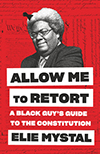
Allow Me to Retort: A Black Guy’s Guide to the Constitution

By Elie Mystal

Elie Mystal remains so funny and smart on the slowly dying Twitter platform, and his book is funny and smart, of course, too, but also infuriating. He uses his very comprehensive knowledge of law to walk the reader through how the constitution has been twisted to protect only some citizens while continually persecuting others.

After giving a fair amount of background in a much needed (for me) setting of the legal stage, Mystal gets down to his two central theses: 1) that originalists (like our current sitting conservative judges) are simply wrong for trying to solely recreate the intention of rich white slave-holding men who did not accept women or any nonwhite people as equals; and 2) all or at least most of our current constitutional crises could be fixed if everyone followed just the 1st and 14th amendment to the fullest extent (that all the other amendments are just closing loopholes that conservatives should never have been allowed to make in the first place).

Every point is bristling with examples from real life cases, which was both immensely helpful to put in context and a struggle, either intellectually because of the legalese or emotionally because of the hypocrisy of the judgments. I truly think Mystal does a masterful job of simplifying each case down to its basics, but I still had to take a deep break and brace myself before each v.

Mystal divides the book into short chapters addressing discrete arguments and provides not only legal, but also philosophical, and anecdotal examples. This makes the book much more readable than it otherwise could have been, but it still hovered around the top edge of my understanding. Which isn’t a bad thing at all! It’s good to stretch with books that are a little advanced, but I definitely had to take my time. (Bless him, though, for mixing in Star Wars and Marvel movie metaphors with Socratic and Hobbesian arguments.)

He closes the book with some quite straight-forward suggestions for fixing our current predicament, mainly eliminating the electoral college and expanding the supreme court, and makes solid arguments for the logic and legality of both. It left me with a lot to think about, and a mixture of hope and pessimism about our government and society as a whole.
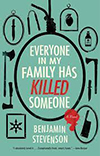
Everyone in My Family Has Killed Someone

By Benjamin Stevenson

I was very amused that Kinsey had recommended this in her review of Hench, since I was reading it at that very moment! I enjoyed it enough that I should check out Hench and the others she listed as well. And, I don’t think I really should have enjoyed this book! It is chock full of literary elements that I normally find frustrating or off-putting, like heavy foreshadowing or winky meta narration. I often find that meta concepts in books take away from the emotional impact, that as a reader one is then too focused on the conceit of the writing structure to get really immersed in the narrative. Benjamin Stevenson manages to capture both, though.

There’s a couple layers of conceits, too. The title is the most obvious: everyone in the narrator’s family has killed someone, or at least will have by the end of the book. When a body is found at the remote retreat hosting the family reunion, suspects are everywhere. Ernest, the narrator, is also an author of, not mysteries, but guides on how to write mysteries. As more bodies appear, he investigates his family, slowly uncovering a slew of past mysteries and secrets.

As narrator he’s a strict adherent of the rules established by the authors of the Golden Age of Detective Fiction, and extremely dismissive of the modern trend of unreliable narrators. Though he repeatedly swears to be upfront and truthful about everything, he still manages to insinuate one thing before the story twists to something else. It is very clever, and I actually enjoyed more and more each time it happened.

There are also moments of surprisingly philosophical introspection, on all the different ways people can die and other people can take the blame or be blamed for those deaths. The ultimate end is quite a spectacle (that I imagine will translate well to television, if the proposed adaption goes through), and bends the classic rules in a letter-of-the-law-not-the-spirit kind of way.

Woman, Eating

By Claire Kohda

Uh, this novel is very strange. It’s a dark, often melancholy, coming of age story, as Lydia, a sheltered 23-year-old, is on her own for the first time after placing her mother in a care home. She’s awkward and shy, trying to find herself in her internship at an art gallery and her studio at a young artists’ collective. She’s also a vampire.

But still a very, very young vampire, who is struggling with her identity, as well as to ethically source blood in London. For the majority of the book she is starving (thus the title), and obsessed with human food she can’t digest. This wouldn’t be a great book for anyone with any sort of eating disorder. In fact, there are a few different content warnings (sexual assault, imagined animal harm), and I read a lot of the book in a state of low-level dread.

But I also read the book in rare complete focus because the writing is just so beautiful. It is very literary – most of the narrative is Lydia’s thoughts and feelings, and they could sometimes be exasperatingly self-indulgent in a very accurate 23-year-old way. But the backcover blurbs weren’t wrong when they raved about a completely new perspective on vampire mythos. Once I started reading each night, I only put the book down again at the end of each of the three parts that divide the relatively short book (227 pages).

The end, too, is a viscerally joyous release of all the built-up tension that truly fulfills Lydia’s coming of age. I wouldn’t necessarily say that I enjoyed the experience of reading this throughout, but I’m very glad that I did nonetheless.

Between Jobs

By W. R. Gingell

This is the first in a series that is weird, funny, and not always so tightly plotted, but I’m popping them like potato chips! I’m already on the third, after reading the first two over a couple of days each. They are narrated by a teenage girl who is most likely borderline psychotic (or at the very least deeply dissociative) after her parents are murdered. She’s been squatting in her parents’ house trying to support herself, when a neighbor is murdered just outside the house and three very strange men move in to investigate.

They turn out to be two fae and a vampire, and they grudgingly agree to keep our narrator as a pet of sorts, much to her glee. Clearly this premise has the potential to be deeply troubling and problematic, but our narrator is just so happy with the situation and the supernatural beings just so bemused that it is instead the precise type of light and absurd book I’m feeling right now. It also reminded me strongly of this tumblr post:

So far, our narrator is pleased as punch to be a pet, but the relationships are slowly evolving over the books, so I look forward to the changing dynamics among them all. That said, as I hinted above, sometimes the plot takes second place to the very amusing characters and setting, and I wasn’t sure I fully grasped the final solution of the mystery at the end of the first book, but I also didn’t particularly care, I was enjoying it so much!

The Prisoner

By B. A. Paris

I’m not even sure how to review this book, quite frankly. I definitely enjoyed it, but it was listed sort of vaguely as psychological thriller, and while it is that, it also read as decidedly YA. And I don’t mean that as a bad thing!

Well, not all the way, at least. The characters are two-dimensional enough that I kept waiting for a reveal beneath the surface that never came. However, a plot switcheroo halfway through the book reminded me strongly of Gone Girl, only as it would be written for children. It’s not a sophisticated book, so the switch didn’t come as a total shock, but it was still very satisfying, which I think represents the book well.

This would be an amazing book for a young teen or precocious tween, who feels ready for adult books but should still be somewhat eased into them. There are a number of tricks and schemes that weren’t the most subtle, but I still really enjoyed them, just in a sort of bemused way. There is no sex (though some non-specific mention of sexual assault in the past), no drug use, or even much swearing. There is violence, as befits a mystery and psych thriller, but not gruesomely described. I would have loved it and felt so mature if I’d read it at 14 or 15! (I was not a precocious tween.)

Once I had a clearer realization of the proper audience for the book, I enjoyed it even more and stopped looking for hidden meanings or nuance that wasn’t there. That said, I was pleasantly surprised that the author gave serious attention to the protagonist’s trauma response, instead of brushing it aside or romanticizing it, which I’d half expected.

Lavender House

By Lev AC Rosen

This mystery novel had shown up on several recommendation lists over the last few months, and it is well justified! Rosen beautifully takes the noir sensibility, which imbues generalized disenfranchisement, and applies it very directly and acutely to the LGBT community in 1950s San Francisco. It becomes a somewhat pointed critique of noir in general, I think, by contrasting what has typically been a general mental oppressiveness in the great noir writers like Chandler and Hammett, with actual systemic and malicious oppression against specific people.

Traditional noir characters sense a true darkness in the world that the general populace ignores or is blind to. In Lavender House, the gay characters only wish they had the option to ignore the ugliness of the world, instead of having it thrust upon them if they drop their defenses for a second. While San Francisco was just starting to be a budding haven for gay people, so there were more underground clubs and the like, the whole of the United States remained very dangerous.

Our protagonist, Levander “Andy” Mills is as aware of this anyone else. As a (closely closeted) gay cop, he is both threatened and the threat, and straddling that line, can trust no one. Before the start of the novel, however, he was discovered in a club raid, kicked off the force, and all but run out of town. He is getting drunk in a bar before throwing himself into the Bay, when Pearl comes to ask him to investigate the suspicious death of her wife. Pearl is the surviving matriarch of the Lavender House, where the now deceased scion of a wealthy soap family created a home where a handful of gay couples can live freely, while showing a much different face to the outside world.

Andy moves into the house in order to investigate, mostly with the idea that he has nothing left to lose at this point, but it opens his mind to a whole different world. And this is what I really loved about the book: it explores the seductive but false appeal of noir and cynicism. It’s a really interesting play on noir – the detective himself has bought into the ideological grimness, but the novel makes the effort to show that his cynicism, though not unfounded, is a blindness of sorts. He expects the worst from people, and while this protects him to a point, he closes himself off so no one can either hurt him or care for him. And then, worst of all, believes that is all there is to life.

I don’t think I’ve ever read a book before that did such of a good job of criticizing its genre so validly, while also perfectly exemplifying it. A very minor spoiler: the end is both satisfying and a poignant summary of the overall themes, with a hopefulness that would feel jarring after a traditional noir but feels like the point of the whole book here.

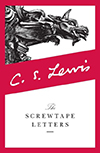
The Screwtape Letters

By C.S. Lewis

Rebecca and I both enjoyed The Great Divorce so much that we decided to read The Screwtape Letters, another Christian fantasy by C.S. Lewis (her review to follow). This novel is a collection of letters from Screwtape, a demon, giving guidance to his nephew on how to corrupt people’s souls. And it comes out of the gate swinging!

“Your business is to fix his attention on the stream [of immediate sense experiences]. Teach him to call it ‘real life’ and don’t let him ask what he means by ‘real’.” (p. 2!)

C.S. Lewis is scolding me for wasting time on social media from beyond the grave!

“But the best of all is to let him read not science but to give him a grand general idea that he knows it all and that everything he happens to have picked up in casual talk and reading is ‘the results of modern investigation’. (p. 3)

80 years ago, C.S. Lewis was dunking on do-your-own-research guys!

So, it’s been a real eye-opening seeing the ever-green traits of humanity that I used to ascribe to the digital age. I initially enjoyed the novelty of it, but the narrative structure of letters leads to far more proselytizing than The Great Divorce, which took a more show-don’t-tell approach. As Screwtape enumerates all things that can lead a person to hell, the path to heaven becomes narrower and harder to define. The reader gets all sorts of negatives (just going through the religious motions will surely lead you to hell, but so too will interrogating your faith too thoroughly), and no positive directions, as far as I can tell.

Of course, this falls in well with the conceit of letters from a demon. Lewis even gives himself a clever and all-encompassing disclaimer in his preface by saying that all demons lie and even have their own bias, so any issues with the letter lie solely with the fictional demonic letter-writer. So, while it’s hard to argue with this, Lewis clearly intends the book for Christian instruction, and for me, at least, this type of negative direction is not so helpful.

After a while, as the ways humans stray kept piling up, I started bracing myself for some ugly prejudice or another to rear its head. However, nothing overt emerged, though Lewis is pretty dismissive of women, when he gives them any thought at all, and it’s probably all for the best that he doesn’t give any thought to anyone non-white, non-Christian, or even non-English. It was hard to escape the feeling of just being constantly scolded, though.

The book contains 31 letters in all, each only being 3-5 pages, and it made me wonder if it was intended to read one letter a day, to allow the reader some time to really think through each one. But Rebecca read that they were originally released in serial on a weekly basis, which is an even better, longer break between each one! It ends with a longer essay, Screwtape Proposes a Toast, which Lewis wrote years later, and in which Screwtape is addresses a new graduating class of demonic tempters. In it, Lewis once again expresses a surprisingly current sentiment, though more retrograde with a “kids these days, with their participation trophies” hack.

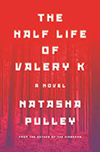
The Half Life of Valery K

By Natasha Pulley

I really like Natasha Pulley, but man, it feels like she is in a challenge to make her readers root for the most problematic character possible. I had some serious issues with her previous book The Kingdoms, but I think she might have outdone herself this time. (Unlike her other books, The Half Life of Valery K doesn’t include any magical realism and is even based on real events, which makes it worse, quite frankly.)

The protagonist, the titular Valery K, is a radiation scientist in Russia in the 1960s, which simply can’t be anything but problematic given the field of study and time period. When the novel starts, Valery has been in a Siberian work camp for 6 years, and has only survived that long due to some lucky circumstances. The description of the work camp is devastating, especially given how well researched it seems to be. Valery has every expectation of starving to death in the following year when he is released and brought to ‘City 40’ to help study the effects of radiation on the general ecosystem. City 40 is kept in deep secrecy to hide it from the western countries (the US in particular), and once in the city, no one leaves.

Valery quickly befriends the head KGB officer that holds them all there, another strangely sympathetic but deeply problematic character. It is a much more comfortable imprisonment than the work camps, so Valery is content until he discovers deeper secrets that even his very compromised morals cannot accept.

And that gets to the crux of the book – it is all about the evils that people have to accept to survive in impossible situations. And also when people reach a breaking point where they can’t accept any more, and fight back, often becoming evil in their own opposing way. This obviously makes for a very difficult read, and I think I’ll be wrestling with the questions this book raises for a while.

I haven’t read much about the Soviet Union, so this book more than any other I’ve read gave me insight into what the Soviet communist government was trying to achieve as an ideal and some of the ways it failed so badly in practice. Anti-west Soviet propaganda is a pervasive background throughout the novel, with most characters living in constant fear of US bombing, especially after Hiroshima. Soviet citizens would ascribe most unexplained explosions to US bombing, and I realized that I had no idea if the United States had bombed the USSR in the 50s and 60s, and that I likely wouldn’t know.

Though the US is somewhat more sophisticated in how it influences its citizens,* it made me really interrogate the degree to which I’ve bought into western propaganda (the Soviet characters are shocked by the strict gender roles imposed in western cultures, for instance). Awareness is all well and good, but there’s no clear answer for how individual citizens can combat this ideological warfare, which left me feeling a little hopeless about the state of humanity in general.

*I was reminded of a joke I’d heard a while ago: A Russian and an American get on a plane in Moscow and get to talking. The Russian says he works for the Kremlin and he’s on his way to go learn American propaganda techniques.

“What American propaganda techniques?” asks the American. “Exactly,” the Russian replies.

A Short History of Tractors in Ukrainian

By Marina Lewycka

“Extremely funny” says The Times.
“Mad and Hilarious,” Daily Telegraph.
“Uproariously funny” from The Economist

Guys, this was one of the most mean-spirited books I’ve read in a long time. Sisters Vera and Nadia hate each other and seem contemptuous of their elderly widowed father. When he becomes attached to a much younger woman, they try to intervene, seemingly more out of immediate hatred for this new woman than any concern for their father. Their father, in turn, disdains his daughters for a variety of reasons, and fights their intervention, even as the new woman turns out to be despicable and abusive.

The back blurb teased that this struggle uncovers long buried family secrets, which is what hooked me (as well as the unusual title). And the central story is interspersed with background vignettes on the parents’ and grandparents’ lives in Ukraine, though there is no big reveal or epiphany. Instead, by spending just a little more time talking about their different experiences growing up, the two sisters reach a basic level of empathy for each other that they probably should have managed a long time ago. Oh, and there are also passages from a short book the father is writing about tractors. The history of mechanical invention is not really my thing, but I actually welcomed the breaks from the central characters.

I wanted to quit a couple of times, but was too embarrassed after the librarian had looked so intrigued by the title when I was checking it out and made a note to check it out herself. Plus, I feel like I’ve been losing interest in books halfway through lately, and that I should really see one through to the end. That said, the ending was surprisingly satisfactory and even a little touching after all the meanness, so that was kind of nice.

The Woman in the Library

By Sulari Gentill

Whew, this book is a trip! It starts off with a scream of terror in the Boston Public Library. In the fuss and speculation that follows, our narrator, a young woman named Freddie working on a novel, becomes friendly with the three other people at her table, one of whom, the book tells us, is a murderer! I was just settling in for a good locked-room mystery when it unfolds that the scream-in-the-library is the first chapter of a book being written by a successful novelist named Hannah, who is sending her chapters individually to a fellow author Leo for feedback.

So, we get the chapters of the library mystery, interspersed with letters of commentary from the other author (interestingly, we don’t get any personal description or insight into Hannah). I was initially a little disappointed because the meta-framework prevented me from getting as fully invested in the library mystery, but I was eventually pulled in despite myself. And then even more thrilled when Leo’s letters started to hint at its own mystery!

Luckily for my comprehension, we don’t read any of Freddie’s book, though she takes notes of people and events she encounters that will influence her novel, so there’s some blurring of lines there as well. I had to periodically pause to remind myself where any given character existed in the layers of fiction stacked in this novel. Gentill (the real author) does a very good job of creating these overlapping worlds that seem to influence each other across boundaries more permeable than one would expect.

Gentill herself is an acclaimed Australian author of novels across multiple genres; Hannah, the mostly invisible fictional first-level author behind the chapters, is also an acclaimed Australian novelist, writing from Australia about winter in Boston (Leo is her contact in Boston, giving her local flavor in addition to general feedback); and Freddie (protagonist of Hannah’s novel) is an Australian novelist on a writing fellowship in Boston, where she gets tangled in a series of suspicious circumstances stemming from the initial titular scream.

I got a little miffed midway through when Freddie started making some dumb decisions (something I’m getting much less tolerant of in books) when I realized that I might be entering a further level of unreliable narrator, which was very exciting!

In the end, I really enjoyed the layers, and how in addition to double suspense, it allowed the author to write about the process of writing in several different ways without being too heavy handed.