By Garth Ennis
 I’ve been looking forward to the tv show “Preacher” for a while before it premiered last month on AMC. I’d never read the comic book, but I think Dominic Cooper is extremely handsome and just needs to be in more shows and movies in general.
The first episode was a fun, over-the-top mishmash of a western, gritty noir, religious horror, and violent comic book action, all of which are things I like. Dominic Cooper, playing the titular preacher Jesse Custer, was as attractive as expected. Ruth Negga plays Jesse’s ex-girlfriend Tulip, and is so witty and lovely that she steals every scene she’s in. The plot was fairly disjointed, but that’s not terribly unusual for a pilot episode, and the second episode had smoother pacing as well more Tulip, which will always be a good thing.
 For people unfamiliar with the basic premise, Jesse Custer is a preacher in a small Texas town with a dwindling faith and congregation. In the middle of a lackluster sermon, he gets struck by a supernatural entity, which bestows on him the Voice of God, allowing him to command absolute obedience. Any person’s use of this power is clearly problematic, and sets Jesse up as a pretty classic anti-hero. Rebecca pointed out that this is the precise power abused by the terrifying villain Kilgrave in “Jessica Jones.”
Anyway, I was enjoying the show enough that I decided to go back and read the comic books, written by Garth Ennis. Now, I’m a big fan of Ennis, who wrote Hitman, one of my favorite comic series, which I’ll need to review some other time, but I have not been impressed with the Preacher comic series. In the written series, Jesse is not only an anti-hero, but just an all-around dick. He has a really annoying stereotypical masculinity that is a real pain in the ass to read about. To complement this, Tulip is a whiny pushover who I have trouble even understanding, let alone empathizing.
I was complaining about this to the coworker who had lent me his Preacher comics to read, and he had an interesting theory about it. He said that he figured that Ennis was satirizing Texas good-ole-boy culture. The only problem with that is that Northern-Irish Ennis has no idea what he’s talking about. While Texas misogyny can be a real problem, it is also a lot more nuanced that Ennis shows here. But I don’t want to get bogged down in a dissertation on gender roles in Texas culture, and anyway Rebecca can speak to this much better than I can, having lived in Texas for twice as long.
The tv show also gets Texas culture wrong, though not quite as offensively, and I’m willing to overlook it in favor of the improvements in both Jesse and Tulip. However, by the fourth episode, the plot is floundering a little, and I wish they’d pick up comic’s pacing at the very least.
—Anna
 All three of us blog writers went to go see the third Captain America movie together, and I have thoughts. Actually, I had thoughts (concerns) before we even went. I didn’t follow the Civil War event in the comic books, but I knew the basic gist is that there is a growing political movement for putting superheroes under some kind of government control, and the Avengers become split between Iron Man supporting that movement, and Captain America against it.
 This is the third book from the
  So, I could absolutely see why this is Tumblr’s cup of tea – it is feminist, queer, violent, and bawdy – but it just wasn’t quite my thing. I think I’m a bit old for it, honestly. The titular Rat Queens are a diverse group of mercenary women, and what the comic does especially well is highlighting the distinct personalities and backgrounds of each of the four women, and their varying relationships with each other. In the collected first volume, they and several other mercenary groups are offered a quest as an alternative to jail time for a bar brawl that got out of hand.
 Saga, on the other hand, was immediately engrossing. It opens with an extremely rustic birth scene, and unfolds from there, moving forward with the gripping plot and filling in the backstory as it goes. Our two new parents are such a hopeful, almost innocent Romeo and Juliet pair, though with much more personal agency than the Shakespeare couple, that I was immediately rooting for them.
 I’ve been reading a lot of books previously reviewed by Kinsey and Rebecca on this blog, so haven’t had much to post about, but I’m going to piggyback on Kinsey’s review of a play, and tell you about a performance I saw on a recent work trip to New York City.
 This book was way more depressing than I’d anticipated, and I already knew it was called The Good Death. Author Ann Neumann was inspired to research and write this book after she spent a year caring for her dying father. After he passed, she wondered whether he’d had a ‘good death,’ and what that even means in our world. I was interested to read it, of course, because I have some questions about that, myself.
 On a more cheerful note, I am completely entranced (possibly to an unhealthy degree) by the
 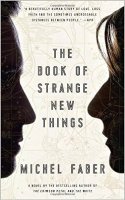 Whew, this book. I’ve been reading The Book of Strange New Things off and on now for the past two months. The very basic, ridiculous-sounding premise is that a minister is sent to a newly established human colony on Mars in order to bring Christianity to the native martians. I had thought that this interesting combination of science fiction and religion might be a good Christmas present for my dad, who is interested in both, but I also thought that I better read it myself first since I’ve had bad luck in the past giving unread books to people.
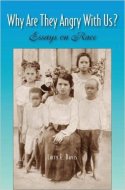 This is a short book of autobiographical essays on race by a colleague of my mother’s. I picked up her copy while visiting over Christmas, so I have no idea how widely available it is, but I highly recommend it. Davis has a fascinating way of breaking down extremely complex and emotionally-charged issues of race into underlying theories of causes that can be more directly addressed. He calmly and clearly lays out factual counter-arguments to many of the arguments that, per the title of this book, attempt to blame black people for their own social inequality.
 This book should have been everything to me – a spooky circus and a sorcerous battle set in the Victorian Era – but it was just so damn boring. It started strong with the hoary old magicians selecting unaware students to continue their contest of skills, and then building the titular circus to serve as the staging ground. Once the circus is up and running with the young magicians showing off their respective skills in increasingly elaborate exhibits, the novel really bogged down in endless descriptions of amazing and whimsical spectacle.
 I would never have picked up this book except that one of my favorite blogs,
  Biblio-therapy