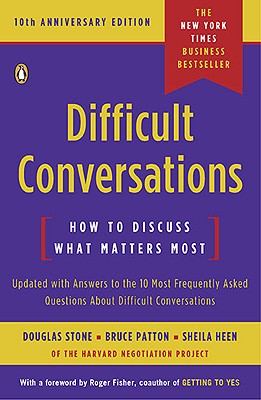
The Fault in our Stars by John Green

I promise that I don’t only read YA books. I’ve actually read a number of fancy grown-up books lately that I’m planning to write about, but first I’ve got to talk about one more YA book, because it apparently the hottest thing around right now–The Fault in Our Stars by John Green.

Now, Green is a big deal in YA circles and he has written a number of well-received and well-loved books, including Looking for Alaska and Will Grayson, Will Grayson (that one was with David Levitan). Plus, he and his brother have this whole YouTube thing where they post videos and, I don’t know, they also sing or something? To be honest, I don’t really understand all of this because I don’t like watching videos online. Yes, yes, I am very old, I just think that the computer is for reading and the TV is for moving pictures. But apparently kids today love all that video stuff, and you can read more about the whole John Green thing at the Kidliterate review.

His latest book, which debuted at Number 1 on the New York Times Children’s Chapter Books List (you know, the one created so Harry Potter wouldn’t knock all the pretentious adult books off the NYT list) is about two teenagers with cancer who fall in love. Cheerful, I know. But the thing about John Green is that it doesn’t really matter what any of his books are about, exactly–his strength is his characters and dialogue. He’s got a sharp sense of humor and creates teenagers who are precocious and flawed and funny and real. His voice is so strong and specific that each time I open one of his books I feel like a crisp breeze blows out of the pages.

One of my favorite sources of book recommendations on the Internet is Elizabeth at Princess Nebraska and she wrote a review of The Fault in Our Stars that pretty much says everything I want to say. I found it really interesting that she says that the first of Green’s books she read was Looking for Alaska and it was still her favorite. The first of his books I read was Paper Towns and it’s still my favorite, so I wonder if Green’s stuff is so striking that you’re always bound to love the one you first read the most. So while The Fault in Our Stars isn’t my favorite, it’s definitely very good and I would highly recommend any of John Green’s stuff. And I suppose you could watch some of his videos too, since I hear they’re popular with the young folks.

Miss Peregrine’s Home for Peculiar Children

By Ransom Riggs

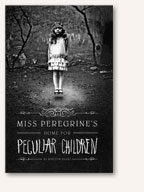
Miss Peregrine's Home for Peculiar ChildrenI’d seen this book a couple of times in bookstores and been hooked in by the eye-catching cover and title, but hadn’t gotten around to even looking it up at the library. But, last week a coworker and friend brought it in to work, having just finished it, and she happily leant it to me, saying it was a quick read.

It was a quick read, and one that I enjoyed very much, but I’m also finding it kind of difficult to describe here. If you pick up the book at a store or library, you’ll first notice the cover, and then, flipping through, see that there are odd, vintage photographs reproduced throughout the book.

At first I thought the photos were simultaneously something unique but also a bit of a gimmick, and they continued to cause a bit of a dilemma for me as a reader. On the one hand, they were extremely interesting illustrations to the story; at the same time, pondering these real-world artifacts took me out of the narrative a bit each time. So, I’m torn over whether I think they added or subtracted from the overall book.

So, photos aside, the plot felt like it took themes that I love from a variety of young adult and fantasy books – special abilities, time travel, WWII child evacuees (a favorite theme of my childhood since seeing “Bedknobs and Broomsticks”)– and combined them into something pretty original and very entertaining.

The strongest element of the book for me was the characters. Just about every single character is multi-dimensional, mostly sympathetic but with realistic flaws. Even side characters that only got a couple of pages caught my attention, and I wanted to read more about them, as well.

It doesn’t hurt, also, that the beginning of the story takes place in Florida, which is always portrayed in books as being full of fun craziness, but then the majority of the book takes place in Wales, which is the most beautiful place I have ever been, bar none.

Though the book wraps up the immediate storyline, it seems fairly clear that the author is intending to write more with these characters and this world, and I am very much looking forward to reading them. (Author confirms that he has started work on the sequel.)

—Anna

“In the Beginning… was the Command Line” by Neal Stephenson

In the Beginning… was the Command Line
Neal Stephenson
1999

As an opening caveat, I should say that this is the first in what is likely to be a series of reviews of assigned readings. I read this book because one of my professors said to, rather than through any choice of my own. Arguably, I did make a higher-level choice to take the course, but since I’m writing a review of a book rather than the course, the caveat is still important.

I will say that I was delighted at the assignment.

This is the same author as Snow Crash, Diamond Age, and Cryptonomicon, all of which I loved. Stephenson has also written a variety of other books that I have not read, and given that this book came out in 1999 and I’m only just now reading it because it’s assigned, it should be evident that while I like this author, I choose books that I think look interesting rather than reading just anything he’s written as I do for a couple of other authors.

My first reaction is that this is a really useful introduction to the history of the personal computer. Despite the speed at which computer development happens, or maybe because of it, it’s a useful to understand what computer operating systems are and how they’ve developed and what the competing market pressures have been regarding them.

On the other hand, I’m reminded of why I am wary of interacting with authors and actors as people rather than simply enjoying their work. There are often occasions when I like a book or movie or whatever and don’t want that enjoyment to be tainted by the fact that I don’t care for the author or actor. (Robert Heinlein, I’m thinking of you. And, oh, Tom Cruise. Tom, Tom, Tom. Why?)

Stephenson isn’t too bad though. He seems like an okay sort of guy even when he’s writing a nonfiction essay and not writing with the voice of characters developed specifically to be sympathetic. However, there were multiple times when I wanted to argue back at the book and explain that while I didn’t understand the details of computers that he obviously does, a couple of his metaphors were still poorly applied and had internal inconsistencies, and the motives that he projects onto the people who act more like me than like him are not the motives that I actually have for my actions.

So, over all, this is not the most perfect book ever that simply, clearly, and correctly explains the history of operating systems. If you know such a book, please let me know, but I’m guessing it’s a logical impossibility. Instead, it makes a good attempt, succeeds at a good portion of it, introduces some interesting ideas to think about even if I don’t agree with all of them and does so with a sprinkling of fun, geeky humor.

Incidentally, the book is only 150 pages long and while it can be purchased from Amazon (which I did) or various physical bookstores, it’s also available online for free. If you’re interested in understanding more about computers without reading a computer book, go and read In the Beginning… was the Command Line.

Awards Season

In addition to Oscar season, it’s also American Library Association Youth Media Award season! Am I the only one who remembers being gleeful when the Newberry Medal was announced each year? I didn’t care about the Caldecott (didn’t like picture books then, don’t like graphic novels now), but the Newberry was a highlight of my year. Would it be something I’d already read? Would it be a history book that wanted me to learn something (Lincoln: A Photobiography) or a story so fun I still reread it as an adult (The Westing Game)? The 2012 ALA winners were announced this week, although since I am actually not 10 years old anymore some of their other awards capture me more than the Newberry.

The Printz award is given to YA books, and we all know how I feel about YA. This year’s winner was Where Things Come Back by John Corey Whaley. The Honor Books were:

Why We Broke Up by Daniel Handler, art by Maira Kalman
The Returning by Christine Hinwood
Jasper Jones by Craig Silvey
The Scorpio Races by Maggie Stiefvater

I haven’t read any of those–in fact, the only one I’ve heard of is The Scorpio Races. My experience with Maggie Stiefvater (fun fact: her last name means stepfather in German) is through an entertaining but slightly cheesy trilogy of werewolf books that starts with Shiver, but the reviews I’ve been seeing of The Scorpio Races are in another league so I’ll have to check that one out. Another fun fact about the Honor Books: Daniel Handler is also Lemony Snicket of the Series of Unfortunate Events books, so he’s doing well on several fronts.

Another award category that caught my eye is the Alex Awards for the 10 best adult books that appeal to teen audiences. For 2012 the list is:

Big Girl Small by Rachel DeWoskin
In Zanesville by Jo Ann Beard
The Lover’s Dictionary by David Levithan
The New Kids: Big Dreams and Brave Journeys at a High School for Immigrant Teens
The Night Circus by Erin Morgenstern
Ready Player One by Ernest Cline
Robopocalypse: A Novel by Daniel H. Wilson
Salvage the Bones by Jesmyn Ward
The Scrapbook of Frankie Pratt: A Novel in Pictures by Caroline Preston
The Talk-Funny Girl by Roland Merullo

I have to say that I’m not entirely sure I understand this award. Looking at the award policies, it doesn’t appear that the authors have to think that teenagers will like their books, the awards committee simply gets to decide which are the 10 best books each year that have a special appeal to teen readers. But as former teenager who read lots of adult books, and as a current adult who reads lots of teen books, this award seems like it was made to give me a reading list. I think that Ready Player One might be up next.

Fate’s Edge by Ilona Andrews

Fate’s Edge
Ilona Andrews
2011

As my last hurrah before starting a new semester, I read Fate’s Edge. Of the authors who are currently producing new books, Ilona Andrews is my favorite. However, she has two series and I prefer the other one.

The Edge series has a wonderful premise:  There are two worlds, the Broken (our non-magical world) and the Weird (the magical realm), with the Edge as a thin stretch of land that divides the two realms. The Edge is essentially the gateway between both realms and is largely invisible to both as well. Plus, it’s the poor backwoods residents of either land who actually live there.

In this series, they’re our heroes.

This is an awesome premise!

I like it a lot.

A lot of the plot comes in from the fact that various lands in The Weird have rather tense relationships. It’s kind of Cold War-ish, with spies fighting spies and neither side wanting to really declare outright war unless they have a better chance of winning.

So there’s spies and magic and a long stretch of land that is best known for it’s violently clannish population and smuggling operations.

There is oodles of fun to be had there.

The weakness of the series is in the characters, who come across as fairly cookie-cutter standard romance-novel love-interests. However, each book in this series is slightly better than the one preceding it, and Fate’s Edge is the third book in the series, so it’s characters are the best yet.

One reason for the increasing complexity of the characters is that so far the pattern is that the next male protagonist is introduced as a side character in the preceding book. As a side character can’t be allowed to upstage the main hero of a book, the side characters are given flaws that make them lesser than the hero but also a lot more interesting and realistic. If Audrey and Kaldar, the pairing in this book, had been the main pair in the first book, I would have been a lot happier.

However, since a lot of the characters are introduced in the preceding books, I’m not really sure how well this book can stand on its own. To get a full sense of the world building, you definitely need to read the first two books.

So over all, it’s a good, fun read, and I do recommend it, but you have to choose between reading the first two first two books with their character issues or missing out on some of the awesome world-building.

Touch of Power by Maria V. Snyder

Touch of Power
Maria Snyder
2011

I read the first few (short) chapters on Amazon, got hooked, checked the book out from the library and read it in an evening. It was a fun light read that was pretty much just what I needed to relax with. It’s one of those books that balances between being a fantasy-adventure novel with a strong romance plot line and being a romance novel with a strong fantasy-adventure plotline.

I believe this is the second fantasy universe for this author, and while the universes have distinct rules of magic and society, the character dynamics in Touch of Power were really similar to those in Poison Study (the first book in the other universe). If you like the one, you’ll probably like the other, (I certainly did) but go in expecting the same type of thing rather than anything spectacularly new or inventive.

The plot is a really common one for romance novels: There are two secretly awesome people – sometimes their awesome is secret from the world, other times their awesome is just secret from each other – who each feel that the other person has wronged them in some way. They then proceed to act either aggressively or passive aggressively at each other in response and things escalate until a final showdown reveals that they have both misunderstood the situation and wronged the other, not in the original perceived acts but in their responses. This can be written at various levels of quality, but when done well it’s a wonderfully self-indulgent bit of character drama. When done poorly, it convinces me that both characters are judgmental idiots. Snyder does one of the better jobs of writing this plot line (although no where near as good as Jane Austin’s Pride and Prejudice) and manages to largely avoid the pitfall of idiocy.

In this book, Healers with magical healing abilities have been blamed for the great plague that swept the land and thus they are generally killed on sight. Our heroine is a Healer and our hero is a guy who badly needs someone healed and will do whatever it takes to help his friend. Under the circumstances, you can see why they start off with the wrong impression of each other. It was a great deal of fun seeing the characters struggle to work together and waiting to see when the big reveal would happen.

I’ll discuss that  a little more under the spoiler cut, but in general, this is a fun book. I enjoyed it and I recommend it the same way I would recommend a summer blockbuster or a soap opera. It’s not high literature, but I’m rarely in the mood for high literature. It’s fun and relaxing and should be enjoyed as such.

Continue reading

The Name of the Star by Maureen Johnson

Remember when I complained about All These Things I’ve Done being so unsatisfying, because it was the first book in a planned series and all it did was set it up for interesting things to happen in later books? The Name of the Star by Maureen Johnson does NOT have that problem. This is another YA fantasy book with a kick-ass young female protagonist, and another book that is leading off a planned series (The Shades of London), but this one walks the line between providing a complete story and setting up future action perfectly.

Rory is a New Orleans high school student who decides to attend a boarding school in London while her college professor parents are on sabbatical in England. Her school is in London’s East End, in the neighborhood where the Jack the Ripper killings took place and shortly after Rory arrives in town a copycat starts recreating the murders. As if that weren’t creepy enough, Rory begins to get the feeling that something strange is going on and that she can see things her classmates can’t. I’m sure you can all guess that something supernatural is going on and that Rory quickly finds herself at the heart of the mystery.

My favorite thing about this book is Rory’s voice–she’s funny and sarcastic and she sounds modern, like a teenager talking today (or at least, what I think teenagers today sound like). She also has a pretty distinctly Southern voice but doesn’t come off like a hick, which I (as a Southerner) always appreciate. The London stuff was nicely atmospheric and (without giving too much away) the fantasy side of things was sufficiently creepy. I also liked, as you probably guessed, that the book manages to wrap up a major mystery with a thrilling final action scene that provides a great deal of closure. But at the same time, the very last page of the book introduces a new twist that made me so excited about the possibilities of the next book I immediately went to Amazon to see if there was a publication date for book two (there’s not). The Name of the Star feels like the start of something new, while also being a satisfying story all by itself. My only small complaint is that it took a long time for things to get going, and a significant portion of the book is just Rory settling into school and having vaguely odd experiences that she doesn’t pay attention to but that the readers know are significant. As a reader, I like feeling smart enough to pick up on subtle hints but this almost tipped over into Rory seeming dumb, since I had figured things out and was just waiting for her to catch up. Since I read this on my Kindle I can be very precise about how much of the book was just working up to the real action and Rory’s discovery of the true nature of things: 47%, which seems like a lot. However, once things get going they are really going, and I suspect that in the future when folks read a few of the books in close succession the time spent introducing things will be less distracting. Again, minor quibble.

A while back BBCAmerica showed a mystery series called Whitechapel that was essentially this same plot, minus the supernatural element and told from the perspective of the detectives. If you find the Jack the Ripper aspect of the story interesting, you might also enjoy tracking down the TV series.

Death Comes to Pemberly

By P.D. James

I read a very brief mention of this book a couple of days before Christmas, and thought to myself, “I better put a hold on that at the library.” I promptly forgot, of course, but on Christmas Day my wonderful father had bought it for me! I finished Comfort & Joy while on vacation, so was able to crack open Death Comes to Pemberly on the plane ride home.

Basically, Death Comes to Pemberly is an old-fashioned British murder mystery, picking up about 5 years after the end of Pride & Prejudice, centered around the married life of Elizabeth and Darcy. I’m normally a little ambivalent about novels that pick up where other famous novels ended, but a couple of things overcame that for me here: 1) I’m not actually a die-hard fan of Jane Austen, so her writing isn’t as sacrosanct for me as it is for many readers, and 2) P.D. James herself has her own excellent reputation as an author.

I have a vague memory of trying to read some of P.D. James’ other novels before, though I can’t remember which ones, and finding them a bit too…technical is the best word I can come up with, though it isn’t quite right. Anyway, her trying to pick up the style of Jane Austen corrects that for me, softening the prose and the characters, and while she can’t write exactly as Jane Austen does, I think she does a fairly good job of capturing the spirit of the characters. Darcy in particular is a surprisingly sympathetic character, and it is actually really interesting to get his perspective on events.

A not-too-long divergence: I feel like male characters in regency novels, even those written contemporarily, are often inaccessible. I think it is probably an accurate portrayal—that men at that time even more than now were expected to be stoic—but as I’ve gotten older, I’ve realized how very young some of these characters are, and how unsure of themselves they must have been in spite of themselves.

P.D. James actually plays on that a bit, making more overt for modern audiences what Jane Austen might have expected her audience to already know, the responsibilities laid on older sons to carry on family duties at a very young age.

I enjoyed the book so much that I hate to even write a criticism (and I’m not convinced that it is a fault of the book), but an odd occurrence happened enough that I can’t quite overlook it. Several times while reading the book, I would turn the page to continue reading, and have to go back and check that I hadn’t accidentally turned two pages together, that there seemed to be the occasional jump in plot. Now, I should qualify this with mentioning that the entire time I was reading this book, I was recovering from a cold and was pretty well dosed with cold medicine, so I can’t say that I was firing on all cylinders, either.

—Anna

The Great Night, by Chris Adrian

Chris Adrian’s The Great Night has been getting fabulous reviews everywhere, including on NPR’s Pop Culture Happy Hour, my favorite podcast ever and the thing that makes my commute bearable. The book is billed as a retelling of A Midsummer Night’s Dream set in modern-day San Francisco. I liked the book and would recommend it, but I think anyone interested in reading it should keep two things in mind:

1) It’s more “inspired by” than a retelling. This is not Clueless, where you can find an exact parallel to almost every character and plot point. Yes, there are fairies and it is Midsummer Eve, but from there the plot’s relation to Shakespeare’s play gets hazier. In this version, Titania and Oberon rule the fairy world under a San Francisco park, but their marriage is breaking under the weight of their grief over the death of a human changeling boy they had adopted. Puck is not, well, puck-ish but is (to quote NPR’s PCHH) a Big Bad who is freed from service to the King and Queen and is now out for revenge. Humans are involved, but it’s not two pairs of lovers, it’s three single city residents all on their way to the same party, who get trapped in the park when Puck is freed. And remember the “rude mechanicals,” like Bottom with the donkey’s head? In this story those are the homeless people also trapped in the park during Puck’s rampage.

2) The tone is . . . dark. I know that the play deals with themes that are not all sunshine and roses, including the fickleness of love, our lack of free will, etc. But I’ve always thought of the play as one of Shakepeare’s works that is is easy to watch–everyone lives, it’s funny and pretty and there is usually music and people dressed up in fairy wings. But this is not a happy book, or a playful book, or a light-hearted book. It’s overall theme is one of loss, and how people chose to deal with their losses. Titania and Oberon were suffering from the death of (what they considered) their child, while the human characters are all struggling to figure out how to carry on with their lives after their own tragedies.

But while it wasn’t quite what I was expecting, it is a beautiful book. I don’t particularly like San Francisco (in fairness, I’ve only been there once and it was in June, which is apparently the February of San Francisco), but Adrian’s descriptions make it seem like the city that would have fairies, if any one did. The passages where Titania’s changeling son is dying are both spell-binding and heartbreaking. She’s not a likeable character, but her grief is so real it is painful to read. She and Oberon are forced to take the boy to a human hospital for treatment, and the absurdity of the fairies trying to interact with and understand the human world is striking. I’ve obviously never been in this situation, but I wonder if a hospital–specifically the children’s cancer ward–would seem just as surreal and otherworldly to any parent with critically ill child. When the author is not writing critical beloved books, he’s a pediatric oncologist (don’t we all feel unaccomplished now?) and the parts of the book that talk about medical treatments and hospitals and doctors’ lives have a feeling of authenticity. I also enjoyed how the storylines of the various characters, human and fairy, overlapped in unexpected ways. I don’t want to give anything way, but I found the connections very satisfying.

This is a book that requires some faith–you have to read along and trust that the story and relatonships between the characters will become clear, but it’s one that has stayed with me days after I finished it.

Comfort & Joy

By India Knight

I checked this book out from the library after Kinsey discussed it in her post about recommended holiday readings, and it was a very good holiday book indeed.

Here’s the thing about Comfort & Joy: the narrator, Clara, feels just like a very good friend. I wish I could just sit down and chat with her, hearing her opinions about life and sharing my opinions and just comparing our viewpoints. Just like with any friend, most of the time I think she’s very smart and interesting, and sometimes I think she’s being silly and melodramatic, and sometimes I imagine that she would think that I was being the same.

The book is broken up into three years’ worth of Christmases (or Christmi, to use an inside joke from the book). Five pages in, I had my first laugh-out-loud moment; seven pages in, I felt Knight had already perfectly captured an aspect of Christmas with this quote:

“That’s the thing about presents, isn’t it? Especially Christmas ones. The judiciously chosen present, the perfect gift, is offered up in the spirit of atonement and regeneration. It says, ‘Look, I know I don’t call as often as I should, and I know you think I’m grumpy and short-tempered’—insert your own personal failings here; I’m merely précising mine—‘but the thing is, I know you so well and I love you so much that I have bought you the perfect thing. And so now everything’s okay, at least for today.’ Which is all very lovely but a great deal easier said than done, and which is why I can feel the hair at the back of my neck curling with heat and stress.”

Honestly, it actually felt a little odd reading it at my own family Christmas. It is so realistic and engrossing (with some similarities but mostly very different from my own life) that I felt like I was almost experiencing two realities layered on top of each other.

—Anna