Sequels

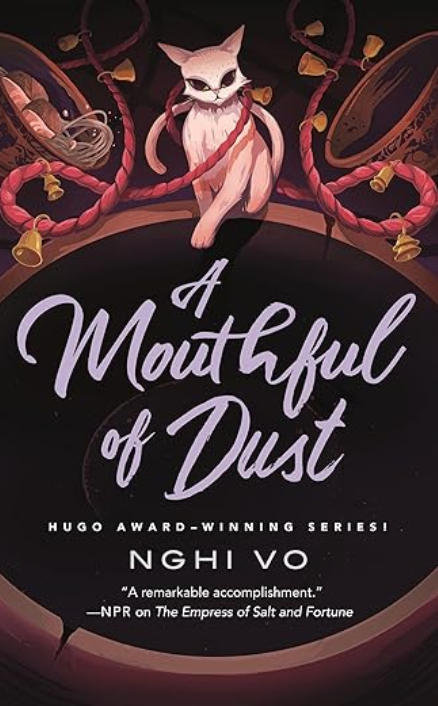
A Mouthful of Dust
The Singing Hills Cycle #6

by Nghi Vo
October 7, 2025

In the acknowledgements after the story, the author describes her editor telling her, in 2020, that maybe the readers weren’t ready for this story. In 2024, the editor was like, okay, yeah, this will be fine. Likely because the world has been rough and we’ve become accustomed to it. I think the editor was right. This is a more difficult story than some of the others, and none of them have been particularly light, but it was still so very good.

Cleric Chi and Almost Brilliant arrive in the town of Baolin to learn stories of the legendary famine that’s long enough in the past that it feels safely distant to the reader and to Cleric Chi, but recent enough to still have an immense and ongoing impact on the residents recounting their stories of what they did when their whole city was starving.
What Stalks the Deep
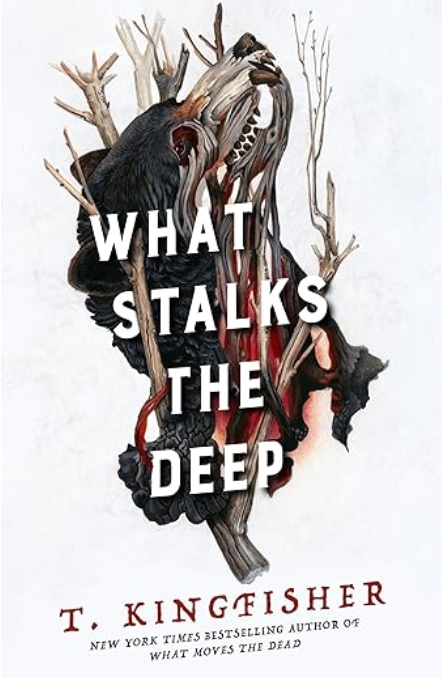
Sworn Soldier #3

by T. Kingfisher
September 30, 2025

Alex Easton, the sworn soldier from Gallacia, travels to America… specifically to West Virginia, to an old abandoned coal mine where Dr. Denton’s cousin has gone missing while exploring the cave. Denton specifically requests Easton’s help because the preliminary evidence has been deeply creepy to the point of unbelievable, but after their shared experience in the first book in the series, at the House of Usher, Denton is sure that Easton won’t immediately dismiss it. Easton would very much like to dismiss it because it is deeply creepy but instead sees the whole investigation through, all the way to the very creepy end.

What really struck me in reading this is how similar Easton is, as a character, to John Watson: not necessarily the brightest, although not stupid by any means, but definitely dedicated, and more inclined to get into trouble than they’d like to admit. This is an investigation with no brilliant detective, just a group of individuals trying their best.

The other thing that struck me is a spoiler about the monster in question that I really want to share but also don’t want to give away! But this book makes me wonder if there are trends in the way new horror monsters are developed and how much horror writers crib from one another. Or maybe I just don’t read enough horror to recognize the less common but still regular tropes. But there are similarities to a very different book I previously reviewed!

In the meantime, both of these series are delightful with some remarkable similarities to one another, despite their decided differences, based on the narration by laid-back nonbinary main characters who find themselves in situations. I highly recommend both these series.
Someone You Can Build A Nest In by John Wiswell

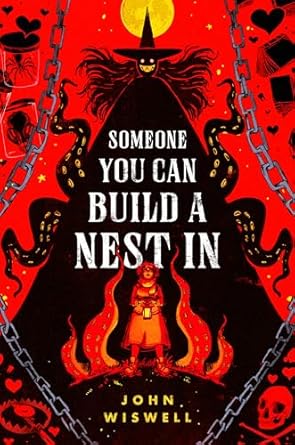
Someone You Can Build A Nest In
by John Wiswell
2024

This book is very cute and very gross. It’s a remarkably sweet romance between a literal man-eating shapeshifting ooze and a member of a monster-hunting human family. The story is set in a hand-wavy historical fantasy setting mostly in and around one town but with knights and nobles and small kingdom politics happening in the background. In the opening scene, the monster Shesheshen wakes up from hibernation when a hunter enters her lair in order to kill her and harvest her heart. Instead, she kills and eats him, not necessarily in that order. Later on, she meets his sister Homily and falls in love. There are, as you can imagine, some problems that must be resolved for any relationship to work out.

The plot is tricksy with a couple of twists and turns that kept my anticipation high. It also side-stepped a lot of issues by having a main character who was so very inhuman that she, and thus to a certain extent the reader, just didn’t care about the ongoing body horror. It’s not horror to the point-of-view character so everything is fine!

I enjoyed the book and thought it was both fun and funny.

However, I do have some caveats:

One of them is oddly how sanitized the story is. Of course there is a lot of death and killing, but I was a bit taken aback by how few people Shesheshen actually winds up killing, despite her stream of conscious thought process that classifies people as highly edible. (Her thought process is hilarious!) Given that the author is upfront about monsters often being a metaphor for disability, it makes sense that he wrote a more misunderstood monster than a truly vicious one, but it also felt like he was trying to write both at the same time and couldn’t quite manage to reconcile the thought process with the actions so it doesn’t quite work out.

While the expectation of death and gore is obvious from the very beginning, there was a scene of extreme animal harm in the middle of the book that surprised me and broke the rhythm of the story for me. Spoiler: the animal does get rescued and does survive, but it’s an unpleasant scene that hit me harder than anything else in the book.

And finally, I think this book could have done better as a duology. The book is broken into eight parts and takes place over the course of a full year. The main plot and primary character arcs and half the year are covered in the first seven parts. The eighth section covers the other half of the year and a whole secondary character arc that gets skimmed through extremely quickly. It could have been a whole sequel, possibly from Homily’s perspective, but it felt very rushed as a too-long epilog to the main story.

But overall, this book was fun and enjoyable and a great build-up to Halloween.

Sworn Soldier series by T. Kingfisher

I have started the spooky season off right with a pair of eerie fantasy horror novellas that I highly recommend (although admittedly not to my 6-year-old cousin for whom I had to do some quick page flipping to find a section I could read aloud without introducing any concerning concepts.)

What Moves the Dead
by T. Kingfisher (aka Ursula Vernon)
2022

This first novella is a retelling of Edgar Allen Poe’s The Fall of the House of Usher, which I actually only read in full afterwards, although I vaguely knew the gist of it through literary osmosis. The original is a bit of a slog with a lot of words about not much happening. In contrast, Kingfisher goes above and beyond in developing some of those details into full plot arcs and monster development, creating a cozy horror story that is deeply unnerving, with a wonderfully unique character to be the narrator.

Also, not to get into spoilers beyond what the cover already shows, but I feel like this book could be part of a triptych with Entangle Life and Little Mushroom to really cover the full expanse of literary discourse on fungi.

The narrator is Alex Easton, a retired soldier from Ruritania, a fictional eastern European country that apparently has a long history of being a fictional setting, and has — in this story at least — a running gag about how miserable the country is in pretty much every way, but it’s still home. An interesting twist that reminds me of the Cleric Chih series is that in the Ruritanian language, soldiers have their own dedicated pronouns, and thus anyone who doesn’t like their born pronouns can swear in as a soldier and get a soldier’s pronouns as part of the deal along with PTSD and various other injuries.

Easton is fascinating enough, that it’s no wonder that the one-off story became a series, and thus the second book is:

What Feasts at Night
by T. Kingfisher (aka Ursula Vernon)
2024

This is another cozy horror novella set in the 1880s, that follows pretty soon after the prior one where Easton is hoping to recover from the events at the House of Usher, although would have preferred to do so in an apartment in Paris rather than in an old hunting lodge in Ruritania, but events conspire to bring Easton to rural Ruritania, an unexpected death, and some deeply superstitious villagers. The characters are a delightful as they try to get along, despite having distinctly different perspectives, and the world-building perfectly creepy in the way it presents the world as dangerously uncertain about what is happening and even more uncertain about what to do about whatever is happening.

Kingfisher does an excellent job of both taking advantage of and subverting some of the standard writing tropes to keep both the reader and the characters uncertain. The supernatural elements are introduced into the world building in a way that feels all too natural and realistic.

The third book in this series, What Stalks the Deep, just got published last week and I’m on the list for it as soon as it hits my library, but wanted to give it a call out here as well. It’s coming soon!

Love, Death + Robots: The Official Anthology : Volume One

Love, Death + Robots: The Official Anthology: Volume One
2021, audiobook 2025

I have not watched the animation series, but I’ve heard good things about it and I saw that this audiobook existed and so I got it and listened to it on my work commute. And I didn’t quit halfway through, though I was extremely tempted. It has some of the worst writing I’ve ever read/heard. Like, at least one story that’s right up there with Eye of Argon, and others that were close runners up. What’s also crazy is that, as I was listening, increasingly appalled with each new story, I realized that they were managing to cover a wide range of ways in which writing can be poorly written.

In retrospect, I realized that there were two entries that are explicitly screenplays and thus can be forgiven (I suppose) for going into details about exact camera angles, and scene changes, and repetitions of the exact time of day even though it didn’t change, but wow was it hard to get through on my commute. The fact that one of those screenplays (“The Witness” by Alberto Mielgo) literally opened with “a beautiful woman is naked in front of a mirror, applying make-up” felt like such a stereotype/cliche that I wondered if it was intended as a spoof. Sadly, if it was intended as satire, it never made any particular point.

A lot of the stories (“Suits” by Steve Lewis, “Sucker of Souls” by Kirsten Cross, “Shape-Shifters” by Marko Kloos, “Blind Spot” by Vitaliy Shushko, “The Secret War” by David W. Amendola) had men with overwrought machismo fighting slavering aliens, with the type of clinical descriptions of violence and gore that I might expect from an audio-description of a visual media, but not from even a book adaptation of a movie. (“Lucky Thirteen” by Marko Kloos, has a woman with machismo fighting human soldiers, but the rest remains the same.) Text and video are different types of media and text is better served trying to describe the impact of violence/gore on the characters rather than just a description of a picture. However, most of them couldn’t even make their violence impactful. Plus, a really eerie pattern I noticed was how in these stories, there was all this extreme violence between the “main characters “good guys” who feared for this lives but stayed strong through it all because they needed to protect their people, versus the “bad guy” alien others who were mindless killing monsters with no thought or culture of their own, only an endless desire to kill humans. But their actions were the same, extreme violence towards one another: just one side was good and one side was bad. It felt like video games for armchair warriors, who wanted to feel powerful and liked gun statistics and weren’t at all interested in the source of any given conflict.

Some of the stories (“Sonnie’s Edge” by Peter F. Hamilton, “The Witness” by Alberto Mielgo, “Beyond the Aquila Rift” by Alastair Reynolds) had an interesting concept and/or twist that I would have enjoyed seeing presented better and with less of a look at the authors’ sexual issues.

“Beyond the Aquila Rift” was actually the first story (ie, the seventh story) that I thought was genuinely well-written. And then it swerved into focusing on a middle-aged dude’s feelings about his extra-marital affair and it mostly stayed there for the rest of the story, pushing aside the interesting science fiction scenario and reminding me of the stereotypical English professor writing a novel about having an affair. The author tried his best to make the affair plot-significant and mostly managed to make the protagonist so self-centered he came across as a sociopath.

There were some decent stories. (“The Dump” by Joe R. Lansdale, “Fish Night” by Joe R. Lansdale, “Ice Age” by Michael Swanwick, “Alternate Histories” by John Scalzi.) It’s too easy to forget them when I think back on the book. But they were there. They were short, but interesting and fun and funny.

There were two genuinely good stories that I enjoyed a great deal and actually recommend. Luckily, I can even provide links to them (the written versions, not the audio):

Good Hunting” by Ken Liu is excellent and heart-breaking and heart-warming and all that about China losing it’s magical culture during the British colonial period and then regaining it in a steampunk fashion.

Zima Blue” by Alistair Reynolds is fascinating and thought-provoking and I have so many thoughts about it but also don’t want to provide any spoilers, because the story itself is so well laid out in the way it presents the situation and slowly makes the reveal, and then leaves the reader to continue to thinking about all the implications for days afterwards. It’s about an artist who went through extreme body modifications in order to have experiences no one else could, and the reporter who interviewed him about his final piece.

Detroit Zine Fest 2025

I hadn’t been quite sure what to expect from the Detroit Zine Fest, but was delighted to discover that it was like a local mini Small Press Expo. Maybe somewhere between 50 and 80 vendors? Thus, it was still slightly overwhelming to browse through all the stalls, but was also delightful and I bought a number of really good zines:

Michigan Cryptids by Shi Briggs
A Michigan Unnature Journal by Shi Briggs
These are two books, 12 pages each, about cryptids natives to Michigan, with absolutely gorgeous illustrations and short descriptions. I don’t actually know much about cryptids, so I’m not sure how much these were researched versus created, but I did recognize the Michigan Dogman as a thing. But the black and white illustrations are so beautiful and creepy and inspiring.

Thank You by Eddie Roberts
2023
This is a gorgeous and pointed poem about the culture of consumerism and the push-pull of gratitude for getting things you desire with the discomfort of always having more pushed upon you. It described many of my own conflicting feelings. The author also experiments with some really interesting typography effects.

Passages by Liana Fu
2019
Is a series of poems and musings on being Chinese diaspora going to visit Hong Kong and trying to learn Cantonese, struggling to figure out where they fit in the world where all their native cultures see them as other, and how this intersects with the ongoing cultural struggle of Hong Kong itself under an increasingly oppressive Chinese government.

Of Course I’d still love you if you were a worm, but like we might have to renegotiate certain aspects of our relationship, y’know? It’s a big adjustment: A guide to safely and responsibly loving your partner post wormification by Seth Karp
This is hilarious and also the best kind of crack-treated-seriously brochure. It’s clearly a take-off of the “Would you still love me if I were a worm?” meme, but reminds me even more of an elaborate version of the Jack Harkness test meme. It’s got advice and perspective on what to do if your significant other spontaneously turns into a worm. (Step one: ask what kind of worm? There are different kinds of it will effect your decision.)

Helianthus by Jone Greaves
There is Something in the Basement by Jone Greaves
Instructional Musings for Encounters & Summoning by Jone Greaves
Intent to Carcinize by Jone Greaves
I spent some time trying to figure out which of Jone Greaves’ zines to get since they were all such fascinating titles and wound up getting four of them, each of which is unique and fascinating and thought-provoking. I’ve been getting into short-story writing competitions recently and I feel like these are all examples of how it’s done: to create a world and a concept and maybe a character in just a few pages.

Gentle Laundry by India Johnson
2023
This is a surprisingly fascinating non-fiction 24-page zine about laundry. As someone who mostly learned to do laundry to the extent of put clothes in a machine with detergent and it will come out Officially Clean regardless of any evidence to the contrary, this zine opens up whole new worlds of understanding about what is actually happening and what detergents, soaps, bleaches, etc actually do. It’s also tonally very approachable, although by about halfway through I was feeling somewhat overwhelmed by the all the options and decision branches. But it’s valuable information to know and I have a few ideas for changes I want to try when doing my own laundry. Once I’ve tried a few things, I’ll need to re-read it to see what else.

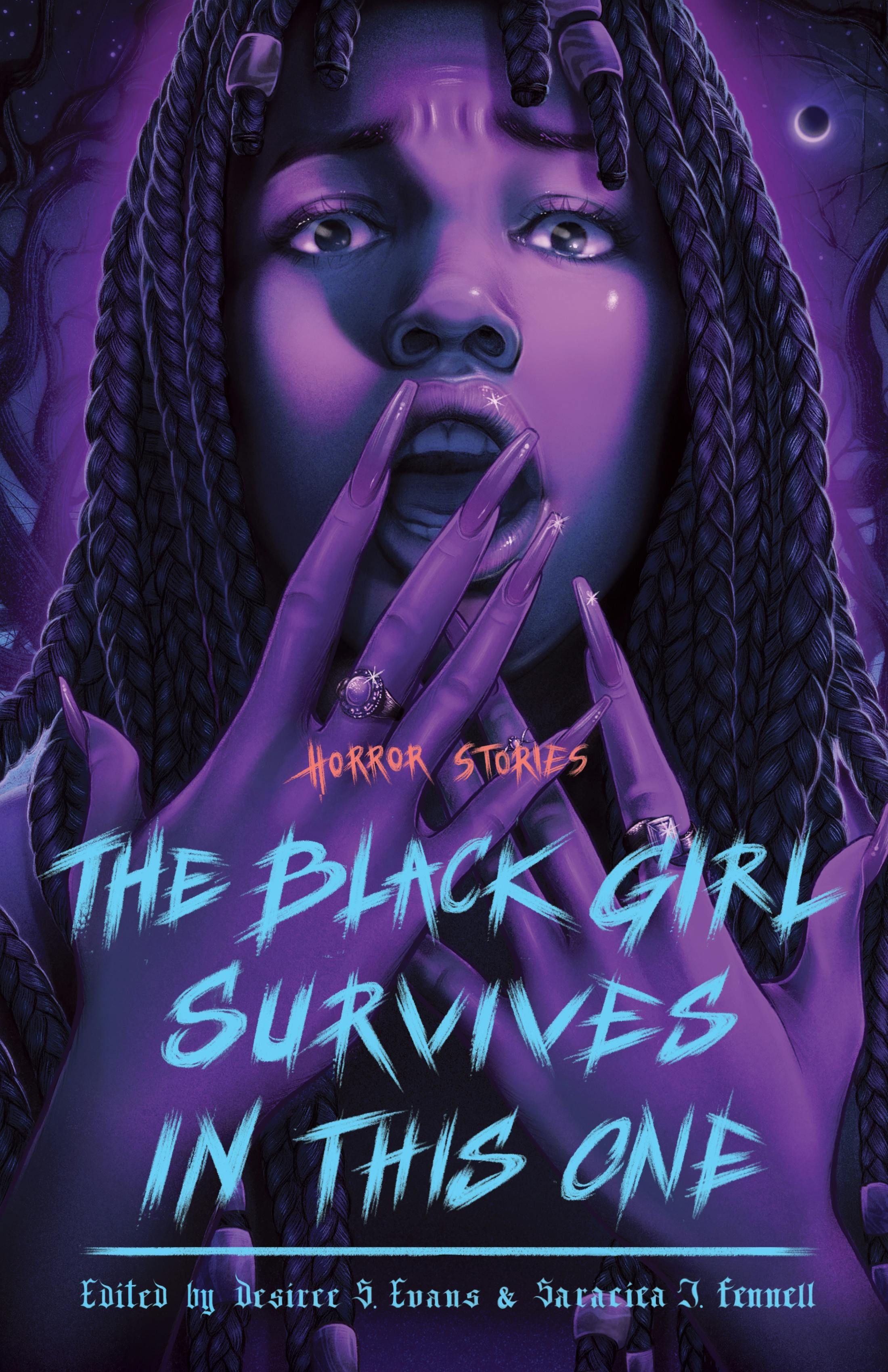
The Black Girl Survives In This One

Edited by Desiree S. Evans and Saraciea J. Fennell

A collection of horror short stories with an assured survival? Yes please! (Though the authors occasionally split hairs by ending the story before the perhaps inevitable conclusion.) In my enthusiasm, however, I’d overlooked that this is very much for young adult readers (and is clearly branded so). The fifteen stories all feature black girls in high school or college, all feeling the impatience for adulthood and independence that makes middle-aged me feel tired (and sympathetic for the adults around them).

So, I wasn’t exactly the audience for this, but the stories covered a truly impressive variety of horror subgenres and intersected them with Black life in a really fascinating way. Southern gothic hits a lot different with the added generational trauma of slavery, but also how do the cults of wellness MLMs punish Black bodies even more than white? Remote nature spaces can already be uninviting to many Black people, with or without supernatural horrors, and what would that look like in futuristic space exploration?

But then, there’s also the comfort in reading these, knowing that you won’t be exposed to an onslaught of abuse. In these stories the Black girls fight back, survive, and often triumph, even if occasionally leaving a truly impressive amount of destruction in their wake.

The stories varied in quality and my personal taste, of course, like any anthology, but I was really impressed with what a comprehensive overview it provided. I always particularly enjoy short story anthologies as a way to be introduced to new authors, including here two up-and-coming writers who won an open call with their submissions that fit in beautifully.

A Sunny Place for Shady People by Mariana Enriquez

A Sunny Place for Shady People
by Mariana Enriquez
translated by Megan McDowell
2024

This is not at all my usual genre, but I really enjoyed it and was impressed by it. I noticed only after reading it that while I got it from the New Releases section of my local public library, it is marked as ultimately intended for the Horror section. I probably wouldn’t have given it a chance if I’d noticed that before, but the title, the cover, and the blurb about a fantastical and hypnotic view of Argentina drew me in. The twelve short stories are horror, but more significant to me is the way they lean in to the magical realism of living in a world where the supernatural is right around the corner. There’s a dream-like quality to all the stories with no clear line between reality and hallucination. And a decided implication of: maybe all the hallucinations are real.

While I often read stories in anthologies out of order, I read this book from front to back, in order, and it was absolutely the right choice. The stories feel like steps down into deep water, creating a path that doesn’t dunk the reader too quickly and also gives a good exit. The first story, “My Sad Dead”, is nearly soft in its portrayal of death, and the trauma for both the dead and surviving. And the second story, the titular “A Sunny Place for Shady People” is a love letter to the people who enjoy delving into the macabre. The sexual violence that comes in the third story “Face of Disgrace” is merely a prelude to the body horror. By the eleventh story, “A Local Artist”, I was reminded of Hieronymus Bosch paintings of demons and temptations. But the twelfth story, “Black Eyes”, felt like a happy ending: they got through, they got out. None of the stories are directly related to one another, they all have different characters and different scenarios, but together they create a version of Argentina that is filled with people trying their best to live their lives even when violence and trauma has left long lasting wounds.

On the one hand, this book kind of needs all the content warnings — body horror, medical horror, psychological horror — but on the other hand, none of it felt gratuitous, and it was really well done. Those warnings would have put me off reading this, so I’m glad I didn’t get them. I also consider these stories an example of the noir genre, which is another genre that I don’t particularly care for, presenting a deeply cynical perspective on humanity. But that the perspective of every person being deeply flawed and just doing what they can to survive, feels like a kindness rather than a condemnation in these stories.

I really enjoyed these stories, even though I had to read them one by one, taking a break between each one. They’re extremely well done and well worth reading and I want to highly recommend them, while also giving the caveat of: take care of yourself.

Comics written by women

I ran across a thread on Twitter listing out comics and manga by women, and there were a number I hadn’t heard of, so I promptly went on a hold spree on my library’s website.

The Good

Sleepless by Sarah Vaughn and Leila del Duca

Ooh, this was a delight! The beautiful illustrations and realistic dialogue work together to draw the reader into this diverse Renaissance-type world of heraldry, politics, and magic. Lady Pyppenia or “Poppy” is the beloved though illegitimate daughter of the late king, trying to find her place in the court once her uncle takes the thrown. Her sworn knight, Cyrenic, is one of the ‘sleepless,’ guards who have magically sacrificed their need for sleep in order to offer around-the-clock protection, and the only one she can trust when assassins come for her.

The world building is expansive enough that it reminds me a bit of Game of Thrones, though much more family friendly, of course. The variety of fantasy cultures borrow elements from Europe through the Mediterranean and down into North Africa, represented with different fashions, manners, and magic, and all trying to navigate the various political alliances. At the same time, it is an intimate look at the relationship between a young woman in a precarious position of power and the man that serves her. The first volume ends on a cliffhanger, and the second picks up immediately, so get them together if you can.

Black Cloak by Kelly Thompson and Meredith McClaren

Another phenomenal story! I knew it was likely to be a good one for me from the various raves describing it as fantasy shot through with noir mystery/police procedural. There’s not much better way to my heart, and it is excellently done.

Set in a futuristic fantasy world, where elves, dragons, and humans all jostle for political power in the last standing city, Black Cloak balances the writing and illustrations beautifully in its “show, don’t tell” approach. When two bodies wash ashore from the mermaid lagoon, our protagonist, a ‘black cloak’ cop, must investigate. The world-building unfolds with the mystery as the bodies lead to secrets through all levels of the society.

Continue reading

Christmas Stories

As I get older, I find I have to work a little harder to generate a holiday spirit among all the daily life stressors and nonsense, so I like to gear up with some seasonal reads:

The Haunting Season: Eight Ghostly Tales for Long Winter Nights

I bought this because it includes a Natasha Pulley story about Keita and Thaniel from her Watchmaker of Filigree Street series, which I adore. The general reader reviews are mixed, with many readers saying that Pulley’s story was the weakest since it doesn’t stand alone if you aren’t familiar with the characters. Being well familiar with the characters, though, my experience was the opposite: I very much enjoyed Pulley’s story, always happy to get more of Keita and Thaniel, but was disappointed in the other stories.

Perhaps it was because I was already familiar with Pulley’s characters, but they were the only ones that I actually liked. Most of the other stories featured either selfish or delusional characters, I suppose to ‘justify’ the hauntings one way or another? The plots also seemed overly complicated and obtuse, so each story ended just as I felt like I was starting to get a feel for it.

Sentenced to Christmas

By Marshall Thornton

Marshall Thornton writes the most ridiculous rom-com and cozy mystery plots featuring a cast of hilarious dirtbag characters, and I get a real kick out of his books. As befits the title, the plot of this book is absolutely ridiculous: arrested for burning down the patriotic Christmas tree in front of a conservative talk radio station, our protagonist Gage is sentenced by a crackpot judge to spend Christmas with the prosecuting assistant district attorney (his own defense attorney being Jewish) in order to “learn the true meaning of Christmas.”

The thing about Thornton, though, is that his dirtbag characters then often react with more realistic cranky befuddlement, and it is consistently laugh-out-loud funny. Only one thing stops me from wholeheartedly recommending this: Gage’s friend and assistant is introduced as non-binary, and that being a point of contention with their family, especially around the holidays. Unfortunately, Thornton presumably forgot, and uses she/her pronouns for them for a chunk of the middle of the book. I am confident that it is an unintentional writing error, and amazon reviews mention that some editorial errors have been fixed, so hopefully this is no longer a caveat.

The Fervor

By Alma Katsu

I thought the premise of this horror novel was so innovative—weaving traditional Japanese mythos into the historical blight of the US Japanese internment camps—until Rebecca told me it had been done before and by the TV show Teen Wolf, no less. Regardless, this novel does an excellent job with both the mundane and supernatural horrors. In fact, author Alma Katsu covers all her horror bases with spiders, ghosts, contagious illness, war, and my personal bugaboo, man as the true monster.

Some of the horror tropes are more effective than others, but for me, the most gripping was the different perspectives from the disparate and disconnected people all facing the same phenomena, with varying levels of knowledge and culpability. The multiple perspectives allow for personal insights into a fairly sprawling narrative. Our central and most sympathetic narrators are a Japanese-American mother and daughter who are interned in a camp in Idaho. They are making the best of the bad situation until a mysterious illness breaks out in the camps, leading to increased aggression and the arrival of mysterious “scientists.”

This illness ramps up the already paranoid public, and we follow another character lured into the mob mentality, as well as an intrepid reporter trying to get ahead of the government cover-ups. The Fervor was published in 2022, and the relevance to the varied reactions to the covid pandemic is clear. Katsu does a particularly good job, I thought, of maintaining the setting of the 1940s while also teasing out timeless human characteristics.