Habibi

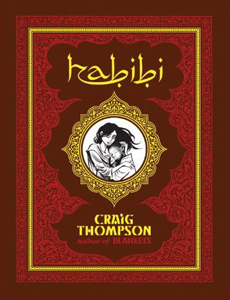
HabibiCoverHabibi
by Craig Thompson
2011

Wow. This is a graphic novel that really earns both of those words: it’s definitely a novel, and it’s definitely graphic (in every sense of the word.) It is most definitely not a comic book.

I’d noticed this book in passing for a while now, because it’s beautifully bound and the illustrations are gorgeous. Just, it’s a really beautiful book. It also has an obvious theme of exploring religion, which is something I often enjoy. On the other hand, it was struck me as trying really hard to be high literature by means of showing a life fraught with hardship, pain and suffering, and yet perseverance through it all.

Then I found myself waiting for a couple of hours in a library for which I didn’t have a library card. So I settled down to read this. And sure enough, I was absolutely right.

It shows a grim world filled with caricatures of characters who still have a bit of individuality to bring them to life and make them interesting. It’s really obviously trying very hard, and yet it largely succeeds in being that story about strength of will and perseverance and the times when there are no good options and so you just carry on. The characters are heartbreaking.

It makes me think of the story of Scheherazade, the narrator of the 1,001 Arabian Nights, and think of what her life must have really been like. After all, she was literally telling stories to preserve her life. (The main character also retells some of Scheherazade’s stories.)

It also reminds me of Caravan by Dorothy Gilman, a book I enjoyed a great deal but was possibly the first book I read in which it was clear that neither the main character nor the love interest were going to be protected by their status as the main characters of the book.

Bad things happen. A lot. And are, with one notable exception, shown rather explicitly.

It is not my particular kind of book, for all that it is just really, really beautifully drawn and bound. After reading half of it while waiting at the library, I got up and walked away when my class started. But when I saw it again at my local library, I thought, you know, let’s carry on. So I checked it out and read the rest.

It joins the ranks of books that I’m impressed with, proud that I’ve read, but feel no particular urge to re-read or own.

Happy Halloween!

Happy Halloween, dear readers!

As a bit of terrifying Halloween fun, here’s a short online comic strip for you:

Bongcheon-Dong Ghost
written and illustrated by Horang

I ran across this several years ago (the link was messaged around my classroom at the time and you could tell who had clicked on it by the flinches and stifled shrieks) but all the text was in Korean. When I went looking for it again, I found it translated into English. It remains really well done.

Spooky Graphic Novels

In honor of the approaching Halloween, I’ve been reading some extremely good graphic novels, that seemed seasonally appropriate. Although possibly more thematic to a more traditional concept of All Hallow’s Eve than to the modern concept of Halloween, per se. This is a time when the barriers between the living and the dead are the weakest and who knows what could be roaming the streets… you’d better prepare to be scary, too, to fit in.

Anyway, the artwork for all three of these are just gorgeous, which can possibly go without mention, since I don’t read graphic novels if I don’t like the art. But still, the art is really gorgeous.

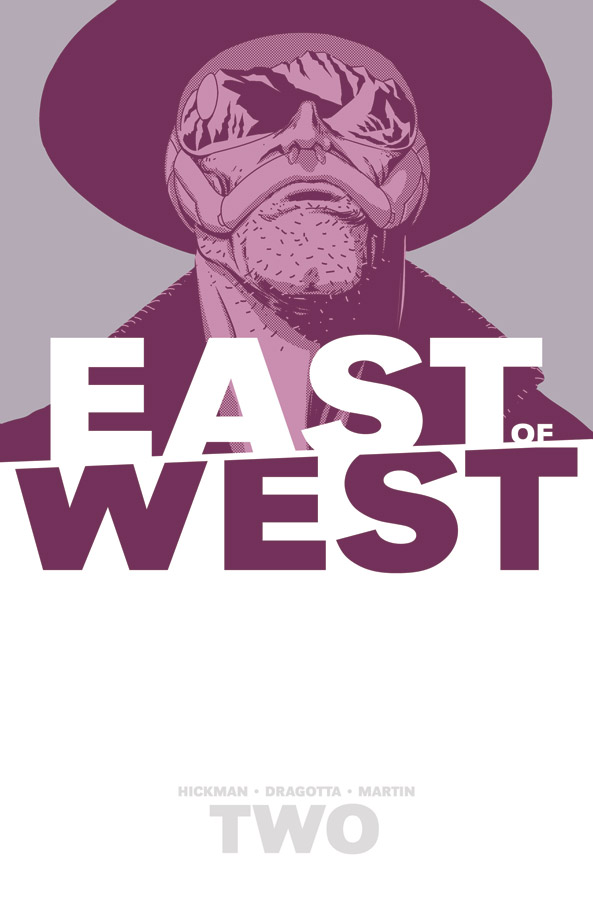
East of West
written by Jonathan Hickman
drawn by Nick Dragotta

200px-East_of_West  east-of-west-vol02  East of West 3

This is a futuristic western based on an alternate past with a whole lot of mystical beings thrown in for good measure. I love it.

One of the main characters is Death. The three other horsemen of the apocalypse are also wandering around, and there’s some sort of evil prophesy that a scary number of the world leaders are fanatical believers of. No one is really good or nice in this, by they’re all really dedicated to their various (and generally conflicting) causes. And there’s something very appealing about competency, good or evil, and something fascinating about manipulative people attempting to manipulate each other.

The back sums it up well:

“We would tell you to pray. But it wouldn’t do any good. You have earned what is coming to you.”

Anna gave the first one of these to me for Christmas last year and then I bought the second one for myself last month, and the third one has just been released a couple of days ago but I haven’t gotten it yet. I’m still going to review this whole series as awesome.


Pretty Deadly
written by Kelly Sue Deconnick
drawn by Emma Rios

PrettyDeadly_Vol1-1

This is another mystical western, although minus the science fiction aspect of East of West. Instead, the whole story has a surreal quality as it is structured as a fairytale told by a bunny (or rather the skeleton of one) to a butterfly (who might be part of death’s daughter) and there are stories within stories. I still need to read it again (probably a few more times) to really track down who all is who and what their intents are, but it’s fascinating. It’s also a complete story, which is nice. There are plenty of other characters who can be developed in the next volume, whenever it comes out (and that I’m looking forward to getting when it does), but the main plot arc following the girl in the vulture cloak is resolved at the end of this volume, and thus ends the story told by bunny to butterfly.


Peculia and the Groon Grove Vampires
by Richard Sala

Peculia

This is a stand-alone single story, and a much quicker read than the others. The story-line is extremely straight-forward without any real surprises. The plot-line sort of reminds me of a Nancy Drew story, although with even fewer surprises. In that way, it seems like something for a fairly young reader.

On the other hand, a lot of characters die, some in relatively gruesome ways. The focus on the gruesome deaths is actually the opposite of gratuitous, though. They’re shown quickly and casually and it all comes across as fairly light. It reminds me of the some of the older Grimm’s fairytales where, say, children push witches into ovens and then go home to celebrate with their families. So, you know, maybe it is intended for youngish children, but cheerfully bloody-minded young children.

And me, too, because I liked it a lot.

The art is also interesting in the way it’s all in black and white, with the appearance of woodprints.

Halloween ComicFest

ComicFest 2014I did not know this was a thing until yesterday evening, but now I’m all pumped to go tomorrow: apparently, in addition to Free Comic Book Day in May, comic stores have Halloween ComicFest, where they offer free Halloween-themed comics! I don’t actually have anything to add to that: Halloween! Free comic books! (Okay, I’ll add two things: one of the free comics is done by Terry Moore, who did (does?) Strangers in Paradise, and one is done by Loeb and Sale, the team that created Batman: The Long Halloween, both series I’ve very much enjoyed.)

Mike Mignola Graphic Novels

Mike Mignola is most well known as the creator of the Hellboy series, which I find a little too silly for me. However, I really admire the artist that partners with him on the inside pages (Mignola himself illustrates most of the covers and I like his style, too). So, I was interested in checking out some of his non-Hellboy work. I previously read, hugely enjoyed, and reviewed Baltimore Volume 1: The Plague Ships here, and just recently remembered to track down the now-released sequels.

Book CoverBaltimore Volume 2: The Curse Bells

This volume goes a bit darker than the previous one, exploring how men can become monsters themselves through their obsessions. I found it gripping, but not exactly pleasant to read. What I did enjoy, though, was that the story expands more on the alternate history of this world, confirming that it is set just barely post-WWI, with foreshadowing of WWII. It also has vampire nuns.

Book CoverBaltimore Volume 3: A Passing Stranger and Other Stories

I was a little hesitant over this one because short stories can go either way, but I really liked it. Mignola uses the shorts to really focus on the characters themselves. We get backstory on two main villains from both previous volumes, and quite a nice look at Baltimore’s struggle to stay moral in his own obsessive quest. It made some of the ickiness from volume 2 more palatable.

Book CoverThe Amazing Screw-on Head and Other Curious Objects

This book is very odd. I believe it is really just Mignola playing around with stories and drawings that he knows won’t hold up to a full graphic novel treatment, but he is so successful that the publisher figured fans would probably be entertained. I would agree, too, that this is probably just for the true fans that want a comprehensive collection of Mignola’s works. The titular Amazing Screw-On Head is literally a sentient head that can be screwed onto a variety of mechanical bodies and does sort of vague battle in service of President Lincoln. Even the backpage blurb didn’t seem quite what to make of it: “If you read only one comic about severed robot heads fighting…I dunno, some damn thing or the other at Abraham Lincoln’s behest, that comic should be The Amazing Screw-On Head.” —Comic Book Resources.

I will say that my favorite vignette in the collection was The Magician and the Snake, written by Mignola’s seven-year-old daughter. It was no less cohesive a story than the rest, and had a very charming description of love and friendship that continues even after death. So, I guess what I am saying is I can take or leave Mike Mignola on this book, but I quite recommend Katie Mignola.

Book CoverWitchFinder: In the Service of Angels

Mignola is back to what I like best: supernatural period pieces. WitchFinder features Sir Edward Grey, recently knighted by Queen Victoria for hush-hush deeds done in service of the crown. In this volume, though, he is tracking a demon brought out of the excavation of an ancient Egyptian tomb and made corporeal in London.

It has a similar feel to Baltimore, though a different historical period and Grey is different enough in character (not quite as hardened and still able to be smitten by a comely medium) that it is not simply a retread. The illustrations are lovely, as usual, and the story interesting, but the pacing was a bit slow. It ends a bit abruptly with only partial resolution, and though there is a second volume out, I’m not sure I’m going to follow up with it. (Except, that upon further research, i.e. amazon description, the second volume takes place in the American West and I love a wild west story.)

—Anna

Marvel Comic Books

My comic book binge continues!

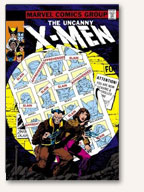
The Uncanny X-Men: Days of Future Past

Book CoverMy partner and I are big fans of superhero movies, and really enjoyed the most recent X-Men reboot. When the previews for this summer’s sequel came out, though, I couldn’t make head or tails of the storyline, and Tom recommended that I read the comic books that it is based on. The storyline was originally published over two issues of The Uncanny X-Men in 1981 and released as a trade paperback in 2011.

I have repeatedly mentioned that artwork is very important to me, and I found the 80s aesthetic a little trying, but the dystopian future and desperate intervention from the past plotline was quite engaging. (Also, the dystopian future is set in 2013, and I wonder if they originally aimed for a release date last year.) Ultimately, though, I don’t know that reading the book helped with my initial issue, since I believe the movie is taking a lot of freedoms from the source material. The primary one being that now Wolverine is the pivotal character instead of Kitty Pryde. The comic book fan in me is attempting to argue that this change is just due to Wolverine being very popular, but the feminist in me isn’t totally buying it (not least because both sides of me suspect that Wolverine is starting to be played out).

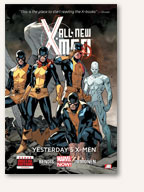
The All-New X-Men: Yesterday’s X-Men

Book CoverReleased just this year, the “Yesterday’s X-Men” trade paperback is pretty much the mirror image of “Days of Future Past.” My X-Men reading heyday was many years ago, so a lot has happened since I stopped checking in monthly. Comic books are similar to soap operas in a lot of ways: a set roster of characters rotates through years of marriages, breakups, feuds, and deaths. This book actually builds on all of that, and references the past craziness in very nice and often humorous ways, without overwhelming the reader with past references.

The basic premise is that so much craziness has happened and the X-Men have gotten so fractured that Beast decides that he needs to bring the teenage X-Men from the 60s forward in time so that the current X-Men can face their past selves and recognize where they have gone wrong. This does not work ideally, of course, and the play between the two sets of X-Men is very interesting and entertaining. (And the illustration is some of the best I’ve seen recently in the big superhero comics—everyone is of course in peak physical condition but no one is ridiculously stacked in either musculature or T&A.)

Hawkeye: Little Hits

Book CoverRebecca previously reviewed Hawkeye, Vol. 1: My Life as a Weapon, and I wasn’t quite sure what to think about it. It is so different from any other superhero comic I’ve read: Clint Barton (aka Hawkeye) is just trying to get by in life when he isn’t with the Avengers, and is only somewhat successful at it. I was initially taken aback by the bleak and almost noir-ish world, but I think it is quickly becoming a favorite. Life is not easy for Clint Barton, partly due to circumstance and partly due to personal poor decision-making, but he perseveres, and I enjoy reading about it. (Oh, and not to harp too much on disappointing girl-power comics, but Hawkeye’s female protégé is so casually tough and independent that there’s no need to make a big deal out of it in the writing.)

“Little Hits” is the second volume, released just last year, and does some very interesting things with the comic book medium, including an issue entirely from the point of view of Clint’s dog, using a series of pictograms to communicate thoughts. The back of the book also includes several pages from the artist’s sketchbook, along with a description of his very minimalist approach toward color and it was fascinating, as well.

—Anna

Disappointing Girl-Power Graphic Novels

I’ve recently decided that it is my duty to introduce all my friends’ kids to comic books, so I’ve been on the lookout for good quality introductory graphic novels for children, especially for young girls, which can be a bit tricky. These two were strong possibilities but were ultimately disappointing, to varying degrees.

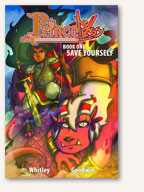
Princeless: Save Yourself

By Jeremy Whitley

Book CoverI’ve had my eye on  Princeless for a while. The first collected publication is selling for upwards of $200, which seemed very promising in terms of popularity, so I was pleased when a reissue trade paperback was released. I was feeling confident enough in it to just buy it outright, but my extended library system had a copy, so I held off. And now I don’t know.

Princeless has a lot going for it. It starts with the common trope of a princess locked in a tower guarded by a dragon, waiting for a prince to come rescue her. After several failed rescue attempts by clueless princes, Princess Adrienne gets bored of waiting and convinces the dragon to fly her away from the tower and rescue her sisters, also locked away in towers. In addition to being admirably spunky and willful, Adrienne is also a princess of color, which is even rarer.

It is a lot of fun, definitely turning a lot of the fairy tale tropes on their heads, and the lead character gets some great lines. It just seemed a little ham-handed with all the girl power, in a winky, self-congratulatory way. The book was so focused on emphasizing girl power that it lacked more nuanced characters, motivations, and plot developments. In the end I wanted it to show, not tell: if you have a strong female protagonist doing heroic deeds, all the side jokes seem to junk it up. If you believe in what you are doing, just do it well, and don’t hedge your bets with irony.

However, when I was browsing online for the cover photo, I found the comic’s official tumblr page, and it is so dedicated to addressing sexism and racism that I started to feel bad. This is a comic for young readers, so it shouldn’t be surprising that I find the plot and characters a little simplistic, and even somewhat clunky girl power is way better than none. I think I’ll keep this in consideration as a future gift.

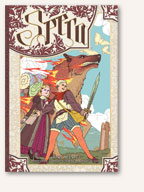
Spera

By Josh Tierney

Book CoverAfter having browsed multiple female-centric comics, Amazon recommended Spera to me, among others. It looked similarly interesting, so I checked it out from the library, and once again, it started out strong. The probably too-brief summary: an orphaned princess escapes her besieged kingdom with the help of one of her advisors who can shape-change into large fire dog and the daughter of the queen leading the siege. The three of them go on a series of adventures with a rotating roster of illustrators.

The Pros:

  • The first issue had my favorite illustrations, a very fun, retro style that reminded me of children’s books from the 60s and 70s.
  • Both princesses are immediately likable and admirable, and clearly distinctive from each other, as well.
  • The fire dog is just as precious as you imagine him to be, and pretty much all the illustrators did an excellent job with him (everyone loves a fire dog). Many of the illustrators, too, included some lovely gestural work that was especially apparent in the dog’s movements.
  • The minor characters met along the adventures are reliably interesting in their own right, even those that only get a couple squares (e.g. the young boy standing guard outside one of the towns is completely daunted by the task in general and the princesses in particular in just a few expressive illustrations).

The Cons:

  • My primary complaint is a bit difficult to put into words. I love the subversion of tropes, but there are some good versus evil characteristics that it does no benefit to transpose, in my opinion. Good characters do not own swords that absorb the souls of their opponents, for instance. At least, not without some serious soul searching of their own.
  • The issues collected in this volume follow a storyline of sorts, but are not always cohesive. Part of this was due to the different artwork, but that makes it even more important for the writing to tie everything together, and it didn’t always pick up the slack.
  • Some of the artwork was really stunningly ugly, and that is one of my particular biases when it comes to comic books. I primarily read them for the art, and bad art ruins the entire thing for me.

So, my search for good comics for young readers continues, and I’m sure I will enjoy it! I have several more on my roster that I will review as I get a chance to read them.

—Anna

Queen and Country

By Greg Rucka

Book CoverQueen and Country has been on my radar for several years, but, honestly, comic books can get expensive really fast, so I like to basically read at least one entire issue before committing to actually buying anything. I’ve been waiting for a version to show up at my library, and was quite pleased when I ran across the collected first volume of the definitive edition! I was then additionally pleased that I hadn’t actually purchased it.

A kick-ass British female spy illustrated by Tim Sale, my very favorite artist, should have been a no-brainer, but for a couple unfortunate bait-and-switches. Tim Sale only draws the covers of each issue, a practice that makes me almost apoplectic. All adages aside, you really do need to be able to judge a book, at least somewhat, by the cover, especially in a primarily visual media like comic books. Hiring a better artist to draw the cover than the inside is truly the definition of bait-and-switch (although I am grudgingly pleased that Tim Sale has earned the status he deserves, I suppose).

The other unpleasant surprise was in the character of Tara Chase, kick-ass British female spy, herself. I don’t know why I let myself be suckered into thinking this was going to be different from every other comic book in existence, so I guess I am sort of to blame, as well, but Tara Chase spends an inordinate amount of time lounging around in her underwear. The issues rotate artists so the first few were just mildly disappointing, but I was completely over it by the time her outfit for a siege operation (black bra under fishnet tank top) highlighted her approximately 12” waist and 40” chest (while her male compatriot is in full combat gear, of course). Same old, same old, I guess, but I was hoping for better.

—Anna

Nonfiction Graphic Novels: Serial Killers

Uh, these are not really in my normal reading sphere. I don’t like true crime stories—they scare me like no supernatural stories do. However, I’d run across raving reviews of both of these, and I guess my curiosity just got the best of me. I agree that the idea of graphic novels about real serial killers sounds just awful since graphic novels  often seem to celebrate over-the-top violence, but these both had personal approaches that caught my attention.

My Friend Dahmer

By Derf Backderf

Book CoverAuthor Derf Backderf actually grew up and went to school with Jeffrey Dahmer, and while Dahmer wasn’t his closest friend, he was one of Dahmer’s very few friends. I can’t even imagine what a strange feeling that must be, looking back in hindsight, though Backderf does a very good job of putting it into words and pictures. It is thoughtful, and sad, and calm; pretty much exactly the opposite of what I would have expected from a graphic novel about Jeffrey Dahmer.

As the story got closer to the end, though, I started getting increasingly nervous. The first half is set in junior high, far before any of the gruesome murders, but I’m not actually all that familiar with the case, so I wasn’t completely sure when the murders started, and Dahmer’s unraveling throughout high school amid all the oblivious authority figures is agonizing to even just read. It is one thing to enjoy a violent thriller, but it is very much another thing when it is nonfiction. The author turns out to be extremely sensitive to this, one might even say surprisingly sensitive, given that he grew up in the same environment that produced Dahmer. He alludes to Dahmer’s increasing perversions but does not illustrate or describe them outright.

In fact, that’s not what this book is about. As Backderf writes in the intro:

This is a tragic tale, one that has lost none of its emotional power after two decades. It’s my belief that Dahmer didn’t have to wind up a monster, that all those people didn’t have to die horribly, if only the adults in his life hadn’t been so inexplicably, unforgivably, incomprehensibly clueless and/or indifferent. Once Dahmer kills, however—and I can’t stress this enough—my sympathy for him ends. He could have turned himself in after that first murder. He could have put a gun to his head. Instead he, and he alone, chose to become a serial killer and spread misery to countless people. There are a surprising number out there who view Jeffrey Dahmer as some kind of anti-hero, a bullied kid who lashed back at the society that rejected him. This is nonsense. Dahmer was a twisted wretch whose depravity was almost beyond comprehension. Pity him, but don’t empathize with him.

It is an extremely insightful look at the society that created Dahmer, from an insider’s point of view. It took Backderf years and several different tries to write this book, and he did an enormous amount of research to fact-check his own recollections. He writes that he has accepted that he has no responsibility in Dahmer’s fate, and I would bet that this book probably helped him find that acceptance.

A quick word of caution: when reading the book itself, I was quite impressed with the author’s restraint and sensitivity with the subject matter, so I was perhaps a little too blasé as a reader. I had trouble afterwards getting it out of my head, and it wasn’t nightmare-causing, exactly, but it wasn’t comfortable, either.

Green River Killer: A True Detective Story

By Jeff Jensen

Book CoverI was a little nervous about this one, since the prologue illustrates the killer’s first murder right off the bat, and that of a child to boot, but I have to say that after My Friend Dahmer, and after the shocking intro, Green River Killer was a bit of a cake walk.

I first heard about this graphic novel on NPR’s RadioLab in an interview with the author, the son of the main detective in charge of this case. As a quick aside, can I say how much I enjoy RadioLab? It feels a bit like This American Life, but doesn’t leave me crying in my driveway nearly as much. The interview is particularly interesting because they actually play snippets of the police interviews with Gary Ridgway, the Green River Killer, responsible for the death of over 40 and possibly over 75 women throughout the 1980s in Seattle. (It’s also very possible that having already heard some of the details in the killer’s own voice made the graphic novel less disturbing in the end.)

Jensen’s father had dedicated the majority of his career to this one case, but tried to shelter his family from it as much as possible. When the recordings of the interviews were made public, his son, a writer for Entertainment Weekly, used them to help recreate his father’s career. It is a very loving look at his father’s dedication to a truly grim job. And, I think that’s what made it relatively easier to read: the focus is on the father and the police work rather than the psyche of the killer. Which makes sense, because in both the interviews and the graphic novel, there’s really not much of a reveal into Ridgway’s psyche, nothing like Backderf is able to do for Dahmer. While they were able to get enough facts for a solid conviction, they were never able to satisfactorily get a motive or really any sort of explanation.

This is actually the biggest frustration for Detective Jensen, but he is also so professional that even his moment of emotional crisis is quite contained, which is both understandable and admirable, but is difficult to communicate on paper. Jensen successfully focuses instead on the contrast of the loving relationship between his mother and father and both of them toward their children with the cypher of Gary Ridgway. The subtitle, “A True Detective Story,” is quite accurate: this is very much more about the lead detective and the toll police work can take on a person than the perpetrator.

—Anna

Nonfiction Graphic Novels

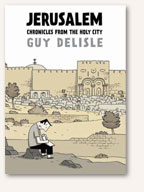
I previously read Pyongyang and Shenzhen by Guy Delisle, and really enjoyed them, and when I saw that he also had books on Jerusalem and Burma, I was very interested in reading those, as well. I was living in Boulder at the time, though, and the local library didn’t have copies, so I backburnered it and of course forgot about it until a couple of weeks ago, when I thought to try my new library system, which happily had both! Jerusalem was available first, and when I went to go pick it up, I browsed the other offerings in the adult travel graphic novel section (a small section, certainly). I picked up Joe Sacco’s Palestine and Waltz with Bashir: A Lebanon War Story as well.

Being your typical clueless American, I hadn’t quite put together that all three books were pretty much talking about the exact same region. I had just figured that I am generally sort of confused over issues in the Middle East, and perhaps a graphic novel or three would be able to break some of the issues down in a way that I could understand. If libraries weren’t stringently against keeping rental records (for exactly this reason), I’m sure I’d be on some list somewhere.

Jerusalem

By Guy Delisle

Book cover: JerusalemJerusalem is about twice as long as Delisle’s previous books, which is explained toward the beginning when he describes how he and his family are moving to Jerusalem for an entire year for his wife’s work for Doctors Without Borders. By this point, he has made enough of a name for himself as an author that he is spending the year solely working on this graphic novel, while also taking care of the children and doing the occasional lecture.

Delisle’s style is quiet and nonjudgmental. His strength as an author and illustrator comes from showing the reader these foreign cultures through his eyes as a traveling Westerner (he’s French Canadian), so it feels very personal. Several times, I laughed out loud, which is somewhat unusual in a visual media such as graphic novels, and two specific pages related to the other two authors of this blog: 1) Kinsey, apparently you are not alone in playing the game “Hipster or Priest”, and 2) Rebecca, I believe you, too, own some of the Helsing manga?

Like his previous books, this one focuses primarily on his own small, daily experiences trying to navigate a new culture, only referring to more global politics when it touches on him directly. For instance, a recurring theme throughout the book is him attempting and failing to get permission to travel into Gaza to lecture at a university there. In fact, after his fourth and final failure, he wonders if perhaps he is being mistaken for Joe Sacco, a reference that pleased me since I was reading his book next.

Palestine

By Joe Sacco

Book Cover: PalestineI have to admit that after Guy Delisle, Joe Sacco came as a bit of a shock and I was initially quite turned off. Like Delisle, Palestine is an autobiographic account of Sacco’s experience in Palestine, but where Delisle is quiet and personable, Sacco is loud, crude, and in-your-face. He is very clearly influenced by the R. Crumb school, which is not my favorite either, and I found his bold lines and clustered text boxes aggressive and claustrophobic. Sacco portrays himself as a bit of an asshole, self-centered and cowardly, and I initially took his word for it, but slowly began to think it is defense mechanism on his part, protecting himself emotionally from so many needy people that he is not in a position to help.

What finally sold me on the book is the sheer amount of information he has managed to pack into it. While I enjoyed Jerusalem more, Palestine gave me a much better understanding of the current situation, and the history that brought about it. As the title might reveal, the book is very much in support of an internationally recognized Palestine, which is not a perspective we hear much here in the United States, and it seems to me that it is an important perspective to hear.

Once I got over my initial bias, too, I started to notice that Sacco is a beautiful illustrator when he wants to be, drawing very detailed and delicately inked vistas depicting the scope of the conditions in the settlements.

Waltz with Bashir: A Lebanon War Story

By Ari Folman

Book Cover: Waltz with BashirI had initially picked this one up because the illustrations are beautiful, like little paintings in each panel. I was not real clear on where Lebanon is (I may or may not have thought it was in South America, the Texas public school system at work.) I had certainly never heard of Bashir before.

It turns out Waltz with Bashir was actually an animated film first (you can see the trailer here) and the graphic novel is made up of frames from the film. It also turns out that Lebanon is just above Israel, and Waltz with Bashir centers around the Israel Defence Force’s invasion of Lebanon. I figured that after the previous two pro-Palestine books, this would be my Israeli perspective.

The book (and film) is an autobiographical account of Folman attempting to recreate memories of his experience as a young soldier in the Israel Defense Forces during the 1982 Lebanon War, when Israel invaded Lebanon in order to install a pro-Israeli Christian government headed by the titular Bashir Gemayel. Folman knew that he had been stationed near the horrific Safra and Shatila Massacre (Christian soldiers under Israeli protection slaughtered between 762 and 3,500 Palestinian and Lebanese civilians), but had no memories at all of that time or place.

A friend of Folman’s, also stationed nearby, began having nightmares 20 years later, which inspires Folman to begin to dig into his own past. Clearly, it is not a happy book, and it, too, is quite critical of the Israeli military, so I am three-for-three on the pro-Palestine front. (If anyone wants to recommend a solid pro-Israel book on the subject, I’d be happy to check it out, though I’d prefer a graphic novel, clearly.)

Which brings me to my conclusion: while nonfiction graphic novels seem a little odd at first, they are palatable media for communicating very complex and charged information. There is no way that I would read a multi-hundred-page book, or even a dozen-page article, on the Israel/Palestine issue, but I happily and quickly ran through several hundred pages of these three comic books combined. They only made me marginally more informed, but they made me a lot less ignorant, if that makes sense. I don’t think that I could instruct someone else on the nuances of the various issues, but I know enough now not make pat judgments, either.

Burma Chronicles

By Guy Delisle
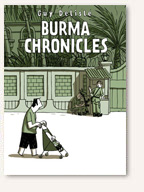
Book Cover: Burma ChroniclesDelisle’s Burma Chronicles came as a welcome relief after the building heaviness of the Israel/Palestine books above, though it is also Delisle’s most political book. He still writes very much in his first-person perspective, but Burma (or Myanmar, depending on your politics) has such a restrictive government that it interfered quite a bit in his daily life. Burma Chronicles takes place after Pyongyang and Shenzhen, but before Jerusalem; Delisle, his wife, and their infant son travel to Burma for his wife’s work in Doctors Without Borders. For the nine months that they are there, Doctors Without Borders attempts to reach outlying minority groups, with the government blocking their efforts until they eventually pull out altogether. This book highlights Delisle’s main charm for me: at the same time as he lightly touches on global politics, he shows us individuals in a very real light, so it becomes easy to look past the cultural differences and see the basic humanity underneath it all.

—Anna