The Mezzanine by Nicholson Baker

The Mezzanine
by Nicholson Baker
1986, 1988

This is a very odd book. I did enjoy but also, just, huh. It’s a first-person demonstration of overthinking everything, while also just letting it all flow past.

The plot, such as it is, is that the narrator rides an escalator from the lobby to the mezzanine, returning to work after his lunch break. The style however is a detailed and rambling documentation of his thoughts as they veer from the immediacy of his current sensations to memories both recent and long past to considerations for the future and back again. His thoughts would be tripping over themselves with how many and how rapid they are, overlapping and given depth from history, except that Baker has given them space to be fully articulated in a 135-page novel with a multitude of long footnotes such that he describes both a three-minute experience and the entirety of a character.

This book also reminded me of how journals kept by the most obsessively boring of individuals can be the most valuable to historians as they’ll document details that other diarists don’t bother to mention. Most books skim past a character going from point A to point B, with a single line or phrase. This book makes it clear that such a phrase can be treated like a fractal: the closer you look, the more details appear. There are a thousand questions: how did he come to be at point A? why is he going to point B? What is the process of going to point B? Why that process? What sense memories are attached to the process? What history? What is he bringing with him? Why those items? How did he come by those items? etcetera ad infinitum.

I have previously denigrated the literary genre, but this is actually really good despite being very much within that genre. I think the difference is that in so many literary books there is a scene in which the narrator looks at other people in a crowd and think to themselves: those people don’t have interior lives like I do. This book has as it’s very premise that each and every person has a rich interior life. The narrator in this book is no different on the surface level from any of the others, and yet, he is uniquely strangely himself, and so too would be every other person if one looked as deeply.

Eli Harpo’s Adventure to the Afterlife

By Eric Schlich

This book is an utter trip! (Pun semi-intended?) Eric Schlich captures and satirizes, with what I can only assume is great accuracy, what he calls the heaven tourism genre: Heaven is for Real and books of that ilk. Though I haven’t read any of those purported nonfiction books, this novel has enough similarities to the description of Todd Burpo’s book that I’m guessing the publisher had to brush up on the fair use rules for parody.

At age 4, fictional Eli Harpo had emergency heart surgery, and told his parents of visiting heaven while under anesthesia. His dad has since written a book about it (Heaven or Bust!) and ekes out a living selling and giving talks about the book. Eli happily supports this relatively small potatoes endeavor, but when a renowned televangelist comes calling and the publicity blows up, Eli is faced with increasing doubts. 

The chronology jumps around a bit, with most of the book being a flashback as middle-aged Eli is revisiting Bible World, the Christian theme park where his budding fame came crashing down at age 13. Most of the book details how Eli and his family got there, both physically and mentally, with some flashforwards to college, where he rebuilt his nonreligious life. The book pointedly does not reflect Eli any younger than 13 because he himself cannot remember any of the original pivotal near-death experience that has brought them all to this point.

Described as “witty, satirical, and profoundly big-hearted,” it was that, but the praise didn’t mention that it is also utterly mortifying. I don’t suffer from second-hand embarrassment as much as others, but I was both agog and cringing at most of the scenes in the novel. Which I mean in a good way — if it wasn’t so well written, it wouldn’t have nearly the impact! I didn’t relate especially closely to any of the characters (though other reviewers who experienced much more stringently religious upbringings than I have said that it is quite accurate), but I found it all fascinating. They could have so easily been caricatures, but truly each character contained unexpected dimensions. Schlich details each scene which such realism and matter-of-fact first-person narration from Eli, that I periodically had to check that this was in fact a novel and not a memoir.

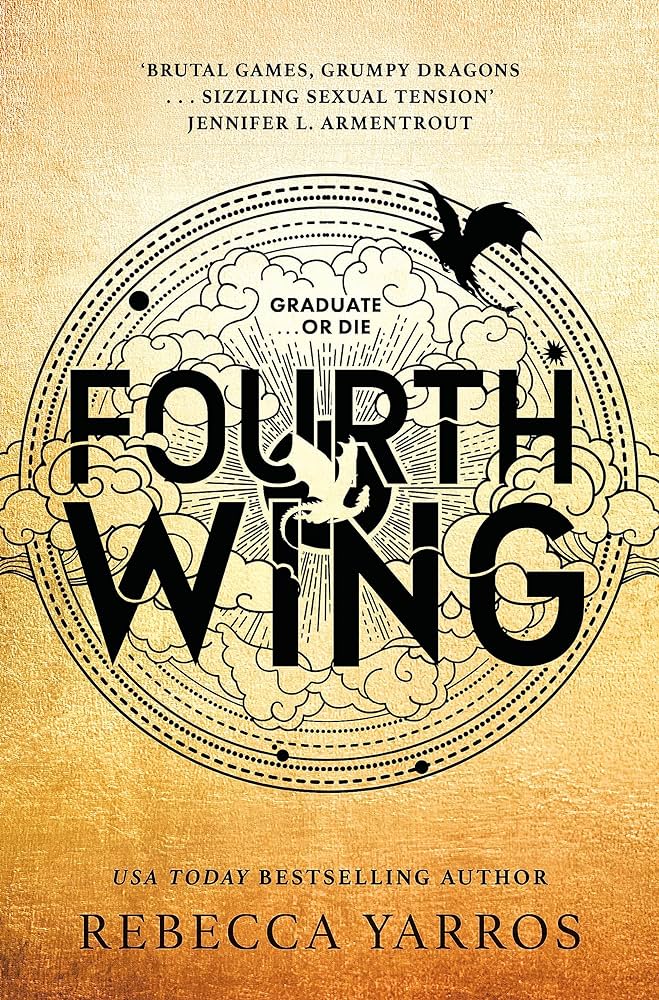
Fourth Wing by Rebecca Yarros

Fourth Wing
by Rebecca Yarros
2023

I enjoyed this book, and I do recommend it, but it was good enough that its flaws stood out. I was frustrated that it wasn’t better. It felt like an amalgamation of Iron Widow, The Hunger Games, A Deadly Education, and Dragon Riders of Pern, rather than entirely it’s own unique thing. The plot arc was also similar enough like The Poppy War that I was nervous that it was going to get overwhelmingly gruesome at some point. It didn’t, which was a relief. By about page 100 I had a basic concept of how the plot and characters would develop and what kind of twist there would be at the end. It’s not a subtle book. I still blasted through all 500 pages in two days.

Our heroine Violet is forced to enter the training for dragon riders, which has something like a 25% survival rate, and where the students are not quite encouraged to kill each other but certainly not discouraged from doing so. It makes me wonder how much the current real world trend of extreme bullying in schools is coming out in fiction. In theory every student is a volunteer, since dragon riders are highly honored, but Violet’s mother is the general in charge and demands Violet enter despite her having a congenital condition weakening her bones and joints. The children of the executed traitors of an earlier rebellion are also required to enter. Notably the children of traitors who were executed by Violet’s mother.

The students are all in their early twenties and training for peak physical fitness and constantly in mortal danger and are completely horny with it all. There are two students in a classic love triangle with Violet — one is her best friend from childhood and the other is the son of the executed rebellion leader. This is not a subtle love triangle and had me rolling my eyes at the introductions (they’re both so strong and sexy!), but I was really impressed with how the relationships develop and how the situation concludes. Also, a special call out to how well done the sex scenes were, at being character and plot significant and also both sexy and hilarious. Special kudos on those!

The part of the world building that I particularly love is that the dragons are large vicious beings who are not just sentient but actually the ones in charge of the dragon/rider relationship. The dragons pick their riders and they kill the ones that annoy them and no one gainsays what a dragon decides. The humans are essentially familiars to the dragons who can use them to access magic in a way that they can’t without a rider. It’s a fabulous premise that I adore and wish had been fully developed and integrated into the rest of the societal world-building, but it’s just not. The demonstrated command structure is still very much human-oriented, although maybe that will change in the sequel.

James

By Percival Everett

James has been getting so much buzz lately, and it is all more than deserved! This retelling of Mark Twain’s Adventures of Huckleberry Finn from the perspective of Jim (James) the slave who accompanies Huck on his adventure gives so much more insight into the period than the original, honestly. Everett uses the familiar story to capture a wide range of the Black experience in America, including slavery, of course, but also code switching, colorism, and fair weather allies among a whole lot more. It would be a bit overwhelming if it wasn’t so tightly constructed around the narrative.

James overall reminds me of Longbourn, with the peek into how much else is going on behind the scenes of a well-known story, and a stunningly different perspective that gives a classic a whole different meaning. It is excellent, riveting, and also a little painful, stripping away any sort of nostalgic sentiment for a story about a boy traveling the Mississippi on a raft. That said, I haven’t read Huckleberry Finn since high school, and while I remember liking it, I don’t remember specifics about the plot. So, on the one hand, I occasionally wished I recognized more of the scenes to better appreciate Everett’s twists; on the other hand, it certainly increased the suspense having no idea how Jim’s story ends in the original. No spoilers, but I did recognize one distinct departure from the original and wasn’t sure how I felt about it, until it became clear how necessary it was in order to explain James’ later actions in a way that sort of broke my heart. All heaviness aside, and there is a fair amount of that, the overall novel is surprisingly funny as well – I laughed out loud multiple times.

So, James in particular is garnering lots of nominations and awards, but Everett’s bibliography is full of fascinating titles that I’m looking forward to exploring in the future.

The First Fifteen Lives of Harry August by Claire North

The First Fifteen Lives of Harry August
by Claire North
2014

This is a fascinating premise and it’s well-written, but I had more than a few issues with it. I still read it to the end and was impressed overall.

The book is written in the first-person, by Harry August, a man who is born in 1919 and generally dies in the 1990s, and when he dies, he wakes up again, born in 1919. He’s not the only person living and re-living such recursive lives. They call themselves kalachakra. Their first lives are normal, their second lives tend to be short and filled with madness as they freak out about what is happening, and then they settle into the pattern of just reliving their lives, with both more comfort and more tedium each time through. Their society really highlights the apathy that comes from not thinking that we can do anything to effect the terrible things that are happening in the world.

At the beginning of this book, a child shows up at Harry’s 11th deathbed to explain that she’s one link in a chain of messages being sent from the future into the past, from the very young to the very old, to tell them that the end of the world is speeding up, and they don’t know what’s causing it, but it has to be something happening in the past. Then Harry dies in 1996 and is born in 1919 and he goes to find the oldest kalachakra currently living within reach of a small child, to pass along the message.

Fascinating!

Then he discovers what is causing the problem and it’s during his lifetime. So then he has to figure out what to do about it. The main plot takes place over the course of lives 12 thru 15 (which are told in order) but with frequent intermittent descriptions of lives 1 thru 11.

A brilliant idea and well implemented. In some ways, it reminded me of This Is How You Lose the Time War, a book I enjoyed a great deal. But any recommendation for this book comes with a lot of caveats.

First caveat: Much of the action takes place in the 1950s and 1960s, with all that entails, specifically: cold war era and a sense of science having all the answers. Everyone is very certain of themselves, which leads to them doing really terrible things because they don’t pause to consider that they might not know best, and simply shrug off all the harm as unavoidable consequences of progress. I don’t find any of the characters particularly likeable.

Second caveat: There’s a lot of torture. At least four extremely specific torture scenes and more than that depending on what counts, and a general sense that this is just how the world is. Characters, setting, and plot are written such that the torture makes perfect sense, and it’s an unpleasant world view that’s a bit too convincing.

Third caveat: The worldview is not completely convincing, especially as the reveal happens of what’s causing the end of the world. It’s written as an obvious and logical sequences that I don’t actually think works as a logical sequence. Or if it does, it’s a commentary on how time works that I don’t think the author fully intends. If it was intentional, then it would have been interesting but this book is too well written for that commentary to be so poorly implemented.*

Fourth caveat: There’s a lot of convincing by the antagonist to the protagonist. It reminded me a bit of Oscar Wilde’s the Portrait of Dorian Grey, except without Wilde’s humor and with a lot of scientific zealotry.**

The concept of the kalachakra is so cool, and the writing is really well done, but I just wish it had been explored in a less grim and gritty way.***

* In Connie Willis’ To Say Nothing of the Dog (a book I whole-heartedly recommend), there’s a deep dive into discussion about how time is effected by time travel and what changes a time traveler can and cannot make, and what happens when a person tries. This book would have made a lot more sense if Claire North had made the argument that the timeline is relatively stable but can be slowed down or sped up, rather than simply saying that changes to the timeline are merely taboo due to messing things up for future kalachakra. Then there could have been a deep dive into the ramifications about that. But instead there are a few half-hearted discussions of alternate timelines and branching time theory, and protecting the future world for the kalachakra that live in those futures, but no real discussion of the stability or malleability of the timeline.

** There was not any less homosexual subtext though. I spent a lot of pages waiting for at least some seduction between the antagonist and protagonist, but it’s all very 1950s lets just sleep with women while thinking about each other but no-homo type of thing. It’s just obsession, not attraction, your honor!

*** Especially since there are at least several dozen rather delightful fanfic stories that I’ve read about people re-living their lives to better or worse effect.
Toronto Comic Arts Festival 2024

I’ve been going to the Small Press Expo (SPX) for years, but last weekend was the first time I’ve managed to go to the Toronto Comic Arts Festival (TCAF) and it was so much fun! We came in to Toronto on Friday and left on Monday so that we could attend the entirety of the event on Saturday and Sunday. I attended five presentations, browsed hundreds of vendor stalls, and bought 14 graphic novels. (And was tempted by a whole lot more!) I haven’t read all my new acquisitions yet, but most of the ones I have are also online so I can link out to them as well as brag about them:

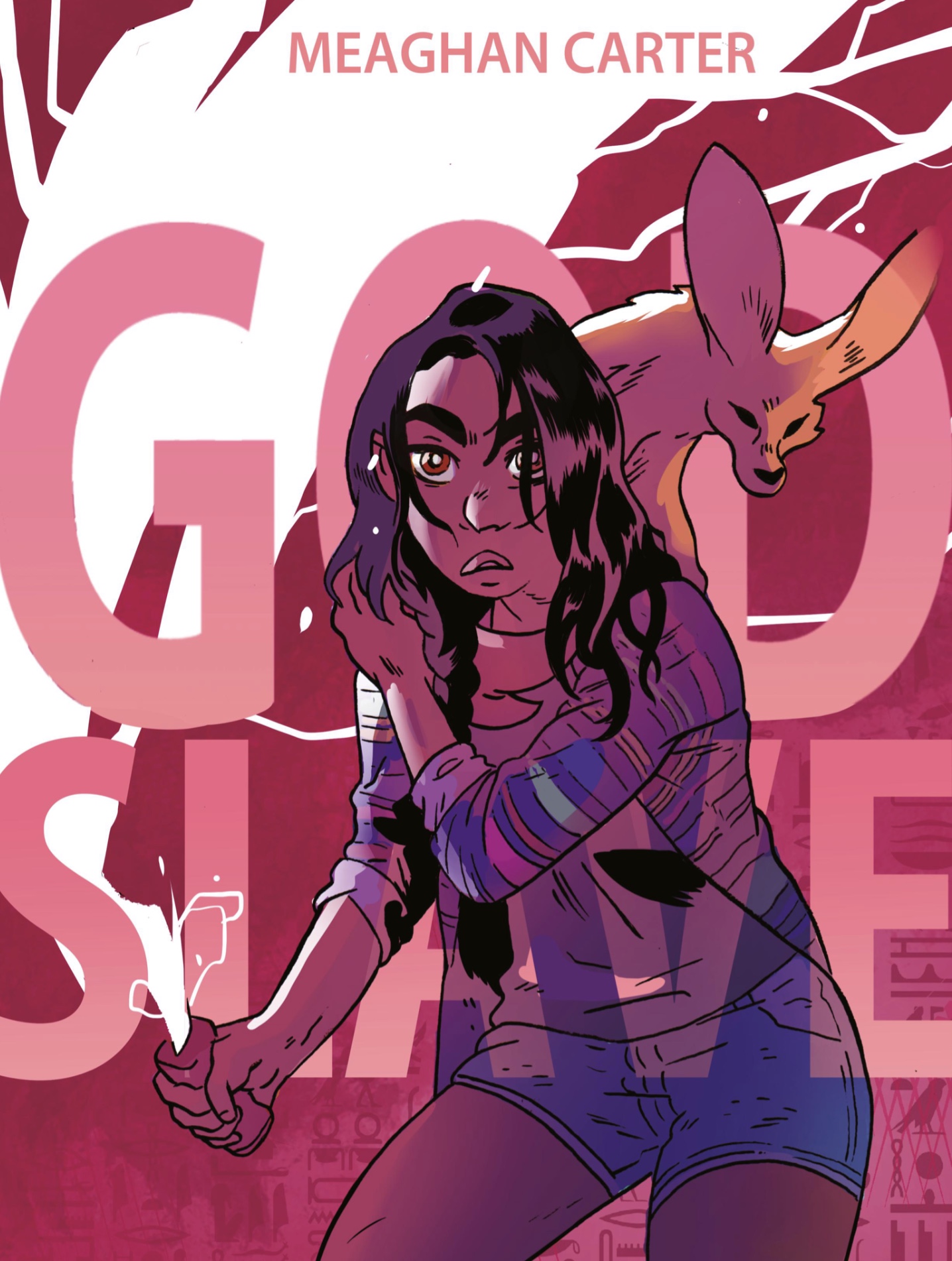
Godslave
by Meaghan Carter
A nineteen-year-old college drop-out accidentally wakes up an ancient Egyptian god who looks a bit like a fennec fox (so cute!) and then gets drawn into the deadly family drama of the Egyptian pantheon. Who the good guys are is deeply in question. I bought the first two volumes, which comprise the first five chapters, but the online version has started the sixth chapter!

The Big Mystery Case: A Crime Comedy
by Luke Bruger-Howard
This is a hilarious pastiche of crime thrillers that reminds me of the equally hilarious video How To Make Blockbuster Movie Trailer. It’s a quick read (less than an hour) and a loving mockery of the detective genre.

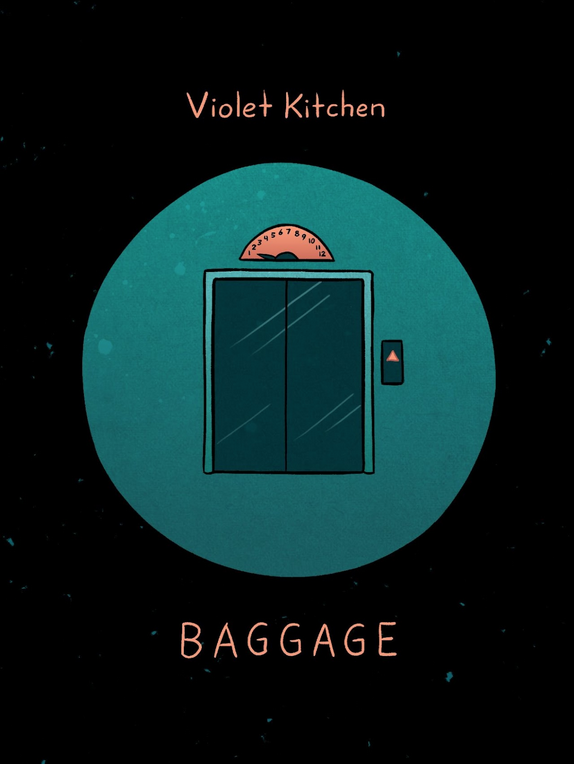
Baggage
by Violet Kitchen
This is an absolutely beautiful poem of a graphic novel, about packing for a trip, unpacking in a hotel room, and then repacking to depart again. It’s gorgeous in the way it uses both artwork and words to evoke emotions and communicate a sense memory. The imagery is very clean and crisp while the concept is very ethereal and dreamlike, and it works together perfectly.

The Closest Thing to Living
by Ky K
They only had the prologue of this story in hardcopy, but it drew me in and included a link to the online version for me to continue following and see what happened to the woman who wakes up from her murder, discovers she’s a vampire, and decides that this is the freedom she needed to be more true to herself. She’s very nihilistic and isn’t much interested in her own past, but it looks like despite being dead, she won’t be able to actually walk away.

Autumn Wing and the Crown of Fire, Volume 1: The Sword of Red Leaves
by Brandon Hankins
Gorgeous inkbrush artwork with a limited color palate that I really love. This first chapter is about a young nephilim, who’s trying to earn the right to go on a quest to forge a crown of fire, aka a halo, and come into his full power. It did a really good job of addressing what it means to be strong, especially when other people are yelling at you for both not giving in to them and for not being strong. I just bought the first volume, but five chapters are online!

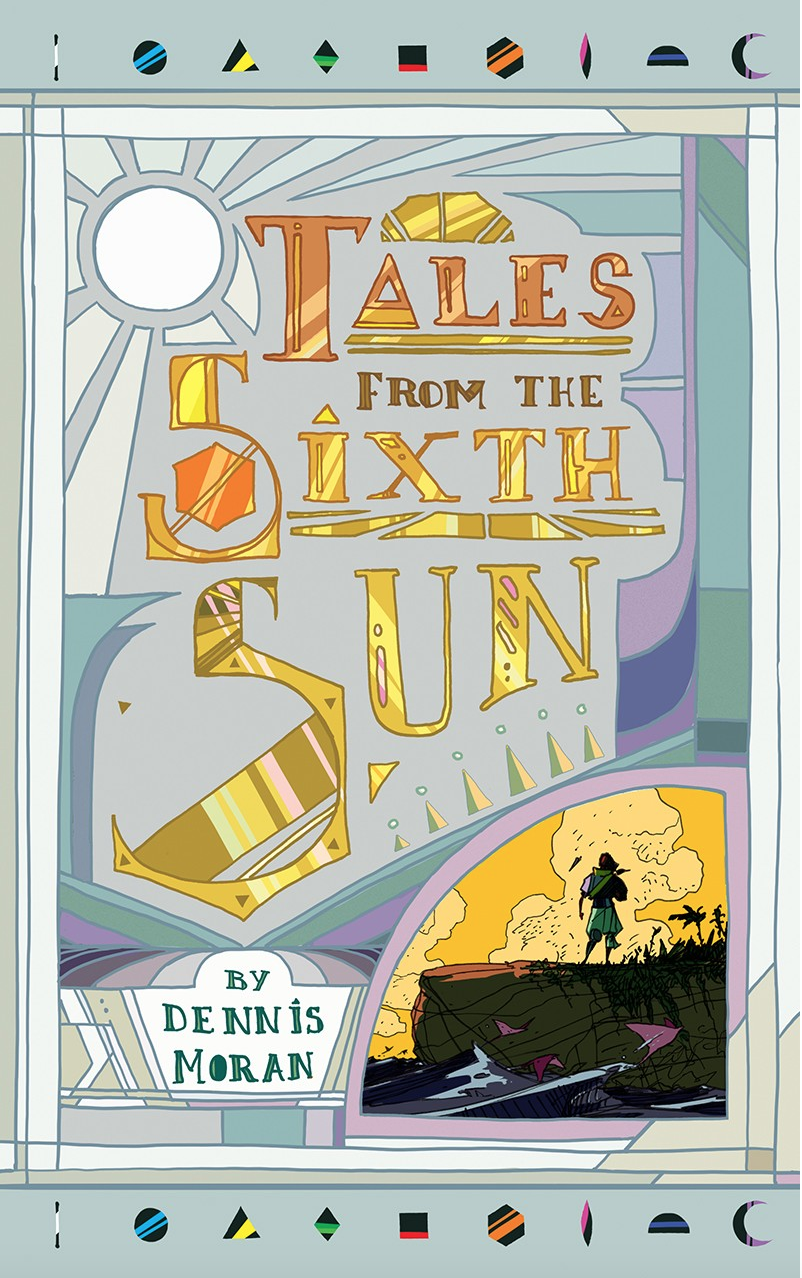
Tales from the Sixth Sun
by Dennis Moran
Absolutely gorgeous artwork and a magical world that reminds me a bit of Wakanda, with mysticism and technology integrated, set in a fantasy world heavily influenced by Afrofuturism and Inca-futurism. The first half of the book is nearly word-less, and the art carries the storytelling so beautifully but also very tightly focused. The later part has more dialogue and introduces a much more complex society and history and plot. This book contains the first three chapters of the story, but the first six chapters are online!

I am extremely picky about the graphic novels I buy: I they need to have both beautiful artwork and interesting storylines, and all of these were wonderful finds. I’m really looking forward to making this festival an annual event.

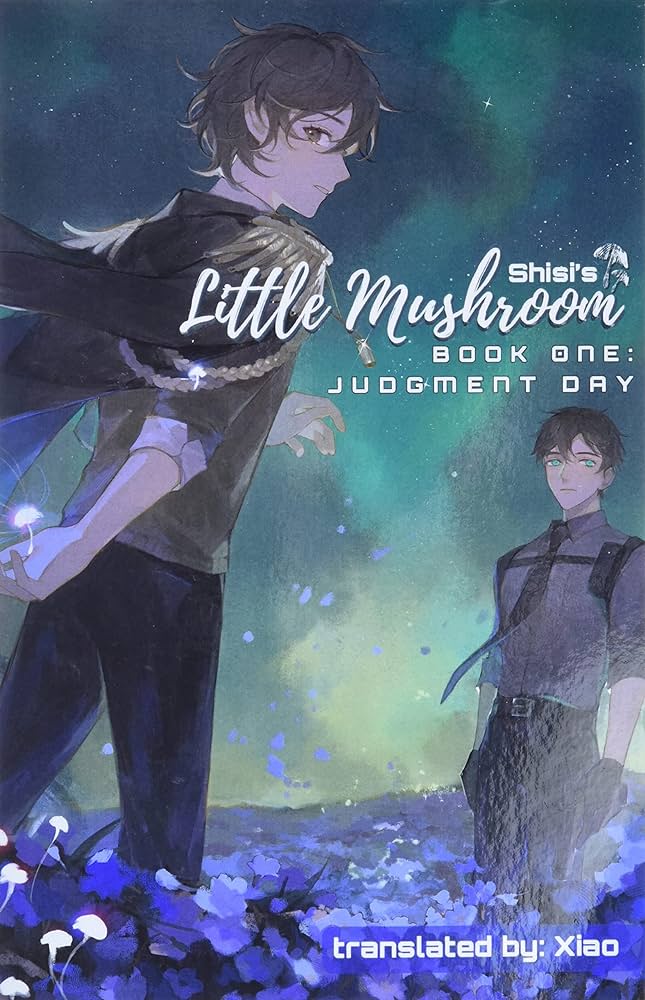
Little Mushroom by Shisi

Little Mushroom
by Shisi
translated by Xiao
2022

This is adorable and hilarious and horrifying. This is set in a post-apocalyptic world (with all the scientific explanation of Star Trek, ie, absolutely ludicrous but boy does the author and a series of scientist characters try) where the final bastions of humanity are in a handful of highly guarded cities under military rule, while plants and animals outside are all aggressively mutating and mutagenic. Get stung by an insect and within a couple of hours you’ll become a giant insect monster going on a killing rampage. The nature aspect reminds me of Scavengers Reign, and the writing is clearly intended to evoke specific visual images that sometimes comes across oddly in a written medium, but this would make a stunning animation.

The society is an extreme form of fascism that’s written as a necessary evil with the protestors dying horrible deaths for not understanding the necessity of the military department with little to no oversight that executes anyone suspected of being tainted with a mutation. The slogan of “Humankind’s interests take precedence over all else” very much includes the rights of any individual. There’s the military, the scientists, the breeding program, and everyone else. It’s a grim society, on the cusp of destruction: an extreme dystopia.

However, the book’s perspective is not from the point of view of a human. While humans are struggling for survival in an increasingly hostile world due to the mutating animals and plants, one such mutation is a mushroom who has gained sentience, mobility, and the ability to shape change into the form of a human. That mushroom, named An Zhe, ventures forth into the human city to reacquire part of itself that had been collected by a human research team. Human massacres just aren’t as traumatic to a mushroom as they are to a human and An Zhe’s calm curiosity permeates the book. What does he know about humans and morals and society? He’s just a little mushroom! Adorable!

Lu Feng, the human in charge of executing any human mutations, takes one look at An Zhe and essentially goes: huh. An Zhe is definitely odd but not in the way of a mutated human. Deeply suspicious, but to all appearances just an oddly sweet and naive human.

And thus the plot develops: the human race losing the century-long war against the increasing number of devastating disasters while desperately trying to figure out what’s causing the mutations, An Zhe trying to figure out how to fit into human society while searching for his lost “spore”, and Lu Feng developing unwanted feelings for the one person who isn’t scared of him.

It is utterly ridiculous and adorable — despite the gore, body horror, and overarching destruction — and somehow ends happily.

While this is printed in two volumes, it was originally written as a webnovel with three books and then a series of epilogues and side stories. I’d originally just bought the first volume which is books one and two (despite the cover which says “book one” on it). It does come to a good conclusion and is a natural break in the story… except that there are some really distracting loose ends (a mannequin that’s a perfect replica of Lu Feng was created, confiscated, and then never shows up again? I think not!) so I immediately ordered the second volume and then had to wait a week for it to show up.

There’s definitely some cultural commentary and common Chinese tropes that I don’t have the context for, but I still really enjoyed these books. I can’t give a blanket recommendation since the society is seriously grim dark with the aforementioned body horror and gory deaths, so readers will need to judge their own preferences, but it really is amazing how chill and even hilarious the narration can be regarding the horrors when the POV character is a self-aware mushroom.

Web comics

I have been bingeing so many web comics! There are so many, and cover such a range! And I know I’ve read web comics before and even recommended some of them on this blog, but previously I was discovering them on their individual websites and now I have discovered that there are phone apps that give you access to some untold numbers of web comics all through a single searchable interface.

Admittedly, the vast majority are pretty darn schlocky, and my first impression was that they were like harlequin romances for fantasy fans. (“His Majesty’s Proposal”, “The Remarried Empress”, and “Justice for the Villainess” are all real titles of webcomics I’ve tried.) But on the one hand, I do enjoy some schlocky fantasy romances, and on the other hand, there are other genres represented, and some really good stories, as long as you’re willing to go searching.

Many of the stories are on-going with weekly updates which remind me of why I stopped following comics in individual issues and waited for trade paperbacks instead. I find the individual updates frustratingly short. But having just discovered these collections, there are a lot of issues to catch up on before I’m current, and there are some great stories that have been completed.

Manta is one of the apps I downloaded on my phone, although it’s also available as a website. I now have a monthly subscription that gives me full access to any story in their collection. Some of the completed stories that I recommend are:

  • Shall We Pole Dance? is a 12-issue nonfiction story about a woman’s experience improving physically and mentally through joining a pole dancing class, that’s just sweet and delightful.
  • The Night Market is a 12-issue fantasy story about a magical market that is an intersection of worlds, where you can buy anything at all, but once you enter, you must buy something, and everything has a cost.
  • Unbreakable Master is a 141-issue fantasy gay romance about a guy who breaks everything he touches discovering that there is a hidden world of magical beings fighting a war for control of the world, and what role his powers might have in this struggle.
  • Traces of the Sun is a 96-issue fantasy gay romance about a guy who has the magical power to fix things, a job fixing destroyed buildings, and a secret: that when his childhood friends were killed in an attack, he tried to fix them, but only raised them as zombies that he can neither bring fully to life nor settle into peace. (This is based on a book and I want to read the book so bad, but it’s in Korean and there’s no translation available.)

Webtoons is the other app I now have installed on my phone, which charges a certain number of “coins” per recent issue, with coins being sold for real money, however, as long as you’re willing to wait a few weeks, the backlog of older issues are free. None of the stories I’ve read on this app have been completed, but there are several that I’ve enjoyed the backlog and updates for:

  • Eleceed is currently at 262 free issues of a fantasy adventure story about a kid who has a superpower discovering that there’s a whole society of “awakened ones” with superpowers and working up the ranks of power via an endless series of dramatic duels, which is a tedious premise, but the growing cast of characters are so darn delightful! The sweet kid, Jiwoo Seo, discovers an injured cat, who is actually a person, Kayden, who had semi-accidentally transformed himself into a cat, but proceeds to mentor the kid. This story made me realize that for a society that’s essentially lawful evil, the chaotic neutral of Kayden is a net benefit.
  • Cleric of Decay is currently at 30 free issues of a fantasy adventure story where our protagonist has been sucked into a video game he was playing, but only after he’d both selected a particularly difficult/weak character class AND installed cheat codes to make it viable. So now he’s wandering around as the last living cleric of an evil goddess who was killed and dismembered years ago trying to collect objects of power at the demand of a mummified hand of a goddess while staying unnoticed by the various paladins and clerics of more accepted deities.
  • Paranoid Mage is currently at 11 free issues of a fantasy adventure story about a young man who discovers he has magic powers shortly before being discovered by a secret society of magic users who are strictly hierarchical and do not think he is allowed to opt out of joining their society on a low rung. He escapes, and is now on the run/in hiding, while trying to learn to use his powers, and also stumbling across parts of magical society.

These stories are a delight and an addiction.

The Wild Robot by Peter Brown

The Wild Robot
2016
by Peter Brown

This was clearly written for young readers with simple language, chapters that are only a page or two long, and fun illustrations on most pages. It’s also 300 pages long, covers a lot of ground in those many short chapters, and is lovely to read as an adult, with a heart-felt plot arch. The titular wild robot, Roz, is a general assistant robot made for by and for humans with a learning AI component, who is lost in a shipwreck and wakes up for the first time on an island full of wild animals, and no humans at all. So Roz must learn directly from nature and the wild animals, which whom she learns to speak and live and become wild.

It’s light and fun with the animals all talking in their animal language and having an hour of truce every day between predator and prey to gather and discuss the island news, but it does acknowledge (albeit lightly) that sometimes the predators do kill and eat the prey animals, because that’s the nature of nature. But it’s a lovely feel-good story, with adventures, found family and beautiful wilderness.

The Wild Robot Escapes
2018
by Peter Brown

Although they were published two years apart, the sequel feels like the second half of a duology. This is another 300-pages of many short chapters riddled with illustrations and a simple plot arch that’s also emotionally deep and resonant. It continues directly from the end of the first book, and creates some lovely parallels.

There is a third book, The Wild Robot Protects, that I’ll probably read eventually as well, but I’m guessing it’s more a stand alone story, while these two are definitely paired.

I highly recommend these for any kid who’s just getting into longer full-text books, or for any ESL readers who want something that’s interesting with plot and characters while still needing simply language, or anyone like me who just wants a somewhat relaxing read about sweet characters figuring out how to succeed.

Also, as a little extra, DreamWorks is making this into an animated movie. The trailer looks adorable, and I’m deeply curious as to what they do with the plot arc.

The Seven Moons of Maali Almeida

By Shehan Karunatilaka

Work is sending me to Sri Lanka tomorrow, so I scrambled to check out several travel guides from the library. They weren’t really holding my attention, though, so I had the thought to track down a fictional novel by a Sri Lankan author and set there. Unsurprisingly, the vast majority focus on the long and brutal civil war, and that wasn’t what I was looking for in this particular moment.

The Seven Moons of Maali Almeida has a fascinating premise, and was described as “bawdy, wisecracking” and “comic, macabre, angry and thumpingly alive,” which seemed more like it. However, it was very much also about the civil war, which upon consideration makes a lot of sense: the 26-year war only ended in 2009, recent enough that it would probably be absurd for any novel to not feature it someway or another. (I also think it worked: I have a much better general sense of the recent history and culture, though I had to frequently remind myself that I was reading a critique of the most negative side.)

The novel opens with Maali Almeida, a photojournalist, arriving in the afterlife, which spotty memories of his life and none of his death. The very bureaucratic helper explains to him that he has seven moons before his chance to move to the next stage, whatever that will be, closes. As he travels around Colombo, revisiting old homes, family, and friends, dodging various other ghosts and demons, pieces of his life come back to him, and he scrambles to make meaning of it before he must go on.

Maali not a very likeable man, though neither is anyone else, and the situation in Sri Lanka is impossible. The tone of the book in general reminded me of Catch-22, in that it was actually quite funny when showing truly horrifying circumstances. Upon reading the first chapter, Rebecca said it reminded her a bit of Slumdog Millionaire, and perhaps there is genre of books that reveal the worst of humanity through the darkest of humor. For all that, though, it ended in a surprisingly optimistic view of humanity and life in general, which caught me off guard but that I really appreciated. (As an aside, the beginning of the book caught me off guard with its second-person present tense, which is an usual style that can be difficult to get into, but I adjusted more quickly than I expected and came to really appreciate it.)