Gentleman Jole and the Red Queen

61ku6qro0cl-_sy344_bo1204203200_Gentleman Jole and the Red Queen
by Lois McMaster Bujold
2016

Bujold is one of the few authors who I absolutely trust. I enjoy every single thing she has ever written. Some more than others, of course, but everything is good. One of the amazing things about her is that she clearly refuses to let herself or her writing stagnate. She’s constantly exploring new styles and genres.

This is particularly obvious in her Vorkosigan series, which is currently at sixteen books (of which this is the most recent) plus a number of short stories and novellas. They’re all in the same science fiction universe and to a large extent about the same characters and yet they are often written as wildly different genres: light science fiction, hard core science fiction, murder mystery, psychological exploration, comedy of manners…. Bujold has tried it all and succeeded at it all.

Most of the books follow Miles Naismith Vorkosigan in his various adventures around the universe, getting himself into and then out of a variety of troubles. The first two books that I read, however, are about his mother, Cordelia Naismith, before and immediately after having Miles. This book returns to Cordelia, giving an interesting perspective on what has gone on before that Miles just never noticed, but focusing on where she is going now.

In some ways, it’s reminiscent of Memory, the eleventh book in the series, in which Miles, age 30, must confront a drastic change in his life and decide how to deal with it (while investigating shenanigans in the capital city!). Except that this time, it’s Cordelia at 76 who is looking at changing her life while in the center of small town life. Admiral Jole, who has previously been an extremely minor character, is also brought into focus as he is confronted with a crossroads of his own as he is swept up in the changes she is making.

One of the really amazing things about this book is that it reads more as character-driven non-genre literature than science fiction. While it’s set in this science fiction universe, it’s also set in what is essentially a backwater boomtown. There are a large number of moderately eccentric but utterly relatable characters. Our two main characters are both mature adults with successful careers. This isn’t high adventure, it’s living your life and making choices and dealing with other people.

It’s beautiful and I loved it.

How to Build a Girl

moranWay back in late 2012, in a wrap-up of my favorite books of the year, I mentioned how much a I liked a book of essays by Caitlin Moran. She remains fabulous to follow on Twitter and I read her essays any time I get the chance (her weekly column is behind a paywall, and I can’t quite justify subscribing to a British newspaper just for one column, but things do show up from time to time). But for some reason I had been avoiding her debut novel. I’m not sure why exactly, maybe because I knew it was a coming-of-age story and I was worried that it would be horribly embarrassing and awkward to read about a teenage girl struggling through puberty? But I finally got around to reading it and I loooved it.

How To Build a Girl is fiction, but is obviously largely autobiographical. Moran, like the main character Johanna, was part of a large family growing up poor in 1990s Britain. And she also stumbled into a career as a music writer as a teenager, which is the story the book largely tells. Johanna is a poor, geeky, too-smart-for-her-own-good unpopular kid who decides to reinvent herself and ends up on the edges of the British music scene working as a magazine writer. As you can imagine, sometimes this goes swimmingly and sometimes it doesn’t, but it’s fascinating to watch Johanna work out how to present herself, how to talk to people, how to construct a persona for herself–essentially how to be an adult. Which, you know, being an adult is hard and I think most of us are still trying to figure out how to do it. I haven’t seen many books that talk about this process as explicitly as this one does. But it manages to not be at all preachy or new-agey, but entirely practical.

I’m not sure how many of the details come directly from Moran’s life, but all of it feels very true–the family interactions, the fashion and makeup conversations, the music reviews. She and I are roughly the same age and I recognized a lot of the musicians and cultural references of the era, which was fun for me but was definitely an extra and not required to enjoy the book. And I should note that while this may sound like a YA novel, it’s not appropriate in any way. Moran does not shy away from talking about sex and drugs and bodies and crime and all the things that a teenager might encounter, and it’s pretty gritty from the very first page. And yet it didn’t feel exploitative or like Moran is grabbing for attention–it just felt real.

Kinsey’s Three Word Review: Snarky but touching

You might also like: Anything by Caitlin Moran is awesome. And if you haven’t read Tina Fey or Amy Poehler’s books, their stories of teenage adventure match up with Johanna’s very well. Someday, Someday, Maybe by Lauren Graham (AKA Lorelai Gilmore) is also a clearly-largely-autobiographical-novel about a young woman becoming who she wants to be, and is lovely.

Also, let me take this opportunity to shout out a couple of things that I read on my fellow blog author’s recommendations and thoroughly enjoyed. First, back in July Rebecca raved about Uprooted by Naomi Novik and she was totally right. It was a completely fabulous modern fairy tale. And Anna recently talked about The Rest of Us Just Live Here by Patrick Ness, which I liked as well. Ness has another recent release called A Monster Calls, which was also great. Different from The Rest of Us–while that one reminded me of an episode of Buffy the Vampire SlayerA Monster Calls was more like Neil Gaiman’s The Graveyard Game–but also great.

The Man in the High Castle Book vs. Movie Showdown

It often feels like people set up book readers and movie watchers as adversaries, especially when it comes to adaptations of written works to movies (or TV). “Are you mad that they’re turning this into a movie?”  “How bad will the movie be?” “If you didn’t read the book, you’re not really a fan! You can possibly appreciate the story!” And as a self-proclaimed reader who loves books, people seem to think that my loyalty will lie with books and I will be offended by any adaptation. But I actually love watching movies or TV versions of books and short stories! I find it fascinating to see how something from one medium is changed to another. What characters have to be cut or combined to make something work on screen? How does a plot need to be condensed or modified to work visually? Rather than take the changes personally, I find the adaptation process to be like watching someone work out a logic problem and I like seeing the solutions people come up with. For example, when I heard they were making a movie of the Cheryl Strayed book Wild, I just couldn’t imagine how they were going to turn that very introspective story into a movie. But the movie did a fabulous job of weaving in flashbacks while using silence to communicate Strayed’s loneliness and solitude on her hike. After I saw the movie Brokeback Mountain I went and read the source material–in that case, the movie was based on a short story, so the screenwriter had to create new material to fill out the story. If I had read the story first, I would not have believed it could be successfully expanded to a two-hour movie, but that movie is beautiful and, I think, very true to the original story. Adaptations don’t always work, of course–Little Women  is one of my very favorite books of all time, and pretty much every movie version has serious problems with casting (Winona Ryder as Jo, really?) and issues with the (admittedly) serial plot. But I also once saw a stage production of Little Women that was a failure in almost every way, EXCEPT they totally fixed Professor Bhaer by making him the same age as Jo and writing him as an absent-minded young man. He instantly went from creepy to cute. My point here is, I like comparing different media versions of the same material and seeing what works and what doesn’t, but I don’t always feel like I have to rule that one is better than another.

Having said all that, let’s talk about The Man in the High Castle. In late 2015 Amazon released a ten-episode season of an original drama based on the Philip K. Dick novel. I had never read the book, so I went into the show knowing only that it was an alternate history about a world where the Axis won WWII, and the U.S. was now divided into a West Coast occupied by the Japanese, an East Coast occupied by the Nazis, and an independent, lawless Rocky Mountain region. It’s now the early 1960s and the story follows, among other characters, members of a resistance group that are working to smuggle newsreels that seem to show the Axis losing the war to a mystery “man in the high castle” who provides them anti-Axis intel in return. The show definitely has some issues. The most primary characters–young people caught up in both the resistance and a love triangle–are the dullest on the show. Things move slowly at times, and it is dark. Really dark. Like, there were several times when I thought, “Well, surely they won’t go that far.” But, they’re Nazis! Of course they will go that far! But I really enjoyed the show overall. The world building is excellent–the scenes in San Francisco show all sorts of subtle ways that Japanese culture has been woven into the American city–and Rufus Sewell is chilling as a New York-based Nazi leader. And the newsreels that seem to show the U.S. winning the war raise all sorts of interesting questions that introduce a sci-fi element to the story (Are these fake newsreels? Are they showing our world? Is some sort of time travel happening?). By episode 10, the plot was moving along at a good pace and it ended on a cliffhanger than makes me very eager to check out (the yet-to-be-announced) Season 2.

As I was watching I heard, either online or on podcasts, that the plot of the show branched off from the book very quickly, and that in the book the newsreels were actually books themselves. This kind of change–changing a book to a film so it plays better in a visual medium–is exactly the sort of thing that fascinates me, so I decided to read The Man in the High Castle and see how the book compares. WELL. Look, I know that Philip K. Dick is a highly-regarded giant of science fiction, and I’m sure there are people out there railing about how the TV show completely ruined the book. But as far as I am concerned? DO NOT READ THIS BOOK.

First of all, the plots of the two versions are wildly different, and the characters just barely even line up. The Rufus Sewell character (probably the most compelling on the show) isn’t in the book at all, and most of the other characters bear little resemblance to their TV versions. The plot does involve a mysterious book and a resistance movement, but that’s about it–it feels as if the TV writers took the basic premise of an occupied U.S. and the character names, and then went off and did their own thing. And for the most part, that new thing is more complex, with more moving parts and more people, than the book. The TV show did drop a few things that could have been interesting–in the book the Nazis are in the process of colonizing Mars–but that were presumably too complicated for TV. But overall I found the multiple plot threads of the TV show more twisty and fun. However, none of that is why I am telling you not to read this book. My issue is that the book was horribly, terribly, sexist and racist. Every female character is both stupid and mean, and Dick makes a disturbing number of “dumb, like all women” comments. And there are plenty of cases where the book will use a racial slur, and it’s obviously because that is what a particular Nazi character would say or how a white man living under Japanese occupation would feel. But there were also lots of times where it seemed pretty clear that Dick was using a slur because he himself did not realize it was a slur. It all made me feel icky and I almost gave up on the book entirely because it was so gross.

So, although I generally don’t feel the need to decide whether the book or the movie (or TV show) wins, or to tell people that one version is definitive, in this case I am clear: the TV show is better. The move down the scale of racism and sexism would be all that I needed to make that call, but I actually also thought that the TV show’s expansion of the plot and characters and the visual world building were significantly more interesting than in the book. So, as long as you have a high tolerance for darkness, I would say watch the show, and don’t feel a single bit of guilt about ignoring the book altogether.


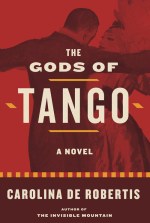
The Gods of Tango

carolina-de-robertis-book-the-gods-of-tangoThe Gods of Tango
By Carolina de Robertis
2015

This is a switch from my usual reading in that it’s general literature rather than genre, but I ran across some recommendation for it that I can no longer recall and decided to give it a shot. I’m glad I did because it’s really very good.

The writing is very lush. Very poetic. And generally a style that I enjoy a lot and Anna dislikes to the point of finding it unreadable. But it’s an appropriate style, too, for a story set in Beunos Aries in the early 1900s, as the immigrant communities ballooned and the tango developed as a music style, a dance, and a culture in the cross cultural whore houses that catered to that population.

The story line follows Leda, who at seventeen marries by proxy her cousin Dante and sets out on her own from Italy to join him in Argentina. The marriage and trip is entirely by her own decision as she longs to escape the small, traditional Italian town where everything is proper and no one acknowledges the horrors that happen behind closed doors. Upon reaching the massive immigrant city of Buenos Ares, Leda discovers that her husband died at a union strike just days before she arrived. She is now a widow in a city overrun by male immigrants from around the world, where women are divided into two groups: pure women supported by husbands or fathers and whores.

In her new city, refusing to return to her family in Italy, Leda considered her options along with her growing passion for tango music (and the thought of playing on the violin her father gave to her husband) and makes the dangerous decision to avoid both paths available to women, and to dress herself as a man instead.

I particularly liked how, while Leda is the main character and the story line follows her experiences, periodically there’s sections that show the events from another character’s perspective – and that perspective includes whole histories of who that person is and what they have experienced to bring them to this point. Even as the characters may have shallow views of one another, we the reader see how much the actions and interactions of the characters are driven by their pasts.

It is all very literary. Which is not something I generally say as a compliment. Normally I find “literature” just tries too hard to be “real” and misses both realism and story line, but this was actually really well done.

One warning though, is that the book is extremely graphic in its discussion and presentation of sexuality. The Buenos Aires culture is full of machismo, the demographics have many more male immigrants than female immigrants, and prostitution is the only job priced without the assumption that a woman is merely supplementing her husband or father’s income. Sex is discussed and had in a variety of permutations on a regular basis and described with physical, mental, and emotional detail. In addition to this, one of the driving themes throughout the book is Leda’s struggle to come to terms with what happened to her girl cousin but never acknowledged when she was twelve and her cousin thirteen.

But that said, it is a really good book that I almost skipped reading, but instead stayed up way too late finishing three days after I started.

The Watchmaker of Filigree Street

watchmakerThe Watchmaker of Filigree Street
by Natasha Pulley
2015

I got the automated email from my library letting me know that a book on my hold list had finally come in, but I only vaguely recalled putting a request in and no real memory of why I had done so. But, wow, am I glad I did!

The book is set in 1884 London, although with a significant section of backstory set in 1870s Japan. Our protagonist is Thaniel, a telegraph clerk at the Home Office in London at a time when Irish nationalists are trying to instigate a revolution and are throwing bombs at government buildings. It’s also about ten years after Japan underwent a revolution, and they still have their own set of nationalists vs modernists, and have a significant immigrant population in England. One of those immigrants is Mori, the titular watchmaker of Filigree Street. Another main character is Grace, a female physics student at Oxford college. Then there are dozens of other characters who are all interesting and quirky and suspicious in their own ways.

It reminded me a bit of Mr. Penumbra’s 24-Hour Bookstore but better. It’s unclear for a significant portion of the book whether or not there’s a magical/supernatural element to the world. Is this book fantasy, science fiction, or straight up literary fiction? The answer to that would be a spoiler, so I’m not going to answer.

The plot, such as it is, is to discover the mystery of a particular watch that came into Thaniel’s possession and saved his life from a bombing. The vagueness of the plot does not stop it from being amazingly suspenseful. The tension really comes from Thaniel trying to figure out just what is going on, and who he should be trying to help versus who he should be trying to hinder. I stayed up way too late finishing this book, the day after I picked it up from the library.

The climax wobbled a bit with Pulley trying to add more traditional plotting and tension in unnecessary ways, but I still really enjoyed the book and highly recommend it.

World War Z

RHWorldWarZ500World War Z
By Max Brooks
2007

So I “read” this as an audio book that was marked as unabridged, but does appear to have lacked a few sections from the original book written in 2006. I now need to go back and read that whole book, because this was AMAZING and there are still parts I haven’t read!

Just, wow! So, so good!

The audio book was particularly good for an audio book because it was read by a full cast of voice actors, not just a single reader, and it really highlighted the way that this book was presented as an oral history.

For the rare person who doesn’t recognize it, it’s a fictional book inspired by the nonfiction book The Good War: An Oral History of World War II. In World War Z, though, the war in question is the zombie war, but for all the fantasy element, it’s addressed in a serious manner. I love the world building that went into figuring out how a zombie war could start, how different people would react, and how it would eventually end. I also loved the characters, who were all faced with this impossible conflict and did the best that they could.

I may very well be the last person to have gotten around to reading this book, so it hardly needs me to recommend it, but if you happen to have been living under a rock for the last decade, you really should read this!

The only thing that could have made it better is if it were longer, and apparently that wish got granted since there’s more for me to read once I get a text copy to read. (I really want to know more about the blind Japanese mountain man! But I’ll also take anything else.)

As a side note: ignore the movie. They took a really unique book essentially consisting of dozens of epic interlinking short stories and tried to shoehorn it into a traditional movie plot.

Kindred

By Octavia Butler

Book Cover: KindredBefore reading Kindred, Connie Willis’ Doomsday Book was the most painful time-traveling book I’d read, but boy does Kindred blow it out of the water. (I’d also previously only read one book by Octavia Butler, Fledgling, considered by herself and everyone else to be her ‘lightest’ book by a long shot.) The basic premise of Kindred is that Dana, a young African-American woman from contemporary times (1970s, when the book is written), is pulled back to a slave plantation several different times in the early 1800s in order to save the life of the plantation owner’s son.

I think we can all acknowledge that the current news has made it increasingly clear that there is a white world and a black world in our country, and even sympathetic whites can’t understand what it is like to live in the black world. Reading Kindred shares some of the sense of what it must be like, though: for every interaction with a white person, even one trying to be kind, to have the possibility of death hanging over it. I was so scared for Dana all the time, and the tenseness of reading the book was exhausting, and about halfway through, I realized that this tenseness and exhaustion is not something confined to the antebellum south at all. So, while it was painful to read, it is also incredibly important, and I was so grateful to Butler because I can’t think of another author that could have communicated this feeling to readers so well.

The kind of funny thing about it, though, is that there are really three time periods: the 1810s, the 1970s, and 2015 for me, as a reader, so there’s that layer on top. Sad to say there doesn’t seem to be a huge difference in race dynamics, but the gender dynamics of the 1970s were occasionally different enough to give me pause, though that was more towards the beginning of the book when she and her husband were confused about what was going on.

It felt like it ended a bit abruptly, but I think that is more a testament to Butler’s writing than anything – I was so deeply involved in the story that coming to the end would have felt jarring no matter what the ending was. I will give this very minor teaser spoiler for people who might be hesitant about the book: it doesn’t end nearly as badly for Dana as I’d expected it to, given that the very first sentence in the book is “I lost an arm on my last trip home.”

—Anna

Thug Notes

Like Anna, I’m a bit embarrassed to make this next recommendation during Black History Month because while this is awesome and by black creators and celebrating black culture, it shouldn’t be restricted to just the one month. This isn’t just awesome within the context of black culture, it’s just plain awesome.

Thug Notes is a YouTube series of videos and it is AWESOME! And I really wish it had been available when I was in high school. These videos take classic books and, in about 5 minutes each, summarizes the plot and talks about the main literary analysis.

  • Great Expectations, which I slogged through in high school and just got entirely bogged down in the details, laid out nice and neat in 5 minutes.
  • Lord of the Flies, which I never managed to get past the first page of, broken down for me and presented.
  • Pride & Prejudice, which I have read way too many times and absolutely love, getting shown in a new light that I hadn’t noticed before.

What makes them particularly funny is that they’re all narrated by Sparky Sweets, PhD, coming at you from the Houston Rap subculture and he is keeping it real about what these homeboys of literature are up to, from a set straight out of Master Piece theater with all of its proper British overtones.

The implied culture clash is hilarious mostly because no clash is ever actually realized. As Jared Bauer, one of the creators, says:

The idea behind Thug Notes was always that ‘the joke is that there is no joke…’ because the analysis is just so accurate and so smart.

There are 64 of them (so far) and they are just brilliant. Go check them out!

Station Eleven

It’s still early in 2015, but I feel pretty confident saying that Station Eleven by Emily St. John Mandel will be on my list of the year’s best. I just loved this book. And I think that almost everyone could love this book, because it is so cleverly structured and covers so many kinds of stories without being too dense or 1000 pages long.

The short plot summary is that at some point much like today a pandemic swept the planet and killed 99.9% of the population. Twenty years later, a traveling symphony/theater company tours around the Great Lakes, playing music and performing Shakespeare for small settlements of survivors. This makes it sound very grim and futuristic, but it isn’t. The story jumps around in time and from character to character, so there are bits of stories happening long before the pandemic hits, and then during it, and at different points in the years afterwards. Which means that part of the book is “what you do when the world is falling apart” and part is “how we live in the new normal,” but another big piece of the story is about actors and artists trying to balance fame and creation and marriage in current-day Hollywood. The brilliant Swistle called the shifts in time and characters a relief, and that’s the perfect word–just when I would start to think I couldn’t handle what was happening in a particular story, the narrative would move forward or back and let me take a deep breath and keep reading.

In general, I appreciated that the story wasn’t unbearably dark. While the pandemic certainly doesn’t sound like any fun, Mandel focuses mainly on the very beginning as people are realizing what is happening, and then on life years later as people have adapted to to world post-pandemic. Maybe some people want the realism of The Road, but I am a delicate flower who can’t handle reading that sort of thing. And I was much more interested in hearing about how even with all the losses, there is still beauty in the world (painted on the side of the traveling symphony’s caravans is the motto “Because survival is insufficient”). I also loved the question that came up over and over of whether it was better/easier to remember what once was, or to have been raised only knowing what is possible now.

I always joke that my plan for the zombie apocalypse is to die in the first wave and not have to try to survive, and I stand by that. But this is one of the first books I’ve read that managed to make me incredibly grateful for air travel and refrigerator lights and antibiotics, while also making me feel like the World After might have some hope after all.

Kinsey’s Three Word Review: Graceful, sad, and hopeful.

You might also like:
This book has the DNA of about 12 different books–it reminds me of everything. If you like the world-falling-apart bits, I’d recommend reading the Susan Beth Pfeffer Life As We Knew It trilogy, the The Age of Miracles by Karen Thompson Walker, or How I Live Now by Meg Rosoff (one of my favorite books of all time, although it’s so sad I’ve never been able to reread it). For more of the how-society-rebuilds pieces, try The Passage by Justin Cronin (actually mentioned by Mandel in Station Eleven). But if you like the traveling band of actors/Shakespeare parts the most, you might try The Great Night by Chris Adrian or the Canadian TV show Slings and Arrows. And while Could Atlas is a hard book to recommend–long and dense and people tend to love it or hate it–it has a similar “a bit of everything” feeling to it.

Rebecca

By Daphne du Maurier

Book Cover: RebeccaI’d tried reading Rebecca years ago, but it starts off with a lengthy dream sequence that is just a description of a decaying estate, and that is a lot to get through right off the bat. I was inspired to try again by the “Rebecca” chapter in Mallory Ortberg’s Texts from Jane Eyre. (I received two copies of this for Christmas, which was good, because it meant that my cousin’s wife didn’t have to steal my copy. This is also the second classic it has inspired me to read.)

The thing is, Rebecca makes me feel old. Perhaps if I’d read it when I was 22, the age of the unnamed second wife and narrator, I’d have been full of righteous indignation about what an awkward situation she’s in and how much more difficult everyone around her is making it. But, instead, I find myself sympathizing with the disdainful and bullying housekeeper, who loved and respected Rebecca, the first wife, and now has to deal with this shrinking child who can’t seem to do anything but apologize for her existence.

As soon as her much older husband starts showing exasperation, though, I’m all in her corner, and she gets somewhat less cringing as the book goes on and she even starts to show some personal agency. Also, du Maurier has a real skill at building a suspenseful atmosphere, so I was still invested in the scenes when not totally invested in the characters.

It took me a few chapters to realize something, but once I did, I was able to enjoy the book even more: I’d had a vague sense that this was a ghost story, either literal or metaphorical, but it is in fact a mystery, and unnamed second wife is not unlike Nancy Drew (in that she behaves like an exceptionally naïve teenager). Rebecca died under mysterious circumstances, and there are hints that she was not exactly as people thought she was. Reading the unfolding of that is actually quite satisfying, and I was even surprised by the series of big reveals at the end, which is always nice.

I wish I’d thought to live blog this one because just every scene is so full of craziness: the costume ball that goes predictably but still agonizingly wrong! The demonic housekeeper trying to hypnotize our narrator into suicide! The shipwreck unearthing secrets of the deep! (Another horrifying reveal that is too spoilery for me to discuss here, but that all the characters took in much better stride than I did!) It is not unlike The Shining, really, with an unbelievably passive woman feeling oppressed by a building and her emotionally distant husband, and would have been fun to go through chapter by chapter, but I was also able to read the book in under a week, which makes a bit of a rush job out of live blogging.

—Anna