The Passage

By Justin Cronin

The_PassageI’ve returned to apocalypses, this time with vampires! The Passage is basically the opposite of On the Beach; still very good but also very stressful. This apocalypse is caused by a virus that turns people into what the survivors call vampires, but also have some elements of zombies to them. The infected have an insatiable hunger and are very, very fast and strong, reminding me a great deal of the movie “28 Days Later,” which I also loved.

Author Justin Cronin gives this premise an amazingly wide scope, addressing the inner lives of the surviving humans, the viral-infected “vampires,” and the ineffable plan of the Old Testament God over almost a century of time. He is able to do all this because this book is over 700 pages, which I didn’t realize until I saw the long line of dots on my kindle. I was initially extremely daunted, but it starts with three very different storylines, told from multiple points of view, so it almost felt like reading three different books, thus breaking it up a bit. I was almost immediately hooked, but while I found it really hard to put down when reading, I also found myself resisting picking it up again, too, because it was just so emotionally devastating.

The thing is, both good and bad things happen to the characters, but the good things tend to be basic survival, like they were sure they were going to die and then they didn’t, while the bad things are horrible, heart-wrenching things done by garbage people in a garbage world. It wouldn’t be so rough if the author wasn’t so good at writing realistic characters. The first chapter was the most difficult for me, though: such a grim look at humanity that I felt that the vampires would be a relief. (They weren’t.)

It was both a relief and a bit of a shock to the system when I finally finished it, but it turns out The Passage is just the first in a trilogy. I wasn’t sure my heart could stand it, so I took a break for a week to read my previously reviewed Mycroft Holmes, and then jumped right back in with the second book, The Twelve.

The_TwelveThings…don’t go well in The Twelve. Even though there is a third book due next spring, I wasn’t convinced that anyone was going to survive this one. While some do, humanity itself has gotten even worse, so this book has less of the small hopeful details of the previous book, while it ups the game on the gritty ugliness.

Spoiler/trigger warning: Continue reading

The Scorpio Races

We’ve talked before about how certain books fit certain times of the year. I wrote a whole post a few years back about good Christmas reads, and Anna has mentioned that A Night in the Lonesome October is an excellent creepy story for Halloween. This year, as the darkness and cold began to descend, I decided to branch out from my typical winter reads and try a couple of new things that I’d seen recommended on social media.

A few people mentioned The Dark is Rising as an excellent Christmas re-read, and it was. This is the second in a series of five middle-reader books by Susan Cooper about children encountering mystical forces in England. The first one in the series is actually my favorite, but The Dark is Rising stands alone so you don’t need to read the others. It’s great for this time of the year because it takes place during Christmas and Advent and feels very winter-y. And although these books are not that old–they originally came out in the 1960s–they feel timeless, and read like classic children’s fantasy without any sort of modern angst or issues.

What I really want to talk about now, though, is The Scorpio Races by Maggie Stiefvater, a book I’ve been avoiding for years but which has now officially joined my To Be Reread Every Year list. Stiefvater has a series of YA books that starts with The Raven Boys that I’ve reviewed here before and enjoyed just fine but didn’t looove. I’d seen discussions online about how The Scorpio Races was her best work–it was a Printz (like the YA Newberrys) honor book in 2012–but the descriptions of the book always sounded so grim, often quoting the very first line of the book: “It is the first day of November and so, today, someone will die.”  Does that sounds cheery? No, it does not. But I finally decided to give it a shot and it’s not a cheery book, but it is suspenseful and exciting and touching and I loooved it.

When I describe the plot this is going to sound like a crazy fantasy novel: every November, on a small island off the coast of (I think?) Ireland, magical, dangerous, predatory horses that live under the water come up on land. It’s island tradition to try to catch one of these horses and keep it under control long enough to win an annual race, which has now become a tourist attraction that is one of the few sources of income on the tiny island. I know, weird. However, once you’ve accepted this premise, the rest of the book is remarkably realistic. There are young people trying to figure out how to make a life and a living on a remote island, sibling dynamics, challenges of established gender roles, some solid villains, and a love story (which I am always a sucker for). The characters feel modern and relatable, but the remote island setting and lack of discussion of cell phones or other technology make the story feel out of time, like it could be taking place anytime from 1900 to today. And it’s always raining or foggy, and everyone’s always cold and wrapping up in sweaters, so it really is the perfect thing to read while under a blanket, drinking hot tea in the early winter darkness.

It took me a little time to get into this book, because the first few chapters felt so ominous. For the first 100 pages or so I had to talk myself into reading it each night because I was so so worried about what might happen next. After a little bit I got so swept up into the story that I couldn’t put the book down, but I definitely felt anxious at first. I don’t want to give away any spoilers, so let me just say that if you start the book and you’re thinking, like I was, “Everyone and everything I love in this book is going to come to a terrible end,” don’t worry. Things get intense, but you’ll come out of it with hope, not despair.

Kinsey’s Three Word Review: Nerve-wracking autumnal adventure.
You might also like: The New Policeman, by Kate Thompson, another YA book set in Ireland with a supernatural twist, and So You Want to Be a Wizard, a childhood favorite of mine that always leaves me with the same emotionally wrung out feeling as The Scorpio Races.


Newt’s Emerald

NewtsEmeraldNewt’s Emerald
by Garth Nix
2015

This was a fun book, but I went into it with high expectations and it never matched them. I’ve read a lot of really good, fun regency romance adventures, with and without magic, and this one feels like what it is: a fan of that genre wrote his own take for fun, but without really going all out.

Regency romance is fun genre over all, with complex manners and dresses and marriage missions, and Georgette Heyer is the clear founder and leader of the genre. Her characters are quirky and her plots of romance and manners are complex, and it all defines a time and culture of arbitrary rules that make so little external sense and yet have perfect internal structure. Garth Nix is clearly a fan, but his characters are a too flat and caricatured while the rules of society don’t have the same clarity and internal consistency.

For regency romance with magic, Patricia Wrede and Caroline Stevermer with their Sorcery & Cecilia series or Patricia Wrede alone with her Mairelon series have brilliantly added layers of magical realism to the rules of society and it all really works well. Despite how amazing the world building was in Nix’s Old Kingdom series (a series I definitely recommend), the rules of magic in Newt’s Emerald are mostly vague and hand-wavy while occasionally contradictory.

The book that Newt’s Emerald was trying to be would have been awesome. Unfortunately, it just never quite developed enough–not the characters, the plot, or the world. None of this means that the book is terrible. It just… wasn’t great.

Carry On

My past entries here have made it clear that I am a Rainbow Rowell person. Eleanor and Park is one of my favorite books ever, and I loved Attachments and Landline. Plus, Rainbow is adorable both on Twitter and in person. (I am not a stalker, I promise.) But I was nervous when she announced that her latest release would be a sort of spin off of Fangirl. Rebecca reviewed Fangirl here on the blog, and while I think I liked that book more than she did I agreed that the pacing was a little odd. And I was pretty indifferent to a major plot point of that book–the Harry Potter-esque book series that the main character wrote epic, popular fanfiction about. Fangirl didn’t actually contain any of this fictional story, but you heard a lot about it over the course of the book. While I liked Fangirl‘s treatment of fanfiction, I wasn’t particularly interested in the wizard-y story itself–it didn’t seem worth my time to think about these characters that felt extra, extra, fictional (books within books!). So when I heard that Carry On would be an entire book those Harry Potter-like wizards fighting evil at a magical boarding school, I was not excited. But then Nicole Cliffe at The Toast (Best Website Ever) started raving about it, and The Toast published a lovely interview with Rowell. And I always knew I was going to read it, so I bought it to take on vacation. And hear me now: it was so good and I was so wrong.

Honestly, Rowell herself seems to have worked a magic trick here. Carry On is clearly inspired by Harry Potter and uses Harry Potter as scaffolding in some ways, yet has an entirely different feeling. Despite the presence of magic, it’s a bit less of a fairy tale and is grittier and funnier–it definitely has a more modern feeling that I would have predicted, based on the descriptions in Fangirl. The book is clearly meant to the culmination of a long series of adventures (as if it were the seventh Harry Potter) and it refers to all sorts of past events, but I was never lost or confused by what was happening. The writing made it feel like you were jumping right into conversation with beloved characters. Rowell also introduces some new, clever ways of dealing with magic. For example, in her world spells are not made-up Latin-y words, but are cliches or nursery rhymes or lyrics–words whose power comes from people using and knowing them. Like, there’s a scene where a u can’t touch this spell doesn’t work on a dragon because the dragon doesn’t know the song. And Carry On does something that I don’t think Harry Potter even quite manged–it tells a really charming, compelling love story, which is really the heart of the book.

As I said, I read this on vacation and I almost wish I hadn’t because once I started all I wanted to do was keeping reading. On multiple occasions I chose to read this rather than pay attention to what was around me, even though what was around me was France. (I liked the book so much, I actually feel okay about this.) This would be the perfect book for a long plane flight or rainy weekend, when you just want to immerse yourself in a new world and ignore everything around you.

Also, I want to note that you don’t have to have read Fangirl to follow Carry On. This book is completely free standing and independent of Fangirl and (I think) is much better. Although I like Fangirl more now, knowing that it eventually led us to this.


Kinsey’s Three Word Review:
Suspenseful, magical romance

You might also like: I’m going to assume that everyone has read Harry Potter and that you’ve all been listening to me and reading Rainbow Rowell’s other books. With that in mind, I’m going to recommend John Green and David Levithan’s YA writing. They both have more famous books, but their collaboration on Will Grayson, Will Grayson is one of my favorites and has a similar feeling to this. Neverwhere by Neil Gaiman is another solid recommendation featuring a clever magic world, although it’s a bit darker.

A Net of Dawn and Bones

chancyA Net of Dawn and Bones
By C. R. Chancy
2015

This is a self-published book available on Amazon, written by one of my favorite fanfic authors, who described it as:

Urban fantasy for anyone who’s stared at the latest vampiric/werewolf/whatever supposed “love” interest, and prayed the main character would have the common sense to set them on fire.

It really was a joy, with a great deal of awesome world building, and wonderful characters and interesting plot. In addition to the general fantasy elements, it also has a lot of religious exploration, which is something I enjoy a great deal. Plus a significant amount of interesting historical information is inserted into the story, too, to the extend that there’s a bibliography at the end of the book with recommended non-fiction books.

One bit of lovely backstory is the premise that a lot of people wind up in Hell –- via original sin or being cursed or whatnot — who don’t really deserve it. Our main character is a “Hell raider”, who breaks into Hell and then back out again, carrying souls with her to be released to face a more fair judgment. The book starts with our main character in Hell, discovering a rather worrying link to Earth that will need to be fixed from the Earth side of things.

Meanwhile, on Earth, the backstory is more like that of the Anita Black series: that various supernatural creatures have revealed themselves to the public and are now granted citizenship and legal protections. And the police are struggling a bit to figure out how this all works out. This is an awesome premise, and I’m still somewhat bitter about how awful the Anita Black series got after a really wonderful start. Chancy is doing something similar, but doing it right.

And thus our Hell raider and our local police attempt to work together to stop a supernatural evil. Yay!

It’s fun and relaxing while also being fascinating and surprisingly informative, and addresses a lack in the vampire/werewolf fantasy genre, for heroines who aren’t going to fall for beautiful monsters.

My one caveat to a positive review is the presence of a few casual anti-Islamic descriptions which threw me off, both for the prejudice and for it’s offhandedness, given that most of her other statements tend to be more backed up with either research or world-building. The anti-Islam sentiment had neither, alas, and I honestly think her editor should have removed them for literary as well as ethical reasons.

That said, I have a lot of experience reading and enjoying problematic things and it only came up twice and I, at least, was able to easily put that aside and enjoy the rest of the book for what it does right.

The first chapter and a half are readable in a preview on Amazon if you’re interested.

Darths & Droids

Screen Shot 2015-10-11 at 7.16.08 PMDarths & Droids
by The Comic Irregulars (Andrew Coker, Andrew Shellshear, David Karlov, David McLeish, David Morgan-Mar, Steven Irrgang, Ian Boreham and Loki Patrick)
and, of course, Lucas Films
2007 – present (and ongoing)

So, I’m currently reading book 3 of this series, while the authors are still regularly updating book 6. And, with the soon-to-be released Star Wars episode 7, I’m sure hoping the authors continue to write a book 7.

Because this is a graphic novel parody re-telling of the Star Wars movies and it is hilarious!

I actually blasted my way through Books 1 and 2 and am now laughing my way through Episode 3, even as I also go back to Episodes 1 and 2 to laugh at that over Anna’s shoulder as she reads it.

The great thing about this is that it doesn’t actually deviate from the plot (as best as I can tell, although I admittedly don’t really remember the movies all that well) – it uses screen captures for the illustrations. The parody aspect comes with the fact that it’s told as the adventures of a Dungeons & Dragons style role playing game and has the dialogue of the players, both in and out of character, overlaying the events. And let me tell you: all the things that make no sense in the movies, suddenly make all sorts of perfect (and perfectly hilarious) sense when you see the motivations of the players making the decisions.

I have no real interest in role playing games, but this almost tempts me to try because it’s so funny, except that then I remember that I find them kind of tedious. It doesn’t matter, though: this makes it look fun and awesome! And the author’s comments below each page are also hilarious bits of commentary either on making that particular update or on the joys/frustrations of role playing games.

Plus, I had not thought it possible to be absolutely charmed by Jar Jar Binks, but apparently I can be. And I really want to tell you all about the hilarious things that happen (Shmi! Sally! “Summon bigger fish”!) but once I started, there’d be no end and you really just need to go start reading it yourself.

Go forth and read Darths & Droids: here!

I’m also going to include a couple of other somewhat related links, which are well worth exploring too:

DM of the Rings: Darths & Droids was originally inspired by DM of the Rings, another webcomic parody with the same premise of role playing gamers being the Lord of the Rings characters. It’s also hilarious, although I think Darths & Droids does it even better, in part at least because the Star Wars movies are active/ludicrous enough to support going through it scene by scene, while DM of the Rings necessarily skips over large sections.

Star Wars: Before The Force Awakens (original Korean: “스타워즈: 깨어난 포스 그 이전의 이야기”) by Hong Jacga is actually a fully licensed and approved addition to Star Wars that is also a free online webcomic being regularly updated. It’s also beautifully illustrated and adds scenes of Luke Skywalker’s early life even as it retells much of the story of the original trilogy.

Hopcross Jilly and Shifting Shadows

By Patricia Briggs

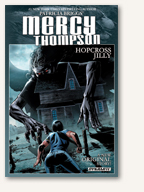
Book Cover: Hopcross JillyRebecca bought me Hopcross Jilly, a Mercy Thompson graphic novel, by Patricia Briggs for my birthday, and it was awesome because I hadn’t even known it existed! It focuses primarily on Mercy’s stepdaughter Jesse, who is struggling to find her place in high school now that she is known as the daughter of the local werewolf alpha. I’m trying to be as spoiler-free as possible, so excuse the coyness, but the events also take place after the big showdown with the fae, so the main antagonist is fae.

Which is where my problem comes in. From just about the beginning of the series, I’ve been on the fae’s side in their struggle with humans. In Briggs’ world, the fae have been treated somewhat similarly (though better) to how the US treated Native Americans, with extreme prejudice and isolation. So, when they have finally taken as much as they are going to take, it feels like an underdog fighting back, even though they are in fact murdering people. I found myself on the unsupportable side of a debate with Rebecca in which I was trying to hand-wave away the (fictional) murder of innocent children.

Anyway, it was fun to see more of Jesse, who is usually very much a side character, and the fae villain was quite interesting, and it had a satisfying ending, even if it wasn’t as pro-fae as I would have liked. I do also want to qualify this by saying that Briggs is clearly a novelist, not a graphic novelist, so there are times when the action and dialogue gets a little muddled since she isn’t writing in quite the screenplay style that a graphic novel demands.

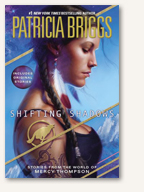
Book Cover: Shifting ShadowsI have also been reminded that I completely forgot to review Briggs’ Shifting Shadows, which is unforgiveable considering how long I’ve been whining for something exactly like this. Shifting Shadows collects all of Patricia Briggs’ short stories in a single volume, including the Alpha and Omega novella that kicks off that series, as well as some brand new stories. The  new stories feature Mercy, of course, but also a variety of side characters that haven’t been given much backstory before, including Ben, one of Adam’s least pleasant pack members; Ariana, the fae with whom Mercy’s ex, Samuel, falls in love; and Kara, a young girl werewolf mentioned very briefly in the second Mercy novel.

And, of course, it contains all of my favorites from a variety of anthologies, like “Seeing Eye,” in which a werewolf and a witch pair up to bring down an evil witch coven; “Fairy Gifts,” about a vampire summoned to save a trapped fairy; and “The Star of David,” a Christmas story about David Christiansen, a werewolf mercenary from the first Mercy Thompson novel. I am just so happy to have them all collected in one place!

—Anna

The Thief

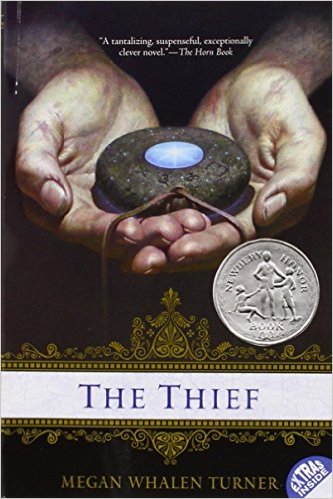
thiefAges ago–maybe two or three years ago–Anna sent me a Kindle book called The Thief, by Megan Whalen Turner, as a gift. She told me it was YA fantasy/adventure book that she really liked and she thought I would like too. And I read it and I thought it was fun and and well written and had an interesting twist at the end, and I moved on with my life and didn’t think about it again. Then a few weeks ago I was on vacation, sitting on the beach, and when I finished my trashy romance novel I didn’t feel like walking back the beach house to get another book. So I started poking around my Kindle, looking for something else to occupy me until I was willing to leave the beach, and The Thief popped up. I started re-reading it and was reminded of how much I enjoyed it and then a tiny voice emerged from somewhere in the depths of my memory: could there be . .  did Anna say . .  is there a sequel? You guys, there wasn’t just one sequel, there were THREE, and apparently two more books on the way. And as much as I liked The Thief, the two books that came after it were so so good that I am now completely obsessed and desperately waiting for number 4 to come in at the library.

So The Thief is about a thief (yes) named Gen who we first meet in the king’s prison after he was caught stealing something audacious and then bragging about it in the pubs. Enter the king’s magus, who offers to get Gen out of prison if he will use his considerable thieving skills to steal something important for the king. The thief, the magus, and the other folks in their little party then ride around dodging soldiers, looking for this mysterious object, and trying not get killed by any of their enemies. The actual thing they’re trying to steal was a bit of a MacGuffin for me, but Gen is a smart, tricky character, and up until the last minute it’s never quite clear who’s using who and how much Gen is controlling the situation. It’s suspenseful with a dark edge (there are deaths along the way and prison is not sugar-coated), but Gen himself is very entertaining.

It’s the second and third books that take the action to a whole new level with intrigue and awesome characters and complexity. However, it’s challenging to talk about these, because you can’t even describe the most basic plot elements of any books past the first without ruining the fun of the first book. So I’m not going to say a word about what happens in the rest of this series–I’m not even going to write out the titles. You’re just going to have to trust me when I say that books get twistier and darker and better.

This is like when I owned paperback copies of the Philip Pullman’s Sally Lockhart books, a YA Victorian mystery trilogy he wrote before his famous His Dark Materials trilogy. They’re great books that I was constantly loaning to people, but reading even the first line of the description on the back of the second book just about ruined the first one, so I taped post-it notes over the back of the books so that I could hand someone the whole stack with spoiling them on the plot before the were ready. So consider this review a virtual stack of books with post-its taped on the back. I love these books. The third one is my favorite, but these are quick reads and fit nicely together as one whole story. I should have listened more carefully to Anna when she initially told me about these, since she’s always right these things. Don’t make my mistake!

Kinsey’s Three Word Review: Dark, complicated adventures.

You might also like:
The Phillip Pullman books that I mentioned, actually, as well as a number of things that we’ve already raved about here: the Graceling books by Kristen Cashore, The Girl of Fire and Thorns trilogy by Rae Carson, and the His Fair Assassin trilogy by Robin LaFevers (the killer nun books). You might also like Cinda Williams Chima’s series that starts with The Warrior Heir, a fantasy YA story that did a number of interesting things and that hasn’t gotten nearly the attention it deserves–it’s the better version of the Mortal Instruments series.

Jonathan Strange & Mr. Norrell, part 7

By Susanna Clarke

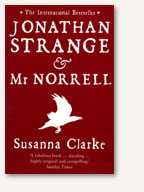
Book Cover: Strand & NorrellSo, last episode! I’m running a little late with this one since I was on vacation last weekend, but better late than never, right? I thought about never, but just couldn’t quite bring myself to leave it hanging. The conclusion in the tv show was very satisfying, but the book conclusion was particularly gripping, I thought. Here are all the final spoilers in a particularly long post, I’m afraid, since a whole lot happened at the end. Continue reading

Fallen Angel: To Serve in Heaven

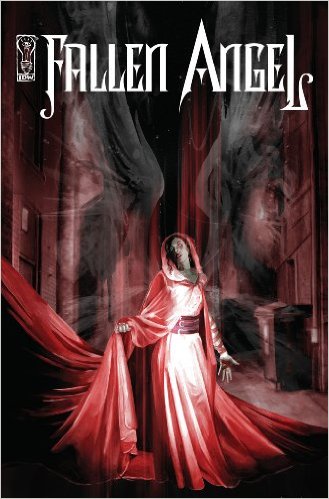
FallenAngelFallen Angel: To Serve in Heaven
by Peter David (author) and J. K. Woodward (illustrator)
2006

This graphic novel was beautifully drawn and had a quite interesting philosophical take on God and the meaning of life, etc. I like religious themed stories, especially ones that deal with the motivations and choices of god-like beings, so this was right up my alley. On the other hand, it was a bit too noir-ish for my particular taste.

The premise is that there’s a city, Bete Noire, that’s sort of the center of reality and fully of dark grittiness and only certain special people are able to access that city. It’s a pretty common trope (Simon Green’s Nightside springs to mind, but also Neil Gaiman’s Neverwhere, Melissa Marr’s Carnival of Souls, etc.) Our main character is a fallen angel and the plot circles around some machinations by the city’s Magistrate and conspiracy, but mostly serves as an exploration of Liandra’s backstory and introducing the other main players in the city, introducing the series as a whole.

So it was beautiful, it introduced at least one really interesting idea, and there was at least one really funny scene (the Magistrate is furiously trying to interrogate Liandra about her past, but she’s spent the last several hours trying to drown her sorrows about an entirely different part of her past, and it was pretty hilarious failure to communicate). However, that failure to communicate isn’t uncommon as these characters mostly alternate between being threatening and being cryptic. It makes the characters come across as both unpleasant and more than a bit dumb.

It wasn’t great but was still worth reading.