Swordheart by T. Kingfisher

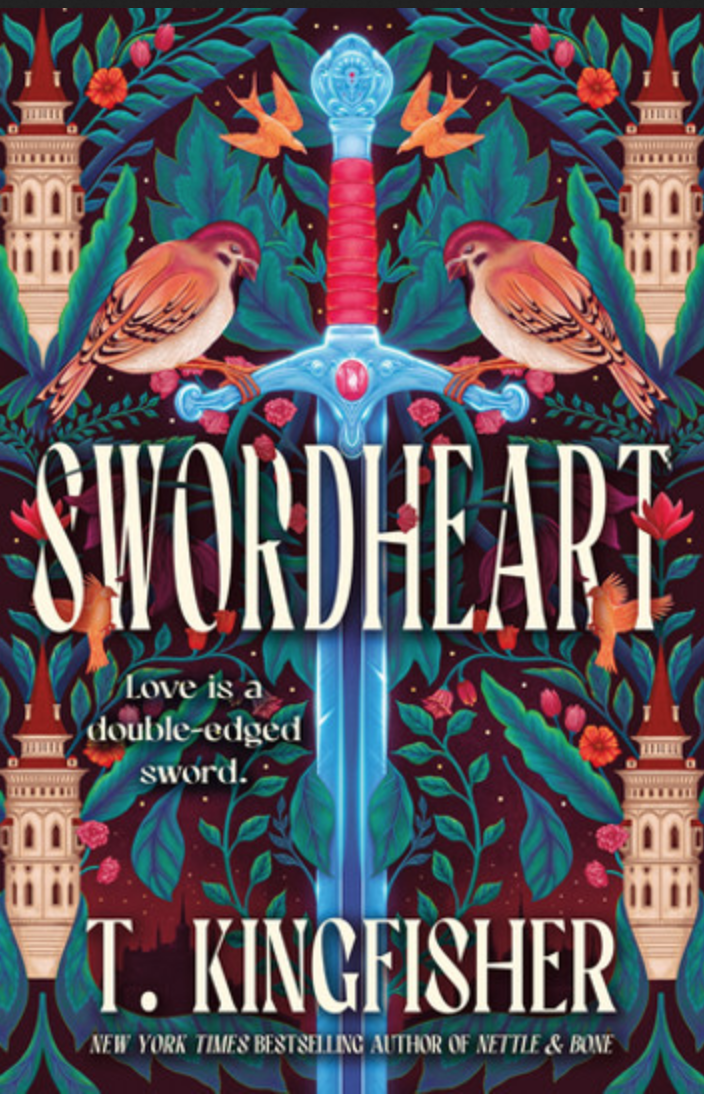
Swordheart
by T. Kingfisher
2018

This is delightful and hilarious and a surprisingly quick read despite being fairly long. The story pulled me along as the plot goes on wild side-quests and the main character goes on wild tangents. I adore the main character, Halla, a housekeeper who had come into an unexpected inheritance that involves some really angry dis-inherited relatives that she has to avoid. She was happily living her life, more or less, and would have continued to do so if not for the need to avoid the awful relatives which has led to acquiring a magically haunted sword, running away from home, meeting bandits on the road and having to escape them, meeting police chasing the bandits on the road and having to escape them, and increasing number of hijinks that domino ever onwards.

The second main character, Sarkis, is the magically haunted sword and also a barbarian from a distant land, who is used to being used as a warrior by other warriors, and is now a companion for an escaping housekeeper and isn’t quite sure what to make of the situation. We slowly get more of his backstory over the course of the book, but (in my opinion) his true delight is to be the outside perspective on Halla and her situation. It’s hilarious!

I was also pleased to see confirmation in the afterward that this was going to be a trilogy. Since it was published in 2018, I assumed the other two would already be available. Alas! Book 2 of the trilogy is due to be published in August 2026. Hmph. I will wait.

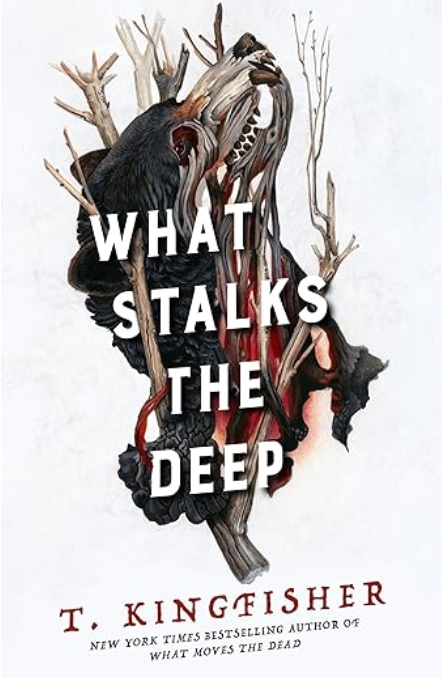
I also realized about a quarter of the way in that Swordheart is set in the same universe as the author’s Saint of Steel series, of which I have read the first three of four:

Paladin’s Grace (Saint of Steel, Book 1)
2020

It’s actually only as I was putting together this review that I realize from the publication dates involved that these books were written after Swordheart, and thus these are in the Swordheart universe rather than vice versa. I had read a great essay about the social history of perfume and how closely perfumers were tied to alchemists and to poisoners and someone had recommend this book in the comments and it really is fabulous. Set in a generic historic fantasy setting with gods and demons and paladins, our main character Grace is a perfumer trying to make a living, but having to fight systemic sexism every step of the way. And also accusations of being a poisoner. Meanwhile, the main male character is a paladin’s who’s god has since died and thus his own status is deeply in question. I really enjoyed the deep dive into the perfuming business as well as the interesting theological perspective. After I read it, I immediately put a hold on the remaining books in the series:

Paladin’s Strength (Saint of Steel, Book 2)
2021

Paladin’s Grace had introduced four paladin’s who had survived the death of their god, and there was a book for each of them to figure out how to continue living when the religion they had devoted themselves to was so thoroughly disbanded. This is the second book and continues to do some amazing world-building on what religions there are and how they interact with one another and with their gods and I do love a deep dive into fantasy theology.

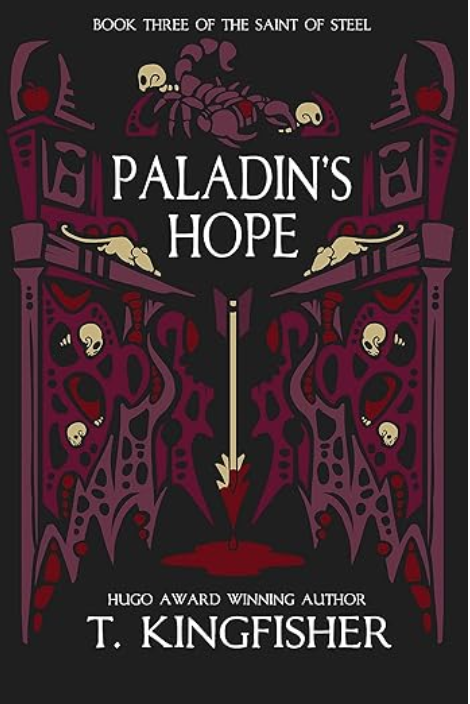
Paladin’s Hope (Saint of Steel, Book 3)
2021

This is the third book in the series and I probably should have taken a break rather than reading one book after another because I remember liking it well enough, but just loosing some steam in reading them back-to-back-to-back. I really love Kingfisher’s characters and world-building, but this book focused more on the overarching series plot of a massive villain in the background who must be routed out before they destroyed all of society or something like that and I just didn’t find it as interesting.

I’m pretty sure the reason I didn’t review these here before was because I’d been planning to review the whole series in one go but then didn’t get around to reading the final book: Paladin’s Faith. However, I’ve gone ahead and put a hold on that at my local library and plan to read it in preparation for Daggerbound being published in August 2026.

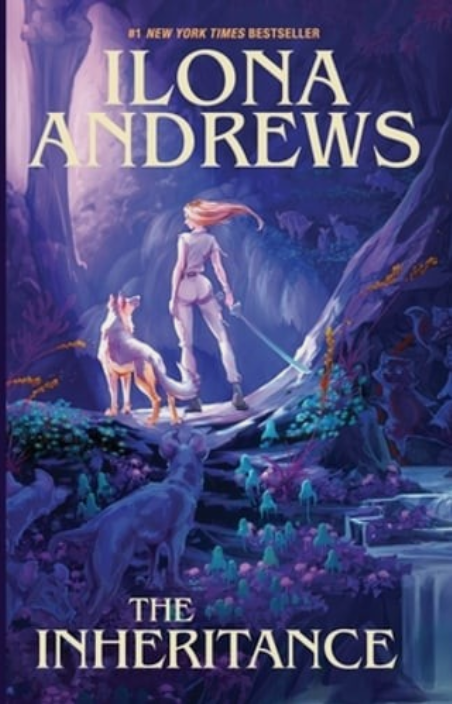
The Inheritance by Ilona Andrews

The Inheritance (Book 1 of The Breach Wars)
by Ilona Andrews
August 2025

This book is fun! It would a guilty pleasure if I were still at a point in my life where I was willing to feel guilty about a simple pleasure. This book is good because it makes me happy. The authors clearly had fun writing it and I had fun reading it, and if I were going to try to compare it to Great LiteratureTM, then there would be some issues, but that’s not the league it’s in, and in the league of fun pleasures, it’s a wild success!

I also get a kick out of knowing that these authors clearly read/watch the same Dungeon Adventure genre of Korean comics/anime that I do. The premise: a decade or so ago, mysterious portals starting appearing that would produce monsters that had to be fought and the portals closed; at the same time some people gained a whole variety of super powers perfectly suited to fighting the monsters; people formed guilds to organize the fighters, and thus plots involve both fighting monsters and political shenanigans with wealthy celebrity fighters and saving people. Probably the most well-known in this sub-genre is Solo Leveling, my favorites are: Traces of the Sun and Mission: Save the Hunter, but I’ve probably tried at least a dozen others. There are a lot of takes on this and now Ilona Andrews are writing their own and I am here for it!

This is also an interesting break from Ilona Andrew’s usual writing in that it is a pure adventure story with no romantic plot line. Not only that, but there is a character in the first chapter who is set up as the obvious love interest who winds up being a minor villain instead. I was delighted by the twist!

There is significant overlap in the world-building for this story with their Innkeeper Series, which I would normally link to a prior review of but am shocked to discover that I haven’t previously reviewed any of those stories. The Innkeeper Series is a great deal of fun, starting with:

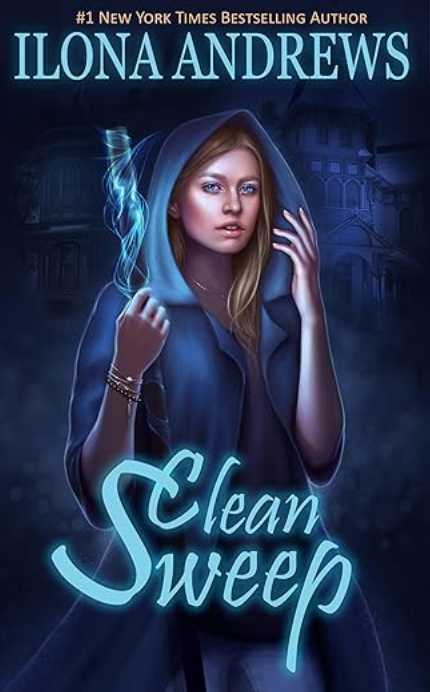
Clean Sweep (Innkeeper Chronicles Book 1)
2013

which introduces Dina Demille who runs a small inn in rural Texas that caters to a very specific clientele: interplanetary visitors who want absolutely safety for the duration of their stay and who, in turn, promise to not make it too obvious to an unaware general human population that Earth is very conveniently located as a waypoint for a lot of very strange travelers. Shenanigans regularly occur.

There’s enough specific overlap between the societies of aliens introduced in the Innkeeper series and some background discussed in The Inheritance that I would expect them to be set in the same universe but there’s also enough different in the standard Earth culture, that I’d expect them to be entirely different. I’m definitely curious about what will be revealed in book 2 of the Breach Wars series or book 7 of the Innkeeper series.

Also, Ilona Andrew’s next book, due in 2026, This Kingdom Will Not Kill Me, is their take on the transmigration sub-genre in which the main character of the story is a regular person in the real world who wakes up inside a story that they’ve been reading with full knowledge of the oncoming plot. Most well-known is probably Scum Villain’s Self-Saving System, my favorite is probably Cleric of Decay, and I have at least started half a dozen other stories on Manta or Webtoons with the same concept. I hope Ilona Andrews are having as much fun with these as I have been!


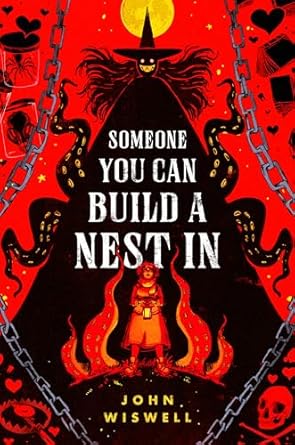
Someone You Can Build A Nest In by John Wiswell

Someone You Can Build A Nest In
by John Wiswell
2024

This book is very cute and very gross. It’s a remarkably sweet romance between a literal man-eating shapeshifting ooze and a member of a monster-hunting human family. The story is set in a hand-wavy historical fantasy setting mostly in and around one town but with knights and nobles and small kingdom politics happening in the background. In the opening scene, the monster Shesheshen wakes up from hibernation when a hunter enters her lair in order to kill her and harvest her heart. Instead, she kills and eats him, not necessarily in that order. Later on, she meets his sister Homily and falls in love. There are, as you can imagine, some problems that must be resolved for any relationship to work out.

The plot is tricksy with a couple of twists and turns that kept my anticipation high. It also side-stepped a lot of issues by having a main character who was so very inhuman that she, and thus to a certain extent the reader, just didn’t care about the ongoing body horror. It’s not horror to the point-of-view character so everything is fine!

I enjoyed the book and thought it was both fun and funny.

However, I do have some caveats:

One of them is oddly how sanitized the story is. Of course there is a lot of death and killing, but I was a bit taken aback by how few people Shesheshen actually winds up killing, despite her stream of conscious thought process that classifies people as highly edible. (Her thought process is hilarious!) Given that the author is upfront about monsters often being a metaphor for disability, it makes sense that he wrote a more misunderstood monster than a truly vicious one, but it also felt like he was trying to write both at the same time and couldn’t quite manage to reconcile the thought process with the actions so it doesn’t quite work out.

While the expectation of death and gore is obvious from the very beginning, there was a scene of extreme animal harm in the middle of the book that surprised me and broke the rhythm of the story for me. Spoiler: the animal does get rescued and does survive, but it’s an unpleasant scene that hit me harder than anything else in the book.

And finally, I think this book could have done better as a duology. The book is broken into eight parts and takes place over the course of a full year. The main plot and primary character arcs and half the year are covered in the first seven parts. The eighth section covers the other half of the year and a whole secondary character arc that gets skimmed through extremely quickly. It could have been a whole sequel, possibly from Homily’s perspective, but it felt very rushed as a too-long epilog to the main story.

But overall, this book was fun and enjoyable and a great build-up to Halloween.

Love, Death + Robots: The Official Anthology : Volume One

Love, Death + Robots: The Official Anthology: Volume One
2021, audiobook 2025

I have not watched the animation series, but I’ve heard good things about it and I saw that this audiobook existed and so I got it and listened to it on my work commute. And I didn’t quit halfway through, though I was extremely tempted. It has some of the worst writing I’ve ever read/heard. Like, at least one story that’s right up there with Eye of Argon, and others that were close runners up. What’s also crazy is that, as I was listening, increasingly appalled with each new story, I realized that they were managing to cover a wide range of ways in which writing can be poorly written.

In retrospect, I realized that there were two entries that are explicitly screenplays and thus can be forgiven (I suppose) for going into details about exact camera angles, and scene changes, and repetitions of the exact time of day even though it didn’t change, but wow was it hard to get through on my commute. The fact that one of those screenplays (“The Witness” by Alberto Mielgo) literally opened with “a beautiful woman is naked in front of a mirror, applying make-up” felt like such a stereotype/cliche that I wondered if it was intended as a spoof. Sadly, if it was intended as satire, it never made any particular point.

A lot of the stories (“Suits” by Steve Lewis, “Sucker of Souls” by Kirsten Cross, “Shape-Shifters” by Marko Kloos, “Blind Spot” by Vitaliy Shushko, “The Secret War” by David W. Amendola) had men with overwrought machismo fighting slavering aliens, with the type of clinical descriptions of violence and gore that I might expect from an audio-description of a visual media, but not from even a book adaptation of a movie. (“Lucky Thirteen” by Marko Kloos, has a woman with machismo fighting human soldiers, but the rest remains the same.) Text and video are different types of media and text is better served trying to describe the impact of violence/gore on the characters rather than just a description of a picture. However, most of them couldn’t even make their violence impactful. Plus, a really eerie pattern I noticed was how in these stories, there was all this extreme violence between the “main characters “good guys” who feared for this lives but stayed strong through it all because they needed to protect their people, versus the “bad guy” alien others who were mindless killing monsters with no thought or culture of their own, only an endless desire to kill humans. But their actions were the same, extreme violence towards one another: just one side was good and one side was bad. It felt like video games for armchair warriors, who wanted to feel powerful and liked gun statistics and weren’t at all interested in the source of any given conflict.

Some of the stories (“Sonnie’s Edge” by Peter F. Hamilton, “The Witness” by Alberto Mielgo, “Beyond the Aquila Rift” by Alastair Reynolds) had an interesting concept and/or twist that I would have enjoyed seeing presented better and with less of a look at the authors’ sexual issues.

“Beyond the Aquila Rift” was actually the first story (ie, the seventh story) that I thought was genuinely well-written. And then it swerved into focusing on a middle-aged dude’s feelings about his extra-marital affair and it mostly stayed there for the rest of the story, pushing aside the interesting science fiction scenario and reminding me of the stereotypical English professor writing a novel about having an affair. The author tried his best to make the affair plot-significant and mostly managed to make the protagonist so self-centered he came across as a sociopath.

There were some decent stories. (“The Dump” by Joe R. Lansdale, “Fish Night” by Joe R. Lansdale, “Ice Age” by Michael Swanwick, “Alternate Histories” by John Scalzi.) It’s too easy to forget them when I think back on the book. But they were there. They were short, but interesting and fun and funny.

There were two genuinely good stories that I enjoyed a great deal and actually recommend. Luckily, I can even provide links to them (the written versions, not the audio):

Good Hunting” by Ken Liu is excellent and heart-breaking and heart-warming and all that about China losing it’s magical culture during the British colonial period and then regaining it in a steampunk fashion.

Zima Blue” by Alistair Reynolds is fascinating and thought-provoking and I have so many thoughts about it but also don’t want to provide any spoilers, because the story itself is so well laid out in the way it presents the situation and slowly makes the reveal, and then leaves the reader to continue to thinking about all the implications for days afterwards. It’s about an artist who went through extreme body modifications in order to have experiences no one else could, and the reporter who interviewed him about his final piece.

Nicked

By M. T. Anderson

Described as a “wildly imaginative, genre-defying, and delightfully queer adventure,” I knew Nicked was going to be weird, but I hadn’t expected it to be quite so laugh-out-loud funny. In many ways, the humor had both a dryness and absurdity that reminded me of Catch-22, without being nearly so bleak, which is saying a lot for a 11th century setting.

A lowly monk is voluntold by his local bishop to accompany a ‘saint hunter’ in ‘liberating’ the reliquary bones of St. Nicholas from its celebrated gravesite and temple to the monk and bishop’s own town. In the middle of a plague, they hope the reportedly healing bones will be able to save the populace, so there is some redeeming motivation. The author claims that this based on a true story, and has the references to back it up, though he also explains that any deviation from strict accuracy is also highly representative of medieval nonfiction, which took plenty of licenses of its own (his afterward is well worth a read).

The humor comes from both the strangeness of the period in general and the quest in particular, and the familiarity of political and religious bickering across all times and geographies. The common people everywhere make due during times of great upheaval, and every interaction is a delight. The heist is also so well written, with setbacks and twists and turns that kept me agog. My one caveat is that there is a framing narrative that sometimes gets very philosophical and that I couldn’t always follow, but it is also used sparingly, so I didn’t find it a detraction.

more graphic novels

It is all too easy to buy a whole bunch of really cool graphic novels from either Small Press Expo or Toronto Comic Arts Festival, be absolutely delighted with them all, and then go home and get distracted from actually reading them, in part because there are so many and where do I even start? (It turns out collecting books and reading books can be two separate hobbies!) But I don’t want to forget about these in my ever-growing to-read pile, and so here are another three graphic novels that I acquired, read, and enjoyed.

She Walks With The Giant
by John V. Slavino
2022

This is a beautifully illustrated book with gorgeous vistas set in a post-apocalyptic world in a fantasy ancient Asia. The girl is an orphan in a ghost town who first sees the giant robot appear, and decides (much to the giant robot’s dismay) to follow along. The first part of the book is an exploration of the world as it is, while the second part is an exploration of the history that brought it to this point, where the giant came from, and how there’s no real escape from being part of that history.

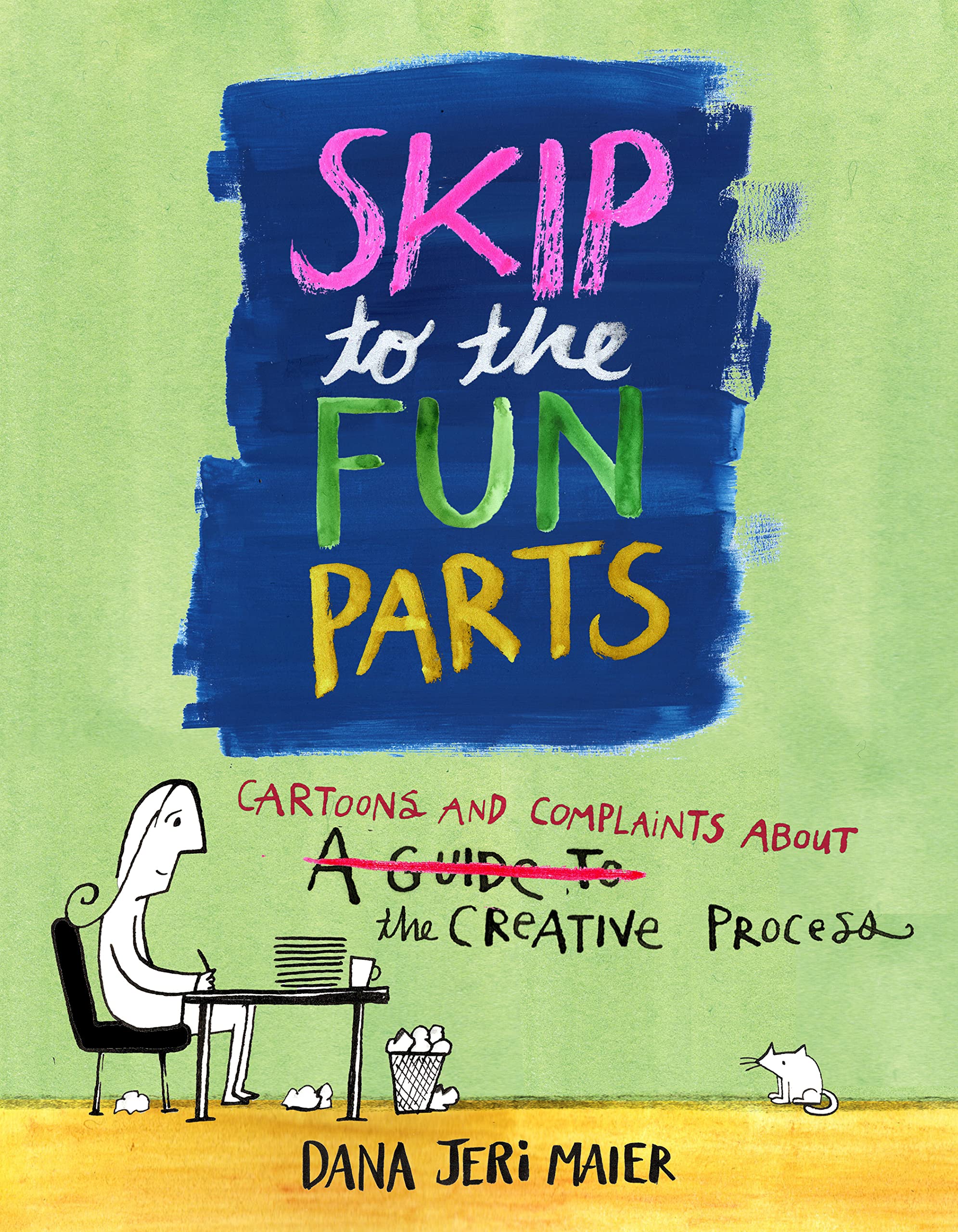
Skip to the Fun Parts: A Guide to Cartoons and Complains about, the Creative Process
by Dana Jeri Maier
2023

Admittedly I bought this with the expectation that this would be something of a guide to the creative process written by a published graphic novel writer/artist despite the clear strike-through of those exact words, and it’s decidedly not that, but I still found it remarkably reassuring and comforting, and also extremely funny and with a few good ideas thrown in. It felt comforting to see someone successful face some of the same issues I am with energy vs inspiration, and still persevering with good humor.

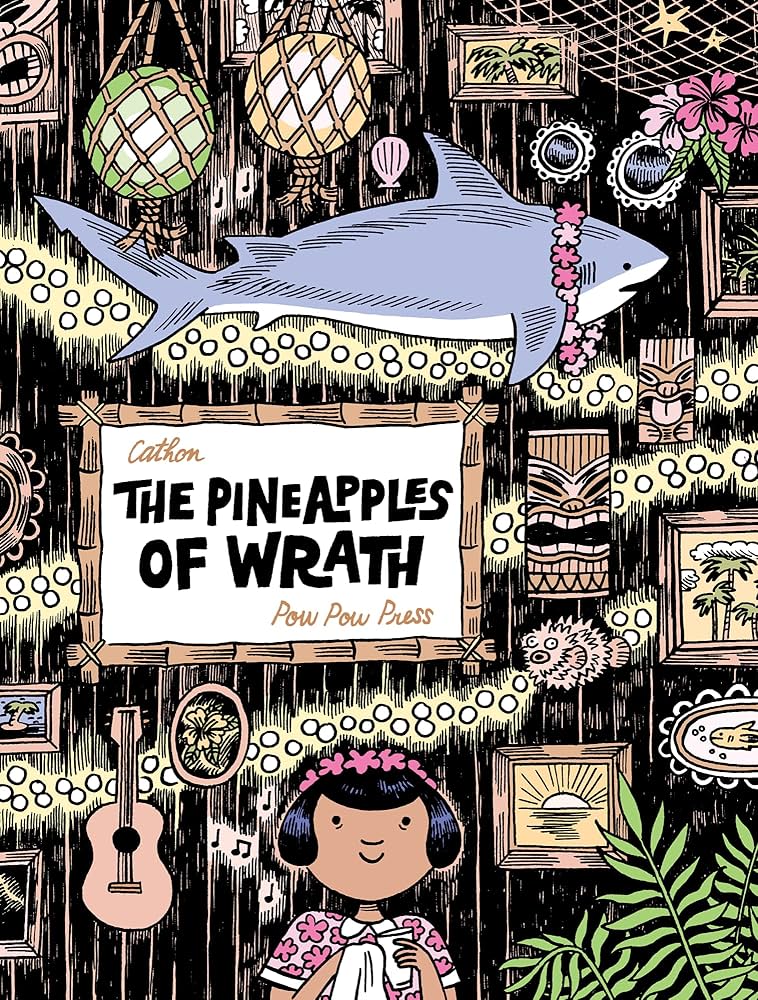
The Pineapples of Wrath
by Catherine Lamontagne-Drolet
2018

A friend who wasn’t particularly interested in graphic novels was curious to try one out and asked for a recommendation, so we asked her what genres she generally read, since graphic novels come in all genres. At which point she asked for a cozy mystery and Anna and I were both stumped. Graphic novels do come in all genres… but that was a rare one! However, we persevered and found a cozy mystery graphic novel: The Pineapples of Wrath, which is hilarious and adorable and has quite the body count as Marie-Plum, bartender and mystery-reader, determines that her elderly neighbor was murdered and if the police won’t investigate, then she will! The setting is a fictional little-Hawaii neighborhood in Québec, Canada, and it is just as ridiculously touristy as you can imagine and maybe a bit more.

Buried Deep and Other Stories by Naomi Novik

Buried Deep and Other Stories
by Naomi Novik
2024

I’ve enjoyed Novik’s writing for years (decades?) at this point, so it comes as something of a shock to realize that this anthology increased my opinion of her as a writer. How was that even possible? Did I not already know that she was a fabulous writer? But this books has such an incredible breadth of stories, each with their own world-building and characters and tone. Some of the stories I liked more than others, but all of them impressed me.

There are thirteen short stories and/or novellas in this collection, and I’m not going to specifically review them all, but just call out a few:

“After Hours” was a wonderful return to the Scholomance, after the events of that trilogy, with the introduction of another whole culture of magic, because the world is full of different cultures, and so too would be an international school.

“Spinning Silver” is the original story that later grew into the novel, and thus has a lot of duplication, but also some fascinating differences such that I’m torn between which I like more.

“Seven Years From Home” is a stand-alone story in an entirely new universe, a science-fiction universe that almost takes as its premise that anything sufficiently understood is science rather than magic, and addresses politics and war profiteering. It’s almost comforting in its cold ruthlessness and dissection of the hypocrisy that can saturate a seemingly benign culture.

“The Long Way Round” is a story that’s not precisely a stand-alone one, but is a test piece for a new universe that Novik is working on, something that may well grow into a new novel or even a new series, developing a world and characters with a magic system, and political lines, and social structures. And this is the first view of it, and it is fascinating.

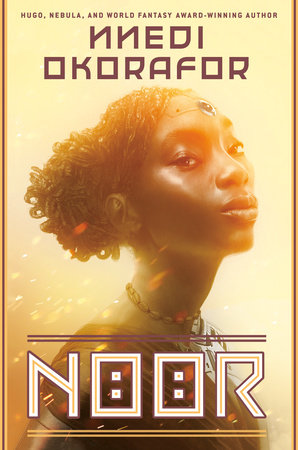
Noor by Nnedi Okorafor

Noor
by Nnedi Okorafor
2021

This is really good and I highly recommend it. It’s Afrofuturistism with the plot beats of a YA novel but a complexity to the characters that makes it feel more adult. It’s set in a relatively near future that grew from our current world. It’s scifi with technology that has continued to advance from what we have, but with a thread of mystical realism that makes me look at the current world and wonder if that is how a religious true believer sees the world. (I’m in this with the main character, AO, who is solidly atheist and yet is beginning to wonder…) It’s set in Nigeria, which is a culture that I’m not particularly familiar with and thus can’t always tell what is based on reality and what has been fictionalized. But the characters and the world are so beautiful and so difficult.

The plot is that our two main characters have each been through separate traumatic attacks in which they defended themselves with lethal force. But they both know that society does not recognize them as having the right to self-defense at the cost of their attackers’ lives. Our primary main character, AO, was born with severe birth defects and now uses extensive and experimental prosthetics, that make many of the people around her question if she is truly human or not. On the run from both her own actions and societies judgement of her, she learns more about other people on the outskirts of society and the exact nature of the experiments that have been done with her and her prosthetics.

The plot also just feels very timely as it comments on how easily the terms “attack” and “defense” can be swapped back and forth when someone’s mere existence is considered a threat to a dominant power in society. And how useful having such a threat can be in maintaining that power, right up until it turns out to actually be a threat rather than carefully massaged propoganda.

Anyway, I really enjoyed and highly recommend this.

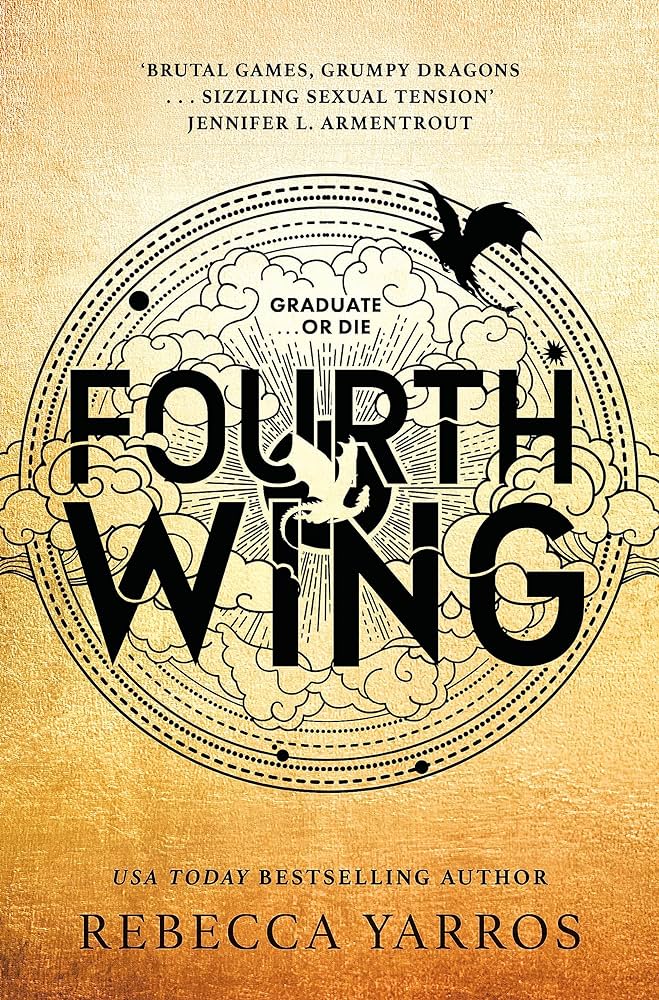
Fourth Wing by Rebecca Yarros

Fourth Wing
by Rebecca Yarros
2023

I enjoyed this book, and I do recommend it, but it was good enough that its flaws stood out. I was frustrated that it wasn’t better. It felt like an amalgamation of Iron Widow, The Hunger Games, A Deadly Education, and Dragon Riders of Pern, rather than entirely it’s own unique thing. The plot arc was also similar enough like The Poppy War that I was nervous that it was going to get overwhelmingly gruesome at some point. It didn’t, which was a relief. By about page 100 I had a basic concept of how the plot and characters would develop and what kind of twist there would be at the end. It’s not a subtle book. I still blasted through all 500 pages in two days.

Our heroine Violet is forced to enter the training for dragon riders, which has something like a 25% survival rate, and where the students are not quite encouraged to kill each other but certainly not discouraged from doing so. It makes me wonder how much the current real world trend of extreme bullying in schools is coming out in fiction. In theory every student is a volunteer, since dragon riders are highly honored, but Violet’s mother is the general in charge and demands Violet enter despite her having a congenital condition weakening her bones and joints. The children of the executed traitors of an earlier rebellion are also required to enter. Notably the children of traitors who were executed by Violet’s mother.

The students are all in their early twenties and training for peak physical fitness and constantly in mortal danger and are completely horny with it all. There are two students in a classic love triangle with Violet — one is her best friend from childhood and the other is the son of the executed rebellion leader. This is not a subtle love triangle and had me rolling my eyes at the introductions (they’re both so strong and sexy!), but I was really impressed with how the relationships develop and how the situation concludes. Also, a special call out to how well done the sex scenes were, at being character and plot significant and also both sexy and hilarious. Special kudos on those!

The part of the world building that I particularly love is that the dragons are large vicious beings who are not just sentient but actually the ones in charge of the dragon/rider relationship. The dragons pick their riders and they kill the ones that annoy them and no one gainsays what a dragon decides. The humans are essentially familiars to the dragons who can use them to access magic in a way that they can’t without a rider. It’s a fabulous premise that I adore and wish had been fully developed and integrated into the rest of the societal world-building, but it’s just not. The demonstrated command structure is still very much human-oriented, although maybe that will change in the sequel.

Toronto Comic Arts Festival 2024

I’ve been going to the Small Press Expo (SPX) for years, but last weekend was the first time I’ve managed to go to the Toronto Comic Arts Festival (TCAF) and it was so much fun! We came in to Toronto on Friday and left on Monday so that we could attend the entirety of the event on Saturday and Sunday. I attended five presentations, browsed hundreds of vendor stalls, and bought 14 graphic novels. (And was tempted by a whole lot more!) I haven’t read all my new acquisitions yet, but most of the ones I have are also online so I can link out to them as well as brag about them:

Godslave
by Meaghan Carter
A nineteen-year-old college drop-out accidentally wakes up an ancient Egyptian god who looks a bit like a fennec fox (so cute!) and then gets drawn into the deadly family drama of the Egyptian pantheon. Who the good guys are is deeply in question. I bought the first two volumes, which comprise the first five chapters, but the online version has started the sixth chapter!

The Big Mystery Case: A Crime Comedy
by Luke Bruger-Howard
This is a hilarious pastiche of crime thrillers that reminds me of the equally hilarious video How To Make Blockbuster Movie Trailer. It’s a quick read (less than an hour) and a loving mockery of the detective genre.

Baggage
by Violet Kitchen
This is an absolutely beautiful poem of a graphic novel, about packing for a trip, unpacking in a hotel room, and then repacking to depart again. It’s gorgeous in the way it uses both artwork and words to evoke emotions and communicate a sense memory. The imagery is very clean and crisp while the concept is very ethereal and dreamlike, and it works together perfectly.

The Closest Thing to Living
by Ky K
They only had the prologue of this story in hardcopy, but it drew me in and included a link to the online version for me to continue following and see what happened to the woman who wakes up from her murder, discovers she’s a vampire, and decides that this is the freedom she needed to be more true to herself. She’s very nihilistic and isn’t much interested in her own past, but it looks like despite being dead, she won’t be able to actually walk away.

Autumn Wing and the Crown of Fire, Volume 1: The Sword of Red Leaves
by Brandon Hankins
Gorgeous inkbrush artwork with a limited color palate that I really love. This first chapter is about a young nephilim, who’s trying to earn the right to go on a quest to forge a crown of fire, aka a halo, and come into his full power. It did a really good job of addressing what it means to be strong, especially when other people are yelling at you for both not giving in to them and for not being strong. I just bought the first volume, but five chapters are online!

Tales from the Sixth Sun
by Dennis Moran
Absolutely gorgeous artwork and a magical world that reminds me a bit of Wakanda, with mysticism and technology integrated, set in a fantasy world heavily influenced by Afrofuturism and Inca-futurism. The first half of the book is nearly word-less, and the art carries the storytelling so beautifully but also very tightly focused. The later part has more dialogue and introduces a much more complex society and history and plot. This book contains the first three chapters of the story, but the first six chapters are online!

I am extremely picky about the graphic novels I buy: I they need to have both beautiful artwork and interesting storylines, and all of these were wonderful finds. I’m really looking forward to making this festival an annual event.