Greek Mythology

DaulairesBookOfGreekMythsIt has been a while since I’ve read any Greek Mythology, but I grew up with D’Aulaires’ Book of Greek Myths. One of my friends in college was a Classics major. If you’re interested, you can read about these myths online:

Theoi Greek Mythology: Exploring Mythology in Classical Literature & Art

Greek Mythology

Greek Mythology on Wikipedia

In particular, you can read about both Atlas and Prometheus. And you should, because it really pisses me off that Francisco definitely and Rand probably, in Atlas Shrugged, are getting their myths so horribly wrong.

Prometheus delivered fire/intelligence to the people. Then Zeus, being mad that the people are now slightly more godlike, punishes Prometheus by chaining him to a rock and sending vultures to eat his liver on a daily basis. Prometheus refuses to recant his beliefs or apologize for his actions and thus the punishment continues.

Saying that John Galt is like Prometheus except that he broke his chains, and took the fire back until the people took back their vultures is like saying that John Galt was a man who stood up to bullies, but when the bullies attack him instead, Galt decided it was too much so he left until the bullies returned to their original targets.

And this is supposed to be the person that Francisco thinks is honest and worthy and good? It makes me think Galt is a wimp who can’t stand by his own convictions and will go running home whenever the going gets tough.

I can only assume that Francisco got his mythology wrong. The misapplication of the Prometheus myth in chapter 5, made me double check the Atlas mythology, which is a good thing because Francisco got that one wrong, too, way back in some previous chapter.

First of all, Atlas is not holding up the world, he’s holding up the heavens, preventing the two from mixing back into primordial goop.  Second, holding it up is a punishment. Atlas was a Titan who fought against Zeus and lost. Holding up the heavens is not a choice or anything done for altruistic reasons. He can’t set it down. He can’t shrug.  Francisco saying that if he were Atlas, then he would just shrug, is a bit like him saying that if he were in prison, he would just leave. It’s not exactly an option!

Go read the actual mythology, people!

Atlas Shrugged, part 2, chapter 4

AtlasShruggedOne of my problems with this book is the way that it’s dated. I increasingly get the sense that this book is fighting a war that’s already been won. Ayn Rand is right and society acknowledges it: inventors who create impressive things can and should be rewarded richly by being able to monetize their inventions. Standing up for yourself, declaring your motives and taking pride in your accomplishments, is not only accepted but encouraged. Inventing, and being rewarded for it, is standard. Think of the way society looks at Steve Jobs or at Bill Gates. They’re impressive people and society respects them greatly. From the perspective of the 1950s, maybe this argument still needed to be made. From the perspective of 2013, though, it’s going too far and turning into bullying.

This is not the fault of Rand or her book, but (as her own arguments go) fault is not actually the issue at hand. It doesn’t matter whether there is fault, what matters is that there is a problem that needs to be addressed. The problem is that the book argues that wealthy business owners need to be given more rights and freedoms than they currently are. In the world of Atlas Shrugged, those wealthy business owners are being severely prosecuted. It makes sense to give them more rights, i.e. stop prosecuting them. But we’re not in a society that hates inventors and hates people who make money. We’re in a society where the banks demand bailouts, where the Disney corporation demands control of the intellectual property of a man half-a-century dead, and corporate theft is a standard practice to quash start-up companies.

I think Ayn Rand would be rolling in her grave regarding some of the people who use her arguments to rationalize their behaviors.

Anyway, first a summary of events (it’s only short in comparison to the chapter itself), and then a bit more about how Rearden, despite being rather awesome in this chapter, is also being incredibly blind, and how Francisco has fallen off the deep end.

Continue reading

Atlas Shrugged, part 2, chapter 3

AtlasShruggedIn this chapter, Rearden just begins to touch on some issues that I hope Rand intends to delve into further.

First, is the definition of “success.” Success is not just making money, or the characters would have accepted the various deals the corrupt officials keep offering them. Oddly, for all that they would deny it vociferously, the characters appear to define success as earning public accolades. They don’t go out seeking it, but they sure are upset when they don’t receive it. Unearned accolades are, of course, for parasites like Jim Taggert et al., but having earned those public accolades, they had better get them. Rearden touches on it, when “He thought—in bitter astonishment and for the first time—that the joyous pride he had once felt, had come from his respect for men, for the value of their admiration and their judgment. He did not feel it any longer. There were no men, he thought, to whose sight he could wish to offer that sign.” If you can’t define success as people looking up at you in awe, what does success mean?

Second is their ignorance of people as a resource that can be developed. Again, Rearden touches on this, when he wonders, “We who were able to melt rock and metal for our purpose, why had we never sought that which we wanted from men?” I have wondered this too, given the amount of times they complain at how hard it is to find good workers. All these men fresh out of college aren’t anywhere near as experienced as their veteran workers. Why don’t you train your own workers?

Meanwhile, Francisco remains an idiot savant. He has wonderful skills at all things, and he continues to make these Faustian arguments that have just enough truth to seem right, huge amounts of flattery to ease their way into Rearden’s psyche, and vast numbers of fallacies to stick in my craw.

So a quick summary of events and then a bit more of reaction from me:

Continue reading

Atlas Shrugged, part 2, chapter 2

AtlasShruggedGiven the recent Super Bowl, I have a sports metaphor for you:  Dagny and Rearden are like Olympic-grade field and track athletes who have stumbled onto a professional football field. They are extremely fast, they are extremely strong, they can get that ball from one end of the field to the other with no problem… and they have no clue why those referees keep on yelling at them, or why those other guys on the field are working together and even strategizing. There are two different competitions going on here, but Dagny and Rearden aren’t willing to learn the rules of football and the rest of the world isn’t willing to give up the game in order to celebrate pure individual strength.

In some ways, this book seems to foretell the shift our society went through in the way it treats information. We are so inundated with information, in today’s world, that someone’s attention is a valuable resource. Marketing firms make and spend fortunes focusing attention. Facebook is monetized based on the idea that people and corporations will pay money in order to get the attention of various demographics. Dagny and Rearden are the dinosaurs in this new economy. They are the takers rather than the makers when it comes to attention. They demand it of others, but they don’t give it to anyone else. That is why they are currently failing so hard. They ignore their “men in Washington” and their boards of directors just as they ignore the vast majority of people. Dagny even states that she doesn’t think her brother’s new wife is worth the attention it would require to form an opinion of.  The economy based on a currency of time and attention is something that she and Reardon are completely unaware of. They wander through the marketplace, wondering why no one will barter with them, when they so obviously have nothing to give.

Anyway, a quick summary of events and then a discussion of money and logic and why Francisco is an idiot.

Continue reading

Kurt Vonnegut short stories

KVonnegut3Kurt Vonnegut
1922-2007

I have mixed feelings about Kurt Vonnegut. I think he has some extremely important ideas in his writing and I know he’s deeply affected a lot of people, but I don’t actually care for most of his writing. He’s still worth reading and I was thinking about him yesterday while I was reading my daily quoto of Ayn Rand (25 pages per day, five days a week.) Despite making a comparison between two authors without having actually read all that much by either, I think they have many similar points of view and many similar styles. But Vonnegut not only writes much shorter books and even short stories, I think he also has a more nuanced sense of people.

He makes many of the same arguments that Ayn Rand does, about the importance of individuality and personal achievement, about rebelling against totalitarian societies, but he also goes on to talk about the importance of working to make the world a better place, if only because it is the world you live in and there’s no opting out.

Anyway, some of his short stories can be found online.

The story that I was particularly reminded of was “Harrison Bergeron.” This story talks about equality and the importance of realizing what exactly you want to be equal. As a die hard liberal, I think everyone should have equality in opportunity. In contrast, the idiot liberals in Harrison Bergeron (and in Atlas Shrugged) seem to be arguing for equality of results. This is an extremely important distinction. Not everyone should be paid the same amount or receive the same amount of accolades. Not everyone is a winner. But everyone should be a contestant. Everyone should have the opportunity to try.

Another of his stories, one that I actually really enjoy, is “Report on the Barnhouse Effect.” While this story also deals with the individual’s ability to achieve great things and to effect the world as a whole, it’s also about taking personal responsibility for the world as a whole, and even the possibility of (as Tony Stark says) privatizing world peace. Privatizing world peace is not something I would approve of in the real world, but it sure makes a good story and I do like the look at personal responsibility on a global scale.

KVonnegut

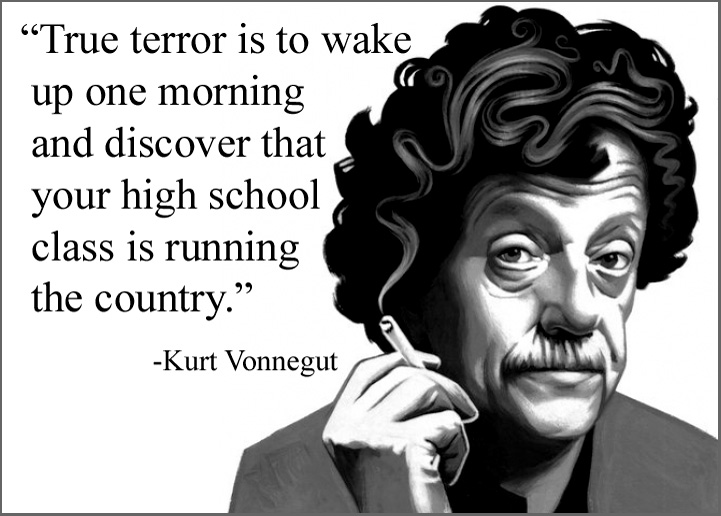
vonnegutTerror1  KVonnegut2

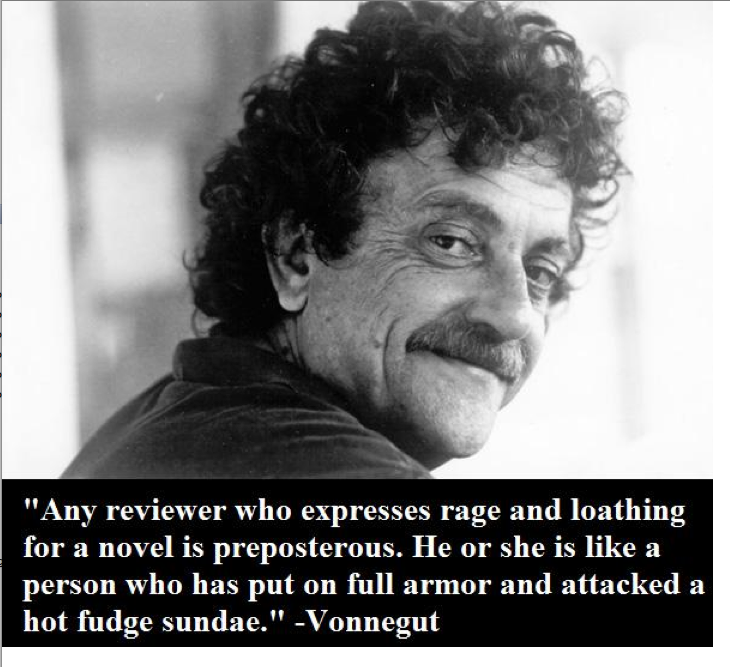
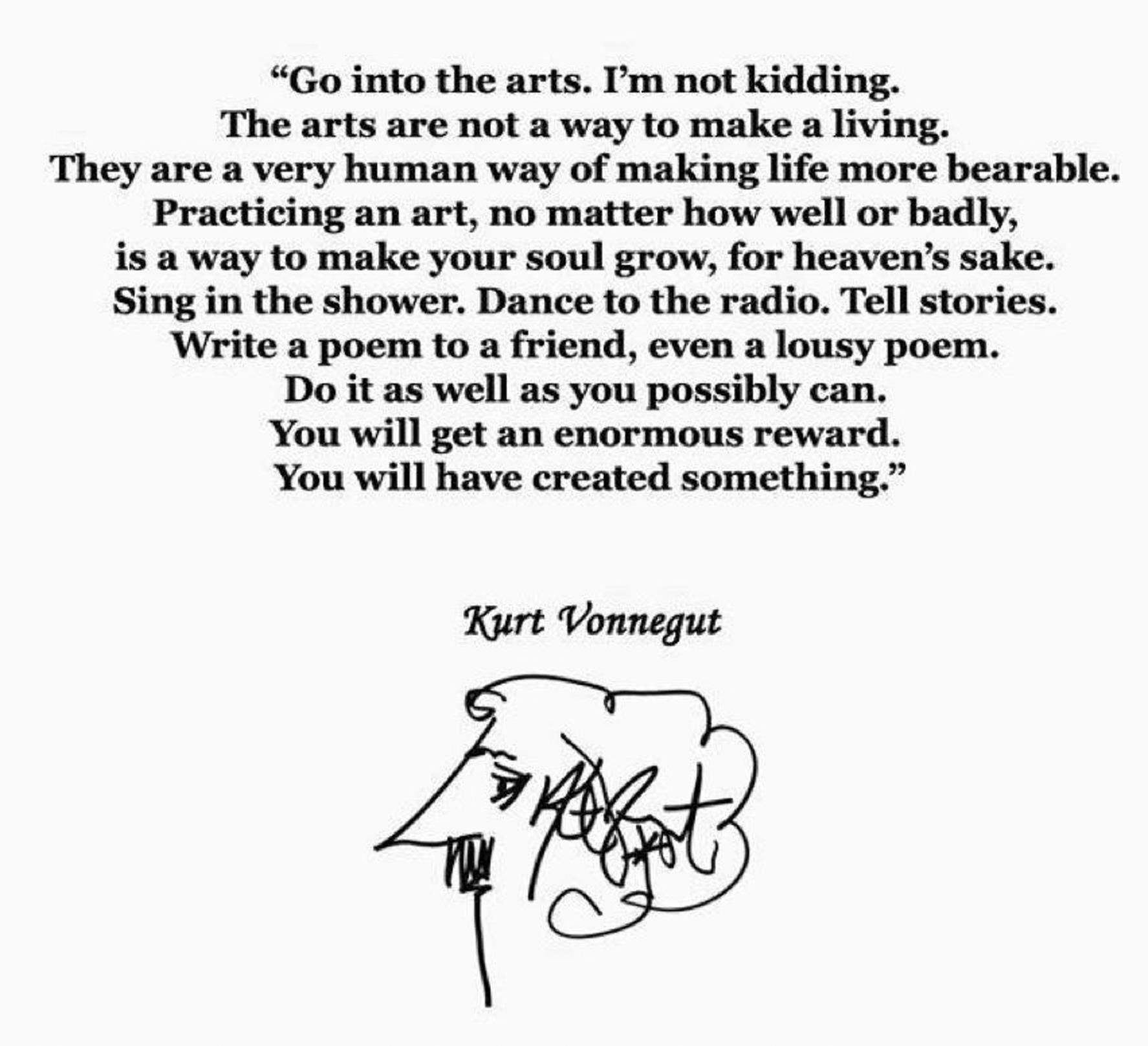
Kurt-Vonnegut-Quotes-3  kurt_vonnegut1

An “Atlas Shrugged” Theme Post

I’m still grinding my way through Atlas Shrugged (I’ve made it past the 300 page mark! I’m a quarter of the way through! … Urg.) But, it also appears to be taking over my life.

For instance, The Colbert Report talked about The Atlasphere: a dating site for fans of Atlas Shrugged and The Fountainhead. (It starts at 1:55 in the clip below.)

(Wowza. Plus, given the skeeviness of the sex scenes in this book, I would not want to date anyone taking their pointers from it.)

But that’s only the tip of the iceberg.

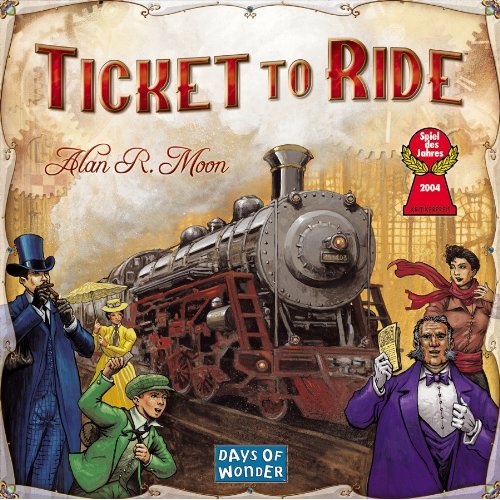
I also joined a new gaming club, for board games and card games and the like. I’ve learned two new games in the last few weeks. Both of them are a lot of fun… and both of them involve building train systems.

Welcome to “Ticket to Ride” and “Trans America.”

TicketToRide     TransAmerica

And finally, when I was just talking (read: venting) to Anna about the book, my playlist comes to Billy Joel singing about living in a small dying industrial town, Allentown:

Atlas Shrugged is taking over my life!

But at least the extra bits are really fun.

Atlas Shrugged, Chapter 8

AtlasShruggedThis chapter kind of highlighted for me how Rand appears to have an incredibly focused Monkey Sphere. She sees known individuals as individuals, but she fails to see groups of people as made up of individuals. Once some people are in a group, they immediately become some vague conglomerate that looses all interest and rights, even to the point of ignoring the individuals who make up that group. (Example from chapter 7: “Passengers” aren’t really people.)

I very much see this perspective as a symptom or a cause or some combination related to depression. The whole world can be against you and the individuals who support you don’t really count because they’re just individuals and you know that the whole world hates you… the whole world being this amorphous thing that you know without ever having to actually get to know it. There is much talk about how the “public” is against Reardon Metal and the John Galt line, how “people” are saying that it’s dangerous and horrible, how “the press” are writing scurrilous stories, etc. And yet, at the same time, there are long lists of individuals who are placing orders for the new metal, who are buying stock in the new train line, who want to be on the new train. But this chapter has a break through because in this chapter Dagny not only achieves a massive success but also recognizes for the first time that there are masses of people who support her, masses too large for her to comprehend as individuals, but must see as groups, as “the public” or as “the press.”

This is a happy chapter (at least in comparison to everything else so far.)   Continue reading

Atlas Shrugged, Chapter 7

AtlasShruggedThis is an extremely dense chapter in which a great many events happen and I am enticed into having a great many thoughts and opinions. Thus, this post is going to be both very long and much shorter than would be required to fully discuss. This chapter deserves a discussion group. I’m beginning to realize how complex this book really is, what with the way it is thoroughly layered in unreliable narration.

The first layer is that all of the characters are either lying—to each other and/or to themselves in bouts of hypocrisy—or making false assumptions. One cannot accept at face value anything that any character says or thinks.

The second layer is Rand’s narration. An author can choose to write a book through the eyes of a character or write in what is commonly called a god voice, in which the author is telling the reader what is happening without any bias from the characters. Rand writes in this style, but still shows a clear bias in the way her summations do not match the details. (For example, as Anna pointed out, Hank Reardon has eyes “like pale blue ice” and has “prominent cheekbones” that made him look younger than his years, but is still considered “ugly.”)

The third layer, which is not the book’s fault, per se, but is nonetheless and important feature in my understanding of the book, is the cultural impact this book has taken. Randian philosophy is an established enough part of the culture that I cannot read Atlas Shrugged without having to deal with other people’s interpretations.

From all three sources, I have heard, for instance, that our heroic protagonists are cold and emotionless, that they prize money above all else, and that they never give charity or offer favors. And yet, given the actual events of the book and the look into the thoughts and ideas of these main characters, all three of these sources are wrong.

A common bit of writers advice is to show, not tell. For instance, if a character is really smart, show them being smart rather than simply telling the reader that they’re smart. I get a real sense of discordance here, though, because I am being told one thing and then shown something contradictory. I am told (by Ayn Rand, by Dagny Taggert/Hank Reardon, and by Paul Ryan) that:

  • Dagny and Hank are cold and emotionless. But then they show vast and painful emotions. They feel pride and pain, desire and concern, frustration and anger and pleasure and happiness.
  • Money is the only thing that matters. But then they spend vast quantities of money to achieve goals based on spreading truth and knowledge and quality, and they turn down vast quantities of money offered as bribes to turn aside from those goals.
  • They never give charity or offer favors. But then they go on to help their opponents who are being torn down by unfair means, and to provide opportunities and support to small businesses who need a chance.

Money is not an ends that these people are working towards, it’s a measurement of greatness, but is not the greatness itself. I watched a TED talk a while back, which pointed out that of all the various things societies and individuals needed to succeed, money was the only one that is purely a means by which other goals can be achieved, but is not a goal in and of itself.

I think Rand understood this perfectly well. The part where she and I diverge is that she appears* to think that money is a useful measurement of greatness, while I think is a deeply flawed measurement tool.

Anyway, I think the three main events of this chapter are:

Continue reading

Atlas Shrugged, Chapter 6

AtlasShruggedI recently read an article on how my particular job title tends to get blank stares and awkward silences at cocktail parties. Before reading this chapter of Atlas Shrugged, I might have nodded along with the article and felt smug about my clear superiority. Having now seen this perspective in excruciating detail in Hank Reardon, I have learned my lesson. I now roll my eyes and want to tell the article writer to suck it up. No matter how dull the party-goers are, you can find a conversational topic. And if none of the topics you are interested in, interest them, then maybe it’s time to ask questions and learn about a new topic that they find interesting. If all the other people at a party are super boring, maybe you need to consider the fact that you might be the boring one.

With that lead up: In Chapter 6 of Atlas Shrugged, we have one of the most uncomfortable parties ever.

Continue reading

Atlas Shrugged by Ayn Rand, first impression

So this is my first live blogging experience and I’m going to be making multiple posts before handing this back to Anna next week. If nothing else, this book brings up a lot of issues. First, a quick review of my general impressions of the first five chapters of:

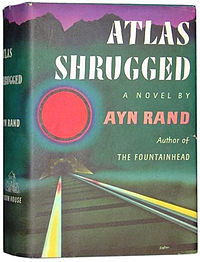
AtlasShruggedAtlas Shrugged
By Ayn Rand
1957

Atlas Shrugged has come up in various political discussions since I’ve been in college but it really got highlighted by Paul Ryan’s run for Vice Presidency. When Anna was contemplating reading it, I offered to read it if she did.

I went into it with really extremely low expectations. It has surprised me in the ways in which the book has been both better and worse than those expectations.

For the better:

It’s not bad writing. While there are some writing issues that I don’t care for (she has a very active narrator voice, with clear opinions, describing landscapes as “seeming” one way or another, even when there is no character to whom it seems anything), the writing is well done. Rand’s real strength is the way in which she delves into the thought processes of her characters. She also does a reasonably good job of building suspense.

Plus, my first reaction to the first chapter was that this was the beginning of one of the creepier (and more awesome) Doctor Who episodes and John Galt is probably either a Moriarty-type character or possibly even The Master. After reading the first five chapters, I’m still not sure this isn’t true.

For the worse:

It’s even more of a punch in the face of all liberals than I had expected. It’s less that there are some awful characters who mouth liberal concepts merely as hypocritical excuses (because, honestly, people like that do exist, much to my dismay), it’s that there’s no acknowledgement that these people aren’t actually liberals. The whole thing reminds me a bit of a quote that I half-remember from years ago: a bad Satanist is not the same thing as a good Christian. In this instance, the application is that an incompetent Capitalist is not at all the same thing as a successful Socialist. Rand, however, does not appear to see any distinction between these. (She also doesn’t see any distinction between monopolies and unions. I have severe doubts regarding her knowledge of business principals.)

For the depressed:

It feels like the writing of someone working through depression. I don’t actually know anything much about Rand’s life and haven’t even read her Wikipedia page, but I assume she was fighting depression and writing Atlas Shrugged was one attempt to deal with it.

One of the aspects of depression, as I know it, is the combination of thoughts that say (1) the world is an awful place, (2) I have a perfect understanding of how awful it is, and (3) I know with absolute certainty that there is nothing to be done about it.

Rand’s characters desperately want to make a connection with other people and yet are completely unwilling to put any effort into it at all and will self-sabotage any situation that might help. Since they know that no one can understand them, they refuse to see that there are other people out there, understanding them. They also know that certain people aren’t worth knowing. Anyone involved in business and politics are viewed as unworthy of any consideration to the extent that both Dagny and Rearden skip board meetings, ignore journalists, refuse to either ask or answer questions, and expect that nothing that those people can do would in anyway impact their own lives. They already know that those people aren’t worth their time without actually knowing anything about them.

This is a mindset that I find particularly frustrating, all the more so as I very much recognize it from dealing with one of my friends who struggles with both depression and with drug/alcohol addiction. Since he already knows that nothing can help him, there’s no point in trying to get help. Since he already knows that everyone hates him, there’s no point in trying to get anyone to like him.

This is a view of the world that I strongly disagree with. You can’t just know what someone else is thinking or doing without knowing them. There are always surprises and change is always possible if not inevitable.

That’s my perspective on the world we actually live in.

The world of Atlas Shrugged, however, is a dystopian world where values and morals are absolute, people are worthy or not worthy, and everyone knows it. This binary concept of values  is incredibly frustrating although it actually cracked me up a bit when it was applied to music in chapter four. The critics who dislike a piece of music write that, “The music of Richard Halley has a quality of the heroic. Our age has outgrown that stuff.” and “The music of Richard Halley is out of key with our times. It has a tone of ecstasy. Who cares for ecstasy nowadays?” Everybody knows the music is good, just the populace in Rand’s world apparently hate good music.

In one of my graduate classes focusing on intellectual property laws, the professor liked to remind us students that “reasonable people can disagree.”

In the world of Atlas Shrugged, reasonable people have a shared understanding of what is right and good and proper. If you disagree, then you are clearly incapable, incompetent, and morally bankrupt.

In conclusion:

This book is well-written and while it doesn’t suit my particular tastes, I can see how it would have a lot of appeal to some people. It brings up some interesting ideas and would likely help people define their thoughts and opinions.

My real problem is not with the book itself, but with the people who are reading it for guidance and direction rather than for thoughtful conversation. There are real politicians who are using this as a serious political treatise. It feels a bit like if, after reading The Hobbit and Lord of the Rings by J.R.R. Tolkein, a politician were to decide that every covert military action should include at least one untrained civilian to carry out some vital task. Or, after reading Ender’s Game by Orson Scott Card, one were to start recruiting child soldiers. These books are all good and thought-provoking and can certainly be used to develop one’s political stance, but they should not be taken as holy writ.