By Robin DiAngelo
 White Fragility is written by a white woman very specifically for a white audience, to help us all process our feelings in a way that does not burden Black people around us. DiAngelo is explicit about this in the introduction: “This book is intended for us, for white progressives who so often—despite our conscious intentions—make life so difficult for people of color.”
DiAngelo writes in a very academic manner, which makes sense given that she started as a professor, with a matter-of-fact and somewhat dry style. She is now a consultant and trainer on issues of racial and social justice, and it’s quickly clear that she is very good at metaphorically holding white people’s hands while they slowly, and often grudgingly, wake up to systemic racism. (At one point, as she walks the reader through a common strawman argument, she requests that the reader take a calming breath.)
And by starting at the beginning, I mean she really starts at the very beginning: “Yet a critical component of cross-racial skill building is the ability to sit with the discomfort of being seen racially, of having to proceed as if our race matters (which it does). Being seen racially is a common trigger of white fragility, and thus, to build our stamina, white people must face the first challenge: naming our race.”
DiAngelo’s parallel of white fragility vs. racial stamina really speaks to me, since I want to be the strongest, most self-sufficient person I can be. Through occasionally excruciating detail, she makes it clear that avoidance of race issues is very much a weakness, and you only get stronger and more resilient by facing these truths head on. I admit that she is so methodical about walking the reader through the process of understanding white fragility, acknowledging it, and then combating it that it can be somewhat exhausting, but it has to be that way. As she describes, white supremacy is so deeply entrenched that we must be able to recognize it and combat it in every aspect of our society: “To say that whiteness is a standpoint is to say that a significant aspect of white identity is to see oneself as an individual, outside or innocent of race—“just human.”
To acknowledge white fragility, one must recognize the myths of individualism and objectivism which are so key to American society in particular. These myths deny the degree to which we are all influenced, even subconsciously, by cultural messages that for the most part work to bolster white supremacy. (This was also where I gave myself a mental pat on the back for already rejecting Ayn Rand’s bullshit.) It is no wonder she has to go into such meticulous detail; it is a huge undertaking to unravel these patterns of thought that have been reinforced since birth. DiAngelo is attempting with this book to remove the centering and the blindness that comes with it so we can see more clearly what whiteness means in our society.
She has somewhat repetitive wording, using similar phrases and going over the same topic in multiple ways, which can be a bit of a grind when reading, but does its job. Her guidance has continued to stay with me, reinforcing what I’m reading/hearing/seeing from people of color and giving me strength when I fear I’ll make something worse through ignorance. You are a far better ally if you acknowledge your inevitable mistakes and gratefully accept correction than if you try to avoid, by either inaction or unaccountability, ever falling into racist patterns (which doesn’t fool anyone anyway).
“Still, I don’t feel guilty about racism. I didn’t choose this socialization, and it could not be avoided. But I am responsible for my role in it.…Unlike the heavy feelings such as guilt, the continuous work of identifying my internalized superiority and how it may be manifesting itself is incredibly liberating. When I start from the premise that of course I have been thoroughly socialized into the racist culture in which I was born, I no longer need to expend energy denying that fact.”
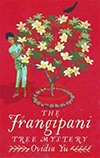 This was both a charming and disconcerting read after my previous book. It is the first in a series of what the author describes as “a feel good history mystery without blood, sex and gore (enough of that in real life),” but which is also set in Singapore in 1936. The protagonist is a spirited and ambitious Chinese teenager attending the British-run mission school, who wants to get a job outside of her grandmother’s protective house. When the Irish nanny working for the ruling English governor dies in a mysterious fall, Su Lin cheerfully accepts the post and quickly befriends the English Chief Inspector investigating the case.
 This was a random pickup for me, and I’m not quite sure what called out to me about it. I’ve never read any other novels by Ishiguro, but I enjoyed (in a sort of depressed way) the movie “Remains of the Day” based on his award-winning novel.
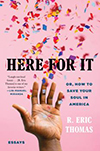 Whew, this book! I’m a big fan of R. Eric Thomas’ weekly
 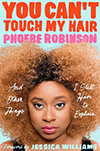 I decided to take a break from reading serious intellectual books about race and racism, and instead turn to a funny book about race and racism! And honestly, comedian Phoebe Robinson touches on many of the points from
 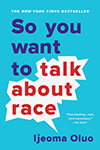 Honestly, I did not want to read about race right now, let alone talk about it. I wanted to keep reading the historical mysteries and romances that have kept me moderately distracted during this pandemic, but they started to feel tiresome, and I knew that I couldn’t ignore this national dialogue any longer.
 I feel like this review is the complete opposite of my
  Well, this novel is a fucking mess. The preview reminded me a bit of classic Agatha Christie mysteries, with a wealthy and estranged family gathered at a huge mansion on a remote island for the wake of the family matriarch. It lacked Christie’s charm, though, with every character being absurdly dislikeable, but I often find that entertaining as well. It was sort of refreshing for the protagonist—bribed/extorted by one of the family siblings into serving as a maid for the wake for mysterious reasons—to explain that everyone finds her “difficult” and for me to agree with everyone. (As a 29-year-old woman trying to get her doctorate in the 1950s, it would have been very easy to sympathize that the cards were very much stacked against her if she herself hadn’t been quite so unpleasant.)
 As I mentioned previously, I’m struggling with full-length novels, and even short stories seem to require a level of focus I don’t quite have in me right now. However, I ran across this
  Additionally, a more low-brow, comfort read during this time is
 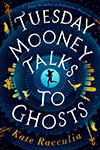 This book deserves a better reader than I am right now. I absolutely loved Racculia’s previous novel
  Biblio-therapy