The Mysteries

By Bill Watterson and John Kascht

I first heard about Bill Watterson’s latest publication from Midnight Pals’ twitter thread, which is funny, a little mean, and pretty accurate. I wasn’t sure what to expect, but the extremely slim volume with one sentence and one picture per page still took me by surprise. It’s described as a “fable for grown-ups” and it is a very quick read — my whole family read it in an afternoon.

It is very much a departure from his Calvin & Hobbes work, though some family thought they could recognize trace similarities in the illustrations. I wasn’t previously familiar with John Kascht, apparently a renowned caricaturist, but per the afterward, both art and writing were a collaborative effort. Whatever each of their roles were, it is clear that they are both fairly fed up with the cultural discourse over the last few decades and perhaps humanity itself. Though it is overall a hopeful message, it reminded a number of us of this comic.

It’s a lovely little book that would probably make a nice gift for a fan or completionist; everyone else should also check it out, but perhaps from the library.

Unexpected Night

By Elizabeth Daly

This book is a trip — not exactly good by today’s standards, but very entertaining! First published in 1940, Daly is a contemporary of Agatha Christie, though not nearly as prolific or renowned. I was going to give Daly some extra credit for avoiding the n-word where Christy would absolutely have used it, but she follows up later with some blackface and different (less charged?) slurs, so I guess there’s that.*

The narrative structure and characters are certainly dated, but that was part of the charm for me. I was often kept guessing at the twists in plot, more because I don’t understand many of the lifestyles and character tropes of the time (why is everyone going out golfing the day after a suspicious death?!) than any planned surprise reveals, and occasionally I couldn’t understand what the characters were on about, with their contemporary slang. It adds a certain spice to the reading experience!

Unexpected Night introduces Daly’s primary detective, Henry Gamadge, an antique book verifier, who gets dragged into mysteries under the flimsiest of excuses. In this case, he is vacationing at a resort in Maine, coincidentally along with a casual friend of his, who’s family then becomes embroiled in the suspicious death. Like I said, Gamadge doesn’t have much of a connection, and I very much appreciated the variety of characters that were also puzzled at his involvement, including the long suffering sheriff.

Since this is her first published book and the first in the Henry Gamadge series, I’m guessing that some of the rougher narrative and character parts will get smoothed out, and I look forward to continuing the series.

*Well, I started the second novel in the series, Deadly Nightshade, and unfortunately it features depictions of “gypsies” so offensive I had to quit, so I guess that’s that.

Doppelganger

By Naomi Klein

So, I didn’t really know who Naomi Klein was, or Naomi Wolf for that matter, but I’d seen the rhyme going around twitter:

If the Naomi be Klein / You’re doing just fine / If the Naomi be Wolf / Oh, buddy. Ooooof.

and it made me laugh, even without context. And, well, here’s the context and then some! Naomi Klein, I learned, is a renowned author who has previously focused on criticisms of capitalism and government, and who has long been deviled by the inability to distinguish her completely from the “Other Naomi.” Naomi Wolf first became famous as a feminist author in the 90s, a sort of peer of Camille Paglia.*

With the exponential popularity of social media and then the pandemic shutdown, the confusion grew even worse, and Klein became somewhat obsessed with her other, tracking Wolf’s sharp turn into deep right-wing conspiracies and alliances with Steve Bannon and Tucker Carlson among others. Klein uses her particular relationship (such as it is) with her doppelganger as an extremely effective jumping off point to comment on a wide variety of societal issues, such as increased isolation coming out of social media, polarization in politics, and the various grifters that take advantage of it all.

Some of the criticisms of the book are that it is too wide ranging, and would be better to have narrowed the focus, but I strongly disagree. One of Klein’s theses is that our social systems are all interconnected, and in order to make change, one must be able to take a wide view of everyone and everything. The disenfranchisement we’re seeing in politics, economy, environment, personal relationships, and on and on, are all tied together, and Klein’s general framework of doppelgangers and mirror worlds is a very effective thread leading the reader through them all.

It’s such a sprawling and deep look at issues I don’t often read about for pleasure, that I was continually caught off guard by how funny Klein is. Just about every passage had me laughing out loud, her accounts of being very occasionally mistaken for Naomi Campbell being a notable example. That said, it does get more serious as it goes, an effective way to lead more casual readers like me into deeper philosophical waters than we are used to.

Speaking of deeper philosophical waters, Klein references several times the docuseries “Exterminate All the Brutes” currently on HBO, which looks at the history of genocide in establishing “civilized” societies. I have currently just watched the first of the four hour-long episodes, since the topic is devastating and takes some time to sit with. The meandering, montage style took me a while to get used to, and the images and topics are definitely a bombardment to the psyche. But it is also increasingly clear that we’ve been taught a very white-washed and sanitized version of history, and it is critically important to try to unlearn that propaganda whenever and wherever we can.

* I have never read Camille Paglia, either, but at least was familiar with her due to a scorching review by Molly Ivins.

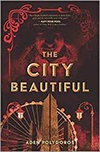
The City Beautiful

By Aden Polydoros

Published in 2021, Aden Polydoros notes in the afterward, “I wanted to write a book where the Jewish characters weren’t just passive victims, but where they fought back and rose above the people who wished to do them harm.” The political climate today is a little trickier, but it does feel like both Hamas and IDF are doing their best to erase the beauty of Jewish culture each in their own way. Polydoros, however, does a powerful job of capturing the complexity of Jewish immigrant experience, in this case in Chicago in the late 1800s.

The City Beautiful packs in a lot, actually – it is a YA historical fantasy murder mystery, tying together the historical realism of immigrant life in the Chicago tenements with Jewish folklore in an enthralling story. Years after a traumatic Atlantic passage and the death of his father, Alter Rosen is focused on staying out of trouble and earning enough money to bring his mother and sisters to America. The disappearance of young men in his neighborhood is common enough that he doesn’t pay it much heed until his roommate and unrequited crush is found drowned. When preparing the tahara, the ritual purification ceremony for dead, he is taken over by the other boy’s dybbuk, or vengeful spirit, and driven to uncover the murder in order to free himself and lay the spirit to rest.

He is assisted by friends and neighbors who all represent varied facets of Jewish and immigrant experiences, occasionally in conflict with each other. The novel captures how messy and uncontained life is, and by contrast how false and damaging stereotypes and propaganda are, even if they seem more easily digestible on the surface. At a more basic level, it is also an absolutely thrilling mystery and ghost story, and a sweet YA-appropriate romance.

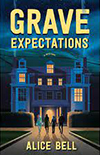
Grave Expectations

By Alice Bell

I guess I just really love the very specific premise of a real psychic, who finds it easier to pretend to be a fake medium, has to solve a murder mystery in an old English country estate, because I loved A House of Ghosts and I loved this one! Despite the obvious similarities above, Grave Expectations has a much lighter, quirkier tone, at least partially due to the modern setting.

30-something Claire has been ‘haunted’ by her best friend ever since Sophie was mysteriously murdered when they were both in high school. This has clearly been a mixed blessing for both Claire and Sophie, but they have settled into a relatively routine life at the novel’s start. Claire makes a basic living as a medium, using Sophie mostly just to eavesdrop and dig through personal items for information.

Claire and Sophie are very reluctantly drawn into a murder investigation by a recent ghost, and their apathy is only matched by their ineptness, which makes for some really excellent comedy. Oddball members of the deceased’s family, both living and dead, join in the investigation, adding to the general hilarity. Halfway through, I was already hoping this is the start of a series.

I was snorting and giggling along, and was completely blindsided (in a good way) by the surprising pathos of the crisis point, when the author gives us a peek into the much more realistic trauma of two women struggling to come to terms with one of their unnatural deaths. I’m only a little ashamed to admit that I teared up. …And then we were back to slapstick reveal and denouement, poking fun at many of the traditional murder mystery tropes! I would have expected it to have felt uneven; it was jarring, but in a really skilled way that used the precarious balance of comedy and drama to strengthen the impact of each.

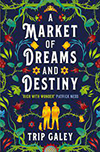
A Market of Dreams and Destiny

By Trip Galey

This novel is set in a fantasy version of Victorian England, where one of our protagonists is an indentured servant in a mundane workhouse and the other is indentured in the underground fae market. The two meet by coincidence (or grand design?) and in addition to an instant attraction, seem to also possess skills and access to help the other toward freedom.

Author Galey does an incredibly good job of weaving together the dual goals that sometimes align and sometimes not, as well an immersive world balancing realistic and fantasy elements. He uses the same mirroring to reflect on the many different ways that the poor and working class are exploited by the wealthy, and how whole systems of society are built on exploitation.

The strong plot element and theme of workers’ rights and community mutual aid felt both contemporaneously Dickensian and very timely for 2023 (and hopefully 2024). It also created high stakes for the various plots and schemes that kept me on the edge of my seat for most of the book. At times I clung to the fact that I’d seen it recommended on a romance forum in hopes for a happy ending. (Minor spoiler: though serious sacrifices are made, the final resolution falls into place immensely satisfyingly.)

Christmas Stories

As I get older, I find I have to work a little harder to generate a holiday spirit among all the daily life stressors and nonsense, so I like to gear up with some seasonal reads:

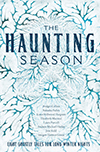
The Haunting Season: Eight Ghostly Tales for Long Winter Nights

I bought this because it includes a Natasha Pulley story about Keita and Thaniel from her Watchmaker of Filigree Street series, which I adore. The general reader reviews are mixed, with many readers saying that Pulley’s story was the weakest since it doesn’t stand alone if you aren’t familiar with the characters. Being well familiar with the characters, though, my experience was the opposite: I very much enjoyed Pulley’s story, always happy to get more of Keita and Thaniel, but was disappointed in the other stories.

Perhaps it was because I was already familiar with Pulley’s characters, but they were the only ones that I actually liked. Most of the other stories featured either selfish or delusional characters, I suppose to ‘justify’ the hauntings one way or another? The plots also seemed overly complicated and obtuse, so each story ended just as I felt like I was starting to get a feel for it.

Sentenced to Christmas

By Marshall Thornton

Marshall Thornton writes the most ridiculous rom-com and cozy mystery plots featuring a cast of hilarious dirtbag characters, and I get a real kick out of his books. As befits the title, the plot of this book is absolutely ridiculous: arrested for burning down the patriotic Christmas tree in front of a conservative talk radio station, our protagonist Gage is sentenced by a crackpot judge to spend Christmas with the prosecuting assistant district attorney (his own defense attorney being Jewish) in order to “learn the true meaning of Christmas.”

The thing about Thornton, though, is that his dirtbag characters then often react with more realistic cranky befuddlement, and it is consistently laugh-out-loud funny. Only one thing stops me from wholeheartedly recommending this: Gage’s friend and assistant is introduced as non-binary, and that being a point of contention with their family, especially around the holidays. Unfortunately, Thornton presumably forgot, and uses she/her pronouns for them for a chunk of the middle of the book. I am confident that it is an unintentional writing error, and amazon reviews mention that some editorial errors have been fixed, so hopefully this is no longer a caveat.

The Housekeepers

By Alex Hay

I only realized after starting this novel that heist stories usually dovetail into two very disparate directions, either clever and glossy (à la Ocean’s Eleven or Leverage) or gritty and desperate (Six of Crows, for one). I enjoy both in general, but currently have more of the emotional capacity for the first, and The Housekeepers decidedly falls into the second.

The recently dismissed housekeeper from a wealthy household gathers together a team to strip the house of all its valuables. The team is all women, most of whom have served in domestic positions, with all the poverty and humiliation that entails. Each woman has her own private motivations and ambitions, and the cooperation of the team always feels like a very fragile agreement that could break at any time.

None of them are particularly likeable, though I sympathized with all of their positions and the actions they felt forced into. It reminded me a little of Parasite, where the extreme inequality is a prison for everyone involved, whether on the luxurious side or not. I could see a solution where all the characters find true purpose and satisfaction, but given the world they lived in, it was impossible, and instead I read in dread of who would get hurt the worst.

And that world, the society they live in, created a more finely pointed, subtle dread than just the suspense of the heist itself. These women who had once been domestic servants are now in much more precarious financial positions, but also have more personal freedom on their own. When they go back into service to set up the operation, the grind of the drudgery becomes its own obstacle, as manual labor and exhaustion take their toll.

The whole thing became a bit much for me at times, honestly—at times I couldn’t put the book down, but other times I had to take a break after a few pages—and the book carries it right to the end. There was no satisfying wheeling out of the perfect plan, just nail biting, and I was hanging onto the blurb raving about “a sensational triumph and the ultimate takedown of those in power” to ensure a happy ending.

Recipe for Disaster: 40 Superstar Stories of Sustenance and Survival

Collected by Alison Riley

I thought this looked like an intriguing gift for any of my cooking-minded friends, so checked it out of the library to preview it (after a number of astonishing failures, I’m trying to do better about reading books before giving them as gifts). I figured I could flip through it at the very least, but I was shocked how quickly I was thoroughly immersed!

First, it is a beautiful book, with full-page photos to illustrate each story/recipe, and would make an excellent gift I think. This also makes it go by fast: I had casually opened the book just to flip through it, and two hours later, I was halfway through and already eager for the next story. Secondly, it covers so many different foods and so many different situations, including some very timely ones of isolation and illness during the pandemic.

It opens with Samantha Irby’s recipe for Rejection Chicken, a perfect author of brilliant, very human (i.e. often humiliating) stories to set the tone for an anthology about comfort foods in tough times. All the stories were so interesting and varied, with only one dud in my opinion. The final story, too, closed the book with such a humorous disaster that I gasped.

Appalachian Elegy

By bell hooks

First, let me apologize for the spam post(s?) that have appeared on this blog (I was honestly mortified). I’m not sure how it happened; I’ve been working with WordPress to bolster the security, but I’m not fully confident it won’t happen again. I guess the only assurance I can offer is that it was probably fairly obvious that we are not trying to advertise Romanian casinos to you?

But also, I’ve been in a bad case of reader’s block lately. I’ve started three different books, and stopped less than halfway through each one, losing interest just to doomscroll twitter, tumblr, and reddit instead. I wasn’t sleeping all that well either, and it felt like part of the same thing: just a little too nervy to really relax.

In desperation to actually finish anything, I picked up the copy of bell hook’s Appalachian Elegy that a friend had given me for Christmas, hopefully last year though I can’t swear to it. I don’t really understand the vast majority of poetry but figured it might work as a palette cleanser of sorts for my brain. It is a very short volume: only 66 one-page poems total, but I took my time with it.

She covers the natural beauty of the Appalachians, and ties it into the people there, both past and present, and the opportunities and oppressions that those people have faced. It is a lot to cover, and yet the poems feel airy and lyrical at the same time. I only read 5 or 6 poems each night, stopping when I felt myself either zoning out or trying to rush through the words, and slowly felt like I was starting to unwind. I still struggled with feeling like I was missing the deeper meaning, and I very likely am, but just the words and rhythms became enough for me. I am still struggling to concentrate on anything longer, but this has certainly helped and I hope to remember to turn to poetry in the future as well.