Youth Group

By Jordan Morris and Bowen McCurdy

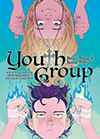
I’ve been listening to the Jordan, Jesse, Go! podcast on MaximumFun lately (Jordan and Jesse are very funny and a little spicy), and Jordan Morris has just released his new graphic novel Youth Group. Set among a Christian church youth group, I wasn’t at all sure this was my sort of thing, but figured it couldn’t hurt to check it out from the library.

However, Morris treats everything with astonishing nuance and empathy, particularly for a story that revolves around said youth group exorcising the demons that are haunting the world. He truly captures the teenage spirit in a way that is incredibly rare, and had me laughing out loud multiple times. McCurdy’s art is also gorgeous, which goes a long way for me in a graphic novel.

There’s been lots of comparisons to Buffy the Vampire Slayer, understandably, and while it isn’t as similar as one would think with the topic, it captures a lot of the same feeling I had when I first watched Buffy way back when: utter delight! (It was really, really nice to revisit that feeling after the subsequent stories about Joss Whedon tainted it.) Youth Group takes the usually overly grimdark genre of religious horror and makes it light and funny and caring and surprisingly inclusive. And the art matches it perfectly, bright and colorful and just fun!

Keanu Reeves Is Not In Love With You

The Murky World of Online Romance Fraud

By Becky Holmes

Of course the title and cover of this booked grabbed my attention immediately! I’d read articles about romance scams before and wondered how anyone could fall for them. And, as the author points out, thinking yourself impervious to a particular type of scam can lead you to lower your guard and become more susceptible. So, I clearly had to learn more.

Becky Holmes is quite funny, in a particularly British way that I don’t always get, so while I was giggling out loud several times, I also occasionally just sort of shrugged. She begins with a lot of texts leading various scammers on, which is entertaining but gets repetitive. This is also how she first got interested in the topic, entertaining herself with the various scam messages she got across social media platforms. The silliness sometimes felt a little jarring in contrast with the harm being discussed, but as she got more into the topic with accounts from victimized people, it got fairly grim and I appreciated the levity.

As ridiculous as the scams sound when reading them from the comfort of one’s own home, she explains that they are most effective on people going through other trauma in their lives, and desperate for love and connection enough to overlook the signs of fraud that are obvious to the rest of us. And in that light, scammers purposefully looking for people in trouble and illness is particularly disgusting. The people Holmes interviews look back at their own situation and can’t quite believe they were in such bad shape to fall for the lines they did, which really struck me because I’ve certainly related to being retrospectively astonished at how stress and exhaustion can compromise my reasoning.

Towards the end of the book, though, the cumulative stories all started to feel a bit draining. I felt discouraged by the cynicism of the scammers preying on people looking for love, and wondered what it was doing for their long-term psyche. Even worse, I fell back into some victim blaming, not for falling for fairly blatant false scenarios, but their willingness to go along with some incredibly shady dealings that could have gotten them in serious legal trouble if they’d been real.

The author’s total and unconditional support of the victims (and mild scolding of anyone even remotely critical of them) didn’t help. Holmes explicitly compares romance scams to abusive relationships, but they seemed more comparable to addiction to me. The victims become so attached to the scammer that they’ll do anything for them and deny all reason, including pushing away family and friends. (Especially shocking is when some admit that they would welcome the scammer back if they got back in touch.) Of course this is terrible and they need help and understanding, but it is not such a shock that their other personal relationships have taken a hit in the process.

Eli Harpo’s Adventure to the Afterlife

By Eric Schlich

This book is an utter trip! (Pun semi-intended?) Eric Schlich captures and satirizes, with what I can only assume is great accuracy, what he calls the heaven tourism genre: Heaven is for Real and books of that ilk. Though I haven’t read any of those purported nonfiction books, this novel has enough similarities to the description of Todd Burpo’s book that I’m guessing the publisher had to brush up on the fair use rules for parody.

At age 4, fictional Eli Harpo had emergency heart surgery, and told his parents of visiting heaven while under anesthesia. His dad has since written a book about it (Heaven or Bust!) and ekes out a living selling and giving talks about the book. Eli happily supports this relatively small potatoes endeavor, but when a renowned televangelist comes calling and the publicity blows up, Eli is faced with increasing doubts. 

The chronology jumps around a bit, with most of the book being a flashback as middle-aged Eli is revisiting Bible World, the Christian theme park where his budding fame came crashing down at age 13. Most of the book details how Eli and his family got there, both physically and mentally, with some flashforwards to college, where he rebuilt his nonreligious life. The book pointedly does not reflect Eli any younger than 13 because he himself cannot remember any of the original pivotal near-death experience that has brought them all to this point.

Described as “witty, satirical, and profoundly big-hearted,” it was that, but the praise didn’t mention that it is also utterly mortifying. I don’t suffer from second-hand embarrassment as much as others, but I was both agog and cringing at most of the scenes in the novel. Which I mean in a good way — if it wasn’t so well written, it wouldn’t have nearly the impact! I didn’t relate especially closely to any of the characters (though other reviewers who experienced much more stringently religious upbringings than I have said that it is quite accurate), but I found it all fascinating. They could have so easily been caricatures, but truly each character contained unexpected dimensions. Schlich details each scene which such realism and matter-of-fact first-person narration from Eli, that I periodically had to check that this was in fact a novel and not a memoir.

Bodies

By Si Spencer

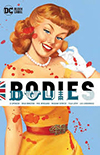
This is a new(ish) program on Netflix, which looks both intriguing and confusing. The graphic novel it is based on turns out to also be intriguing and confusing. It is set in London but over four different years: 1890, 1940, 2014, and 2050. Investigators of each time period are faced with the mysterious appearance a brutally murdered corpse with no identification. The thing is that it is the same corpse for all of them.

I don’t have great facial recognition in general, so was impressed that I was vaguely able to recognize the reoccurring corpse, even across the different art styles. Each year has its own artist, all significantly distinct and all quite good. The art complements the writing in capturing the cultural changes of each time period as well. All that to say, it is a beautifully done graphic novel, and I still have only the vaguest sense of what it is all about.

I think it is probably very British? It reminded me a bit of Watchmen and V For Vendetta in overall style, though Bodies is generally more optimistic. Each year is a time of upheaval for England, highlighting different threats, both internal and external, that England has faced. It ends in a very English-centric declaration that I assume might resonate more if I were English.

… I decided I should probably at least watch the first episode of the show so that I can give my two cents on that, fully expecting to be unenthusiastic, but the show is actually really good! It takes significant divergences from the source, but they mostly improve the suspense and pacing to my mind, as well as making the characters a little more nuanced, though I’m still only halfway through the series. Rebecca pointed out that the cinematography is so good that it surpassed the illustration for her.

The show also made a theme more explicit that I’d initially missed from the comic: that all four investigators from the various time periods are various degrees of acab, exerting their power over vulnerable characters, but they are also each from a discriminated population themselves, possibly using their borrowed authority to balance.

How to Give Up Plastic

By Will McCallum

Like a lot of people I’m sure, I’ve been reflecting more and more lately on how much waste and plastic in particular there is in my life. It feels really daunting though, to try to cut it down, so I jumped on getting some clear guidelines on where to start. This turns out to have been a very timely read, since I just learned about the Plastic Free July campaign, started in 2011.

Will McCallum is Head of Oceans at Greenpeace UK, so feels VERY strongly about all of this, naturally. He begins by making the case for trying to eliminate plastics with some rather harrowing stories of natural devastation that I kind of wish I hadn’t read. I gritted my teeth and got through the first two chapters, though I wasn’t sure why I was pointing myself through the stress of it all, since I was already on board. However, I began to understand later why McCallum hits it so hard. A lot of the approaches toward eliminating plastic are going to be annoying (to you and others), inconvenient, and a little confrontational at times, so it is important to keep in one’s mind the criticalness of the endeavor. I also found some resolve in the idea of fighting against the notoriously anti-environment petroleum companies, who are incredibly invested in continuing to escalate plastic use for their own profits.

The third chapter gives some hope with initiatives that are beginning to work around the globe, primarily government and policy interventions; the fourth on the impact that individuals can make, both in their own actions and influencing their community and local government; and finally in the fifth chapter we get down to the nitty gritty of tracking down plastic alternatives. Luckily, the easiest replacements also seem to be the most critical. The book mentions the Big 5 of disposable plastics, those plastic items that we use for mere minutes one time and then throw out: cups and lids, straws, water bottles, plastic cutlery, and of course plastic bags.

A quote by oceans activist and actress (Ginny Weasley!) Bonnie Wright sums it all up nicely, “If I had a message, it would be that yes, it is very overwhelming and it is a really big issue, but these small changes that you are making are significant. It can be hard, so just choose one part of your household—like food, or cleaning products, or toiletries—to tackle first.”

Mystery Comics

A friend asked me for a recommendation for a graphic novel to introduce her to the medium, which is always a fun challenge. She stumped me, though, when I asked her preferred genre, and she said ‘cozy mystery’! I would have previously thought that graphic novels covered pretty much all genres, but I couldn’t think of a single cozy mystery. I sent her Jason Little’s Shutterbug Follies, which I would classify as more of a quirky mystery than cozy (a fine distinction), while I did a deeper dive through my library stacks.

The Good Asian by Pornsak Pichetshote and Alexandre Tefenkgi

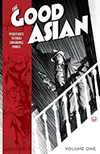
This is very much noir, and not cozy, but is also super interesting! Starting with him stuck in an immigration detainment camp, Edison Hark is a Chinese police officer working in San Francisco in 1936. Tracking down the missing Chinese maid of a millionaire family takes him through all levels of society. The author and artists capture classic noir perfectly in both narrative and style, and weave in an impressive amount of historical detail. My only complaint is a common one with graphic novels, that is was just too abridged. The characterizations and plot felt rushed to the point that I had some trouble keeping track of the investigation, which certainly blunts the suspense and reveals a bit. Even with the compression, volume 1 ends on a cliffhanger with no solution yet in sight.

Continue reading

James

By Percival Everett

James has been getting so much buzz lately, and it is all more than deserved! This retelling of Mark Twain’s Adventures of Huckleberry Finn from the perspective of Jim (James) the slave who accompanies Huck on his adventure gives so much more insight into the period than the original, honestly. Everett uses the familiar story to capture a wide range of the Black experience in America, including slavery, of course, but also code switching, colorism, and fair weather allies among a whole lot more. It would be a bit overwhelming if it wasn’t so tightly constructed around the narrative.

James overall reminds me of Longbourn, with the peek into how much else is going on behind the scenes of a well-known story, and a stunningly different perspective that gives a classic a whole different meaning. It is excellent, riveting, and also a little painful, stripping away any sort of nostalgic sentiment for a story about a boy traveling the Mississippi on a raft. That said, I haven’t read Huckleberry Finn since high school, and while I remember liking it, I don’t remember specifics about the plot. So, on the one hand, I occasionally wished I recognized more of the scenes to better appreciate Everett’s twists; on the other hand, it certainly increased the suspense having no idea how Jim’s story ends in the original. No spoilers, but I did recognize one distinct departure from the original and wasn’t sure how I felt about it, until it became clear how necessary it was in order to explain James’ later actions in a way that sort of broke my heart. All heaviness aside, and there is a fair amount of that, the overall novel is surprisingly funny as well – I laughed out loud multiple times.

So, James in particular is garnering lots of nominations and awards, but Everett’s bibliography is full of fascinating titles that I’m looking forward to exploring in the future.

Comics written by women

I ran across a thread on Twitter listing out comics and manga by women, and there were a number I hadn’t heard of, so I promptly went on a hold spree on my library’s website.

The Good

Sleepless by Sarah Vaughn and Leila del Duca

Ooh, this was a delight! The beautiful illustrations and realistic dialogue work together to draw the reader into this diverse Renaissance-type world of heraldry, politics, and magic. Lady Pyppenia or “Poppy” is the beloved though illegitimate daughter of the late king, trying to find her place in the court once her uncle takes the thrown. Her sworn knight, Cyrenic, is one of the ‘sleepless,’ guards who have magically sacrificed their need for sleep in order to offer around-the-clock protection, and the only one she can trust when assassins come for her.

The world building is expansive enough that it reminds me a bit of Game of Thrones, though much more family friendly, of course. The variety of fantasy cultures borrow elements from Europe through the Mediterranean and down into North Africa, represented with different fashions, manners, and magic, and all trying to navigate the various political alliances. At the same time, it is an intimate look at the relationship between a young woman in a precarious position of power and the man that serves her. The first volume ends on a cliffhanger, and the second picks up immediately, so get them together if you can.

Black Cloak by Kelly Thompson and Meredith McClaren

Another phenomenal story! I knew it was likely to be a good one for me from the various raves describing it as fantasy shot through with noir mystery/police procedural. There’s not much better way to my heart, and it is excellently done.

Set in a futuristic fantasy world, where elves, dragons, and humans all jostle for political power in the last standing city, Black Cloak balances the writing and illustrations beautifully in its “show, don’t tell” approach. When two bodies wash ashore from the mermaid lagoon, our protagonist, a ‘black cloak’ cop, must investigate. The world-building unfolds with the mystery as the bodies lead to secrets through all levels of the society.

Continue reading

The Mysterious Case of the Alperton Angels

By Janice Hallett

I raved about Hallett’s The Appeal earlier this year, but I’m savoring this one even more! The Alperton Angels uses the same epistolary style of collected emails, texts, and memos, but whereas The Appeal was more cozy mystery, this is religious suspense thriller, which is absolutely my bag. The same style that worked so well to bring out the humor in small community theater works equally well at building brewing creeping dread.

The first page sets the premise: you have access to the following collection of documents, do you take them to the police or hide them away forever? And when I first started, I wondered, what on earth would lead me to cover up a brutal murder?! Well, the presence of the antichrist might… (that’s a teaser, not a spoiler). The documents are the collected emails, texts, and transcribed interviews of a true crime author researching her latest project: years ago two teenagers rescued a baby from a doomsday cult that claimed it was the antichrist and planned to kill it to save the world. The cult itself was then found dead by ritual suicide by the cops that responded to the teen’s emergency call. After the first rush of news stories, with some suspicious discrepancies, the story went quiet and the teens and baby seem to have disappeared.

Our central author is approached by her publisher to revisit the story, and to pique the public’s interest, find the baby, who would be turning 18 this year. As she follows the various leads, more and more isn’t adding up, and then a competing author joins the search as well. That’s about as much as I want to say; since the mystery goes in so many different directions, anything else could be mild spoilers. There were so many twists and turns at the end, it was getting a little ridiculous, but I loved every one of them!

The Seven Moons of Maali Almeida

By Shehan Karunatilaka

Work is sending me to Sri Lanka tomorrow, so I scrambled to check out several travel guides from the library. They weren’t really holding my attention, though, so I had the thought to track down a fictional novel by a Sri Lankan author and set there. Unsurprisingly, the vast majority focus on the long and brutal civil war, and that wasn’t what I was looking for in this particular moment.

The Seven Moons of Maali Almeida has a fascinating premise, and was described as “bawdy, wisecracking” and “comic, macabre, angry and thumpingly alive,” which seemed more like it. However, it was very much also about the civil war, which upon consideration makes a lot of sense: the 26-year war only ended in 2009, recent enough that it would probably be absurd for any novel to not feature it someway or another. (I also think it worked: I have a much better general sense of the recent history and culture, though I had to frequently remind myself that I was reading a critique of the most negative side.)

The novel opens with Maali Almeida, a photojournalist, arriving in the afterlife, which spotty memories of his life and none of his death. The very bureaucratic helper explains to him that he has seven moons before his chance to move to the next stage, whatever that will be, closes. As he travels around Colombo, revisiting old homes, family, and friends, dodging various other ghosts and demons, pieces of his life come back to him, and he scrambles to make meaning of it before he must go on.

Maali not a very likeable man, though neither is anyone else, and the situation in Sri Lanka is impossible. The tone of the book in general reminded me of Catch-22, in that it was actually quite funny when showing truly horrifying circumstances. Upon reading the first chapter, Rebecca said it reminded her a bit of Slumdog Millionaire, and perhaps there is genre of books that reveal the worst of humanity through the darkest of humor. For all that, though, it ended in a surprisingly optimistic view of humanity and life in general, which caught me off guard but that I really appreciated. (As an aside, the beginning of the book caught me off guard with its second-person present tense, which is an usual style that can be difficult to get into, but I adjusted more quickly than I expected and came to really appreciate it.)