How to Give Up Plastic

By Will McCallum

Like a lot of people I’m sure, I’ve been reflecting more and more lately on how much waste and plastic in particular there is in my life. It feels really daunting though, to try to cut it down, so I jumped on getting some clear guidelines on where to start. This turns out to have been a very timely read, since I just learned about the Plastic Free July campaign, started in 2011.

Will McCallum is Head of Oceans at Greenpeace UK, so feels VERY strongly about all of this, naturally. He begins by making the case for trying to eliminate plastics with some rather harrowing stories of natural devastation that I kind of wish I hadn’t read. I gritted my teeth and got through the first two chapters, though I wasn’t sure why I was pointing myself through the stress of it all, since I was already on board. However, I began to understand later why McCallum hits it so hard. A lot of the approaches toward eliminating plastic are going to be annoying (to you and others), inconvenient, and a little confrontational at times, so it is important to keep in one’s mind the criticalness of the endeavor. I also found some resolve in the idea of fighting against the notoriously anti-environment petroleum companies, who are incredibly invested in continuing to escalate plastic use for their own profits.

The third chapter gives some hope with initiatives that are beginning to work around the globe, primarily government and policy interventions; the fourth on the impact that individuals can make, both in their own actions and influencing their community and local government; and finally in the fifth chapter we get down to the nitty gritty of tracking down plastic alternatives. Luckily, the easiest replacements also seem to be the most critical. The book mentions the Big 5 of disposable plastics, those plastic items that we use for mere minutes one time and then throw out: cups and lids, straws, water bottles, plastic cutlery, and of course plastic bags.

A quote by oceans activist and actress (Ginny Weasley!) Bonnie Wright sums it all up nicely, “If I had a message, it would be that yes, it is very overwhelming and it is a really big issue, but these small changes that you are making are significant. It can be hard, so just choose one part of your household—like food, or cleaning products, or toiletries—to tackle first.”

Mystery Comics

A friend asked me for a recommendation for a graphic novel to introduce her to the medium, which is always a fun challenge. She stumped me, though, when I asked her preferred genre, and she said ‘cozy mystery’! I would have previously thought that graphic novels covered pretty much all genres, but I couldn’t think of a single cozy mystery. I sent her Jason Little’s Shutterbug Follies, which I would classify as more of a quirky mystery than cozy (a fine distinction), while I did a deeper dive through my library stacks.

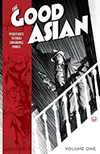
The Good Asian by Pornsak Pichetshote and Alexandre Tefenkgi

This is very much noir, and not cozy, but is also super interesting! Starting with him stuck in an immigration detainment camp, Edison Hark is a Chinese police officer working in San Francisco in 1936. Tracking down the missing Chinese maid of a millionaire family takes him through all levels of society. The author and artists capture classic noir perfectly in both narrative and style, and weave in an impressive amount of historical detail. My only complaint is a common one with graphic novels, that is was just too abridged. The characterizations and plot felt rushed to the point that I had some trouble keeping track of the investigation, which certainly blunts the suspense and reveals a bit. Even with the compression, volume 1 ends on a cliffhanger with no solution yet in sight.

Continue reading

James

By Percival Everett

James has been getting so much buzz lately, and it is all more than deserved! This retelling of Mark Twain’s Adventures of Huckleberry Finn from the perspective of Jim (James) the slave who accompanies Huck on his adventure gives so much more insight into the period than the original, honestly. Everett uses the familiar story to capture a wide range of the Black experience in America, including slavery, of course, but also code switching, colorism, and fair weather allies among a whole lot more. It would be a bit overwhelming if it wasn’t so tightly constructed around the narrative.

James overall reminds me of Longbourn, with the peek into how much else is going on behind the scenes of a well-known story, and a stunningly different perspective that gives a classic a whole different meaning. It is excellent, riveting, and also a little painful, stripping away any sort of nostalgic sentiment for a story about a boy traveling the Mississippi on a raft. That said, I haven’t read Huckleberry Finn since high school, and while I remember liking it, I don’t remember specifics about the plot. So, on the one hand, I occasionally wished I recognized more of the scenes to better appreciate Everett’s twists; on the other hand, it certainly increased the suspense having no idea how Jim’s story ends in the original. No spoilers, but I did recognize one distinct departure from the original and wasn’t sure how I felt about it, until it became clear how necessary it was in order to explain James’ later actions in a way that sort of broke my heart. All heaviness aside, and there is a fair amount of that, the overall novel is surprisingly funny as well – I laughed out loud multiple times.

So, James in particular is garnering lots of nominations and awards, but Everett’s bibliography is full of fascinating titles that I’m looking forward to exploring in the future.

Comics written by women

I ran across a thread on Twitter listing out comics and manga by women, and there were a number I hadn’t heard of, so I promptly went on a hold spree on my library’s website.

The Good

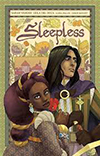
Sleepless by Sarah Vaughn and Leila del Duca

Ooh, this was a delight! The beautiful illustrations and realistic dialogue work together to draw the reader into this diverse Renaissance-type world of heraldry, politics, and magic. Lady Pyppenia or “Poppy” is the beloved though illegitimate daughter of the late king, trying to find her place in the court once her uncle takes the thrown. Her sworn knight, Cyrenic, is one of the ‘sleepless,’ guards who have magically sacrificed their need for sleep in order to offer around-the-clock protection, and the only one she can trust when assassins come for her.

The world building is expansive enough that it reminds me a bit of Game of Thrones, though much more family friendly, of course. The variety of fantasy cultures borrow elements from Europe through the Mediterranean and down into North Africa, represented with different fashions, manners, and magic, and all trying to navigate the various political alliances. At the same time, it is an intimate look at the relationship between a young woman in a precarious position of power and the man that serves her. The first volume ends on a cliffhanger, and the second picks up immediately, so get them together if you can.

Black Cloak by Kelly Thompson and Meredith McClaren

Another phenomenal story! I knew it was likely to be a good one for me from the various raves describing it as fantasy shot through with noir mystery/police procedural. There’s not much better way to my heart, and it is excellently done.

Set in a futuristic fantasy world, where elves, dragons, and humans all jostle for political power in the last standing city, Black Cloak balances the writing and illustrations beautifully in its “show, don’t tell” approach. When two bodies wash ashore from the mermaid lagoon, our protagonist, a ‘black cloak’ cop, must investigate. The world-building unfolds with the mystery as the bodies lead to secrets through all levels of the society.

Continue reading

The Mysterious Case of the Alperton Angels

By Janice Hallett

I raved about Hallett’s The Appeal earlier this year, but I’m savoring this one even more! The Alperton Angels uses the same epistolary style of collected emails, texts, and memos, but whereas The Appeal was more cozy mystery, this is religious suspense thriller, which is absolutely my bag. The same style that worked so well to bring out the humor in small community theater works equally well at building brewing creeping dread.

The first page sets the premise: you have access to the following collection of documents, do you take them to the police or hide them away forever? And when I first started, I wondered, what on earth would lead me to cover up a brutal murder?! Well, the presence of the antichrist might… (that’s a teaser, not a spoiler). The documents are the collected emails, texts, and transcribed interviews of a true crime author researching her latest project: years ago two teenagers rescued a baby from a doomsday cult that claimed it was the antichrist and planned to kill it to save the world. The cult itself was then found dead by ritual suicide by the cops that responded to the teen’s emergency call. After the first rush of news stories, with some suspicious discrepancies, the story went quiet and the teens and baby seem to have disappeared.

Our central author is approached by her publisher to revisit the story, and to pique the public’s interest, find the baby, who would be turning 18 this year. As she follows the various leads, more and more isn’t adding up, and then a competing author joins the search as well. That’s about as much as I want to say; since the mystery goes in so many different directions, anything else could be mild spoilers. There were so many twists and turns at the end, it was getting a little ridiculous, but I loved every one of them!

The Seven Moons of Maali Almeida

By Shehan Karunatilaka

Work is sending me to Sri Lanka tomorrow, so I scrambled to check out several travel guides from the library. They weren’t really holding my attention, though, so I had the thought to track down a fictional novel by a Sri Lankan author and set there. Unsurprisingly, the vast majority focus on the long and brutal civil war, and that wasn’t what I was looking for in this particular moment.

The Seven Moons of Maali Almeida has a fascinating premise, and was described as “bawdy, wisecracking” and “comic, macabre, angry and thumpingly alive,” which seemed more like it. However, it was very much also about the civil war, which upon consideration makes a lot of sense: the 26-year war only ended in 2009, recent enough that it would probably be absurd for any novel to not feature it someway or another. (I also think it worked: I have a much better general sense of the recent history and culture, though I had to frequently remind myself that I was reading a critique of the most negative side.)

The novel opens with Maali Almeida, a photojournalist, arriving in the afterlife, which spotty memories of his life and none of his death. The very bureaucratic helper explains to him that he has seven moons before his chance to move to the next stage, whatever that will be, closes. As he travels around Colombo, revisiting old homes, family, and friends, dodging various other ghosts and demons, pieces of his life come back to him, and he scrambles to make meaning of it before he must go on.

Maali not a very likeable man, though neither is anyone else, and the situation in Sri Lanka is impossible. The tone of the book in general reminded me of Catch-22, in that it was actually quite funny when showing truly horrifying circumstances. Upon reading the first chapter, Rebecca said it reminded her a bit of Slumdog Millionaire, and perhaps there is genre of books that reveal the worst of humanity through the darkest of humor. For all that, though, it ended in a surprisingly optimistic view of humanity and life in general, which caught me off guard but that I really appreciated. (As an aside, the beginning of the book caught me off guard with its second-person present tense, which is an usual style that can be difficult to get into, but I adjusted more quickly than I expected and came to really appreciate it.)

The Mysteries

By Bill Watterson and John Kascht

I first heard about Bill Watterson’s latest publication from Midnight Pals’ twitter thread, which is funny, a little mean, and pretty accurate. I wasn’t sure what to expect, but the extremely slim volume with one sentence and one picture per page still took me by surprise. It’s described as a “fable for grown-ups” and it is a very quick read — my whole family read it in an afternoon.

It is very much a departure from his Calvin & Hobbes work, though some family thought they could recognize trace similarities in the illustrations. I wasn’t previously familiar with John Kascht, apparently a renowned caricaturist, but per the afterward, both art and writing were a collaborative effort. Whatever each of their roles were, it is clear that they are both fairly fed up with the cultural discourse over the last few decades and perhaps humanity itself. Though it is overall a hopeful message, it reminded a number of us of this comic.

It’s a lovely little book that would probably make a nice gift for a fan or completionist; everyone else should also check it out, but perhaps from the library.

Unexpected Night

By Elizabeth Daly

This book is a trip — not exactly good by today’s standards, but very entertaining! First published in 1940, Daly is a contemporary of Agatha Christie, though not nearly as prolific or renowned. I was going to give Daly some extra credit for avoiding the n-word where Christy would absolutely have used it, but she follows up later with some blackface and different (less charged?) slurs, so I guess there’s that.*

The narrative structure and characters are certainly dated, but that was part of the charm for me. I was often kept guessing at the twists in plot, more because I don’t understand many of the lifestyles and character tropes of the time (why is everyone going out golfing the day after a suspicious death?!) than any planned surprise reveals, and occasionally I couldn’t understand what the characters were on about, with their contemporary slang. It adds a certain spice to the reading experience!

Unexpected Night introduces Daly’s primary detective, Henry Gamadge, an antique book verifier, who gets dragged into mysteries under the flimsiest of excuses. In this case, he is vacationing at a resort in Maine, coincidentally along with a casual friend of his, who’s family then becomes embroiled in the suspicious death. Like I said, Gamadge doesn’t have much of a connection, and I very much appreciated the variety of characters that were also puzzled at his involvement, including the long suffering sheriff.

Since this is her first published book and the first in the Henry Gamadge series, I’m guessing that some of the rougher narrative and character parts will get smoothed out, and I look forward to continuing the series.

*Well, I started the second novel in the series, Deadly Nightshade, and unfortunately it features depictions of “gypsies” so offensive I had to quit, so I guess that’s that.

Doppelganger

By Naomi Klein

So, I didn’t really know who Naomi Klein was, or Naomi Wolf for that matter, but I’d seen the rhyme going around twitter:

If the Naomi be Klein / You’re doing just fine / If the Naomi be Wolf / Oh, buddy. Ooooof.

and it made me laugh, even without context. And, well, here’s the context and then some! Naomi Klein, I learned, is a renowned author who has previously focused on criticisms of capitalism and government, and who has long been deviled by the inability to distinguish her completely from the “Other Naomi.” Naomi Wolf first became famous as a feminist author in the 90s, a sort of peer of Camille Paglia.*

With the exponential popularity of social media and then the pandemic shutdown, the confusion grew even worse, and Klein became somewhat obsessed with her other, tracking Wolf’s sharp turn into deep right-wing conspiracies and alliances with Steve Bannon and Tucker Carlson among others. Klein uses her particular relationship (such as it is) with her doppelganger as an extremely effective jumping off point to comment on a wide variety of societal issues, such as increased isolation coming out of social media, polarization in politics, and the various grifters that take advantage of it all.

Some of the criticisms of the book are that it is too wide ranging, and would be better to have narrowed the focus, but I strongly disagree. One of Klein’s theses is that our social systems are all interconnected, and in order to make change, one must be able to take a wide view of everyone and everything. The disenfranchisement we’re seeing in politics, economy, environment, personal relationships, and on and on, are all tied together, and Klein’s general framework of doppelgangers and mirror worlds is a very effective thread leading the reader through them all.

It’s such a sprawling and deep look at issues I don’t often read about for pleasure, that I was continually caught off guard by how funny Klein is. Just about every passage had me laughing out loud, her accounts of being very occasionally mistaken for Naomi Campbell being a notable example. That said, it does get more serious as it goes, an effective way to lead more casual readers like me into deeper philosophical waters than we are used to.

Speaking of deeper philosophical waters, Klein references several times the docuseries “Exterminate All the Brutes” currently on HBO, which looks at the history of genocide in establishing “civilized” societies. I have currently just watched the first of the four hour-long episodes, since the topic is devastating and takes some time to sit with. The meandering, montage style took me a while to get used to, and the images and topics are definitely a bombardment to the psyche. But it is also increasingly clear that we’ve been taught a very white-washed and sanitized version of history, and it is critically important to try to unlearn that propaganda whenever and wherever we can.

* I have never read Camille Paglia, either, but at least was familiar with her due to a scorching review by Molly Ivins.

The City Beautiful

By Aden Polydoros

Published in 2021, Aden Polydoros notes in the afterward, “I wanted to write a book where the Jewish characters weren’t just passive victims, but where they fought back and rose above the people who wished to do them harm.” The political climate today is a little trickier, but it does feel like both Hamas and IDF are doing their best to erase the beauty of Jewish culture each in their own way. Polydoros, however, does a powerful job of capturing the complexity of Jewish immigrant experience, in this case in Chicago in the late 1800s.

The City Beautiful packs in a lot, actually – it is a YA historical fantasy murder mystery, tying together the historical realism of immigrant life in the Chicago tenements with Jewish folklore in an enthralling story. Years after a traumatic Atlantic passage and the death of his father, Alter Rosen is focused on staying out of trouble and earning enough money to bring his mother and sisters to America. The disappearance of young men in his neighborhood is common enough that he doesn’t pay it much heed until his roommate and unrequited crush is found drowned. When preparing the tahara, the ritual purification ceremony for dead, he is taken over by the other boy’s dybbuk, or vengeful spirit, and driven to uncover the murder in order to free himself and lay the spirit to rest.

He is assisted by friends and neighbors who all represent varied facets of Jewish and immigrant experiences, occasionally in conflict with each other. The novel captures how messy and uncontained life is, and by contrast how false and damaging stereotypes and propaganda are, even if they seem more easily digestible on the surface. At a more basic level, it is also an absolutely thrilling mystery and ghost story, and a sweet YA-appropriate romance.