The Hymn to Dionysus

By Natasha Pulley

Ooh, Natasha Pulley just keeps getting better and better at her special talent, which is weaving truly brutal social commentary through a cover of fantasy action. I went into this one with less trepidation after The Mars House, and I’m sort of wondering if The Mars House was a setup. There are enough notably similar themes between the two novels that I began to think of them as a pairing of sorts, though very, very different in setting, character, and plot.

The Hymn To Dionysus has an even more light-hearted tone right off the bat. Our protagonist is a happy child soldier in ancient Thebes, and if it doesn’t exactly sound like a happy existence to a modern reader, well, sometimes that’s just the case with fantasy, especially historical fantasy. I mean, look at the majority of children’s and young adult media, right? The Hunger Games and Naruto, just to name a few right off the bat – full of deeply traumatizing events for young children who just sort of make do, and that’s what our protagonist does, too. His life has some downsides (murdering, enslaving, etc.) but there’s plenty of upsides, too (his military unit is like a family to him, he gets to travel and see all sorts of sights). He and everyone else in Thebes are just going along, until Dionysus, the god of madness, shows up and suddenly they can’t just go along, and the full awareness of it all starts crashing down on them, and it is devastating, for both the characters and the reader.

As if all that wasn’t enough, there are some striking comparisons to our current world. My ancient Greek history isn’t up to much, but I started getting the impression this was set toward the end of the Grecian empire, with a years-long drought devastating all levels of civil society. As field slaves run away, figuring capture and death is better than starvation on the stringent food rations, the military is charged with rounding up ‘criminals’ to work the fields for the necessary food for the city and given a quota to meet, which rang direly true.

It ends as satisfactorily as possible, more so than I’d imagined it being able to after a whole series of gasp-worthy twists, and left some scenes indelibly imprinted in my head, so I’d generally recommend this, though I am looking forward to returning to something a little more gentle next (spoiler: I didn’t do that).

The Mars House

By Natasha Pulley

You know how there are rare authors that you as a reader just trust implicitly? Like, even if the story doesn’t seem to be making sense or clicking, you know they’ll pull it off in the end. Well, I don’t trust Natasha Pulley – in fact, I actively distrust her. This is not to say that her books aren’t consistently excellent. They are! She just has a real habit of throwing in some actual crime against humanity, and having all the characters shrug it off like no big deal.

I wouldn’t even read this one until Kinsey read it first and gave me the all clear, and even then, I read it in a sort of mental flinch state. This also made me very suspicious of the slightest hint of genocidal tendencies in characters, so I was extra judgmental of them all and not quite able to actually like them as much as perhaps I would have otherwise.

Our main character is a principal ballet dancer for the Royal Ballet who has to flee the climate crisis in London for a colony on Mars. There, he is consigned to manual labor until a conflict with an anti-immigration politician forces the two of them into a contractual marriage (it makes marginally more sense in the context). This would all be brutal to read if the protagonist wasn’t such an utter golden retriever, just overall cheerful (and a little egocentric) regardless of harrowing circumstances around him.

It seemed clear from the outset that the politics were not all that they seemed, but I stayed extremely wary of Pulley trying to trick me into rooting for a war criminal or some such. Instead, though, she wove a very satisfyingly complex mystery that pulls in geopolitics, gender and cultural identity, disability rights, and so much more. The core relationship is, of course, the draw, but I find myself continuing to think through the various linguistic and cultural extrapolations Pulley creates here.

Eli Harpo’s Adventure to the Afterlife

By Eric Schlich

This book is an utter trip! (Pun semi-intended?) Eric Schlich captures and satirizes, with what I can only assume is great accuracy, what he calls the heaven tourism genre: Heaven is for Real and books of that ilk. Though I haven’t read any of those purported nonfiction books, this novel has enough similarities to the description of Todd Burpo’s book that I’m guessing the publisher had to brush up on the fair use rules for parody.

At age 4, fictional Eli Harpo had emergency heart surgery, and told his parents of visiting heaven while under anesthesia. His dad has since written a book about it (Heaven or Bust!) and ekes out a living selling and giving talks about the book. Eli happily supports this relatively small potatoes endeavor, but when a renowned televangelist comes calling and the publicity blows up, Eli is faced with increasing doubts. 

The chronology jumps around a bit, with most of the book being a flashback as middle-aged Eli is revisiting Bible World, the Christian theme park where his budding fame came crashing down at age 13. Most of the book details how Eli and his family got there, both physically and mentally, with some flashforwards to college, where he rebuilt his nonreligious life. The book pointedly does not reflect Eli any younger than 13 because he himself cannot remember any of the original pivotal near-death experience that has brought them all to this point.

Described as “witty, satirical, and profoundly big-hearted,” it was that, but the praise didn’t mention that it is also utterly mortifying. I don’t suffer from second-hand embarrassment as much as others, but I was both agog and cringing at most of the scenes in the novel. Which I mean in a good way — if it wasn’t so well written, it wouldn’t have nearly the impact! I didn’t relate especially closely to any of the characters (though other reviewers who experienced much more stringently religious upbringings than I have said that it is quite accurate), but I found it all fascinating. They could have so easily been caricatures, but truly each character contained unexpected dimensions. Schlich details each scene which such realism and matter-of-fact first-person narration from Eli, that I periodically had to check that this was in fact a novel and not a memoir.

The City Beautiful

By Aden Polydoros

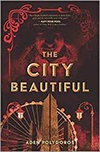
Published in 2021, Aden Polydoros notes in the afterward, “I wanted to write a book where the Jewish characters weren’t just passive victims, but where they fought back and rose above the people who wished to do them harm.” The political climate today is a little trickier, but it does feel like both Hamas and IDF are doing their best to erase the beauty of Jewish culture each in their own way. Polydoros, however, does a powerful job of capturing the complexity of Jewish immigrant experience, in this case in Chicago in the late 1800s.

The City Beautiful packs in a lot, actually – it is a YA historical fantasy murder mystery, tying together the historical realism of immigrant life in the Chicago tenements with Jewish folklore in an enthralling story. Years after a traumatic Atlantic passage and the death of his father, Alter Rosen is focused on staying out of trouble and earning enough money to bring his mother and sisters to America. The disappearance of young men in his neighborhood is common enough that he doesn’t pay it much heed until his roommate and unrequited crush is found drowned. When preparing the tahara, the ritual purification ceremony for dead, he is taken over by the other boy’s dybbuk, or vengeful spirit, and driven to uncover the murder in order to free himself and lay the spirit to rest.

He is assisted by friends and neighbors who all represent varied facets of Jewish and immigrant experiences, occasionally in conflict with each other. The novel captures how messy and uncontained life is, and by contrast how false and damaging stereotypes and propaganda are, even if they seem more easily digestible on the surface. At a more basic level, it is also an absolutely thrilling mystery and ghost story, and a sweet YA-appropriate romance.

A Market of Dreams and Destiny

By Trip Galey

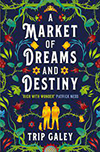
This novel is set in a fantasy version of Victorian England, where one of our protagonists is an indentured servant in a mundane workhouse and the other is indentured in the underground fae market. The two meet by coincidence (or grand design?) and in addition to an instant attraction, seem to also possess skills and access to help the other toward freedom.

Author Galey does an incredibly good job of weaving together the dual goals that sometimes align and sometimes not, as well an immersive world balancing realistic and fantasy elements. He uses the same mirroring to reflect on the many different ways that the poor and working class are exploited by the wealthy, and how whole systems of society are built on exploitation.

The strong plot element and theme of workers’ rights and community mutual aid felt both contemporaneously Dickensian and very timely for 2023 (and hopefully 2024). It also created high stakes for the various plots and schemes that kept me on the edge of my seat for most of the book. At times I clung to the fact that I’d seen it recommended on a romance forum in hopes for a happy ending. (Minor spoiler: though serious sacrifices are made, the final resolution falls into place immensely satisfyingly.)

Christmas Stories

As I get older, I find I have to work a little harder to generate a holiday spirit among all the daily life stressors and nonsense, so I like to gear up with some seasonal reads:

The Haunting Season: Eight Ghostly Tales for Long Winter Nights

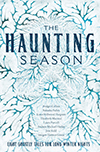
I bought this because it includes a Natasha Pulley story about Keita and Thaniel from her Watchmaker of Filigree Street series, which I adore. The general reader reviews are mixed, with many readers saying that Pulley’s story was the weakest since it doesn’t stand alone if you aren’t familiar with the characters. Being well familiar with the characters, though, my experience was the opposite: I very much enjoyed Pulley’s story, always happy to get more of Keita and Thaniel, but was disappointed in the other stories.

Perhaps it was because I was already familiar with Pulley’s characters, but they were the only ones that I actually liked. Most of the other stories featured either selfish or delusional characters, I suppose to ‘justify’ the hauntings one way or another? The plots also seemed overly complicated and obtuse, so each story ended just as I felt like I was starting to get a feel for it.

Sentenced to Christmas

By Marshall Thornton

Marshall Thornton writes the most ridiculous rom-com and cozy mystery plots featuring a cast of hilarious dirtbag characters, and I get a real kick out of his books. As befits the title, the plot of this book is absolutely ridiculous: arrested for burning down the patriotic Christmas tree in front of a conservative talk radio station, our protagonist Gage is sentenced by a crackpot judge to spend Christmas with the prosecuting assistant district attorney (his own defense attorney being Jewish) in order to “learn the true meaning of Christmas.”

The thing about Thornton, though, is that his dirtbag characters then often react with more realistic cranky befuddlement, and it is consistently laugh-out-loud funny. Only one thing stops me from wholeheartedly recommending this: Gage’s friend and assistant is introduced as non-binary, and that being a point of contention with their family, especially around the holidays. Unfortunately, Thornton presumably forgot, and uses she/her pronouns for them for a chunk of the middle of the book. I am confident that it is an unintentional writing error, and amazon reviews mention that some editorial errors have been fixed, so hopefully this is no longer a caveat.

The Secret Life of Albert Entwistle

By Matt Cain

The quoted praise for this book all included words like heartfelt, heartwarming, and heartbreaking, and they aren’t wrong—I laughed, cried, and aww’ed—but it all felt a little heavy handed. Not emotionally manipulative exactly, but not as effortlessly immersive as I’d hoped.

The novel follows Albert Entwistle, a postman nearing mandatory retirement, who is finding himself faced with how narrow his life has become. Intertwined with flashbacks to his youth, Albert’s early experiences with homophobia was so painful and traumatic for him that it turns into pretty severe social anxiety in general. The novel emphasizes how if you can’t be yourself in one way, it tends to bleed into closing off any sort of real relationships with people. That said, Albert’s early experiences are in no way uncommon or extraordinarily brutal, so no content warning needed for those. I get the impression that Matt Cain was more concerned with filling the lack in literature of stories with happy ending for older gay people, so understandably uninterested in delving deep into trauma, which I appreciated.

At times the book feels a little simplistic, in a sort of Forest Gump kind of way. Albert’s search for his secret high school boyfriend from 50 years ago follows a linear step-by-step trail that stretched my suspension of disbelief. On an individual level, though, Albert follows the same path that greater society has taken over the last five decades, his own self-acceptance mirroring the wider cultural progress. Cain is very purposefully walking the reader through an easily accessible guide to LGBTQ+ history.

In fact, he ends the book with some short interviews with gay men in their 60s from small Northern British towns like Albert’s, explicitly because he worried that the history was getting lost. So much has changed in such a relatively quick time, due to the very hard work of activists, that younger generations might not realize how much had to be fought for over the last few decades. Seeing Albert as a stand-in to personify a movement helped make sense of parts of his personality that seemed a little too flat or smoothed over.

Lavender House

By Lev AC Rosen

This mystery novel had shown up on several recommendation lists over the last few months, and it is well justified! Rosen beautifully takes the noir sensibility, which imbues generalized disenfranchisement, and applies it very directly and acutely to the LGBT community in 1950s San Francisco. It becomes a somewhat pointed critique of noir in general, I think, by contrasting what has typically been a general mental oppressiveness in the great noir writers like Chandler and Hammett, with actual systemic and malicious oppression against specific people.

Traditional noir characters sense a true darkness in the world that the general populace ignores or is blind to. In Lavender House, the gay characters only wish they had the option to ignore the ugliness of the world, instead of having it thrust upon them if they drop their defenses for a second. While San Francisco was just starting to be a budding haven for gay people, so there were more underground clubs and the like, the whole of the United States remained very dangerous.

Our protagonist, Levander “Andy” Mills is as aware of this anyone else. As a (closely closeted) gay cop, he is both threatened and the threat, and straddling that line, can trust no one. Before the start of the novel, however, he was discovered in a club raid, kicked off the force, and all but run out of town. He is getting drunk in a bar before throwing himself into the Bay, when Pearl comes to ask him to investigate the suspicious death of her wife. Pearl is the surviving matriarch of the Lavender House, where the now deceased scion of a wealthy soap family created a home where a handful of gay couples can live freely, while showing a much different face to the outside world.

Andy moves into the house in order to investigate, mostly with the idea that he has nothing left to lose at this point, but it opens his mind to a whole different world. And this is what I really loved about the book: it explores the seductive but false appeal of noir and cynicism. It’s a really interesting play on noir – the detective himself has bought into the ideological grimness, but the novel makes the effort to show that his cynicism, though not unfounded, is a blindness of sorts. He expects the worst from people, and while this protects him to a point, he closes himself off so no one can either hurt him or care for him. And then, worst of all, believes that is all there is to life.

I don’t think I’ve ever read a book before that did such of a good job of criticizing its genre so validly, while also perfectly exemplifying it. A very minor spoiler: the end is both satisfying and a poignant summary of the overall themes, with a hopefulness that would feel jarring after a traditional noir but feels like the point of the whole book here.

The Half Life of Valery K

By Natasha Pulley

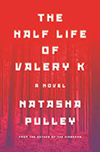
I really like Natasha Pulley, but man, it feels like she is in a challenge to make her readers root for the most problematic character possible. I had some serious issues with her previous book The Kingdoms, but I think she might have outdone herself this time. (Unlike her other books, The Half Life of Valery K doesn’t include any magical realism and is even based on real events, which makes it worse, quite frankly.)

The protagonist, the titular Valery K, is a radiation scientist in Russia in the 1960s, which simply can’t be anything but problematic given the field of study and time period. When the novel starts, Valery has been in a Siberian work camp for 6 years, and has only survived that long due to some lucky circumstances. The description of the work camp is devastating, especially given how well researched it seems to be. Valery has every expectation of starving to death in the following year when he is released and brought to ‘City 40’ to help study the effects of radiation on the general ecosystem. City 40 is kept in deep secrecy to hide it from the western countries (the US in particular), and once in the city, no one leaves.

Valery quickly befriends the head KGB officer that holds them all there, another strangely sympathetic but deeply problematic character. It is a much more comfortable imprisonment than the work camps, so Valery is content until he discovers deeper secrets that even his very compromised morals cannot accept.

And that gets to the crux of the book – it is all about the evils that people have to accept to survive in impossible situations. And also when people reach a breaking point where they can’t accept any more, and fight back, often becoming evil in their own opposing way. This obviously makes for a very difficult read, and I think I’ll be wrestling with the questions this book raises for a while.

I haven’t read much about the Soviet Union, so this book more than any other I’ve read gave me insight into what the Soviet communist government was trying to achieve as an ideal and some of the ways it failed so badly in practice. Anti-west Soviet propaganda is a pervasive background throughout the novel, with most characters living in constant fear of US bombing, especially after Hiroshima. Soviet citizens would ascribe most unexplained explosions to US bombing, and I realized that I had no idea if the United States had bombed the USSR in the 50s and 60s, and that I likely wouldn’t know.

Though the US is somewhat more sophisticated in how it influences its citizens,* it made me really interrogate the degree to which I’ve bought into western propaganda (the Soviet characters are shocked by the strict gender roles imposed in western cultures, for instance). Awareness is all well and good, but there’s no clear answer for how individual citizens can combat this ideological warfare, which left me feeling a little hopeless about the state of humanity in general.

*I was reminded of a joke I’d heard a while ago: A Russian and an American get on a plane in Moscow and get to talking. The Russian says he works for the Kremlin and he’s on his way to go learn American propaganda techniques.

“What American propaganda techniques?” asks the American. “Exactly,” the Russian replies.

Cemetery Boys

By Aiden Thomas

Cemetary Boys is a very seasonal read right now with its cemetery setting, leading up to El Día de los Muertos.  Yadriel was born into a family gifted with divine abilities. All the women of his family serve life, able to heal even mortal injuries, while the men serve death, leading lost spirits to their afterlife. Yadriel is trans, though, and while his family recognizes him, they insist that Lady Death will not, and refuse to let him perform the necessary male ritual that will awaken his powers.

When Yadriel attempts the ritual in secret, with the assistance of a cousin, he accidentally summons the wrong ghost in the process, a fellow classmate from his school. The ghost challenges Yadriel to solve his murder, and in the process, they uncover a slew of disappearances throughout their LA neighborhood. It’s a great premise and well-thought out mystery, but I realized early on that the novel is very much for young adult readers, perhaps even middle school rather than high school. I liked and cared about the characters, but felt more sympathy for the overwhelmed and often clueless parents and grandparents than I did for the teenage protagonists.

It was also quickly clear to me what was going on with the mystery, which I took as another sign that this is truly a book for younger readers, ones who are still being introduced to plot twists and suspense in books. I would have loved this book in my preteens, and I feel a little sad that now I found it at times tiresomely predictable, though I suppose that is an inevitable part of getting older. Happy Day of the Dead, everyone!