Nonfiction Graphic Novels: Serial Killers

Uh, these are not really in my normal reading sphere. I don’t like true crime stories—they scare me like no supernatural stories do. However, I’d run across raving reviews of both of these, and I guess my curiosity just got the best of me. I agree that the idea of graphic novels about real serial killers sounds just awful since graphic novels  often seem to celebrate over-the-top violence, but these both had personal approaches that caught my attention.

My Friend Dahmer

By Derf Backderf

Book CoverAuthor Derf Backderf actually grew up and went to school with Jeffrey Dahmer, and while Dahmer wasn’t his closest friend, he was one of Dahmer’s very few friends. I can’t even imagine what a strange feeling that must be, looking back in hindsight, though Backderf does a very good job of putting it into words and pictures. It is thoughtful, and sad, and calm; pretty much exactly the opposite of what I would have expected from a graphic novel about Jeffrey Dahmer.

As the story got closer to the end, though, I started getting increasingly nervous. The first half is set in junior high, far before any of the gruesome murders, but I’m not actually all that familiar with the case, so I wasn’t completely sure when the murders started, and Dahmer’s unraveling throughout high school amid all the oblivious authority figures is agonizing to even just read. It is one thing to enjoy a violent thriller, but it is very much another thing when it is nonfiction. The author turns out to be extremely sensitive to this, one might even say surprisingly sensitive, given that he grew up in the same environment that produced Dahmer. He alludes to Dahmer’s increasing perversions but does not illustrate or describe them outright.

In fact, that’s not what this book is about. As Backderf writes in the intro:

This is a tragic tale, one that has lost none of its emotional power after two decades. It’s my belief that Dahmer didn’t have to wind up a monster, that all those people didn’t have to die horribly, if only the adults in his life hadn’t been so inexplicably, unforgivably, incomprehensibly clueless and/or indifferent. Once Dahmer kills, however—and I can’t stress this enough—my sympathy for him ends. He could have turned himself in after that first murder. He could have put a gun to his head. Instead he, and he alone, chose to become a serial killer and spread misery to countless people. There are a surprising number out there who view Jeffrey Dahmer as some kind of anti-hero, a bullied kid who lashed back at the society that rejected him. This is nonsense. Dahmer was a twisted wretch whose depravity was almost beyond comprehension. Pity him, but don’t empathize with him.

It is an extremely insightful look at the society that created Dahmer, from an insider’s point of view. It took Backderf years and several different tries to write this book, and he did an enormous amount of research to fact-check his own recollections. He writes that he has accepted that he has no responsibility in Dahmer’s fate, and I would bet that this book probably helped him find that acceptance.

A quick word of caution: when reading the book itself, I was quite impressed with the author’s restraint and sensitivity with the subject matter, so I was perhaps a little too blasé as a reader. I had trouble afterwards getting it out of my head, and it wasn’t nightmare-causing, exactly, but it wasn’t comfortable, either.

Green River Killer: A True Detective Story

By Jeff Jensen

Book CoverI was a little nervous about this one, since the prologue illustrates the killer’s first murder right off the bat, and that of a child to boot, but I have to say that after My Friend Dahmer, and after the shocking intro, Green River Killer was a bit of a cake walk.

I first heard about this graphic novel on NPR’s RadioLab in an interview with the author, the son of the main detective in charge of this case. As a quick aside, can I say how much I enjoy RadioLab? It feels a bit like This American Life, but doesn’t leave me crying in my driveway nearly as much. The interview is particularly interesting because they actually play snippets of the police interviews with Gary Ridgway, the Green River Killer, responsible for the death of over 40 and possibly over 75 women throughout the 1980s in Seattle. (It’s also very possible that having already heard some of the details in the killer’s own voice made the graphic novel less disturbing in the end.)

Jensen’s father had dedicated the majority of his career to this one case, but tried to shelter his family from it as much as possible. When the recordings of the interviews were made public, his son, a writer for Entertainment Weekly, used them to help recreate his father’s career. It is a very loving look at his father’s dedication to a truly grim job. And, I think that’s what made it relatively easier to read: the focus is on the father and the police work rather than the psyche of the killer. Which makes sense, because in both the interviews and the graphic novel, there’s really not much of a reveal into Ridgway’s psyche, nothing like Backderf is able to do for Dahmer. While they were able to get enough facts for a solid conviction, they were never able to satisfactorily get a motive or really any sort of explanation.

This is actually the biggest frustration for Detective Jensen, but he is also so professional that even his moment of emotional crisis is quite contained, which is both understandable and admirable, but is difficult to communicate on paper. Jensen successfully focuses instead on the contrast of the loving relationship between his mother and father and both of them toward their children with the cypher of Gary Ridgway. The subtitle, “A True Detective Story,” is quite accurate: this is very much more about the lead detective and the toll police work can take on a person than the perpetrator.

—Anna

Americanah

I was sick for most of January, and when I’m sick I tend to reach for both comfort foods and comfort books. So I haven’t had much to talk about here, since I’ve mostly been rereading Anne of Green Gables and Sharon Shinn books. But I’ve rejoined the land of the living with Americanah by Chimamanda Ngozi Adichie, which was just stunning, and it reminded me what an impact a good novel can have. (On a related note, did you see this study about how reading novels improves brain function for days afterwards?)

Adichie is a young, female Nigerian writer who has written a couple of other very well-regarded books–Purple Hibiscus and Half of a Yellow Sun–that I enjoyed, but this one really hit home for me. I’m about 90% sure that this is because a lot of this book is set in the U.S., which probably speaks poorly of my ability to empathize with people in other situations. But whatever the reason, the characters in this book felt so real to me it’s like they were walking around next to me and I was just eavesdropping on their lives. Summaries of the book tend to describe it as a love story spanning the years as two teenagers meet in Lagos, drift apart, and meet up again in the present day. And it is that. But it’s also an immigrant story–Ifemelu (the female half of the couple) ends up in the U.S., while Obinze goes to England, and the stories show different sides of the immigrant experience. And it’s about race–in the U.S., in the U.K., and in Nigeria.

I feel like this might make the book sound heavy, and it’s not a romantic comedy, that’s for sure. But again, Ifemelu and Obinze are both such layered, complicated people that I felt like I knew them, and I was interested in finding out what happened to them in the same way I’m interested in my friends’ lives. And it seemed like Adichie felt the same–I felt as if the author really liked these characters and was treating them with respect, even when bad things might be happening.

Also, I originally picked this book up because one of my favorite people online was raving about it. Bim Adewunmi (@bimadew) is a British journalist who is completely hilarious and awesome on Twitter, talking about everything from politics to pop culture. She basically live-tweeted sobbing her way through Eleanor and Park, and when she recommends something I listen. A highly recommended Twitter follow.

Kinsey’s Three Word Review: Dense, thoughtful, and kind.

You might also like: Adichie’s other books are wonderful, but other good immigrant stories also could include The Namesake by Jhumpa Lahiri, Brick Lane by Monica Ali, or even A Tree Grows in Brooklyn by Betty Smith.

Out of the Easy

By Ruta Sepetys

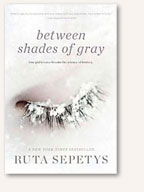
Book CoverThis book is so good, you guys! You know when you read a string of pretty good books, and you’re happy enough with them, but then you read a really good book and all of a sudden those other books really pale in comparison? That’s how I feel right now: I don’t redact anything I said about Girl of Nightmares and Being Henry David, but I maybe don’t recommend them quite so highly anymore. I definitely recommend Out of the Easy, though.

It starts out fairly light but very engaging, introducing Josie, the daughter of a prostitute in 1950s New Orleans trying to escape the lifestyle she was born into. A wealthy man that she meets in the bookstore she helps run is found dead later than night, and the book is ostensibly about the investigation into the suspicious circumstances. As the book progresses, though, the mystery takes the backseat while it focuses more on Josie’s desperate attempts to improve her circumstances. This is not a criticism at all, though, because Josie, the world around her, the people in her life (including madams, prostitutes, johns, and gangsters) are fascinating, and her struggles are heartbreaking and gripping.

—Anna

Shadows by Robin McKinley

Shadows Robin MckinleyShadows
by Robin McKinley
2013

I have a complex relationship with Robin McKinley’s books. I love The Blue Sword and Beauty. They were wonderful. I thought she was doing something interesting with Rose Daughter, since it was a second rewrite of the story of Beauty and the Beast, and yet quite different from her first version, Beauty. And then she wrote Sunshine, which is really in contention for being the best book ever, and won her (in my mind) a life time achievement award: she was thereby a favorite author and I loved her writing.

Where it gets problematic is that I don’t actually care for many of her other books. I found Deerskin unpleasant, Chalice seemed more like a semi-written outline for a book rather than a complete book in and of itself, and I never even managed to get past the first chapter of Pegasus due to the extreme level of twee.

So I’d mostly decided that I would love her intensely and pretend that she wasn’t writing anything anymore. And yet, when her newest book came out, I checked it out from the library.

And I liked it a lot.

The first chapter or so made me wince with the over use of made-up slang and general teenage fraughtness but then it settled into the plot and I discovered that I actually really enjoyed it. The characters and the character interactions and the world they live in are all fun. However, much like how, with Rose Daughter, McKinley had apparently decided that she wanted to try a variation on Beauty, Shadows reads a like McKinley decided she wanted to try a variation on Sunshine. (Even the titles parallel each other!)

Sunshine is so fabulously good that it can definitely support a knock off. In fact, a knock off of Sunshine is a whole lot better than many originals. But, it does add an odd quality of double vision to reading it, see how the characters, plots, and descriptions in the two books map to each other.

One useful distinction, though, is that Sunshine is intended for an adult audience, while Shadows is a teen reader. By this, I mean that the romantic relationships in the two books as well as the level of gore are variably age-appropriate. But they both look at magic and reality and perspective and hope and determination and making due with what you have.

Anyway, I definitely recommend this book, but it doesn’t do much to resolve my issues with McKinley, since now I can’t even rely on her writing books that I don’t want to read. (I also find it somewhat irritating that she really doesn’t like fanfiction and is one of those authors who has their attorneys send cease-and-desist letters. Which is particularly questionable of her given that she apparently writes AUs of her own stories.) Also, just as with Sunshine, I would love to see a sequel of Shadows, or a prequel, or anything else further exploring the world contained within.

Being Henry David

By Cal Armistead

Book CoverI ran across BuzzFeed’s list of The 21 Best YA Books of 2013, and had only read two (both courtesy of Kinsey). So, I read through all of the descriptions and a bunch of them held no interest for me (there is nothing for me in a story about an outcast teenage girl who finds herself through DJ-ing), but several promptly got added to my to-read list. Being Henry David was the only one immediately available at my library, so it has come first.

The premise is extremely basic, which I like: a teenaged boy wakes up in New York City’s Penn Station with no knowledge of who he is or how he got there or anything about his past. His only possession is a copy of Henry David Thoreau’s Walden, and for lack of any better clues, he decides to go to Walden Pond and see if anything there can bring back his memories. Since he doesn’t know his real name, he gives his name as Henry David whenever asked. “Hank” is very engaging, and the various characters he meets are equally interesting.

The mystery is quite enthralling and kept me guessing for the majority of the book: Is he a government super-soldier a la Bourne? Is he running away from the massacre of his family a la Dark Places? Could he possibly be Thoreau himself brought forward in time?! The ending wasn’t quite as interesting as some of my admittedly farfetched imaginings, but was still quite satisfying. It occasionally got a little too teenage-angst for me, but I have a lower-than-average tolerance for that, so that criticism is more due to that I am not really the intended audience for this type of book than any sort of flaw in the story. I was overall quite pleased.

I additionally enjoyed the occasional discussions about Thoreau and Walden Pond because I read Walden in high school and did not relate to it at all (I am really very much not an outdoorsy person). So, I liked reading about how other people, even fictional characters, took inspiration from it. (I had also initially thought that that I was getting a somewhat unusual, for me, story about a male character by a male author, since I primarily read female characters and authors, but then I double-checked and author Cal Armistead is a woman, so not too off the beaten path – haha, Walden!)

Alternate Book CoverCan I also indulge in a quick graphic design exercise? I thought the cover to the book sucked – it was generic, discordant, and missed several different opportunities. I mulled over this throughout the several days of reading it, and so threw together a quick fan-art cover instead, courtesy of the great M.C. Escher.

The other books I’m waiting on from the list are Mermaid in Chelsea Creek by Michelle Tea (#9), Fangirl by Rainbow Rowell (#15), and Out of the Easy by Ruta Sepetys (#21), so hopefully those reviews will be coming up, too, though I’m interspersing my YA reading with graphic novels, so those will be sprinkled throughout, as well.

—Anna

Girl of Nightmares

By Kendare Blake

Book Cover: Girl of NightmaresGirl of Nightmares is the sequel to Anna Dressed in Blood, which I enjoyed as my palette cleanser after a brutal few months with Atlas Shrugged. Anna Dressed in Blood was an awesome way to recover from Ayn Rand, but wasn’t so engaging that I was intending to read the sequel. However, I was looking for casual reading over the holidays, so I picked it up on a whim at the library, figuring it would be a fun distraction.

And it was! It was actually even better than the first book! My one complaint about Anna Dressed in Blood was awfully vague, just that the pace of the plotting seemed odd to me in a way I couldn’t quite put my finger on. Well, I’ve figured out what the plotting issue was because Girl of Nightmares doesn’t have it at all. So, here’s the thing, I like a very linear storyline: protagonist has a problem, works towards a solutions, and finally succeeds. It is a little simple, perhaps, but that’s how I like it. Anna Dressed in Blood had a lot of red herrings as the protagonist and supporting characters tried to figure out what challenge they were facing and then how to solve it, but this book is more straight-forward.

Girl of Nightmares starts just a couple of months after the end of Anna Dressed in Blood, and picks up the same story, so is definitely not a standalone. I can’t really describe the plot at all without spoiling Anna Dressed in Blood, so I’m not going to do that, beyond saying that the other thing I really like is that this book is sort of the flipside of the first book. The first book follows the protagonist Cas as he hunts murderous ghosts and sends them to the afterlife; in Girl of Nightmares, Cas is trying to bring a ghost back from the afterlife. I just love that kind of mirror-image reversal treatment in sequels!

Cas also travels to London to meet with a group that sounds very similar to the Watcher Council, and any similarity to Buffy the Vampire Slayer is a-okay with me!

—Anna

The Fall of Ile-Rien

The Fall of Ile-Rien
by Martha Wells

wzcovThe Wizard Hunters
2003

shipsofair250The Ships of Air
2004

gateofgodsThe Gate of Gods
2005

So, it’s possible that I overdosed slightly on Martha Wells. After reading all three of The Books of the Raksura, I went immediately to the library and got Wheel of the Infinite, and after reading that, I went back and got all three books of The Fall of Ile-Rien. I loved each and every one of these books, but by The Gate of Gods, I was flagging a bit and needed a break.

However! It’s still really good and I want to read the prequels, The Element of Fire and Death of a Necromancer. I’m just aware that it’s probably a good thing that the library doesn’t have them and I’ll have to take a break to figure out how to get them through inter-library loan.

Anyway, this series starts off with a ludicrous mess of a plot that I wouldn’t have bothered reading by an unknown author. However, as I’ve mentioned before, Wells has an amazing ability to bring new life to old tropes and she does it extremely well here.

There’s a lot going on in these books: the kingdom of Ile-Rein is sort of like a magical version of a 1920s Europe, but is currently being attacked by (and losing to) an invading army that appears to come from nowhere. Tremaine Valiarde, our heroine, is from this world.  It turns out the bad guys, though, are invading from a different world, although tracking exactly how is a main plotline for the series. Ilias is from a more agrarian society in an entirely different world. Also his society is a matriarchy, which allows Wells to be delightful in her exploration of gender norms and social expectations.

Normally, the thing that most attracts me to a book is the world building, but while the world building here is excellent, it’s really the characters who shine. Both Tremaine and Ilias are broken in their own ways, but also too strong to let that stop them. And while they’re not outcasts from their respective societies, neither of them quite fit in at home. Wells does an amazing job of showing how out of sync both of them are, even with their friends and family, and yet those same idiosyncrasies allow them to fit together in a way they don’t with anyone else.

Plus, I just really love how Wells approaches bringing them together. Some things simply appear impossible: there’s a war going on, there’s no time for relationships. Other things are so easy and without angst for much the same reason: there’s a war going on, no need for unnecessary waffling.

But for all that Tremaine is clearly set up as the central character, the real main character is the war itself. It is ever-present and affects everything that happens. There is a large cast of characters who are all struggling to do their best to achieve their goals, because the war doesn’t effect just one person and can’t be fought by just one person. There are dozens of main characters, all working, either together or in opposition, but all with the knowledge that something needs to be done and no one has the option to sit out these events.

I really liked this series a great deal. I think I might have a new favorite author, as well.

Hyperbole and a Half

By Allie Brosh

Book Cover: Hyperbole and a HalfI received the Hyperbole and a Half book for Christmas and it was awesome! I tried to portion it out so it would last longer, but was only able to stretch it out over four days. A lot of her fans say this, but author Allie Brosh seems to live, at least part of the time, inside my head.

If you’ve never heard of Allie Brosh or Hyperbole and a Half, the book is a selection of stories, both new and from her blog by the same name, which you have to go visit right now. You should read my two favorite stories, which are also in the book, “The Simple Dog” and “The Party.” And read Wolves, too, because that one is also really funny. Oh, and Sneaky Hate Spriral is great. Basically, just start at the top and read until you hit the end. And buy the book, especially to read “Motivation,” one of the new stories, because I’ve been quoting it all week: “I don’t want to do anything more than I don’t want to hate myself.”

It was actually a perfect gift for me because although I’m a big fan of hers, I’d mostly stopped reading her blog for the last year, for a reason that shames me a little. She stopped posting for several months, during which I checked back regularly, but when she came back, she discussed how she was recovering from a serious bout of depression, and I couldn’t bring myself to read about that, and I got too anxious to check back in afterwards. So, basically, I’m pretty much as unsupportive as can be, and was seriously ashamed of myself, but luckily her book actually addressed her own coming-to-terms with her selfishness and egotism, so once again, I felt very like she was talking from my own head.

—Anna

Fanfiction Selection

The last month (or two, or three) has been somewhat frenetic for me, and I haven’t really had the energy or focus to read full books. However, I couldn’t not be reading something, and what I’ve been reading is fanfiction. I’ve introduced the genre before, so I thought I’d take a moment to recommend a few more short fanfics.


Friends Across Borders
by MueraRashaye

To understand these stories, you need to be familiar with Mercedes Lackey’s Valdemar universe.

Summary: Two long-time enemy nations can’t become meaningful allies overnight. Stories from the lives of a border-guard Herald and Sunpriest, from their first meeting to the end, and insights into just how Karse and Valdemar were able to turn around their relationship so fast.

Warning: This is a series rather than a single story. The first three stories are complete, but the forth one is still a work in progress. Each of the first three stories can absolutely stand on their own, though, so if you won’t want to take a chance on a half-completed story, it’s okay to just not start the fourth story until it’s been completed.

Why I like it:  This takes a part of my childhood and makes it a tad bit more realistic, but without ever tarnishing the joy of the original. The main characters are both a delight and their mutual bewilderment regarding their developing friendship is a joy to behold. Also, one sign of a good series, in my opinion, is that the individual stories can stand on their own. So you don’t have to commit to reading the whole series to enjoy just the first story: Enemy, It’s Cold Outside.


Monster
by Laura JV (jacquez)

To understand this story, you need to be familiar with the character of Methos from Highlander and Sesame Street in general.

Summary: “Someone new moved in, Chris, next door to Gordon! Come meet him with Elmo.”

Why I like it: This is super short but it’s sort of like a John Donne poem in its own way. Without ever directly saying anything, it plays with the different meanings of the word “monster.” And, let me reiterate: it’s a Highlander/Sesame Street crossover. 😀


The Whole Truth (So Help Me God)
by Metisket

To understand this, you should be at least passingly familiar with the new Teen Wolf tv show. Although, actually, I read and enjoyed it without ever watching the show, just knowing the basic premise.

Summary: And this is a Stiles character study, so there you go. It’s multiple POV and set around “Night School.” Mostly because it will never stop being hilarious to me that Stiles punched Jackson viciously in the face and the only person who was remotely surprised was Allison. XD WHAT WERE YOU LIKE AS A CHILD, STILES?

Why I like it: First, I have to admit that I don’t watch Teen Wolf, I just really like the fandom. Fan authors can, and often are, much better than, say, MTV script writers. My pleasure in this fandom comes, in large part, from how the character of Stiles is treated, and this is just a concentrated look at how hilariously fascinating Stiles is and why the other characters wince when they have to deal with him. I wouldn’t necessarily want to be around him, but I sure like reading about him. It just makes me laugh.


A Perpendicular Expression
by leupagus

To understand what’s going on here, you should know the tv show Person of Interest.

Summary: Pissing Finch off never actually ends well; usually it ends like this, with John scaring the shit out of her at two in the morning.

Why I like it: There’s a certain joy in reading about super-competent people who just fail at being reasonable human beings. And Joss Carter is hilarious as she has to put up with them and explain basic social behaviors like not stalking your friends.


Kissable Fanatic, Unhinged Minim Artists
by Basingstoke

This fic is set in the X-Men universe, although the X-Men characters appear only briefly. If you are aware at all of the character Toad, in Magneto’s Brotherhood of Mutants, you know enough to read this.

Summary (provided by thefourthvine): Best FF featuring a powerful anti-drug message; namely that if we spend all our time stoned we might fail to notice critical things in our environment, like that one of our friends is actually green.

Warning: This is not family-friendly or work safe, i.e. any sort of filter at all should filter out this story. There’s drugs, profanity, and graphic homosexual sex.

Why I like it: I fought with myself over including this particular story because so far all my recommendations have been intended for a general audience (which is not necessarily common in fandom) and this one is absolutely not. This is, in fact, the first story I’ve recommended that includes a serious warning. (It’s standard policy with fanfiction to include warnings, a policy that is immensely helpful for maintaining some sanity when wandering dark corners of the internet.) However, this story is just too good to not recommend. Basingstoke takes Toad, a character that is treated as a barely 2-dimensional character in the comics, and makes him fully human (as it were). This story makes him real and that is one of the things I really love about fanfiction: that it will take minor characters the original author threw in to take up space and develop those characters into the main characters of their own lives. This story is just really, really good with that.

The Rest of 2013

As I said at this time a year ago, when I really love a book I generally write about it here, mostly so I can tell as many people as possible what to do. So you’ve already read here about the best books I read in 2013: Code Name Verity, Eleanor and Park, Me Before You, and Mr. Penumbra’s 24-Hour Bookstore. But there were plenty of other books that I enjoyed but never got around to reviewing on the blog for one reason or another. Rather than let those slip through the cracks, here are the five best books I read in 2013 that I didn’t already mention on the blog:

1) 11/22/63 by Stephen King.

I am not a Stephen King fan, and this didn’t make me want to read anything else by him. However, I love books about time travel, John Kennedy, the 1960s, and Texas, so it’s like this was written especially for me. It’s way too long, and there are some annoying factual errors–some of them might not be noticeable if you’re not from Texas, but at one point he mentions JFK’s daughter, “Carolyn.” Where was his editor? But it was engrossing and I really enjoyed it, even if if weighs a ton and took forever to finish.

2) Miss Buncle’s Book by D.E. Stevenson

Did you know that you can give someone a book via Kindle, and it will appear on their device as if by magic? I love my Kindle. Anyway, one day I got an email saying that my friend Jocelyn had given me this book I had never even heard of, and it is completely delightful. Written in the 1930s, the book is set in a tiny, picturesque English village where Barbara Buncle has written a book based on the people she knows in town. When the book is published, anonymously, and becomes a hit, the townspeople are not too happy to see themselves in print. The whole thing is just charming.

3) You Don’t Have to Say You Love Me and Unsticky by Sarra Manning

The night before I was leaving for vacation this summer I realized I didn’t have enough to read to carry me through my whole trip, so I frantically got on Twitter looking for cheap e-book recommendations. Someone (I can’t remember now who, but thank you, whoever you were!) said that these were $2.99 on Amazon and were entertaining, and I bought them without knowing anything else about them. And I loved them both! I guess you’d call them chicklit–they’re both romances that involve cool, young, urban (London-based) 20-somethings. But I found them unpredictable, and all the characters were much more complex than I was expecting. I think Unsticky was my favorite, but they were both fun.

4) Going Clear by Lawrence Wright

I am OBSESSED with Scientology. As in, I read blogs and message boards where people who’ve left the church hang out, and follow the gossip like it’s about people I know. It’s all just so INSANE. I’ve read a bunch of books about the church, and this one is definitely the best. It swings between detailing L. Ron Hubbard’s life  and the beginnings of the church, and current day leadership and scandals. It a long, detailed book, and I found every word of it FASCINATING.

5) The Good Nurse by Charles Graeber

Do you ever watch those true-crime TV shows, like Dateline ID or 48 Hours? I love those, and this is like a really, really good one in book form. It’s about a nurse who killed people–maybe dozens, maybe hundreds–during his career, and how he was ultimately caught. A quick, but riveting read, that may make you terrified of even the idea of being in the hospital.

And now I’ve started a new list of Books Read for 2014 and am looking forward to a year of more awesome reading.