The Best Books of 2015 (according to the world’s coolest 12-year-old)

Happy 2016, everyone! In late December/early January I typically write a post highlighting the books I’ve enjoyed most over the past year. But I’ve already posted on most of the things I’d want to talk about (Station Eleven, The Martian, Carry On), so let’s do something a bit different. Anna and I were lucky enough to spend New Year’s Eve with some dear friends and their children. I’m sure this won’t come as any surprise, but our friends are also bookish sorts, so we’re always talking about what we’re reading and trading around/gifting each other favorite books. One of the fun parts about watching our friends’ kids get older is seeing them become bookish and getting to introduce them to books we loved as children. But the oldest of the kids is twelve now and it’s become clear that she doesn’t need us to recommend books to her–she can find great things on her own and we should probably start taking recommendations from her. She kindly agreed to contribute a guest blog for us, so here are her top three books of 2015 (all of which are now on my library list):


Ava

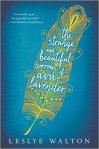
1) The Strange and Beautiful Sorrows of Ava Lavender by Leslye Walton. “I love how this book tells the story of many generations of Lavenders. I also love the fact that Ava is actually born with wings!”


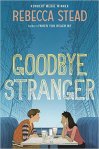
stead2) Goodbye Stranger by Rebecca Stead. “This book tells about a girl who has been through a terrible accident and all of her friends. I feel like you can really connect with them, because they do things that real 2015 teenagers do.” [Note: we’ve talked about Rebecca Stead here on the blog before and my love for her now feels validated.]


theo3) Kid Lawyer (part of the Theodore Boone series) by John Grisham. “I love that this kid, Theo, is not afraid to stand up to adults. He is a junior lawyer who knows a lot and stands up for his beliefs. I love reading about his adventures and how he always helps everyone out.”

Everything Everything

By Nicola Yoon

Everything_EverythingI would never have picked up this book except that one of my favorite blogs, bitches gotta eat, decided to start an online reading club, of sorts, and chose this as the first ‘assignment.’ Samantha was totally upfront about how this so-called ‘book club’ was basically the books she wants to read and she will post the titles and that’s about it – there will be no discussion, no question-and-answers, no nothing; we can just read the books and take whatever comfort we want that perhaps other people are also reading it. I didn’t quite believe her and I didn’t want to be left out of any subsequent blog posts, so I put a hold on the book and then forgot about it per usual.

True to her word, though, Samantha didn’t follow up on the book at all, and a month later simply wrote that now she would be reading Carry On by Rainbow Rowell. I had actually just then finished reading Carry On, per Kinsey’s recommendation, and completely adored it, so when Everything Everything finally came in at the library, I had residual good feelings toward Samantha’s picks.

Everything Everything is narrated by 18-year-old Madeline, who was diagnosed with SCID as an infant and has lived in her hermetically-sealed house for her entire life. An attractive boy her age moves next door and her interest in him opens her to the rest of the world that she has been cut off from. Sounds terrible, right? I hate romantic coming-of-age stories and I hate rare disease stories, and the only thing that tempted me to even crack the cover is that the narrative creatively includes IMs, emails, diary entries, and illustrations, and I do appreciate multimedia storytelling.

You guys, maybe I’m turning into a big softy, but I absolutely loved it! Madeline is so smart and funny and personable that her voice really carries the novel. Olly, the boy next door, is interesting and nuanced, and I quickly started to care about his story, as well. Additionally, the premise, with this life cut off from all outside human contact, discusses what life actually means, and how different people all cope, either well or poorly, with different kinds of loss, and how to still build a life worth living, which is definitely something that I find personally relevant right now.

—Anna

The Rest of Us Just Live Here

By Patrick Ness

The_Rest_of_UsThis book is like if we got the stories of some of Buffy’s classmates at Sunnydale High – there are terrible, supernatural things happening, but there’s nothing they can do about it, so it is mostly in the background of their everyday lives. I don’t normally like stories about non-fantasy teenagers (even when I was a teenager I couldn’t really relate), but this novel is just so well written!

Each chapter opens with a short paragraph summarizing the large-scale supernatural events being battled by the various chosen ones. The rest of the book is narrated by a high school senior stressed out over prom, graduating, leaving for college, and battling varying levels of OCD. He and his friends very occasionally witness the periphery of the larger battles, but somehow the author is able to use this to emphasize how equally important the everyday struggles are.

So, I was initially attracted to the book by the interesting and unusual premise, but two specific attributes of the novel really made it stand out for me. Ness writes with a really nice, light touch on diversity — it becomes apparent that characters are different ethnicities only way after their more important individual character traits are established. Ness keeps it true to life, as well, with their cultural backgrounds being an important part of who they are, but certainly not their primary defining characteristic.

Secondly, Ness does a truly spectacular job of addressing dealing with various mental illnesses. Our main character has occasional bouts of pretty severe OCD, while his sister is recovering from anorexia. Again, Ness shows how these are not insignificant in the characters’ lives, but they are also just one aspect of the many, many traits that make people so individual. This book would have done me a world of good in high school, quite frankly.

—Anna

The Passage

By Justin Cronin

The_PassageI’ve returned to apocalypses, this time with vampires! The Passage is basically the opposite of On the Beach; still very good but also very stressful. This apocalypse is caused by a virus that turns people into what the survivors call vampires, but also have some elements of zombies to them. The infected have an insatiable hunger and are very, very fast and strong, reminding me a great deal of the movie “28 Days Later,” which I also loved.

Author Justin Cronin gives this premise an amazingly wide scope, addressing the inner lives of the surviving humans, the viral-infected “vampires,” and the ineffable plan of the Old Testament God over almost a century of time. He is able to do all this because this book is over 700 pages, which I didn’t realize until I saw the long line of dots on my kindle. I was initially extremely daunted, but it starts with three very different storylines, told from multiple points of view, so it almost felt like reading three different books, thus breaking it up a bit. I was almost immediately hooked, but while I found it really hard to put down when reading, I also found myself resisting picking it up again, too, because it was just so emotionally devastating.

The thing is, both good and bad things happen to the characters, but the good things tend to be basic survival, like they were sure they were going to die and then they didn’t, while the bad things are horrible, heart-wrenching things done by garbage people in a garbage world. It wouldn’t be so rough if the author wasn’t so good at writing realistic characters. The first chapter was the most difficult for me, though: such a grim look at humanity that I felt that the vampires would be a relief. (They weren’t.)

It was both a relief and a bit of a shock to the system when I finally finished it, but it turns out The Passage is just the first in a trilogy. I wasn’t sure my heart could stand it, so I took a break for a week to read my previously reviewed Mycroft Holmes, and then jumped right back in with the second book, The Twelve.

The_TwelveThings…don’t go well in The Twelve. Even though there is a third book due next spring, I wasn’t convinced that anyone was going to survive this one. While some do, humanity itself has gotten even worse, so this book has less of the small hopeful details of the previous book, while it ups the game on the gritty ugliness.

Spoiler/trigger warning: Continue reading

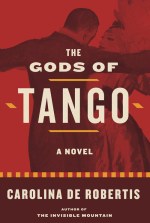
The Gods of Tango

carolina-de-robertis-book-the-gods-of-tangoThe Gods of Tango
By Carolina de Robertis
2015

This is a switch from my usual reading in that it’s general literature rather than genre, but I ran across some recommendation for it that I can no longer recall and decided to give it a shot. I’m glad I did because it’s really very good.

The writing is very lush. Very poetic. And generally a style that I enjoy a lot and Anna dislikes to the point of finding it unreadable. But it’s an appropriate style, too, for a story set in Beunos Aries in the early 1900s, as the immigrant communities ballooned and the tango developed as a music style, a dance, and a culture in the cross cultural whore houses that catered to that population.

The story line follows Leda, who at seventeen marries by proxy her cousin Dante and sets out on her own from Italy to join him in Argentina. The marriage and trip is entirely by her own decision as she longs to escape the small, traditional Italian town where everything is proper and no one acknowledges the horrors that happen behind closed doors. Upon reaching the massive immigrant city of Buenos Ares, Leda discovers that her husband died at a union strike just days before she arrived. She is now a widow in a city overrun by male immigrants from around the world, where women are divided into two groups: pure women supported by husbands or fathers and whores.

In her new city, refusing to return to her family in Italy, Leda considered her options along with her growing passion for tango music (and the thought of playing on the violin her father gave to her husband) and makes the dangerous decision to avoid both paths available to women, and to dress herself as a man instead.

I particularly liked how, while Leda is the main character and the story line follows her experiences, periodically there’s sections that show the events from another character’s perspective – and that perspective includes whole histories of who that person is and what they have experienced to bring them to this point. Even as the characters may have shallow views of one another, we the reader see how much the actions and interactions of the characters are driven by their pasts.

It is all very literary. Which is not something I generally say as a compliment. Normally I find “literature” just tries too hard to be “real” and misses both realism and story line, but this was actually really well done.

One warning though, is that the book is extremely graphic in its discussion and presentation of sexuality. The Buenos Aires culture is full of machismo, the demographics have many more male immigrants than female immigrants, and prostitution is the only job priced without the assumption that a woman is merely supplementing her husband or father’s income. Sex is discussed and had in a variety of permutations on a regular basis and described with physical, mental, and emotional detail. In addition to this, one of the driving themes throughout the book is Leda’s struggle to come to terms with what happened to her girl cousin but never acknowledged when she was twelve and her cousin thirteen.

But that said, it is a really good book that I almost skipped reading, but instead stayed up way too late finishing three days after I started.

The Bible: Chronicles 1

This broke me. Not the book itself, although it took an audiotape and a long drive to get through it, but the write up. I had originally planned to illustrate it with a family tree. Except that the first four verses of the first chapter are a vertical family tree through thirteen generations from Adam to Japheth. The fifth verse lists Japheth’s seven sons. Verses six and seven list the sons of two of Japheth’s seven sons, one of whom had three sons and the other four. And it just keeps going.

There are more than a hundred names (although only approximately 75 unique individuals because of course every father is listed twice, once as a “son of” and then again as a “father of”) within the first 26 verses of chapter 1, at which point we get to the sons of Abraham: Isaac and Ishmael, who at least are names I recognize. After that, there are a lot more names that I don’t recognize at all. A lot.

The first chapter has 54 verses. The book as a whole has 29 chapters. And it’s the first of two scrolls that make up Chronicles 1 and Chronicles 2 respectively.

What do you even do with this?

Although as a baby name book, it’s pretty excellent. If you can get over some of the names themselves. I do feel like no one should be named after Ham (1:4), but then there’s Tilgathpilneser (king of Assyria, listed in 5:6 and again in 5:26 because why make things easy to keep track of?), since that is a bitching name.

“I wanted to give my son a biblical name, but also a unique one.”

“So, little baby Tilgathpilneser?”

“We call him Tilgy.”

(Also, rather than just a name in a list, like so many are, we learn that God roused Tilgathpilneser’s spirit in order to punish the Israelites – even the Reubenites! – so… there’s that? 5:26)

The family trees just keep going, but we do occasionally get some few verses dotted here and there giving a few details about what’s actually happening with and to at least some of these people.

There’s also the occasional woman mentioned, such as Hammoleketh who bore three children of unspecified gender (but certainly not unspecified name!) listed in 7:18. And then there’s Sherah (7:24) who makes me grin because Shera! Princess of Power! which was a favorite cartoon that dates me horribly (and also aged horribly.)

We also get to a few parts where the people don’t always have names, but do have hereditary positions of employment such as porters of various quarters, overseers of vessels, cooks, and singers. Of course, sometimes they do have names, and those many, many names are listed. (chapter 9.)

And, sometimes there isn’t familial connections, just being in the same battle but still needing a chapter devoted to the roll call of those valiant warriors. (chapter 11).

By chapters 15, it became too much for the original writer apparently because it breaks down into numbers rather than lists of names, or at least lists of names associated with the number of children rather than lists of names associated with lists other lists of names.

Chapters 16-22 actually get back to story telling with King David and the ark of the covenant, a list of rules of behaviors, and the temple that David really wants to build and has very specific ideas about but that can’t be built within his lifetime because God says so and thus needs to be described to his son Solomon for him to do later.

After that break, chapters 23-27 are back to genealogies and employment records.

Chapters 28-29 are a rousing speech that King David gives, somewhat about the greatness of the Lord but mostly about exactly what the temple he wants built after he dies to look like, described in extremely excruciating detailed instructions. It all finally ends with a quick summary of King David’s reign (good) and his biographies (three of them)  and mention that King Solomon is the next king.

Summary: There are a lot of people and population increases geometrically over time if couple has more than two kids. They’re mostly employed being porters, priests, singers, cooks, warriors, and kings. And wow, does King David want to be in charge of building his temple even if it can’t be started until after he dies.

Moral: As time goes by, being one more name in a long list of names is not a great legacy, in my ever so humble opinion.

Next up: Chronicles 2
The Life-Changing Magic of Tidying Up

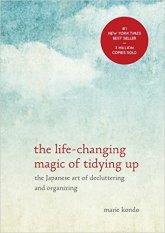
tidyingupThe Life-Changing Magic of Tidying Up: The Japanese Art of Decluttering and Organizing
By Marie Kondo
2014

This book was amazing. I have now recommended it to virtually everyone in my family and am passing it around so they can all read it and you should read it too. It’s joining The Art of Learning as one of now two nonfiction self-help books that I really enjoyed and was impressed by.

Marie Kondo is kind of crazily obsessed with tidying and organizing. (Her family members are clearly saints for having put up with her trying out different methods.) But it makes the book pretty funny in addition to useful and interesting as she writes about what methods she’s tried and the ways in which they did and did not work.

Kondo’s actual method, the one she’s describing in the book really does work, and I love that she takes the time to show how she came up with the method and how and why it works. Not only is the theory something I find generally interesting, it also makes it possible for me to modify the method for my own use. Because I don’t have the time and energy to implement her massive 6-month reorganization bonanza, but working bit by bit, as I feel inspired does work.

Despite it not being a particularly long book, it took a while to get through because I would get inspired to just start tidying. It’s surprisingly fun to do and the results leave me feeling all pleased and happy with myself.

While there are a lot of specific suggestions about how to really work her system (so go and read the book!), the basic premise is that you should keep the stuff you love and get ride of the stuff you don’t. The first part of her method is to spend time looking through your possessions and identifying all the things that you love. It’s amazing how much stuff I had because I had it and had no reason to get rid of it. I had a lot of clothing due to inertia rather than enjoyment. While reading this book, I wound up with several large bags and boxes of clothing and books to donate and now am left with a room with a much higher concentration of things I love, because there’s less dilution with things that I just sort of have.

I highly recommend this book. You don’t have to follow her advice, but at least read the book and see if you’re interested in trying it out. Because I have been working through my stuff and it has been fun to do and I love the results.

The Scorpio Races

We’ve talked before about how certain books fit certain times of the year. I wrote a whole post a few years back about good Christmas reads, and Anna has mentioned that A Night in the Lonesome October is an excellent creepy story for Halloween. This year, as the darkness and cold began to descend, I decided to branch out from my typical winter reads and try a couple of new things that I’d seen recommended on social media.

A few people mentioned The Dark is Rising as an excellent Christmas re-read, and it was. This is the second in a series of five middle-reader books by Susan Cooper about children encountering mystical forces in England. The first one in the series is actually my favorite, but The Dark is Rising stands alone so you don’t need to read the others. It’s great for this time of the year because it takes place during Christmas and Advent and feels very winter-y. And although these books are not that old–they originally came out in the 1960s–they feel timeless, and read like classic children’s fantasy without any sort of modern angst or issues.

What I really want to talk about now, though, is The Scorpio Races by Maggie Stiefvater, a book I’ve been avoiding for years but which has now officially joined my To Be Reread Every Year list. Stiefvater has a series of YA books that starts with The Raven Boys that I’ve reviewed here before and enjoyed just fine but didn’t looove. I’d seen discussions online about how The Scorpio Races was her best work–it was a Printz (like the YA Newberrys) honor book in 2012–but the descriptions of the book always sounded so grim, often quoting the very first line of the book: “It is the first day of November and so, today, someone will die.”  Does that sounds cheery? No, it does not. But I finally decided to give it a shot and it’s not a cheery book, but it is suspenseful and exciting and touching and I loooved it.

When I describe the plot this is going to sound like a crazy fantasy novel: every November, on a small island off the coast of (I think?) Ireland, magical, dangerous, predatory horses that live under the water come up on land. It’s island tradition to try to catch one of these horses and keep it under control long enough to win an annual race, which has now become a tourist attraction that is one of the few sources of income on the tiny island. I know, weird. However, once you’ve accepted this premise, the rest of the book is remarkably realistic. There are young people trying to figure out how to make a life and a living on a remote island, sibling dynamics, challenges of established gender roles, some solid villains, and a love story (which I am always a sucker for). The characters feel modern and relatable, but the remote island setting and lack of discussion of cell phones or other technology make the story feel out of time, like it could be taking place anytime from 1900 to today. And it’s always raining or foggy, and everyone’s always cold and wrapping up in sweaters, so it really is the perfect thing to read while under a blanket, drinking hot tea in the early winter darkness.

It took me a little time to get into this book, because the first few chapters felt so ominous. For the first 100 pages or so I had to talk myself into reading it each night because I was so so worried about what might happen next. After a little bit I got so swept up into the story that I couldn’t put the book down, but I definitely felt anxious at first. I don’t want to give away any spoilers, so let me just say that if you start the book and you’re thinking, like I was, “Everyone and everything I love in this book is going to come to a terrible end,” don’t worry. Things get intense, but you’ll come out of it with hope, not despair.

Kinsey’s Three Word Review: Nerve-wracking autumnal adventure.
You might also like: The New Policeman, by Kate Thompson, another YA book set in Ireland with a supernatural twist, and So You Want to Be a Wizard, a childhood favorite of mine that always leaves me with the same emotionally wrung out feeling as The Scorpio Races.


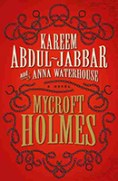
Mycroft Holmes

By Kareem Abdul-Jabbar and Anna Waterhouse

Mycroft_HolmesI first heard about this novel on NPR and was intrigued by reading a novel about Sherlock Holmes’ older (and canonically smarter) brother and, quite frankly, by reading a novel by one of the greatest basketball players ever. In the NPR interview, Abdul-Jabbar says he’s been a lifelong fan of the Sherlock Holmes stories, and it really shows in the details of the novel.
Mycroft is also a really excellent character to expand upon, since he was only roughly sketched out in the original Sherlock Holmes Stories. This novel starts with a 23-year-old Mycroft, fresh out of university and working a mid-level government job with mid-level ambitions to marry his charming fiancé and settle down in a cottage in the countryside. The authors are able to basically build the entire character from the ground up, establishing the origin story of how he becomes a puppet-master behind the English government.

Mycroft, along with his close friend, Cyrus Douglas, an African Carribean shopkeeper, are first introduced in London, and my one quibble with the story is here. The introductory scenes include overly meticulously described action that bogs down the pace of the prose. I believe the explanation for this lies with author Anna Waterhouse, whose background is in scriptwriting. It very much reads like someone describing a movie scene, which can be tedious on the page, but also made me imagine what a terrific movie this novel would make.

The story really picks up after Holmes and Douglas get news of children being brutally killed in Douglas’ homeland Trinidad, which incidentally is also the home of Holmes’ fiancé. Holmes and Douglas go to investigate, and the action and suspense are skillfully done. The setting of Trinidad is fascinating, with a large mix of different cultures and society levels. The authors also explore themes of race and slave-culture in a time when slavery was legal in some countries but not others.

By the end, I was so engaged that I quickly checked to see whether a sequel was in the works before I remembered that this was only released in September. I very much hope that a sequel will come eventually, though — and possibly even a movie?

—Anna

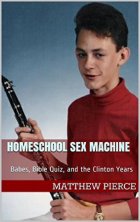
Homeschool Sex Machine

By Matthew Pierce

Book Cover: Homeschool Sex MachineI don’t even remember what internet rabbit hole led me to Matthew Pierce’s blog, but the entries I read were funny enough that I decided it was worth $2.99 to get them compiled in his kindle book. The author was primarily homeschooled up to 10th grade, and he describes the experience, and that niche community, hilariously and self-deprecatingly. I kept expecting some anger or bitterness, but he writes respectfully, if briefly, about his religiously conservative parents, and ultimately affectionately about his upbringing.

I got a little grumpy about it, actually, and ended up having to face some personal bias against religious conservatism that I would have preferred to ignore in myself. Personal issues aside, though, it was a really interesting and entertaining look a childhood much, much different from my own. He has a sequel about attending a Christian college, which I look forward to reading just as soon as I work up some acceptance for Christian colleges.

In case this review has not already made my religious lack clear, I have tested as being damned to an inner circle of Dantes’ Hell. Rebecca found an online quiz that tells you where you belong in the 9 circles, and it was all fun and games as every other member of my family headed off to limbo to hang out with famous philosophers, and then I was consigned to burn in sepulchers with all the other heretics.

—Anna

The Dante’s Inferno Test has banished you to the Sixth Level of Hell – The City of Dis!
Here is how you matched up against all the levels:

Level Score
Purgatory (Repending Believers) Very Low
Level 1 – Limbo (Virtuous Non-Believers) Moderate
Level 2 (Lustful) Low
Level 3 (Gluttonous) High
Level 4 (Prodigal and Avaricious) Low
Level 5 (Wrathful and Gloomy) Moderate
Level 6 – The City of Dis (Heretics) Very High
Level 7 (Violent) High
Level 8 – The Malebolge (Fraudulent, Malicious, Panderers) Moderate
Level 9 – Cocytus (Treacherous) Moderate

Take the Dante’s Inferno Hell Test