Between the World and Me by Ta-Nehisi Coates

61unm4weinl-_aa300_Between the World and Me
by Ta-Nehisi Coates
2015

So 2016 proved to be a bit of a wake-up call for me in terms of politics and social justice. We have some serious problems in the US, regarding unjust inequality of human respect and public safety in addition to inequalities of income, access to education, access to healthcare, and access to overall opportunities.

I’ve come to the realization that it’s a sign of just how sheltered I’ve been that 2016 was a wake-up call rather than just another demonstration of what the world can be like. It was time and past for me to expand my horizons and get out of my comfort zone.

Ta-Nehisi Coates is only a couple of years older than me and this book is about his experience with being black in a white society. I’m white in a white society and thus a lot of racial issues are nearly invisible to me. I am not at all the intended audience for this book: he writes it as a black man to his black son about his experience with the way their blackness is seen by society. It is beautifully written and it’s an honor to be be allowed to read this somewhat intimate letter from a father to his son about his fears and hurts and anger.

It reminded me of Why Are They Angry With Us?, another book I highly recommend, but while that book was academic and intended for a general audience, Between the World and Me is very personal and intended for a specific audience of one, possibly expanded to include all young black men.

I’m glad I listened to it as an audio book rather than trying to read it as text. Coates reads it himself, which I always appreciate in audio books. But the real benefit of audio books is that they don’t stop unless you actively push the pause button. I found it a difficult book to hear but that very difficulty is what makes it all the more important that I listen.


Some topical advice from “The Thin Man”

The stream of “alternative facts” from the White House over the last few days reminded me of a passage from one of my favorite books, Dashiell Hammett’s The Thin Man, which I’d like to share (no spoilers, but mild 1930s sexism):

We went into Mimi’s bedroom. She was sitting in a deep chair by a window looking very pleased with herself. She smiled gayly at me and said: “My soul is spotless now. I’ve confessed everything.”
            Guild stood by a table wiping his face with a handkerchief. There were still some drops of sweat on his temples, and his face seemed old and tired. The knife and chain, and the handkerchief they had been wrapped in, were on the table. “Finished?” I asked.
            “I don’t know, and that’s a fact,” he said. He turned his head to address Mimi: “Would you say we were finished?”
            Mimi laughed. “I can’t imagine what more there would be.”
            “Well,” Guild said slowly, somewhat reluctantly, “in that case I guess I’d like to talk to Mr. Charles, if you’ll excuse us for a couple of minutes.” He folded his handkerchief carefully and put it in his pocket.
            “You can talk here.” She got up from the chair. “I’ll go out and talk to Mrs. Charles till you’re through.” She tapped my cheek playfully with the tip of a forefinger as she passed me. “Don’t let them say too horrid things about me, Nick.” Andy opened the door for her, shut it behind her, and made the o and the blowing noise again.
            I lay down on the bed. “Well,” I asked, “what’s what?”
            Guild cleared his throat. “She told us about finding this here chain and knife on the floor where the Wolf dame had most likely broke it off fighting with Wynant, and she told us the reasons why she’d hid it till now. Between you and me, that don’t make any too much sense, looking at it reasonably, but maybe that ain’t the way to look at it in this case. To tell you the plain truth, I don’t know what to make of her in a lot of ways, I don’t for a fact.”
            “The chief thing,” I advised them, “is not to let her tire you out. When you catch her in a lie, she admits it and gives you another lie to take its place and, when you catch her in that one, admits it and gives you still another one, and so on. Most people—even women—get discouraged after you’ve caught them in the third or fourth straight lie and fall back on either the truth or silence, but not Mimi. She keeps trying and you’ve got to be careful or you’ll find yourself believing her, not because she seems to be telling the truth, but simply because you’re tired of disbelieving her.”

So, let’s do our best to take Mr. Charles’ advice and not get tired. We need to keep calling Trump on his lies each and every time. It will be exhausting and often seem pointless, but I think it is important to keep reminding ourselves what the truth is and reminding him that we won’t be exhausted into believing him.

And Then There Were None

By Agatha Christie

So, over the holiday season, Rebecca and I finally broke down and got Amazon Prime. I’d been resisting because Amazon does some really shady stuff with pricing and publishing, but that free two-day shipping is really seductive. The streaming service isn’t so bad, either, and I finally got a chance to see the recent BBC production of “And Then There Were None,” which I’ve been eagerly waiting to be widely available. I remember reading and really enjoying the novel in high school, so I remembered the basic premise – that ten people are invited on a holiday weekend at a remote island mansion, where they are murdered one by one over the course of a few days – though I didn’t remember all the details.

aidan-turnerI have to admit that I mostly wanted to watch the miniseries because I am a shameful sucker for a pretty face, and Aidan Turner is just so damn attractive. He is so attractive that I’ve watched two very mediocre shows (“Being Human” and “Poldark”) solely in order to look at him. He was very good in this, though his character also turned out to be the most problematic part for me.

Mild spoiler from the first few chapters: all the people on the island are accused of murdering one or two people, except for Turner’s character, who unrepentantly admits to killing about 20 African tribesmen. The other characters are appalled, but not enough to my mind, given we are talking about a large-scale massacre. The other characters make stifled British exclamations over it, but still seem to view him as dangerously fascinating. It really did come across as killing 20 Africans is equal in “badness” to killing one to two English people.

and-then-there-were-noneThat was the one sour note for me; overall, it was all very dramatic and fun to watch. Since there was a fair amount of sex and violence, I wondered what liberties the show had taken to ‘modernize’ the source material, so I checked out the book, and it turns out, not much. That Agatha Christie was quite the salty lady! The show ups the ante just a bit on both, but still sticks remarkably close to the original novel.

I’m not going to spoil anything more of the plot – murders! sex! violence! racism! – but Agatha Christie said that she considered this her most difficult plot to write, and her care and eye for detail really shows. Since I already knew whodunit, I could see all the small ways she had revealed that person throughout the plotting, which provided additional enjoyment to rereading it.

The Best of 2016

2016 was rough, I think we’ve established that. But now as we move forward into 2017, I’ve been trying to make myself remember some of the good things that did happen last year–I refuse to let an entire year go down because of a few (key, admittedly very) bad things. I’ve spent the past few months re-reading romance novels, but before that period of re-reading began, I found some great new books. Most of them I’ve already talked about here on the blog–Aristotle and Dante Discover the Secrets of the Universe, How to Build a Girl, and Bone Gap–but there were a few others I wanted to mention.

  1. Pointe by Brandy Colbert is a YA book about a ballet dancer, but it also involves a kidnapping and a teenage victim who comes back after years away. It’s a dark, sad book, maybe not for younger teens, but I found it really compelling. I especially enjoyed watching, over the course of the book, as the female protagonist worked out just how much agency she had and how she was going to use it.
  2. I’ve already raved about the memoir Love, Nina by Nina Stibbe, one of my favorites books of recent years, but I was a little worried that I might not feel the same way about the author’s fiction. And while nothing could quite match my original love, Paradise Lodge was a really charming story about a British teenager in 1970s who takes a job in a nursing home. Stibbe has this very specific voice that comes across in both her fiction and non-fiction, in which even when she’s talking about some sort of crisis or disaster, everything seems like it will all work out fine. I found this very calming.
  3. If you know who I am talking about when I say “Dave Holmes, MTV VJ,” I suspect you will like his book. Party of One is a memoir, structured around music, and maybe it’s just that he and I are about the same age, but this book felt like it came directly from my subconscious.
  4. Way back in 2012 I wrote about how much I love Sharon Shinn, and I recommended a new book of hers called Troubled Waters and said I hoped was the start of a new series. And it was! There are now four books in the Elemental Blessings series, and I have enjoyed all of them. If you would like to read a fantasy romance novel with a kick-ass female main characters, these are a great option. I would recommend reading them in order, but I think my favorite was the third book, Jewelled Fire.

And with that, I am quite happy to close the book (so to speak) on 2016. I’m already starting 2017 out well, reading-wise, with my continued journey through the Lord Peter Wimsy books, and a lovely, poem-like book called The Lesser Bohemians. I have a lot of hopes and goals for 2017, and continuing to discover great new things to read and writing about them here is definitely something I plan to continue.

Books for the New America

So, 2016, huh? It’s been quite a year. I feel like I’ve been just barely hanging on since the election. But while I needed some recovery time to mourn and come to terms with what had happened, it’s time to look up and move forward. (Although holidays cards have been a challenge, since I couldn’t find any that said “Merry Christmas, but I’m still really mad.” I should have waited to make my card purchase, since the genius Swistle just got on zazzle.com and made a bunch of cards with pretty lights and trees on the front that say things like, “Wishing you whatever scraps of peace and joy you can find this holiday season.”) Since this site is all about dealing with everything thought books, I thought I would offer two different kinds of book options for anyone else out there who might be desperately looking for their scraps of peace and joy.

Comfort Books

I spent a lot of the last month reading things that allowed me to slide into a calmer, more peaceful world. The best of them included:

  • L.M. Montgomery stand-alone books. As much as I love Anne of Green Gables, once I start rereading that I have to go through the whole series, which is a big time commitment. Plus, Rilla of Ingleside, the last book in the series, has too much heart-breaking World War I plot for me to handle right now. But some of Montgomery’s one-off books are completely charming. My favorites are Jane of Lantern Hill, about a little girl who gets to set up house with her father on Prince Edward Island, and the much more grown-up romance The Blue Castle.
  • Dorothy Sayers mystery novels. How did I miss Dorothy Sayers all my life? Somehow how I did, which is actually great, because now I have a whole series of arch British 20th century mysteries to catch up on. Whose Body? is the first in her series featuring Lord Peter Wimsey, but Gaudy Night has been my favorite so far.
  • Books about makeup. The actual thing that has been soothing me to sleep each night? Pretty Iconic by Sali Hughes, her latest detailed hardback book about classic makeup/hair care/beauty items. Just page after page of gorgeous photos of a lipstick or a shampoo bottle, next to a little essay about each item. Even opening the book lowers my blood pressure.

I have also heard from friends that vampire books and Connie Willis comedies have been working for them, so this is clearly a category that expands to fit the needs of the individual.

Discomfort Books

But makeup and historical mysteries will only get us so far, and we also need to be prepared for the fight ahead. Since I assume that everyone has already been taking notes from The Handmaid’s Tale, here are a few other books to keep you sharp.

  • The Small Change series by Jo Walton. These are also British mystery novels, but they are worlds away from Dorothy Sayers. In this trilogy, which starts with Farthing, English elites overthrew Churchill and ceded Europe to Hitler, and fascism and intolerance are creeping over the island. While each book features a mystery and a principled Scotland Yard investigator, the power of the books in the chilling way they show what happens to regular people trying to live regular lives as their country slowly crushes them.
  • Anything by Octavia Butler. The Parable of the Sower is a completely amazing book that terrified me to the point where I can never read it again. As I recall, it was about a teenage girl living with her family in a California where law and order and government and society and general had broken down. Also, I think she was starting a new religion? But any Octavia Butler is going to provide a swift reminder about the oppression some Americans have experienced from the moment this country began and kind of how terrible humans can be, in general.
  • Secondhand Time: The Last of the Soviets by Svetlana Alexievich. The author of this, I’m going to call it a literary oral history, won the Nobel prize in literature in 2015. This book is an amazing, enormous telling of the crumbling of the Soviet Union and the emergence of today’s Russia through a zillion individual stories. What came through most clearly to me was how many of the people she spoke with felt like not only their country, but the people that lived within it, became unrecognizable in the blink of an eye.


Sorcerer to the Crown

By Zen Cho

This has been a trying couple of weeks – I’ve been obsessively reading twitter and facebook until I can’t stand it anymore, and then I read fiction until I can’t stand being away from social media. Zen Cho, however, has been a real comfort during these times, though.

jade-yeoThe novella The Perilous Life of Jade Yeo features a Malaysian woman trying to make a living as a journalist in Victorian-era England. It is short and funny and touching, all told through her journal entries. It just felt very much like a story by a woman for other women.* The male characters, both good and bad, are only given context in relation to Jade, and the story focuses primarily on her growth as a young adult trying to establish her sense of self. So, this was extremely comforting in these worrisome times.
sorcerer-to-the-crownSorcerer to the Crown, the full-length novel, starts slowly and in very high-fantasy fashion, set in a magical version of Regency-era England. It reminded me almost immediately of Jonathan Strange and Mr. Norrell, but luckily it picks up the pace much more quickly. Zacharias Wythe, as a very young boy, proves his extraordinary magical ability in front of a large panel of sorcerers, who promptly all lose their shit. This is not because Zacharias shows such promise so early, but rather because he is a freed African slave. The lead sorcerer adopts him and trains him to be his successor as Sorcerer Royal, the position he holds at the time the book.

A large contingent of white sorcerers actively work against him, even against their own self-interest, solely in order to oust him from his position by spreading outrageous rumors and innuendos. As the story revolves around an extremely thoughtful and conscientious black man trying to navigate the world of magic through difficult times, while surrounded by white men who are actively rooting for his failure, it became much less of an escapist fantasy.

Zacharias then runs across a young woman who shows strong magical abilities, and decides to train her, in the face of all traditional lore saying that magic is beyond women’s understanding. Reading about this black man conquering his enemies and silencing his naysayers, while working with a woman to do the same with hers, just about broke my heart. We didn’t get the ending we deserved, but at least this fictional world did.

the_dressmaker*If I can be excused a diversion for an additional recommendation – a few months ago I saw “The Dressmaker,” and I absolutely loved it! It is an Australian film that didn’t get a lot of showings, even though it stars Kate Winslet and Liam Hemsworth. The preview looked amazing to me – a haute couture dressmaker has to move back to her very rural Australian town in order to take care of her elderly mother – but the reviews were mixed. The negative reviews all tended to revolve around uneven storytelling and shifting mood, and I started to formulate a theory that this movie might be telling a story in a more traditionally female way, one that focuses on relationships and character growth, rather than a single-trajectory action sequence. Seeing the movie absolutely confirmed that for me, and it felt amazing to see a movie that was so clearly by women about women and for women.


Penric & Desdemona by Lois McMaster Bujold


Apparently Lois McMaster Bujold has decided to retire, which is somewhat dismaying as she has long been one of my favorite authors. On the other hand, what she’s decided to do in her semi-retirement is write novellas instead of novels and semi-self-publish them. (Spectrum Literacy Agency is listed as the publisher rather than a regular publishing house.) They are absolutely delightful and I love them and all three of the novellas that have come out so far have come out in 2016. The stories are available for purchase as Kindle books within weeks of them being written so I can track them on facebook.

These novellas: Penric’s Demon, Penric and the Shaman, and Penric’s Mission (so far), are in the series, Penric & Desdemona, about a young man named Penric who acquires a demon he names Desdemona. In this world the acquisition of a demon is what makes an individual a sorcerer, “much like the acquisition of a horse makes an individual a rider.” The Church, which has oversight of the demons in this world, is not best pleased with the situation. Penric is sweet and adorable and Desdemona is a delight.

The stories are set in Bujold’s world of the five gods. The five gods being the Father, the Mother, the Brother, the Sister, and the Bastard (each of whom are interesting characters in their own right although only appearing for the briefest of scenes.)

I whole-heartedly recommend those books as well, each of which has the interesting aspect of being able to stand alone, although I recommend just going ahead and reading them all, and at least the first two in order.

cursechalion

The Curse of Chalion is the first book and a standard (beautifully done) fantasy novel of adventure and court politics.

paladinsouls

Paladin of Souls is set some years later and shares some characters with The Curse of Challion but mostly through references, and is interesting in its main character being a middle-aged woman, mother and widow, who has had a rough life and is trying to find her place again… with much adventure and court politics.

hallowedhunt

The Hallowed Hunt shares no characters with the other books except for the gods, and is actually set in a whole different country and time period. This one has the most intriguing and heart-breaking villain story arch that I think I’ve ever run across and is amazing, especially since I still love the main characters and want them to succeed.

And then the Penric novella’s come in and it’s only in reading them that I can put together the time line, since they’re set some centuries after The Hallowed Hunt and but some time before The Curse of Challion.

Anyway, I love all of these and think you should read them all, but I mostly needed to just gloat with joy about the three Penric & Desdemona novellas that have already been made available with murmurs of at least two more. Yay! They are wonderful!


Prudence and the Dragon

By Zen Cho

You guys, is there any better feeling than when you discover a great new author? A link to Zen Cho’s story “Prudence and the Dragon” showed up sort of randomly on my Tumblr, with a comment saying that it was the best short story they read in a long time. I figured even if it wasn’t the best for me, I’m game for a decent short story about dragons.

Guys, it was the best short story that I’ve read in a very long time! It reminded me very much of Patricia C. Wrede’s dragon series (which were my favorites all through childhood) especially in how Cho provides this wealth of absurdist detail that gives such richness and humor to the story.

So read “Prudence and the Dragon” as soon as you get a chance, and then read the sequel short story about Prudence’s best friend in “The Perseverance of Angela’s Past Life” (both of which are appropriate for readers of all ages – there is light romance, but nothing graphic).

I don’t want to make a big deal out of it since the stories themselves don’t, but they are also just perfect examples of how to weave multiculturalism and different identities into a story without making it the focus of the entire storyline.

I have since also bought a novel, a novella, and a collection of short stories by Cho, since I think she might be my new favorite author, and I’ll review them, too, as I finish them.

Down Don’t Bother Me

By Jason Miller

down_dont_bother_meKinsey set me up on Twitter a few years ago, and I’ve become quite the addict since. I follow a whole bunch of comedians, who then follow each other, so I’m not even sure how I found all of them. Jason Miller posts frequently and is so funny and smart and thoughtful that I may possibly have a little bit of a crush on him.
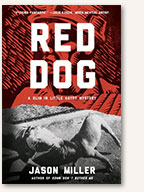
Miller has been recently posting about a new book he has published, Red Dog, which I looked up and turns out to be a sequel to an earlier book, Down Don’t Bother Me, which was described as a Justified-like noir mystery set in rural Pennsylvania coal mining country.

I’ve been recently watching and loving Justified, so I promptly bought Down Don’t Bother Me, and not only is it very, very good, but it is coincidentally the perfect counterpart to my earlier review of Savage Season. Like, Down Don’t Bother Me has the rural grittiness that first attracted me to Lansdale’s books, but eliminates all the racism and sexism and then also adds surprising nuance to the characters, as well.

Down Don’t Bother Me has a somewhat slow start where Miller introduces us to the characters and general setting, though the writing is very good. He hits the metaphors a bit hard, but they are always very clever and made me laugh. And once the action picks up, though, the story really gets going!

Down Don’t Bother Me is set in poor, rural mining country, and our main protagonist, Slim, is a miner barely makes ends meet in the dying industry. He is also a single father of a precocious twelve-year-old daughter, which is the first sign that this is a step above most other action-mystery novels. The owner of the mine that he works at offers him a secure pension in return for discretely finding his missing son-in-law, considered a person of interest by the police in the murder of a reporter investigating possible negligence in the mine. If that sounds a bit confusing, it is—Miller does not shy away from a convoluted plot.

I’ve been really struggling to write this review, because what do you say about a book that doesn’t really break any new barriers or anything, but just does its genre really, really well? It was just such a satisfying read – all grit and rural noir with some added poignancy and surprising humor for contrast.

Red Dog

red_dogMiller significantly upped his game with this sequel, with a plot that starts with a missing dog, and spirals out into a storm of dog fighting, gun running, and white supremacists.  The characters are where Miller really shines. I had some trouble following all the characters, but that is absolutely my fault as a reader and not Miller’s as the author. I read a lot of “tough guy” books and even though I love them, I still get tired of the tough-guy dialogue, and Miller’s dialogue surprises me over and over, and makes me laugh.
So, the dialogue, like I said, is refreshing, the pacing fast, and the violence described in realistic but brief impressions, not in the blow-by-blow detail that slows down the pacing in other action books. Which I especially appreciate, because the violence is not glamorized in these books (which is also a plus to my mind). Red Dog, though, also requires trigger warnings for animal abuse and sexual violence, for which I’ll put more specifics after the spoiler cut. Continue reading

The City of Mirrors

By Justin Cronin

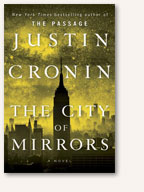
city_of_mirrorsI wasn’t going to review this book because it is the third in a trilogy in which I’ve already discussed the first two. However, the third book pissed me off so much that I had to rant. I am also about to spoil the hell of this book, starting right now, though I’ll throw a page break in before the more specific spoilers.

The City of Mirrors has a problem, and that problem is Timothy Fanning. The character Fanning is also known as “Zero,” as in Patient Zero, the original vampire. He is the main villain of the whole series, having orchestrated the spread of the vampire virus purposefully, though he has stayed mostly behind the scenes in the first two books.

Unfortunately, in the third book we get a much more in-depth look, via a 100-PAGE MONOLOGUE in which he gives his entire history, starting almost from birth, and it is just the most undiluted example of white male entitlement that I think I have ever read. I really wanted to believe that this was on purpose, to make a commentary on how dangerous this kind of unacknowledged privilege can be, but I had increasing suspicions that Cronin intended it to create a more complex villain with a sympathetic backstory. The monologue itself was insufferable, but the recipient of it, a previously strong woman, appears to receive it with sympathy and understanding.

Here’s where I’m about the spoil the hell of this book, by sharing a breakdown of his backstory.  Continue reading