Love, Death + Robots: The Official Anthology : Volume One

Love, Death + Robots: The Official Anthology: Volume One
2021, audiobook 2025

I have not watched the animation series, but I’ve heard good things about it and I saw that this audiobook existed and so I got it and listened to it on my work commute. And I didn’t quit halfway through, though I was extremely tempted. It has some of the worst writing I’ve ever read/heard. Like, at least one story that’s right up there with Eye of Argon, and others that were close runners up. What’s also crazy is that, as I was listening, increasingly appalled with each new story, I realized that they were managing to cover a wide range of ways in which writing can be poorly written.

In retrospect, I realized that there were two entries that are explicitly screenplays and thus can be forgiven (I suppose) for going into details about exact camera angles, and scene changes, and repetitions of the exact time of day even though it didn’t change, but wow was it hard to get through on my commute. The fact that one of those screenplays (“The Witness” by Alberto Mielgo) literally opened with “a beautiful woman is naked in front of a mirror, applying make-up” felt like such a stereotype/cliche that I wondered if it was intended as a spoof. Sadly, if it was intended as satire, it never made any particular point.

A lot of the stories (“Suits” by Steve Lewis, “Sucker of Souls” by Kirsten Cross, “Shape-Shifters” by Marko Kloos, “Blind Spot” by Vitaliy Shushko, “The Secret War” by David W. Amendola) had men with overwrought machismo fighting slavering aliens, with the type of clinical descriptions of violence and gore that I might expect from an audio-description of a visual media, but not from even a book adaptation of a movie. (“Lucky Thirteen” by Marko Kloos, has a woman with machismo fighting human soldiers, but the rest remains the same.) Text and video are different types of media and text is better served trying to describe the impact of violence/gore on the characters rather than just a description of a picture. However, most of them couldn’t even make their violence impactful. Plus, a really eerie pattern I noticed was how in these stories, there was all this extreme violence between the “main characters “good guys” who feared for this lives but stayed strong through it all because they needed to protect their people, versus the “bad guy” alien others who were mindless killing monsters with no thought or culture of their own, only an endless desire to kill humans. But their actions were the same, extreme violence towards one another: just one side was good and one side was bad. It felt like video games for armchair warriors, who wanted to feel powerful and liked gun statistics and weren’t at all interested in the source of any given conflict.

Some of the stories (“Sonnie’s Edge” by Peter F. Hamilton, “The Witness” by Alberto Mielgo, “Beyond the Aquila Rift” by Alastair Reynolds) had an interesting concept and/or twist that I would have enjoyed seeing presented better and with less of a look at the authors’ sexual issues.

“Beyond the Aquila Rift” was actually the first story (ie, the seventh story) that I thought was genuinely well-written. And then it swerved into focusing on a middle-aged dude’s feelings about his extra-marital affair and it mostly stayed there for the rest of the story, pushing aside the interesting science fiction scenario and reminding me of the stereotypical English professor writing a novel about having an affair. The author tried his best to make the affair plot-significant and mostly managed to make the protagonist so self-centered he came across as a sociopath.

There were some decent stories. (“The Dump” by Joe R. Lansdale, “Fish Night” by Joe R. Lansdale, “Ice Age” by Michael Swanwick, “Alternate Histories” by John Scalzi.) It’s too easy to forget them when I think back on the book. But they were there. They were short, but interesting and fun and funny.

There were two genuinely good stories that I enjoyed a great deal and actually recommend. Luckily, I can even provide links to them (the written versions, not the audio):

Good Hunting” by Ken Liu is excellent and heart-breaking and heart-warming and all that about China losing it’s magical culture during the British colonial period and then regaining it in a steampunk fashion.

Zima Blue” by Alistair Reynolds is fascinating and thought-provoking and I have so many thoughts about it but also don’t want to provide any spoilers, because the story itself is so well laid out in the way it presents the situation and slowly makes the reveal, and then leaves the reader to continue to thinking about all the implications for days afterwards. It’s about an artist who went through extreme body modifications in order to have experiences no one else could, and the reporter who interviewed him about his final piece.

To Catch A Cat

By Marian Babson

For such a charming cozy premise, this mystery is surprisingly grim and nasty, which is not necessarily a pan but definitely a surprise. Within the first ten pages, 11-year-old Robin has been dared to steal a neighbor’s prized cat but while in the house, witnesses the husband brutally beat his wife to death. I guess I’d expected more of a ‘closed door’ mystery, where all the violence is off-screen so to speak, but it’s really quite explicit. We continue to get intermittent chapters from the husband’s unhinged viewpoint, which are unpleasant and I imagine would be very triggering to anyone experienced in any sort of domestic abuse situation.

At the same time, Robin is staying with his aunt and her less violent, but still verbally abusive boyfriend, and honestly, this novel is not very generous to any sort of post-pubescent male characters. Individual scenes are darkly funny, but the overall situation is grim enough that it is hard to fully enjoy the mystery. Robin is, at best, severely neglected by the variety of self-centered adults around him, with his only real comfort and companion being this cat that he has successfully smuggled out of the murder house.

All the adults are fairly useless in general, with the only real support and help coming from other children and teens. The several divergent plot strands come together in a neat (and fairly quick, at less than 200 pages) ending, and like any decent cozy, it all concludes satisfactorily, though disconcertingly so, considering everything everyone has been through.

Manners and Monsters

By Tilly Wallace

I’d run across a couple different recommendations for this book, and the premise is fascinating! Set in a fantasy England in the early 19th century, a biological weapon created in the Napoleanic wars has turned several hundred members of the English aristocracy, primarily women, into zombies of a sort. Honestly, the worldbuilding is so clever, this is more of what I would have liked to see in Pride and Prejudice and Zombies! The aristocracy, being the elite, have made it a whole song and dance, with a whole new set of ridiculous etiquette around their living-dead members.

When the etiquette is broken quite violently with a zombie-esque murder (missing brains, of course) at a grand ball, chief investigator Viscount Wycliff, on the fringe of haute ton himself, must pry into secrets of the various ‘unfortunates’ in attendance. In order to ruffle as few feathers as possible, he is accompanied by Spunky Heroine™ Hannah, the unassuming daughter of a surgeon specializing in undead ailments. And here’s where the novel lost me a little.

I generally liked Hannah, but both protagonists are fairly flatly written: Wycliff is brusque to the point of insulting, while Hannah pines for love at least half a dozen times throughout the book. The two are very clearly destined for each other, which wouldn’t bother me if they didn’t seem like an exceptionally bad match. I’d be reading along, enjoying the general zombification of the Regency era, and then their personal interactions would be a sour note. Romance really is trickier to write than people realize!

An additional big kudo to author Tilly Wallace, though: she sells all of her books directly through her website, tillywallace.com, where you can pay and promptly download an epub file. As someone trying to cut my very last tie to amazon (those pesky self-published ebooks), I very much appreciated this, and hope that more self-published authors follow suit!

The Mars House

By Natasha Pulley

You know how there are rare authors that you as a reader just trust implicitly? Like, even if the story doesn’t seem to be making sense or clicking, you know they’ll pull it off in the end. Well, I don’t trust Natasha Pulley – in fact, I actively distrust her. This is not to say that her books aren’t consistently excellent. They are! She just has a real habit of throwing in some actual crime against humanity, and having all the characters shrug it off like no big deal.

I wouldn’t even read this one until Kinsey read it first and gave me the all clear, and even then, I read it in a sort of mental flinch state. This also made me very suspicious of the slightest hint of genocidal tendencies in characters, so I was extra judgmental of them all and not quite able to actually like them as much as perhaps I would have otherwise.

Our main character is a principal ballet dancer for the Royal Ballet who has to flee the climate crisis in London for a colony on Mars. There, he is consigned to manual labor until a conflict with an anti-immigration politician forces the two of them into a contractual marriage (it makes marginally more sense in the context). This would all be brutal to read if the protagonist wasn’t such an utter golden retriever, just overall cheerful (and a little egocentric) regardless of harrowing circumstances around him.

It seemed clear from the outset that the politics were not all that they seemed, but I stayed extremely wary of Pulley trying to trick me into rooting for a war criminal or some such. Instead, though, she wove a very satisfyingly complex mystery that pulls in geopolitics, gender and cultural identity, disability rights, and so much more. The core relationship is, of course, the draw, but I find myself continuing to think through the various linguistic and cultural extrapolations Pulley creates here.

The Little Book of Bees by Kearney and Holliday

The Little Book of Bees: An illustrated guide to the extraordinary lives of bees
written by Hilary Kearney
illustrated by Amy Holliday
2019

This is a really nice, easy, nonfiction read about bees, with gorgeous illustrations and fun facts and the text broken into many short sections, which is good for my current level of concentration (which has been shot recently.) It felt like it was structured a bit like an elementary school textbook, with lots of side bars and large illustrations, but written for an audience with an adult reading comprehension.

A bit more than half of the book is a solid overview of what bees are, how many types of bees there are (hint: it’s a lot!), and what the differences are between the different types of bees.* The remaining sections talk about different kinds of honey (which led me down an extra online rabbit hole regarding the most expensive honeys), a brief overview of beekeeping (which I’m already thinking of trying), and how modern environmental issues are causing declines in bee populations (which is really depressing although this section does include some suggestions of things regular people can do to help, many of which I’m already doing, but I can try to do more).

Bees really are very cute and I enjoy seeing them in my garden and this book was lovely and interesting, written by someone who really loves bees. And the illustrations are gorgeous!

* I do have to call out one sub-section that discussed the differences between bees, wasps, and flies, though, because it is hilariously biased and told me a lot more about the author than it did about bees, wasps, or flies. According to this author bees are cute and adorable and elegant and lovely, while wasps and flies are simply not as wonderful. (Examples: A bee has elegantly curved eyes wrapping around its head, while a fly has ugly bulbous eyes protruding from its head. A bee has playfully curious antennae, while a wasp has restlessly jittery antennae.) HAHAHAHA! It was a single section that stood out as being uselessly subjective and that made it all the more hilarious.

Detroit Zine Fest 2025

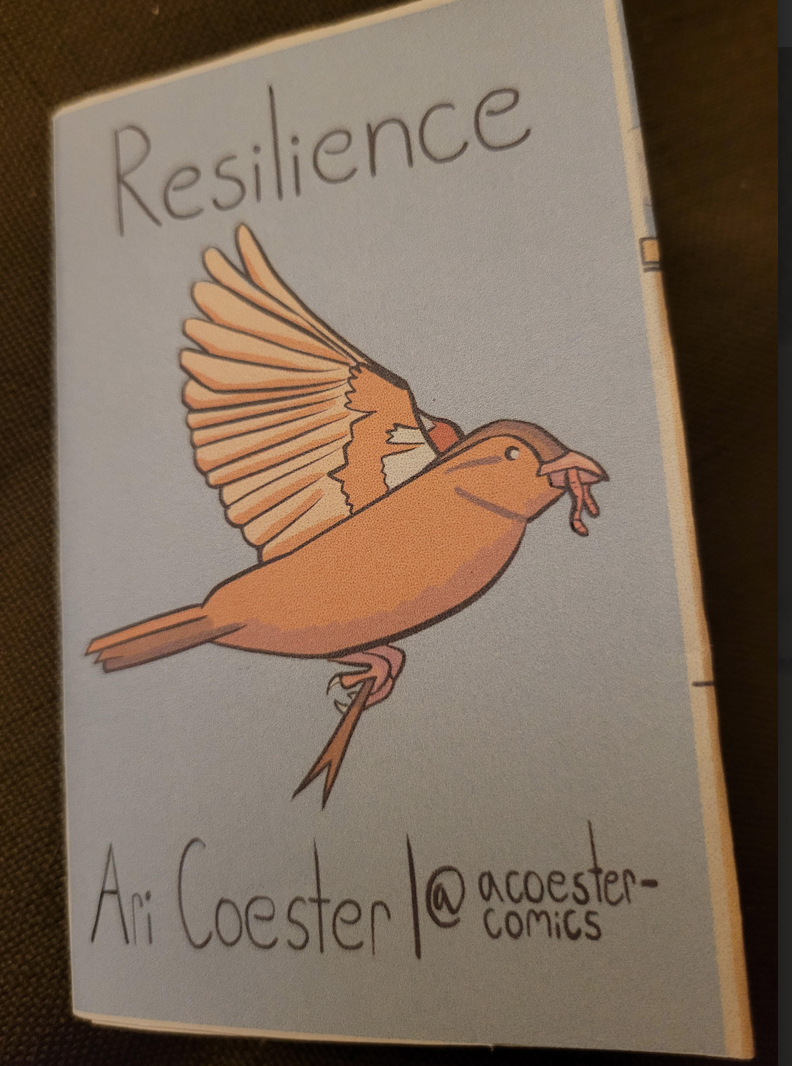
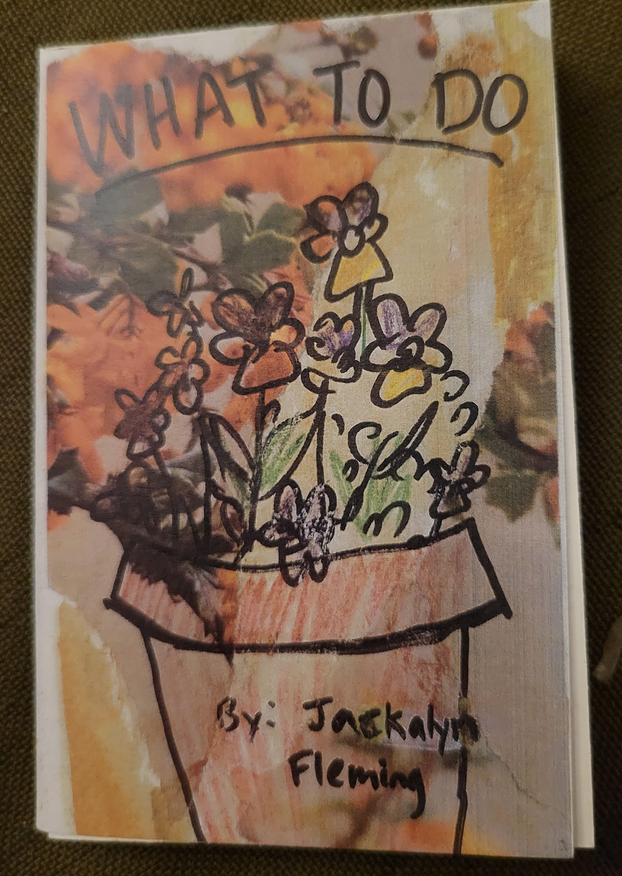
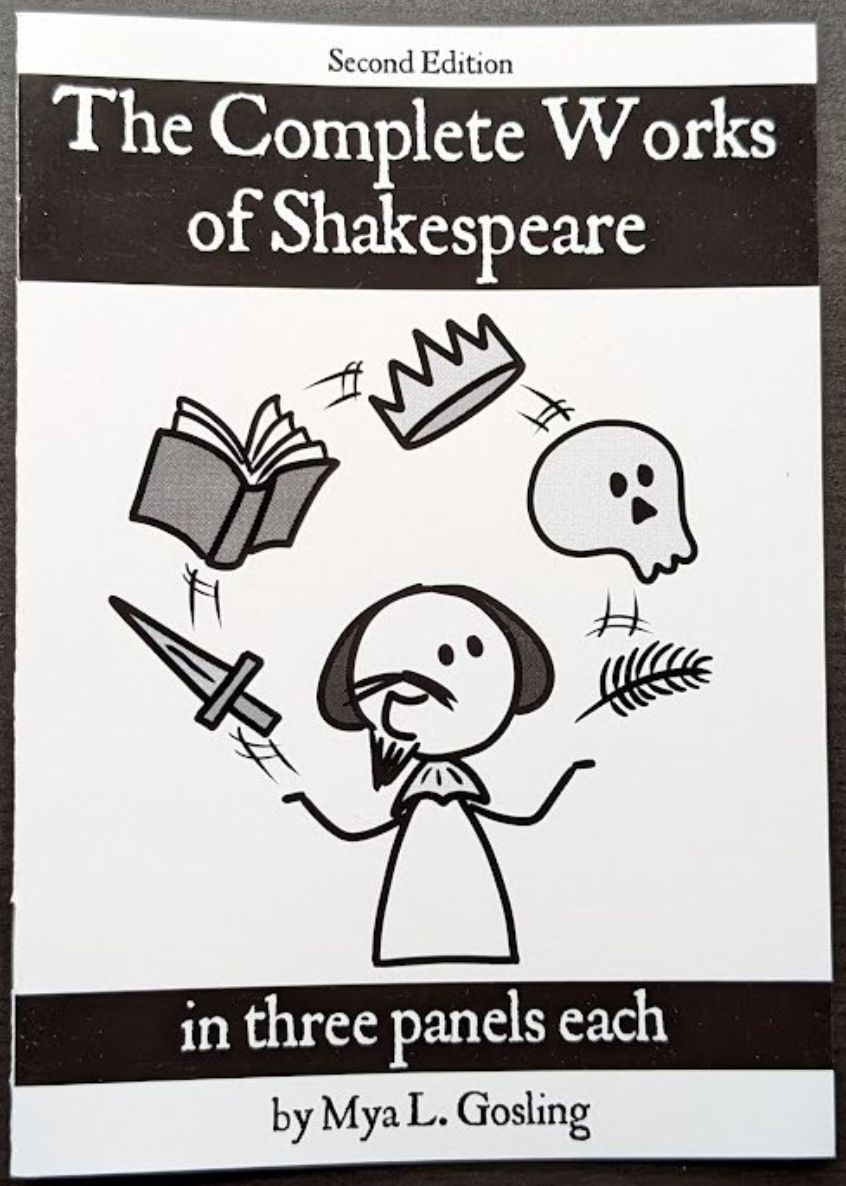
I hadn’t been quite sure what to expect from the Detroit Zine Fest, but was delighted to discover that it was like a local mini Small Press Expo. Maybe somewhere between 50 and 80 vendors? Thus, it was still slightly overwhelming to browse through all the stalls, but was also delightful and I bought a number of really good zines:

Michigan Cryptids by Shi Briggs
A Michigan Unnature Journal by Shi Briggs
These are two books, 12 pages each, about cryptids natives to Michigan, with absolutely gorgeous illustrations and short descriptions. I don’t actually know much about cryptids, so I’m not sure how much these were researched versus created, but I did recognize the Michigan Dogman as a thing. But the black and white illustrations are so beautiful and creepy and inspiring.

Thank You by Eddie Roberts
2023
This is a gorgeous and pointed poem about the culture of consumerism and the push-pull of gratitude for getting things you desire with the discomfort of always having more pushed upon you. It described many of my own conflicting feelings. The author also experiments with some really interesting typography effects.

Passages by Liana Fu
2019
Is a series of poems and musings on being Chinese diaspora going to visit Hong Kong and trying to learn Cantonese, struggling to figure out where they fit in the world where all their native cultures see them as other, and how this intersects with the ongoing cultural struggle of Hong Kong itself under an increasingly oppressive Chinese government.

Of Course I’d still love you if you were a worm, but like we might have to renegotiate certain aspects of our relationship, y’know? It’s a big adjustment: A guide to safely and responsibly loving your partner post wormification by Seth Karp
This is hilarious and also the best kind of crack-treated-seriously brochure. It’s clearly a take-off of the “Would you still love me if I were a worm?” meme, but reminds me even more of an elaborate version of the Jack Harkness test meme. It’s got advice and perspective on what to do if your significant other spontaneously turns into a worm. (Step one: ask what kind of worm? There are different kinds of it will effect your decision.)

Helianthus by Jone Greaves
There is Something in the Basement by Jone Greaves
Instructional Musings for Encounters & Summoning by Jone Greaves
Intent to Carcinize by Jone Greaves
I spent some time trying to figure out which of Jone Greaves’ zines to get since they were all such fascinating titles and wound up getting four of them, each of which is unique and fascinating and thought-provoking. I’ve been getting into short-story writing competitions recently and I feel like these are all examples of how it’s done: to create a world and a concept and maybe a character in just a few pages.

Gentle Laundry by India Johnson
2023
This is a surprisingly fascinating non-fiction 24-page zine about laundry. As someone who mostly learned to do laundry to the extent of put clothes in a machine with detergent and it will come out Officially Clean regardless of any evidence to the contrary, this zine opens up whole new worlds of understanding about what is actually happening and what detergents, soaps, bleaches, etc actually do. It’s also tonally very approachable, although by about halfway through I was feeling somewhat overwhelmed by the all the options and decision branches. But it’s valuable information to know and I have a few ideas for changes I want to try when doing my own laundry. Once I’ve tried a few things, I’ll need to re-read it to see what else.

The Black Girl Survives In This One

Edited by Desiree S. Evans and Saraciea J. Fennell

A collection of horror short stories with an assured survival? Yes please! (Though the authors occasionally split hairs by ending the story before the perhaps inevitable conclusion.) In my enthusiasm, however, I’d overlooked that this is very much for young adult readers (and is clearly branded so). The fifteen stories all feature black girls in high school or college, all feeling the impatience for adulthood and independence that makes middle-aged me feel tired (and sympathetic for the adults around them).

So, I wasn’t exactly the audience for this, but the stories covered a truly impressive variety of horror subgenres and intersected them with Black life in a really fascinating way. Southern gothic hits a lot different with the added generational trauma of slavery, but also how do the cults of wellness MLMs punish Black bodies even more than white? Remote nature spaces can already be uninviting to many Black people, with or without supernatural horrors, and what would that look like in futuristic space exploration?

But then, there’s also the comfort in reading these, knowing that you won’t be exposed to an onslaught of abuse. In these stories the Black girls fight back, survive, and often triumph, even if occasionally leaving a truly impressive amount of destruction in their wake.

The stories varied in quality and my personal taste, of course, like any anthology, but I was really impressed with what a comprehensive overview it provided. I always particularly enjoy short story anthologies as a way to be introduced to new authors, including here two up-and-coming writers who won an open call with their submissions that fit in beautifully.

Nicked

By M. T. Anderson

Described as a “wildly imaginative, genre-defying, and delightfully queer adventure,” I knew Nicked was going to be weird, but I hadn’t expected it to be quite so laugh-out-loud funny. In many ways, the humor had both a dryness and absurdity that reminded me of Catch-22, without being nearly so bleak, which is saying a lot for a 11th century setting.

A lowly monk is voluntold by his local bishop to accompany a ‘saint hunter’ in ‘liberating’ the reliquary bones of St. Nicholas from its celebrated gravesite and temple to the monk and bishop’s own town. In the middle of a plague, they hope the reportedly healing bones will be able to save the populace, so there is some redeeming motivation. The author claims that this based on a true story, and has the references to back it up, though he also explains that any deviation from strict accuracy is also highly representative of medieval nonfiction, which took plenty of licenses of its own (his afterward is well worth a read).

The humor comes from both the strangeness of the period in general and the quest in particular, and the familiarity of political and religious bickering across all times and geographies. The common people everywhere make due during times of great upheaval, and every interaction is a delight. The heist is also so well written, with setbacks and twists and turns that kept me agog. My one caveat is that there is a framing narrative that sometimes gets very philosophical and that I couldn’t always follow, but it is also used sparingly, so I didn’t find it a detraction.

Shubeik Lubeik by Deena Mohamed

Shubeik Lubeik
written, illustrated, and translated by Deena Mohamed
2022

This graphic novel is amazing! I highly recommend it. It came to me as a second-hand recommendation with the suggestion to just go into it cold, with no expectations of what it is. Just know that it is brilliantly done and beautifully illustrated, award-winning, and anyone reading this should definitely give it a shot. That said, this is a book review blog, so I’m going to go into more (ie, some) detail, but am respecting the original recommendation enough to put those details under a cut.

Continue reading

Naomi Kritzer’s prophetic vision(s?)

Whew, it’s been a month (or three) hasn’t it?! I don’t have much else to say except to thank Rebecca for continuing to push this blog forward when I ran out of steam for a while there. You can thank her too for dragging me back in by sending me these links and then haranguing me until I finally read them:

So Much Cooking

Rebecca sent me the link to this novelette (8,410 words) that has been making the rounds on social media lately. Written in 2015, it is eerily accurate for 2020, down to some of the tiniest details. Told in the style of a food blog, it stays grounded in everyday life, capturing the broader human experience through the smaller individual shared experiences. Though Kritzer is anticipating (again: frighteningly accurately!) an unusually difficult period in the modern era, she also highlights the strength and generosity that people can and do bring to shared struggles, making it a much more hopeful reflection than one would expect.

The Year Without Sunshine

This slightly longer novelette (10,883 words) came out in 2023, along with readers’ hopes that it doesn’t turn out to be quite so on-the-nose this time around, though it sadly doesn’t seem out of the realm of possibility. Though the scope of the crisis is even larger this time, so is the community that comes together to bolster each other in truly innovative ways. I very much hope it doesn’t come to quite this extreme, but Kritzer again focuses on the positive, the basic good of most people and how they want to and can help each other. Through this, she provides some innovative blueprints for what different kinds of mutual aid can look like, and isn’t that what scifi does best, showing us a path toward a better future? I look forward to more of her writing (with only a little dread, haha)!