The Many Books of Cassandra Clare

Sometimes when I see an interesting book and realize it’s the first in a series, I feel overwhelmed by the task in front of me and don’t even both starting. Too many pages! Too much commitment! So I understand that recommending two interconnected series of seven books (so far!) is dicey. But don’t panic! Cassandra Clare’s Mortal Instruments series will not be a weight upon your reader’s conscience. This series just makes me happy, because I know I can count on more books coming.

City of Bones, the first book in the series, tells the story of Clary, a New York City teenager who finds out that she’s actually part of a world of demon hunters and vampires and werewolves, etc. I know there are a million young adult books out there with this same basic plot, but Clare creates a very detailed world and whole giant cast of interesting characters. There’s passionate teenage love, parents who don’t understand, fairies who strike bad bargains, a magical city in another dimension, secret governments, warlocks–it goes on and on. I don’t necessarily think the characters are that realistic (they really don’t read like teenagers to me) and the books aren’t going to offer tremendous insight into the problems facing our world now (for that, go read Bitterblue). But they’re fun and dramatic and surprising and engaging and ultimately satisfying.

There are five Mortal Instruments books so far, and clearly at least one more coming. I initially said that there are seven because Clare has started a second, companion series, set in the same universe but 100+ years back in Victorian London. The Infernal Devices has two books so far and I think I might actually like it better that the modern day books right now (but I am a sucker for period stories set in England). So please give Cassandra Clare a chance, starting with either City of Bones or Clockwork Angel. If you don’t like the first, you don’t have to read any more because they’re very similar. But if you like them, just think–you won’t have to worry about having something fun to read for many, many hundreds of pages. They’re also in the process of making the first one into a movie and I’m pretty sure they’re going to position it as the new Hunger Games, so just think how ahead of all the teenagers you will be!

The Far West by Patricia C. Wrede

The Far West
Patricia C. Wrede
2012

So much fun! I love this series and I love this book. Anna already reviewed the first two books, but The Far West just came out this month and I got a copy immediately. In hardcover, even. One of the things that impresses me about this entire series is the world-building and this book continued the process magnificently, continuing to delve into both the theory of magic and the unknown wildlife of out in the unexplored far West.

As you may have noticed from previous posts, I love me some world-building and Wrede does it beautifully. The series is set in the days of the settlers except that there’s magic, which has made a significant difference in history and national politics as well as ecology. There are three main theories of magic: Avrupan, Aphrikan, and Hijero-Cathayan, each with their own structure and way of manipulating magic. While these were each introduced in the prior books, The Far West looks more closely at the differences and similarities of each type as Eff, the main character, goes on an exploratory expedition further West than anyone else has gone before… or at least further West than anyone else has returned from. There’s new wildlife and new magical theories and a small group of people trying their best to figure out the world and survive the process long enough to report back.

One of the many wonderful things I appreciate about the book is that there’s no bad guy. There are disagreements and personality conflicts and wild animals and danger and adventure, but it’s all situational. There’s no one out there specifically trying to do evil… it’s just a dangerous world and Eff and the rest of the expedition have to work hard to survive. They don’t all get along, they certainly don’t all agree, but they all have a common goal.

The one thing that I really did not like about this book, however, was the fact of the epilog. Not that it was bad, but that it existed. Wrede did that thing where the epilog gives brief descriptions of the future lives of each of the main characters: So-and-so went on to do such-and-such, what’s-his-name went on to do this-and-that. It ended the series. This is book three of a trilogy and Wrede decided to tie it off the loose ends, at least as far as character development went. But there’s so much more out there. It’s this rich world and complex characters and no hope for another book in the series. Hmph. I will have to sulk and re-read it some more.

Thirteenth Child and Across the Great Barrier

Patricia C. Wrede

Book Cover: Thirteenth ChildPreface and warning: I have been a HUGE Patricia C. Wrede fan ever since my best friend gave me Talking to Dragons for my birthday when I was twelve. At the time, I’d never read anything like it: adventure, fantasy, humor, and light romance all together in a book with a narrating hero that a preteen girl can empathize with and a heroine that she can admire. Wrede is particularly clever with creating characters and narratives that subvert traditional fantasy tropes: clumsy knights, ditsy princesses, wizards that melt with soapy water, and dragons that demand complicated etiquette, I believe to date that I have read all of Wrede’s books, even though they tend to be quite young, “young readers” rather than “young adult.” (Upon a quick consultation with amazon, there is actually one of her books I have not read – a ‘junior novelization’ of The Phantom Menace, and I think I can be excused for not only not reading it, but pretending it simply doesn’t exist.)

She also manages to blend the fantasy genre and period-piece genre better than almost any author I’ve read. I won’t totally divert this review, but Sorcery & Cecilia is just such a wonderful fantasy story set in the Regency period, and is just such a perfect blend of historical romance and fantasy that it seems so easily done, but it clearly isn’t*.

Book Cover: Across The Great BarrierAnyway, the Frontier Magic series is set in an alternative universe that is obviously similar to our pioneer days in the United States, but with a world that developed with magic. The main character and narrator is a young girl who is born the thirteenth child in her family, which is considered extremely unlucky, to the point where relatives insinuate she probably should have been “taken care of” at birth. Within the first book, Thirteenth Child, she grows from about 5 years old to 18, growing up, going to school, and learning magic, and then the second book continues for the next couple of years, where she takes on her first magical job as a young adult. The third book, The Far West, sounds like it starts off where the second book ends.

Both books are a bit more atmosphere-driven, and less crisis-driven, so it has a leisurely pace that can take a little adjustment as a reader of rip-roaring adventure stories. However, it is such a charming book in every way, from the magical elements to just the frontier elements—it reads a bit like a fantasy version of Little House on the Prairie. And, seriously, what could be better than that?

—Anna

*Aside rant: how is this so difficult? Seriously, one would think the two would go hand in hand—vampires and all sorts of other magical creatures are immortal, after all. The audience that reads fantasy books has a pretty big overlap with the audience that reads historical novels and romances, I believe. How is almost every period-piece fantasy book I’ve read just terrible?

Bitterblue

One of the hazards of writing a book review blog is that if you’re not careful about what you review, giving books as presents becomes tricky. Your friends won’t be surprised by the books you give them for their birthday if they’ve already read your glowing review, and since probably 90% of the presents I give are books, this has made shopping somewhat challenging. So now when I read something that I know I want to give as a gift, I avoid writing a review even if I love the book. When I read Bitterblue a few months ago I knew immediately that it would be perfect for my friend Hannah’s birthday, so it’s only now that she’s opened the present that I will tell you how awesome Bitterblue is.

Kristin Cashore has written three young adult fantasy books set in the same world–Graceling, Fire, and Bitterblue–and they’re all great. I wouldn’t quite call it a series, since they all center on different characters and jump around in time quite a bit. But there a lots of overlapping characters and plotlines, so it helps to read them in that order. I loved Graceling, thought Fire was perfectly niceand now think that Bitterblue might be the best of the bunch.  But telling you even the teeniest bit about the plot of Bitteblue will give away all sorts of things about the other books, so instead I am going to just list some of things I like about all of them.

  1. They all feature strong young women at the center, but the women are very distinct. One has incredible physical/athletic strength, while another is a bookworm whose power is more political. They show a nice range of different ways a girl could be in control of her life.
  2. The world they are set in is, in some ways, your standard YA fantasy fiction world: castles, princes, magic, sailing ships, etc. We’ve all read a ton of these, but this one feels original and complete, and the magic follows some very specific and interesting rules. Cashore even manages to make the political part of the story–which kingdoms are trying to overthrow which other kingdoms–compelling, and that is generally my least favorite part of any fantasy book.
  3. I found the story resolutions in each book unexpected. I did not know where any of these were going, right up until the end.
  4. Cashore addresses some pretty intense political topics, while still keeping these young adult books. I’m going to assume she was not actually trying to create a parallel of post-Qadaffi Libya, but it was still an interesting take on what that might be like for these characters in this world.
  5. On a similar note, all three of the books do feature some romantic storyline, but the relationships that the characters have are all very complex and layered. Especially in Bitterblue, I was impressed by how willing the story was to leave a lot of the romance storyline up in the air.
  6. All of the books are big and long and chewy. I read fast and it can be disappointing when a good book only lasts a day or two. With Bitterblue I stayed up until two in the morning, on multiple worknights, reading as fast as I could. Each of these kept me busy for a while.

So I guess I’m recommending that you make a 1000+ investment, since I think you really need to read the first two before you get to Bitterblue, but it’s worth it! I’m now just waiting for the next one.

What happened to conclusions?

There are some traditional plot arcs out there that various authors use, re-use, re-interpret, or ignore entirely, depending on their choice. But there is one basic plot arc that I consider pretty universal: beginning, middle, end.

First there’s the beginning in which the writer starts the story and introduces the characters and the world and the problem at hand. Then there’s the middle in which stuff happens. Finally there’s the end in which the results are revealed for the stuff that happened in the beginning and the middle.

Is there some post-modern style now that considers endings to be passé? Because I have recently read two young adult books that I enjoyed right up until I realized that the last few pages weren’t actually going to involve any sort of conclusion.

There’s a difference between a book being the first in a series and just hacking a book into multiple pieces. Or so I had thought. But twice in a row, two otherwise well written books suddenly stopping like this. It feels like a conscious choice. It’s not a style that I approve of, but I’m beginning to really think it might be a stylistic thing rather than simply bad writing, especially since, aside from the lack of any conclusion, they were good books, or at least two-thirds of good books.

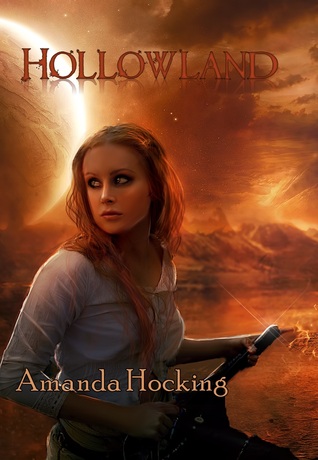
Hollowland
By Amanda Hocking
2010
(Free kindle edition on Amazon)

Remy King is nineteen, the world has fallen apart in a zombie apocalypse and she is going to go across country to get to her brother if she has to walk to do it, beating off zombies all the way. She is kick-ass and awesome, acquires a few companions and loses a few companions (but luckily not the lion, because I never before realized that a proper kick-ass heroine needs a lion companion, but this book convinced me), and is generally determined. This was pretty much exactly what I was in the mood for during my own finals madness.

Except for the fact that this is book #1 of The Hollows series and the plot transitions smoothly into plot #2 before the book ends, leaving me going: Seriously? That’s where you decided to break off? Seriously?

Cinder
By Marissa Meyer
2012

Cinder is a mechanic with a stall at the local market bringing in the only income her family sees. She’s also a sixteen-year-old cyborg in a world that considers cyborgs to be less than human. Her step-mother was not happy that Cinder’s adopted father had decided to adopt a cyborg and even less happy that he then proceeded to die of the plague just a few months later.

A lot of people are dying of the plague these days. Including the Emperor.

Which leaves the prince and heir to the throne in the rather unhappy position of being pressured to marry the queen of the independent moon colony. The lunar people have mind control powers and their royalty tend to use assassination and mutilation to get what they want.

This is the kind of crazy re-imaging of the Cinderella fairy-tale that I just can’t resist. It was excellent and crazy and fun… right up until the final climactic scene turned out to be less climactic and more of an introduction to a whole new plot arc with no conclusion in sight. Apparently there are four more books in the works.

So, what’s up with this?

Neither ending is really a cliff-hanger, per se. They’re just incomplete stories. For anyone who reads amateur fiction published online, it feels like I just came to the end of the posted portion of a WIP (Work in Progress). I had rather thought that the benefit of reading formally published books is that none of them are WIPs. It’s depressing to discover that’s not the case.

So, I ask again, is this really a style of writing that’s going around now: plot arcs composed of beginnings and middles, but no ends?

Wonderstruck

I think I’ve said here before that I don’t like graphic novels–I respect them as an art form, I respect those who read them, but no matter how I try, they’re just not for me. Wonderstruck may be an exception to the rule, partly because it’s half a graphic novel and half a regular novel. The illustrated story follows a deaf girl living in New York City in the 1930s, while the written story follows a little boy in Minnesota in the 1970s, and the narrative moves back and forth between the two. Without giving away too much, the joy of the book is watching how these stories parallel each other and move closer and closer together, until they ultimately intertwine. The drawings are fairly simple black and white pencil drawings (I think? I am so artistically-challenged that Draw Something is beyond me, so who knows what someone with art knowledge would call these) but they’re beautiful and very evocative. And a lot of the book is set is New York City and I’ve mentioned how much I like reading about New York.

Brian Selznick also wrote The Invention of Hugo Cabret, which the movie Hugo was based on, and when I was reading Wonderstruck a school librarian stopped to rave about how good it was, and how good the Hugo book was, and I how I should see the Hugo movie, etc. I feel like school librarians see lots of books, so I should listen when they say something is worth my time.

I should say here that Wonderstruck is more of a middle reader than a young adult book–it’s aimed at pretty young kids. So although the book looks giant and long, it took me less than two hours to read, so don’t go expecting something at The Hunger Games level. It’s not that complex, which is probably why I don’t have too much to say about it, but it was cute and charming and it served a a nice break from some of the heavier, Nazi-filled things I’ve been reading lately.

The Fault in our Stars by John Green

I promise that I don’t only read YA books. I’ve actually read a number of fancy grown-up books lately that I’m planning to write about, but first I’ve got to talk about one more YA book, because it apparently the hottest thing around right now–The Fault in Our Stars by John Green.

Now, Green is a big deal in YA circles and he has written a number of well-received and well-loved books, including Looking for Alaska and Will Grayson, Will Grayson (that one was with David Levitan). Plus, he and his brother have this whole YouTube thing where they post videos and, I don’t know, they also sing or something? To be honest, I don’t really understand all of this because I don’t like watching videos online. Yes, yes, I am very old, I just think that the computer is for reading and the TV is for moving pictures. But apparently kids today love all that video stuff, and you can read more about the whole John Green thing at the Kidliterate review.

His latest book, which debuted at Number 1 on the New York Times Children’s Chapter Books List (you know, the one created so Harry Potter wouldn’t knock all the pretentious adult books off the NYT list) is about two teenagers with cancer who fall in love. Cheerful, I know. But the thing about John Green is that it doesn’t really matter what any of his books are about, exactly–his strength is his characters and dialogue. He’s got a sharp sense of humor and creates teenagers who are precocious and flawed and funny and real. His voice is so strong and specific that each time I open one of his books I feel like a crisp breeze blows out of the pages.

One of my favorite sources of book recommendations on the Internet is Elizabeth at Princess Nebraska and she wrote a review of The Fault in Our Stars that pretty much says everything I want to say. I found it really interesting that she says that the first of Green’s books she read was Looking for Alaska and it was still her favorite. The first of his books I read was Paper Towns and it’s still my favorite, so I wonder if Green’s stuff is so striking that you’re always bound to love the one you first read the most. So while The Fault in Our Stars isn’t my favorite, it’s definitely very good and I would highly recommend any of John Green’s stuff. And I suppose you could watch some of his videos too, since I hear they’re popular with the young folks.

Miss Peregrine’s Home for Peculiar Children

By Ransom Riggs

Miss Peregrine's Home for Peculiar ChildrenI’d seen this book a couple of times in bookstores and been hooked in by the eye-catching cover and title, but hadn’t gotten around to even looking it up at the library. But, last week a coworker and friend brought it in to work, having just finished it, and she happily leant it to me, saying it was a quick read.

It was a quick read, and one that I enjoyed very much, but I’m also finding it kind of difficult to describe here. If you pick up the book at a store or library, you’ll first notice the cover, and then, flipping through, see that there are odd, vintage photographs reproduced throughout the book.

At first I thought the photos were simultaneously something unique but also a bit of a gimmick, and they continued to cause a bit of a dilemma for me as a reader. On the one hand, they were extremely interesting illustrations to the story; at the same time, pondering these real-world artifacts took me out of the narrative a bit each time. So, I’m torn over whether I think they added or subtracted from the overall book.

So, photos aside, the plot felt like it took themes that I love from a variety of young adult and fantasy books – special abilities, time travel, WWII child evacuees (a favorite theme of my childhood since seeing “Bedknobs and Broomsticks”)– and combined them into something pretty original and very entertaining.

The strongest element of the book for me was the characters. Just about every single character is multi-dimensional, mostly sympathetic but with realistic flaws. Even side characters that only got a couple of pages caught my attention, and I wanted to read more about them, as well.

It doesn’t hurt, also, that the beginning of the story takes place in Florida, which is always portrayed in books as being full of fun craziness, but then the majority of the book takes place in Wales, which is the most beautiful place I have ever been, bar none.

Though the book wraps up the immediate storyline, it seems fairly clear that the author is intending to write more with these characters and this world, and I am very much looking forward to reading them. (Author confirms that he has started work on the sequel.)

—Anna

Awards Season

In addition to Oscar season, it’s also American Library Association Youth Media Award season! Am I the only one who remembers being gleeful when the Newberry Medal was announced each year? I didn’t care about the Caldecott (didn’t like picture books then, don’t like graphic novels now), but the Newberry was a highlight of my year. Would it be something I’d already read? Would it be a history book that wanted me to learn something (Lincoln: A Photobiography) or a story so fun I still reread it as an adult (The Westing Game)? The 2012 ALA winners were announced this week, although since I am actually not 10 years old anymore some of their other awards capture me more than the Newberry.

The Printz award is given to YA books, and we all know how I feel about YA. This year’s winner was Where Things Come Back by John Corey Whaley. The Honor Books were:

Why We Broke Up by Daniel Handler, art by Maira Kalman
The Returning by Christine Hinwood
Jasper Jones by Craig Silvey
The Scorpio Races by Maggie Stiefvater

I haven’t read any of those–in fact, the only one I’ve heard of is The Scorpio Races. My experience with Maggie Stiefvater (fun fact: her last name means stepfather in German) is through an entertaining but slightly cheesy trilogy of werewolf books that starts with Shiver, but the reviews I’ve been seeing of The Scorpio Races are in another league so I’ll have to check that one out. Another fun fact about the Honor Books: Daniel Handler is also Lemony Snicket of the Series of Unfortunate Events books, so he’s doing well on several fronts.

Another award category that caught my eye is the Alex Awards for the 10 best adult books that appeal to teen audiences. For 2012 the list is:

Big Girl Small by Rachel DeWoskin
In Zanesville by Jo Ann Beard
The Lover’s Dictionary by David Levithan
The New Kids: Big Dreams and Brave Journeys at a High School for Immigrant Teens
The Night Circus by Erin Morgenstern
Ready Player One by Ernest Cline
Robopocalypse: A Novel by Daniel H. Wilson
Salvage the Bones by Jesmyn Ward
The Scrapbook of Frankie Pratt: A Novel in Pictures by Caroline Preston
The Talk-Funny Girl by Roland Merullo

I have to say that I’m not entirely sure I understand this award. Looking at the award policies, it doesn’t appear that the authors have to think that teenagers will like their books, the awards committee simply gets to decide which are the 10 best books each year that have a special appeal to teen readers. But as former teenager who read lots of adult books, and as a current adult who reads lots of teen books, this award seems like it was made to give me a reading list. I think that Ready Player One might be up next.

The Name of the Star by Maureen Johnson

Remember when I complained about All These Things I’ve Done being so unsatisfying, because it was the first book in a planned series and all it did was set it up for interesting things to happen in later books? The Name of the Star by Maureen Johnson does NOT have that problem. This is another YA fantasy book with a kick-ass young female protagonist, and another book that is leading off a planned series (The Shades of London), but this one walks the line between providing a complete story and setting up future action perfectly.

Rory is a New Orleans high school student who decides to attend a boarding school in London while her college professor parents are on sabbatical in England. Her school is in London’s East End, in the neighborhood where the Jack the Ripper killings took place and shortly after Rory arrives in town a copycat starts recreating the murders. As if that weren’t creepy enough, Rory begins to get the feeling that something strange is going on and that she can see things her classmates can’t. I’m sure you can all guess that something supernatural is going on and that Rory quickly finds herself at the heart of the mystery.

My favorite thing about this book is Rory’s voice–she’s funny and sarcastic and she sounds modern, like a teenager talking today (or at least, what I think teenagers today sound like). She also has a pretty distinctly Southern voice but doesn’t come off like a hick, which I (as a Southerner) always appreciate. The London stuff was nicely atmospheric and (without giving too much away) the fantasy side of things was sufficiently creepy. I also liked, as you probably guessed, that the book manages to wrap up a major mystery with a thrilling final action scene that provides a great deal of closure. But at the same time, the very last page of the book introduces a new twist that made me so excited about the possibilities of the next book I immediately went to Amazon to see if there was a publication date for book two (there’s not). The Name of the Star feels like the start of something new, while also being a satisfying story all by itself. My only small complaint is that it took a long time for things to get going, and a significant portion of the book is just Rory settling into school and having vaguely odd experiences that she doesn’t pay attention to but that the readers know are significant. As a reader, I like feeling smart enough to pick up on subtle hints but this almost tipped over into Rory seeming dumb, since I had figured things out and was just waiting for her to catch up. Since I read this on my Kindle I can be very precise about how much of the book was just working up to the real action and Rory’s discovery of the true nature of things: 47%, which seems like a lot. However, once things get going they are really going, and I suspect that in the future when folks read a few of the books in close succession the time spent introducing things will be less distracting. Again, minor quibble.

A while back BBCAmerica showed a mystery series called Whitechapel that was essentially this same plot, minus the supernatural element and told from the perspective of the detectives. If you find the Jack the Ripper aspect of the story interesting, you might also enjoy tracking down the TV series.