Me Before You

I can’t remember why I picked up Me Before You by Jojo Moyes–I must have seen it recommended on a blog or on Twitter, since those are those places I learn about everything–but I didn’t know a thing about it when I started reading. I think I thought it was a romance. Which I guess it is, sort of, but calling it a romance seems way too simple.

Now, when I summarize the plot, you’re going to think it sounds like a bummer. It’s about a young British woman, Louisa, who takes a job serving as a companion to Will, a man who was recently paralyzed in an accident and isn’t very pleased about having her around. I know, I know, I wouldn’t have wanted to read it based on that either. And it’s not a happy book–there were definitely tears. But it’s also charming and the characters are real and funny. When the book starts, Lousia is working at a coffee shop with no plans to do anything else, and Moyes did a great job of making Louisa aimless without her seeming dumb or unsympathetic. The relationship Louisa has with Will is complicated and layered, but her relationship with her family is presented with equal care. Even when some of the plot turns got a bit melodramatic, the characters kept the story grounded.

Gretchen Rubin (the author of The Happiness Project, a book I’ve raved about before) offers monthly book suggestions on her site, but very specifically doesn’t describe the books at all. She says that she finds herself less interested in reading a book when someone tells her what it’s about. I like hearing details about books before I read them, but I struggle with the actual describing part here on the blog sometimes. Often I feel like I’ll steal some of the magic of a book by revealing things that are better discovered as you go along. If I were queen, I would just tell everyone that they should trust me and read what I tell them to. Me Before You is definitely a book where I don’t want to risk any of the magic, so just trust me and read it already.

If you need any more convincing, Anne Lamott raved about this book in the most recent People magazine, so I feel like it’s been blessed–if she likes it, how could anyone not?

Kinsey’s Three Word Review: Funny, sad, cathartic.

You might also like: Wild by Cheryl Strayed. It’s not really like Me Before You–it’s a non-fiction memoir for one thing–but it’s the last thing I read that inspired the same kind of emotional reaction (laughter, tears, inability to get it out of my mind days later).
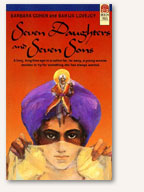
Seven Daughters and Seven Sons

By Barbara Cohen and Bahija Lovejoy

Book Cover: Seven Daughters and Seven SonsRebecca and I were discussing the other day whether it is possible to have a romantic storyline with the old trope wherein the heroine dresses as a boy without including even a hint of homophobia. You know: girl is disguised as boy, girl meets and falls in love with boy, and boy discovers the disguise when he also falls in love with girl since he just knew he could never have those kinds of feelings for another boy. The Fourth Vine writes up an excellent analysis of the inherent homophobic issues in Georgette Heyer’s The Masqueraders here.

I had suggested Robin McKinley’s Outlaws of Sherwood as a possibility, in which Little John says that after he began to have feelings for an apparent boy, he studied her more closely to see what was attracting him since he had never before felt that way for a boy, and then saw through the disguise. It is a fine point, but an important one that he didn’t automatically know that she was a woman because of his feelings, so he wasn’t immediately repudiating homosexual attraction. Confusion instead of repulsion.

Rebecca suggested Seven Sons and Seven Daughters, in which the middle daughter in a family of seven daughters dresses as a man in order to go out and make her fortune in trade like her male cousins do. I’d never read it, but was at loose ends, book-wise, so figured I’d give it a shot. It is also quite short, since it is more Young Readers than Young Adult (I would estimate late elementary/early middle school). It does still have some of the inherent anti-gay sentiment, though more by omission in that it never occurs to the love interest that he could be romantically attracted to a boy. Either he has a strong brother-like friendship with a young man or a great romance with a young woman, and the gender of his person of interest will determine that. Considering that this book is the retelling of an eleventh-century Iraqi folktale, that is pretty good.

More interesting than the treatment of the romance-in-disguise, though, was the description of the evolution of Sharia law in the Middle East. The heroine Buran’s family is very poor and pitied by the locals because having seven daughters and no sons at all is clearly a curse from Allah. Sons are how one gains wealth and prestige, and Buran’s wealthy uncle is considered additionally blessed with his seven sons. When coming up with her idea to set out as a man, Buran thinks back over the previous centuries, when women were free to be “musicians, scholars, warriors, poets, and merchants,” and describes how the caliphs had given their power away to the conquering Persians, who brought with them the hajib, and then the Turks, who brought even stricter restrictions for women.

Even though the book itself is very clearly pro-women, the pervading anti-women sentiment in the general society can be a bit shocking to modern ears. One reason Buran is able to stay disguised as male for several years is that no one believes that women have the minds for business strategy, so if someone is successful in business, that person is unquestionably male, all appearances aside.

As evidenced by this quite long review, this 220-page, large print book for young readers gave me quite a bit of food for thought, especially in our current political discourse on the Middle East, Islam, terrorism, gender roles, definitions of traditional families, and sexual equality. Not so bad for a couple day’s reading of a folk tale and love story.

—Anna

The Talisman Ring

By Georgette Heyer

Book Cover: The Talisman RingComing back from vacation, I picked up an old favorite of mine, and a bit of a guilty pleasure. Georgette Heyer is known for her Regency romance novels (and, strangely, also for meticulously researched historical battles). My mother has all of her novels, so they were some of the first adult novels I started reading. Luckily for my tween sensibilities, the romance is actually quite light in these books, comparable in raciness to Jane Austen, I would say.

The Talisman Ring is one of my favorites, since it includes a murder mystery as well as romance. Heyer also does a bit of a switcheroo, where the first 50 pages features a young and somewhat insipid heroine before a more mature and much more interesting heroine is introduced, I believe in a conscious play on traditional romance tropes. Almost every review of Georgette Heyer mentions her humor, lively characters, and witty dialogue, and this one is no exception. Her characters and the farcical plot lines are what make her books such a pleasure to read.

What is not so much a pleasure to read is the racism. Heyer lived from 1902-1974, which of course was significantly more racist than today, and while most of her books don’t feature people of color at all, thereby avoiding racism by pure omission, a few are totally and irredeemably cringe-worthy. In fact, all of the reviews of Heyer’s novel The Grand Sophy are quite entertaining in how they start with how delightful all the characters and dialogue are, and you can just see each reviewer slowly winding down the praises in order to end up addressing the extreme bigotry. I just imagine all these slumped shoulders and heavy sighs, and the ominous tone in which they refer to the Goldhanger Chapter.

It can be quite appalling, and after rereading some of these scenes as a more culturally-aware adult (and an adult who couldn’t quite understand how I’d overlooked them as a tween), my pleasure in Heyer’s novels both diminished and became ethically confusing for me.

I was pleased to run across the essay “How to be a fan of problematic things” online just recently, and was somewhat comforted that I perhaps didn’t have to swear off all things Heyer as long as I stayed entirely open-eyed about the problematic things. Which, I mean, they are blatant enough that it would be really hard to try to explain them away.

The Talisman Ring doesn’t feature any people of color, but has some class issues instead. People of status and wealth are invariably smarter, kinder, and just better all-around human beings than middle- and lower-class people. My increasingly socialist heart couldn’t take quite the joy in seeing the aristocratic young smuggler best the poor working detectives that my teenage heart could.

So, this ended up being quite a negative review about a book that is very close to my heart, but I guess in the end, after all the very problematic issues, I can’t quite quit this author, and that says a lot, doesn’t it?

—Anna

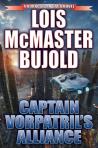
Captain Vorpatril’s Alliance by Bujold

Captain Vorpatril AllianceCaptain Vorpatril’s Alliance
by Lois McMaster Bujold
2012

This is an excellent fast-paced romantic adventure comedy. I sped through it in two days and kept giggling to myself. It just leaps from one ludicrous situation to another and yet, the plot still tracks beautifully. I can see why and how these situations came about, and I can also see why and how these characters managed to get themselves into these situations, even if I want to slap them upside the head for doing some of the things they do.

Interestingly, it takes place prior to Cryoburn, which might explain why Cryoburn made so few references to off-planet events in general, less to avoid spoilers than to avoid a sense of WTF?.

There’s an elopement with the use of a box of instant groats, a 100-year-old buried treasure, a 30-year-old hidden bomb, a handful of beautiful ladies (all of whom are extremely wily), a handful of wily men (many of whom are extremely beautiful), cross cultural laws and smuggling rings and bounty hunters. And, in the middle of all of this, is Ivan Vorpatril, who has, much to his dismay, lots of experience regarding such insanity.

In previous books in this series, Ivan generally gets drawn into his cousin Miles’ crazier plots despite his own efforts to remain an innocent bystander. In this book, though, Miles appears in only a quick cameo, and Ivan manages to get involved in a crazy plot all on his own. The book also develops a few other secondary characters from the series, showing more of Byerly Vorrutyer and Simon Illyan than we’ve gotten previously.

While it’s more than a bit self-indulgent, the book maintains its self-indulgence with aplomb and delivers an immensely fun roller-coaster of a story that I enjoyed immensely.

Gunmetal Magic by Ilona Andrews

Gunmetal Magic
by Ilona Andrews
2012

This is a pretty mixed review given that it’s for a book that I enjoyed in a series that I loved.

I enjoyed this book a lot. There was fun banter and exciting action and all sorts of fun. On the other hand, it wasn’t exactly the best work of literature I’ve run across, not even the best by this author. The plot depends more on shiny-magic-handwaving than it does on logic and the characterizations are pretty dependent on introductions from previous books. There are also a few scenes that seem to have been included for no particular reason at all.

I assume those scenes are part of the set up for the next book, actually. That actually brings me to skirting around a spoiler that I wrote about in one of my spoiler posts, regarding how this book was written primarily in order to set up some circumstances in preparation for the events in the next book. This book is well-worth reading as the next building block in a really awesome series, but I don’t think it can or should stand alone. I definitely recommend the series, though, but start at the beginning and read them in chronological order. While the main series is planned to have seven books, I would say that this counts as book 5.5. While focusing on a side character, the events of this book are necessary to the development of the series in general.

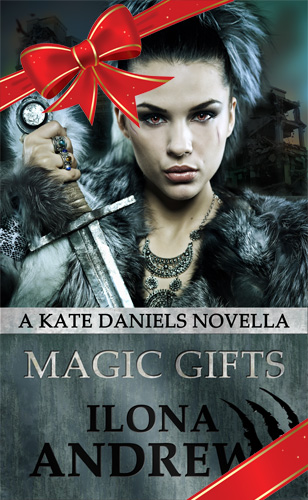
The suggestion to read the books in chronological order includes, incidentally, the suggestion to read the novella, Magic Gifts, which is included at the back of this book, before reading Gunmetal Magic. Which means, that when you get the 448-page book, the first thing to do is to flip to approximately page 330 and start reading. Magic Gifts is the story of what Kate Daniels, the main character of the series, is doing in the background during Gunmetal Magic, which focuses on the adventures of Kate’s best friend Andrea.

Anyway, a couple of things about the book in particular:

On the plus side: One thing that I really appreciated about Gunmetal Magic is how deftly it managed to flirt with but then avoid the classic romance-novel cliché of the love triangle in which one girl must choose between two guys. While the structure is still there, Andrea deals with the situation in a realistic fashion without all the angst and general waffling that I had feared. I was impressed. The characters were fun, the banter was fun, and I was pleased at the romantic resolution.

On the minus side: This could be a plus or a minus, depending on your perspective, I suppose, but the book covers some heavy ground regarding extreme childhood abuse very lightly. Maybe a bit too lightly. It’s not that I want to read a realistic depiction of how extreme childhood abuse affects adult relations (which I assume would be horribly depressing,) but I kind of think that introducing the issue and then not dealing with it might be worse. On the other (third?) hand, I’m willing to handwave away some of that with a vague explanation of magic and societal changes, etc.

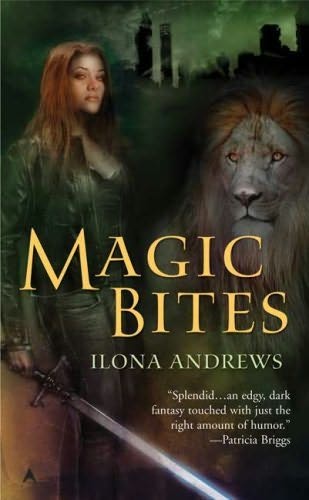
So I will end this review with the suggestion that you go read Magic Bites (Kate Daniels, Book 1)

Ilona Andrews Spoilers, part 2

As I mentioned in the previous post, I attended a book signing by Ilona and Gordon Andrews yesterday evening. In the first part, I described what they said regarding some of their books and stories that were published prior to a week ago. This post describes Gunmetal Magic and future Ilona Andrews publications.

First, there are a few general things about upcoming books, and then more specific spoilers under the cut.

The Kinsman series (currently consists of Silent Blade and Silver Shark) seems to have been primarily written by Ilona (the woman) with less input from Gordon than the other Ilona Andrews (the author) stories. Thus, it was a bit disappointing when she said she didn’t really have any ideas regarding what to write for any future stories set in this universe. Too bad. But she did say that they had plans to write something to post for free on Christmas as a present to their readers, and that story could potentially be set in that universe. I’ll live in hope.

The next book set in the Edge series is planned to be the last of the books. They sold the rights to a TV series, which would be awesome, and is yet still extremely unlikely to actually come to fruition. Depending on reader and publisher interest, Gordon seemed to think there might be another book following a slightly more grown up Jack and George, but there are no real plans for it at the moment.

However, there are solid plans for a Jim and Dali book which should come out after the Kate Book 6 book but before Kate Book 7.

And now, for the real spoilers. If you don’t like spoilers, don’t click the link below.


Continue reading

Ilona Andrews Spoilers, part 1

Ilona and Gordon Andrews, who jointly write under the name Ilona Andrews, were at BookPeople yesterday evening and I went to hear their talk and to get a signed copy of their newest book, Gunmetal Magic. The talk was a lot of fun, and their youngest daughter, who was maybe 14-years-old and constantly interjecting comments, was adorable. (The daughter actually kind of reminded me of Lydia from The Lizzie Bennett Diaries… big smile, rolling eyes, and a propensity for teasing her parents.) However, I told Anna that she was probably just as happy not being able to attend, because there were a lot of spoilers.

Thus, the reason for breaking the description into two posts:

This post, part 1, is going to be Anna-friendly, ie, discussing all the books and stories that were published prior to this week. The next post (part 2), will discuss all the books and stories that might be coming down the pipe.

It was interesting to see that Gordon loved talking about the plot twists coming up while Ilona (the individual) didn’t like any possible mention of spoilers, including mentions of facts that were stated in previous published books. However, since I’m going to recount some stories about the writing of different books, there will be spoilers below.

For those of you who haven’t read and don’t want spoilers for AlphaMenz, Magic Bites, or Magic Mourns, don’t click on the spoiler cut below.

Continue reading

Fifty Shades of Grey

by E L James

[Editor: Here’s the second perspective on Fifty Shades of Grey]

First, think Danielle Steele with an edge.

I haven’t read Danielle Steele in over 20 years, but what I remember of the genre is the redundancy of a heavily sexual plot with over-the-top beautiful characters. Fortunately for Fifty Shades of Grey, leading male character Christian Grey steps up the level of intrigue through his divergent pursuit of leading female character Anastasia Steele.

Anastasia, or Ana, is on the eve of her college graduation. Her best friend Kate is the editor for the university’s newspaper and has a high-brow interview with the 27-year-old billionaire Christian Grey, who will deliver their commencement speech. But Kate has the flu and begs Ana to stand in for her. Ana arrives at the interview knowing nothing about Christian. He of course is hot, and she of course doesn’t know how beautiful she is. She’s also unassuming and lacking confidence, and trips and falls when she enters his office. In Danielle Steele style, the electricity between them is palpable. Ana is inexperienced with men and freaked out by it. Christian, on the other hand, is a man who knows what he wants and gets what he wants. Ana has no idea what she’s in for. He lives the art of seduction, and she’s hooked.

And so is the reader. As Ana enters into his sexual world of “dominant-submissive” relationships, Christian is not so much pleasing the pants off of her (like every hour)—he’s pleasing the most devoted readers. When he takes her into his sexual play room (what Ana calls his “red room of pain”), it’s out of the ordinary, and intriguing.

Next, think a new kind of liberation for women.

Having read and discussed Fifty Shades of Grey as part of my book club, I got to thinking about it from a different angle. These days, post-women’s liberation, the lines are blurred as to who’s in charge in a relationship. Women often have the upper hand—regardless of the fact there are women’s lib issues that need balancing. But in exchange for this relatively new sense of power and freedom of choice, have women completely put their submissiveness aside? And have they inadvertently transferred too much of that submissiveness to men?

Christian is a rare species of a man. In his own deviant way, he’s both an old school gentleman and an intensely controlling character. Combined, this can actually be a turn on for readers. Why? He brings a new light to submissiveness. At the end of the day, would it be so bad to have a man open your car door, decide what you’ll have for dinner, order a nice bottle of wine, pay the bill, tell you what to wear (or what not to wear), instruct you how to wait for him in his play room as he enters with no shirt, top button of his jeans undone…

It’s not Ana’s struggle to be a modern independent woman that gets readers fired up. Nor is it her exhausting insecurity and repetitive self-monologues. It’s the intrigue into her relationship with Christian through which he teaches her to give up the need to be in control, and in the process, makes it look sensual and gratifying.

The Fifty Shades of Grey plot is purely dependent upon its erotic twist, but the Danielle Steele feel is its saving grace. It’s not all spanking, whips, and bondage (or even close)—that which is supposed to define Christian as “the dominant.” It’s actually pretty fluffy, and a love story. Yet the author knows her hook. While the play room, the backdrop for the dominant-submissive rules and regulations, does not come into play often, it leaves readers wondering how far Christian will go and why he is the way he is. Why else dive into the next two books of the trilogy?

—Christine, Guest Contributor

Fifty Shades of Grey by E. L. James

This is the first of two reviews of this book. The next one will likely be somewhat more positive. So keep an eye out for another forthcoming review.

Fifty Shades of Grey
E. L. James
2012

I enjoy fanfiction, both the fact that it exists as a genre1 as well as the genre itself. Thus, when I heard that someone had written an AU2 Twilight fanfiction and then changed the names in order to publish it professionally, I decided to read it. I hadn’t enjoyed Twilight, but mostly I found it uninteresting and poorly crafted. With a different author and a different setting, this had potential.

Especially since the articles I had read about it, were mostly shocked by the fact that apparently women can like sex. Yes, even mothers! The fact that this is apparently shocking makes me mourn for the women’s movement. Given that this was the primary complaint about the book, I thought the book must be pretty good.

Alas, I was doomed to rather severe disappointment.

To a certain extent, E. L. James did fix one of the major problems I had with Twilight. The characters are well presented. The narrative descriptions match their actions. Thus, Ana is both described as shy and acts shy. Christian is both described as arrogant and acts arrogant.

Another thing the author does really well is build anticipation. What’s going to happen next?, how are these two characters going to get together?, etc. It kept me reading for about half the book.

Then I hit the first sex scene, and wow, the badness.

From there on out, as the book attempts to get more serious, it becomes something of a travesty that I had trouble slogging my way through.

It’s not clear to me that this author (or the editor for that matter) knows what sex involves or any real concept of physicality or how bodies work much less anything at all about the BDSM3 lifestyle. Given the whole plot of the book is based on the sexual awakening of a young woman and the moderate depravity of her love interest, the lack of understanding on the author’s part is a major problem.

The problem with this book is not that it was based off of another author’s work and not that it contains a lot of sex; the problem is that it’s poorly researched, poorly written, and, to an even greater extent than Twilight, it attempts to romanticize a highly dysfunctional relationship.

1 U.S. Copyright law involves a fundamental division between idea and expression. Ideas are not considered under copyright, ever; only the expression of those ideas is protected. In the past, this was taken to literally mean the exact words. Even translations were considered to be a matter of the ideas rather than the expression. More recent legal interpretations of copyright have expanded what exactly is considered an expression to include not only translations but also events, places, and characters. However, no case of fanfiction has ever made it through the court system, and thus whether or not the genre infringes on copyright remains uncertain.

2 AU in this context means “Alternate Universe.” In fanfiction, this means taking well-loved characters, relationships, and plot devices and transposing them into completely different settings and situations. In this case the Twilight characters were used in a modern setting.

3 BDSM stands for Bondage & discipline, Dominance & submission, Sadism and Masochism. (It is not to be confused with DBMS, which stands for DataBase Management Systems, with which I am somewhat more familiar.)

The rest of this review is going to involve spoilers of the R-rated variety, so I’m putting a break here. Proceed at your own risk. Continue reading