Wicked River by Lee Sandlin

Wicked River: The Mississippi When It Last Ran Wild
written by Lee Sandlin
read by Jeff McCarthy
2010

This is a wild ride. It’s a non-fiction black-comedy history book. It’s a collection of crazy stories about unpleasant people living awful lives and they are hilarious. Except that sometimes it gets grim enough that it overloads my sense of humor and just gets super depressing even in its ridiculousness. But it really is fascinating and an excellent look at American history and social movements. It’s kind of amazing how many patterns of events and types of people I recognize as being present in today’s world.

This is by the same author who wrote Storm Kings , which I enjoyed so much that I immediately checked out their other audiobook. Storm Kings is the better book, with a more cohesive storyline, while Wicked River is more a scattershot of stories and events, but it’s still very good and very impactful. Each chapter looks at a different aspect of life along the Mississippi, mostly pre-Civil War, skipping around in time and location, with a lot of stories about the lives of specific individuals and events. It gets into the nitty gritty of life and death and trade, the horrors of recurring epidemics, the cognitive dissonance of slave-holding societies, the lawlessness of the various settler justice systems, intermittent excesses of debauchery, celebrations of casual violence, ubiquitous drunkenness, and a vast cast of characters from all walks of life.

The book concludes with the Mississippi River Commission being established immediately post-Civil War and essentially taming the river, at the same time that railroads were replacing boats for transport. In the end, there’s a sense of nostalgia for the wildness that has been lost, because the river cultures were amazing and easily romanticized, even though, or perhaps especially because, they sound truly awful to have lived through.

Nicked

By M. T. Anderson

Described as a “wildly imaginative, genre-defying, and delightfully queer adventure,” I knew Nicked was going to be weird, but I hadn’t expected it to be quite so laugh-out-loud funny. In many ways, the humor had both a dryness and absurdity that reminded me of Catch-22, without being nearly so bleak, which is saying a lot for a 11th century setting.

A lowly monk is voluntold by his local bishop to accompany a ‘saint hunter’ in ‘liberating’ the reliquary bones of St. Nicholas from its celebrated gravesite and temple to the monk and bishop’s own town. In the middle of a plague, they hope the reportedly healing bones will be able to save the populace, so there is some redeeming motivation. The author claims that this based on a true story, and has the references to back it up, though he also explains that any deviation from strict accuracy is also highly representative of medieval nonfiction, which took plenty of licenses of its own (his afterward is well worth a read).

The humor comes from both the strangeness of the period in general and the quest in particular, and the familiarity of political and religious bickering across all times and geographies. The common people everywhere make due during times of great upheaval, and every interaction is a delight. The heist is also so well written, with setbacks and twists and turns that kept me agog. My one caveat is that there is a framing narrative that sometimes gets very philosophical and that I couldn’t always follow, but it is also used sparingly, so I didn’t find it a detraction.

Braiding Sweetgrass by Robin Wall Kimmerer

Braiding Sweetgrass: Indigenous Wisdom, Scientific Knowledge and the Teachings of Plants
by Robin Wall Kimmerer
2013
read by Robin Wall Kimmerer
2016

This is a gorgeous and fascinating book, and I’m glad that I was able to listen to a version read by the author. The book is a wide ranging series of stories and musings about her life, family history, biology, ecology, and reclaiming that which is too nearly lost. It starts with a very personal focus, about her life and self-reflection and moves onto some really fascinating discussions of plants and of Native American culture and history, and then continues onto a discussion of both the dangers of ecological destruction and the importance of not giving up on repairing such casualties.

Kimmerer was raised with a Native American’s perspective on nature which gave her a love of plants and a desire to study them, and then went on to get a PhD and then a professorship in biology with a very scientific perspective on nature. It was later that she realized how important it was to combine the two approaches to nature rather than to give up one for the other. The scientific perspective is one of studying plants as objects, with scientists as unbiased outsiders, while the Native American perspective is one of being part of the nature with humanity as the younger sibling needing to learn from the plants and animals who came before them.

One of the themes that really got to me was her description of how nature is a gift economy: plants give fruits and berries to the birds, and birds give transportation of seeds to the plants. And also how humans are part of this gift economy, not separate from it. Our role in nature is supposed to be taking what is given with gratitude and giving back with reciprocity. The dangers comes with refusing what is given, taking what is not given, not having gratitude, and not giving back.

Another metaphor that she used to great effect was delving into the story of the windigo — a Native American monster that is constantly hungry and can never be satiated — and how capitalist society is trying to turn everyone into this very monster: hungry for more and never satisfied.

The audiobook is approximately 17 hours long, so I’ve been listening to this on my work commute for more than a month, and Anna has been inundated with “In Braiding Sweetgrass…” statements, because every day there is some new and fascinating story or perspective. I’ve also had to deal with becoming a bit teary-eyed while driving a few times.

This is truly an amazing book, and I highly recommend it to basically anyone and everyone.

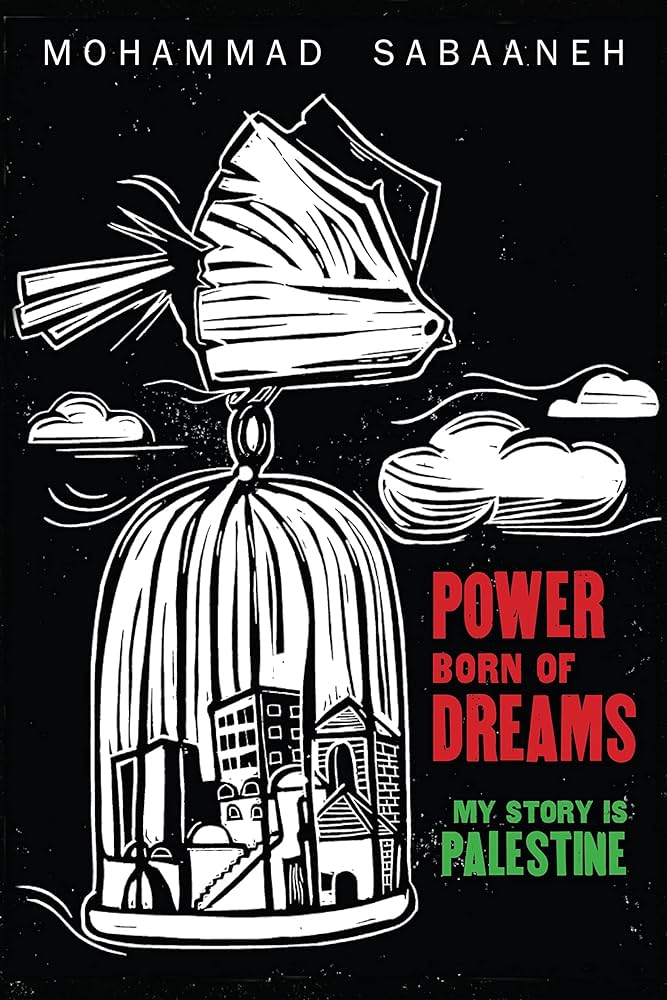
Power Born of Dreams by Mohammad Sabaaneh

Power Born of Dreams: My story is Palestine
written and illustrated by Mohammad Sabaaneh
2021

This reads more like prose poetry than a standard graphic novel, and it’s gorgeous and also devastating. Sabaaneh is an artist, journalist, and political cartoonist who lives in the West Bank but wrote this book while getting his masters degree in London and reflecting back on his time as a political prisoner in Israel and his life in general as a Palestinian. It’s about his life and the life of his community in tiny snippets and stories about oppression and holding onto hope because there’s no other recourse than to hope and dream for better.

I bought this book from the Street Noise Books publisher stall at the Small Press Expo before the most recent series of attacks from Hamas on Israel and from Israel on all of Palestine, but only read it after that was already in the news. The two sets of stories, from reading this book and hearing the news, gave each other context and break my heart. This book is not fictional, for all that it’s structured around a man hearing news from a bird who’s flying through his prison window, and the headlines in the news are not just statistics but real people living and dying and struggling to be free.

The main book is about Sabaaneh’s experience in prison and the small amount of news he was able to hear about what was happening with everyone else, but the afterwards are six single pages with basic introductions to significant historical events, locations, and laws effecting Palestine from 1967 to 2020.

The illustrations are all linocuts (images carved in linoleum and then printed), which are both beautiful and increasingly rare because they’re so time consuming to make. I’m pretty sure the only other book I have that’s similar are the wood cuts in Gods’ Man which was written in 1929.

This book is beautiful and heart-breaking but important, about a current political topic (which is rare for me) and I highly recommend it. Just be prepared to take the emotional hit.

Nonfiction Graphic Novels

For several months this summer, my local library ran a reading rewards program for both children and adults, and I should definitely be too old for this, but I was thrilled to be able to read a book and get a little treat for filling out a quick review. After the first few times, I tried to maximize my treats by checking out a bunch of graphic novels, and then didn’t get to them until after the program ended. Even though I didn’t get a chocolate for either of these, I still recommend them quite a bit (and also strongly recommend public libraries)!

The Magical Life of Long Tack Sam

By Ann Marie Fleming

This book, called an “illustrated memoir” caught my eye because it is a really interesting mix of comics panels, photographs, and printed copy, all from the author’s research into her great grandfather. Long Tack Sam was the most famous Chinese acrobat and magician in the US vaudeville circuit in the early 1900s, but he’s basically unheard of today. Fleming pieces together what she can from archival records around the world, and the story she puts together is fascinating.

What is almost as interesting, though, is what she isn’t able to find: Long Tack Sam had told at least three distinct “origin” stories of his upbringing and introduction to acrobatics, all of them about equally likely or unlikely, and with no evidence anymore to substantiate any of them.

In addition to being the story of her great grandfather, it is also the story of Fleming’s search for her ancestry, and also a look at what is preserved and what is lost in history and documents. I occasionally wished the book had explored that last more deeply, but Fleming is already packing a lot into a relatively short book.

The Great American Dust Bowl

By Don Brown

My brother was telling me about the Saharan dust hitting Texas over the summer, and I asked whether that had contributed to the 1930s Dust Bowl. Upon being assured it wasn’t, I realized that I was woefully ignorant of any real knowledge about it and jumped on this very short graphic novel when I saw it at the library. Only 77 pages, and many of them sprawling full-page illustrations, this book is still chock full of facts that seemed to me to give a concise but comprehensive overview of the causes and effects.

The illustrations really captured the horror and scope of it better than the verbal descriptions or numbers. Whole pages of deep brown watercolor splashes enveloping tiny cars in the bottom corner, tall vertical panels with the dust hovering high above the minuscule Washington monument, and 14 panels of storm after storm really give you a sense of how badly the farmers of the plains were pummeled.

Don Brown stays very factual and almost entirely limited to the historical events of the 30s, but still ends the comic ambivalently, that such crises (or worse) could definitely be on the horizon today.

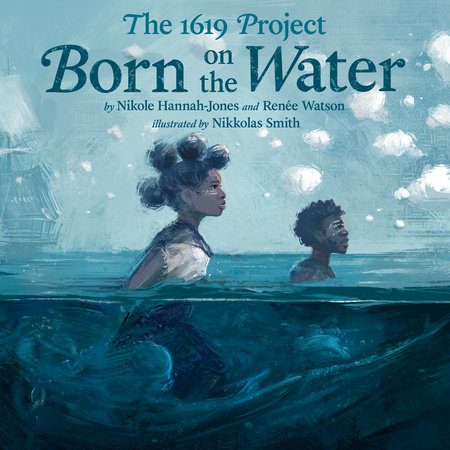
The 1619 Project: Born on the Water, by Hannah-Jones, Watson, and Smith

The 1619 Project: Born on the Water
written by Nikole Hannah-Jones and Renée Watson
illustrated by Nikkolas Smith
2021

This is a children’s picture book that was part of The 1619 Project and it is beautifully written, gorgeously illustrated, and addresses a difficult but vitally important topic in an age-appropriate manner.

The framing story starts with a young child being given a class assignment to write out their family tree. However, while their white peers are able to go back many generations and list which countries their families came from, this black student can only list three generations and feels ashamed. The main focus of the book is the history of that student’s family that starts with joy and culture and rich history in Africa, goes through great suffering and hardship with kidnapping and enslavement in America, but still perseveres, fights, and survives to live on in the student today. It gives a message that survival in the face of trauma is to be celebrated. Black Americans have a great deal to be proud of in their African roots and their American survival and their achievements – past, present, and future.

I’m particularly impressed with the way this book shows centuries of American slavery as the middle part of the history of the student’s ancestors. Slavery was long and harsh and transformational, but it was not the start of their history and it was not the end of it.

This is clearly intended for a young audience, but I highly recommend it for adults as well, not just for the pure artistry of the writing and illustrations, but also for the soft discussion of a difficult topic.

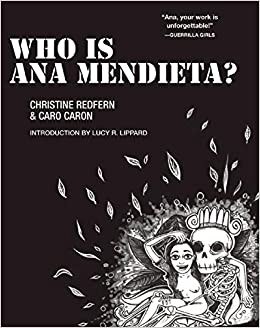
Who Is Ana Mendieta? by Redfern & Caron

Who Is Ana Mendieta?
by Christine Redfern & Caro Caron
introduction by Lucy R. Lippard
2011

This is a relatively short but extremely full and dense graphic novel. It’s a biography of an artist, but also a window into an artistic movement, and also a true crime tragedy, and also a demonstration of how systemic prejudice works to keep a whole demographic down. The particular art styles of both the book and the art movement that it describes are not ones that I particularly enjoy (a lot of shock value and intentionally disturbing imagery), and yet, I still highly recommend the book. It was a reminder to me of what second-wave feminism was trying to accomplish and the context it was working in.

Ana Mendieta was born in 1948 in Havana, Cuba, moved to the US in 1961, and died violently in 1985 (her husband was indicted for murder three times by a jury, and acquitted three times by a judge who then sealed the records.) During her life, Mendieta was a rising star in the art world and making waves. But the book also points out that she, like so many women before her, had to be their own firsts, breaking the glass ceiling, not because there hadn’t been women before her, but because the existence of those women was and is so regularly denied. This book itself is an effort to not have Ana Mendieta suffer the same fate, not just of death but of being quietly brushed aside, leaving art history to continue as a history of male artists.

So all of this to say: this book is educational, distasteful, enraging, and important.

illustrated travelogues

These books make me yearn for the open road. I don’t really enjoy hiking and I haven’t traveled much in a while even before the whole world went into various levels of quarantine but having read/looked through these two beautiful books about traveling the countryside by bicycle and by foot, I yearn. The complete impossibility of doing this myself makes the yearning all the stronger, since it doesn’t have to confront the fact that I like my creature comforts a bit too much for camping.

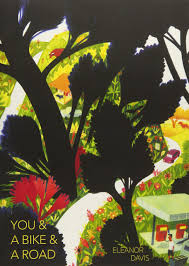
You & A Bike & A Road
by Eleanor Davis
2017

I received this book as a Christmas present in 2020 and read it within days. It’s basically a copy of the author’s sketch-pad/diary that she kept while making a cross-country bicycle trip from Tuscan, Arizona where her parents live to her home with her husband in Athens, Georgia. The pages are little illustrations of her experiences with short descriptions to show her thoughts. She’s struggling with depression and this is a way for her to get out of her head and try something new and difficult. While the main plot, such as it is, is her personal journey – both physical and emotional – it’s also dotted with stories of the people she comes across at the various resting points. As much as the journey works for Davis, it works for the reader too, to vicariously experience the weirdness, exhaustion, and exhilaration of making this attempt, and get out of my own head too.

The Fifty-Three Stages of the Tokaido
by Hiroshige
1833-1834
published by Heibonsha Ltd, 1960

I received this book for Christmas in 2019, and worked though it in its and starts over the course of a year. The 55 illustrations in this series, showing images from Edo to Kyoto with the 53 stages of the Tokaido in between, are enchanting and lure me into thinking it’s a journey I would like to take. The Tokaido is a 320-mile-long road in Japan that the governments have maintained for centuries, connecting two of the country’s major cities. This set of woodblock prints by Hiroshige romanticizes each stage of the trip – the gorgeous vistas, the exciting markets, the specialized restaurants, and even the uncertain weather – and establishes his reputation as an artist at the same time. The scenes are both gorgeous and fascinating and the way they show calm water and raging storms and mountains both near and far just makes something in my mind un-tense for a little bit.

This specific publication of the illustrations also comes with short descriptions of each which were both helpfully informative and occasionally unintentionally funny. These captions vary between describing the locations (how the stages worked and which services and resources were there), describing the subject matter (what type of people were being shown and what interactions were taking place), and describing the artwork itself (letting me know which ones I should appreciate more than others, in case I wasn’t appreciating them correctly). What I considered particularly funny was the contrast between the detailed discussion regarding exactly when a particular image was set based on the presence of famous travelers versus how casually the descriptions discuss the artistic license used with both the events being shown and even the physical geography of other images that rearranged, removed, or created whole mountains for the aesthetic. But regardless of how much or little accuracy they may have, they are all lovely and intriguing.

In a time when it’s been nearly a full year of staying in my house with a single exciting trip to a grocery store every other week, these books were a chance to imagine a freedom of movement that comes with its own pros and cons, but feels so refreshing just to think about.

Reading Through the Pandemic

So, it’s been a while. 2020, huh? I may have aged 20 years since February. Everyone hanging in there?

While I have definitely spent my share of this pandemic doom-scrolling, playing a truly astounding amount of Thirteen, and watching every episode of the Great British Baking Show again, I have actually read a fair amount. My book list from the last five months is an odd mix of romance, non-fiction, and literary best sellers as I keep trying different kind of books, looking for the perfect thing to help me either forget the world or understand what is going on around me. I don’t know that I have yet to find a book that genuinely helped on either front, but I did read some smart, touching, fun things that kept me off Twitter. It’s all I’ve got today, but I’m going to offer it to you: some books that might take you away from the current hellscape for a few minutes.

Disappearing Earth by Julia Phillips
A while back I read Reservoir 13, a novel about how the disappearance of a young girl affects the residents of a small town. It got rave reviews, but I found it deeply unsatisfying. This book is everything I had hoped Reservoir 13 would be. I also really enjoyed a peek inside life in a far-flung Russian province, including in its indigenous communities.

The Starless Sea by Erin Morgenstern
People absolutely adore Morgenstern’s first book, The Night Circus, but I thought it was just pleasant enough and Anna was even less impressed. But it’s a pandemic, I’ve got nothing but time, so I thought I as might as well tackle her second one. It’s another long, sprawling magical realism story with lots of characters and multiple time frames, but I was much more caught up in the characters and the magical world she created this time around.

The Checklist Manifesto by Atul Gawande
I made so much fun of Anna for reading this at the beach a few years ago, but she was totally right! This is a smart, readable book that provides a sense of hope that there are concrete things we can do to improve the world.

Open Book by Jessica Simpson
I know! The Jessica Simpson book! It is actually very good!

The Widows of Malabar Hill by Sujata Massey
Massey wrote a series of mystery novels about a Japanese-American woman solving crimes in modern-day Tokyo, which I liked a lot, but this book kicked of an even more interesting new series about a female lawyer working in 1920s Bombay. The story was interesting, but I was most impressed with the level of research that Massey must have done, which allowed her to create this world that felt so real, even while being so far from anything I’m familiar with.

Because Internet by Gretchen McCulloch
Have you been wanting to read a linguist discuss how people on the Internet communicate? You want to, whether you know it or not. This can get a little dense at times, but McCulloch is funny and the phenomena she describes will be familiar to anyone who has spent significant time on line over the last 25 years. Having an expert take a specific Internet language thing (a meme, an acronym, ellipses) and then explain exactly what purpose it serves actually gave me a lot of respect for how we create the forms of communications we need in real time every day.

The Alice Network by Kate Quinn
This last one isn’t cheerful, I’ll warn you, but it was compelling. I think I found this book in a round-up of WWII stories, but it actually has an interesting twist. The story follows two timelines–a female spy in France during the first World War, and then a young American girl in Europe in the years immediately following the end of the second war. Anyone who reads a lot of historical fiction ends up reading a lot of WWII stories, and that’s all fine, but they often focus exclusively on the war years and little before or after. I liked how Quinn’s story showed how close and connected the wars, and individuals’ experiences of them, were and how Europe had begun to rebuild in the late 1940s.

Agrippina: The Most Extraordinary Woman of the Roman World

Over the past few weeks, as I have been telling people how much I liked this historical biography of a Roman empress, I have gotten some very skeptical responses. And I get it–it doesn’t sound like the kind of book you might pick up for a casual read on a Saturday afternoon. But I promise, Agrippina: The Most Extraordinary Woman of the Roman World by Emma Southon is fascinating and compelling and funny and sad. Even though I knew Agrippina was not going to get a happy ending, I was still reading along as fast as I could, desperate to know what happened to this incredible woman who lived 2000 years ago.

The basic facts: Agrippina was the great-granddaughter of the emperor Augustus, and spent decades at the center of the imperial family and of Roman politics–she was Caligula’s sister, Claudius’s wife, and Nero’s mother. Her life was shot through with tragedy (imperial family disputes had a tendency to get bloody) but also with glory and ambition. Historical information about her is limited, since Roman writers only occasionally even bothered to mention women, so a lot of the book is Southon explaining what sources do mention Agrippina, and what we can assume in places where the historical record is silent. Southon (who is also lots of fun on Twitter @nuclearteeth) also does a really excellent job of both making sure that we remember that Agrippina was a real person with fears and loves and emotions, while also making it clear that Agripppina lived in an entirely different culture and time. For example, when discussing Agrippina’s first marriage, Southon talks about how disturbing she finds it that the 13-year-old bride was married to a man more than twice her age, but also makes the point that we really have no way of knowing how a Roman princess would have thought about this.

Southon is also really funny, and that’s what really makes this book stand apart. Yes, it’s a very detailed, academic history book that is rigorous in the treatment of its primary sources. But it’s also like hearing a snarky friend gossip about people you know. She calls Caligula “subtle as a brick,” says that Agrippina’s first husband was “a dick,” and is entertainingly exasperated with the Roman habit of giving everyone some variation of the same four names. It makes the book so readable, and helps bring the historical figures to life.

One final note: in the UK, where this was initially published, the title was Agrippina: Empress, Exile, Hustler, Whore which is way more fun! I guess us Americans can’t handle that level of excitement in our history.

Kinsey’s Three Word Review: Tragic, yet funny.

You might also like:  For some more educational history enhanced by dry humor, check out A Short History of Nearly Everything by Bill Bryson, or any of Sarah Vowell’s historical books–I particularly like Assassination Vacation and Unfamiliar Fishes.