RIP Elizabeth Peters

Elizabeth_Peters
RIP Elizabeth Peters
(Sept. 29, 1927 – Aug. 8, 2013)

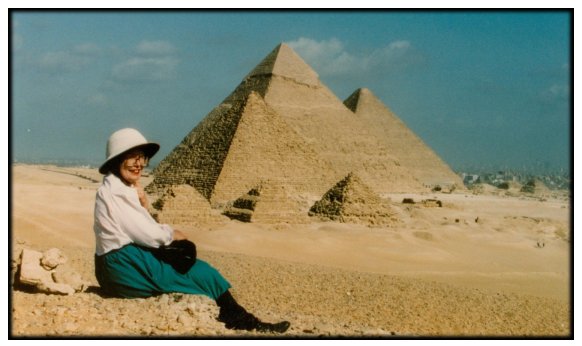
I just learned that Elizabeth Peters recently died. Her actual name was Barbara Mertz, but I knew her as Elizabeth Peters when I grew up reading her books.

She was a prolific mystery writer, her characters are a delight, and her writing easily mixed suspense and humor. I particularly loved her sense of character though. Her heroines were all very real, with very definite personalities and perspectives. They were all people that I would have loved meeting, but also that I could have imagined meeting. They were real people and they continue to delight me. The love interests were also all strong personalities that could hold their own against the main characters, and the large casts of secondary characters were always zany and delightful.

I think growing up reading these books provided a wonderful salve to also growing up reading classic science fiction, which tended to skimp on the character side of things, especially when it came to females. Peters’ characters more than made up for the lack in any other books, though. Her were a delight and a wonder.

crocodile-on-the-sandbank   The first book of hers that I read was Crocodile on the Sandbank, which introduced me to Amelia Peabody, Peters’ most well-known character. Peabody is a British female Egyptologist in 1884. As you might guess from that, she is quite opinionated and strong-willed. Watching her butt heads with pretty much everyone is a delight. Amelia along with her eventual husband and eventual son are the focus of 19 books.

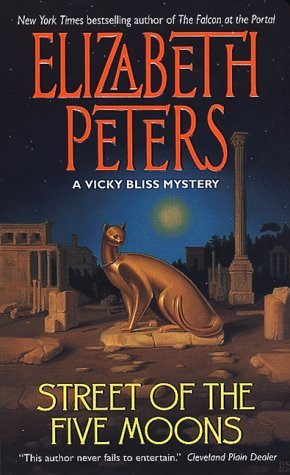
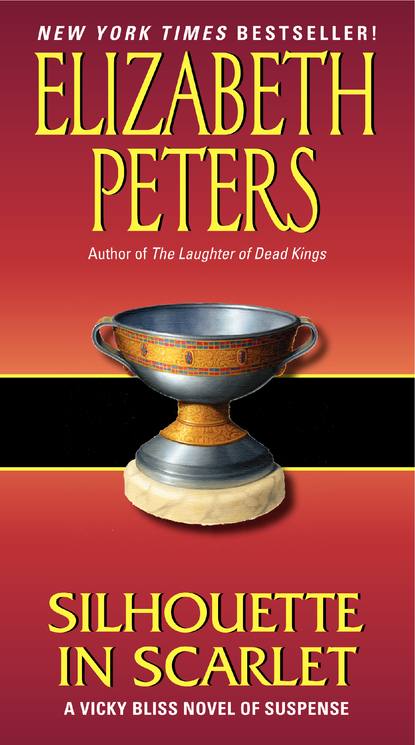
borrower-of-the-night-a-vicky-bliss-murder-mystery-by-elizabeth-peters     streetoffivemoons    silhouette

My favorite series of hers though is the one that follows Dr. Victoria Bliss, a medieval arts scholar who works at the National Museum in Munich. Vicky is Barbie-doll-esque enough in appearance that most people don’t take her seriously as a scholar. Her boss Herr Professor Anton Schmidt is Santa-Claus-esque enough in appearance that no one takes him seriously as an adventurer. John Tregarth is a master criminal who tries valiantly to not be taken too seriously. Together they find and/or get drawn into all sorts of historical and criminal adventures.

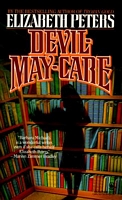
summer_of_the_dragon     devilmaycare     lovetalker

Some of my favorite books of Peters, though, are her stand alone novels, introducing whole new casts of characters and a single mystery to be resolved. Of her many such books, Summer of the Dragon is probably my favorite, closely followed by Devil-May-Care and The Love Talker.

This is an author well worth reading and who has had a major impact on my youth, reading, and writing. She set a high bar for others to follow.
Rest in peace, Elizabeth Peters.

Me Before You

I can’t remember why I picked up Me Before You by Jojo Moyes–I must have seen it recommended on a blog or on Twitter, since those are those places I learn about everything–but I didn’t know a thing about it when I started reading. I think I thought it was a romance. Which I guess it is, sort of, but calling it a romance seems way too simple.

Now, when I summarize the plot, you’re going to think it sounds like a bummer. It’s about a young British woman, Louisa, who takes a job serving as a companion to Will, a man who was recently paralyzed in an accident and isn’t very pleased about having her around. I know, I know, I wouldn’t have wanted to read it based on that either. And it’s not a happy book–there were definitely tears. But it’s also charming and the characters are real and funny. When the book starts, Lousia is working at a coffee shop with no plans to do anything else, and Moyes did a great job of making Louisa aimless without her seeming dumb or unsympathetic. The relationship Louisa has with Will is complicated and layered, but her relationship with her family is presented with equal care. Even when some of the plot turns got a bit melodramatic, the characters kept the story grounded.

Gretchen Rubin (the author of The Happiness Project, a book I’ve raved about before) offers monthly book suggestions on her site, but very specifically doesn’t describe the books at all. She says that she finds herself less interested in reading a book when someone tells her what it’s about. I like hearing details about books before I read them, but I struggle with the actual describing part here on the blog sometimes. Often I feel like I’ll steal some of the magic of a book by revealing things that are better discovered as you go along. If I were queen, I would just tell everyone that they should trust me and read what I tell them to. Me Before You is definitely a book where I don’t want to risk any of the magic, so just trust me and read it already.

If you need any more convincing, Anne Lamott raved about this book in the most recent People magazine, so I feel like it’s been blessed–if she likes it, how could anyone not?

Kinsey’s Three Word Review: Funny, sad, cathartic.

You might also like: Wild by Cheryl Strayed. It’s not really like Me Before You–it’s a non-fiction memoir for one thing–but it’s the last thing I read that inspired the same kind of emotional reaction (laughter, tears, inability to get it out of my mind days later).

Grave Mercy

Have you been thinking that there are not enough young adult novels out there about nuns who kill people in the name of the god of death? Well then, I have the book for you! But seriously, I really enjoyed Grave Mercy by Robin LaFevers, and it’s lots of fun to tell people that you’re reading about assassin nuns.

Set in Brittany (now part of France) in the 1400s, the story follows Ismae, a teenage girl who is saved from an abusive father and an arranged marriage by joining a convent dedicated to Mortain, the god of death. And this convent teaches it’s novices some very specific skills, training them to be sent out into the world to kill those people marked by Mortain for death.

This was clearly published in the wake of The Hunger Games and Divergent and all those other teenage dystopian future series (this is the first in what looks like a planned trilogy), and it feels very much like those books. But if you’re a little sick of dystopian futures, like I am, this offers a nice twist by being set in the past. And while there is a bit of the magic/supernatural happening with the god of death and all, it’s really mostly a historical novel about life in medieval Europe. It featured a little more political intrigue than I would have preferred (However will the Duchess keep her crown? I don’t really care all that much!) but it also had adventure, romance, and strong female characters with a lot of agency. And it sure wasn’t like anything else I’ve read lately.

Kinsey’s Three Word Review: Dramatic, historical, romantic.

You might also like:  Scott Westerfeld’s Pretties/Uglies series. Those are set in the future, but the books felt very similar. And I consider those really fun books, so.

The Outlaws of Sherwood

By Robin McKinley

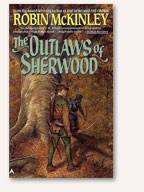
Book Cover: Outlaws of SherwoodI mentioned The Outlaws of Sherwood in my previous review as a possible non-homophobic treatment of a heroine-in-disguise romantic plot. I decided that since it had been years since I’d actually read it, though, I was a bit fuzzy on the actual treatment, so figured I’d better reread it.

Robin McKinley is a favorite author of mine, so even though this isn’t one of my favorite books of hers, it is still better than most books out there. It is also the most realistic and least romanticized version of the Robin Hood story that I’ve ever read/seen/heard. This can make it a bit slow at times—Robin is often unsure of himself and uncomfortable with his increasing renown—but the characters really shine. The outlaws of Sherwood Forest are desperate people who are simply trying to stay alive in a time of political and economic upheaval while keeping as much a moral compass as possible in their circumstances.

Unfortunately, per my previous review, the Little John storyline was not quite as extensive as I’d remembered, with the woman-in-disguise element dealt with summarily enough that it does not really address the issue of potential homophobia. On the flip side, the female characters themselves are, I believe, the most interesting and nuanced characters, so at least there is a strong feminist theme.

—Anna

Life After Life

I feel like I have a habit of recommending the hottest book of the moment, as if people don’t already know that they should go read Gone Girl or Where’d You Go, Bernadette. But sometimes the masses are correct and I am powerless to do anything but join in with the chorus. In this case, that means saying that Life After Life by Kate Atkinson is amazing and everyone should go read it.

In case you haven’t seen the many, many glowing reviews, Life After Life is about Ursula, a British girl born in the early 1900s who dies almost immediately. Except, then the story starts again and this time she lives. Over and over, the book skips ahead and then backs up again, with events playing out in different ways and alternate timelines spinning out into different futures that hinge on the smallest things. Now, this is not a time travel book–the point here is not whatever magic allows Ursula to do this, and she only has the barest sense that anything is going on. Rather, the point was wide range of possibilities that every life contains. Sometimes Ursula is alone and sad, other times she has family and friends around her. By the end of a possible timeline, things feel inevitable, but Atkinson immediately shows you how different Ursula’s life could be. And because of the way the book is structured, I felt a growing sense of hope as I read, like Ursula was slowly figuring things out and fighting an invisible battle for the best life possible for her and the people around her.

I’m afraid this makes the book sound heavier and more complicated than it is–it was really a joy to read. Ursula’s various outcomes don’t play out exactly in order, but it’s so carefully written that it is easy to follow. Major sections of the book take place during World War II, including some especially harrowing sequences during the London Blitz, but there is plenty of family drama and it doesn’t feel like a war story. It’s a long, dense book, but I was sorry when it ended because I wished I could spend more time with the characters. Just so, so good.

Kinsey’s Three Word Review: Intricate, contemplative, and hopeful.

You might also like: For World War II stories and complex structure, try The Night Watch by Sarah Waters. Kate Atkinson’s other books, especially the Jackson Brodie mysteries, are also great. And I want to recommend Wolf Hall and Bringing Up the Bodies by Hilary Mantel, although the only thing they really have in common with Life After Life is being amazingly written.

I also want to note that another book with the same title also came out this year. The Life After Life that is not getting all the attention is by Jill McCorkle. I haven’t read it yet, but Jill McCorkle is a North Carolina author who I met years ago when she came to speak at the creative writing summer camp I attended. She was fun and sweet and voluntarily chose to spend time with a bunch of dorky teenagers attending a–let me say it again–creative writing summer camp. I also really enjoyed her earlier books, especially July 7th. So if anyone’s read her Life After Life (it is a really good title), let me know how it was, because I have a soft spot for her and feel a bit bad that her book is getting overshadowed.

Code Name Verity

I’ve been home sick from work for a couple of days now, and while I am tired of coughing and sick of my couch, I did get a chance to finish an AMAZING book: Code Name Verity by Elizabeth Wein.

This WWII story is about a young, female British intelligence agent who is captured in Occupied France while on a mission, and is writing her confession for her Gestapo captors. But telling her story also involves describing her friendship with a female pilot, so while it’s a war novel, there’s also this lovely thread of friendship running through it. I’m a sucker for WWII stories and this one is clearly impeccably researched. It’s also really cleverly put together–things are not the way they may appear on the surface of the story, which is completely appropriate for a tale told by intelligence officers. As I was reading, I had a sense that something else was going on, but was still surprised by how things came together at the end. It was difficult to read, at times, but so well constructed. After Eleanor and Park, this was the best thing I’ve read this year.

One note: my library classified this as YA, but I found it pretty disturbingly violent. Realistically violent, not gratuitously so, but still. I would call this a book for adults or maybe older teens.

Kinsey’s Three Word Review: Harrowing, heart-breaking, and gripping.

You might also like: The Book Thief by Marcus Zusak, or How I Live Now by Meg Rosoff, or Gone to Soldiers by Marge Piercy

Comic Book Glut

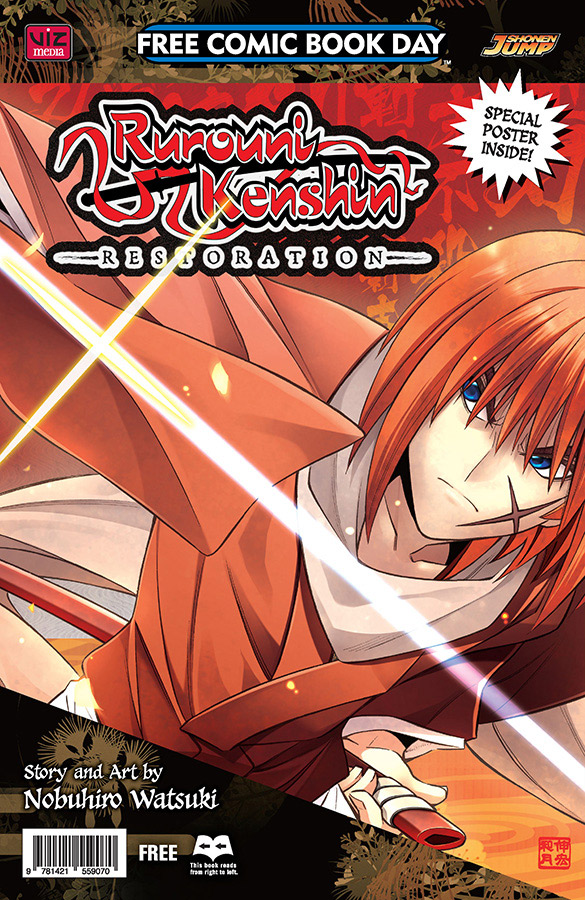
RurouniKenshinRurouni Kenshin: Restoration
By Nobuhiro Watsuki
2013

This was one of the free comic books that I picked up at Free Comic Book Day. It is a teaser for an AU (alternate universe) version of Rurouni Kenshin by the original author. It was fun, but mostly I enjoyed it because it reminded me how much I love this series. The actual teaser itself wasn’t all that great. It reintroduced the characters and held their first meeting at an arranged illegal fighting/gambling event, which just seemed like a bit of over-the-top, idiotic, self-indulgence.

While the reboot wasn’t so great, I definitely recommend the whole original series of Rurouni Kenshin, following Himura Kenshin, an amazing swordsman who, after a bloody past during the civil war, made an oath to never kill again but still manages to find and be found by a whole lot of trouble. The anime series based on the manga is also really good, and the recent live-action movie was excellent! (The animated movies, branded “Samurai X”, however, should be avoided.)

Anyway, seeing more of these characters written and drawn by the original author made me bounce around grinning with excitement. But the actual thing wasn’t all that good. It was a it of self-indulgent fluff, and while there’s nothing wrong with self-indulgent fluff, if you actually want to read a good AU take on this series, fandom (in the person of Vathara) has provided several better options, including the urban fantasy Blades of Blood and it’s sequel Witchy Woman, the Star Wars-crossover Shadows in Starlight, or the historical fantasy Gargoyles-crossover All I Need is a Miracle (which is a direct response to the awfulness of the animated movies).

So this series is awesome, and I highly recommend it, but this particular comic book is not the best example of it.


HawkeyeHawkeye: My Life as a Weapon
By Matt Fraction, David Aja, and Javier Pulido
2013

I’ve never really followed any of the Hawkeye comic books, but I enjoyed The Avengers movie a lot and the characters cameo in the Thor movie made me grin. So a new stand-alone comic book about Hawkeye at my library caught my eye. It was a whole lot of fun.

It’s a look at what Hawkeye, aka Clint Barton, is doing when he’s not out being a superhero Avenger… which is mostly getting into other types of trouble and going out being a secret agent for SHIELD. But it also involves hanging out with his neighbors at a rooftop barbeque/potluck.

Anna pointed out that the stories in this collection are all a bit grim, which I was going to argue with, except, okay, yes, they are a bit grim. But it left me happy. I liked it. Even though it does kind of imply that one of the main requirements of being a superhero is the ability to take a beating.


the-book-of-five-rings-a-graphic-novelThe Book of Five Rings
By Miyamoto Musashi, Sean Michael Wilson, Chie Kutsuwada, and William Scott Wilson
2012

I picked this book up because I have struggled to read The Book of Five Rings for a while now. It was highly recommended by a seventh-don black belt that I was training with. And yet, I found it super uninteresting and unhelpful. In some ways it read (to me) like The Art of War, except without the value. The graphic novel version makes up for some of that lack by being really well illustrated. And from everything I’ve read, Musashi himself was a fascinating character and I wouldn’t mind reading more about him, despite not caring for his writing.

Anyway, I actually highly recommend the graphic novel as a precursor to the plain unabridged text of The Book of Five Rings. It will give you a taste of the text while making subject more accessible. It’s readable in about an hour. Then, if you find the graphic novel appealing, maybe you should try reading the original text in its entirety.

Although, really, I mostly recommend Sun Tzu’s The Art of War instead.


Elektra_Lives_Again_00-1book_coverElektra Lives Again
By Frank Miller
2002

I read a couple of Daredevil series before and really enjoyed them (Frank Miller’s Daredevil: The Man Without Fear is excellent, as is David Mack’s Daredevil: Vision Quest although it largely focuses on a different character), but over all the quality of Daredevil comics varies wildly, so I also read a couple of Daredevil series before that I didn’t enjoy at all. Elektra is Daredevil (aka Matt Murdock)’s tragic girlfriend, a zombie-ninja-assassin who has her own spin-off series, but I had never read any of her comics that were any good at all… until now. This collection really brought her to life (haha!) as a character, despite her being a zombie ninja assassin. I liked the writing and the illustrations and just the whole feel for it. Well done.

Plus, there are two more Elektra graphic novels by Frank Miller for me to look forward to.

Eleanor and Park

Back in October, I wrote a review of Rainbow Rowell’s Attachements, mostly focusing on how sweet and charming I thought it was. Based on that, I assumed that I would like her new novel, Eleanor and Park, as well. I was not prepared for how much I LOVED this book. People, you have all got to go read Eleanor and Park.
Here is a short list of the things about this book that were awesome:
  • It’s a love story between two misfits (that’s Eleanor and Park), and for once the misfits actually seem like they don’t fit in. Eleanor is not a nerdy girl who takes her glasses off and then she’s a model–she (and, in his own way, Park) are truly complicated people who struggle to blend in and relate.
  • The portrayal of high school life–with it’s tentative and ever-shifting alliances–is as on-point as I’ve ever read.
  • The point of view alternates between Eleanor and Park, and both of their voices are so distinct and clear–it felt like I got to know two different people. I also love it when a book gives me an insight into teenage boys, and Park is a really stunning character.
  • It’s set in the 90s, so if you’re old like me, it will bring back fun memories. (They listen to the Smiths on a Walkman–raise your hand with me if you also did that!)
  • It made me cry on an airplane, but also made me so happy that I am planning to buy my own copy so I can read it whenever I want.
My library classified this as YA and I wouldn’t hesitate to recommend it to teens, but it’s complex enough that I might consider it an adult book.

Kinsey’s Three Word Review: Better than words.

You might also like: Nick & Norah’s Infinite Playlist (read the book, then see the movie–they’re both good)

Vampires in the Lemon Grove

By Karen Russell

Book cover: Vampires in the Lemon GroveMy wonderful friend Lori sent me this just because she thought I’d like it and it arrived in the mail in the middle of my Atlas Shrugged doldrums, and it was such a mood lifter, just having it on my to-read shelf. The cover is just so bright and graphic!

I had heard of the author, Karen Russell, through a brief review of her previous book Swamplandia!, which I had assumed was a comic narrative of Florida craziness á la Elmore Leonard. If it is anything like this book, though, (and I believe it is, according to the blurbs on the back cover) my assumptions are way off. Vampires in the Lemon Grove is the strangest book! It is a collection of short stories, and when I described the premise of each story to Rebecca, they just sounded kind of absurd:

“All silkworms in the Western hemisphere have died, so China is now the sole proprietor of silk, and in order to meet the now increased demand, they have discovered a way to turn women into more efficient silk worms.”

Rebecca said, “hmm.”

But, this story and the others are just beautifully written and poetic, even. Russell emphasizes the senses in her writing, describing not just the sights, but also the sounds, smells, tastes and touch of the worlds she builds. In the titular lemon groves, she describes the sun on the fluttering leaves, the feel of the wind that blows through the grove, the smell of lemon that pervades, and the sweet tartness of the lemons and lemonade.

The silkworm story took a bizarre and, quite frankly, almost silly premise and created layers upon layers of symbolism. The disenfranchised, used for production and others’ profit, find hope in self-identity and transformation. Each story was like this; reading them felt like scuba diving or spelunking, moving deeper and deeper through layers of alien landscapes. The stories themselves, too, seemed to each move a little deeper into the human psyche, getting darker and darker, until the last two broke my heart. So, take that as a caution: don’t avoid reading the book, by any means, but just be emotionally prepared.

It wasn’t a quick read because I wanted to savor each story for several days after reading it and before reading the next one. The only criticism I have is that each story ended too soon, almost abruptly, and each time I was left sort of blinking my way out of the story’s world and wanting to know far, far more about the characters.

Three word review: “otherworldly, emotionally devastating”*

*I’m not promising to always follow Kinsey’s lead with the three word reviews (though I love her addition), but I found these in the NPR review, and they just seem spot-on.

—Anna

Frost Burned by Patricia Briggs

Frost_burnedFrost Burned
by Patricia Briggs
2013

There are a lot of girl-vampire-werewolf series out there, with a wide range regarding quality. Frost Burned is the most recent book in one of those series, that started out excellent, backslide into generic, but has managed to recover.

This is the tenth* book set in this particular universe, the seventh that follows the character Mercy Thompson, and I was impressed. The first few books in this series (Moon Called, Blood Bound, and Iron Kissed) are the best ones, while some of the most recent ones (Bone Crossed and River Marked) have felt rather bland, like Briggs was forced to write them in order to fulfill a contract, without having any particular plan or goal with them. In Frost Burned, Briggs is back with energy and interest.

I’m guessing it’s due to the major happening that concluded her most recent book set in this universe, but following a different set of characters. The Alpha and Omega series only has three books so far (Cry Wolf, Hunting Ground, and Fair Game) and these keep on getting better. The end of Fair Game was so spectacular, in fact, it drew me back into reading the Mercy Thompson series, just so that I could see what happens next in this universe.

And, without giving any spoilers: there is definitely a lot of fall-out.

I’m very excited about Briggs revamping (hee: re-VAMPing!) this universe, and think it was probably pretty important that she started alternating which series she was writing, so she could approach the characters with excitement rather than getting bored with them. However, I’m not entirely sure how readable any of her books are, at this point, without going back and reading the earlier ones.

Frost Burned did a pretty good job of filling in the blanks for what happened before, but it was enough that I think I need to go back and read the earlier Mercy Thompson book that I skipped entirely (Silver Borne).

Although, if you want to jump into this universe without having read any of the previous books, I would start out with Fair Game, just because it was a good book, delightful characters, the climax/epilog is really spectacular, and it sets up a whole new situation that is going to continue percolating through any future books in this universe.

* Or eleventh, if you count a novella in an anthology. Or fourteen, if you count short stories in anthologies.