The Books of the Raksura

The Books of the Raksura
By Martha Wells

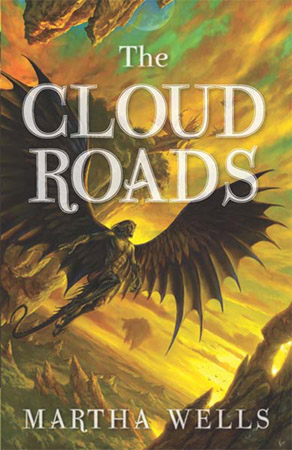
Raksura_TheCloudRoadsThe Cloud Roads
Feb. 2011

Raksura_TheSerpentSeaThe Serpent Sea
Jan. 2012

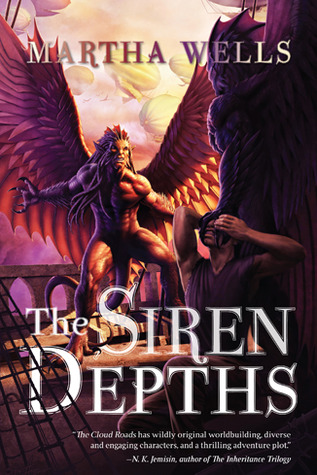
Raksura_theSirenDepthsThe Siren Depths
Dec. 2012

Please, please, let there be more coming soon!

So I started reading The Cloud Roads on the recommendation of an online friend and thought it was decent but not fabulous. My ambivalence was mostly due to the fact that most of what should have been unique about the world building, I’d seen before in either George Lucas’ Star Wars or in Bujold’s Sharing Knife series.  The characters seemed a trifle flat, although nothing out of the ordinary when the focus is on world building. The plot and character interactions were still fun, and I enjoyed it enough to check out the second book.

Half way through the second book, I put a request in at my library for book three. Then I finished book two, which ended perfectly satisfyingly with no cliff-hanger in sight, and yet I still desperately wanted to see more of these characters and this world, both (all?) of which had finally come into their own.

And then the third book was just as awesome as expected. Awesome!

And now I want more, more, more!

Anyway: the world Wells created is a complex one with an unknown number of sentient species all living in their own communities and groups, but also very much interacting. The bar in Star Wars, where Luke and Kenobi meet Han Solo would not be out of place in one of this world’s cities.

Our main character, Moon, is introduced while living with yet another group of people, trying to fit in with a species not his own. The trouble is that Moon doesn’t know what species he is. He lived with only his mother and siblings before he was able to care for himself, and they all died when he was still quite young.

In The Cloud Roads, the first book, Moon discovers his own people. Or rather, he is discovered by his own people. In The Serpent Sea, Moon settles in and finds his place among his own kind. And in The Siren Depths the comfort that he has found is challenged.

One of the things that particularly impresses me with Wells is the way she introducing the reader to a person and a culture who are decidedly not human and yet are completely sympathetic. Each book adds more layers of complexity and subtlety over the cultures and individuals, making them increasingly enthralling. I also love the way Wells plays with gender roles and how societal expectations vary from society to society and how even societies with established hierarchies always have to deal with a few exceptions. And Moon, as both our main character and an outsider to all societies, gives the reader a wonderfully bemused perspective on it all.

If you want a taste of these books, the first chapter of each book is available online. In addition, Wells has posted a short story, The Forest Boy, which shows Moon as a kid, before the start of the books.  (She also has other short stories and missing scenes posted, but the others should wait until you’ve caught up to those events in the books.)

Overall, they’re just kind of adorable books with wonderfully nuanced takes on some standard tropes. And I really hope there’s more soon.

The Outlaws of Sherwood

By Robin McKinley

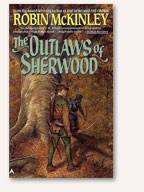
Book Cover: Outlaws of SherwoodI mentioned The Outlaws of Sherwood in my previous review as a possible non-homophobic treatment of a heroine-in-disguise romantic plot. I decided that since it had been years since I’d actually read it, though, I was a bit fuzzy on the actual treatment, so figured I’d better reread it.

Robin McKinley is a favorite author of mine, so even though this isn’t one of my favorite books of hers, it is still better than most books out there. It is also the most realistic and least romanticized version of the Robin Hood story that I’ve ever read/seen/heard. This can make it a bit slow at times—Robin is often unsure of himself and uncomfortable with his increasing renown—but the characters really shine. The outlaws of Sherwood Forest are desperate people who are simply trying to stay alive in a time of political and economic upheaval while keeping as much a moral compass as possible in their circumstances.

Unfortunately, per my previous review, the Little John storyline was not quite as extensive as I’d remembered, with the woman-in-disguise element dealt with summarily enough that it does not really address the issue of potential homophobia. On the flip side, the female characters themselves are, I believe, the most interesting and nuanced characters, so at least there is a strong feminist theme.

—Anna

Comic Book Glut

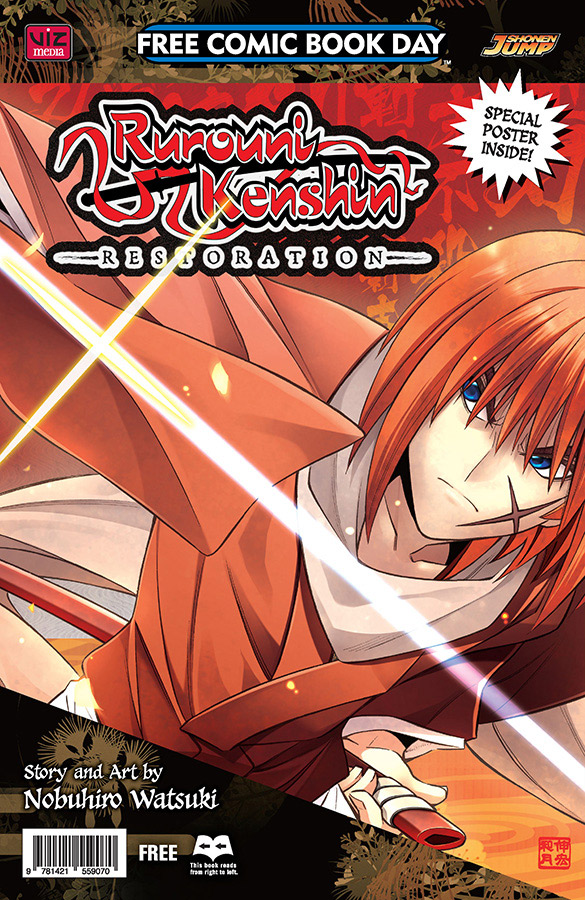
RurouniKenshinRurouni Kenshin: Restoration
By Nobuhiro Watsuki
2013

This was one of the free comic books that I picked up at Free Comic Book Day. It is a teaser for an AU (alternate universe) version of Rurouni Kenshin by the original author. It was fun, but mostly I enjoyed it because it reminded me how much I love this series. The actual teaser itself wasn’t all that great. It reintroduced the characters and held their first meeting at an arranged illegal fighting/gambling event, which just seemed like a bit of over-the-top, idiotic, self-indulgence.

While the reboot wasn’t so great, I definitely recommend the whole original series of Rurouni Kenshin, following Himura Kenshin, an amazing swordsman who, after a bloody past during the civil war, made an oath to never kill again but still manages to find and be found by a whole lot of trouble. The anime series based on the manga is also really good, and the recent live-action movie was excellent! (The animated movies, branded “Samurai X”, however, should be avoided.)

Anyway, seeing more of these characters written and drawn by the original author made me bounce around grinning with excitement. But the actual thing wasn’t all that good. It was a it of self-indulgent fluff, and while there’s nothing wrong with self-indulgent fluff, if you actually want to read a good AU take on this series, fandom (in the person of Vathara) has provided several better options, including the urban fantasy Blades of Blood and it’s sequel Witchy Woman, the Star Wars-crossover Shadows in Starlight, or the historical fantasy Gargoyles-crossover All I Need is a Miracle (which is a direct response to the awfulness of the animated movies).

So this series is awesome, and I highly recommend it, but this particular comic book is not the best example of it.


HawkeyeHawkeye: My Life as a Weapon
By Matt Fraction, David Aja, and Javier Pulido
2013

I’ve never really followed any of the Hawkeye comic books, but I enjoyed The Avengers movie a lot and the characters cameo in the Thor movie made me grin. So a new stand-alone comic book about Hawkeye at my library caught my eye. It was a whole lot of fun.

It’s a look at what Hawkeye, aka Clint Barton, is doing when he’s not out being a superhero Avenger… which is mostly getting into other types of trouble and going out being a secret agent for SHIELD. But it also involves hanging out with his neighbors at a rooftop barbeque/potluck.

Anna pointed out that the stories in this collection are all a bit grim, which I was going to argue with, except, okay, yes, they are a bit grim. But it left me happy. I liked it. Even though it does kind of imply that one of the main requirements of being a superhero is the ability to take a beating.


the-book-of-five-rings-a-graphic-novelThe Book of Five Rings
By Miyamoto Musashi, Sean Michael Wilson, Chie Kutsuwada, and William Scott Wilson
2012

I picked this book up because I have struggled to read The Book of Five Rings for a while now. It was highly recommended by a seventh-don black belt that I was training with. And yet, I found it super uninteresting and unhelpful. In some ways it read (to me) like The Art of War, except without the value. The graphic novel version makes up for some of that lack by being really well illustrated. And from everything I’ve read, Musashi himself was a fascinating character and I wouldn’t mind reading more about him, despite not caring for his writing.

Anyway, I actually highly recommend the graphic novel as a precursor to the plain unabridged text of The Book of Five Rings. It will give you a taste of the text while making subject more accessible. It’s readable in about an hour. Then, if you find the graphic novel appealing, maybe you should try reading the original text in its entirety.

Although, really, I mostly recommend Sun Tzu’s The Art of War instead.


Elektra_Lives_Again_00-1book_coverElektra Lives Again
By Frank Miller
2002

I read a couple of Daredevil series before and really enjoyed them (Frank Miller’s Daredevil: The Man Without Fear is excellent, as is David Mack’s Daredevil: Vision Quest although it largely focuses on a different character), but over all the quality of Daredevil comics varies wildly, so I also read a couple of Daredevil series before that I didn’t enjoy at all. Elektra is Daredevil (aka Matt Murdock)’s tragic girlfriend, a zombie-ninja-assassin who has her own spin-off series, but I had never read any of her comics that were any good at all… until now. This collection really brought her to life (haha!) as a character, despite her being a zombie ninja assassin. I liked the writing and the illustrations and just the whole feel for it. Well done.

Plus, there are two more Elektra graphic novels by Frank Miller for me to look forward to.

Frost Burned by Patricia Briggs

Frost_burnedFrost Burned
by Patricia Briggs
2013

There are a lot of girl-vampire-werewolf series out there, with a wide range regarding quality. Frost Burned is the most recent book in one of those series, that started out excellent, backslide into generic, but has managed to recover.

This is the tenth* book set in this particular universe, the seventh that follows the character Mercy Thompson, and I was impressed. The first few books in this series (Moon Called, Blood Bound, and Iron Kissed) are the best ones, while some of the most recent ones (Bone Crossed and River Marked) have felt rather bland, like Briggs was forced to write them in order to fulfill a contract, without having any particular plan or goal with them. In Frost Burned, Briggs is back with energy and interest.

I’m guessing it’s due to the major happening that concluded her most recent book set in this universe, but following a different set of characters. The Alpha and Omega series only has three books so far (Cry Wolf, Hunting Ground, and Fair Game) and these keep on getting better. The end of Fair Game was so spectacular, in fact, it drew me back into reading the Mercy Thompson series, just so that I could see what happens next in this universe.

And, without giving any spoilers: there is definitely a lot of fall-out.

I’m very excited about Briggs revamping (hee: re-VAMPing!) this universe, and think it was probably pretty important that she started alternating which series she was writing, so she could approach the characters with excitement rather than getting bored with them. However, I’m not entirely sure how readable any of her books are, at this point, without going back and reading the earlier ones.

Frost Burned did a pretty good job of filling in the blanks for what happened before, but it was enough that I think I need to go back and read the earlier Mercy Thompson book that I skipped entirely (Silver Borne).

Although, if you want to jump into this universe without having read any of the previous books, I would start out with Fair Game, just because it was a good book, delightful characters, the climax/epilog is really spectacular, and it sets up a whole new situation that is going to continue percolating through any future books in this universe.

* Or eleventh, if you count a novella in an anthology. Or fourteen, if you count short stories in anthologies.

Fanfiction

productimage-picture-discover-fanfiction-today-9528Fanfiction

I have not been reading just Ayn Rand this whole time. That would have driven me completely crazy. I’ve also been reading a fair amount of fanfiction as some light-hearted, palate cleansers. I won’t be reviewing a lot of fanfiction on this site, but I do feel like I should introduce it as a genre, at least.

Fanfiction is a term that describes when fans of a particular story line decide to expand upon that story line by creating their own additions. While the practice has been going on for as long as anyone has been telling stories, the term “fanfiction” is more recent, first gaining wide usage by fans of the original StarTrek series. Now, there is fanfiction for pretty much any book, movie, tv-show, or other type of media that you can think of.

The genre lives in a bit of a legal gray zone since, if the original source is recent enough to be under copyright, then such stories and pieces of artwork are potentially infringing on that copyright. However, fanfiction is generally not produced for commercial gain, reading it comes with the expectation of prior consumption of the original source, and no case of fanfiction has ever been judged in a U.S. court. Published authors vary between actively promoting fanfiction based on their works and actively discouraging it.

As a genre like any other, it also ranges wildly in quality, from extremely shoddy works to amazingly spectacular masterpieces. The amateur nature of the genre allows writers to push at boundaries and experiment with ideas and characters in a way that publishing houses discourage. The online community is well aware of the way they are pushing boundaries, and compensates for it by generally beginning any story with a summary and a series of warnings. These warnings will let you know what source materials (AKA “canon”) you are expected to already know, what characters the author will be using, what romantic relationships will be included, what levels of violence and or sexual content will be included, and any events that readers might have problems with. Fanfiction writers write for fun and readers are expected to approach it for fun, too: use the warnings to read what you expect to enjoy and avoid what you expect to dislike.

The genre as a whole is a living demonstration of the multi-worlds theory: anything that could potentially happen in any universe or with any character, can be written and read with fanfiction. I love it.

Rather than just find fanfiction at random, your best bet is to follow recommendations and browse friends’ bookmark lists. The two biggest online fanfiction compendiums are Fanfiction.net and Archive of Our Own, both of which include reviewing and bookmarking functions.

Here are some good introductory fanfiction stories (ie, fun, short, not too different from their original source material, and no necessary warnings):

Flying Monkeys
by Thimblerig
It can be read on Archive of Our Own.
To understand what’s going on in this story, you should have watched the Marvel movie The Avengers.

The summary is:
The inevitable, horrifying debrief.
“Is this some kind of hobby for you? Planning our imminent destruction?”

The reason I like it is:
First, it’s hilarious. Second, it creates a series of scenes for after the events of the movie, about Clint Barton being debriefed from his time as a mind controlled slave of Loki. The author uses a rich universe and makes it just that much richer by showing some details that just couldn’t have fit into the movie.

Prediction, Protection
By Icarus_chained
It can be read on Archive of Our Own.
To understand what’s going on in this story, you should have watched both the current TV show Person of Interest and the 1990s TV show The Pretender.

The summary is:
Harold was a failed Pretender experiment. Years later, Jarod tracks him down. What follows is a somewhat tense negotiation.

The reason I like it is:
This story uses some background from The Pretender to explain a mystery in Person of Interest. This story makes a connection between these two unrelated universes and asks what if they are the same universe.

Food for Thought
By Ruth Stewart
This can be read on Fanfiction.net (as plain text) or on Livejournal.com (as an entire fake livejournal account, completely with many illustrations.)
To understand what’s going on in this story, you should have read C.S. Lewis’ Narnia series.

The summary is:
A modern teenage girl goes into the Wardrobe, meets Aslan, and learns an important lesson that does not include falling in love with a King.

The reason I like it is:
This is an outsider’s perspective on Susan Pevensie’s life. Susan has died and her grandson and great-granddaughter have come to sort through her belongings. This story is written as a series of blog posts by her great granddaughter, learning about Susan’s life from the records she left behind. This author does an amazing job of researching and then showing recent British history.

Day One
By Zee Viate
This can be read on Fanfiction.net.
To understand this story, you should have watched the TV show NCIS.

The summary is:
The night DiNozzo and Gibbs first met.

The reason I like it:
I stopped watching NCIS around season 7, because the characters were going in directions that I didn’t care for, but this is a look back at young Tony DiNozzo and Gibbs before he knew him, and it reminded me why I loved this show so much for so long.

Followers of the Carpenter
By PaBurke
This can be read on Fanfiction.net.
To understand this story, you should have read book eight of The Dresden Files by Jim Butcher and watched the TV show Criminal Minds.

The summary is:
A serial killer moved to Chicago and followed his normal MO, but this time, he bit off more than he could chew.

The reason I like it:
There’s something wonderful about an outsider’s perspective on some of the characters and events of urban fantasy novels.

Five Scenes Over a Goban
By Opalish
This can be read on Fanfiction.net.
To understand this story, you should have read the manga or watched the anime Hikaru no Go.

The summary is:
Ichikawa laughs until she chokes, and Akira suddenly understands why Shindo spends so much of his time yelling at people to stop hitting him already.

The reason I like it is:
I just love these little looks at how these characters view and interact with each other. This is a peak at everything that made me love these characters in the first place. There isn’t any plot arc, but just some fun character studies.

Evening Encounter
By Maeniel
This can be read on Fanfiction.net.
To understand this story, you should have read the manga or watched the anime Rurouni Kenshin.

The summary is:
Okita’s heading home at the end of the war and encounters a certain redhead. What do they say to each other?

The reason I like it:
In the series, we don’t get much of a look at this time period in Kenshin’s life, but it’s a major turning point for him, and seeing him in this time really shows off his thoughts. Plus, it also develops Okita, who is given very little attention at all in the series, and creates a connection between the fictional series and the real history of the time period.
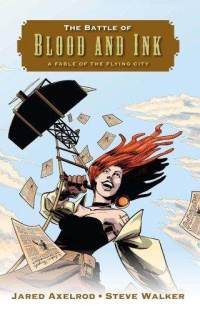
The Battle of Blood and Ink by Axelrod and Walker

The Battle of Blood and Ink: a Fable of the Flying City
Jared Axelrod and Steve Walker
2012

This book has my qualified approval. Without the time (or ability to concentrate) for reading a full book, I recently read a graphic novel instead. Given the adage “a picture is worth a thousand words,” if all of your descriptions can be replaced by images, a graphic novel can be read a whole lot faster than a traditional novel and in fact I read The Battle of Blood and Ink in about forty-five minutes.

On the up-side, it was wonderful to just relax with a book and this one had fun characters and interesting intrigue and really beautiful illustrations. The art is both lovely and lively and was what first attracted me to the book. Then, the characters drew me in, as well as how the authors addressed moral issues regarding ethics versus pragmatics and personal versus political responsibility. It was both beautiful and interesting.

The story is about a woman, Ashe, who grew up as a street kid on a flying city and now makes her living printing a newsletter regarding city events and happenings. The city is a place of wonder, but from Ashe’s perspective, we see some of the gritty underpinnings of how things actually work, and so too does her readership. This gets her into trouble with the city ruler and events progress. Since the role of information and censorship are currently particular interests of mine, this plot was just right for me.

On the down-side, the climactic scene relies on a lot of world building that wasn’t actually presented previously in the book. Given the setting is a flying city, the universe is obviously a science-fiction/fantasy one, but the physics of the world isn’t really explained at all, and the climax depends on certain premises that I hadn’t expected.

Having read and enjoyed the book but feeling a bit bemused by the ending, I discovered that the book was intended as a stand-along sequel to a set of 44 online pod casts (i.e., audio recordings). I listened to the first two of them and was not nearly as impressed by them as by the graphic novel. The world building issues may or may not be addressed in these pod casts, but of the two that I listened to (each about 15 minutes), both times the speaker rambled for a significant period of time before getting to the story and then the story was filled with poorly written descriptions that were much better presented as images in the graphic novel.

So, on the whole, while there are serious flaws in this graphic novel, it’s still lovely, fun, interesting, and well worth the half-hour to an hour that it would take to read. If you want to get a taste of it, the first twenty or so pages are available online.

The Far West by Patricia C. Wrede

The Far West
Patricia C. Wrede
2012

So much fun! I love this series and I love this book. Anna already reviewed the first two books, but The Far West just came out this month and I got a copy immediately. In hardcover, even. One of the things that impresses me about this entire series is the world-building and this book continued the process magnificently, continuing to delve into both the theory of magic and the unknown wildlife of out in the unexplored far West.

As you may have noticed from previous posts, I love me some world-building and Wrede does it beautifully. The series is set in the days of the settlers except that there’s magic, which has made a significant difference in history and national politics as well as ecology. There are three main theories of magic: Avrupan, Aphrikan, and Hijero-Cathayan, each with their own structure and way of manipulating magic. While these were each introduced in the prior books, The Far West looks more closely at the differences and similarities of each type as Eff, the main character, goes on an exploratory expedition further West than anyone else has gone before… or at least further West than anyone else has returned from. There’s new wildlife and new magical theories and a small group of people trying their best to figure out the world and survive the process long enough to report back.

One of the many wonderful things I appreciate about the book is that there’s no bad guy. There are disagreements and personality conflicts and wild animals and danger and adventure, but it’s all situational. There’s no one out there specifically trying to do evil… it’s just a dangerous world and Eff and the rest of the expedition have to work hard to survive. They don’t all get along, they certainly don’t all agree, but they all have a common goal.

The one thing that I really did not like about this book, however, was the fact of the epilog. Not that it was bad, but that it existed. Wrede did that thing where the epilog gives brief descriptions of the future lives of each of the main characters: So-and-so went on to do such-and-such, what’s-his-name went on to do this-and-that. It ended the series. This is book three of a trilogy and Wrede decided to tie it off the loose ends, at least as far as character development went. But there’s so much more out there. It’s this rich world and complex characters and no hope for another book in the series. Hmph. I will have to sulk and re-read it some more.

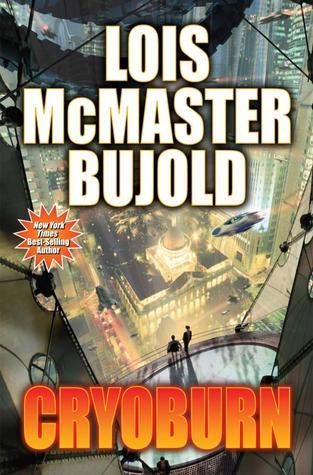
Cryoburn by Lois McMaster Bujold

Cryoburn
By Lois McMaster Bujold
2010

So I finally got around to reading Cryoburn, which is a ludicrous statement for me to have made. I adore Bujold. I discovered her about fifteen years ago and have read her books ever since. She has three different series, set in three wildly different universes, each of which I love. I have read everything she has ever published and loved them all. She was the first author for whom I actually started purchasing new-released hardcover books and even now is one of only four authors for whom I have done that. So why, then, did it take me nearly two years to read this book, checking it out from the library?

When it was first announced, I was super excited. A few months before it was finally due to be published, the publisher posted the first several chapters online as a teaser and I raced over to read them… and found myself kind of, well, bored.

First of all, this is the fifteenth book set in this universe and the eleventh book following the adventures of Miles Vorkosigan. And it is the first book in which there is no major character development.

It makes a certain amount of sense. Miles was introduced in The Warrior’s Apprentice (incidentally, that book (awesome-awesome-awesome) is available for free online, because both Bujold and Baen Publishers are very cool) as a high-born teenager in a military culture who failed to pass the military entrance exam due to physical disability despite all the nepotism in the world. He’s an awesome character: a brilliant, hyperactive dwarf with brittle bones, a lot of high-ranking family connections, and a deep desire to prove himself. It gets him into and then out of So Much Trouble.

But he does, slowly and painfully (and awesomely!), grow up. He grows into himself and faces set backs and failures and grows into himself again and changes who he is and what he wants and if the teenage years were hard, the twenties were driven, and the thirties were vicious, but now he’s settled. He’s happy with who he is and where he is and what he’s doing.

This makes me very happy for him.

But, well, there’s a reason most stories end with the whole “happy ever after” summary of the rest of characters’ lives. Happy settled people aren’t really as interesting as manic, driven people.

Now, character development isn’t the only thing that Bujold does fabulously well.  Her world-building is amazing and rich and deep. Her plot lines and mysteries are complex and tricky and hilarious. And Miles does remain an excellent character and driven in his investigations once they get going.

Cryoburn absolutely demonstrates Bujold’s skills at both science-fiction world-building and tricky plotting. The problem is that since the storyline is a mystery, and the reader only sees Miles’ discoveries as he’s making them, it takes a while for both Miles and the reader to get the momentum going.

Once it gets going, though, the book is excellent. I love the twisty plots and plans and characters and Miles’ manic investigation into them all.

It occurs to me that this book actually might work best as a stand-alone, without having read any of the previous books in the series, and thus coming to it without expectations.

The only thing that needs real background to get the full impact is the epilog, after all the plot ends have been tied up. The epilog, oh, the epilog: it hits like a punch to the sternum and makes my heart skip a beat. (You do need to have read the series to get the full impact, but oh, my heart, oh Miles, oh Bujold, love-love-love!)

So expect to slog a bit through the beginning, but the later two-thirds are really, really good.

Gunmetal Magic by Ilona Andrews

Gunmetal Magic
by Ilona Andrews
2012

This is a pretty mixed review given that it’s for a book that I enjoyed in a series that I loved.

I enjoyed this book a lot. There was fun banter and exciting action and all sorts of fun. On the other hand, it wasn’t exactly the best work of literature I’ve run across, not even the best by this author. The plot depends more on shiny-magic-handwaving than it does on logic and the characterizations are pretty dependent on introductions from previous books. There are also a few scenes that seem to have been included for no particular reason at all.

I assume those scenes are part of the set up for the next book, actually. That actually brings me to skirting around a spoiler that I wrote about in one of my spoiler posts, regarding how this book was written primarily in order to set up some circumstances in preparation for the events in the next book. This book is well-worth reading as the next building block in a really awesome series, but I don’t think it can or should stand alone. I definitely recommend the series, though, but start at the beginning and read them in chronological order. While the main series is planned to have seven books, I would say that this counts as book 5.5. While focusing on a side character, the events of this book are necessary to the development of the series in general.

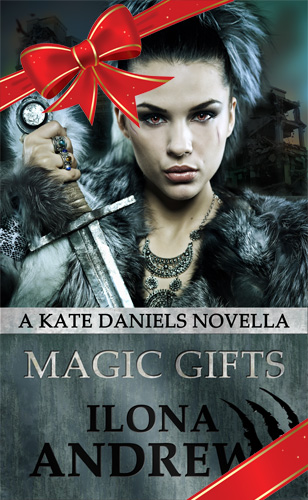
The suggestion to read the books in chronological order includes, incidentally, the suggestion to read the novella, Magic Gifts, which is included at the back of this book, before reading Gunmetal Magic. Which means, that when you get the 448-page book, the first thing to do is to flip to approximately page 330 and start reading. Magic Gifts is the story of what Kate Daniels, the main character of the series, is doing in the background during Gunmetal Magic, which focuses on the adventures of Kate’s best friend Andrea.

Anyway, a couple of things about the book in particular:

On the plus side: One thing that I really appreciated about Gunmetal Magic is how deftly it managed to flirt with but then avoid the classic romance-novel cliché of the love triangle in which one girl must choose between two guys. While the structure is still there, Andrea deals with the situation in a realistic fashion without all the angst and general waffling that I had feared. I was impressed. The characters were fun, the banter was fun, and I was pleased at the romantic resolution.

On the minus side: This could be a plus or a minus, depending on your perspective, I suppose, but the book covers some heavy ground regarding extreme childhood abuse very lightly. Maybe a bit too lightly. It’s not that I want to read a realistic depiction of how extreme childhood abuse affects adult relations (which I assume would be horribly depressing,) but I kind of think that introducing the issue and then not dealing with it might be worse. On the other (third?) hand, I’m willing to handwave away some of that with a vague explanation of magic and societal changes, etc.

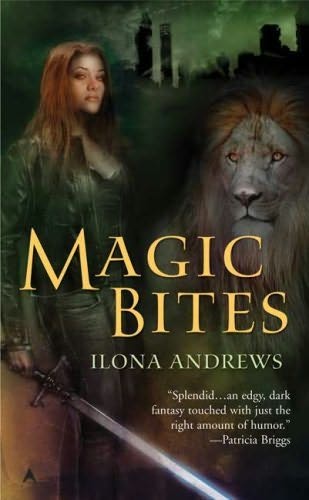
So I will end this review with the suggestion that you go read Magic Bites (Kate Daniels, Book 1)

Touch of Power by Maria V. Snyder

Touch of Power
Maria Snyder
2011

I read the first few (short) chapters on Amazon, got hooked, checked the book out from the library and read it in an evening. It was a fun light read that was pretty much just what I needed to relax with. It’s one of those books that balances between being a fantasy-adventure novel with a strong romance plot line and being a romance novel with a strong fantasy-adventure plotline.

I believe this is the second fantasy universe for this author, and while the universes have distinct rules of magic and society, the character dynamics in Touch of Power were really similar to those in Poison Study (the first book in the other universe). If you like the one, you’ll probably like the other, (I certainly did) but go in expecting the same type of thing rather than anything spectacularly new or inventive.

The plot is a really common one for romance novels: There are two secretly awesome people – sometimes their awesome is secret from the world, other times their awesome is just secret from each other – who each feel that the other person has wronged them in some way. They then proceed to act either aggressively or passive aggressively at each other in response and things escalate until a final showdown reveals that they have both misunderstood the situation and wronged the other, not in the original perceived acts but in their responses. This can be written at various levels of quality, but when done well it’s a wonderfully self-indulgent bit of character drama. When done poorly, it convinces me that both characters are judgmental idiots. Snyder does one of the better jobs of writing this plot line (although no where near as good as Jane Austin’s Pride and Prejudice) and manages to largely avoid the pitfall of idiocy.

In this book, Healers with magical healing abilities have been blamed for the great plague that swept the land and thus they are generally killed on sight. Our heroine is a Healer and our hero is a guy who badly needs someone healed and will do whatever it takes to help his friend. Under the circumstances, you can see why they start off with the wrong impression of each other. It was a great deal of fun seeing the characters struggle to work together and waiting to see when the big reveal would happen.

I’ll discuss that  a little more under the spoiler cut, but in general, this is a fun book. I enjoyed it and I recommend it the same way I would recommend a summer blockbuster or a soap opera. It’s not high literature, but I’m rarely in the mood for high literature. It’s fun and relaxing and should be enjoyed as such.

Continue reading