List Challenges and Book Lists

Screen Shot 2013-07-09 at 10.27.17 PMI recently discovered List Challenges, the website. I do like list challenges, especially ones about books. And here are a whole bunch of them:

NPR’s Top 100 Science Fiction & Fantasy Books
(I’ve read 32 of these, and saw a bunch more that I’ve been intending to get around to reading. It really is an excellent list.)

Top 25 Fantasy Books, from IGN
(I’ve read 11 of these.)

101 Best Selling Books of All Time
(I’ve read 27 of these, but more to the point, these books made for a really odd collection. They aren’t themed or anything, just the books that have sold the most copies. Very odd.)

Modern Library 100 Best Novels (Modern Library ran the poll in 1998)
(Urg. Here are the Great Classics, the real, high literature. I’ve only read 6 of these books, and only enjoyed 3 of them. Just, urg. There’s only so much delving into the human condition that I can take and it’s not that much.)

BBC’s The Big Read – Best Loved Novels of All Time
(I’ve read 30 of these and loved most of those.)

The 50 Best Books for Kids (from the National Education Association)
(So I’m not exactly the audience for this list anymore, but I’ve still read 25 out of the 50, and not all of them while I was a kid. These are good ones, and also include books for a range of ages, from picture books for toddlers to young-adult readers.)

The 20 Best Books of the ’00s
(Now, this is just embarrassing, but I’ve only read 1 of these 20. At least I recognize several more?)

NPR’s 100 Best-Ever Teen Novels
(I’ve read 31 of these.)

This website of lists is a major time-sink so I had better tear myself away from it so I can go do something at least moderately productive. But you, dear reader, should definitely go and lose yourself in the various lists. How many of these books have you read?

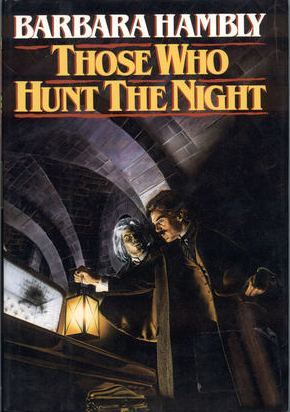
Those Who Hunt the Night

Those_who_hunt_the_nightThose Who Hunt the Night
By Barbara Hambly
1988

This is an excellent vampire book. There are a lot of fun vampire books, but this one is actually good. I love the characters, I love the way they interact, and I especially love the way that the author presents the vampire characters.

The book is set in Edwardian England and our main character is Oxford professor James Asher. He’s living a calm quite life, but has a rather gritty past as a secret agent for the British government. At the start of this book, the vampire Don Simon Ysidro approaches Asher, informs him that (1) vampires exist, (2) someone has been hunting the vampires of London, and (3) Asher is going to be Ysidro’s agent in tracking down the hunter or Ysidro is going to kill Asher’s wife Lydia. The plot progresses from there.

The problem with vampires (as it were) is that they eat people. Humans are their prey. There just can’t be any sort of natural alliances between predator and prey. Most vampire stories hand wave this away: the vampire just feels terrible about it, or refrains from following his natural urges, or some such. This book, though, directly confronts the fact that these vampires kill people; both ‘good’ and ‘bad’ vampires kill people.  The alliance between Asher and Ysidro is necessarily deeply coercive and fraught.

Very much related to the previous point, I like a certain amount of ruthlessness in my characters. I don’t want them to be mean or cruel, but I like characters who are smart and determined and accept personal responsibility for their actions and the repercussions of those actions. Asher, Ysidro, and Lydia are all like this. They have goals and they do what they need to do in order to achieve those goals. They know what risks they take with their actions and they are very careful in how and what they do.

Another wonderful thing about this book and these characters is that Lydia, Asher’s wife, is an excellent character in her own right and the marriage between her and Asher is equitable. They not only love each other but they also respect and support each other. They are honest and forthright with each other. They trust each other, not just to be faithful, but to be capable.

Anyway, the investigation that makes up the actual plot itself was good, but what makes this book shine are the characters and their interactions with each other. I definitely recommend it.

A Book About Design by Mark Gonyea

book about designA Book About Design: Complicated Doesn’t Make It Good
by Mark Gonyea
2005


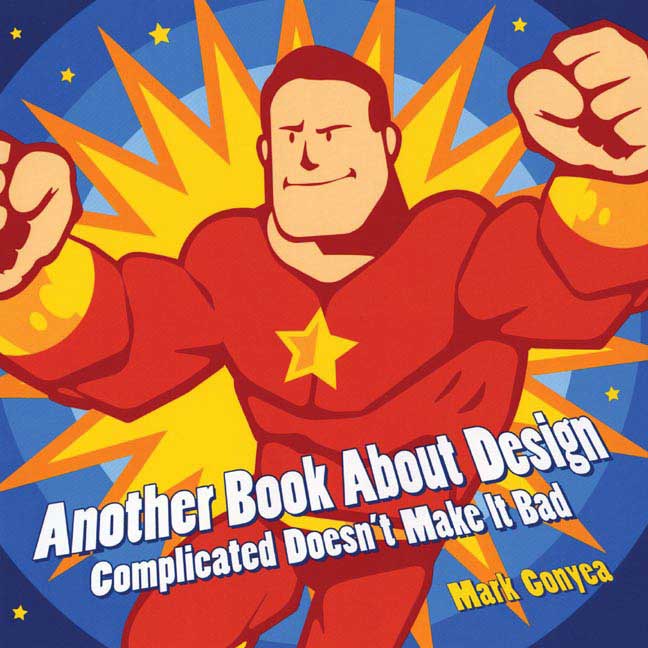
another book about designAnother Book About Design: Complicated Doesn’t Make It Bad
by Mark Gonyea
2007


These are awesome! I love them both.

In theory, these are picture books about design, written and illustrated for young children. As such, they are about as long and have about as much text as you might expect from a picture book intended for to be read either by or to very young beginning readers.

In practice, they are design books that show some of the foundational concepts of design, and are a great introduction for adults as well. There is very little text, but it is all exactly on point and the illustrations do an excellent job of actually illustrating the concepts presented.

Plus, there’s a certain humor in the presentation of the concepts that I really enjoyed. I thought the books were useful, but I was also grinning the whole time I read them. I highly recommend them.

Stephen Hawking

I was reading a Cracked article the other day: 14 Photographs That Shatter Your Image of Famous People, and #13 was “A Young, Cool Stephen Hawking, Standing With His Bride.”

hawking_wedding

It actually looks quite a bit like the new Q from the most recent James Bond movie, Skyfall.

Q_fromJamesBond

It made me want to watch a Stephen Hawking biopic starring Ben Whishaw. (There’s already a biopic starring Benedict Cumberbatch that is apparently pretty good, but after watching Cumberbatch in both BBC’s Sherlock and Star Trek Into Darkness, I have trouble seeing him as young Stephen Hawking.)

Instead, I checked out a couple of biographies from my library:

Stephen HawkingStephen Hawking: Revolutionary Physicist
By Melissa McDaniel
1994

I got this book from the library because it was short and looked like a quick overview. Something like an Encyclopedia article: less detailed, less accurate, but somewhat more reliable than Wikipedia. I wasn’t even entirely sure if this book was supposed to be in the adult section rather than the young reader section. But, no, it was properly catalogued. It’s just that it’s kind of a book for people who don’t like reading.  Although it was frequently vague and/or confusing about the order of events, it was a useful overview in preparation for a more detailed biography.

Stephen Hawking 2Stephen Hawking: An Unfettered Mind
By Kitty Ferguson
2012

Alas, this book was a severe disappointment. I managed to force my way all the way through it, but I suggest avoiding it. Only in retrospect did I notice that of the five reviews on the back of the book, only one of them was for the book “Stephen Hawking”—the other four for person Stephen Hawking.

Ferguson has a serious case of hero worship for Hawking and it hamstrings this book. I imagine that one doesn’t write a biography of someone without feeling strongly for or against that person, but most biographers attempt to showcase their subjects in all their humanity. Ferguson, on the other hand, does more to obscure Hawking’s existence as a human being than she does to reveal it, presenting Hawking as a godly figure, without failing or flaw.

Ferguson’s own presence is also extremely present, as she highlights her connection to Stephen Hawking, talking about how her children went to the same school as the Hawking children did, how Hawking himself reviewed the manuscript for her first biography of him, and how she met with him at his office! I can see the stars in her eyes and little hearts floating around her head. In keeping with an overblown crush, Ferguson uses the passive voice in a pattern that I believe intentionally denies Hawking culpability in anything that Ferguson didn’t approve of and attributed to him actions and decisions that Ferguson did approve of. Hawking is presented as having perfect intuition for physics such that he requires no proof and his word should be accepted as gospel. Questionable events are either denied, skimmed over, or not mentioned at all. She presents Hawking as a messiah figure—awesome, majestic, unknowable and yet all-knowing—and Ferguson as his faithful disciple—a devoted lesser being who is brought greatness by proximity.

In addition, Ferguson attempts to explain a few actual physics issues that Hawking had worked on over the years, but learning new physics concepts requires a certain amount of trust in the teacher. After, 1, obscuring and contradicting biographical events, 2, describing students as working on incomprehensible and mysterious equations, and, 3, explaining that the Pythagorean Theorem changes when used in space-time*, Ferguson lost her credibility with me for any of her physics explanations.

By the end, this book was a pure slog to get through. I definitely do not recommend it to anyone.

In comparison, I was increasingly impressed by the earlier book which was short, to the point, and presented a factual and nuanced view of the actual person, Stephen Hawking.

* The Pythagorean Theorem is a relationship between the sides of a right triangle and the hypotenuse. It is most often summarized as A2 + B2 = C2. It would take a thorough explanation  from someone I trusted to know what they were talking about before I was willing to believe that when time is a dimension, the equation suddenly becomes A2 = B2 + C2.

Hedy’s Folly by Richard Rhodes

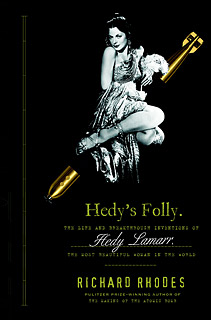
Hedys-Folly_211x320Hedy’s Folly: The life and breakthrough inventions of Hedy Lamarr the most beautiful woman in the world
by Richard Rhodes
2011

Hedy Lamarr is best known for being “the most beautiful woman in the world.” She was a film actress from 1930 through 1958, and once said, “Any girl can be glamorous. All you have to do is stand still and look stupid.”

Hedy was anything but stupid, although it’s amazing (and depressing) how many people discounted her intelligence. She broke into the film industry in Austria when she was 16, married at 19, escaped her controlling husband at 22, moved to Hollywood ahead of WWII, broke into the film industry in Hollywood to become a movie star, married (and divorced) five more times, raised three children, and died in January 2000. She also maintained a significant hobby of invention.

However, while I learned a great deal about Hedy Lamarr from reading this book, the title is somewhat misleading. It’s not so much the story of Hedy Lamarr as it is the story of one of her inventions: the frequency-hopping secret communication system.

Frequency-hopping is now known as spread-spectrum and is the technology that allows wireless communications to happen without interference or jamming. It’s one of the foundational technologies for cell phones, Bluetooth, military drones.  And it was developed by Hedy Lamarr and George Antheil, the composer of Ballet Mecanique, in Hollywood during WWII as a bit of civilian support of the war effort.

This book tells the story of how this technology came about, starting with background on these two famous artists. While it is an interesting perspective on the two characters, it is not a comprehensive biography of either, and it was a bit disingenuous of the author to title and illustrate the book as if it were a biography of Hedy Lamarr alone.

For what it is, though, the book is well written (with the only a few wrong notes, where the author inserts a few generic homilies), quite interesting, and not that long. I recommend it.

Comic Book Glut

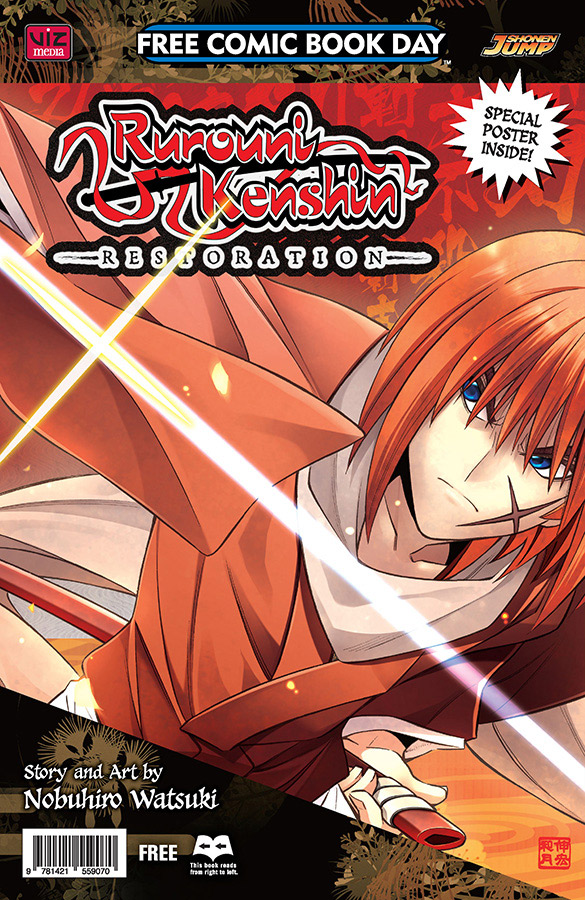
RurouniKenshinRurouni Kenshin: Restoration
By Nobuhiro Watsuki
2013

This was one of the free comic books that I picked up at Free Comic Book Day. It is a teaser for an AU (alternate universe) version of Rurouni Kenshin by the original author. It was fun, but mostly I enjoyed it because it reminded me how much I love this series. The actual teaser itself wasn’t all that great. It reintroduced the characters and held their first meeting at an arranged illegal fighting/gambling event, which just seemed like a bit of over-the-top, idiotic, self-indulgence.

While the reboot wasn’t so great, I definitely recommend the whole original series of Rurouni Kenshin, following Himura Kenshin, an amazing swordsman who, after a bloody past during the civil war, made an oath to never kill again but still manages to find and be found by a whole lot of trouble. The anime series based on the manga is also really good, and the recent live-action movie was excellent! (The animated movies, branded “Samurai X”, however, should be avoided.)

Anyway, seeing more of these characters written and drawn by the original author made me bounce around grinning with excitement. But the actual thing wasn’t all that good. It was a it of self-indulgent fluff, and while there’s nothing wrong with self-indulgent fluff, if you actually want to read a good AU take on this series, fandom (in the person of Vathara) has provided several better options, including the urban fantasy Blades of Blood and it’s sequel Witchy Woman, the Star Wars-crossover Shadows in Starlight, or the historical fantasy Gargoyles-crossover All I Need is a Miracle (which is a direct response to the awfulness of the animated movies).

So this series is awesome, and I highly recommend it, but this particular comic book is not the best example of it.


HawkeyeHawkeye: My Life as a Weapon
By Matt Fraction, David Aja, and Javier Pulido
2013

I’ve never really followed any of the Hawkeye comic books, but I enjoyed The Avengers movie a lot and the characters cameo in the Thor movie made me grin. So a new stand-alone comic book about Hawkeye at my library caught my eye. It was a whole lot of fun.

It’s a look at what Hawkeye, aka Clint Barton, is doing when he’s not out being a superhero Avenger… which is mostly getting into other types of trouble and going out being a secret agent for SHIELD. But it also involves hanging out with his neighbors at a rooftop barbeque/potluck.

Anna pointed out that the stories in this collection are all a bit grim, which I was going to argue with, except, okay, yes, they are a bit grim. But it left me happy. I liked it. Even though it does kind of imply that one of the main requirements of being a superhero is the ability to take a beating.


the-book-of-five-rings-a-graphic-novelThe Book of Five Rings
By Miyamoto Musashi, Sean Michael Wilson, Chie Kutsuwada, and William Scott Wilson
2012

I picked this book up because I have struggled to read The Book of Five Rings for a while now. It was highly recommended by a seventh-don black belt that I was training with. And yet, I found it super uninteresting and unhelpful. In some ways it read (to me) like The Art of War, except without the value. The graphic novel version makes up for some of that lack by being really well illustrated. And from everything I’ve read, Musashi himself was a fascinating character and I wouldn’t mind reading more about him, despite not caring for his writing.

Anyway, I actually highly recommend the graphic novel as a precursor to the plain unabridged text of The Book of Five Rings. It will give you a taste of the text while making subject more accessible. It’s readable in about an hour. Then, if you find the graphic novel appealing, maybe you should try reading the original text in its entirety.

Although, really, I mostly recommend Sun Tzu’s The Art of War instead.


Elektra_Lives_Again_00-1book_coverElektra Lives Again
By Frank Miller
2002

I read a couple of Daredevil series before and really enjoyed them (Frank Miller’s Daredevil: The Man Without Fear is excellent, as is David Mack’s Daredevil: Vision Quest although it largely focuses on a different character), but over all the quality of Daredevil comics varies wildly, so I also read a couple of Daredevil series before that I didn’t enjoy at all. Elektra is Daredevil (aka Matt Murdock)’s tragic girlfriend, a zombie-ninja-assassin who has her own spin-off series, but I had never read any of her comics that were any good at all… until now. This collection really brought her to life (haha!) as a character, despite her being a zombie ninja assassin. I liked the writing and the illustrations and just the whole feel for it. Well done.

Plus, there are two more Elektra graphic novels by Frank Miller for me to look forward to.

Book Clubs

Screen Shot 2013-05-05 at 2.12.53 PM

ButteryBooks.com

This is a website that provides ideas for book clubs, but with a strong focus on what the menus should be. Including the mixed drinks. It looks super good.

It also provides some interesting discussion questions.

I haven’t actually joined any book clubs, because I always thought that they would be like high school English class (ie, a combination of boring, pretentious, and frustrating.) This bit of prejudice (like most instances of prejudice) came from absolutely no evidence. This website provides a good counter-argument that a book club might be a whole lot of fun.

Stalking Authors, the Ilona Andrews edition

Magic_RisesPeriodically I like to drop by the websites of my favorite authors to see when their next books are coming out and if they have anything new and interesting up.

Lois McMaster Bujold doesn’t tend to update her website very much, alas. But she does actively support fanfiction, which I appreciate.

Patricia Briggs is pretty good with her website, although she’s gotten somewhat less active on it as her career has taken off.

Ilona Andrews is still very active on social media, including their own website, AND posts regular free stuff.

Robin McKinely has a decent website, although I’m generally somewhat disappointed in her. I love her early work (The Blue Sword, The Hero and the Crown, and Beauty) and feel like Sunshine was her absolute Best Book Ever! Ever since, it’s been just kind of down hill. But I still like to check up on her, periodically, to see if maybe there will be a sequel to Sunshine at some point, or if any of her more recent books look good.

Megan Whalen Turner has possibly the least active author’s website I’ve seen, and yet I still check back because, by god, if there’s going to be another book in series, I will start stalking bookstores and possibly publisher’s warehouses in the hopes of getting to it just that much sooner. (So far, no luck. I will just have to re-read the four that already exist.)

Anyway, this is all a long wind up to letting you guys know that Ilona Andrews has the first chapter of her next book up! This is book 6 is the Kate Daniels series, Magic Rises, due out on July 30, 2013. Yay! You can read the excerpt: HERE!!!

I love this series.

However… the chapter raises some concerns for me.

Thus: Here Be Spoilers (for both Book 5 and for Book 6).

Continue reading

Frost Burned by Patricia Briggs

Frost_burnedFrost Burned
by Patricia Briggs
2013

There are a lot of girl-vampire-werewolf series out there, with a wide range regarding quality. Frost Burned is the most recent book in one of those series, that started out excellent, backslide into generic, but has managed to recover.

This is the tenth* book set in this particular universe, the seventh that follows the character Mercy Thompson, and I was impressed. The first few books in this series (Moon Called, Blood Bound, and Iron Kissed) are the best ones, while some of the most recent ones (Bone Crossed and River Marked) have felt rather bland, like Briggs was forced to write them in order to fulfill a contract, without having any particular plan or goal with them. In Frost Burned, Briggs is back with energy and interest.

I’m guessing it’s due to the major happening that concluded her most recent book set in this universe, but following a different set of characters. The Alpha and Omega series only has three books so far (Cry Wolf, Hunting Ground, and Fair Game) and these keep on getting better. The end of Fair Game was so spectacular, in fact, it drew me back into reading the Mercy Thompson series, just so that I could see what happens next in this universe.

And, without giving any spoilers: there is definitely a lot of fall-out.

I’m very excited about Briggs revamping (hee: re-VAMPing!) this universe, and think it was probably pretty important that she started alternating which series she was writing, so she could approach the characters with excitement rather than getting bored with them. However, I’m not entirely sure how readable any of her books are, at this point, without going back and reading the earlier ones.

Frost Burned did a pretty good job of filling in the blanks for what happened before, but it was enough that I think I need to go back and read the earlier Mercy Thompson book that I skipped entirely (Silver Borne).

Although, if you want to jump into this universe without having read any of the previous books, I would start out with Fair Game, just because it was a good book, delightful characters, the climax/epilog is really spectacular, and it sets up a whole new situation that is going to continue percolating through any future books in this universe.

* Or eleventh, if you count a novella in an anthology. Or fourteen, if you count short stories in anthologies.

The Man Who Loved Only Numbers

the_man_who_loved_only_numbersThe Man Who Loved Only Numbers
by Paul Hoffman
1998

This is a wonderful book, but it also took me four tries over nearly a decade to get all the way through. It presents itself as a biography of the mathematician Paul Erdös (1913-1996). In reality, the book goes off on a lot of tangents, and there are a lot of natural breaks where it’s easy to set down. It talks about world history and about mathematics and is pretty obviously based on an oral history project. However many tangents it goes on, though, it does always return to Erdös.

Erdös, for those who don’t immediately recognize the name, is the zero point of Erdös numbers—where actors have degrees of Kevin Bacon, mathematicians have Erdös numbers, showing how close they are to having collaborated with Erdös.

Erdös is also one of the few mathematicians who made serious contributions to the field of mathematics after the age of 30, Mathematics generally being a young person’s field. Erdös remained a productive and innovative thinker until his death in his 80s. He was also a very peculiar man, thus a great focus for a biography.

He also seems like a good example of how there are people who are delightful to hear about and make the world a more wonderful place but I’m still glad I don’t have to deal with them personally. (Having read Surely You’re Joking, Mr. Feynman! several times and enjoyed it immensely, the physicist Richard Feynman is likely another of these individuals.) Among other things, Erdös spent most of his life couch surfing at his colleagues’ houses, demanding that they talk mathematics 18 hours a day. He made it work, though, and there was always someplace for him to stay.

Anyway, the problem with the book is that while it is excellent text about a fascinating character, it is also really dense, and not particularly well organized. In addition to Erdös himself, the book describes some of the more accessible and yet unusual mathematical proofs, the lives of various other mathematicians, and a good amount of political history–both that Erdös dealt with and that other mathematicians, both contemporary and historical, dealt with. The history and the mathematics are all related to Erdös’ life and experience, but it’s still a bit like reading multiple books, each of which requires a fair bit of concentration to properly appreciate. The book clearly shows its basis in oral history, and Hoffman doesn’t manage to give it any strong, overarching structure.

It is still well worth reading, but it does take effort.