Grave Expectations

By Alice Bell

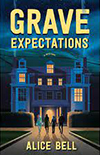
I guess I just really love the very specific premise of a real psychic, who finds it easier to pretend to be a fake medium, has to solve a murder mystery in an old English country estate, because I loved A House of Ghosts and I loved this one! Despite the obvious similarities above, Grave Expectations has a much lighter, quirkier tone, at least partially due to the modern setting.

30-something Claire has been ‘haunted’ by her best friend ever since Sophie was mysteriously murdered when they were both in high school. This has clearly been a mixed blessing for both Claire and Sophie, but they have settled into a relatively routine life at the novel’s start. Claire makes a basic living as a medium, using Sophie mostly just to eavesdrop and dig through personal items for information.

Claire and Sophie are very reluctantly drawn into a murder investigation by a recent ghost, and their apathy is only matched by their ineptness, which makes for some really excellent comedy. Oddball members of the deceased’s family, both living and dead, join in the investigation, adding to the general hilarity. Halfway through, I was already hoping this is the start of a series.

I was snorting and giggling along, and was completely blindsided (in a good way) by the surprising pathos of the crisis point, when the author gives us a peek into the much more realistic trauma of two women struggling to come to terms with one of their unnatural deaths. I’m only a little ashamed to admit that I teared up. …And then we were back to slapstick reveal and denouement, poking fun at many of the traditional murder mystery tropes! I would have expected it to have felt uneven; it was jarring, but in a really skilled way that used the precarious balance of comedy and drama to strengthen the impact of each.

A Market of Dreams and Destiny

By Trip Galey

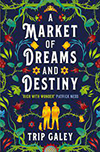
This novel is set in a fantasy version of Victorian England, where one of our protagonists is an indentured servant in a mundane workhouse and the other is indentured in the underground fae market. The two meet by coincidence (or grand design?) and in addition to an instant attraction, seem to also possess skills and access to help the other toward freedom.

Author Galey does an incredibly good job of weaving together the dual goals that sometimes align and sometimes not, as well an immersive world balancing realistic and fantasy elements. He uses the same mirroring to reflect on the many different ways that the poor and working class are exploited by the wealthy, and how whole systems of society are built on exploitation.

The strong plot element and theme of workers’ rights and community mutual aid felt both contemporaneously Dickensian and very timely for 2023 (and hopefully 2024). It also created high stakes for the various plots and schemes that kept me on the edge of my seat for most of the book. At times I clung to the fact that I’d seen it recommended on a romance forum in hopes for a happy ending. (Minor spoiler: though serious sacrifices are made, the final resolution falls into place immensely satisfyingly.)

Christmas Stories

As I get older, I find I have to work a little harder to generate a holiday spirit among all the daily life stressors and nonsense, so I like to gear up with some seasonal reads:

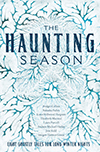
The Haunting Season: Eight Ghostly Tales for Long Winter Nights

I bought this because it includes a Natasha Pulley story about Keita and Thaniel from her Watchmaker of Filigree Street series, which I adore. The general reader reviews are mixed, with many readers saying that Pulley’s story was the weakest since it doesn’t stand alone if you aren’t familiar with the characters. Being well familiar with the characters, though, my experience was the opposite: I very much enjoyed Pulley’s story, always happy to get more of Keita and Thaniel, but was disappointed in the other stories.

Perhaps it was because I was already familiar with Pulley’s characters, but they were the only ones that I actually liked. Most of the other stories featured either selfish or delusional characters, I suppose to ‘justify’ the hauntings one way or another? The plots also seemed overly complicated and obtuse, so each story ended just as I felt like I was starting to get a feel for it.

Sentenced to Christmas

By Marshall Thornton

Marshall Thornton writes the most ridiculous rom-com and cozy mystery plots featuring a cast of hilarious dirtbag characters, and I get a real kick out of his books. As befits the title, the plot of this book is absolutely ridiculous: arrested for burning down the patriotic Christmas tree in front of a conservative talk radio station, our protagonist Gage is sentenced by a crackpot judge to spend Christmas with the prosecuting assistant district attorney (his own defense attorney being Jewish) in order to “learn the true meaning of Christmas.”

The thing about Thornton, though, is that his dirtbag characters then often react with more realistic cranky befuddlement, and it is consistently laugh-out-loud funny. Only one thing stops me from wholeheartedly recommending this: Gage’s friend and assistant is introduced as non-binary, and that being a point of contention with their family, especially around the holidays. Unfortunately, Thornton presumably forgot, and uses she/her pronouns for them for a chunk of the middle of the book. I am confident that it is an unintentional writing error, and amazon reviews mention that some editorial errors have been fixed, so hopefully this is no longer a caveat.

The Housekeepers

By Alex Hay

I only realized after starting this novel that heist stories usually dovetail into two very disparate directions, either clever and glossy (à la Ocean’s Eleven or Leverage) or gritty and desperate (Six of Crows, for one). I enjoy both in general, but currently have more of the emotional capacity for the first, and The Housekeepers decidedly falls into the second.

The recently dismissed housekeeper from a wealthy household gathers together a team to strip the house of all its valuables. The team is all women, most of whom have served in domestic positions, with all the poverty and humiliation that entails. Each woman has her own private motivations and ambitions, and the cooperation of the team always feels like a very fragile agreement that could break at any time.

None of them are particularly likeable, though I sympathized with all of their positions and the actions they felt forced into. It reminded me a little of Parasite, where the extreme inequality is a prison for everyone involved, whether on the luxurious side or not. I could see a solution where all the characters find true purpose and satisfaction, but given the world they lived in, it was impossible, and instead I read in dread of who would get hurt the worst.

And that world, the society they live in, created a more finely pointed, subtle dread than just the suspense of the heist itself. These women who had once been domestic servants are now in much more precarious financial positions, but also have more personal freedom on their own. When they go back into service to set up the operation, the grind of the drudgery becomes its own obstacle, as manual labor and exhaustion take their toll.

The whole thing became a bit much for me at times, honestly—at times I couldn’t put the book down, but other times I had to take a break after a few pages—and the book carries it right to the end. There was no satisfying wheeling out of the perfect plan, just nail biting, and I was hanging onto the blurb raving about “a sensational triumph and the ultimate takedown of those in power” to ensure a happy ending.

Recipe for Disaster: 40 Superstar Stories of Sustenance and Survival

Collected by Alison Riley

I thought this looked like an intriguing gift for any of my cooking-minded friends, so checked it out of the library to preview it (after a number of astonishing failures, I’m trying to do better about reading books before giving them as gifts). I figured I could flip through it at the very least, but I was shocked how quickly I was thoroughly immersed!

First, it is a beautiful book, with full-page photos to illustrate each story/recipe, and would make an excellent gift I think. This also makes it go by fast: I had casually opened the book just to flip through it, and two hours later, I was halfway through and already eager for the next story. Secondly, it covers so many different foods and so many different situations, including some very timely ones of isolation and illness during the pandemic.

It opens with Samantha Irby’s recipe for Rejection Chicken, a perfect author of brilliant, very human (i.e. often humiliating) stories to set the tone for an anthology about comfort foods in tough times. All the stories were so interesting and varied, with only one dud in my opinion. The final story, too, closed the book with such a humorous disaster that I gasped.

Appalachian Elegy

By bell hooks

First, let me apologize for the spam post(s?) that have appeared on this blog (I was honestly mortified). I’m not sure how it happened; I’ve been working with WordPress to bolster the security, but I’m not fully confident it won’t happen again. I guess the only assurance I can offer is that it was probably fairly obvious that we are not trying to advertise Romanian casinos to you?

But also, I’ve been in a bad case of reader’s block lately. I’ve started three different books, and stopped less than halfway through each one, losing interest just to doomscroll twitter, tumblr, and reddit instead. I wasn’t sleeping all that well either, and it felt like part of the same thing: just a little too nervy to really relax.

In desperation to actually finish anything, I picked up the copy of bell hook’s Appalachian Elegy that a friend had given me for Christmas, hopefully last year though I can’t swear to it. I don’t really understand the vast majority of poetry but figured it might work as a palette cleanser of sorts for my brain. It is a very short volume: only 66 one-page poems total, but I took my time with it.

She covers the natural beauty of the Appalachians, and ties it into the people there, both past and present, and the opportunities and oppressions that those people have faced. It is a lot to cover, and yet the poems feel airy and lyrical at the same time. I only read 5 or 6 poems each night, stopping when I felt myself either zoning out or trying to rush through the words, and slowly felt like I was starting to unwind. I still struggled with feeling like I was missing the deeper meaning, and I very likely am, but just the words and rhythms became enough for me. I am still struggling to concentrate on anything longer, but this has certainly helped and I hope to remember to turn to poetry in the future as well.

The Appeal

By Janice Hallett

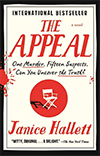
Ooh, this book is so good, I started recommending it when I was only halfway through — and I was already halfway through after staying up far too late on the first day of reading. Told entirely through emails, texts, and memos, I never thought I would audibly gasp (and giggle) so many times at the contents of an email!

The communication is primarily among a small community theater group, who become increasingly unhinged under the stress of trying to raise money for an experimental cancer cure for the director’s grandchild. Nothing is quite as it seems, and my speculations and allegiances shifted with each new message. There’s not much more to say without getting into spoilers, and so much of the fun of the book is watching it all unfold, so I’ll keep this short.

One reassurance: though the tagline says “One Murder. Fifteen Suspects. Can You Uncover the Truth?” it does not in fact make you, the reader, solve the mystery, which had been a slight concern of  mine — the book ties up all loose ends very nicely (that said, Kinsey and I had slightly different interpretations of the final ending).

Nonfiction Graphic Novels

For several months this summer, my local library ran a reading rewards program for both children and adults, and I should definitely be too old for this, but I was thrilled to be able to read a book and get a little treat for filling out a quick review. After the first few times, I tried to maximize my treats by checking out a bunch of graphic novels, and then didn’t get to them until after the program ended. Even though I didn’t get a chocolate for either of these, I still recommend them quite a bit (and also strongly recommend public libraries)!

The Magical Life of Long Tack Sam

By Ann Marie Fleming

This book, called an “illustrated memoir” caught my eye because it is a really interesting mix of comics panels, photographs, and printed copy, all from the author’s research into her great grandfather. Long Tack Sam was the most famous Chinese acrobat and magician in the US vaudeville circuit in the early 1900s, but he’s basically unheard of today. Fleming pieces together what she can from archival records around the world, and the story she puts together is fascinating.

What is almost as interesting, though, is what she isn’t able to find: Long Tack Sam had told at least three distinct “origin” stories of his upbringing and introduction to acrobatics, all of them about equally likely or unlikely, and with no evidence anymore to substantiate any of them.

In addition to being the story of her great grandfather, it is also the story of Fleming’s search for her ancestry, and also a look at what is preserved and what is lost in history and documents. I occasionally wished the book had explored that last more deeply, but Fleming is already packing a lot into a relatively short book.

The Great American Dust Bowl

By Don Brown

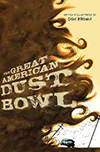
My brother was telling me about the Saharan dust hitting Texas over the summer, and I asked whether that had contributed to the 1930s Dust Bowl. Upon being assured it wasn’t, I realized that I was woefully ignorant of any real knowledge about it and jumped on this very short graphic novel when I saw it at the library. Only 77 pages, and many of them sprawling full-page illustrations, this book is still chock full of facts that seemed to me to give a concise but comprehensive overview of the causes and effects.

The illustrations really captured the horror and scope of it better than the verbal descriptions or numbers. Whole pages of deep brown watercolor splashes enveloping tiny cars in the bottom corner, tall vertical panels with the dust hovering high above the minuscule Washington monument, and 14 panels of storm after storm really give you a sense of how badly the farmers of the plains were pummeled.

Don Brown stays very factual and almost entirely limited to the historical events of the 30s, but still ends the comic ambivalently, that such crises (or worse) could definitely be on the horizon today.

The Fervor

By Alma Katsu

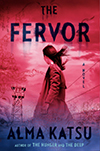
I thought the premise of this horror novel was so innovative—weaving traditional Japanese mythos into the historical blight of the US Japanese internment camps—until Rebecca told me it had been done before and by the TV show Teen Wolf, no less. Regardless, this novel does an excellent job with both the mundane and supernatural horrors. In fact, author Alma Katsu covers all her horror bases with spiders, ghosts, contagious illness, war, and my personal bugaboo, man as the true monster.

Some of the horror tropes are more effective than others, but for me, the most gripping was the different perspectives from the disparate and disconnected people all facing the same phenomena, with varying levels of knowledge and culpability. The multiple perspectives allow for personal insights into a fairly sprawling narrative. Our central and most sympathetic narrators are a Japanese-American mother and daughter who are interned in a camp in Idaho. They are making the best of the bad situation until a mysterious illness breaks out in the camps, leading to increased aggression and the arrival of mysterious “scientists.”

This illness ramps up the already paranoid public, and we follow another character lured into the mob mentality, as well as an intrepid reporter trying to get ahead of the government cover-ups. The Fervor was published in 2022, and the relevance to the varied reactions to the covid pandemic is clear. Katsu does a particularly good job, I thought, of maintaining the setting of the 1940s while also teasing out timeless human characteristics.

Miss Aldridge Regrets

By Louise Hare

I have very mixed feelings about this book. The central mystery is fiendishly clever, slowly revealed with each chapter and interspersed with short narratives from the unnamed murderer, which tease the identity and motive. Having witnessed the murder by poison of her boss in a London nightclub, Miss Lena Aldridge jumps on the offer of a role in a Broadway musical, accompanied by a first class ticket on an ocean liner to New York. She is reluctantly pushed into companionship with a wealthy family shortly before the patriarch dies by poison, and (minor spoiler) she seems perfectly positioned to take the fall for it.

For much of the book, I was on the edge of my seat, since it seemed impossible that Lena would be able to extricate herself from such a clever trap, especially since, as the murderer describes her on the first page, “She may have possessed both common sense and ambition, but from what I’d learned about her, she rarely used the two together.”

As the book went on, I wasn’t that confident that Lena possessed much common sense, actually. She is sympathetic but not particularly likeable. She sort of drifts through life, drinking far too much, thinking of herself when she should be thinking of others, and thinking of others when she should be most concerned with herself. She is caught completely off guard by the end reveal, and unfortunately so was I, since it was a solution that I’d already dismissed as being both too obvious and nonsensical.

Basically, the end fell so flat that it soured the rest of the book for me. Because I’d been previously so engrossed in the events, the finale was even more of a disappointment. There were also themes of racism, colorism, sexism, and classism woven throughout, but they became so heavy handed in the ending that they reminded me of, not even freshman 101 classes, but the dorm discussions in afterhours that we thought were so deep. Perhaps I’m just getting jaded as I get older.