The King in Yellow

By Robert W. Chambers

Thomas and I both really enjoyed “True Detective” on HBO this spring, though Thomas’ philosophy background gave him more insight than I had. Very mild spoiler for the television show: I recently read on io9, a site I very much recommend for all your geek culture news, a very interesting argument that the story was in fact supernatural, the author’s primary proof being the many illusions to “The King in Yellow.”

The King in Yellow is an early collection of horror/fantasy short stories, published in 1895. The common element through the stories is the existence of a play titled “The King in Yellow,” set in Carcosa, which will drive mad anyone who reads past the first act. The stories are mostly about various readers, and while there are occasional excerpts, the play itself is never written out in a comprehensive whole.

The book is available for free on Kindle, and I’ve been reading it on my commute. The writing is surprisingly fresh, not feeling dated much at all, and the author does a particularly good job with an unreliable narrator, I thought.

Some of the stories are certainly grotesque, but also fairly tame by today’s standards, and I found the general tone of quiet gloom to be soothing. In fact, this gets a little spoilery, so I’m putting it after the cut: Continue reading

Leftover Life to Kill

By Caitlin Thomas

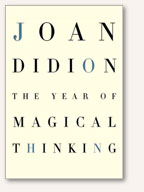
Book CoverJoan Didion mentioned this book in The Year of Magical Thinking, saying that when she read it in her 20s, she was exasperated with what she felt was Caitlin, Dylan Thomas’ widow, wallowing in self-pity, but that she could relate better now.

I was immediately struck by the name, because at times it describes my own feelings perfectly: how on earth am I going to get through the potential decades I have left when all of my plans for the future involved Thomas?

Unfortunately, Caitlin Thomas’ own strategy of alcohol, drugs, and shallow affairs while living off others’ charity in a small Italian villa is not the most helpful, and I have to admit to agreeing with 20-something Didion, that Caitlin’s raging against the world gets to be a bit much, even while I often feel similar myself. I would say that the entire book reflects my state of mind at the very worst 10% of the time, an emotional state of impotent rage and self-pity and self-destructiveness that I spend the rest of the time fighting against.

The most important piece of awareness this book did bring to me, though, was gratitude for the job that I often have to drag myself to with a combination of internal threats and bribery. I was occasionally resentful of Didion’s freedom from the need to work and juggle finances during her own recovery, but Caitlin (I’m avoiding calling her Thomas for obvious reasons) describes the emptiness of her days and her need for any sort of task to fill them (though she also refuses to find one), and I recognized that my work has kept me on a more structured path than I would have been able to create for myself during this time, and I am (grudgingly) grateful for that.

So, while the book was eventually worth while reading if only for that, I wouldn’t recommend it to anyone not particularly interested in the subject matter for one reason or another. Caitlin most often comes across as the stereotype that shows up in Austen novels and other period pieces of that time, always complaining of the ill treatment she gets from everyone around her, from no possible cause, since she herself is nothing but kindness, and would be more than happy to be of assistance to others if only she were in a better condition to do so.

I also had some doubts that I would even be able to finish the book, since Caitlin has an incredibly difficult writing style, which uses punctuation marks in very strange ways that actively block comprehension. Semi-colons are often used where comas should be, and comas are just sort of haphazardly thrown in wherever, along with the random colon and hyphen, as well. I eventually decided that I wasn’t going to get so hung up on reading comprehension, and instead was simply going to charge through the book at 50 pages a day and I would simply settle for taking in whatever I was able to at that pace, and that ended up working fairly well.

—Anna

The Year of Magical Thinking

By Joan Didion

Book CoverOn Wednesday, March 19, I sat in the living room and wrote my last post on this site, while Thomas, my partner for almost eight years, lay down for an afternoon nap that he wouldn’t wake up from. Thomas had been quite ill for several months, and I thought I had to some degree prepared myself for any possible outcome, but the immediate implosion of one’s life is literally unimaginable. There is no way to prepare for this, and no way to understand it without going through it. I don’t have the words for what the past couple of months have been like; everything seems insufficient.

A couple of weeks later I ran across a copy of Joan Didion’s The Year of Magical Thinking. I went back and forth on whether to read it; I wasn’t sure I was ready, but a phrase on inside blurb resonated with me: “This powerful book is Didion’s attempt to make sense of the ‘weeks and then months that cut loose any fixed idea I ever had about death, about illness…about the shallowness of sanity, about life itself.’” I felt so cut loose myself that even reading those words felt like a stabilizing force.

The Year of Magical Thinking describes the year in which Didion’s adult daughter almost died of a sudden blood infection and her husband did die of heart failure. She describes her various emotional states, along with research she did around the psychology of grief. I could read this book when I rejected more direct help books because I could experience her story at a little bit of a distance, even while I felt “yes, this is exactly how it is” at the same time.

It wasn’t always the same, of course; it couldn’t be since grief is so personal. I also had to remind myself that Didion writes from a world of great privilege: both she and her husband are renowned authors, very comfortably off in both finances and independence. They had top-quality medical care, and Didion was able to spend all her time and resources with her slowly recovering daughter and her own slow emotional recovery. Several times I had to decide not to get resentful of what she had, but instead to take advantage of what she was giving—a thoughtfully written account that kept me from feeling quite so isolated.

Several people expressed concern about reading this book right now, since it is not an uplifting or inspirational story. However, the reality is so much worse that her words were soothing and comforting. She doesn’t have any answers because there aren’t any. Didion simply gave me a way to define, and then begin to accept, something that still often seems indefinable and unacceptable in a very literal sense.

—Anna

Marvel Comic Books

My comic book binge continues!

The Uncanny X-Men: Days of Future Past

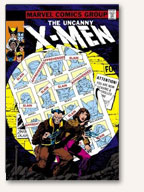
Book CoverMy partner and I are big fans of superhero movies, and really enjoyed the most recent X-Men reboot. When the previews for this summer’s sequel came out, though, I couldn’t make head or tails of the storyline, and Tom recommended that I read the comic books that it is based on. The storyline was originally published over two issues of The Uncanny X-Men in 1981 and released as a trade paperback in 2011.

I have repeatedly mentioned that artwork is very important to me, and I found the 80s aesthetic a little trying, but the dystopian future and desperate intervention from the past plotline was quite engaging. (Also, the dystopian future is set in 2013, and I wonder if they originally aimed for a release date last year.) Ultimately, though, I don’t know that reading the book helped with my initial issue, since I believe the movie is taking a lot of freedoms from the source material. The primary one being that now Wolverine is the pivotal character instead of Kitty Pryde. The comic book fan in me is attempting to argue that this change is just due to Wolverine being very popular, but the feminist in me isn’t totally buying it (not least because both sides of me suspect that Wolverine is starting to be played out).

The All-New X-Men: Yesterday’s X-Men

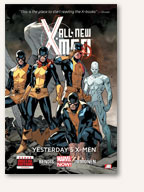
Book CoverReleased just this year, the “Yesterday’s X-Men” trade paperback is pretty much the mirror image of “Days of Future Past.” My X-Men reading heyday was many years ago, so a lot has happened since I stopped checking in monthly. Comic books are similar to soap operas in a lot of ways: a set roster of characters rotates through years of marriages, breakups, feuds, and deaths. This book actually builds on all of that, and references the past craziness in very nice and often humorous ways, without overwhelming the reader with past references.

The basic premise is that so much craziness has happened and the X-Men have gotten so fractured that Beast decides that he needs to bring the teenage X-Men from the 60s forward in time so that the current X-Men can face their past selves and recognize where they have gone wrong. This does not work ideally, of course, and the play between the two sets of X-Men is very interesting and entertaining. (And the illustration is some of the best I’ve seen recently in the big superhero comics—everyone is of course in peak physical condition but no one is ridiculously stacked in either musculature or T&A.)

Hawkeye: Little Hits

Book CoverRebecca previously reviewed Hawkeye, Vol. 1: My Life as a Weapon, and I wasn’t quite sure what to think about it. It is so different from any other superhero comic I’ve read: Clint Barton (aka Hawkeye) is just trying to get by in life when he isn’t with the Avengers, and is only somewhat successful at it. I was initially taken aback by the bleak and almost noir-ish world, but I think it is quickly becoming a favorite. Life is not easy for Clint Barton, partly due to circumstance and partly due to personal poor decision-making, but he perseveres, and I enjoy reading about it. (Oh, and not to harp too much on disappointing girl-power comics, but Hawkeye’s female protégé is so casually tough and independent that there’s no need to make a big deal out of it in the writing.)

“Little Hits” is the second volume, released just last year, and does some very interesting things with the comic book medium, including an issue entirely from the point of view of Clint’s dog, using a series of pictograms to communicate thoughts. The back of the book also includes several pages from the artist’s sketchbook, along with a description of his very minimalist approach toward color and it was fascinating, as well.

—Anna

Disappointing Girl-Power Graphic Novels

I’ve recently decided that it is my duty to introduce all my friends’ kids to comic books, so I’ve been on the lookout for good quality introductory graphic novels for children, especially for young girls, which can be a bit tricky. These two were strong possibilities but were ultimately disappointing, to varying degrees.

Princeless: Save Yourself

By Jeremy Whitley

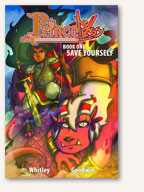
Book CoverI’ve had my eye on  Princeless for a while. The first collected publication is selling for upwards of $200, which seemed very promising in terms of popularity, so I was pleased when a reissue trade paperback was released. I was feeling confident enough in it to just buy it outright, but my extended library system had a copy, so I held off. And now I don’t know.

Princeless has a lot going for it. It starts with the common trope of a princess locked in a tower guarded by a dragon, waiting for a prince to come rescue her. After several failed rescue attempts by clueless princes, Princess Adrienne gets bored of waiting and convinces the dragon to fly her away from the tower and rescue her sisters, also locked away in towers. In addition to being admirably spunky and willful, Adrienne is also a princess of color, which is even rarer.

It is a lot of fun, definitely turning a lot of the fairy tale tropes on their heads, and the lead character gets some great lines. It just seemed a little ham-handed with all the girl power, in a winky, self-congratulatory way. The book was so focused on emphasizing girl power that it lacked more nuanced characters, motivations, and plot developments. In the end I wanted it to show, not tell: if you have a strong female protagonist doing heroic deeds, all the side jokes seem to junk it up. If you believe in what you are doing, just do it well, and don’t hedge your bets with irony.

However, when I was browsing online for the cover photo, I found the comic’s official tumblr page, and it is so dedicated to addressing sexism and racism that I started to feel bad. This is a comic for young readers, so it shouldn’t be surprising that I find the plot and characters a little simplistic, and even somewhat clunky girl power is way better than none. I think I’ll keep this in consideration as a future gift.

Spera

By Josh Tierney

Book CoverAfter having browsed multiple female-centric comics, Amazon recommended Spera to me, among others. It looked similarly interesting, so I checked it out from the library, and once again, it started out strong. The probably too-brief summary: an orphaned princess escapes her besieged kingdom with the help of one of her advisors who can shape-change into large fire dog and the daughter of the queen leading the siege. The three of them go on a series of adventures with a rotating roster of illustrators.

The Pros:

  • The first issue had my favorite illustrations, a very fun, retro style that reminded me of children’s books from the 60s and 70s.
  • Both princesses are immediately likable and admirable, and clearly distinctive from each other, as well.
  • The fire dog is just as precious as you imagine him to be, and pretty much all the illustrators did an excellent job with him (everyone loves a fire dog). Many of the illustrators, too, included some lovely gestural work that was especially apparent in the dog’s movements.
  • The minor characters met along the adventures are reliably interesting in their own right, even those that only get a couple squares (e.g. the young boy standing guard outside one of the towns is completely daunted by the task in general and the princesses in particular in just a few expressive illustrations).

The Cons:

  • My primary complaint is a bit difficult to put into words. I love the subversion of tropes, but there are some good versus evil characteristics that it does no benefit to transpose, in my opinion. Good characters do not own swords that absorb the souls of their opponents, for instance. At least, not without some serious soul searching of their own.
  • The issues collected in this volume follow a storyline of sorts, but are not always cohesive. Part of this was due to the different artwork, but that makes it even more important for the writing to tie everything together, and it didn’t always pick up the slack.
  • Some of the artwork was really stunningly ugly, and that is one of my particular biases when it comes to comic books. I primarily read them for the art, and bad art ruins the entire thing for me.

So, my search for good comics for young readers continues, and I’m sure I will enjoy it! I have several more on my roster that I will review as I get a chance to read them.

—Anna

Queen and Country

By Greg Rucka

Book CoverQueen and Country has been on my radar for several years, but, honestly, comic books can get expensive really fast, so I like to basically read at least one entire issue before committing to actually buying anything. I’ve been waiting for a version to show up at my library, and was quite pleased when I ran across the collected first volume of the definitive edition! I was then additionally pleased that I hadn’t actually purchased it.

A kick-ass British female spy illustrated by Tim Sale, my very favorite artist, should have been a no-brainer, but for a couple unfortunate bait-and-switches. Tim Sale only draws the covers of each issue, a practice that makes me almost apoplectic. All adages aside, you really do need to be able to judge a book, at least somewhat, by the cover, especially in a primarily visual media like comic books. Hiring a better artist to draw the cover than the inside is truly the definition of bait-and-switch (although I am grudgingly pleased that Tim Sale has earned the status he deserves, I suppose).

The other unpleasant surprise was in the character of Tara Chase, kick-ass British female spy, herself. I don’t know why I let myself be suckered into thinking this was going to be different from every other comic book in existence, so I guess I am sort of to blame, as well, but Tara Chase spends an inordinate amount of time lounging around in her underwear. The issues rotate artists so the first few were just mildly disappointing, but I was completely over it by the time her outfit for a siege operation (black bra under fishnet tank top) highlighted her approximately 12” waist and 40” chest (while her male compatriot is in full combat gear, of course). Same old, same old, I guess, but I was hoping for better.

—Anna

Coal to Diamonds

By Beth Ditto with Michelle Tea

Book CoverSigh. One would think that I would eventually learn my lesson, and not go off completely half-cocked, but I never do learn and I actually do this far more often than one would think.

So, when I first saw the Dior perfume commercial with Charlize Theron juxtaposed with Marlene Dietrich, Grace Kelly, and Marilyn Monroe, I was promptly hugely offended because I vaguely remembered that Theron had once said something derogatory about Monroe’s size years ago, and didn’t think that she should then profit by the juxtaposition. But, of course, once I actually double-checked before writing this review (at the very least, I have learned to do that, on occasion), it was actually Elizabeth Hurley who said that (in my defense, I had forgotten that Elizabeth Hurley was even a thing).

Anyway, in this one case, my own misinformation actually worked in my favor, because it made me pay more attention to the commercial, which made me realize how very catchy the song is. I downloaded* the song and added it to my current mix of music, and then didn’t think much more about it.

A couple months later, I read Buzzfeed’s Best YA Books of 2013, and decided that I wanted to read Mermaid in Chelsea Creek by Michelle Tea. My library system doesn’t have that book (I requested that they buy it), but they did have a memoir she helped Ditto write. I wasn’t sold right away because I don’t really like memoirs to begin with, and Ditto seems awfully young to have one anyway, but my curiosity got the best of me.

It is quite short, only about 150 pages, which makes sense given that Ditto is only now in her early 30s. But, what I was kind of banking on, her life has been chock full of crazy. Her childhood in rural Arkansas is so retrograde that I have trouble wrapping my mind around it. It was a truly terrible place to grow up and truly terrible things happened to her, but Ditto (and Tea) has such an incorrigibly upbeat voice that the story never gets bogged down in the grimness.

So, that was pretty much the first half, and I was quite pleased with both Ditto and Tea as authors, feeling that this was a surprisingly lighthearted memoir about an upbringing of poverty, neglect and abuse. However, the second half surprised me by being quite educational. I like listening to music a lot, but I don’t really know anything about it, and I don’t really like punk music at all. I have always been a little in awe of the punk movement, though: I would have loved to be a punk sort of person, but I’m really not, and I don’t even really understand the movement. Ditto does understand it, however, or at the very least, has her own strong interpretation of what punk means. She does an excellent job of describing what drew her to the late-90s punk scene coming out of Washington in the aftermath of the grunge movement.

I was fascinated and also a little embarrassed at my ignorance. Ditto and the band Gossip had a fairly meteoric rise for an indie punk group, and I only hear about them from a television commercial. One doesn’t get much less punk than that, I think. They even toured with Sleater-Kinney, which I had heard of, but only through an interview with Carrie Brownstein about Portlandia.

The vast majority of the short book takes place before Ditto’s big success, with the last few pages zipping through her gold, and then platinum, records, her television appearances, and her clothing line. The pacing seems to reflect her own experience of everything suddenly coming together at once, but after reading so much about the titular “coal,” I would have liked to spend some more time on the “diamonds.”

—Anna

* Downloaded legally, though I also didn’t pay anything. Rebecca introduced me to Freegal Music, a music downloading service through a network of libraries. They have a kind of random selection of music, but someone there is a apparently a big Gossip fan.

Between Shades of Gray

By Ruta Sepetys

Book CoverI enjoyed Out of the Easy so much that I quickly checked out Sepetys’ first novel, Between Shades of Gray. By a horrible coincidence, it was actually released on the very same day as Fifty Shades of Grey, and so a wonderful and very worthwhile read got buried in the ensuing mania. They couldn’t be more different, either. Seriously.

Between Shades of Gray is a fictional but historically-based story of a Lithuanian family arrested by the Russian police under Stalin’s occupation of the Baltic countries and deported to work camps in the Arctic. Russia’s treatment of these political prisoners (artists and academics charged with “anti-Soviet” activity, among others) was only marginally better than the German’s treatment of theirs, and ultimately resulted in the death of about a third of the populations of Lithuania, Latvia, and Estonia, as well as the disappearance of the countries themselves for decades.

The novel is narrated by Lina, a fifteen-year-old girl, who is arrested, with her mother and younger brother, on the first page of the book. For the rest of the book, and for over a year, they are driven across the entire Asian continent to a work camp in the North Pole. It is a very personal look through the eyes of a single girl, and is both heart-breaking and inspiring all at once, and impossible to put down. Lina and her story feel very real, which is a testament to the amount of research Sepetys put into it.

Sepetys dedicates the book to her father, a Lithuanian refugee who escaped the gulags with his family as a child, but left many family members behind to be imprisoned and deported. She traveled to Lithuania to interview family members and many other survivors and composites their stories in this novel. In the afterward, she writes that she wanted to bring awareness to the horrors that got overshadowed by even worse atrocities committed in World War II, and it just kills me that this book promptly got overshadowed by escapist erotica. (Although, actually, the author herself kind of appreciates the confusion because it is introducing new, initially confused readers to the issues of the Baltic genocides.)

On a brief personal note, this week has been a bit trying. We got 7 inches of snow, and I had to shovel my driveway three different days, and load and unload firewood. I hated every minute of it, and then felt especially spoiled since this was exactly the kind of “lighter” work given to the children in the work camps for days in sub-zero conditions on food rations of 3 grams of stale bread a day.

—Anna

Nonfiction Graphic Novels: Serial Killers

Uh, these are not really in my normal reading sphere. I don’t like true crime stories—they scare me like no supernatural stories do. However, I’d run across raving reviews of both of these, and I guess my curiosity just got the best of me. I agree that the idea of graphic novels about real serial killers sounds just awful since graphic novels  often seem to celebrate over-the-top violence, but these both had personal approaches that caught my attention.

My Friend Dahmer

By Derf Backderf
Book CoverAuthor Derf Backderf actually grew up and went to school with Jeffrey Dahmer, and while Dahmer wasn’t his closest friend, he was one of Dahmer’s very few friends. I can’t even imagine what a strange feeling that must be, looking back in hindsight, though Backderf does a very good job of putting it into words and pictures. It is thoughtful, and sad, and calm; pretty much exactly the opposite of what I would have expected from a graphic novel about Jeffrey Dahmer.

As the story got closer to the end, though, I started getting increasingly nervous. The first half is set in junior high, far before any of the gruesome murders, but I’m not actually all that familiar with the case, so I wasn’t completely sure when the murders started, and Dahmer’s unraveling throughout high school amid all the oblivious authority figures is agonizing to even just read. It is one thing to enjoy a violent thriller, but it is very much another thing when it is nonfiction. The author turns out to be extremely sensitive to this, one might even say surprisingly sensitive, given that he grew up in the same environment that produced Dahmer. He alludes to Dahmer’s increasing perversions but does not illustrate or describe them outright.

In fact, that’s not what this book is about. As Backderf writes in the intro:

This is a tragic tale, one that has lost none of its emotional power after two decades. It’s my belief that Dahmer didn’t have to wind up a monster, that all those people didn’t have to die horribly, if only the adults in his life hadn’t been so inexplicably, unforgivably, incomprehensibly clueless and/or indifferent. Once Dahmer kills, however—and I can’t stress this enough—my sympathy for him ends. He could have turned himself in after that first murder. He could have put a gun to his head. Instead he, and he alone, chose to become a serial killer and spread misery to countless people. There are a surprising number out there who view Jeffrey Dahmer as some kind of anti-hero, a bullied kid who lashed back at the society that rejected him. This is nonsense. Dahmer was a twisted wretch whose depravity was almost beyond comprehension. Pity him, but don’t empathize with him.

It is an extremely insightful look at the society that created Dahmer, from an insider’s point of view. It took Backderf years and several different tries to write this book, and he did an enormous amount of research to fact-check his own recollections. He writes that he has accepted that he has no responsibility in Dahmer’s fate, and I would bet that this book probably helped him find that acceptance.

A quick word of caution: when reading the book itself, I was quite impressed with the author’s restraint and sensitivity with the subject matter, so I was perhaps a little too blasé as a reader. I had trouble afterwards getting it out of my head, and it wasn’t nightmare-causing, exactly, but it wasn’t comfortable, either.

Green River Killer: A True Detective Story

By Jeff Jensen

Book CoverI was a little nervous about this one, since the prologue illustrates the killer’s first murder right off the bat, and that of a child to boot, but I have to say that after My Friend Dahmer, and after the shocking intro, Green River Killer was a bit of a cake walk.

I first heard about this graphic novel on NPR’s RadioLab in an interview with the author, the son of the main detective in charge of this case. As a quick aside, can I say how much I enjoy RadioLab? It feels a bit like This American Life, but doesn’t leave me crying in my driveway nearly as much. The interview is particularly interesting because they actually play snippets of the police interviews with Gary Ridgway, the Green River Killer, responsible for the death of over 40 and possibly over 75 women throughout the 1980s in Seattle. (It’s also very possible that having already heard some of the details in the killer’s own voice made the graphic novel less disturbing in the end.)

Jensen’s father had dedicated the majority of his career to this one case, but tried to shelter his family from it as much as possible. When the recordings of the interviews were made public, his son, a writer for Entertainment Weekly, used them to help recreate his father’s career. It is a very loving look at his father’s dedication to a truly grim job. And, I think that’s what made it relatively easier to read: the focus is on the father and the police work rather than the psyche of the killer. Which makes sense, because in both the interviews and the graphic novel, there’s really not much of a reveal into Ridgway’s psyche, nothing like Backderf is able to do for Dahmer. While they were able to get enough facts for a solid conviction, they were never able to satisfactorily get a motive or really any sort of explanation.

This is actually the biggest frustration for Detective Jensen, but he is also so professional that even his moment of emotional crisis is quite contained, which is both understandable and admirable, but is difficult to communicate on paper. Jensen successfully focuses instead on the contrast of the loving relationship between his mother and father and both of them toward their children with the cypher of Gary Ridgway. The subtitle, “A True Detective Story,” is quite accurate: this is very much more about the lead detective and the toll police work can take on a person than the perpetrator.

—Anna

Out of the Easy

By Ruta Sepetys

Book CoverThis book is so good, you guys! You know when you read a string of pretty good books, and you’re happy enough with them, but then you read a really good book and all of a sudden those other books really pale in comparison? That’s how I feel right now: I don’t redact anything I said about Girl of Nightmares and Being Henry David, but I maybe don’t recommend them quite so highly anymore. I definitely recommend Out of the Easy, though.

It starts out fairly light but very engaging, introducing Josie, the daughter of a prostitute in 1950s New Orleans trying to escape the lifestyle she was born into. A wealthy man that she meets in the bookstore she helps run is found dead later than night, and the book is ostensibly about the investigation into the suspicious circumstances. As the book progresses, though, the mystery takes the backseat while it focuses more on Josie’s desperate attempts to improve her circumstances. This is not a criticism at all, though, because Josie, the world around her, the people in her life (including madams, prostitutes, johns, and gangsters) are fascinating, and her struggles are heartbreaking and gripping.

—Anna