By Timothy Snyder
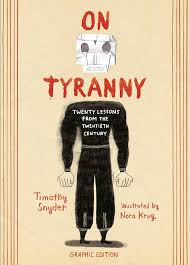
Well, this was a long overdue read. My uncle gave this to me years ago; I read the first lesson (do not obey in advance) and got so bummed out (by all the people and institutions doing just that) that I set it aside for far too long until I couldn’t ignore the necessity of it any longer.
Timothy Snyder knows well that this is both a difficult read and a very important one, so he’s made it as accessible as possible. I have the graphic edition, illustrated by Nora Krug, who has previous written about reckoning with her German history. The graphic novel comes in at a tidy 120 pages, broken down even further into 20 clearly delineated lessons that run 2-4 pages each. I had assumed it was condensed from the original, but the original also turns out to be a well compressed little chapbook as well.
This book is a perfect example of the idea that it takes a real expert to write on a topic briefly and clearly. It is clear that decades of research have gone into this, and the reader gets the final fruit of all that labor, organized into these 20 practical lessons. This is not an academic or historical treatise; Snyder has done his best (which is better than most) to create a roadmap for readers to push back against the erosion of freedom and democracy.
Each lesson starts with a short explanatory paragraph, followed by more context. Snyder weaves in events and quotes throughout history, 1930s Germany of course, but also 1960s Soviet Union bloc and US slavery, among others; not in flagellation, but a push to really work to learn from the history available to us. Despite the temptation to just tear through it and get it read, I set myself the schedule of only one lesson a day, so that I had the time to really think through and internalize each one.



 Whew, this book! I’m a big fan of R. Eric Thomas’ weekly
  Ostensibly a romance novel (the first son of the United States falls into an affair with the second prince of England), Red, White, and Royal Blue is charming enough to lure the reader into some truly heart-wrenching looks at our current political climate.
 I can’t remember what social media recommended this, but a while ago, someone
  When I was relating this to my mom as perhaps the best literary take-down I’d ever read, she reminded me of Mark Twain’s savaging of Fenimore Cooper, which if you haven’t read, you need to go do
 Biblio-therapy