By Natasha Pulley

Ooh, Natasha Pulley just keeps getting better and better at her special talent, which is weaving truly brutal social commentary through a cover of fantasy action. I went into this one with less trepidation after The Mars House, and I’m sort of wondering if The Mars House was a setup. There are enough notably similar themes between the two novels that I began to think of them as a pairing of sorts, though very, very different in setting, character, and plot.
The Hymn To Dionysus has an even more light-hearted tone right off the bat. Our protagonist is a happy child soldier in ancient Thebes, and if it doesn’t exactly sound like a happy existence to a modern reader, well, sometimes that’s just the case with fantasy, especially historical fantasy. I mean, look at the majority of children’s and young adult media, right? The Hunger Games and Naruto, just to name a few right off the bat – full of deeply traumatizing events for young children who just sort of make do, and that’s what our protagonist does, too. His life has some downsides (murdering, enslaving, etc.) but there’s plenty of upsides, too (his military unit is like a family to him, he gets to travel and see all sorts of sights). He and everyone else in Thebes are just going along, until Dionysus, the god of madness, shows up and suddenly they can’t just go along, and the full awareness of it all starts crashing down on them, and it is devastating, for both the characters and the reader.
As if all that wasn’t enough, there are some striking comparisons to our current world. My ancient Greek history isn’t up to much, but I started getting the impression this was set toward the end of the Grecian empire, with a years-long drought devastating all levels of civil society. As field slaves run away, figuring capture and death is better than starvation on the stringent food rations, the military is charged with rounding up ‘criminals’ to work the fields for the necessary food for the city and given a quota to meet, which rang direly true.
It ends as satisfactorily as possible, more so than I’d imagined it being able to after a whole series of gasp-worthy twists, and left some scenes indelibly imprinted in my head, so I’d generally recommend this, though I am looking forward to returning to something a little more gentle next (spoiler: I didn’t do that).



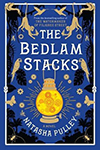 Oh, man, you guys! This book is so good! The Bedlam Stacks is the second novel by the author of
 Biblio-therapy