The Bible (Genesis 1 – 11)

There was a Fox news reporter who was nicely highlighted on The Daily Show with Jon Stewart for saying that the movie Noah was completely untrue to the bible, because the story was so much grittier than she remembered from her illustrated kiddy bible back in Sunday school. So, clearly she’s an idiot, first for thinking a kid version of any piece of literature is going to be the same as the original, and second for admitting to that on national television. However, it was something of a reminder to me that I actually hadn’t read much more than a quote or two from the bible since high school, and have certainly never read the whole thing.

Given how many people base their opinions on what they think is or is not in that book, I figured I had better go ahead and read it. If I can read Atlas Shrugged, then I can certainly read the Bible.

Awesomely, there are multiple standard schedules for people who want to read the whole bible without bogging down too badly in the (gosh darned) “begat” sections.*

Anyway, after mulling over some of my options, I decided that I was going to read the English Standard Version** chronologically by events. And to keep me honest, I’m going to live blog the whole thing. I’m not actually planning on sticking to the schedule though (you shouldn’t have to put up with this for a whole year), but it will keep me going in the correct order and make sure I don’t fall behind the set schedule.

Anyway, I thus start my first post on reading the Bible:

Genesis 1 – 11

This section is both plot intensive and pretty familiar to me (from Sunday school some large number of years ago.)

It also covers a lot of ground extremely quickly. In Genesis 1 – 5, we’ve got creation, the garden of Eden, Adam and Eve, Cain and Abel, and a geneology that goes down to Noah. Then the writing slows down a bit, because Gensis 6 – 10 is Noah’s story.

What was rather stunning however, were the parts that I didn’t remember, and even more so the parts that I hadn’t really given much thought to before.

I’d never really thought about it before, but you know how the creationist theory is that we’re all descended from Adam and Eve? Well, according to this, we are more specifically all descended from Adam’s great-great-great-great-great-great-great grandkid Noah*** and Noah’s unnamed wife.

And each of those nine ancestors of Noah also fathered other sons and daughters, who went off to live their lives and start whole family trees of their own which were all apparently too corrupt to live because they all get wiped out in the flood and aren’t even named in the geneology, beyond the reference to “other sons and daughters.”

Anyway, what I hadn’t remembered at all, however, was Genesis 1:6-8, in which God created an expanse that divided the waters below the expanse from the waters above the expanse, and he called the expanse heaven. The rest of the creation story continues in the waters below the expanse. So, inquiring minds want to know: what happened with the waters above the heaven???


* The (gosh darned) “begat” sections are why I never managed to read the whole thing through before.
** Free on Kindle. And I was kind of stunned to discover, or rather, to fail to discover any free King James translations, which is my preferred version for excellent quotes.
*** Adam fathered Seth, who fathered Enosh, who fathered Kenan, who fathered Mahalalel, who fathered Jared, who fathered Enoch****, who fathered Methuselah, who fathered Lamech, who fathered Noah.
**** I really want to know more about Enoch. There’s really nothing about the rest of the characters beyond their names, but Enoch apparently walked with God and was so loved that rather than have him die, God just took him away directly. Just… what?

Next up:

Job. Apparently the entire book of Job is set chronologically between Genesis 11 and 12. Curious.
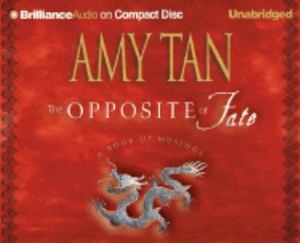
The Opposite of Fate

TheOppositeOfFateThe Opposite of Fate
written by Amy Tan
read by Amy Tan
2004

This was a really interesting set of nonfiction essays by the writer Amy Tan, author of The Joy Luck Club and The Kitchen God’s Wife. Since it’s a collection, rather than a single piece, there was a great deal of overlap in the topics being discussed, and that actually made it more interesting for me, rather than less. Because the topics were often the same or similar but the writing time and intended audience varied, it gave very different perspectives on some of the events in her life. And she has had a quite eventful life.

While Tan’s fiction is very much fictional, I can see why so many of her readers think these stories are true. Tan’s real life would fit right in with that of her fictional characters.

I particularly liked her perspective on minority authors, and how they don’t need to be and shouldn’t be required to be minority spokespeople. The best stuff speaks to the human condition, not just the minority condition.

I was reminded of reading The Thousand and One Nights, the set of recursive stories that Scheherazade tells to her husband over the course of three years so as to postpone her execution. Her husband believes that all women and certainly all wives are evil and deceptive and deserve to die before they get the opportunity to betray their husbands. So Scheherazade tells story within story about people being people: men and women and husbands and wives and children and lovers who are variously good or evil or strong or weak or smart or stupid or silly. Because while Scheherazade’s husband believes all women are evil, the lesson Scheherazade is trying to teach him is not that all women are good, but that women are people just like men and each individual must be judged by their own merits.

Anyway, I enjoyed this book, but also think that I will probably not read any of her other books. I like to keep a certain amount of distance when looking at the human condition, and Tan seems to dive right in to look at the difficult and the gritty parts of being human.

Fangirl by Rainbow Rowell

Fangirl-Rainbow-Rowell-Cover-677x1024Fangirl
Rainbow Rowell
2013

Rainbow Rowell is an amazing author and I really enjoyed her two previous books: Attachments is a delight and Eleanor & Park is amazing and also amazingly tense, because dear god, those kids!

Given my own love of fandom, I was particularly delighted to see her publish a book about fanfic writers, or at least a fanfic writer. And I did enjoy this book. The characters are delightful and the plot was interesting.

That said, there was just something off about the book and it took me a while to pin down exactly what. The main tension of the story is whether or not Cath (the main character) can deal with the real world or will focus herself exclusively on fandom. This is a real crisis for many college students. However, I found two main problems with the implementation of this plot, one with the timing of the plot arc and the other with the writing style interacting poorly with the tension of the story.

The writing style is almost fairy-tale like, with a focus on significant events and turning points without getting into much of the day-to-day activities of the characters. This is a writing style I often enjoy, but when the plot tension is about whether or not the main character is doing her regular day-to-day activities, then it becomes pretty important for those activities to be explicitly addressed. There’s a real question of whether or not Cath is attending her classes, and she says she is, but we only ever see her in one of her classes. In addition, there’s a major plot point about one thing that Cath doesn’t do. But since so much of what she does do isn’t described, there’s no way to tell when she doesn’t do something. That plot point comes out of nowhere when it’s finally revealed.

The timing is also problematic. Like most stories, this one is structured with the climax at the end of the book and the end of the time period being described. It certainly makes sense to structure a story like that. But the kind of crisis that Cath is dealing with isn’t one that waits until the end of the year. When I went to college, there were members of my cohort who struggled with online and fandom obsessions. I was only introduced to fandom in college, and started being active in it in my later years, after I had gotten the hang of college itself. From what I saw, though, with others, was that the crisis came early on. They made a choice in their first month of the semester, if they could balance fandom and real world or not. If they couldn’t balance the two, and if they picked fandom, then they flunked out fast. The crisis point doesn’t wait until the end of the year. At most, it might wait until the end of the first semester.

So, the end of the book focuses on this crisis of priorities, but I had actually judged the crisis point to have long passed, and I had to play catch-up a bit when the story referenced a turning point that I didn’t even notice. It was a fun book about wonderful characters, but the timing and the tension of it weren’t very well done. I still enjoyed it, but it’s definitely no Eleanor & Park.

The Signature of All Things

Lots of people make fun of Eat, Pray, Love. Of the overly earnest writing, of the privilege of a rich white woman writing about solving her problems by taking a year-long trip around the world, of the (admittedly terrible) Julia Roberts movie version. But you know what? I like Eat, Pray, Love! I have read it more than once! And I love Elizabeth Gilbert, who in interviews always seems fun and realistic about her crazy self-help book success. Also, her TED talk is pretty amazing. But I admit that I was a little wary of her latest book, a novel about a female scientist in 19th century America. Gilbert’s voice is so distinctive, and in her non-fiction novels is so specific to her experiences, that I was not sure how that might work in a period fiction piece. But The Signature of All Things worked for me.

It’s a long, sweeping book that tells the story of Alma Whittaker, a Philadelphia heiress in the early 1800s who bucks convention by not marrying and focusing instead on her study of mosses. The books her life from the day she’s born (and actually starts off with a really lengthy but about her father, explaining how the Whittakers got to Philadelphia), but most of the big action in the book takes place when Alma is in her fifties and her previously predictable life suddenly sends her in new directions (literally). A woman studying moss doesn’t sounds like a rip-roaring story, but Alma’s story takes all sorts of turns and did not end up anywhere I expected.

The story itself is interesting and twisty and detailed, and Gilbert clearly did lots of research on the time period and the science involved. But my favorite thing about it was the voice–it sounds like Elizabeth Gilbert. If you’ve read her non-fiction, you’ll know that she’s funny and a little irreverent, and all of that is right there in The Signature of All Things. The book reads like a period piece with characters that seem of the time, but there is still this slightly wry undercurrent the peeks out. I recently read The Luminaries by Eleanor Catton, another piece of historical fiction that has gotten rave reviews. I didn’t write about here because it felt like a slog and I couldn’t quite articulate why, but reading The Signature of All Things helped me make sense of it. The Luminaries felt very straightforward, as if it could have been written in 1800, and it didn’t have that sense of humor running through it. That irreverence that Elizabeth Gilbert brings made all the difference for me and kept me hooked through Alma’s whole, incredible story.

Kinsey’s Three Word Review: Chewy, three-dimensional tale

You might also like: Remarkable Creatures by Tracy Chevalier, which is historical fiction about a female scientist (although it is based on a real person) or State of Wonder by Ann Patchett, about a modern day woman consumed in her scientific work.

Long Fanfictions

In preparation for writing my review of Rainbow Rowell’s most recent book, Fangirl (expect the review soon), I decided it was time to recommend a few more fanfiction stories. What makes this selection stand out from my prior recommendations is that, in honor of Rowell’s main character’s fanfiction epic, all of these are recommendations are really incredibly long.

Previously I’ve recommended short fics, because they’re intended to lure unwary readers into fandom or maybe point out a hidden jewel to someone already in fandom. The longer stories tend to be well known to those already in fandom and be a bit daunting for those outside of it.

The following stories range from 109K to 757K long. To give you some context for those numbers: A harlequin romance (one of those romance books often sold at the check-out line of grocery stores and titles things like The Billionaire’s Baby or The Tycoon’s Virgin Mistress or some such) is generally 10K words. Anyone who has completed the NaNoWriMo challenge to write a novel in the month of November, has written 50K words.

The following recommendations are a demonstration of not just the skill that some fanfiction writers have in weaving together words and worlds and characters, but also the dedication they have in continuing a story line that has gotten immensely rich and complex, and keeping at it until they can bring the story to its intended conclusion.

These stories have required a serious commitment by some fan to write. They take a reasonably serious commitment from some fan to read, too. But they’re worth it!

So, from shortest to longest:

Into the Rose Garden
by Dryad13
Fandom: Labrynth
109,232 words long
first chapter posted: June 10, 2004
last chapter posted: January 8, 2006

Summary: Sarah has good grades, a circle of friends, and a cute boyfriend. Life’s great…right? So why does she have the strange feeling that something’s missing? Fairy tales show that magic will make you or break you. Which category does she belong in?

Why I like this: This is a gorgeous story that does an incredible amount of world building regarding both magic and society, to how the Underground works and where exactly Jareth’s place is, in it and the consequences to Sarah for having defeated him.


The Least of All Possible Mistakes
by rageprufrock
Fandom: BBC’s Sherlock
118,096 words long
first chapter posted: January 31, 2012
last chapter posted: February 20, 2013

Summary: If ever a people deserved tasering, it’s Holmeses.

Why I like this: Lestrade doesn’t get much attention in the Sherlock Holmes stories and it’s a shame given how awesome she (the author decided to make Lestrade a female for this story) is. She’s not brilliant, but she is smart and, more to the point, she’s also practical and pragmatic and with enough self-confidence to know when to ask for help and when to call that help out for being an ass. And she is not at all the sort to put up with kidnappings by the mysterious older brother of her consultant (see the summary.) 😀


Divided We Stand
by KouriArashi
Fandom: MTV’s Teen Wolf
156,742 words long
first chapter posted: July 10, 2013
last chapter posted: October 4, 2013

Summary: Derek is being pressured by his family to pick a mate, and somehow stumbles into a choice that they didn’t expect and aren’t sure they approve of….

Why I like this: This uses a fairly common trope of fanfiction, but one that I enjoy immensely, and says what if this secret society is actually common knowledge? They’ve been around forever and all sorts of their cultural oddities have just been incorporated into society at large. In this case, everyone knows werewolves exist. And then we get to an immensely fun and satisfying romp of a story in which there is romantic drama and mysterious conspiracies and an eventual happy ending. It’s pretty much a perfect comfort story.


Pet Project
by Caeria
Fandom: Harry Potter
338,788 words long
first chapter posted: March 3, 2005
last chapter posted: June 9, 2013

Summary: Hermione overhears something she shouldn’t concerning Professor Snape and decides that maybe the House-elves aren’t the only ones in need of protection.

Why I like it: This is a brilliant story focused on Hermione Granger as she matures enough to realize that teachers are people, too, and starts to notice some of the complexities and tricks of the adults around her, with a focus on Severus Snape in particular, and his role as a double agent. As she begins to delve into the mystery of Severus Snape, she and the author really delve into the magic and magical culture of the Harry Potter world. (Plus, I am completely in love with the house elves of this story, even though I never much cared for that plot line in the original books. “Ears are flapping!”)


Embers
by Vathara
Fandom: Avatar: The Last Airbender
757,222 words long
first chapter posted: September 24, 2009
last chapter posted: January 18, 2014

Summary: Dragon’s fire is not so easily extinguished; when Zuko rediscovers a lost firebending technique, shifting flames can shift the world…

Why I like this: So many feelings! This is an amazing story delving into Zuko’s character as an exiled prince and abused child and doing amazing world building while also delving into the causes and repercussions of genocides and world wars and cultural clashes and children loaded with responsibilities and adults loaded with secrets.

Marvel Comic Books

My comic book binge continues!

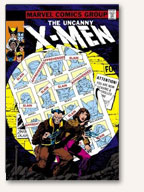
The Uncanny X-Men: Days of Future Past

Book CoverMy partner and I are big fans of superhero movies, and really enjoyed the most recent X-Men reboot. When the previews for this summer’s sequel came out, though, I couldn’t make head or tails of the storyline, and Tom recommended that I read the comic books that it is based on. The storyline was originally published over two issues of The Uncanny X-Men in 1981 and released as a trade paperback in 2011.

I have repeatedly mentioned that artwork is very important to me, and I found the 80s aesthetic a little trying, but the dystopian future and desperate intervention from the past plotline was quite engaging. (Also, the dystopian future is set in 2013, and I wonder if they originally aimed for a release date last year.) Ultimately, though, I don’t know that reading the book helped with my initial issue, since I believe the movie is taking a lot of freedoms from the source material. The primary one being that now Wolverine is the pivotal character instead of Kitty Pryde. The comic book fan in me is attempting to argue that this change is just due to Wolverine being very popular, but the feminist in me isn’t totally buying it (not least because both sides of me suspect that Wolverine is starting to be played out).

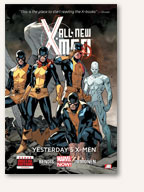
The All-New X-Men: Yesterday’s X-Men

Book CoverReleased just this year, the “Yesterday’s X-Men” trade paperback is pretty much the mirror image of “Days of Future Past.” My X-Men reading heyday was many years ago, so a lot has happened since I stopped checking in monthly. Comic books are similar to soap operas in a lot of ways: a set roster of characters rotates through years of marriages, breakups, feuds, and deaths. This book actually builds on all of that, and references the past craziness in very nice and often humorous ways, without overwhelming the reader with past references.

The basic premise is that so much craziness has happened and the X-Men have gotten so fractured that Beast decides that he needs to bring the teenage X-Men from the 60s forward in time so that the current X-Men can face their past selves and recognize where they have gone wrong. This does not work ideally, of course, and the play between the two sets of X-Men is very interesting and entertaining. (And the illustration is some of the best I’ve seen recently in the big superhero comics—everyone is of course in peak physical condition but no one is ridiculously stacked in either musculature or T&A.)

Hawkeye: Little Hits

Book CoverRebecca previously reviewed Hawkeye, Vol. 1: My Life as a Weapon, and I wasn’t quite sure what to think about it. It is so different from any other superhero comic I’ve read: Clint Barton (aka Hawkeye) is just trying to get by in life when he isn’t with the Avengers, and is only somewhat successful at it. I was initially taken aback by the bleak and almost noir-ish world, but I think it is quickly becoming a favorite. Life is not easy for Clint Barton, partly due to circumstance and partly due to personal poor decision-making, but he perseveres, and I enjoy reading about it. (Oh, and not to harp too much on disappointing girl-power comics, but Hawkeye’s female protégé is so casually tough and independent that there’s no need to make a big deal out of it in the writing.)

“Little Hits” is the second volume, released just last year, and does some very interesting things with the comic book medium, including an issue entirely from the point of view of Clint’s dog, using a series of pictograms to communicate thoughts. The back of the book also includes several pages from the artist’s sketchbook, along with a description of his very minimalist approach toward color and it was fascinating, as well.

—Anna

The Secret Rooms

I have been in a reading rut since January–I haven’t been able to get into anything, the things I do read are so slow and dragging I don’t want to recommend them, it’s all been very meh. But I recently ran across The Secret Rooms: A True Story of a Haunted Castle, a Plotting Duchess, and a Family Secret by Catherine Bailey–it’s not a perfect book, but I enjoyed it and it gave my reading a kick start.

Bailey is a historian who was granted access to the extensive records maintained by one of England’s aristocratic families so she could write a book about the experience of British soldiers in World War I. But as she starts her research, she find strange gaps in the records, gaps that were clearly deliberately created. She gets drawn into researching these gaps and learning what one of the former Dukes was trying to conceal. The story is told chronologically from Bailey’s perspective, so the reader is discovering what’s missing and what it might mean right along with the author. Am I making this sound boring? It’s actually a page turner, and I found myself thinking things like, “It’s midnight and I have to work in the morning, but I have to read one more chapter to read what she found in the attic!” (Full disclosure: I was a history major, so I might have been predisposed to find a description of primary source research fascinating.)

The reason I’m not jumping up and down and telling everyone to go find this immediately is that I  found the actual solution to the mystery a bit of a let down. This was partly because I’m not sure the mystery could live up to all the hype (spoiler: when the subtitle talks about a haunted castle, it’s being metaphorical). But also, I’m not sure the book did enough to put the Duke’s secret into context for the modern reader. I had to draw on my own knowledge of 20th century British history to understand why the big reveal would have been so scandalous, and I wish the book had included one more chapter that could have better placed the whole situation in its time. (I’m trying not to give away the mystery, but I’ll be happy to discuss more spcific details in the comments.) Also, there were some very detailed descriptions of World War I battles, which really bogged things down and left me feeling like Bailey was determined that the initial research she did on WWI wouldn’t go to waste. But those are really small quibbles. I really enjoyed this and was impressed with Bailey’s ability to make a book about archival research read like a thriller. If you’re feeling a bit of Downton Abbey withdrawal, this might hit the spot.

Kinsey’s Three Word Review:
Intriguing, if anti-climatic.

You might also like: The Daughter of Time by Josephine Tey. This is one of my favorite books ever, and the real reason I wrote this post. Tey wrote a series of books set in the early 1950s about a Scotland Yard detective named Alan Grant. In most of them, he’s out solving mysteries as usual, but in this one, he’s stuck in a hospital bed recovering from a back injury. He’s wildly bored, so a friend decides to occupy him with historical mysteries, and he gets fixated on finding out whether Richard III really killed the two princes in the tower. The entire book is basically him, in traction, thinking, while the folks helping him describe the things they have found in the library. And it is SO GOOD. Really, go read this.

Disappointing Girl-Power Graphic Novels

I’ve recently decided that it is my duty to introduce all my friends’ kids to comic books, so I’ve been on the lookout for good quality introductory graphic novels for children, especially for young girls, which can be a bit tricky. These two were strong possibilities but were ultimately disappointing, to varying degrees.

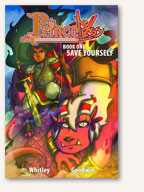
Princeless: Save Yourself

By Jeremy Whitley

Book CoverI’ve had my eye on  Princeless for a while. The first collected publication is selling for upwards of $200, which seemed very promising in terms of popularity, so I was pleased when a reissue trade paperback was released. I was feeling confident enough in it to just buy it outright, but my extended library system had a copy, so I held off. And now I don’t know.

Princeless has a lot going for it. It starts with the common trope of a princess locked in a tower guarded by a dragon, waiting for a prince to come rescue her. After several failed rescue attempts by clueless princes, Princess Adrienne gets bored of waiting and convinces the dragon to fly her away from the tower and rescue her sisters, also locked away in towers. In addition to being admirably spunky and willful, Adrienne is also a princess of color, which is even rarer.

It is a lot of fun, definitely turning a lot of the fairy tale tropes on their heads, and the lead character gets some great lines. It just seemed a little ham-handed with all the girl power, in a winky, self-congratulatory way. The book was so focused on emphasizing girl power that it lacked more nuanced characters, motivations, and plot developments. In the end I wanted it to show, not tell: if you have a strong female protagonist doing heroic deeds, all the side jokes seem to junk it up. If you believe in what you are doing, just do it well, and don’t hedge your bets with irony.

However, when I was browsing online for the cover photo, I found the comic’s official tumblr page, and it is so dedicated to addressing sexism and racism that I started to feel bad. This is a comic for young readers, so it shouldn’t be surprising that I find the plot and characters a little simplistic, and even somewhat clunky girl power is way better than none. I think I’ll keep this in consideration as a future gift.

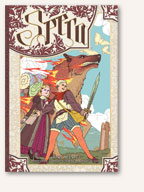
Spera

By Josh Tierney

Book CoverAfter having browsed multiple female-centric comics, Amazon recommended Spera to me, among others. It looked similarly interesting, so I checked it out from the library, and once again, it started out strong. The probably too-brief summary: an orphaned princess escapes her besieged kingdom with the help of one of her advisors who can shape-change into large fire dog and the daughter of the queen leading the siege. The three of them go on a series of adventures with a rotating roster of illustrators.

The Pros:

  • The first issue had my favorite illustrations, a very fun, retro style that reminded me of children’s books from the 60s and 70s.
  • Both princesses are immediately likable and admirable, and clearly distinctive from each other, as well.
  • The fire dog is just as precious as you imagine him to be, and pretty much all the illustrators did an excellent job with him (everyone loves a fire dog). Many of the illustrators, too, included some lovely gestural work that was especially apparent in the dog’s movements.
  • The minor characters met along the adventures are reliably interesting in their own right, even those that only get a couple squares (e.g. the young boy standing guard outside one of the towns is completely daunted by the task in general and the princesses in particular in just a few expressive illustrations).

The Cons:

  • My primary complaint is a bit difficult to put into words. I love the subversion of tropes, but there are some good versus evil characteristics that it does no benefit to transpose, in my opinion. Good characters do not own swords that absorb the souls of their opponents, for instance. At least, not without some serious soul searching of their own.
  • The issues collected in this volume follow a storyline of sorts, but are not always cohesive. Part of this was due to the different artwork, but that makes it even more important for the writing to tie everything together, and it didn’t always pick up the slack.
  • Some of the artwork was really stunningly ugly, and that is one of my particular biases when it comes to comic books. I primarily read them for the art, and bad art ruins the entire thing for me.

So, my search for good comics for young readers continues, and I’m sure I will enjoy it! I have several more on my roster that I will review as I get a chance to read them.

—Anna

Queen and Country

By Greg Rucka

Book CoverQueen and Country has been on my radar for several years, but, honestly, comic books can get expensive really fast, so I like to basically read at least one entire issue before committing to actually buying anything. I’ve been waiting for a version to show up at my library, and was quite pleased when I ran across the collected first volume of the definitive edition! I was then additionally pleased that I hadn’t actually purchased it.

A kick-ass British female spy illustrated by Tim Sale, my very favorite artist, should have been a no-brainer, but for a couple unfortunate bait-and-switches. Tim Sale only draws the covers of each issue, a practice that makes me almost apoplectic. All adages aside, you really do need to be able to judge a book, at least somewhat, by the cover, especially in a primarily visual media like comic books. Hiring a better artist to draw the cover than the inside is truly the definition of bait-and-switch (although I am grudgingly pleased that Tim Sale has earned the status he deserves, I suppose).

The other unpleasant surprise was in the character of Tara Chase, kick-ass British female spy, herself. I don’t know why I let myself be suckered into thinking this was going to be different from every other comic book in existence, so I guess I am sort of to blame, as well, but Tara Chase spends an inordinate amount of time lounging around in her underwear. The issues rotate artists so the first few were just mildly disappointing, but I was completely over it by the time her outfit for a siege operation (black bra under fishnet tank top) highlighted her approximately 12” waist and 40” chest (while her male compatriot is in full combat gear, of course). Same old, same old, I guess, but I was hoping for better.

—Anna

The Elite by Kiera Cass

the-eliteThe Elite
by Kiera Cass
2013

I had enjoyed The Selection enough that when I returned it to the library, I picked up the sequel, The Elite. And just: urg. I will try to get through this review without swearing at the main character.

So this actually made me kind of mad. While I was expecting light and fluffy again like the first book, I would have been fine if this book had decided to just be darker and more complex than the last one. However, the way in which it did so pisses me off: it’s written the same way but our main character is revealed to be an unreliable narrator due to her immense stupidity. She just doesn’t see what’s happening around her unless she has her nose rubbed in it, and thus, as the reader I have my nose rubbed in it.

Admittedly she’s a 16-year-old with little to no education outside of the performing arts, but as a member of a highly caste-structured society, she should have a basic understanding of how power inequalities work in practice. At the very least, she should be capable of noticing oddities that she thinks nothing of but that allow the reader to get a deeper understanding of the world.

Instead, she complains about how awful the caste structure is but she acts like a teenager from modern U.S. society who has simply been transplanted to this new society rather than growing up in it and yet, at the same time, taking it all for granted and not questioning it. And she takes the reader along with her, seeing and thus showing only the most obvious events.

It’s not a poorly written book, per se, it’s just super frustrating and all the things that I’m supposed to like about the main character mostly make me dislike and disrespect her. She is amazingly naive and completely incapable of subtlety. There are uneducated 16-year-olds and then there is America Singer who has managed to avoid both book learning and street smarts or even the ability to observe without leaping to conclusions.

At the end of this book, I mostly just wanted to re-read Poison Study, which follows a young woman in a similarly rigid society who finds herself physically near the center of power and realizes that there are things happening here that aren’t always obvious.

I do not expect to read the third book in this series whenever it eventually emerges.