The Girl From Everywhere

girl

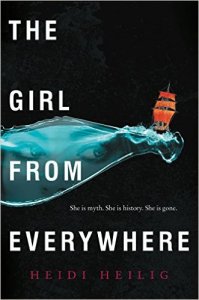
Okay, this one is going to be complicated to describe but hang in there, it’s worth it. The Girl From Everywhere by Heidi Heilig is this crazy mix of time travel and fantasy and a coming of age YA story that constantly spins off into unexpected directions.

Nix is a teenage girl who lives on a time-traveling pirate ship. (I know!) She was born in 19th-century Hawaii, but her father has the power to sail a ship into any original map he has–even maps of fictional places. Nix’s mother died when she was a baby so Nix has grown up on the ship with a crew of sailors collected across times and places. She has developed a knack for raising the money they need for new maps through elaborate time travel import/export schemes, and is happy on the ship that is the only home she’s ever known. But her father is obsessed with finding a map that will get him back to Hawaii before Nix’s mother died, and Nix doesn’t know whether she will even still exist if they make it there. Despite not knowing how the rules of time travel might affect her, Nix still agrees to help her father try to track down one last map of Hawaii, but to get it they’ll need to pull off an elaborate heist and not get caught by the police, local crooks, or the winds of time itself.

How does time travel work? What are we willing to sacrifice for love? What is the difference between history and myth? What do we have to give up to make our own lives apart from our family? What would Ocean’s Eleven look like in 19th-century Hawaii? There are all kinds of things happening here, but the story still feels very grounded. And even through most of the book takes place in colonial Hawaii, Nix’s father was originally from the modern-day U.S. so both Nix and the story have a very modern sensibility.

Also, how pretty is that cover?

Kinsey’s Three Word Review: Fantastical historical caper

You might also like: Time and Again is a classic time travel story, and I’ve already talked about how much I love When You Reach MeKindred by Octavia Butler is a dark take on the subject, and I’ll always recommend Connie Willis for time travel stories. But a lot of this book dealt with Hawaiian history and Unfamiliar Fishes by Sarah Vowell is a comprehensive but snarky look at that sad story.
Bone Gap

I first heard about Bone Gap, written by Laura Ruby, on the Pop Culture Happy Hour podcast as part of their round-up of National Book Award winners and I planned to write a post recommending from just about the minute I started it. So the fact that it just this week won the 2016 Printz Award for excellence in literature for young adults this week  makes this a very timely review (a rarity for me!).

Bone Gap tells the story of Finn, a teenage boy who lives with his older brother in a tiny, Midwestern farm town. Finn has a reputation as being a bit slow or spacey, and things have only gotten worse since the disappearance of Roza, a young woman who was living with them. Finn was the only witness to her kidnapping, but he hasn’t been able to describe the kidnapper and everyone in town (including his brother) has been looking at him askance ever since. Aaaand that’s about all I want to say.

I went in to this book knowing that it included elements of magic realism, and I’m going to tell you that much because I think our readers here more likely to pick this up if it’s got a bit of magic to it (Biblio-therapy readers are a fanciful lot). However, I also read the book summary on the inside of the cover and it gave me some details that I wish I hadn’t known. This story and its magic and its central mystery unfold so slowly and naturally that I think part of the joy of reading this is letting the story take you along at it’s own pace.

So, don’t read any online reviews, just trust me on this. Bone Gap is sweet and mysterious and sometimes dark and scary and sometimes small-town claustrophobic, and just all around interesting. It’s a book that cast a spell on me.

Kinsey’s Three Word Review: Magical small-town mystery

You might also like: I almost hate to make recommendations here, since anything I suggest is going to telegraph the ultimate tone of Bone Gap. But I can’t stop myself from telling people what to read, so, Alice Hoffman and Francesca Lia Block are two authors that do magic realism well. I like them both, although Hoffman’s books tend to tip towards middle-aged women and Block’s really speak to angsty 14-year-olds. Another option is Please Ignore Vera Dietz, by A.S. King, a book with an element of magic that splits the difference and would appeal to a wide range of folks.

The Shamer’s Daughter

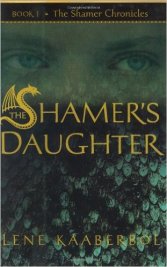
shamersdaughterThe Shamer’s Daughter
By Lene Kaaberbol
2006

This was a good little book although it was a bit on the young side of YA for me. In an unrelated note, it’s actually really interesting how young the main character was. The main character, Dina, is old enough to be well into the age of reason but nowhere near pubescent so there’s absolutely no romantic plotline. I appreciated that.

I also hadn’t realized this book was the first part in a series so I thought the ending was particularly interesting as it resolved the immediate problem while leaving a much larger problem still there. While I now know that it was setting up for a sequel, at the first read, I assumed it was an aspect of Dina being young and focused on the immediate situation.

Over all, the book reminded me a lot of Sharon Shinn’s series with The Safe-Keeper’s Secret, The Truth-Teller’s Tale, and The Dream-Maker’s Magic. Like those books, The Shamer’s Daughter is set in a world in which some people are born with semi-magical talents that give them careers even as it sets them apart from society at large.

Dina, the titular Shamer’s daughter, has inherited her mother’s skill of being able to see (and force others to see) everything that they are ashamed of by looking into their eyes. No one really wants a Shamer as a neighbor, but they have a social role in identifying criminals.

As one might expect, when a crime involves the death of the ruling family of a kingdom and competing heirs to the throne, being a Shamer who can actually see the truth is a bit fraught. Especially since the ability is built on shame and thus doesn’t work on people who don’t feel shame.

While this book simplifies the world and the complexities of people’s emotions in general, it still does a really good job of presenting some very clear answers to traditionally complex questions about guilt and responsibility and the strength to do what’s right.

Also, apparently there’s a movie, but it doesn’t look good.

The Best Books of 2015 (according to the world’s coolest 12-year-old)

Happy 2016, everyone! In late December/early January I typically write a post highlighting the books I’ve enjoyed most over the past year. But I’ve already posted on most of the things I’d want to talk about (Station Eleven, The Martian, Carry On), so let’s do something a bit different. Anna and I were lucky enough to spend New Year’s Eve with some dear friends and their children. I’m sure this won’t come as any surprise, but our friends are also bookish sorts, so we’re always talking about what we’re reading and trading around/gifting each other favorite books. One of the fun parts about watching our friends’ kids get older is seeing them become bookish and getting to introduce them to books we loved as children. But the oldest of the kids is twelve now and it’s become clear that she doesn’t need us to recommend books to her–she can find great things on her own and we should probably start taking recommendations from her. She kindly agreed to contribute a guest blog for us, so here are her top three books of 2015 (all of which are now on my library list):


Ava

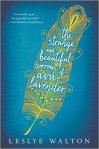
1) The Strange and Beautiful Sorrows of Ava Lavender by Leslye Walton. “I love how this book tells the story of many generations of Lavenders. I also love the fact that Ava is actually born with wings!”


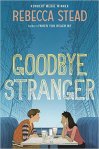
stead2) Goodbye Stranger by Rebecca Stead. “This book tells about a girl who has been through a terrible accident and all of her friends. I feel like you can really connect with them, because they do things that real 2015 teenagers do.” [Note: we’ve talked about Rebecca Stead here on the blog before and my love for her now feels validated.]


theo3) Kid Lawyer (part of the Theodore Boone series) by John Grisham. “I love that this kid, Theo, is not afraid to stand up to adults. He is a junior lawyer who knows a lot and stands up for his beliefs. I love reading about his adventures and how he always helps everyone out.”

Everything Everything

By Nicola Yoon

Everything_EverythingI would never have picked up this book except that one of my favorite blogs, bitches gotta eat, decided to start an online reading club, of sorts, and chose this as the first ‘assignment.’ Samantha was totally upfront about how this so-called ‘book club’ was basically the books she wants to read and she will post the titles and that’s about it – there will be no discussion, no question-and-answers, no nothing; we can just read the books and take whatever comfort we want that perhaps other people are also reading it. I didn’t quite believe her and I didn’t want to be left out of any subsequent blog posts, so I put a hold on the book and then forgot about it per usual.

True to her word, though, Samantha didn’t follow up on the book at all, and a month later simply wrote that now she would be reading Carry On by Rainbow Rowell. I had actually just then finished reading Carry On, per Kinsey’s recommendation, and completely adored it, so when Everything Everything finally came in at the library, I had residual good feelings toward Samantha’s picks.

Everything Everything is narrated by 18-year-old Madeline, who was diagnosed with SCID as an infant and has lived in her hermetically-sealed house for her entire life. An attractive boy her age moves next door and her interest in him opens her to the rest of the world that she has been cut off from. Sounds terrible, right? I hate romantic coming-of-age stories and I hate rare disease stories, and the only thing that tempted me to even crack the cover is that the narrative creatively includes IMs, emails, diary entries, and illustrations, and I do appreciate multimedia storytelling.

You guys, maybe I’m turning into a big softy, but I absolutely loved it! Madeline is so smart and funny and personable that her voice really carries the novel. Olly, the boy next door, is interesting and nuanced, and I quickly started to care about his story, as well. Additionally, the premise, with this life cut off from all outside human contact, discusses what life actually means, and how different people all cope, either well or poorly, with different kinds of loss, and how to still build a life worth living, which is definitely something that I find personally relevant right now.

—Anna

The Rest of Us Just Live Here

By Patrick Ness

The_Rest_of_UsThis book is like if we got the stories of some of Buffy’s classmates at Sunnydale High – there are terrible, supernatural things happening, but there’s nothing they can do about it, so it is mostly in the background of their everyday lives. I don’t normally like stories about non-fantasy teenagers (even when I was a teenager I couldn’t really relate), but this novel is just so well written!
Each chapter opens with a short paragraph summarizing the large-scale supernatural events being battled by the various chosen ones. The rest of the book is narrated by a high school senior stressed out over prom, graduating, leaving for college, and battling varying levels of OCD. He and his friends very occasionally witness the periphery of the larger battles, but somehow the author is able to use this to emphasize how equally important the everyday struggles are.

So, I was initially attracted to the book by the interesting and unusual premise, but two specific attributes of the novel really made it stand out for me. Ness writes with a really nice, light touch on diversity — it becomes apparent that characters are different ethnicities only way after their more important individual character traits are established. Ness keeps it true to life, as well, with their cultural backgrounds being an important part of who they are, but certainly not their primary defining characteristic.

Secondly, Ness does a truly spectacular job of addressing dealing with various mental illnesses. Our main character has occasional bouts of pretty severe OCD, while his sister is recovering from anorexia. Again, Ness shows how these are not insignificant in the characters’ lives, but they are also just one aspect of the many, many traits that make people so individual. This book would have done me a world of good in high school, quite frankly.

—Anna

The Scorpio Races

We’ve talked before about how certain books fit certain times of the year. I wrote a whole post a few years back about good Christmas reads, and Anna has mentioned that A Night in the Lonesome October is an excellent creepy story for Halloween. This year, as the darkness and cold began to descend, I decided to branch out from my typical winter reads and try a couple of new things that I’d seen recommended on social media.

A few people mentioned The Dark is Rising as an excellent Christmas re-read, and it was. This is the second in a series of five middle-reader books by Susan Cooper about children encountering mystical forces in England. The first one in the series is actually my favorite, but The Dark is Rising stands alone so you don’t need to read the others. It’s great for this time of the year because it takes place during Christmas and Advent and feels very winter-y. And although these books are not that old–they originally came out in the 1960s–they feel timeless, and read like classic children’s fantasy without any sort of modern angst or issues.

What I really want to talk about now, though, is The Scorpio Races by Maggie Stiefvater, a book I’ve been avoiding for years but which has now officially joined my To Be Reread Every Year list. Stiefvater has a series of YA books that starts with The Raven Boys that I’ve reviewed here before and enjoyed just fine but didn’t looove. I’d seen discussions online about how The Scorpio Races was her best work–it was a Printz (like the YA Newberrys) honor book in 2012–but the descriptions of the book always sounded so grim, often quoting the very first line of the book: “It is the first day of November and so, today, someone will die.”  Does that sounds cheery? No, it does not. But I finally decided to give it a shot and it’s not a cheery book, but it is suspenseful and exciting and touching and I loooved it.

When I describe the plot this is going to sound like a crazy fantasy novel: every November, on a small island off the coast of (I think?) Ireland, magical, dangerous, predatory horses that live under the water come up on land. It’s island tradition to try to catch one of these horses and keep it under control long enough to win an annual race, which has now become a tourist attraction that is one of the few sources of income on the tiny island. I know, weird. However, once you’ve accepted this premise, the rest of the book is remarkably realistic. There are young people trying to figure out how to make a life and a living on a remote island, sibling dynamics, challenges of established gender roles, some solid villains, and a love story (which I am always a sucker for). The characters feel modern and relatable, but the remote island setting and lack of discussion of cell phones or other technology make the story feel out of time, like it could be taking place anytime from 1900 to today. And it’s always raining or foggy, and everyone’s always cold and wrapping up in sweaters, so it really is the perfect thing to read while under a blanket, drinking hot tea in the early winter darkness.

It took me a little time to get into this book, because the first few chapters felt so ominous. For the first 100 pages or so I had to talk myself into reading it each night because I was so so worried about what might happen next. After a little bit I got so swept up into the story that I couldn’t put the book down, but I definitely felt anxious at first. I don’t want to give away any spoilers, so let me just say that if you start the book and you’re thinking, like I was, “Everyone and everything I love in this book is going to come to a terrible end,” don’t worry. Things get intense, but you’ll come out of it with hope, not despair.

Kinsey’s Three Word Review: Nerve-wracking autumnal adventure.
You might also like: The New Policeman, by Kate Thompson, another YA book set in Ireland with a supernatural twist, and So You Want to Be a Wizard, a childhood favorite of mine that always leaves me with the same emotionally wrung out feeling as The Scorpio Races.


Newt’s Emerald

NewtsEmeraldNewt’s Emerald
by Garth Nix
2015

This was a fun book, but I went into it with high expectations and it never matched them. I’ve read a lot of really good, fun regency romance adventures, with and without magic, and this one feels like what it is: a fan of that genre wrote his own take for fun, but without really going all out.

Regency romance is fun genre over all, with complex manners and dresses and marriage missions, and Georgette Heyer is the clear founder and leader of the genre. Her characters are quirky and her plots of romance and manners are complex, and it all defines a time and culture of arbitrary rules that make so little external sense and yet have perfect internal structure. Garth Nix is clearly a fan, but his characters are a too flat and caricatured while the rules of society don’t have the same clarity and internal consistency.

For regency romance with magic, Patricia Wrede and Caroline Stevermer with their Sorcery & Cecilia series or Patricia Wrede alone with her Mairelon series have brilliantly added layers of magical realism to the rules of society and it all really works well. Despite how amazing the world building was in Nix’s Old Kingdom series (a series I definitely recommend), the rules of magic in Newt’s Emerald are mostly vague and hand-wavy while occasionally contradictory.

The book that Newt’s Emerald was trying to be would have been awesome. Unfortunately, it just never quite developed enough–not the characters, the plot, or the world. None of this means that the book is terrible. It just… wasn’t great.

Carry On

My past entries here have made it clear that I am a Rainbow Rowell person. Eleanor and Park is one of my favorite books ever, and I loved Attachments and Landline. Plus, Rainbow is adorable both on Twitter and in person. (I am not a stalker, I promise.) But I was nervous when she announced that her latest release would be a sort of spin off of Fangirl. Rebecca reviewed Fangirl here on the blog, and while I think I liked that book more than she did I agreed that the pacing was a little odd. And I was pretty indifferent to a major plot point of that book–the Harry Potter-esque book series that the main character wrote epic, popular fanfiction about. Fangirl didn’t actually contain any of this fictional story, but you heard a lot about it over the course of the book. While I liked Fangirl‘s treatment of fanfiction, I wasn’t particularly interested in the wizard-y story itself–it didn’t seem worth my time to think about these characters that felt extra, extra, fictional (books within books!). So when I heard that Carry On would be an entire book those Harry Potter-like wizards fighting evil at a magical boarding school, I was not excited. But then Nicole Cliffe at The Toast (Best Website Ever) started raving about it, and The Toast published a lovely interview with Rowell. And I always knew I was going to read it, so I bought it to take on vacation. And hear me now: it was so good and I was so wrong.

Honestly, Rowell herself seems to have worked a magic trick here. Carry On is clearly inspired by Harry Potter and uses Harry Potter as scaffolding in some ways, yet has an entirely different feeling. Despite the presence of magic, it’s a bit less of a fairy tale and is grittier and funnier–it definitely has a more modern feeling that I would have predicted, based on the descriptions in Fangirl. The book is clearly meant to the culmination of a long series of adventures (as if it were the seventh Harry Potter) and it refers to all sorts of past events, but I was never lost or confused by what was happening. The writing made it feel like you were jumping right into conversation with beloved characters. Rowell also introduces some new, clever ways of dealing with magic. For example, in her world spells are not made-up Latin-y words, but are cliches or nursery rhymes or lyrics–words whose power comes from people using and knowing them. Like, there’s a scene where a u can’t touch this spell doesn’t work on a dragon because the dragon doesn’t know the song. And Carry On does something that I don’t think Harry Potter even quite manged–it tells a really charming, compelling love story, which is really the heart of the book.

As I said, I read this on vacation and I almost wish I hadn’t because once I started all I wanted to do was keeping reading. On multiple occasions I chose to read this rather than pay attention to what was around me, even though what was around me was France. (I liked the book so much, I actually feel okay about this.) This would be the perfect book for a long plane flight or rainy weekend, when you just want to immerse yourself in a new world and ignore everything around you.

Also, I want to note that you don’t have to have read Fangirl to follow Carry On. This book is completely free standing and independent of Fangirl and (I think) is much better. Although I like Fangirl more now, knowing that it eventually led us to this.


Kinsey’s Three Word Review:
Suspenseful, magical romance

You might also like: I’m going to assume that everyone has read Harry Potter and that you’ve all been listening to me and reading Rainbow Rowell’s other books. With that in mind, I’m going to recommend John Green and David Levithan’s YA writing. They both have more famous books, but their collaboration on Will Grayson, Will Grayson is one of my favorites and has a similar feeling to this. Neverwhere by Neil Gaiman is another solid recommendation featuring a clever magic world, although it’s a bit darker.

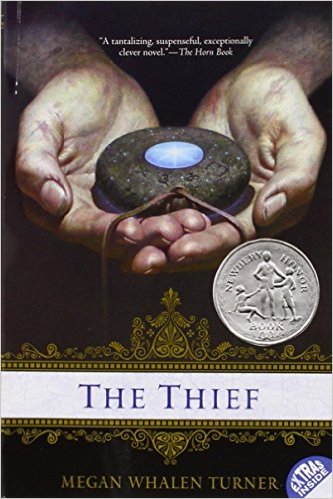
The Thief

thiefAges ago–maybe two or three years ago–Anna sent me a Kindle book called The Thief, by Megan Whalen Turner, as a gift. She told me it was YA fantasy/adventure book that she really liked and she thought I would like too. And I read it and I thought it was fun and and well written and had an interesting twist at the end, and I moved on with my life and didn’t think about it again. Then a few weeks ago I was on vacation, sitting on the beach, and when I finished my trashy romance novel I didn’t feel like walking back the beach house to get another book. So I started poking around my Kindle, looking for something else to occupy me until I was willing to leave the beach, and The Thief popped up. I started re-reading it and was reminded of how much I enjoyed it and then a tiny voice emerged from somewhere in the depths of my memory: could there be . .  did Anna say . .  is there a sequel? You guys, there wasn’t just one sequel, there were THREE, and apparently two more books on the way. And as much as I liked The Thief, the two books that came after it were so so good that I am now completely obsessed and desperately waiting for number 4 to come in at the library.

So The Thief is about a thief (yes) named Gen who we first meet in the king’s prison after he was caught stealing something audacious and then bragging about it in the pubs. Enter the king’s magus, who offers to get Gen out of prison if he will use his considerable thieving skills to steal something important for the king. The thief, the magus, and the other folks in their little party then ride around dodging soldiers, looking for this mysterious object, and trying not get killed by any of their enemies. The actual thing they’re trying to steal was a bit of a MacGuffin for me, but Gen is a smart, tricky character, and up until the last minute it’s never quite clear who’s using who and how much Gen is controlling the situation. It’s suspenseful with a dark edge (there are deaths along the way and prison is not sugar-coated), but Gen himself is very entertaining.

It’s the second and third books that take the action to a whole new level with intrigue and awesome characters and complexity. However, it’s challenging to talk about these, because you can’t even describe the most basic plot elements of any books past the first without ruining the fun of the first book. So I’m not going to say a word about what happens in the rest of this series–I’m not even going to write out the titles. You’re just going to have to trust me when I say that books get twistier and darker and better.

This is like when I owned paperback copies of the Philip Pullman’s Sally Lockhart books, a YA Victorian mystery trilogy he wrote before his famous His Dark Materials trilogy. They’re great books that I was constantly loaning to people, but reading even the first line of the description on the back of the second book just about ruined the first one, so I taped post-it notes over the back of the books so that I could hand someone the whole stack with spoiling them on the plot before the were ready. So consider this review a virtual stack of books with post-its taped on the back. I love these books. The third one is my favorite, but these are quick reads and fit nicely together as one whole story. I should have listened more carefully to Anna when she initially told me about these, since she’s always right these things. Don’t make my mistake!

Kinsey’s Three Word Review: Dark, complicated adventures.

You might also like:
The Phillip Pullman books that I mentioned, actually, as well as a number of things that we’ve already raved about here: the Graceling books by Kristen Cashore, The Girl of Fire and Thorns trilogy by Rae Carson, and the His Fair Assassin trilogy by Robin LaFevers (the killer nun books). You might also like Cinda Williams Chima’s series that starts with The Warrior Heir, a fantasy YA story that did a number of interesting things and that hasn’t gotten nearly the attention it deserves–it’s the better version of the Mortal Instruments series.